
After church on Sunday I had twelve friends over for a little party. Half of them were children under ten, and all of those had been in my house before; they fell to right away playing with my dress-up clothes, dolls, and matchbox cars. At one point the squirming baby let me remove her to the armchair in the play area where we read a couple of stories together, so that in the other room her mother might drink tea with both hands.

The weather had warmed up just enough between Saturday and Sunday to make it pleasant for eating outside, and for the children to enjoy organizing the playhouse. I had spent more time cleaning that little hut in preparation than I did the real house — but I still have not sewn new curtains for its window, in these ten years since it became mine.

May is in many ways the perfect month for a garden party, because of the variety of blooms — and what a joy to have other people soaking up the beauty with me. This spring, since I “lifted the skirt” on the pomegranates, the orange helianthemums are bursting with more flowers than ever before; the wisteria is in its prime, and the bees are buzzing all over it. The snowballs on the viburnum are at their best. And we have the possibility of temperate and sunny afternoons. I always think it should be easy to host more such gatherings, but just finding a date that works for everyone takes a lot of effort; in this case I’d begun that process seven weeks ahead.
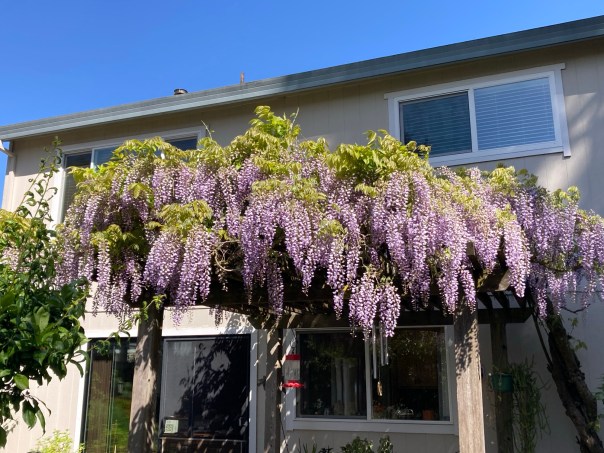
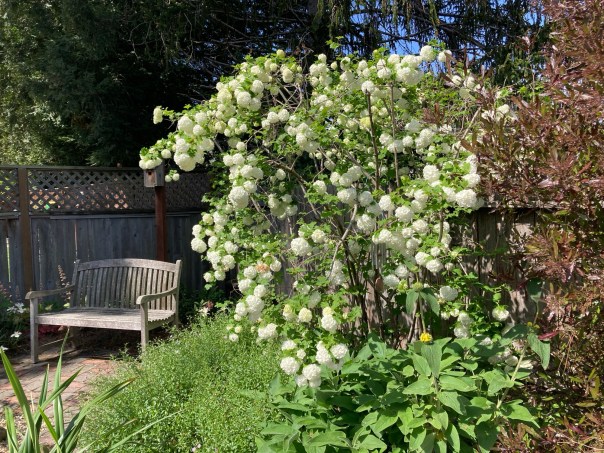
I’d started planning the menu, too — it needed to be items that wouldn’t need fussing over that day. One thing I made the evening before was this favorite quinoa salad that is tweakable to what one has on hand, which I found on the New York Times cooking site. I am unlocking the recipe for you, and you can access it through the link: Quinoa and Broccoli Spoon Salad.
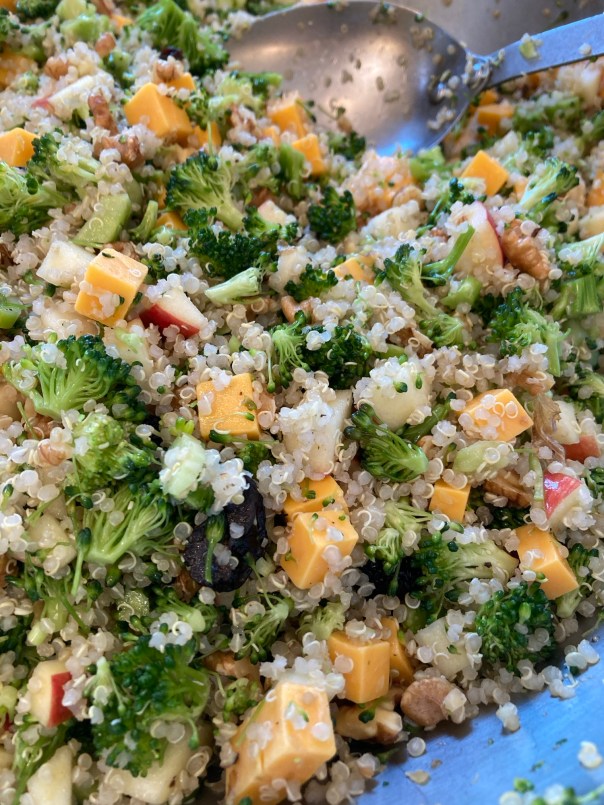
A warning about the quantity of salad that came from one of the cooks who joked about it supposedly serving 4-6: “…it serves 4 to 6 distance swimmers during an Olympic training camp.” I used two cups of quinoa and ended up with plenty left over for my guests to take home plus more than I can eat staying here. I don’t like mustard so I left that out, and I used dried California cherries instead of cranberries, toasted walnuts instead of pecans. I like these NYT recipes because the cooks who try them share things they learned when making them according to the original instructions, or after they alter various ingredients or procedures.

Few people like raw broccoli, but as I have learned and other cooks testified, the dressing in this dish quickly marinates the small pieces of broccoli and removes the unpleasant rawness, while retaining a little crispness.
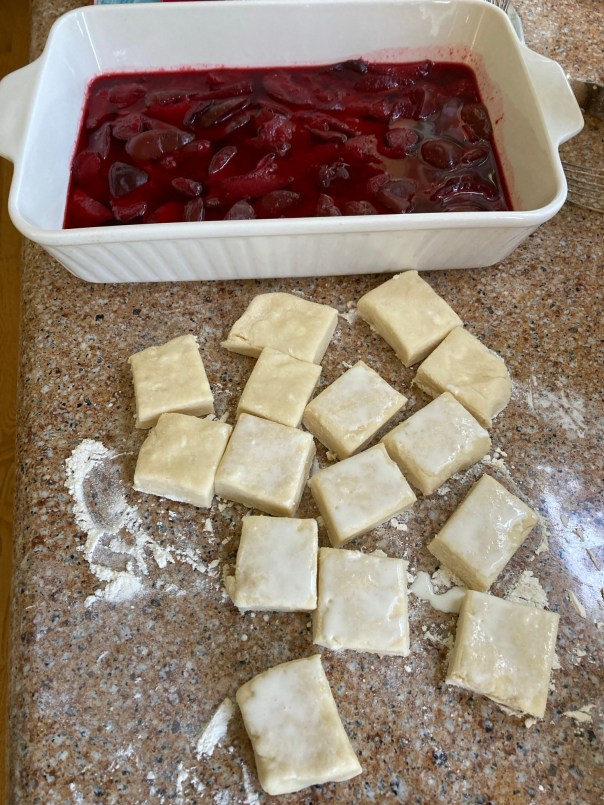
In an effort to use up foods from my freezer and pantry, I made one dessert using plums from my trees that I’d put by last summer, and another dessert using figs that I had tried freezing raw for the first time. Both worked well and were heartily eaten. Plum and Cream Scone Cobbler from Smitten Kitchen I’ve made before with peaches, but this time I had enough plums to use them.
It was delicious, but I will change some things if I make it again. The scones that make the cobbler topping are just too rich, with a whole stick of butter and a cup of cream in the dough. At least, they are too rich combined with the amount of fruit called for. Maybe I would decrease the butter by half next time, and use at least 50% more fruit. (Ha! I see that last time I made it I told myself to make those very changes next time, and forgot.) I also seem to have cut my scones too large…

 My guests and I didn’t only talk about books over the course of our leisurely afternoon, but many book titles popped up in our conversation, more than I even know about. A few that I can recall just from our last hour together were: The Ethics of Beauty; St. Ephrem the Syrian: Hymns On Paradise; The Hidden Rainbow; Christ the Conqueror of Hell; The Little Liar; and Orthodoxy and the Religion of the Future.
At one point I ran upstairs to get this book to show the others, my latest deep read. They all had a good laugh with me. It’s not just goofy, but is actually a very thought-provoking book! Maybe I will tell about here it sometime: How to Talk About Books You Haven’t Read. I do a lot of that already, but I’m sure there’s room for improving my skills.
Usually when children play in the playhouse, they like to prepare salads or other halfway-pretend dishes made of all the edibles I give them permission to pick from the garden, including flowers as well as vegetables.


I meant to point my younger guests to my exuberantly flowering kale, parsley and who-knows-what in the planter boxes I am not cultivating right now, but I never got around to it. After everyone had gone home I checked out the back garden to see if there was the sort of happy mess I’m used to in and around the playhouse. There was no evidence that anyone had done any “cooking,” but rather a lot of setting in order, with the dish soap by the sink and a lavish bouquet completing the scene. It was symbolic of all that I had received from my guests who gave me an afternoon in spring.







 Gladsome Lights