Tag Archives: pomegranates

Waking in the middle of January.

Today felt like the beginning of a fresh season. The real seasons don’t sync with the dates on the calendar, and right now presents itself as more natural for starting something, for having the necessary energy and expectation. If my helper Alejandro hadn’t come to prune, it might not have happened still. But I did ask him to come, so I guess I got the ball rolling, or the pruners opened, or something.

In the first week of January, I only needed to go to church, to be carried on a wave of feasts and exultations. I did that seven times in seven days, because of St. Basil’s Day, Theophany, and our parish feast day, with all the associated Matins and Vespers services. When I go to church it’s nearly impossible for me to get Anything Done the rest of the day. So of course I was Behind in the second week, and before I had caught up much I sank a bit Under the Weather, and put this painting as the background of my computer monitor:

Felix Vallotton, Femme Couchee Dormant, 1899

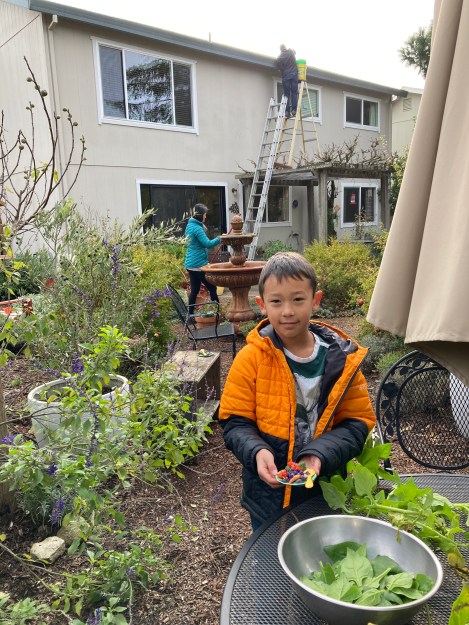
But! I didn’t resemble that lady all the time, and when I put her picture up it was at my New Computer I was sitting, the whole project of which was accomplished for me (just before I went Under) by a team of family members, starting with Soldier, who chose and ordered the machine, and the Professor and Scout who got it set up beautifully. Especially Scout, whom some might remember as the boy at left, but who now is a young man and my favorite I.T. guy. My computing (reading and word processing) now goes blessedly like lightning, compared to the old system.
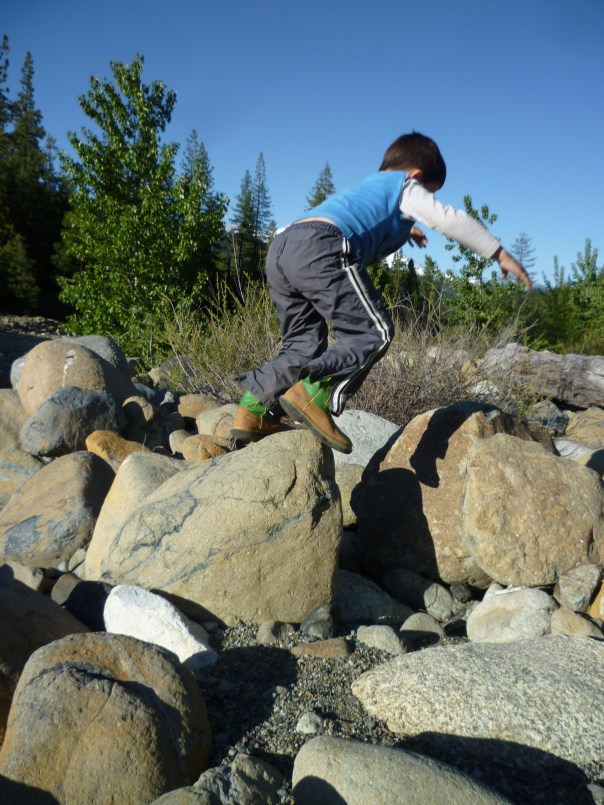
That speed enabled me to switch my Duolingo lessons from my phone to the computer, which was a relief, because all the phone pecking had aggravated my right thumb joint. It is in an effort to learn Greek that I was suffering the abuse, which led one friend to declare that I now have a Greek Thumb. I found the audio-visual lessons to be inadequate without writing practice, so once I switched to the computer I started writing down some phrases and sentences I was learning.

A trip to Greece is in my near future, if all goes as planned — I will surely tell you more about that soon. It’s doubtful that I will use the language much when I go there, but at least I may be able to make out some signage. And languages are always fun. I really need to work on my Greek penmanship, though!

My Greek Thumb had been one more cause of my enervation. But after about a week of lounging about and never quite finishing the dishes and laundry, I found myself out in the garden picking greens and stringing up pea supports. It was an overcast day, but I wore my barn coat and garden gloves and happily pulled out the rotten cherry tomato plant and took pictures of the pomegranates before they got pruned.

Many people have looked out the window at those fruits and wondered what they could be. The pomegranates get bleached by the winter rain and frosts, and don’t resemble at all the deep red fruits they were in the fall.

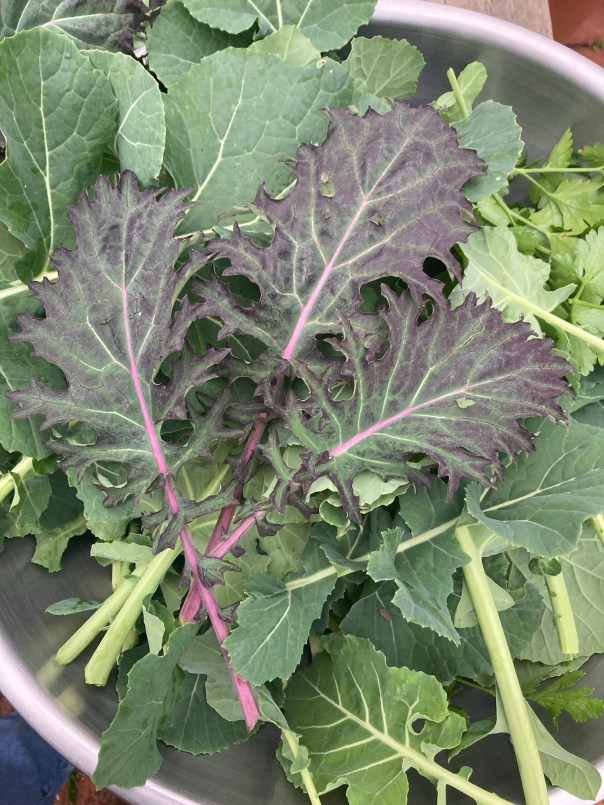
The day’s harvest of parsley, kale, collards and Swiss chard was fantastic. I hadn’t picked any for a couple of months. That type of kale on the top of this bowlful is so beautiful and hardy, I hope I can find the same seeds to plant again this year.
On the last day of lounging, my podcast listening also helped me get into a more active mode, because my contemplative self had been supremely satisfied by listening to Malcolm Guite. He was talking about George MacDonald, at a celebration last year of MacDonald’s 200th birthday.
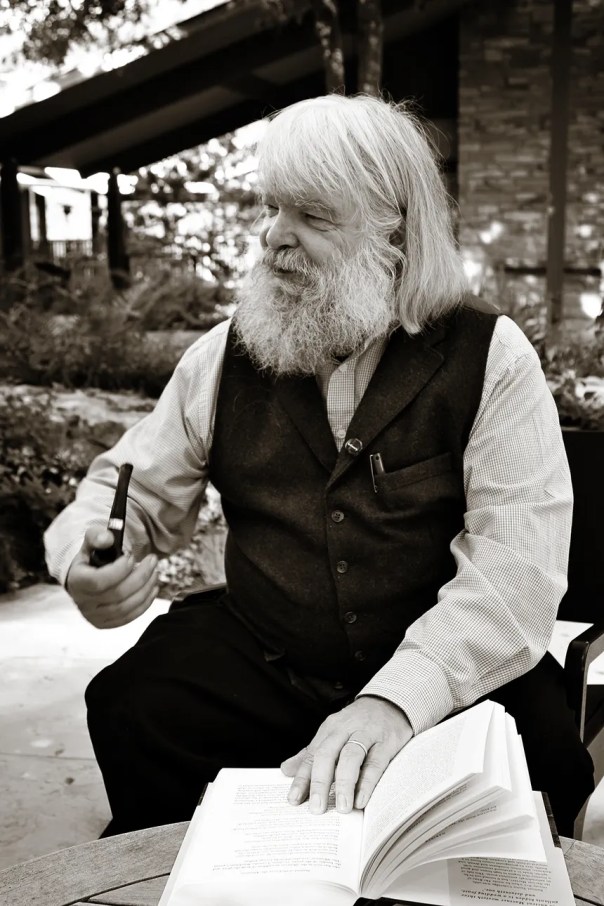
The event took place at the Wade Center at Wheaton College, and the recording of it can be found here on YouTube: “When A Heart Is Really Alive: George MacDonald and the Prophetic Imagination.”

If you are at all interested in MacDonald, C.S. Lewis’s conversion, the vision of Coleridge, or myth and the imagination generally, I very heartily recommend it. I’m going to watch/listen again. Guite’s love for God and for his subject(s) are contagious. Immediately following that experience, I had today a perfect Home Alone Day, when my scattered mind wasn’t too challenged by having to multi-task. And that helps me to get more Things Done, which is calming and energizing.

Even though my last couple of days were more about Getting Up than waking up, I put the word “wake” in the title of this post because one theme of Guite’s talk and MacDonald’s writings is Waking Up. You can listen to the podcast and hear more about what we might wake to; I will just leave you with a related thought from the author himself:

“The world…is full of resurrections… Every night that folds us up in darkness is a death; and those of you that have been out early, and have seen the first of the dawn, will know it — the day rises out of the night like a being that has burst its tomb and escaped into life.” -George MacDonald

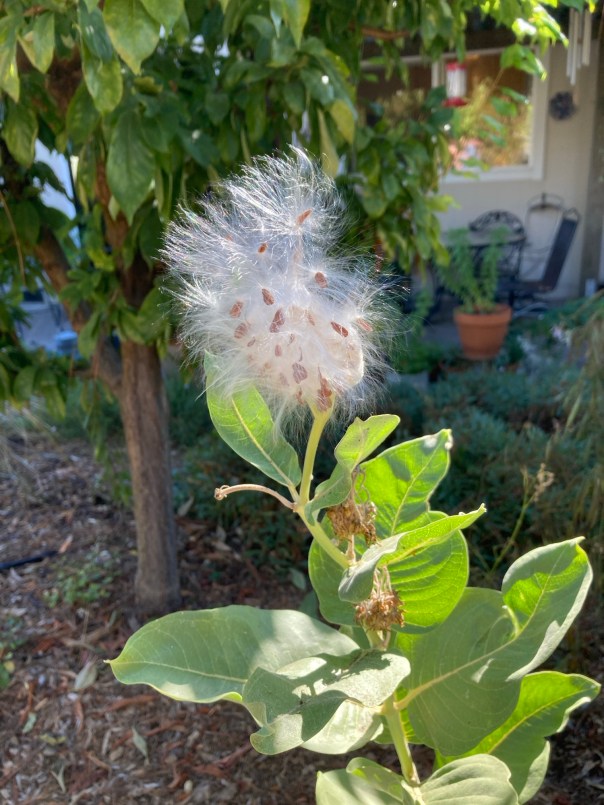
From a neglected garden.

In spite of my absence for various reasons, the garden continues to carry on valiantly its business of growing and changing by the hour. I love walking around and picking off a few dead flowers, or noticing seeds forming, even when I can’t give it the more thorough care it needs.

A couple of years ago I managed to transplant one of the vigorous Showy Milkweed plants (above) next to where the Narrow-Leaf Milkweeds grow. You can’t see the latter very well in the background, which is a good thing, because their leaves have mostly had the life sucked out of them by aphids and have turned black. But every spring, they come back stronger than ever.

Tatsoi greens and lobelia

The leafy green Tatsoi really took off in this pot where I stuck it in next to lobelia, and is begging to be thrown into a stir-fry a.s.a.p. Those I set out in the planter boxes are languishing; that soil must need amending.

The dwarf pomegrantes are mostly a fun member of the garden in that for most of the year have flowers, often with hummingbirds drinking from them; or foliage bright and beautiful catching one’s attention in spring and fall; and their darling fruits, that don’t get very large, and in this climate don’t get enough heat for their seeds to develop sweetness. But they are so cute right about now. This one is about an inch and a half in diameter.

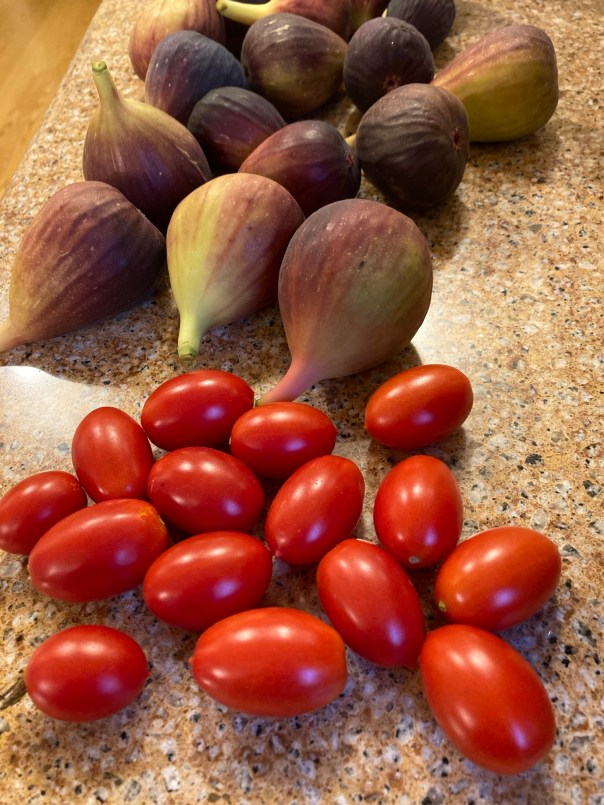
Every day I pick figs; the evening of my return from the mountains I gathered two dozen, and yesterday nineteen. Soon I hope to make that Autumn Fig Cake I told you about one time. And the Juliet grape tomato plant is prolific. I eat the tomatoes in the garden and in the kitchen, and took enough with me to the cabin that I could eat a few every day for ten days, and they were always sweet.

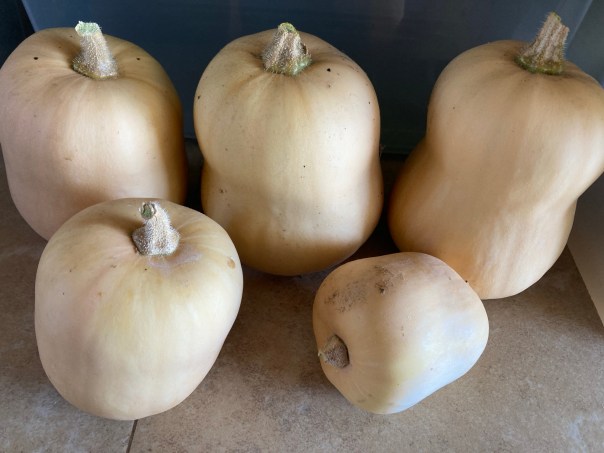
I harvested all but one of the little butternut squashes I grew this year, and planted some Sugar Ann snap peas in their place. Ideally those will start bearing about February, if the winter isn’t too cold and if I can keep the snails from devouring the plants between now and then.

My native sneezeweed is of the less showy sort, but it welcomed me when I returned from my mountain retreat with a particularly lovely array of blooms, not plain at all.

No doubt about it, my garden loves me, and forgives my neglect.
It makes me want to do better in the future.

The scent of a monastery.

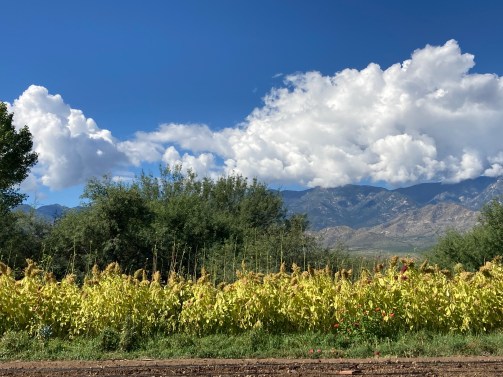
The monsoon season officially ended in Arizona on September 30, but at least one rainstorm was not keeping to that calendar. The evening that we arrived at the high-desert monastery we enjoyed a loud thunderstorm and showers that continued through the morning.

Velvet Ash

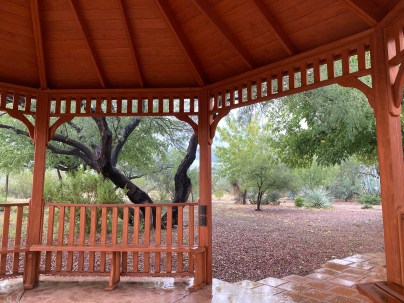
When I got caught in a shower while taking a walk I discovered this gazebo near at hand, where I waited a few minutes until the rain lessened.

Now that I have returned to northern California (where we are still waiting for our own wet season to begin in force) I feel that the spiritual watering I received is liable to evaporate to nothing if I don’t take more time than I have so far, to process what seems like a deluge of impressions and experiences.

I’ve been thinking about an article from Father Stephen Freeman, about Living in the Real World. Here is an excerpt:

A monk lives in a monastery. He rises early in the morning and prays. He concentrates his mind in his heart and dwells in the presence of God. He will offer prayers for those who have requested it. He will eat and tend to the work assigned for him to do. And so he lives his day. He works. He prays.

And someone will say, “But what does he know about the real world?” But what can they possibly mean? He walks on the earth. He breathes the same air as we do. He eats as we do and sleeps as we do. How is his world any less real than that of anyone else on the planet?

A man lives in a city. He wakes in the morning, turns on the TV as he gets ready for the day. He dashes out the door (he’s running late). He gets to his car, listens to the news on the radio, takes a couple of calls on his cell phone. He gets to work and for every minute he does something that he thinks of as “work,” he spends at least another checking his email, looking quickly at Facebook, and maybe checking the news. He gets into an argument at lunch about what should be done somewhere else in the world and who should do it. Angry and distracted, he is frustrated with himself because he swore he was not going to have that same argument today. He goes back to work with the same routine. After work he drops by a bar, has a couple of drinks and decides to stay and watch some of the game. He gets home late and heads to bed.

Who is living in the real world? The man-in-the-city’s life is “real,” it actually happens. But he is distracted all day from everything at hand. He never notices himself breathing unless he’s out of breath. He swallows his food as quickly as possible. Even the beers he has at the bar are as much for the buzz as for the taste.

If the man refrained from these things his friends might taunt him, “What are you? Some kind of monk?”

What is the “real” that we should live in?

The sisters at the monastery demonstrate a quality of life that is closely grounded in the earthly, incarnated existence that God has given us, with all its limitations and glories. Their orderly life, hard work and continual prayer create an oasis of beauty and holiness.

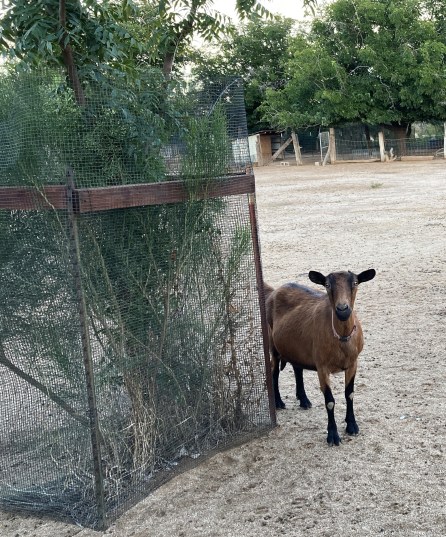
From their chickens, ducks and guinea fowl they collect eggs. From a little herd of goats they get plenty of milk for their own use and to sell to soap-makers. Pomegranate and apple orchards and vineyards supply more fruit; and they take the fruit of 850 olive trees to press into oil and cure into olives for eating. Over the years they’ve learned to drive tractors and do construction of their buildings, among dozens of other skills.

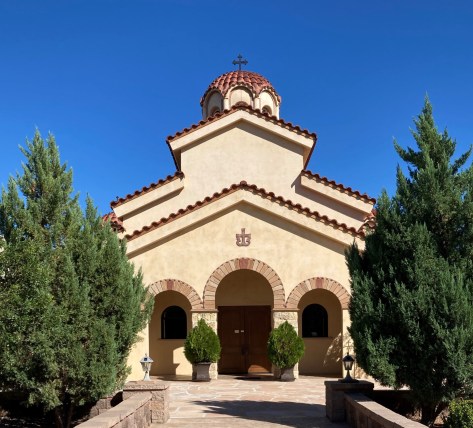
Guest quarters and bookstore are in this building.
Goat milk feta was available to guests for breakfast.

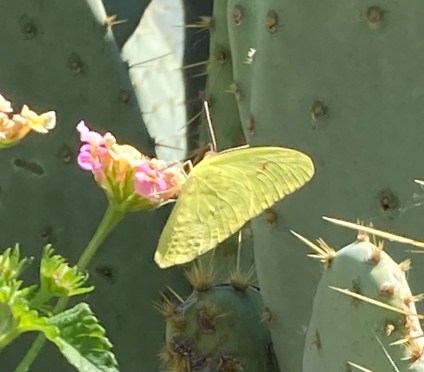
I took many pictures of plants and butterflies! Lantana is interspersed with prickly pear cactus in the landscape, and we saw several species of swallowtail butterflies, skippers, this Cloudless Sulphur, and Queen Butterflies feasting on those flowers.

Cloudless Sulphur
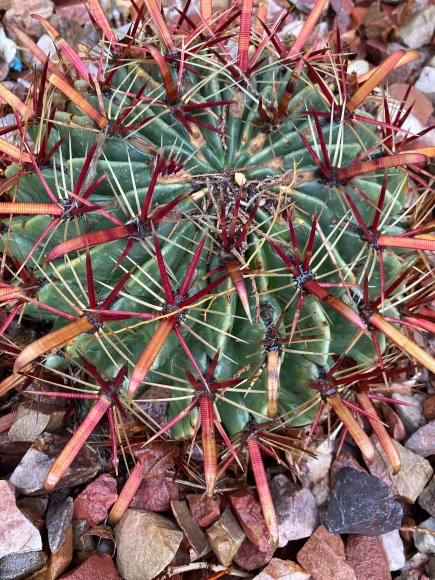
Devil’s Tongue Barrel Cactus
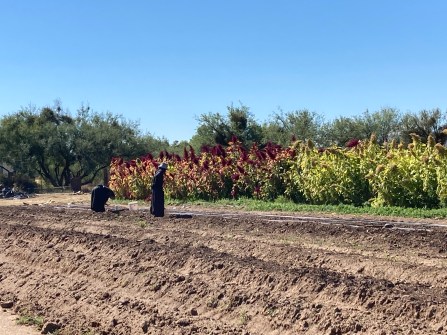
Amaranth, with okra behind.
Cane Cholla Cactus
Bunny Ears Cactus

On Mount Athos

While at the monastery our group of women woke in time for Matins at 5:30. Vespers was at 3:50 and Compline after dinner. One morning of our visit Divine Liturgy was served soon after Matins. (The sisters have more services in the night, just for them.) Standing and praying in church (and sitting when we couldn’t stand any longer) was a huge shower of blessing, of course.

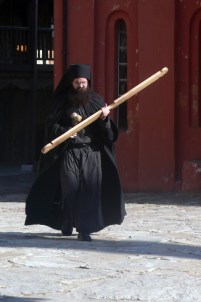
One of the sisters walks around the property beating the hand-held talanton (semantron) to announce both services and meals. This picture of the talanton is from Mt. Athos; St. Paisius Monastery tries to keep the monastic rule and tradition of Athonite monasteries.

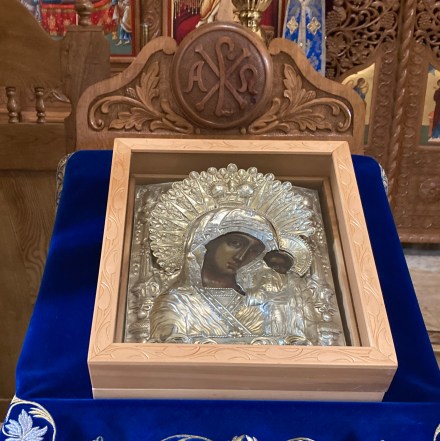
When we arrived they were coming to the end of the Feast of the Cross, with the accompanying red altar cloths. Soon the cloths had been changed to blue, which is the default color, in honor of Christ’s mother, the Theotokos.

One image that comes to mind regarding the idea of pilgrimage is from the novel Kristin Lavransdatter, set in medieval Norway. Kristin sets off on foot with only her infant child for company, and walks to a holy site far enough away that she has to sleep outdoors on the way, I don’t remember how many nights. Her food is whatever she has brought in her bag.

Such a pilgrimage that takes serious commitment and protracted journeying would no doubt lend a different flavor to the experience, compared to our group’s monastery visit that was so easy and comfortable, and quick. Do I even qualify to be called a pilgrim?

One afternoon I sat on a bench next to this quiet moth, about an inch across, and I felt some camaraderie with his dull color. (He was much more “boring” in his actual size.) Maybe I, too, could just cling to the monastery for a time, blending in as much as possible with its unique color, the way the moth clung to the bench, and soak up the grace by clinging.

My friend Lorica comes into my story at this point. She was in our group, and had compiled a booklet of songs for us, titled “Spiritual Songs for a Pilgrim Journey.” We sang from it in the van on our drive from the Tucson airport.

Whither goest thou, oh pilgrim, with thy staff in hand?
Though the wondrous mercy of the Lord go I to a better land.

The lines above remind me that my whole life’s journey might be called a pilgrimage, and this too-brief trip was a reminder of what my Real Life consists of. I want one day to return to St. Paisius or to visit another monastery to help me further on my way — if I do I hope it is for a much longer visit! — but in any case, it is through God’s wondrous mercy that I travel in the right direction moment by moment, wherever I find myself.

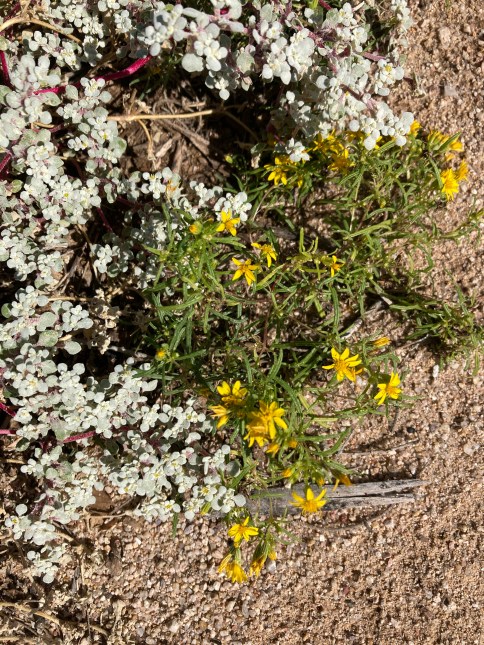
Lorica helped me in another way, on our first full day of our visit. As we were having a tour around the property, she said, “Something that we are walking on is very aromatic.” I hadn’t noticed, but I looked down and saw these little yellow daisies growing like weeds along and in the path. I broke off a stem and we knew that that was the aromatic plant. It was delicious to my own senses, and new.

I learned that it is the Southwestern native pectis papposa, or chinchweed, and they say it can sometimes be found in Mexican markets sold as limoncillo.
On the day of our departure, I was standing by the van waiting for the others and watching the butterflies again, when I noticed a big clump of chinchweed right there. A stem of it just fit into a pocket of my backpack, so I brought it home as a memento of the visit.  It is sitting near me now on the sideboard, dried up and having lost not quite all of its spiciness.

The intangible things that I brought home from the monastery — I pray those stay with me longer, whatever they are. Because the aroma is sweet, and powerful. I think it’s the scent of holiness.

The chefs create lavish plates.

The children and I had a good time scavenging in my garden for any remaining edibles. My New Zealand Spinach, known down under as warrigal, I think, popped up and was immediately lush after recent rains, so I picked a gallon of leaves to make Creamy Green Soup with.
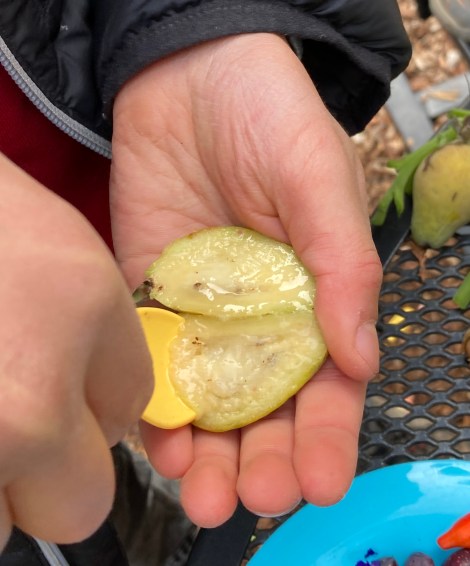
The boys used a few of the leaves as a foundation for multiple gorgeous culinary creations, several of which were proudly presented as “fully edible.” I did eat one whole plateful, and we all nibbled on pineapple guavas that we found on the ground at the back of the bush, and almost-ripe pomegranate seeds. We found a few sweet tomatillos here and there, but there were only two fruits on the strawberry tree. Olives and salvia flowers and pomegranate flowers all contributed to extravagant visual displays.

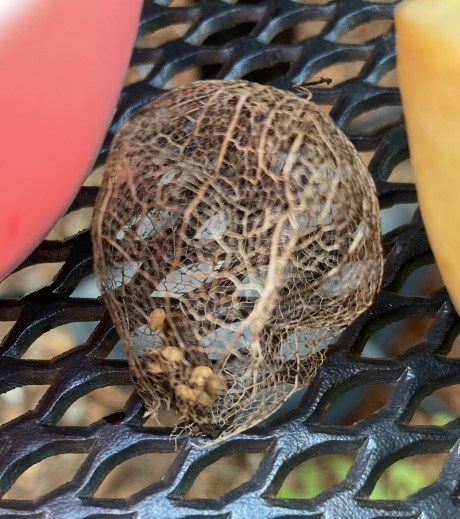
Skeleton of a tomatillo husk. It contained seeds and a fly.

Meanwhile, Soldier cleaned my rain gutters
and Joy raked the paths of pine and redwood needles.

Liquidambar gumballs

On our drizzly walks we’ve admired liquidambar trees with deep red leaves yet to drop, and collected cotoneaster berries for the next phase of Christmas decorating. My grandson Pat and his new bride are joining us for Christmas Eve!

Here are the remaining “Baby Jesuses” that we made from salt dough about thirty years ago, re-wrapped in their twill tape swaddling clothes and set under my second little Christmas tree, given by my neighbor and decorated by the children just tonight.

“Away in a walnut shell…”