THE SPACIOUS FIRMAMENT ON HIGH
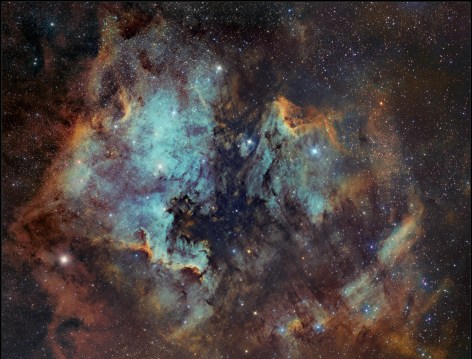
The spacious firmament on high,
with all the blue ethereal sky,
and spangled heavens, a shining frame,
Their great Original proclaim.
The unwearied sun from day to day
does his Creator’s power display;
And publishes to every land
the work of an almighty hand.
Soon as the evening shades prevail,
the moon takes up the wondrous tale,
and nightly to the listening earth
repeats the story of her birth;
whilst all the stars that round her burn,
and all the planets in their turn,
confirm the tidings, as they roll
and spread the truth from pole to pole.
What though in solemn silence all
move round the dark terrestrial ball?
What though no real voice nor sound
amid their radiant orbs be found?
In reason’s ear they all rejoice,
and utter forth a glorious voice;
for ever singing, as they shine,
“The hand that made us is divine.”
-Joseph Addison, 1712 (after Psalm 19)
 This psalm, and its poetic rendering by Addison, was C.S. Lewis’s favorite. Why did he love it so much? Because it speaks of the wondrous, shining, singing, rejoicing cosmos, the firmament, the heavens, in the voice of the medieval mind, of which Lewis was an expert — and he thought that vision most beautiful.
In the last few years I’ve reread and re-reread the trilogy of novels by C.S. Lewis originally titled the Space Trilogy. Lewis was never happy with that name for the three books, because of the bleak connotations of the word space. He preferred the medieval vision of the cosmos and the heavens. Lately, lovers of the world that Lewis created in these novels have been calling them the Ransom Trilogy, after the protagonist of all three.
One can read about medieval cosmology in Lewis’s own work, The Discarded Image, which I plan to do. This year my introduction to the mind of Lewis on this topic was through the works of Michael Ward, who is probably the preeminent C.S. Lewis scholar alive today. His beautifully written book, Planet Narnia: The Seven Heavens in the Imagination of C.S. Lewis, has been on my shelf for years, long enough for me to forget about it; to my chagrin I didn’t remember until a few days before our church book group’s discussion of the Ransom Trilogy, but I was able to listen to a shorter presentation of his treatise on Audible, read by the author himself: C.S. Lewis: Christology and Cosmology. You can also read an even briefer summary of it in this article in Touchstone Magazine: “Narnia’s Secret.”
I am just a beginner in all of this, as far as it being an academic subject, and I don’t have the time or understanding to say any more about it. For now, I just wanted to share this psalm-poem, which Michael Ward puts on the very first page of his book. Because I also love the heavens and their divine message.
 Gladsome Lights