The poem below is part of a collection of “Himalaya Poems” on the “Asymptote” website, where that magazine’s name is explained like this:
“Asymptote is the premier site for world literature in translation. We take our name from the dotted line on a graph that a mathematical function may tend toward, but never reach. Similarly, a translated text may never fully replicate the effect of the original; it is its own creative act.”
I originally read the poem on a blog that didn’t tell what century the poet was writing in, so I had to hunt around to find out that he is a contemporary Korean. On his own website he writes something that I can relate to: “I long not to finish my life as a poet. In other words, I wish I could be a poem at the end of the poet.”
If Ko Un does manage to set off and “walk on and on until the sun sets,” and not just write about that kind of activity, then I think he stands a good chance of turning into a poem. Especially if he gets drenched! Lately I have done a lot of walking in the rain myself, and I have begun to look forward to those wet outings. I keep wondering why that is…
One friend said something about “the ions,” and online I found numerous articles about the “health benefits” of walking in the rain. Every article counted a different number of benefits, ranging from four to nine, one number per article, and that coordinated numbering was the most interesting thing about them.
I try not to take an umbrella on my walks, because of the way an umbrella usually takes my attention from the wind and water assaulting me, and forces me to give my all to one more instance of wrestling with technology, especially if it’s the pop-up type. (However, umbrellas seem to add cheer to dark and rainy paintings.) If the day is very wet, I do merely a loop around a block or two, and change into dry clothes afterward. That’s not a pilgrimage, but it makes me feel that I am walking in a (short) poem.
YOUR PILGRIMAGE
A slower pace, a somewhat slower pace will do. Of a sudden, should it start to rain, let yourself get soaked. An old friend, the rain.
One thing alone is beautiful: setting off. The world’s too vast to live in a single place, or three or four.
Walk on and on until the sun sets, with your old accomplice, shadow, late as ever. If the day clouds over, go on anyway regardless.
Contrary to my recent posting about the dead feeling of winter, I was for several days experiencing living “streams in the desert” that were, I realize now, an onflowing of Theophany grace. It was rain, rain, rain, and when it fell on a real live desert in southern Nevada, I felt the rivers as symbolic and real, all mixed together.
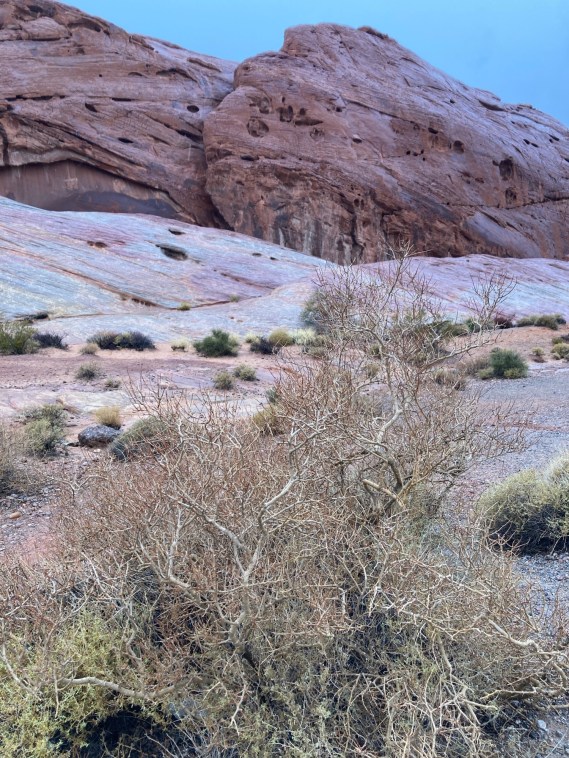
At the end of last week I flew to visit church friends who not long ago settled in that state, a large homeschooling family whom I’d been longing to see. We had planned that on Monday we’d make an outing to Valley of Fire State Park in the Mojave Desert. It was raining, but in such a dry climate I assumed the precipitation would be light, or fleeting. We all donned our rain gear; I wore a light shell over my sweater, and wished later that I had put on my longer raincoat.
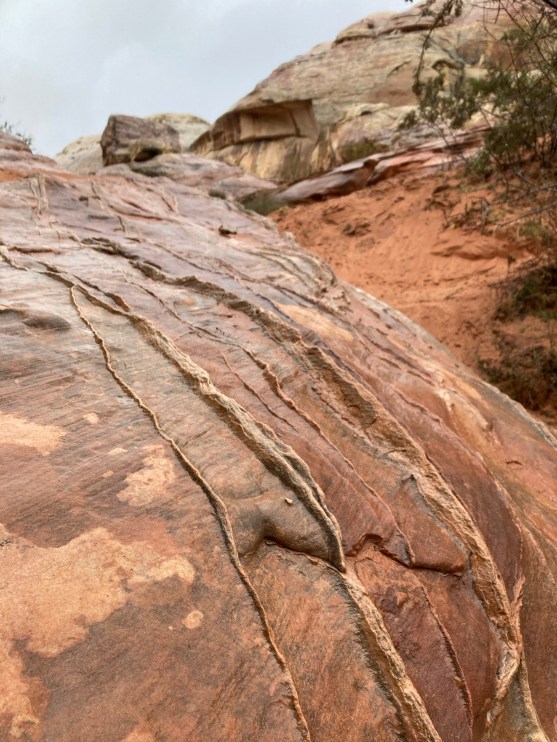
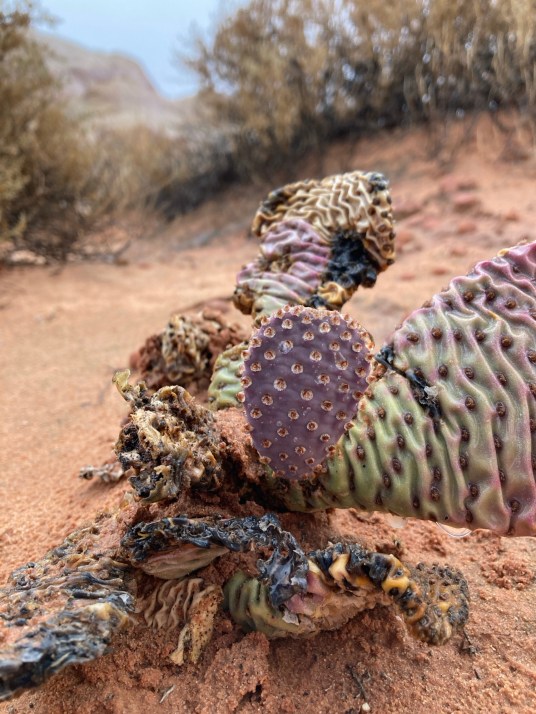
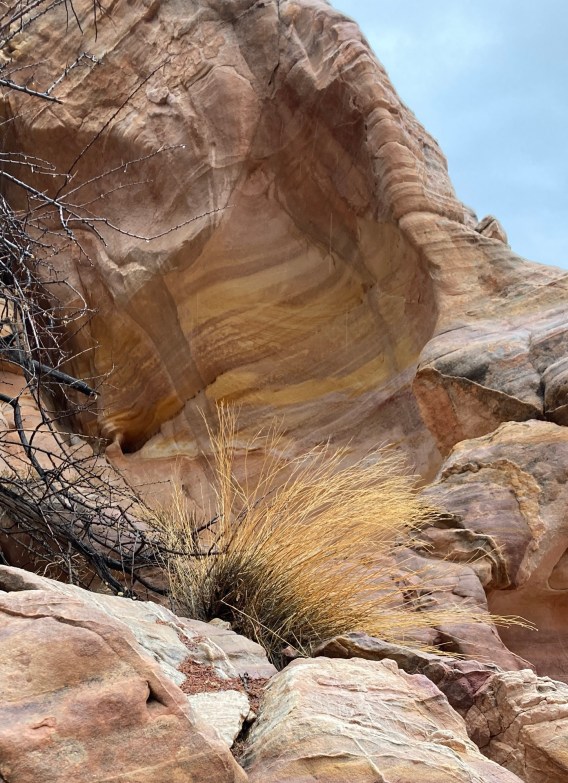
The rainfall was fairly constant, though not ever heavy, and I managed to take plenty of pictures without wrecking my phone. My Newly Nevadan hosts had visited this park many times, but never before when the landscape was wet, with the colors popping out dramatically, highlighting the lines and textures of giant rocks sloping every which way, and towering above us.
Everywhere we looked, there was a new vista of pink and red and purple, and even yellow. This scene got my attention because the grass seemed to be reflecting the yellow stripes behind — and look! blue sky:
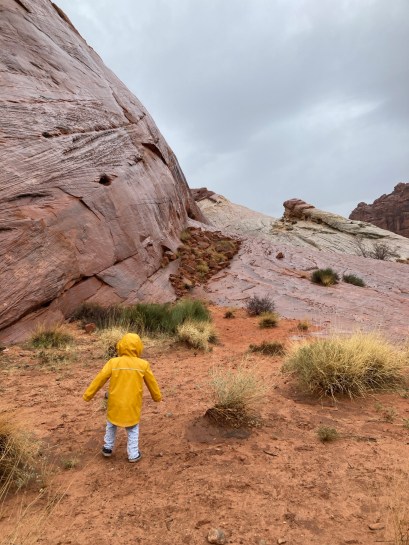
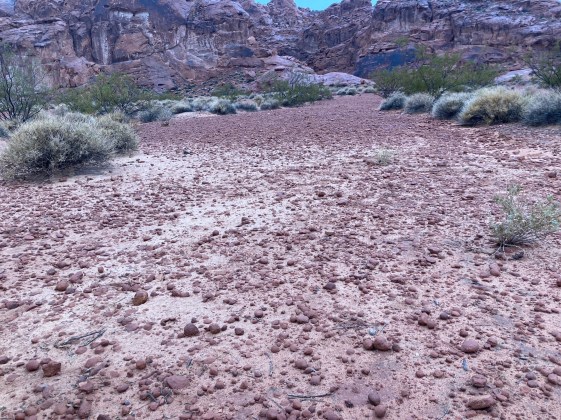
A couple of the children scrambled up higher than the adults (like the bighorn sheep that we saw in the scene at the top of this page — but they are probably too distant to notice in the picture.) and the toddler was pleased with the chance to toddle through pink sand and over flat stones on the trail. I was shown the field of marble-like pebbles and heard the theory of how they were formed, from erosion of aggregate rock nearby:
Our company was dripping and soggy by the time we got back in the car after our excursion, but everyone was cheerful. We had breathed gallons of refreshment, and feasted our eyes on the loveliest colors and forms of Creation. Showers of blessing had fallen on us and made us glorious.
Like Rain it sounded till it curved And then I knew ‘twas Wind— It walked as wet as any Wave But swept as dry as sand— When it had pushed itself away To some remotest Plain A coming as of Hosts was heard That was indeed the Rain— It filled the Wells, it pleased the Pools It warbled in the Road— It pulled the spigot from the Hills And let the Floods abroad— It loosened acres, lifted seas The sites of Centres stirred Then like Elijah rode away Upon a Wheel of Cloud.
It was hard to keep up with myself last week, and with all the friends, projects and tasks that fill my life to overflowing. I guess I was somewhat playing catch-up after my mountain retreat the previous week. The garden got gently rained on three times that last week of September, which is unusual. Combined with fog on other days, the dampness caused mildew in the planter boxes, but mostly the lower leaves of the tall zinnias have been affected.
When I noticed the Japanese anemones looking better than ever, it occurred to me to plant a few more this fall, maybe some pale pink ones — but I corrected my impulsivity in time, and won’t be taking on one more project, what with so many others unfinished. A more reasonable goal would be to try to take better care of the anemones I have, and see if they can be encouraged to be taller and more robust. It’s a sign of their middling health, that they do not ever spread and multiply, and their flowers are few and small.
The sneezeweed I grow in a pot looks as well as it ever has. I bought it a few years ago at a native plant nursery, because I love the mountain versions of the flower. I put it in a pot so I could be sure to water it enough; the irrigation settings for most of my garden are set for drought-tolerant plants, and sneezeweed is not one of those. My type is pretty plain, or at least monochromatic, compared to the mountain ones.
In search of fancier kinds, a few months ago I browsed sneezeweeds online for quite a while, and ordered seeds for this one, Purple-Headed. When I am looking at seed catalogs or even plants in nurseries, all the options seem so do-able and desirable. But once the time comes to get on with the actual work of planting… well, I literally drag my feet. So who knows what will happen with these seeds…
I used my sourdough starter twice last week, first to make a large pan loaf of seeded wheat-and-spelt bread. This is the recipe I have been trying to perfect, but perfection hasn’t happened yet. I may have to pause the sourdough project while I branch out and reach back, to other breads I have made or have wanted to try, like chocolate bread, Indian flatbreads, and applesauce rye.
Buttery Sourdough Crackers was a satisfying recipe that used a bit of starter. This picture shows the dough as it was resting overnight, along with leaves of the lemon verbena that I am drying, after pruning my plant for the first time ever.
I used this recipe for: Rustic Sourdough Butter Crackers as my jumping off place, substituting half dark rye flour, and adding sesame seeds to one half, and poppy seeds to the other. I baked them a lot longer than the recipe called for. The resulting crackers are nice and crispy and easy to eat. The butter ingredient plus the sourdough tang is a great combination.
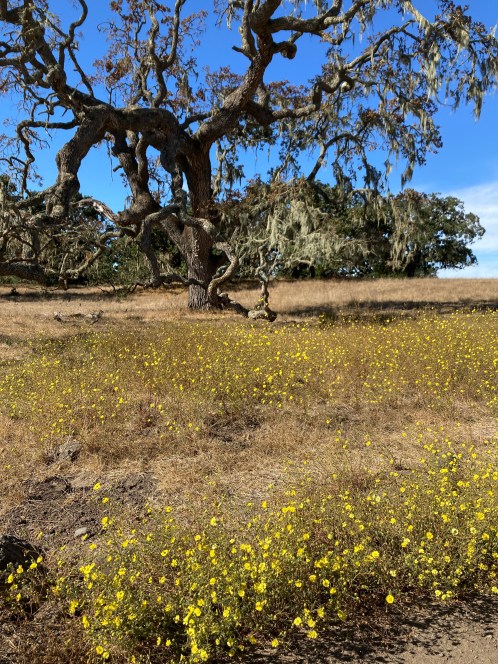
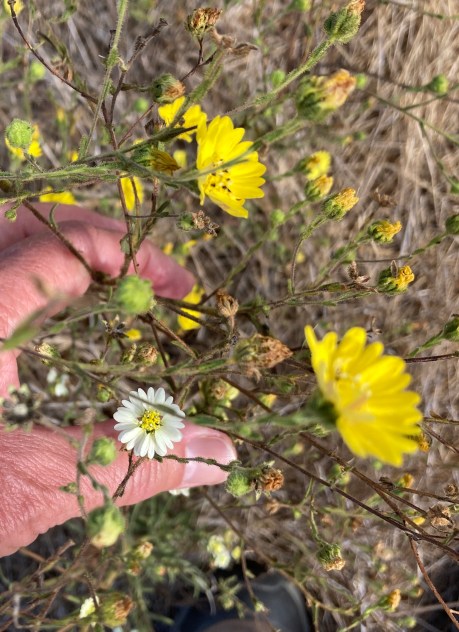
My friend Lucy and I took another one of our monthly walks, up in the hills again but to a park she hadn’t been to before. It’s mostly very brown up there now, but the poison oak is making red splashes in the landscape. And my old friend tarweed!
The Seek app tells me this is not either of the species I saw on my way up the mountain last month, but Hayfield Tarweed. And it seems to come in white or yellow versions, in one case growing side by side:
The third online Beowulf class was this week, and I spent more than two happy hours in the company of the most delightful teachers, Richard Rohlin and Jonathan Pageau. They both love the subject, and Richard is definitely a Beowulf scholar from way back. I will have to at least quote a couple of lines from the poem here eventually, though it seems that unlike me, most people I’ve talked to got an introduction to Beowulf in school. So you may already be more familiar with the story than I.
Apple orchard where I go.
At the end of the week, I remembered: apples! It’s time to make a trip my favorite apple ranch, and see which of their 30+ varieties is available now. I squeezed it in on Saturday afternoon, and added a stop at a nursery out that way, hoping they would have starts of some kind of leafy greens I could tuck into spaces in the planter boxes after I take out zucchini and tomatoes and eggplant. They did!
So here in the back of my car is a mix of apples Empire, Jonathan and Macintosh; and six packs of Swiss chard and collards. I do have chard growing right now, but I think I need more. And I wasn’t able to get collards started from seed in August.
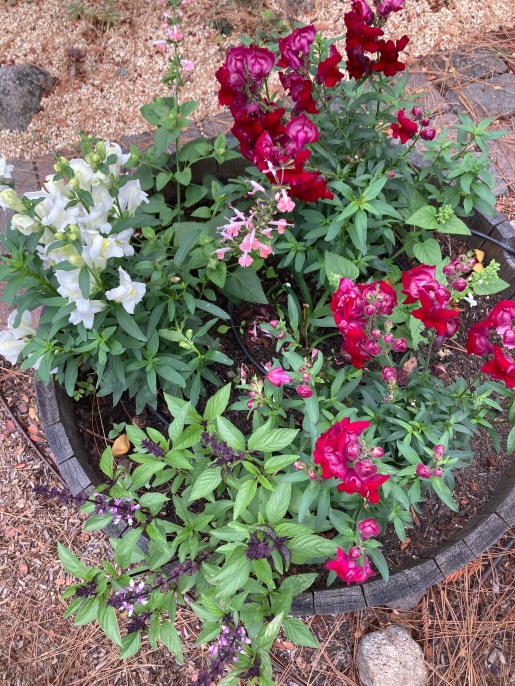
One more glad sighting of late summer I want to share, is this half wine barrel that was unplanted through last winter:
When I put in some snapdragon plants in late spring, I noticed a couple of tiny mystery plants that didn’t look like weeds, so I left them undisturbed. Now everything has filled out and I find that I have beautiful Thai basil and tropical sage complementing the snaps. Gardens are ever surprising.
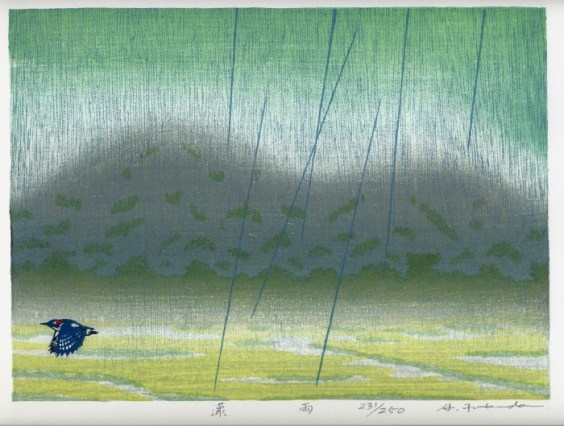
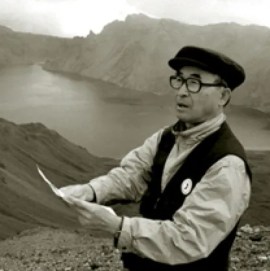 so I had to hunt around to find out that he is a contemporary Korean. On his own website he writes something that I can relate to: “I long not to finish my life as a poet. In other words, I wish I could be a poem at the end of the poet.”
 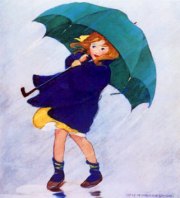 One friend said something about “the ions,” and online I found numerous articles about the “health benefits” of walking in the rain. Every article counted a different number of benefits, ranging from four to nine, one number per article, and that coordinated numbering was the most interesting thing about them.






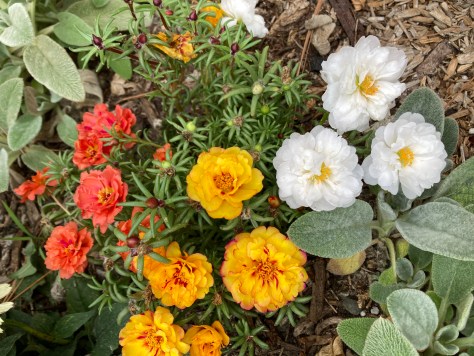
 When I noticed the Japanese anemones looking better than ever, it occurred to me to plant a few more this fall, maybe some pale pink ones — but I corrected my impulsivity in time, and won’t be taking on one more project, what with so many others unfinished. A more reasonable goal would be to try to take better care of the anemones I have, and see if they can be encouraged to be taller and more robust. It’s a sign of their middling health, that they do not ever spread and multiply, and their flowers are few and small.
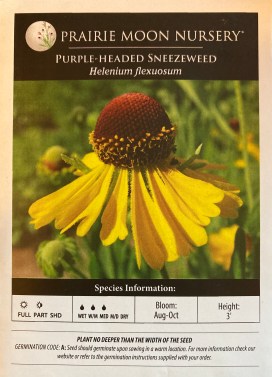 seed catalogs or even plants in nurseries, all the options seem so do-able and desirable. But once the time comes to get on with the actual work of planting… well, I literally drag my feet. So who knows what will happen with these seeds…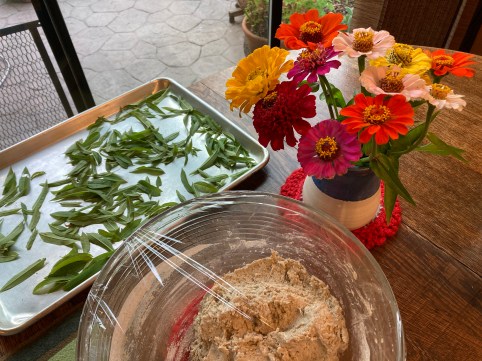




 Gladsome Lights