Tag Archives: spiritual struggle

Gain peace, not a kingdom.

…If you cannot be still within your heart, then at least make still your tongue. If you cannot give right ordering to your thoughts, at least give right ordering to your senses. If you cannot be solitary in your mind, at least be solitary in body. If you cannot labor with your body, at least be afflicted in mind. If you cannot keep your vigil standing, keep vigil sitting on your pallet, or lying down. If you cannot fast for two days at a time, at least fast till evening. And if you cannot fast until evening, then at least keep yourself from satiety.

If you are not holy in your heart, at least be holy in body. If you do not mourn in your heart, at least cover your face with mourning. If you cannot be merciful, at least speak as though you are a sinner. If you are not a peacemaker, at least do not be a troublemaker. If you cannot be assiduous, at least consider yourself lazy. If you are not victorious, do not exalt yourself over the vanquished. If you cannot close the mouth of a man who disparages his companion, at least refrain from joining him in this.

Know that if fire goes forth from you and consumes other men, God will demand from your hands the souls which your fire has burned. And if you yourself do not put forth the fire, but are in agreement with him who does, and are pleased by it, in the judgment you will be reckoned as his accomplice. If you love gentleness, be peaceful, if you are deemed worthy of peace, you will rejoice at all times. Seek understanding, not gold. Clothe yourself with humility, not fine linen. Gain peace, not a kingdom.

~St. Isaac of Syria


People are weeping – St. Tikhon of Zadonsk

On this day we remember St. Tikhon of Zadonsk, a man born into a poor Russian family in 1724. He excelled in school, and after attending seminary became a teacher, and then a monk. After being elevated to the bishopric, at one time he had over 800 churches under his care; the story of his life is well told: here.

It was a huge job, and he accomplished a great deal, but his health began to suffer to the point that he wasn’t able to carry out his duties. He was transferred to a monastery in Zadonsk, and in solitude and relative rest continued to write. Bodily afflictions didn’t cease, but changed, and he became plagued with insomnia and depression, as this article “Victor over Melancholy” explains:

“It was a time of desperate and total battle with his thoughts, of overcoming the spirit of melancholy, despair, and despondency, and of a reassessment of his life circumstances; in the end, his soul acquired the priceless experience of overcoming, and with that the boldness to comfort the despairing….”

Being in seclusion was in some ways harder than overseeing hundreds of parishes, and the saint considered a petition to go back to his former overly-busy life. But eventually he gave up trying to change his situation, and gave himself to ministering to the many needs of the people in the community:

“In the small house where he lived, he organized a type of hospital for those who contracted any kind of illness on the way to work or on pilgrimage. He also offered spiritual alms, tearfully praying for the needs and illnesses of those closely and not so closely known by him.”

His writings were widely read by this time; in one of his compilations of “spiritual treasures” he exhorts us:

“We see in the world that people are weeping… They are born with weeping, live with weeping, and die with weeping. People weep because they live in the world—a place of weeping, the vale of tears… And you weep, Christian!… Weep, while time yet remains, while tears are yet beneficial. Weep, and you will not weep eternally. Weep, and be comforted.”   Source

The first Orthodox monastery established in the United States is dedicated to St. Tikhon of Zadonsk: St. Tikhon’s Monastery in Pennsylvania was founded in 1905 concurrently with an orphans’ home, and the current campus is shared with St. Tikhon’s Seminary and Bookstore as well.

Annual Memorial Day Pilgrimage to St. Tikhon’s Monastery, May 2024

Before falling asleep in death, at the age of 59, St. Tikhon was delivered of his melancholy. But in the years previous, during which his writings were proving beneficial to so many, it’s clear from them that his spiritual struggles were already bearing fruit. His example is inspiring, and his words confirm it:

“A manifest sign of love for God is a heartfelt gladness in God, for we rejoice in what we love. Likewise love of God cannot exist without joy, and whenever a man feels the sweetness of the love of God within his heart, he rejoices in God. For so sweet a virtue as love cannot be felt without joy. As honey sweetens our throat when we taste of it, so the love of God makes our heart glad when we taste and see that the Lord is good (LXX-Ps. 33:9 [KJV-Ps. 34:8]). –“On Love for God”

Saint Tikhon was glorified on Sunday August 13, 1861.

Turtle calleth turtle in Heaven’s May.

I was first introduced to this poem by Dr. Oliver Tearle, on his expansive website Interesting Literature; he says it is little-known as a New Year’s poem. Twice before I posted a few lines of it, but this time I am sharing the whole thing. Usually I only like short poems, but this one is like a song that wants to be sung through all the verses, until the repetitions of “passing away, passing away” are completed, and finally, “Lo, it is day.”

OLD AND NEW YEAR DITTIES

New Year met me somewhat sad:
Old Year leaves me tired,
Stripped of favourite things I had
Baulked of much desired:
Yet farther on my road to-day
God willing, farther on my way.

New Year coming on apace
What have you to give me?
Bring you scathe, or bring you grace,
Face me with an honest face;
You shall not deceive me:
Be it good or ill, be it what you will,
It needs shall help me on my road,
My rugged way to heaven, please God.

Watch with me, men, women, and children dear,
You whom I love, for whom I hope and fear,
Watch with me this last vigil of the year.
Some hug their business, some their pleasure-scheme;
Some seize the vacant hour to sleep or dream;
Heart locked in heart some kneel and watch apart.

Watch with me blessed spirits, who delight
All through the holy night to walk in white,
Or take your ease after the long-drawn fight.
I know not if they watch with me: I know
They count this eve of resurrection slow,
And cry, ‘How long?’ with urgent utterance strong.

Watch with me Jesus, in my loneliness:
Though others say me nay, yet say Thou yes;
Though others pass me by, stop Thou to bless.
Yea, Thou dost stop with me this vigil night;
To-night of pain, to-morrow of delight:
I, Love, am Thine; Thou, Lord my God, art mine.

Passing away, saith the World, passing away:
Chances, beauty and youth sapped day by day:
Thy life never continueth in one stay.
Is the eye waxen dim, is the dark hair changing to grey
That hath won neither laurel nor bay?
I shall clothe myself in Spring and bud in May:
Thou, root-stricken, shalt not rebuild thy decay
On my bosom for aye.
Then I answered: Yea.

Passing away, saith my Soul, passing away:
With its burden of fear and hope, of labour and play;
Hearken what the past doth witness and say:
Rust in thy gold, a moth is in thine array,
A canker is in thy bud, thy leaf must decay.
At midnight, at cockcrow, at morning, one certain day
Lo, the Bridegroom shall come and shall not delay:
Watch thou and pray.
Then I answered: Yea.

Passing away, saith my God, passing away:
Winter passeth after the long delay:
New grapes on the vine, new figs on the tender spray,
Turtle calleth turtle in Heaven’s May.
Though I tarry wait for Me, trust Me, watch and pray:
Arise, come away, night is past and lo it is day,
My love, My sister, My spouse, thou shalt hear Me say.
Then I answered: Yea.

-Christina Rossetti, 1830-94

Christina Rossetti, by her brother Dante Gabriel Rossetti

Wrestling and striving with his heart.

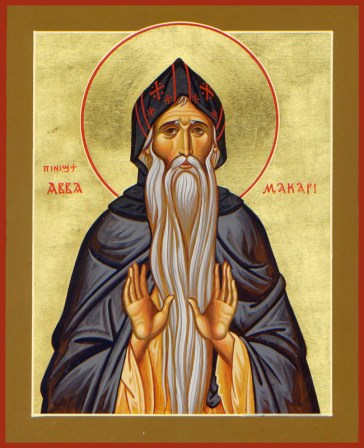
“The abode and resting-place of the Holy Spirit is humility, love, gentleness and the other holy commandments of Christ. If, therefore, a person desires to grow and to attain perfection by acquiring all these virtues, he must initially force himself to acquire and must establish himself in the first — that is to say, in prayer—wrestling and striving with his heart to make it receptive and obedient to God.”

-St. Makarios of Egypt