Tag Archives: St. Gregory Palamas

Serving and suffering for 700 years.

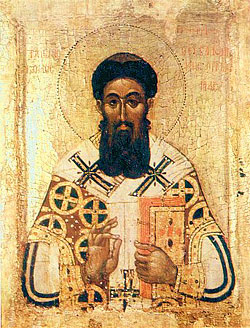
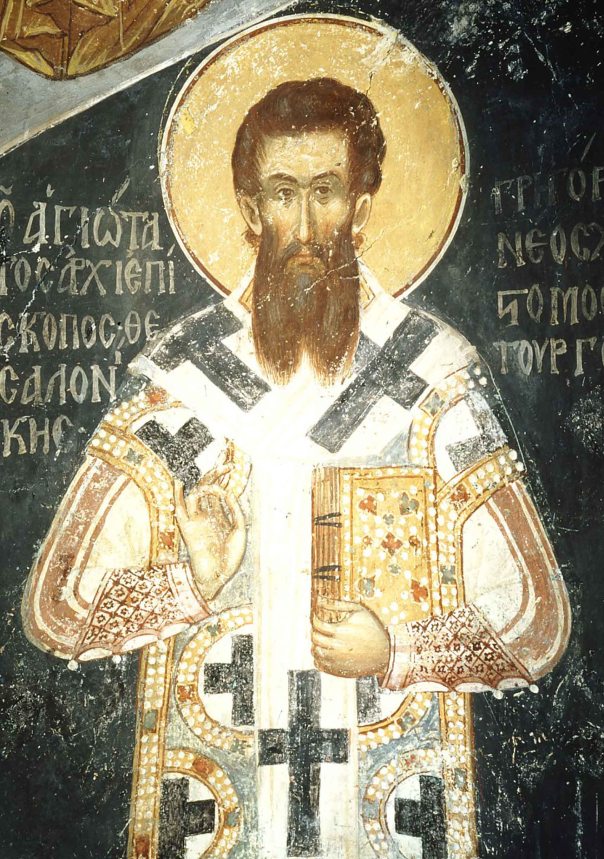
The Metropolitan Church of St. Gregory Palamas is very close to my hotel, and it houses the relics of St. Gregory, who was Archbishop of Thessaloniki from 1350 to 1359 A.D. I really appreciate St. Gregory and for months I’ve been looking forward to visiting his church.
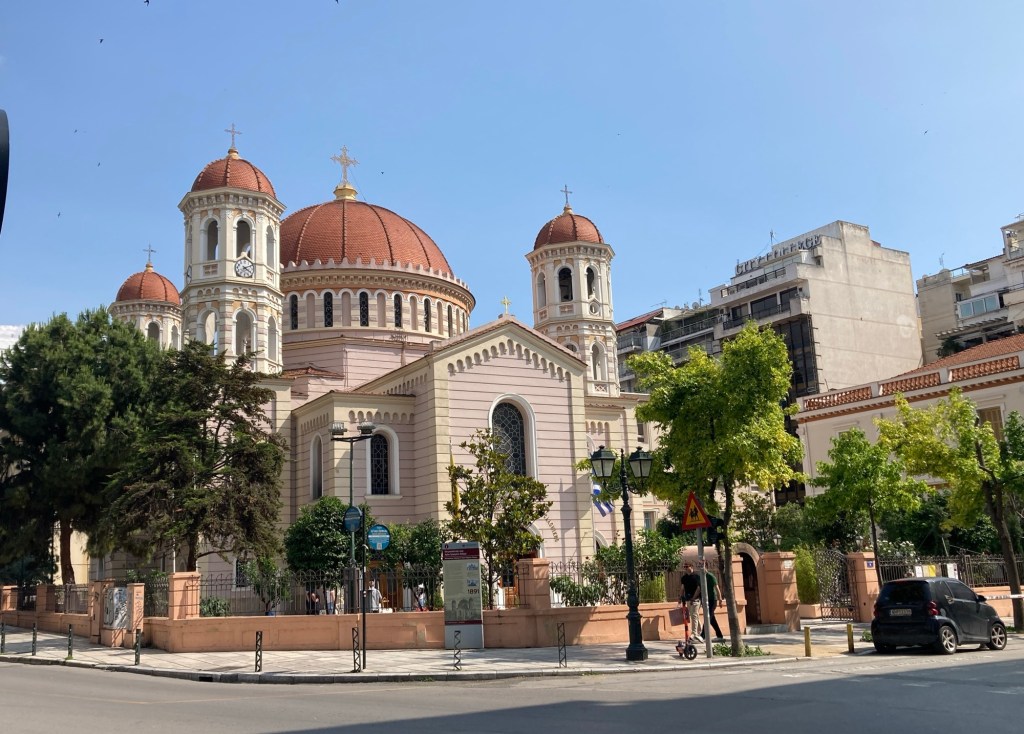
I’m devoting an entire post to the subject because of the relationship of this particular site and temple to other churches in the city, and because of its unique role during the 400 years of Ottoman rule.

It was built in the 13th and 14th centuries and originally was dedicated to the Virgin Mary, but after the Ottoman conquest of the city in 1430, and the conversion of St. Demetrios Cathedral into a mosque in 1491, this church was re-christened after that saint, who is the city’s patron. After the (Rotonda) Cathedral of St. George was also converted into a mosque in 1591, and this temple remained a place of Christian worship, it was designated the cathedral church of Thessaloniki.

The Greeks rose up against Ottoman rule at various times over the centuries; during the revolution of 1821, hundreds of Thessalonians sought refuge in the church, but the Ottomans broke down the doors and massacred them.

The building was entirely destroyed in a fire in 1890, and fully rebuilt by 1909. By the time it was consecrated, the old St. Demetrios church was functioning as a Christian church again, and that’s when the newly rebuilt church was dedicated to St. Gregory Palamas, in 1914. Later in the 20th century it had to be repaired after an earthquake damaged it.

I often think of how buildings have lives. A building that is consecrated for worship has a particular “calling,” if you will, and is often a revered member and bedrock of the community. The Church of St. Gregory Palamas has served for 700 years, and during those centuries has suffered from earthquake, fire, and sword.

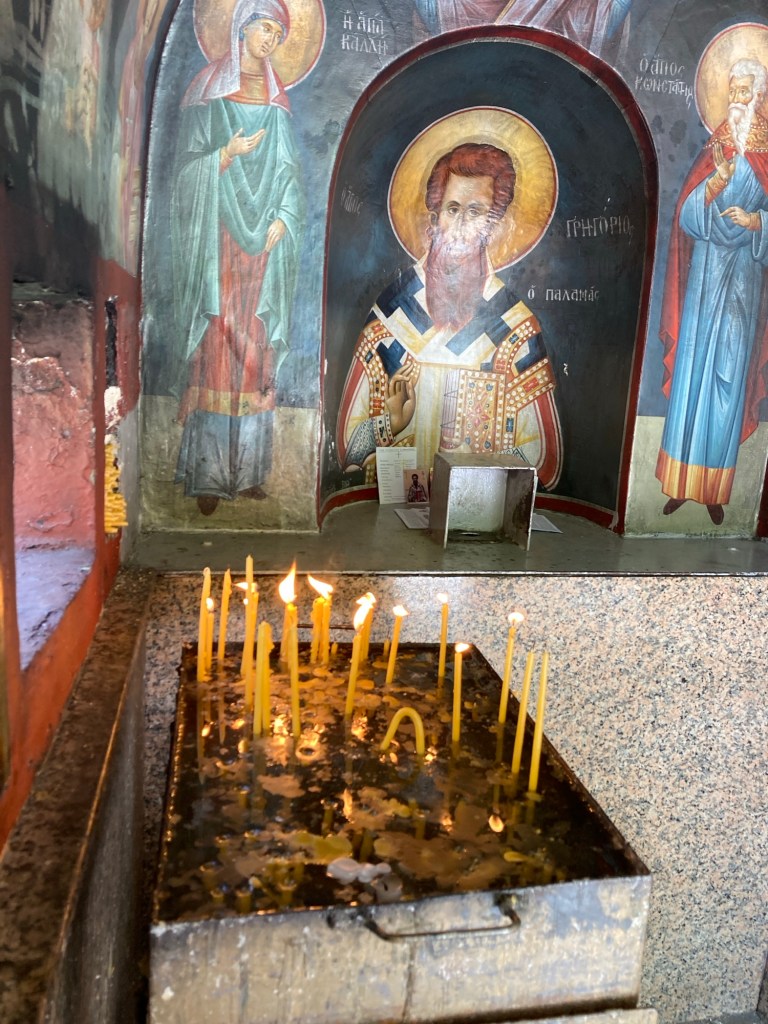
Today when I walked past, I stopped at the little booth shrine outside by the street, where candle fires were symbolizing a whole lake of prayers (sorry about the glare on the face of the icon):
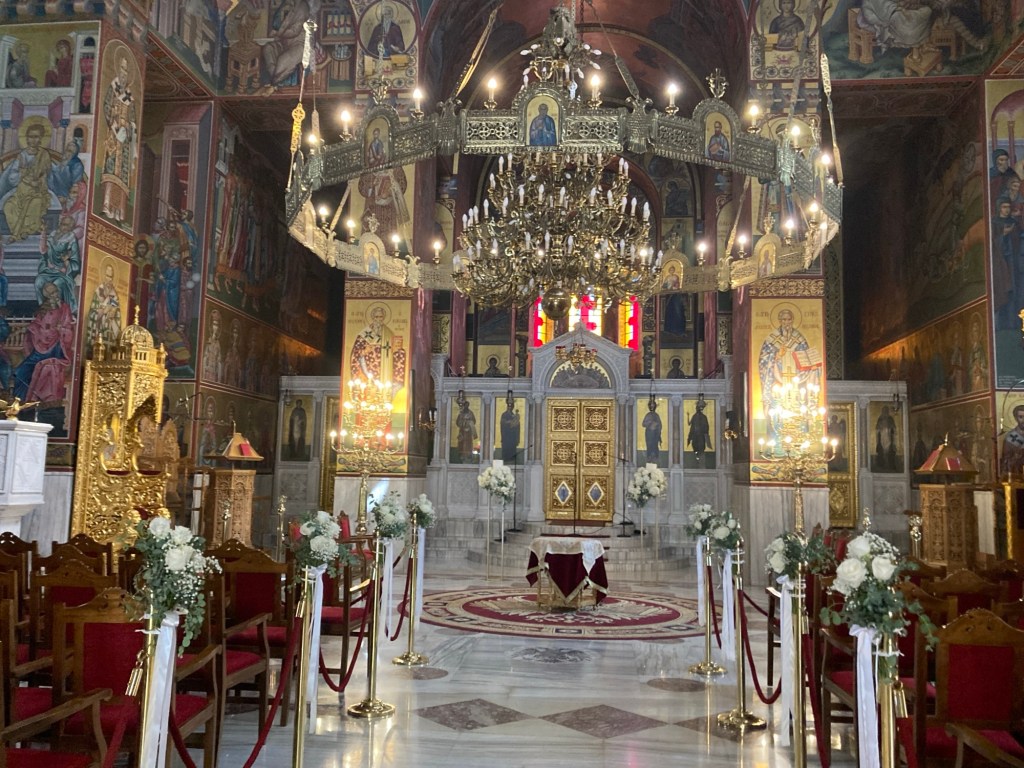
The last fifty years — such a brief span of time in the context of this city — seem to have been peaceful, and if the temple were sentient, it would no doubt be happy that it’s one of the most popular churches in Thessaloniki for weddings. The first day I stopped in, they were getting ready for such an event.
But the presence of the relics of St. Gregory, deposited there in 1914 when the church was dedicated to him, are the greatest blessing to the temple and the people.

May the Lord continue to make His temple a blessing to the city of Thessaloniki.

Milk turned to wine and spilling over.

I’m re-posting from five years ago some thoughts from and about St. Gregory Palamas, the 14th-century ascetic, scholar and apologist whom we Orthodox always remember on the second Sunday of Lent:

“…the grace of the Spirit takes possession of the quiet soul, and gives it a taste of the unspeakable good things to come, which no passionate and negligent eye has seen, nor ear heard, neither have entered into the heart of such a man (cf. I Cor. 2:9). This taste is the earnest of these good things, and the heart which accepts these pledges becomes spiritual and receives assurance of its salvation.”   -St. Gregory Palamas

Today we commemorate St. Gregory Palamas. Frequently I am so scattered that I forget to look at any calendar: my wall calendars or my everyday planning calendar or the church calendar. But today I did, so I noticed. One year I attended the most enriching retreat during which we were taught much about the spiritual life, understanding and practices that are our inheritance from St. Gregory, but I never managed to process it in a way that I could share here.

So I read what St. Nicolai has to say about him in his Prologue. Here is a bit of it:

St. Gregory Palamas learned much through heavenly revelations. After he had spent three years in stillness in a cell of the Great Lavra, it was necessary for him to go out among men and benefit them with his accumulated knowledge and experience. God revealed this necessity to him through an extraordinary vision: One day, as though in a light sleep, Gregory saw himself holding a vessel in his hand full to overflowing with milk. Gradually, the milk turned into wine which likewise spilled over the rim, and drenched his hands and garments.
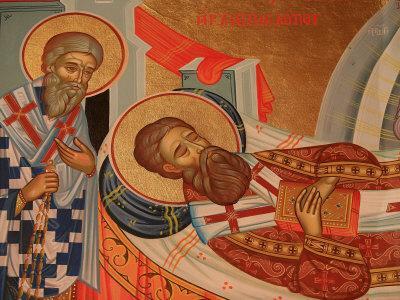
Then a radiant youth appeared and said: “Why would you not give others of this wonderful drink that you are wasting so carelessly, or are you not aware that this is the gift of God’s grace?” To this Gregory replied: “But if there is no one in our time who feels the need for such a drink, to whom shall I give it?” Then the youth said: “Whether there are some or whether there are none thirsty for such a drink, you are obligated to fulfill your debt and not neglect the gift of God.” Gregory interpreted the milk as the common knowledge (of the masses) of moral life and conduct, and the wine as dogmatic teaching.

Also I mused on quotes from him that I found online, such as the one at top. Here are two more that give me courage:

“Life of the soul is union with God, as life of the body is union with the soul. As the soul was separated from God and died in consequence of the violation of the commandment, so by obedience to the commandment it is again united to God and is quickened. This is why the Lord says in the Gospels, ‘The words I speak to you are spirit and life’ (John 6:63).”

“Given that we desire long life, should we not take eternal life into account? If we long for a kingdom which, however enduring, has an end, and glory and joy which, great as they are, will fade, and wealth that will perish with this present life, and we labour for the sake of such things, ought we not to seek the kingdom, glory, joy and riches which, as well as being all-surpassing, are unfading and endless, and ought we not to endure a little constraint in order to inherit it?” -St. Gregory Palamas

Sunday of St. Gregory Palamas

“… Adam chose the treason of the serpent, the originator of evil, in preference to God’s commandment and counsel, and broke the decreed fast. Instead of eternal life he received death and instead of the place of unsullied joy he received this sinful place full of passions and misfortunes, or rather, he was sentenced to Hades and nether darkness.

“Our nature would have stayed in the infernal regions below the lurking places of the serpent who initially beguiled it, had not Christ come. He started off by fasting (cf. Mk. 1:13) and in the end abolished the serpent’s tyranny, set us free and brought us back to life.”

— St. Gregory Palamas, The Homilies Vol. II

What they saw on Mount Tabor.

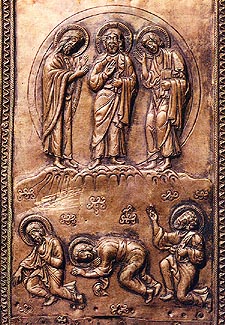
transfiguration georgian used GL 2020“Through the fall our nature was stripped of divine illumination and resplendence. But the Logos of God had pity upon our disfigurement, and in His compassion He took our nature upon Himself. On Tabor He manifested it to His elect disciples clothed once again most brilliantly. He showed what we once were and what we shall become through Him in the age to come if we choose to live our present life, as far as possible, in accordance with His ways.”

-St. Gregory Palamas

Today we celebrate the Feast of the Transfiguration. If you would like a full discussion of the event and its meaning, you will find it, also from St. Gregory, here:“The Holy Transfiguration of our Lord God and Savior Jesus Christ.”

Transfiguration 20 IMG_7178 (2)