Tag Archives: St. Nikolai Velimirovich

Know this and let your heart dance for joy.

September 1st marks the beginning of the church calendar, and St. Nikolai in his Prologue of Ohrid explains:

The First Ecumenical Council [Nicaea, 325] decreed that the Church year should begin on September 1. The month of September was, for the Hebrews, the beginning of the civil year (Exodus 23:16), the month of gathering the harvest and of the offering of thanks to God. It was on this feast that the Lord Jesus entered the synagogue in Nazareth (Luke 4:16-21), opened the book of the Prophet Isaiah and read the words:

The Spirit of the Lord God is upon Me; because the Lord hath anointed Me to preach good tidings unto the meek; He hath sent Me to bind up the brokenhearted, to proclaim liberty to the captives, and the opening of the prison to them that are bound; to proclaim the acceptable year of the Lord, and the day of vengeance of our God; to comfort all that mourn (Isaiah 61:1-2).

In the Prologue the first entries for September contain themes of beginnings, including this homily that I find very heartening as I myself start over, as we are exhorted to do, as many million times as necessary. I want to put behind me my past failures, even those of the last few minutes, as distracting weights, and enjoy the liberty our Lord proclaims. It is just one of the rich gifts that Christ brought with his visiting of the earth.

HOMILY
on the Word of God
revealed in the flesh
And the Word was made flesh
(John 1:14).

Here, brethren, is a new, blessed and salvific beginning for us — the beginning of our salvation. Adam was in the flesh when he fell under the authority of sin and death. Now the Creator of Adam has appeared in the flesh, to deliver Adam and Adam’s posterity from the power of sin and death.

The Son of God — the Word, Wisdom, Light and Life — descended among men in human flesh and with a human soul. He was incarnate but not divided from His Divinity. He descended without being separated from His Father. He retained all that He had been and would be for all eternity, and yet He received something new: human nature.

His eternal attributes were not diminished by the Incarnation, neither was His relationship to the Father and the Spirit changed. Lo, the Father testified to this, both on the Jordan and on Mount Tabor: This is my beloved Son! He did not say: “This was my Son,” but “This is my Son.” The Holy Spirit was with Him at His bodily conception and throughout His mission on earth. The divine and human nature were united in Him, but not intermingled.

How? Do not ask, you who do not even know how to explain yourself to yourself, and cannot say how your soul and body are united in you. Only know this: God came to visit the earth, bringing unspeakably rich treasures for mankind — royal gifts, incorruptible, eternal, priceless and irreplaceable gifts.

Know this and let your heart dance for joy. Strive to cleanse your hands, purify your senses, wash your soul, whiten your heart, and set your mind straight, that you may receive the royal gifts. For they are not given to the unclean.

O Lord Jesus Christ, help us to cleanse and wash ourselves by Thy blood and Thy Spirit, that we may be made worthy of Thy royal gifts.

To Thee be glory and praise forever. Amen.
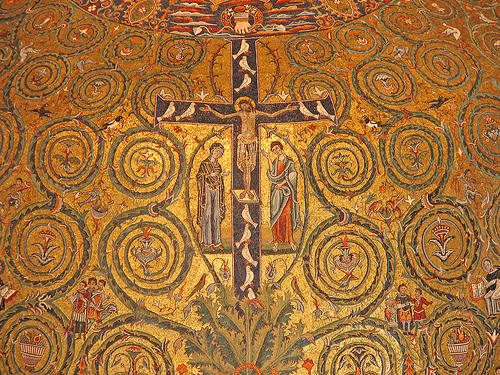
Choose your tree.

Thank you to Leah for posting this excellent word from St. Nikolai.

excerpt: Prayer V

How stupid the servants of the tree of knowledge are! They do not measure their strength in You, but in their num­bers. They do not adopt a law of justice in Your name, but by their numbers. Whichever way the majority of them choose is the way of truth and justice. The tree of knowledge has become the tree of crime, stupidity, and icy darkness.

Truly, the knowledgeable men of this world know every­thing except that they are servants of Satan. When the last day dawns, Satan will rejoice in the number of people in his harvest. All the meager ears of grain! But in his stupidity, even Satan counts on quantity rather than quality. One of Your ears of grain will be worth more than the entire harvest of Satan. For You, O Conqueror of death, rely on the fullness of the bread of life, and not on numbers.

In vain I tell the godless: “Head for the Tree of Life and you will know more than you could possibly wish to know. From the tree of knowledge Satan fashions a ladder for you to descend into the nether world.”

Prayers by the Lake St Nikolai Velimirovic

Correct this ugliness.

The desire to be beautiful seems to be common to mankind, but the very atmosphere of this age is toxic with something that feeds a disease, making us obsessed with our image. One part of the toxic mix is the overwhelming abundance of pictures of faces and bodies in magazines and on every electronic device, forming a kind of lesson plan on How to Look. I was happy for a respite this morning when I read St, Nikolai’s homily for the day in The Prologue of Ohrid.

HOMILY
on the beauty of Christ above all other beauty

Thou art fairer than the sons of men (Psalm 45:2).
 

Holy Scripture does not ascribe any particular value to physical beauty, and in general to anything transient. That is why everyone who reads Holy Scripture should take care to be sufficiently attentive and wise to transfer the praise of physical beauty to the soul and to spiritual values. Without a doubt, spiritual beauty gives a wondrous attractiveness to the most unattractive body, just as an ugly soul makes even the most attractive body repulsive. The Prophet David, pouring forth good words (Psalm 45:1), says to his King, the Lord Jesus Christ: Thou art fairer than the sons of men. 

The Lord Himself created His bodily cloak as He wanted. Had He wanted to appear in the world as the physically fairest of men, He could have done so. But there is nothing in the Gospel to indicate that He drew followers to Himself or influenced men by His appearance. He Himself said: the flesh profiteth nothing (John 6:63). Therefore, it is clear that David was not speaking of the physical beauty of Christ, but of His spiritual, divine beauty. This is clearly seen in the following words of the Psalmist: Grace is poured forth upon thy lips (Psalm 45:2). So it is that the unsurpassed beauty of the Son of God is not in the form and shape of His lips, but rather in the stream of grace that flows from His mouth. 

Again, the Prophet Isaiah speaks of Christ: He had no form or comeliness; and when we shall see Him, there is no beauty that we should desire Him (Isaiah 53:2-3). Do Isaiah and David agree? Perfectly well. David speaks of Christ’s inward beauty, and Isaiah speaks of Christ’s external abasement. Isaiah said that He would not be seen as a king or a rich man, but as a servant and sufferer.

O Lord Jesus Christ, Thou art fairer to us than all men and angels: glory to Thine immortal and unending beauty. O gracious Lord, correct the ugliness of our souls, which are disfigured by sin, we pray Thee.


To Thee be glory and praise forever. Amen.

Busy as Bees

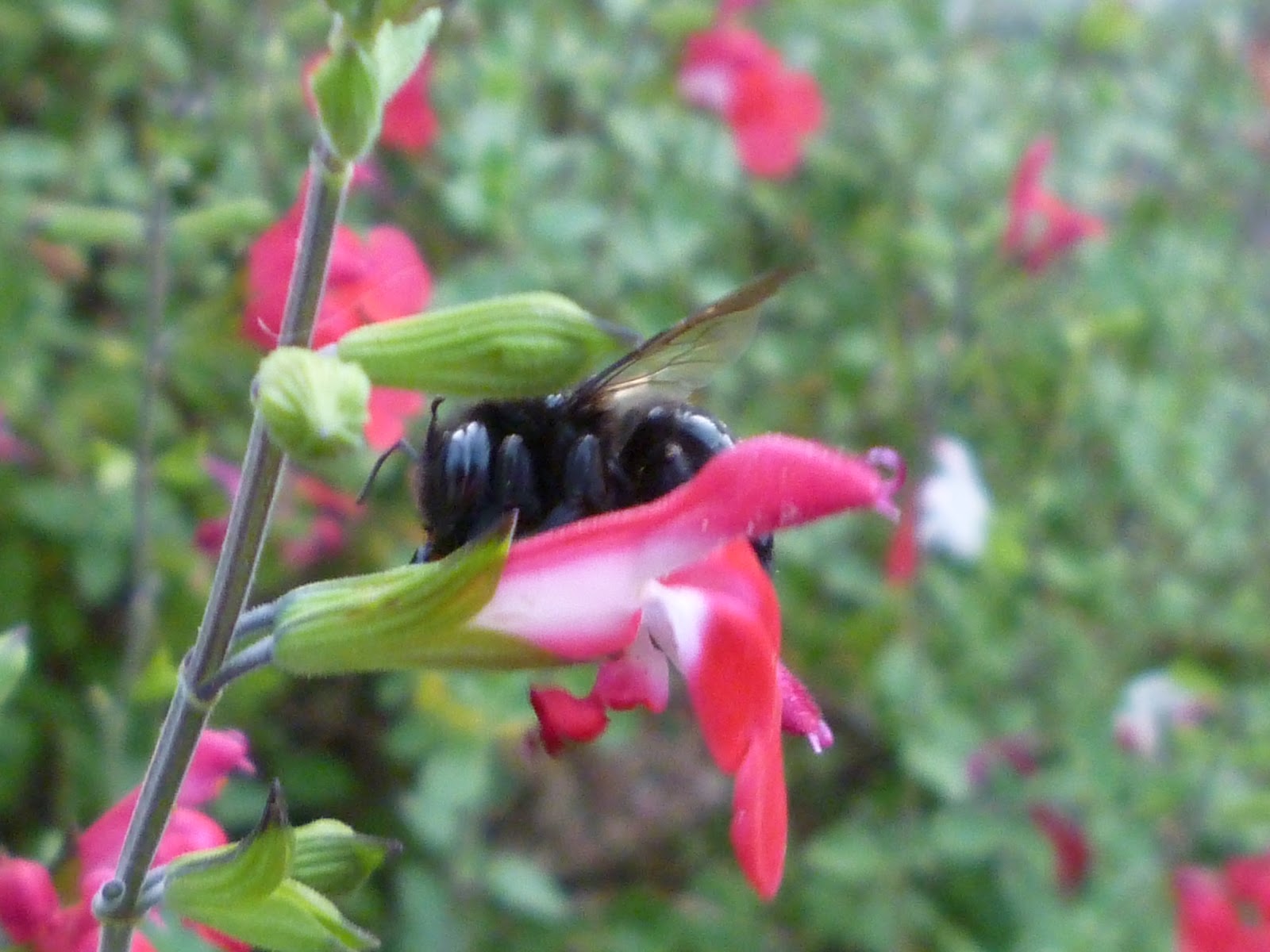
Bumblebee on Hot Lips salvia

Tonight at dusk when I was sprinkling the basil through the hose nozzle, I saw a couple of bumblebees frantically getting their last drops of nectar from the Hot Lips salvia bush. It was really hard to get a picture of this one because he was in such a hurry floating and buzzing from one bloom to the next.

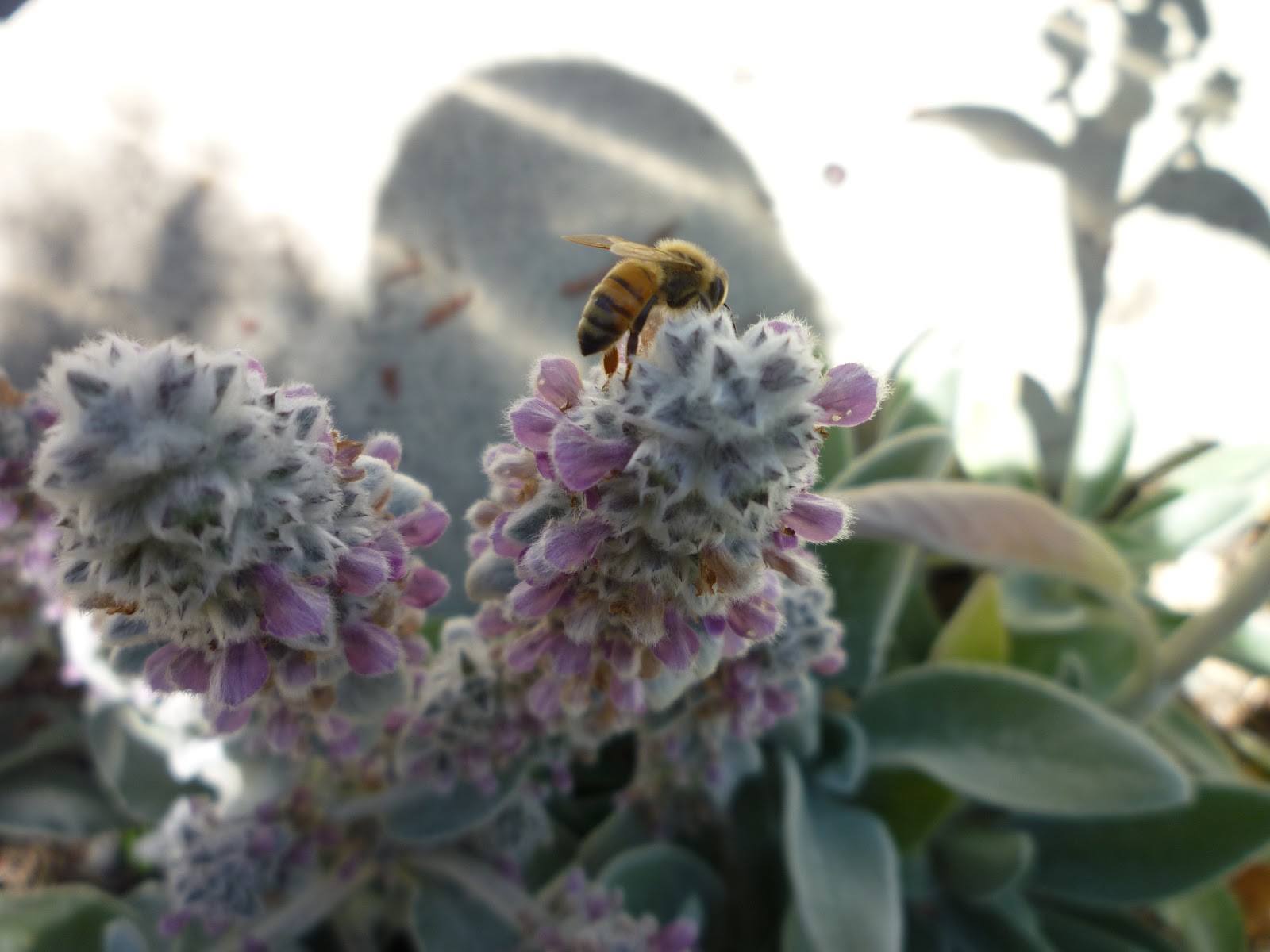
Pippin was sitting on the swing with me this week and she noticed as I had, that the honeybees favor the lavender, while the big black bumbles stick to the salvia. Or maybe it is that there are so many honeybees that they get first pick of the bushes, and the few bumblebees segregate to whatever is left over.

The honeybees like the lambs ears, too. I am thrilled to have so many bushes near my swing where I can see hardworking creatures fulfilling their purposes. I put this one in the shadow of my head to get a good shot.

Two lavenders and Hot Lips

Mr. Glad and I have been as busy as bees ourselves. For four days we took care of little Scout again; he keeps us running up and down the stairs and all over the garden, and sometimes we take walks through the neighborhood along the bike path. I showed him the wild fennel and how the young shoots especially are tender for munching and taste like licorice.

wild fennel and blackberry bloom

He’s a quite friendly fellow, and as we were standing on the side of the path nibbling our greens he was lucky to see some people walking a dog. He held up the fennel frond and called to them, “We’re having a picnic!”  It’s only been about three weeks since I was dreaming about picnics I might make happen Someday. That fennel picnic happened with so little effort and no planning at all.

PomPom was just writing about picnics this week and pointed out that our Lord’s feeding of the 5,000 was a blessed picnic indeed. I’m pleased to see that my grandson has a good start on appreciating how substantial are the little things God has growing along the path of life.

Last week I was buzzing with joy, flying down the state a ways to greet the new grandson “Liam.” A couple of days after that, Mr. Glad and I went to a Giants baseball game, which is pretty much an all-day commitment. It was fun to see our team beat L.A.

Then there were the several days with Scout and his mama. And no sooner had they departed for home than we were sent on three errands of mercy in one day. My mister had to drive a distance for the last one of these and isn’t home yet.

Back in April in the Prologue of Ohrid I noticed a couple of references to saints whom St. Nikolai compared to honeybees flying about carrying honey, or laboring diligently at the work for which they were created. Just watching the bees as I rest on my swing makes me happy, and the sight of them reminds me that after a short break I need to be up and at my work again.

I’d like to be more like the honeybees. When the last bumblebee was anxiously trying to get more salvia nectar, all the honeybees had gone from the lavender. They knew enough to give up for the day and go to bed. And so shall I.