When the flowers of earth have faded, go outside at night and look up…
WANDERERS
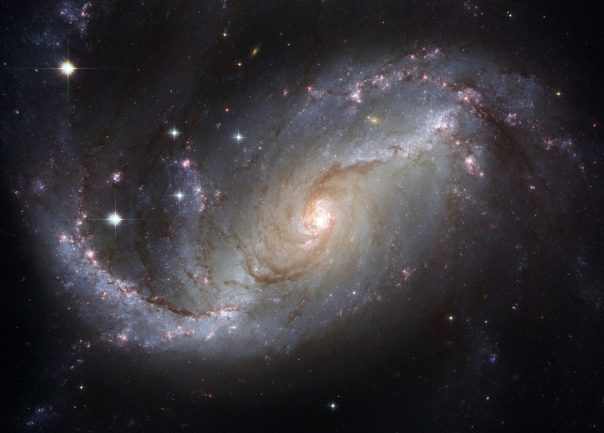
Wide are the meadows of night And daisies are shining there, Tossing their lovely dews, Lustrous and fair; And through these sweet fields go, Wanderers ‘mid the stars __ Venus, Mercury, Uranus, Neptune, Saturn, Jupiter, Mars.
Tired in their silver, they move, And circling, whisper and say, Fair are the blossoming meads of delight Through which we stray.
This week so far I have seen patches of the starry sky through the window from my bed, and through narrow gaps in the tree canopy as I walked along the gravel road coming back from a campfire.
Those glimpses are lovely, but not as powerful as what I experienced a few years ago when I was alone here in the High Sierra, standing on the deck at night, looking up: I was aware of the stars as somehow sentient beings that were intently and personably crowding and pressing down on me. The poem below expresses the thrill of such a meeting as I had, with added feelings that I didn’t experience.
The composer Tchaikovsky, in a letter to the Grand Duke Konstantin Konstantinovich, wrote: “I place some of his poems up there with the very highest that there is in art. In this respect there is one which I am determined to illustrate musically some day.” This is the poem he copied in:
UPON A HAYSTACK ON A SOUTHERN NIGHT
Upon a haystack in lands of South, I lay, while facing skies of night, The choir of stars, alive and couth, Was trembling, spread at every side.
The earth, mute as a dream half-hidden, Was fast receding into space, And I, as if the first in Eden, Alone met the black night’s face.
Did I race to the depth profound, Or did the stars race straight to me? In mighty hands, it seemed me how, I hanged above abysmal sea.
With heart, so sinking and bewildered, I measured with my look a depth, Into which, every moment sighted, I sink, and nobody helps.
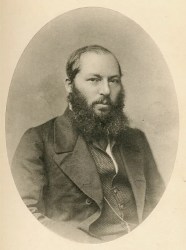
-Afanasy Afanasevich Fet, (1820-1892)
One odd thing is, the way Luis Sundkvist translated the letter from Russian, the second line of the poem reads, “I lay with my face towards the ground…” How this happened I can’t imagine, because of course the poem makes no sense like that.
Golgol and Tolstoy also thought Fet’s poetry was stellar. The writer and publisher Nikolay Nekrasov wrote: “Not a single poet since Pushkin has managed to give such delight to those who understand poetry and readily open their soul to it, as Fet does.”
The surname of Fet was assigned by authorities to Afanasy because of some question in Russia about the legitimacy of his birth; his parents’ marriage had been registered in Germany. In his later years he wrote to his wife, “You cannot even imagine how I hate the name Fet. I implore you never to mention it… If someone would ask me to give one single name to all the trials and tribulations of my life, I’d say without hesitation, this name is ‘Fet'”. Later still he was able to get back the name of his father, Shenshin, but as his poems were all published under the name Fet, so he is known. Evidently not much of his work has been translated into English, which makes this one even more special.
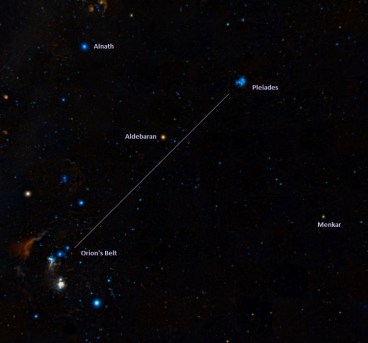
This evening I was reminded of one snowy night last week up at my daughter’s: I walked outdoors and crunched through the snow, far enough from the house that the fairy lights were hidden behind a tall spruce tree, and I looked up – oh my! The stars were brilliant, and I immediately saw two constellations I hadn’t noticed the last time I was in the mountains, in October. It is evidently the season for Orion and the Pleiades. I always think of the Pleiades as the Seven Sisters, because when I first met that group I was in Turkey, and my friends there called them that.
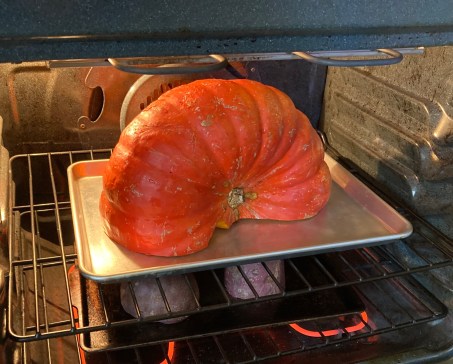
Tonight I took a bowl of kitchen scraps out to the trash, and saw those same constellations shining right above my house in lowland suburbia. A cloudless sky seems strange, after days and days of clouds and rain. But there it was. I was carrying out all the rind and seeds of this giant Rouge vif D’Etampes pumpkin, which I bought in the fall and which has been sitting on my front walk until today, when a black spot revealed a bit of rot setting in.
I cut out that bit of flesh and then roasted the two halves one at a time, because they were too large to do otherwise… unless I had cut the pumpkin into smaller pieces, but I wasn’t smart enough to think of that idea until later…
(Those are Asian yams baking at the same time.)
…maybe because I brought a cold home with me from the northlands, and my brain may still be affected, though I feel very well today. Another more pleasant gift was a jar of our Glad-type of peppernuts ! that Pippin baked for Christmas. I took this picture in my car before I had eaten too many, and I’m proud to say I have continued with restraint. They are the sort of treat we can’t seem to produce every year. Maybe next year I will bake some myself; on the way home I bought one of the ingredients that is often not easily found except at truck stops.
I didn’t bake half of the cookies I’d planned this Christmas. Instead of baking, I had my little road trip, and then a couple of days of lying around under the weather. I figure if I haven’t done my baking by the Twelfth Day it will have to wait until next year.
Speaking of the Twelfth Day, here is one last image of Theophany, from my dear friend May’s parish, and her arrangement of the festal surround.
My red berries from the bike path cotoneaster bushes dried out before Theophany, and I had to wander the garden a bit to find something to extend the season for my kitchen windowsill. In January it’s succulents and olives.
I’m slowly putting away the decorations and burning down some of the candles, beginning to settle into what looks to be a quiet month of guilt-free homebodiness. I have a good stack of firewood, and enough housework and reading to keep me busy for a year of Januarys. And more than five quarts of pumpkin now in the freezer to make sustaining soups and puddings for the rest of winter and beyond.
Live your life while you have it. Life is a splendid gift. There is nothing small in it.
 This week so far I have seen patches of the starry sky through the window from my bed, and through narrow gaps in the tree canopy as I walked along the gravel road coming back from a campfire.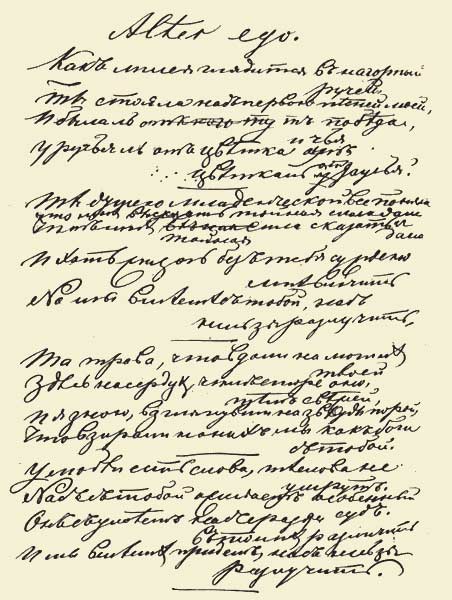

 had eaten too many, and I’m proud to say I have continued with restraint. They are the sort of treat we can’t seem to produce every year. Maybe next year I will bake some myself; on the way home I bought one of the ingredients that is often not easily found except at truck stops.
 My red berries from the bike path cotoneaster bushes dried out before Theophany, and I had to wander the garden a bit to find something to extend the season for my kitchen windowsill. In January it’s succulents and olives.
 Gladsome Lights