Tag Archives: teaching

We were each other looking out.

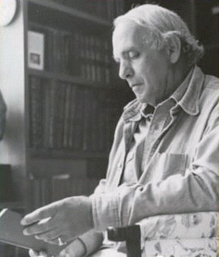
“Late one winter afternoon as I was walking to a class that I had to teach, I noticed the beginnings of what promised to be one of the great local sunsets. There was just the right kind of clouds and the sky was starting to burn and the bare trees were black as soot against it. When I got to the classroom, the lights were all on, of course, and the students were chattering, and I was just about to start things off when I thought of the sunset going on out there in the winter dusk, and on impulse, without warning, I snapped off the classroom lights.

“I am not sure that I ever had a happier impulse. The room faced west so as soon as it went dark, everything disappeared except what we could see through the windows, and there it was—the entire sky on fire by then, like the end of the world or the beginning of the world.

“You might think that somebody would have said something. Teachers do not usually plunge their students into that kind of darkness, and you might have expected a wisecrack or two or at least the creaking of chairs as people turned around to see if the old bird had finally lost his mind. But the astonishing thing was that the silence was as complete as you can get it in a room full of people, and we all sat there unmoving for as long as it took the extraordinary spectacle to fade slowly away.

“For over twenty minutes nobody spoke a word. Nobody did anything. We just sat there in the near-dark and watched one day of our lives come to an end, and it is no immodesty to say that it was a great class because my only contribution was to snap off the lights and then hold my tongue. And I am not being sentimental about sunsets when I say that it was a great class because in a way the sunset was the least of it.

“What was great was the unbusy-ness of it. It was taking unlabeled, unallotted time just to look with maybe more than our eyes at what was wonderfully there to be looked at without any obligation to think any constructive thoughts about it or turn it to any useful purpose later, without any weapon at hand in the dark to kill the time it took. It was the sense too that we were not just ourselves individually looking our at the winter sky but that we were in some way also each other looking out at it. We were bound together there simply by the fact of our being human, by our splendid insignificance in face of what was going on out there through the window, and by our curious significance in face of what was going on in there in that classroom.

“The way this world works, people are very apt to use the words they speak not so much as a way of revealing but, rather, as a way of concealing who they really are and what they really think, and that is why more than a few moments of silence with people we do not know well are apt to make us so tense and uneasy. Stripped of our verbal camouflage, we feel unarmed against the world and vulnerable, so we start babbling about anything just to keep the silence at bay. But if we can bear to let it be, silence, of course, can be communion at a very deep level indeed, and that half hour of silence was precisely that, and perhaps that was the greatest part of it all.”

— Frederick Buechner

Jan Schmuckal, Sunset on the Pass

First read on Bologna.

The elder’s pain and love.

I don’t know who all will be in my class when my parish’s church school program begins again next month. But I think I know what I’ll be teaching, and it includes gleanings from this book that I haven’t read yet, With Pain and Love for Contemporary Man. The arrangement of our classes and students and how and where they will meet is one more realm of decisions that has been affected by the coronavirus situation, and that is why I didn’t know until this week to get busy and start reading; I had expected to be using a different curriculum.
This big book was first published in Greek in 1996, as the first of several volumes of the monk’s teachings. Over the course of 28 years his spiritual counsels were carefully recorded in notes and on tape, by the sisterhood of St. John the Theologian monastery in Souroti, for whom he was a guide and helper. In the preface they tell about his response at the beginning of their project:

“When Elder Paisios realised what we were doing, he was rather irritated: ‘Why are you taking notes?’ he asked. ‘Are you saving them for an emergency? You should put my words into practice; put them to work! Who knows what you are saying in these notes! Let me see them.’ When we showed him a sample, particularly the notes of one Sister, his expression changed. He seemed comforted and reassured, and exclaimed with satisfaction, ‘My goodness! She is like a tape recorder! She wrote it exactly as I said it!'”

St. Paisios of Mount Athos: InjusticeThis man, who in 2015 the Orthodox Church formally recognized as a saint, was in 1924 born Arsenios Eznepidis, in Cappadocia in Asia Minor. This was just after the Greco-Turkish war, and just before those governments mutually agreed upon a population exchange that forced more than a million people to become refugees; his family was among them, and they moved to Greece. You can read all about his life here: St. Paisios, and in other articles and books. I just wanted to tell you a little bit in introduction, because I’m planning to share at least a few quotes from the saint as I go. For now I will leave you with this that I found elsewhere:

“What I see around me would drive me insane
if I did not know that no matter what happens,
God will have the last word.”

— Elder Paisios of the Holy Mountain
1924-1974


Kinds of Poetry – Tolkien vs. Jackson

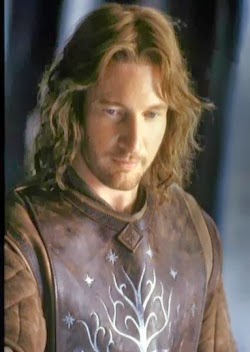
Jackson apparently thinks the characters Tolkien gives us are too simply good to be fully believable to modern audiences, and so he feels obligated to “complicate” them, to give them internal conflicts other than the ones they actually have, in the hopes that we will better be able to relate to them.

I’m quoting from this article in the Nov/Dec 2013 Touchstone Magazine, in which Donald T. Williams explains how literature, while delighting us with its art, is more powerful than history or philosophy to nurture our moral vision, or to corrupt us with false images.

With the help of quotes from Sir Philip Sidney, who wrote Apology for Poetry in the sixteenth century, he shows how “Tolkien was very consciously and deliberately following the literary tradition that flows down to us from Sidney through Dr. Johnson and C. S. Lewis.”

Peter Jackson the filmmaker seems to be flowing in a different stream. But he is an artist, and of course will impart his own soul to his work. I wouldn’t expect him to give us The Rings, because that has already been done, and he is not J.R.R. Tolkien. But it is unfortunate that he has changed things to the degree and in the directions he has. Williams points out specific ways in which the characters who inspired us in the books disappoint us in the movies, and makes these general remarks:

By this process of negative moral transformation, in other words, we reach the place where beloved characters are unrecognizable to Tolkien’s fans, and those fans feel betrayed. And they are right to feel so, though mostly they do not understand why. It is because the difference between the books and the movies is not just one of necessary adaptation to a different medium. It is that the author consciously followed the Sidneyan tradition while the adaptor is either ignorant of it or doesn’t understand it or has rejected it.

Read the whole article here.

Limón in the Cazuela

The Cazuela That the Farm Maiden Stirred by Samantha R. Vamos is a delightful Hispanic incarnation of The House that Jack Built. It tells the story of a rice pudding from the farm to the table. The reader is introduced to two new words, first in English, every time he turns the page. From then on, those key words are only written in Spanish.

Before I opened the book, Mr. Glad was enjoying it and noticed that the word for lime was much like our lemon. That made me wonder what the word for lemon is.

New World Spanish-English Dictionary sits on the reference shelf here as a leftover from the days when four of our children in turn studied Spanish. Even though their father and I never did study that language that is so useful, almost essential, in California, we’ve lived here our whole lives and have picked up some vocabulary, sometimes by consulting this word book, as I did on this occasion.

The hen helps by grating the limón

I don’t know why, but my dictionary is wrong about limón. It says that it means lemon, and that if you want to talk about a lime you say lima. I found it hard to believe that this book written by a woman with a Hispanic name, illustrated by a man with a Hispanic name, with the intent of teaching 21 words, would get any wrong.

But I have a friend who is married to a Mexican man and teaches at a bilingual school, and I couldn’t pass up the opportunity to ask my local expert. She wrote, “Okay babe. Limón means lime and limón agria or limón Amarillo can mean lemon. There is a lemon-like fruit called Lima limón. There are not lemons like we have here in the U.S. in Mexico.” That seemed a pretty authoritative word on the subject.

This is a picture book, an Easy Reader, so I must not forget to mention the illustrations, which as you can see from these sample pages I photographed are party-bright, full of the joy and fun of cooking together.

At the back you will find a glossary with pronunciations, in case your Spanish is rusty, and best of all, a recipe for rice pudding. What I would love to do with a young child is read the book, make the pudding together while using the English and Spanish words to talk about the ingredients, and then read the book again while the cazuela simmers.

I would rather one of my grandchildren helped me in the kitchen, while we keep the animals outdoors or in the pages of the book. But an arroz con leche pudding with plenty of crema and some zest of limón would suit me just fine.