Warm days and blooming flowers are pulling me outdoors, to pick more peas or to sit and read. I should be planting something in my vegetable planter, but I can’t figure out what. It’s raining today, so I can put off those decisions a little longer.

At the same time I seem to be cooking more this month. Ginger broth has been a favorite drink for a while now; I like it hot with a little cream and honey, or mixed with pineapple juice over ice. Just this morning I discovered that after I boil pieces of fresh ginger root for three hours and strain off the strong “tea,” the leftover pieces still have a surprising amount of flavor. I made my own crystallized ginger with them!
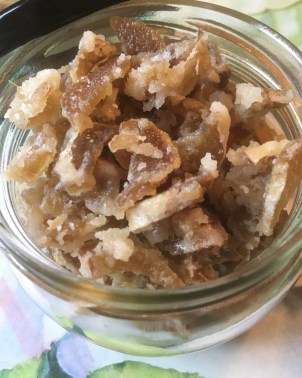
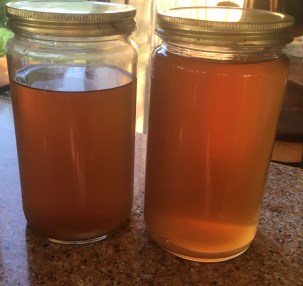
 An experience I haven’t had for ages: While I stirred the ginger in the syrup with one hand, I read this book from the other hand. I guess it is just the right size, weight and genre to fit the situation.
Likely it was one of you bloggers on whose site I read about The Daughter of Time, and I bought a used copy years ago; it went to my shelves where a hundred other books wait to be opened. And last week, suddenly, I was in the mood for Tey and the mystery of Richard III.
Reading the first couple of chapters, I began to wonder if being in the mood was enough — maybe I should have brushed up on my Kings and Queens of England first. But I pushed on, and with the help of family tree diagrams in the front of the book I began to get my historic bearings. I love this story because the main character Detective Grant likes to read letters and other primary sources, and to look at  pictures of faces, all the while using his common sense and imagination to “write” what is probably a more accurate history in his mind. It is so much fun to think along with him.
Some other things I’ve made recently are two types of grain-free cookies. One of the recipes starts with a can of garbanzo beans. It has chocolate chips, and was yummy. Today I made up a recipe that included carob powder, walnuts and cinnamon, also good. I still haven’t found the perfect cookie in this category.
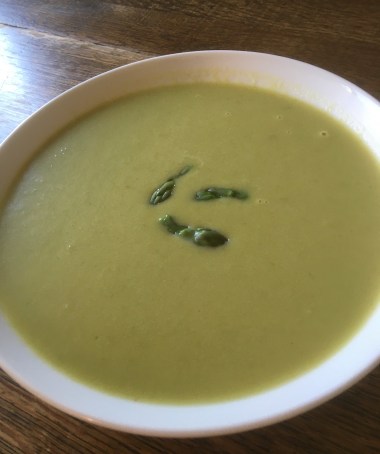
Asparagus season coincides with Lent, so it wasn’t until the very end of my harvest that I could make cream of asparagus soup to eat immediately. It was quite lovely. I think I squirreled some of that away in the freezer.
So, I have let the asparagus go to fronding and photosynthesis. You can see the tall twiggy foliage (it will become more ferny) in the picture below, behind the hedge of teucrium that is getting ready to burst into its glory of purple and accompanying bees. Stay tuned for that.

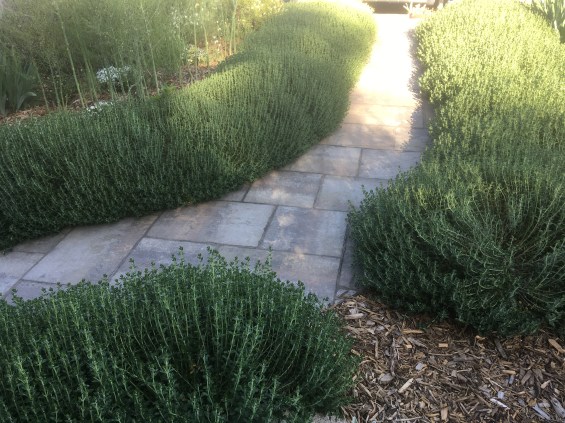
Many of the images from the front garden are pretty scruffy; the California poppies that grow out there go mad for a couple of months and begin to get leggy and messy. I pulled out dozens of plants and cut the rest down to the ground. They will keep coming up and blooming for the rest of the summer. The lamb’s ears are sending up their flower stalks.

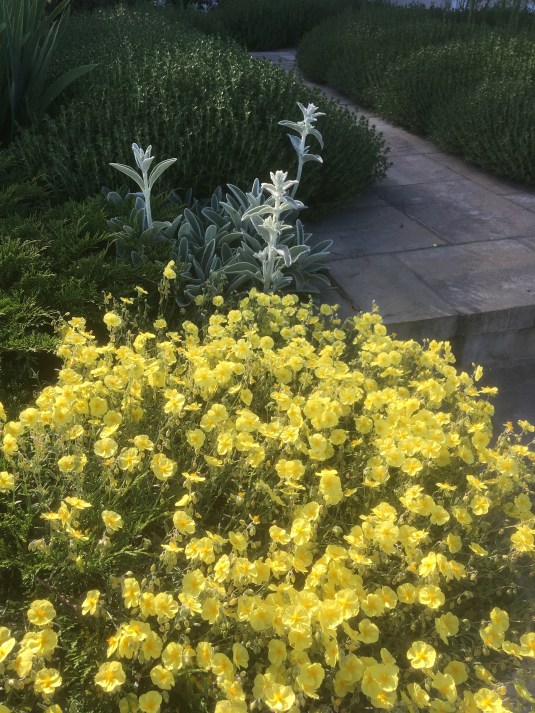
I don’t mind tearing out the poppies, even though they were still blooming their hearts out, because now the yellow helianthemum can take center stage for a while.
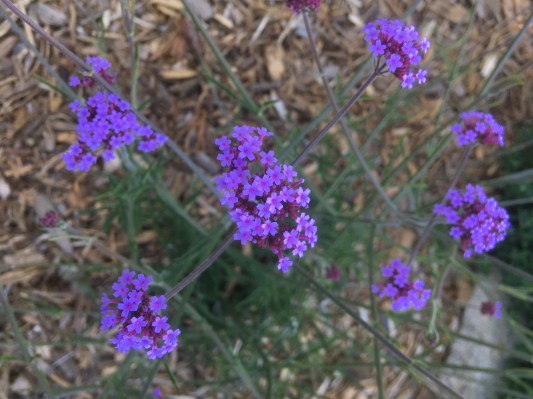
At the moment I can’t remember what these purple perennials above are called. [Shoreacres in the comments helped me find it: Verbena bonariensis] They are very tricky to photograph because of the airy, widely spaced arrangement of their blooms, the profile of which is seen against my car farther above. I got two of them last year to replace the two wallflowers that died an early death.
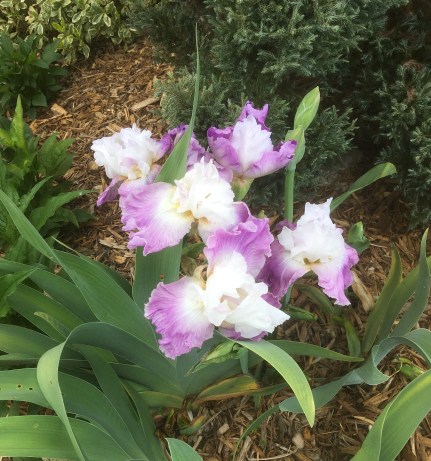
The next two flowers are both new, but in different ways. The irises are in their fourth season, but this is the first time they have bloomed, so I’m very happy, and pleased to see “who” they are after all this time since I chose them. And the friendly yellow flower is on a yarrow [Nope! The reason it doesn’t look like a yarrow flower is that it is actually a type of marguerite, a cousin of yarrow, both of them in the tribe Anthemideae, in the Aster family. This one might be Anthemis tinctoria, or Dyer’s Chamomile. Thanks to my friend May for helping me get straight.] plant that I only planted last fall; it has grown big plant over the winter and is now brightening the walkway. Thinking it was a yarrow, I was startled at its round and sunny face.

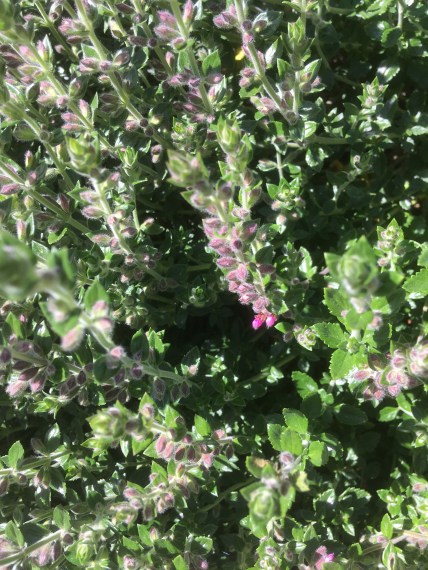
On a warm day last week — one of them was 90 degrees! — I sat just baking a bit and noticing things happening… The tiny white flower buds on the olive tree next to my new icon stand, and below them, delicate lavender stems with swelling evidence of blooms in the making. Mostly bumblebees are in the back garden; I wonder if the honeybees are out front waiting for that teuchrium.
One evening I was having a FaceTime visit with two-year-old Raj who is in D.C., high in an apartment building where he can’t have his former daily routine of playing in the park a few blocks away. More frequently of late we have had these virtual visits that are keeping us connected in an odd way. He likes to look (on his mom’s phone) at my collection of toy trucks, and my fountain and playhouse.
On that particular day we were just about to say good-bye, because it was his bedtime, when I had the idea to look in my birdhouse while he was watching. I knew that some bird or other had been making a nest a while back, and I didn’t think it was so long ago that the fledglings would have left the nest. I stood on the bench and leaned over, and stuck my phone in as far as I could…. and we saw this:

So it was bluebirds making a home in my garden this year! What a springtime it is.



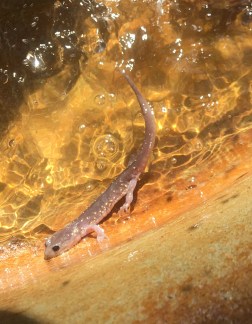 ro my sometimes gardener was here yesterday and we moved one of the big pots that hold olive trees, and found two salamanders underneath! How they ended up in this droughty place I don’t understand, but I didn’t think about that at the time.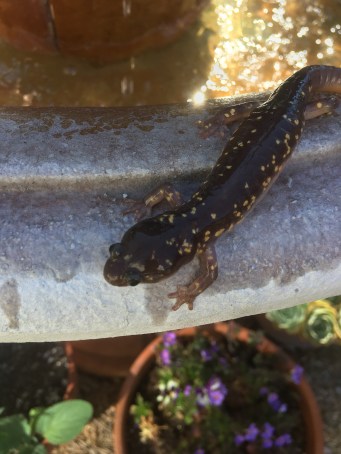

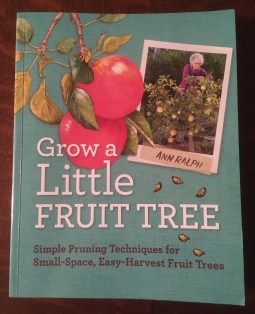 Ann Ralph does make it seem easy. She is all about the backyard gardener being the one in control, managing the tree, and not letting it decide on its own how big to get.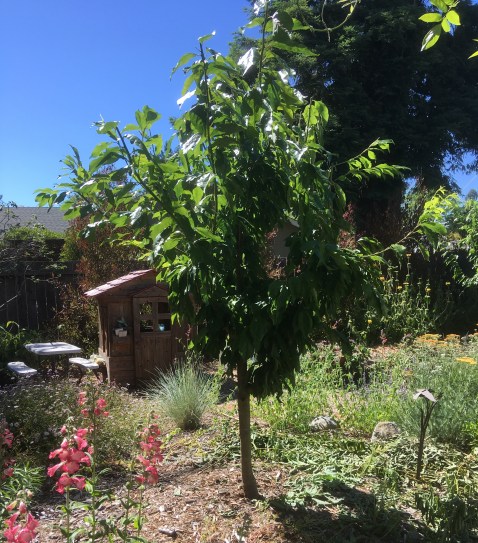


 Gladsome Lights