Tag Archives: the heart

The clear eye on the map.

The Poem-a-Day selection for yesterday was about maps, by Carl Sandburg. I read it when I came home from church this afternoon, after hearing a homily about a map. In Liturgy we learned that the map to the Kingdom is in our heart — but many other things are in the heart, as is obvious from our own lives and from the daily news. One consequence that can result from contemplating the news of the world is an increase of fear and anxiety in our hearts.

The experience related in Sandburg’s poem seems to echo what St. Macarius describes, following the Prophet Jeremiah,  who said, “The heart is deceitful above all things, and desperately wicked: who can know it?

St. Macarius: “Within the heart is an unfathomable depth. There are reception rooms and bedchambers in it, doors and porches, and many offices and passages. In it is the workshop of righteousness and of wickedness. In it is death, in it is life….The heart is but a small vessel; and yet dragons and lions are there, and there likewise are poisonous creatures….rough, uneven paths are there, and gaping chasms.”

EXPERIENCE

This morning I looked at the map of the day
And said to myself, “This is the way! This is the way I will go;
Thus shall I range on the roads of achievement,
The way is so clear—it shall all be a joy on the lines marked out.”
And then as I went came a place that was strange,—
’Twas a place not down on the map!
And I stumbled and fell and lay in the weeds,
And looked on the day with rue.

I am learning a little—never to be sure—
To be positive only with what is past,
And to peer sometimes at the things to come
As a wanderer treading the night
When the mazy stars neither point nor beckon,
And of all the roads, no road is sure.

I see those men with maps and talk
Who tell how to go and where and why;
I hear with my ears the words of their mouths,
As they finger with ease the marks on the maps;
And only as one looks robust, lonely, and querulous,
As if he had gone to a country far
And made for himself a map,
Do I cry to him, “I would see your map!
I would heed that map you have!”

-Carl Sandburg

Our pastor was preaching on Matthew 6, where Christ teaches us:

The light of the body is the eye. If therefore thine eye be single, thy whole body shall be full of light. But if thine eye be evil, thy whole body shall be full of darkness. If therefore the light that is in thee be darkness, how great is that darkness!

No man can serve two masters; for either he will hate the one and love the other, or else he will hold to the one and despise the other. Ye cannot serve God and mammon.

Therefore I say unto you, take no thought for your life, what ye shall eat, or what ye shall drink; nor yet for your body, what ye shall put on. Is not the life more than meat, and the body than raiment?

Behold the fowls of the air, for they sow not, neither do they reap, nor gather into barns; yet your heavenly Father feedeth them. Are ye not much better than they? Which of you by taking thought can add one cubit unto his stature?

It’s interesting to look at several translations of the words describing the healthy or unhealthy eye: cloudy or clear, evil or single, diseased or unclouded. Of course, Christ is our Light, He said so Himself, and if we keep our eye on Him, He will light the path, He will be the map in our heart, so that we find the best things that St. Macarius tells about:

“The heart is Christ’s palace…There Christ the King comes to take His rest, with the angels and the spirits of the saints, and He dwells there, walking within it and placing His kingdom there….the heavenly cities and the treasures of grace: all things are there.”

When Christ places His kingdom there, we understand that our heavenly Father is obligated to take care of us — He loves us and is, after all, our Father. Much more than any earthly father He loves us and wants to provide for our needs.

Today I also read a poem by Wendell Berry, on this blog, and he expresses and heeds the exhortation in today’s Gospel:

THE PEACE of WILD THINGS

When despair for the world grows in me
and I wake in the night at the least sound
in fear of what my life and my children’s lives may be,
I go and lie down where the wood drake
rests in his beauty on the water, and the great heron feeds.
I come into the peace of wild things
who do not tax their lives with forethought
of grief. I come into the presence of still water.
And I feel above me the day-blind stars
waiting with their light. For a time
I rest in the grace of the world, and am free.

-Wendell Berry

What a contrast Berry’s focus is to Sandburg’s narrator who wanders where “no road is sure,” and who longs for a good map. “We have been given the map!” I want to tell him. Keep your eyes on Christ, and walk on past the dragons and gaping chasms. Cling to Him, keep bringing your focus back to Him as a light that is far brighter than your “mazy stars,” and you will find your way to Christ’s palace, and take your rest, too, with the saints and angels, amid the treasures of grace.
It’s not about feeling balanced.

From another site:

No frail human morality can ever hope to contain the overflowing fullness of life with which Christ desires to rejuvenate the faithful.

…The world will not be saved by optimistic humanism that believes human progress and morality will eventually save the world. For Dostoevsky and the church fathers, man’s deepest problems are not moral, nor even psychological, but ultimately existential and ontological. It’s not about following the rules or feeling balanced. It is a matter of choice and it is a matter of human nature being touched by the hand of God Himself.

Only by daring to leap towards God in spite of the good and evil that exist in the heart can the believer hope to get beyond the contradiction of the human condition. In order to avoid descending into nihilism, Dostoevsky offers his readers another path: the acceptance of suffering and affliction in the context of a relationship with God. It is only in this context that man is able to recognize a path out of his fallen condition. It is only this Love that is able to transform suffering into salvific joy.

Read more here: Ancient Christian Wisdom blog


Can consumers be saved?

In trying to understand ourselves, people have worked out different ways to analyze aspects of the human person. Are we spirit-soul-body or mind-emotions? Is it body-and-intellect, or heart vs. head? It’s too bad we have to be always chopped up into warring interests. God intended for us to be unified creatures, as the Holy Trinity is a Unity, but only by God’s grace can we begin to know some of that intended wholeness.

What is the heart? Surely it’s not just the emotions, as many moderns seem to think. The Orthodox Church understands the heart very differently and more deeply than this. The Greek word nous, the fathers tell us, is not easily translated into English. But some current writers have been able to get through my dullness and give a little more clarity.

One of these is Fr. Stephen Freeman, and his recent blog post “Shopping for God” contains a lot of nourishment that will take me some time to soak up thoroughly. My title is a question posed at the end of his article written on Black Friday Eve.

I haven’t finished my Christmas shopping, but even when I come to the end of that I know there will be other anxiety-producing prompts to and from my false self, so I appreciate Fr. Stephen’s reminder of my inheritance in Christ, and His Kingdom within.

Here are some excerpts:

Shoppers desire beauty, acceptance, self-confidence, power, intelligence, pleasure, excitement, a host of intangible needs. They are not natural needs, but the passions of the spiritually disordered. Our unnatural existence is centered in the false self — the sense of identity generated within our memory, thoughts and emotions. It is burdened with uncertainty. Comparing, judging, measuring, revising are constant activities of the mind in its role of the false self.
 ………

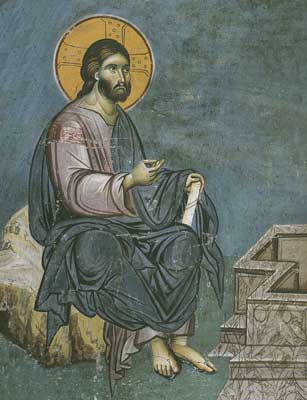
Christ at the well

The human life was created to be centered in the heart, the spiritual seat of our existence. The heart is not subject to the passions, not driven by desire and necessity. It is not the same thing as the mind. It does not compare or judge, measure or spin tales of its own existence. It simply is. It is in the heart that we know God (truly know). Its aesthetic is true beauty, found within the most ordinary of objects as well as in the greatest efforts of man. The heart is content.


A Dream of What’s Real

It was about 40 years ago I had a dream that I know was from God. I don’t remember any since then about which I felt such assurance. Many dreams I have are mild nightmares of household disasters, though I have also experienced dreadful nightmares that left a cloud over the first hours of the day.

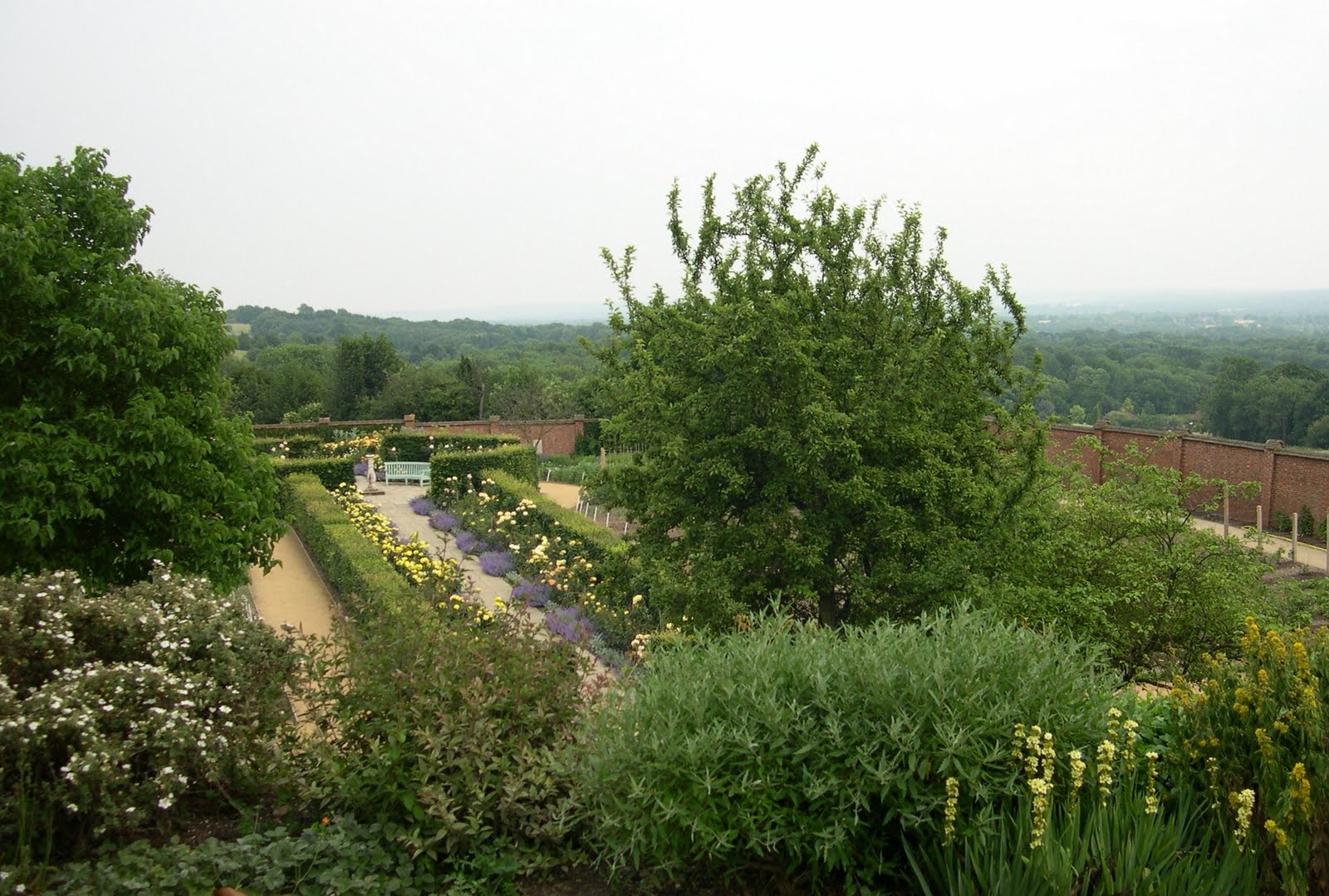
This dream was of a garden. I was walking in a lush and green garden, where birds were singing and flowers were blooming. Cool lawns stretched between all the most fitting tall trees and flower beds, everything breathing with new life. The air was warm and balmy — it was obviously Spring or early Summer. As I followed the paths and took in the beauty I felt very happy and peaceful, but I didn’t think of taking a nap on the grass, because the atmosphere of the place made me feel too alive and awake. Then, the words were spoken, “This is your heart.” And I woke up.

I can well recall the sweetness that filled me as I lay in bed in those few minutes after waking, knowing that God had given me a taste of His presence. That lovely feeling stayed with me all day. I told a few people about the dream, and was often encouraged by it in a vague way. There was no clear doctrine to hold to; it was more like a promise.

This morning when I woke I got to thinking about that garden, and how it might still have something to teach me about prayer. It is possible, the fathers teach us, to always live in the garden of the heart, where God and His love are constantly available to us, even when our minds are required by the everyday cares of life to be busy elsewhere. We can live in that garden even when our earthly houses and treasures are in ruin from earthquake, or when we walk in the front door to find that thieves have stolen us blind. The Life that we absorb through our pores in that place can energize us to do the necessary work of repair and healing.

In the last week I’ve been hearing a bird song in the backyard in the mornings, but it was not my robin whom I wrote about before, a messenger of comfort from just a few years ago. I strained to hear that robin’s chirp that means so much to me now, but he was not on the airwaves. Lo! this morning before I got out of bed there he was, and he started in. God sends birds like angels.

“The kingdom of God is within you,”  said our Lord. The robins and other angels are there, nearby where He makes us to lie down in green pastures under heavens that declare His glory, and where nothing can separate us from the Love of God.

Chartwell, Kent