Tag Archives: trees

I explore the north country.

Yes, another road trip! My first stop, as often works out best, was at Pippin’s. The children doted on me and I on them, and well, I like the parents a lot, too!

I drove through the rain the last couple of hours of my first day, up through the top center of California, and arrived in town just in time to catch the last ten minutes of Ivy’s ballet lesson. She is a beginner ballerina but was fun to watch.

Everyone was surprised that all three children and I could spend so much of the next morning coloring pictures I had brought, as we watched birds at the feeders. We colorers chatted about how it is way more fun to do coloring with other people, and we were proving the principle.

Between rain storms and frost the next two days we went on a couple of splendid nature walk expeditions, first to Lake Siskiyou where the Sacramento River comes into it.
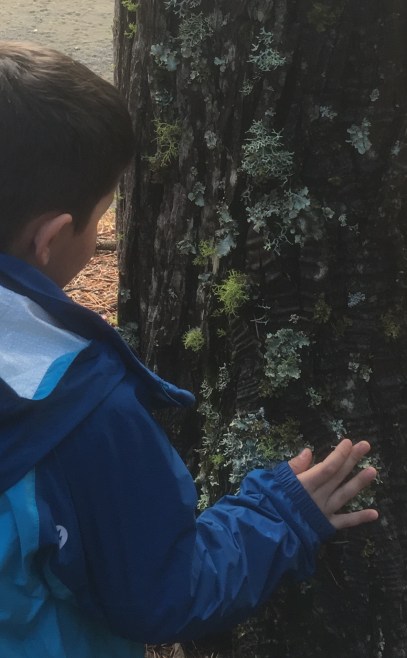
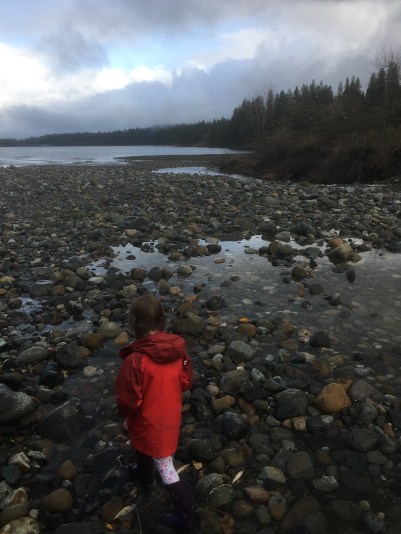
Pippin remarked at this point, “From here we tend to make slow progress because there are so many rocks to look at.” Indeed. And to bring home!

Indian Rhubarb

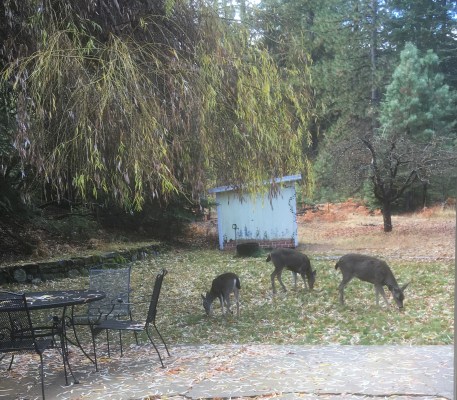
On my second morning I stood at the kitchen window while eating my breakfast bowl, and watched four deer eating their breakfast of willow leaves off the back lawn.
And that afternoon found most of us along the Sacramento River Trail near Castle Crags. The last time I’d been here my husband was still feeling healthy and we were here together with Pippin’s family.
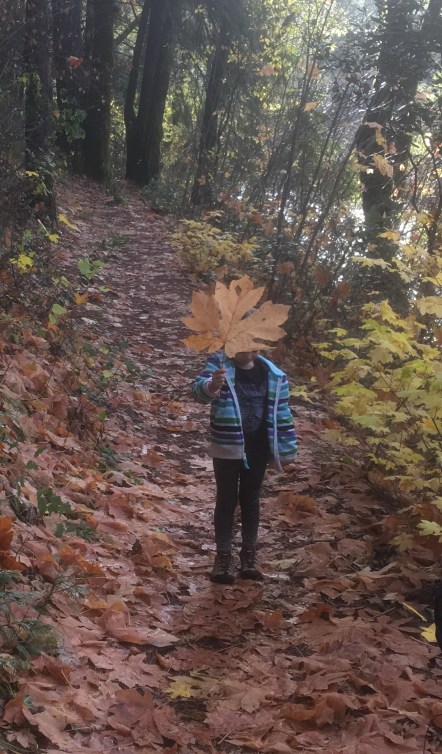
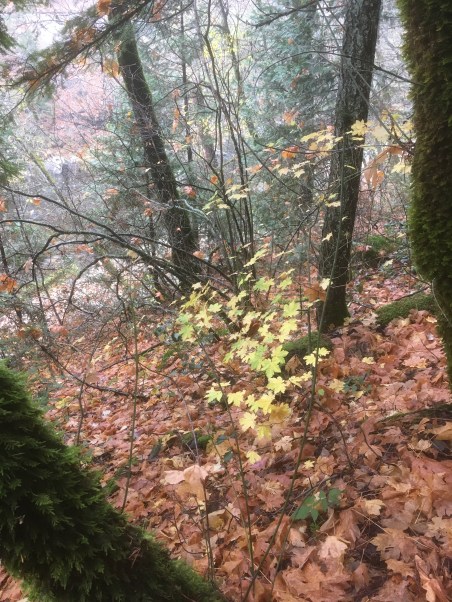
This time was lovely, too, nearly four years later, during fall instead of winter, with bigleaf maple leaves covering the paths, oaks and firs and Port Orford Cedars and more kinds of trees…. The children had a ball on the rocks jutting out into the river and Scout named one spot after me: Pearl Point, because I had told him the day before that Gretchen means little pearl.

Jamie was missing his nap but you would never know it by the way he marched along the trail and climbed cheerfully for hours up and down banks and over countless large river stones.

On our drive back home Scout’s mind was busy planning the evening’s activity and chattering about all his ideas. His mother and I were not enthusiastic about the first ambitious projects he came up with, so he said, “Well, then, Grandma, what would you like to do?” It shows a developmental leap, I think, that he was showing this willingness to consider what other people’s preferences might be.

I thought a bit, and answered, “I would like to do something that wouldn’t require thinking or talking, or being on my feet.”

“Is reading considered talking?”

“No.”

“Well, then, would you like to read that book about Kit Carson that you gave me for my birthday?”

I surely would love that, and I read three chapters while dinner was being prepared by other people on their feet, and Scout colored another picture while he was listening.

Now I’ve moved on to Oregon, where Walt has found and started restoring the truck he was only dreaming about back in September when I was here.

Oregon trees and their knock-out gorgeous fall colors
are competing for my designation of Favorite.

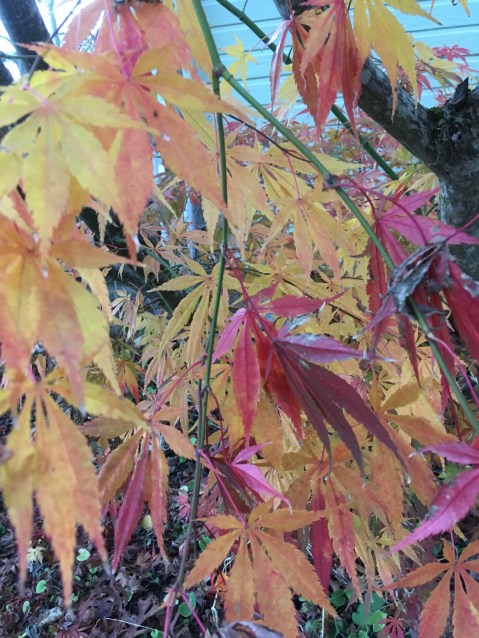
So far I think I like the last one best.

I’m not halfway through this road trip. Before I get home I’ll have slept twelve nights not in my own bed. I’ll have seen five friends and ten family members, staying in five homes. It does feel like a little much for an old lady, but I’m enjoying myself and will try to check in at least once more to tell you more about my northern adventures.
 

Listening to the silent stars.

Diary of a mountain sojourn:

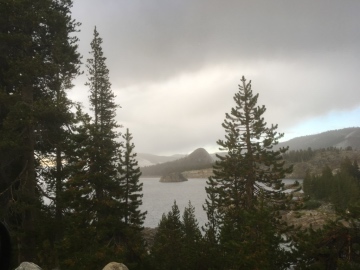
DAY 1:  I arrive at the cabin overlooking a lake for my second visit this summer. The last twenty minutes I was driving through a thunderstorm with huge drops splattering the windshield and dark grey-purple clouds all around the lake when it first came into view.

I am alone in the house until at least tomorrow night, and there don’t seem to be many people in the little village, either. It took me slightly less than six hours of driving to get here, if you don’t count the first hour when I got to the next town before realizing that I’d forgotten the keys to the gates and the cabin — so back I drove, and started over. I’m so thankful I remembered so soon; a few years ago we forgot the keys and it was inconvenient to say the least.

The quiet is so complete, it reveals the noise in my body and soul as so much jangling and buzzing and ringing. But it’s a weary and even bored kind of excitement – I hate to think of how so many of us get through day after day on this kind of “energy.”

I expect that as I go to sleep listening to God in the silence of the stars, the noise of my mad journey to get here will begin to evaporate.

DAY 2: Every time I wake and turn over in the night, the silence is there enveloping me as cozily as my sleeping bag. Until 7:00, when a bird call breaks the quiet and brings me to consciousness. Other than the Steller’s Jays, I don’t know most of the mountain birds. I do see a woodpecker occasionally.

This morning, the sky is bright blue and cloudless, but the deck is very wet, and it’s only 44 degrees. In spite of my deep sleep, I am groggy and have a slight headache from the altitude. This is a catch-up day, so I go back to bed and eventually to sleep again.

Not getting much “done” today – I’m trying to enter into that rest, in spite of a brain that can’t hold a thought. There is less oxygen up here for sure! Well, not exactly:

“The percentage of oxygen is the same at sea level as it is at high altitudes, which is roughly 21 percent. However, because air molecules at high altitudes are more dispersed, each breath delivers less oxygen to the body.”

It takes me a long time to shower and dress and to decide about breakfast. I make summer squash with scrambled eggs, and yes, I will have coffee this morning. Suddenly it seems that a big mug of coffee with cream will complete the event in the most comforting way. Will it compensate for the oxygen?

It used to be that coffee was made by my father in a percolator, and my husband always loved that strong brew. Daddy bought a second, extra large version for the rare times that we had a crowd here. But lately someone has added a French press and a grinder to the kitchen equipment, so I use that, only because it’s what I’m used to.

While eating breakfast I text with friends on my phone! Even more than using the French press, it feels a bit sacrilegious to be in contact with the world “down there.” Three or four years ago when it became an option in the cabin, I didn’t use it – but at this stage of my life I don’t crave Alone Time that is absolute, and when you are trying to coordinate meals and supplies with people who are coming later, it’s very helpful. We don’t have phone service, but those with iPhones up here can text with iPhones elsewhere, and then there is email, Facebook, etc.

Not that I know what all the etcetera are. I have no hope of catching up in the tech world; “they” are always changing things and calling it upgrading. I don’t know why Apple Photos have to be so complicated: It’s so so easy to take pictures and have them stored in Moments and Place and in the Cloud. But then I can’t find them when I want to put one in my blog!

Oh, well, I can finish the post when I get home. And I want to read while I’m here. I brought The Hidden Life of Trees, by Peter Wohlleben, which one or more of my readers recommended, and am reading it on the deck surrounded by a virgin forest. But I haven’t gotten past the introductory chapters when I come to a hint that this forester author is going to be annoying.

Tim Flannery in the foreword explains a little about how trees in a forest communicate by means of fungi in their root systems. Trees send electrical impulses, they exude chemicals toxic to specific insects when one starts chewing on a neighbor… I have heard about these phenomena and want to learn more, which is why I am reading this book. Trees show us God’s glory, and He fills all His creation with His presence, including trees. I want to know and love them more.

In the introduction to the English version, the author uses half of the page space to tell the story of an ecosystem, how wolves that have been reintroduced to Yellowstone Park have “kept the [elk] herds on the move,” so that the elk aren’t defoliating the trees along the streams, the beaver are back, and so on. I understand all this.

But then he tells us that we humans ought to learn from the wolves’ “stewardship of natural processes.” Wait a minute! The wolves are just doing what comes naturally to them, as do the elk, when they “make quite a meal of the aspens, willows, and cottonwoods….” I don’t know why he doesn’t label the elk as poor stewards, because they are equally intentional in their destruction as the wolves are in their destruction. The author also doesn’t mention that the reason the wolves are keeping the elk on the move is to kill and eat them – not to promote the restoration of streams. And a wolf would eat a beaver if it were convenient.

Stewardship is intentional and not instinctive. Wikipedia: Stewardship is an ethic that embodies the responsible planning and management of resources. But why tell this story of wolves, when it has only the remotest connection to how trees communicate with one another? The motivation for doing that might make an interesting tangent to run along, but I know you are glad I won’t. I hope the author will get down to business now and tell us what he really knows about trees, and not fall into too much romantic euphemizing and speculating, but I’m not very hopeful.

The air is cooling as the sun sinks behind the peaks. Dusk comes early in the mountains. It’s 5:30. Tonight, or tomorrow, Pippin’s family will arrive and we’ll spend a few more days together. They invited me for this stay, but I arrived first, glad to get through my lethargic day without the children around for contrast.

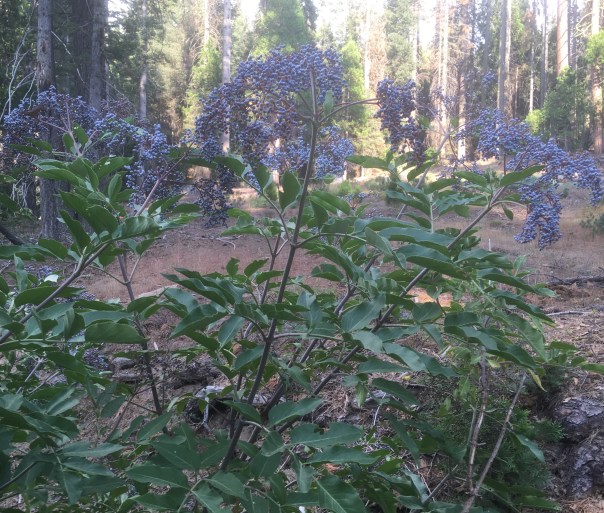
I found a way to get some photos in here, so I will publish this part of my “diary” now – otherwise it would be way too long by the time I get home. But before I go, here are some elderberries I saw on the way up yesterday. And my family just drove up… Good night!

Next day’s entry is HERE.

Nothing of all these exists anymore.

Today we celebrate the Veneration of the Holy Cross, “planted” like a tree in the middle of Great Lent for our refreshment and encouragement, and as a foretaste of Pascha. We haven’t completed our Lenten labors, but the fatigue of them is lightened by the joyous hymns of this feast, such as this from Matins:

“Let all the trees of the forest dance and sing, as they behold their fellow-tree, the Cross, today receiving veneration: for Christ, as holy David prophesied, has exalted it on high.”

This quote from the shining Mother Gavrilia also reflects that joyful mood:

gl-sunlight-wikipedia-330px-the_sun

“Think and see only the Light. Everything else is irrelevant and should not affect you in any way… By reliving regrettable incidents of the past, you cause much harm to yourself… We should take all our sorrow and place it at the Feet of Christ. Because He suffered on the Cross for our sins, and for our sorrows, and for our problems, and for all the gloom of our souls. For everything! And when you remember that the Blood of our Lord is cleansing us from everything, that’s the end of it! Nothing of all these exist anymore… Place them at the Feet of Christ… and then go forth as a joyful person.”

~Mother Gavrilia, The Ascetic of Love

Breathing in quietness.

P1000751

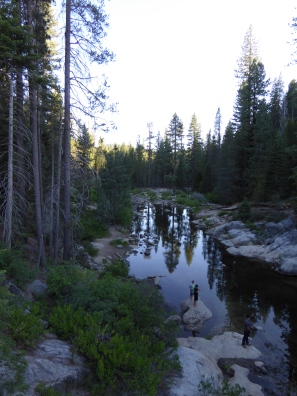
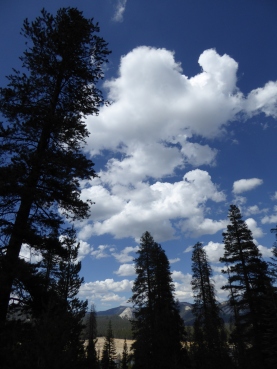
At about 5,000 feet up into the mountains I usually turn off the radio or story, open all the car windows, and breathe deeply of the pine and cedar scents that are so exhilarating. They make me think, “Why oh why have I stayed away so long? How will I bear to go back down to the air of the flatlands?”

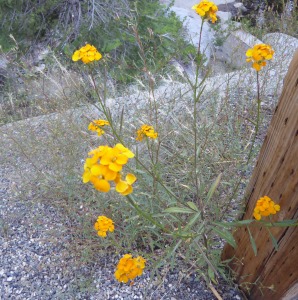
wallfower Dinky Ck 7-17-15
Wallflower

But this summer — it didn’t happen that way. At about 3,000 feet I got lost, or at least confused, by taking a couple of wrong turns. When I realized my mistake, it took me a half hour to get back on track. At 4,000 feet, even though it was still 86°, I opened the windows under tall pines, but all I noticed was my shirt hanging in the backseat, as a sleeve started flapping in the rear view mirror.

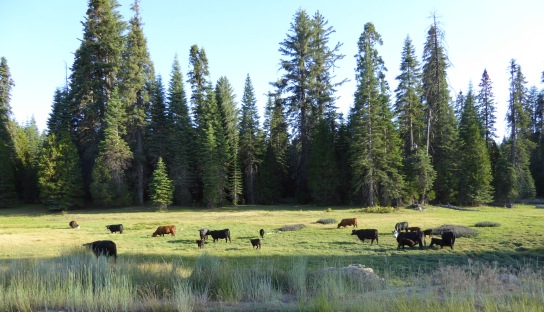
And I watched the thermometer drop 20 degrees in 20 minutes, as I climbed into the forest. I saw the elderberry bushes in bloom, those tall and friendly plants I’d learned about two years ago, and more than one upland meadow with black cattle grazing. Maybe it wasn’t late in the day for summertime, but I’d forgotten how the sun would go down early, because the trees are so tall, and the valleys deep.P1000783 I discovered that my jaw was sore – evidently I’d been clenching it, so there must have been some anxiety about the time underneath my excitement over all the irresistible photo opportunities.

Where the road crosses a bridge over a creek I stopped to catch the fishermen in the twilight, and found an orange wallflower, that lacking a wall, made do with a post.

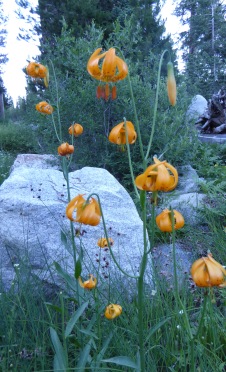
P1000799 leopard lily crp
Leopard Lily

The thermometer dropped another twenty degrees in the last hour of my drive, as I got higher and higher and still obeyed the call of the wildflowers to stop and take their pictures — because after all, they might be gone the next time I passed their way! Their glory is short-lived, except for the Pearly Everlasting that seems to hang on and on making a white border by the roadside.

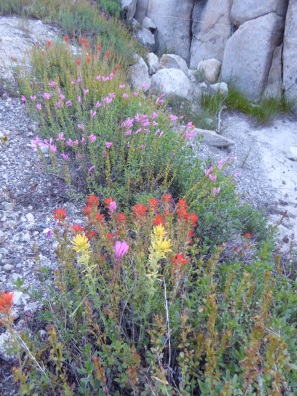
Leopard lilies bloomed in the wetter areas, but the penstemon and paintbrush grew right out of the granite gravel next to the pavement, where they also get the maximum of sun exposure.

paintbrush & penstemon


And then, after a journey of eight and a half hours (it “normally” takes me six) during which the temperature ranged from 102° to 57°, I arrived at the door of our beloved cabin! I had by this time forgotten the advice of one of my friends, when I told her about my anxiety: “Breathe deeply when you get in the mountains.” I’m sure when I was sitting at home in the morning and read that message I must have thought, “Well, that comes naturally!”


When I unlocked the door and walked in, I noticed a new sign on the wall:

breathe at cabin 2

I obeyed that word, too, but I was only thinking of how I needed the conscious inhalation to help me relax. It wasn’t until I was lying in bed an hour later that it dawned on me I hadn’t smelled the trees. Was it the drought that was making them hold every droplet of moisture in their needles? Was I to spend several days in their company and never get that mountain perfume? Two years ago when I last was last here, smoke from a huge forest fire in Yosemite was filling my senses with the scent of burning trees.

P1000813
view from deck

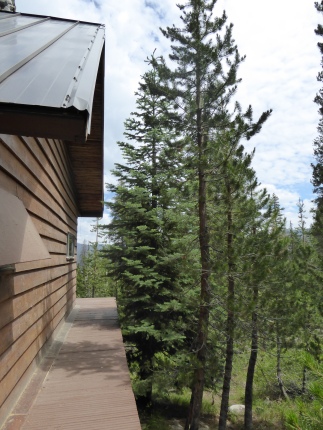
It was the bone-penetrating, soul-healing quiet of the mountains that most affected me during this visit. I was completely solitary for my first evening and morning, and that turned out to be enough time for an intense healing session.

I sat on the deck reading in the morning. Two birds twittered a call-and-response from one Lodgepole pine to another. Up there the sun is baking, and the altitude takes your breath away – or more precisely, takes the oxygen from your breath – and everything combines and causes a heavy sleepiness to fall on you…. Before noon I had to lie on my bed to take a nap. But in the cool of the bedroom I revived and didn’t sleep. I read more in George MacDonald’s Phantastes, the book that C.S. Lewis said “baptized his imagination.”

The protagonist of the story, who is exploring Fairyland, encounters a lovely and deep blue pool: “Led by an irresistible desire, I undressed, and plunged into the water. It clothed me as with a new sense and its object both in one. The waters lay so close to me, they seemed to enter and revive my heart.”

When in my imagination I experienced that Living Water with the swimmer in the story, it was as if the silence of the mountain morning were the pool of God’s healing presence for me at that moment. Then I knew another reality I had read about a few pages before in that book, “Tears are the only cure for weeping.”P1000831

One doesn’t like to imagine breathing water, and I hadn’t yet managed to detect that comforting mountain aroma in the air that I drank hungrily, but stillness and peace were in plentiful supply, and were oxygen for my spirit. That sort of peace is so unfamiliar, it is at the same time both soothing and thrilling.

I was soon to have more good company, both human and atmospheric, and I will tell more about that next time.