Monthly Archives: February 2011

The Crosse

Friday is a day to remember The Cross. This poem by John Donne, which I first read at least 15 years ago, contributed to my own alienation from modern minimalists and anti-sacramentalists. It is long and full of theology, and by the time I get to the end I am always lifted up by joy. It must be that cup of joy He gave us by taking the cup of death. I’ve put it with the old spellings and words, to remind me of the historical context in which it was written, but it can be found in an updated form here.

I wonder if I wasn’t imbued with a love for The Cross from my earliest Sunday School classes; my teacher gave me a small plastic cross with adhesive on the back, which I stuck to the wall above my bed. I looked at it every night before I went to sleep, for years, as it was the sort of material that absorbed light and glowed for a while after the electric lights were put out.

THE CROSSE

Since Christ embrac’d the Crosse it selfe, dare I
His image, the’image of his Crosse deny?
Would I have profit by the sacrifice,
And dare the chosen Altar to despise?
It bore all other sinnes, but is it fit
That it should beare the sinne of scorning it?
Who from the picture would avert his eye,
How would he flye his paines, who there did dye?
From mee, no Pulpit, nor misgrounded law,
Nor scandall taken, shall this Crosse withdraw,
It shall not, for it cannot; for, the losse
Of this Crosse, were to mee another Crosse.
Better were worse, for no affliction,
No Crosse is so extreme, as to have none;
Who can blot out the Crosse, which the’instrument
Of God, dew’d on mee in the Sacrament?
Who can deny mee power, and liberty
To stretch mine armes, and mine owne Crosse to be?
Swimme, and at every stroake, thou art thy Crosse,
The Mast and yard make one, where seas do tosse.
Looke downe, thou spiest out Crosses in small things;
Looke up, thou seest birds rais’d on crossed wings;
All the Globes frame, and spheares, is nothing else
But the Meridians crossing Parallels.
Materiall Crosses then, good physicke bee,
And yet spirituall have chiefe dignity,
These for extracted chimique medicine serve,
And cure much better, and as well preserve;
Then are you your own physicke, or need none,
When Still’d, or purg’d by tribulation.
For when that Crosse ungrudg’d, unto you stickes,
Then are you to your selfe, a Crucifixe.
As perchance, Carvers do not faces make,
But that away, which hid them there, do take.
Let Crosses, soe, take what hid Christ in thee,
And be his image, or not his, but hee.
But, as oft Alchimists doe coyners prove,
So may a self-dispising, get selfe-love.
And then as worst surfets, of best meates bee,
Soe is pride, issued from humility,
For, ’tis no child, but monster;  therefore Crosse
Your joy in crosses, elso, ’tis double losse,
And crosse thy senses, else, both they, and thou
Must perish soone, and to destruction bowe.
For if the’eye seeke good objects, and will take
No crosse from bad, wee cannot scape a snake.
So with harsh, hard, sowre, stinking, crosse the rest,
Make them indifferent; call nothing best.
But most the eye needs crossing, that can rome,
And move;  to th’others th’objects must come home.
And crosse thy heart:  for that in man alone
Points downewards, and hath palpitation.
Crosse those dejections, when it downeward tends,
And when it to forbidden heights pretends.
And as thy braine through bony walls doth vent
By sutures, which a Crosses forme present,
So when thy braine workes, ere thou utter it,
Crosse and correct concupiscence of witt.
Be covetous of Crosses, let none fall.
Crosse no man else, but crosse thy selfe in all.
Then doth the Crosse of Christ worke fruitfully
Within our hearts, when wee love harmlesly
That Crosses pictures much, and with more care
That Crosses children, which our Crosses are.

-John Donne

Scouting Around

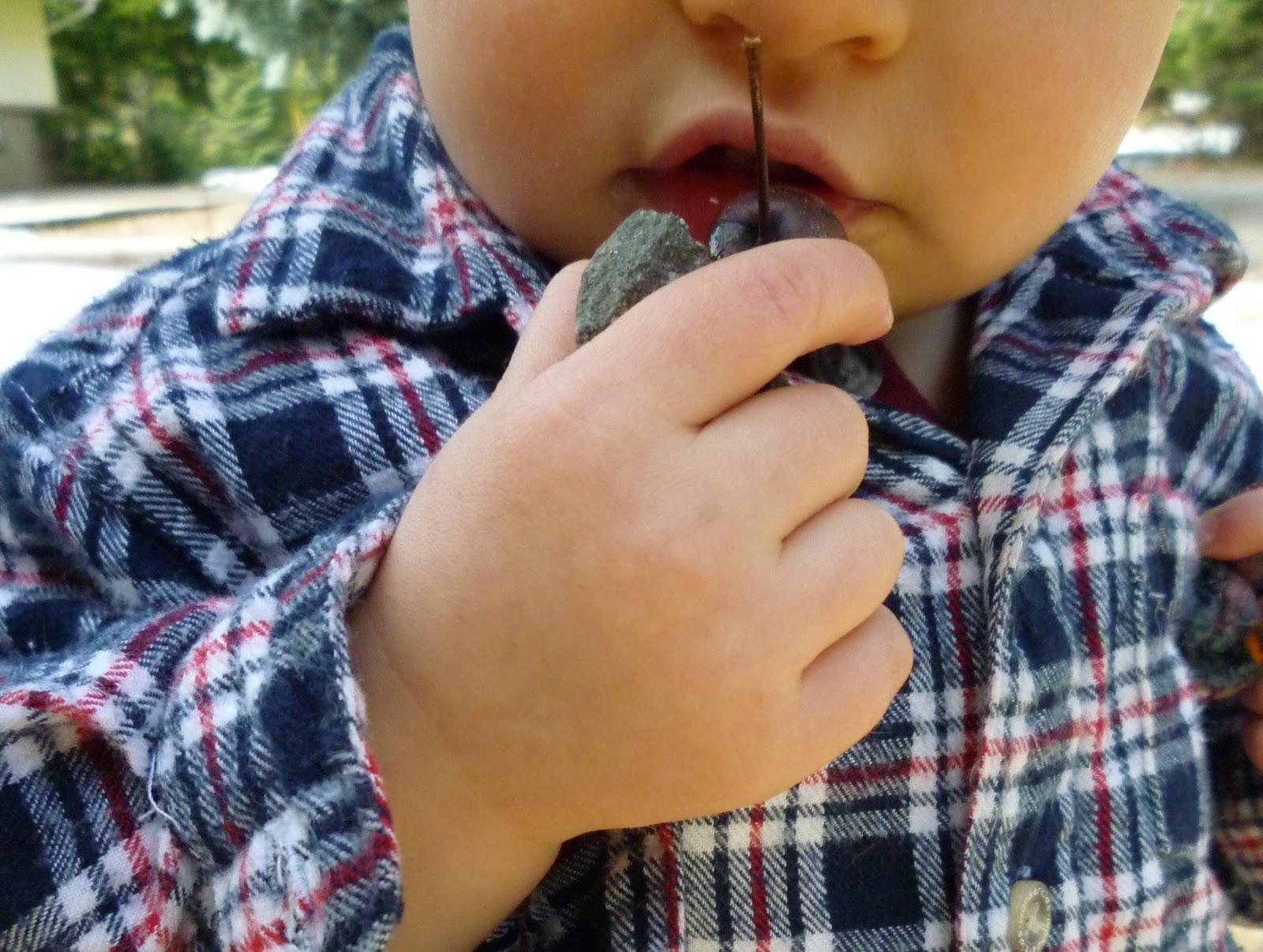
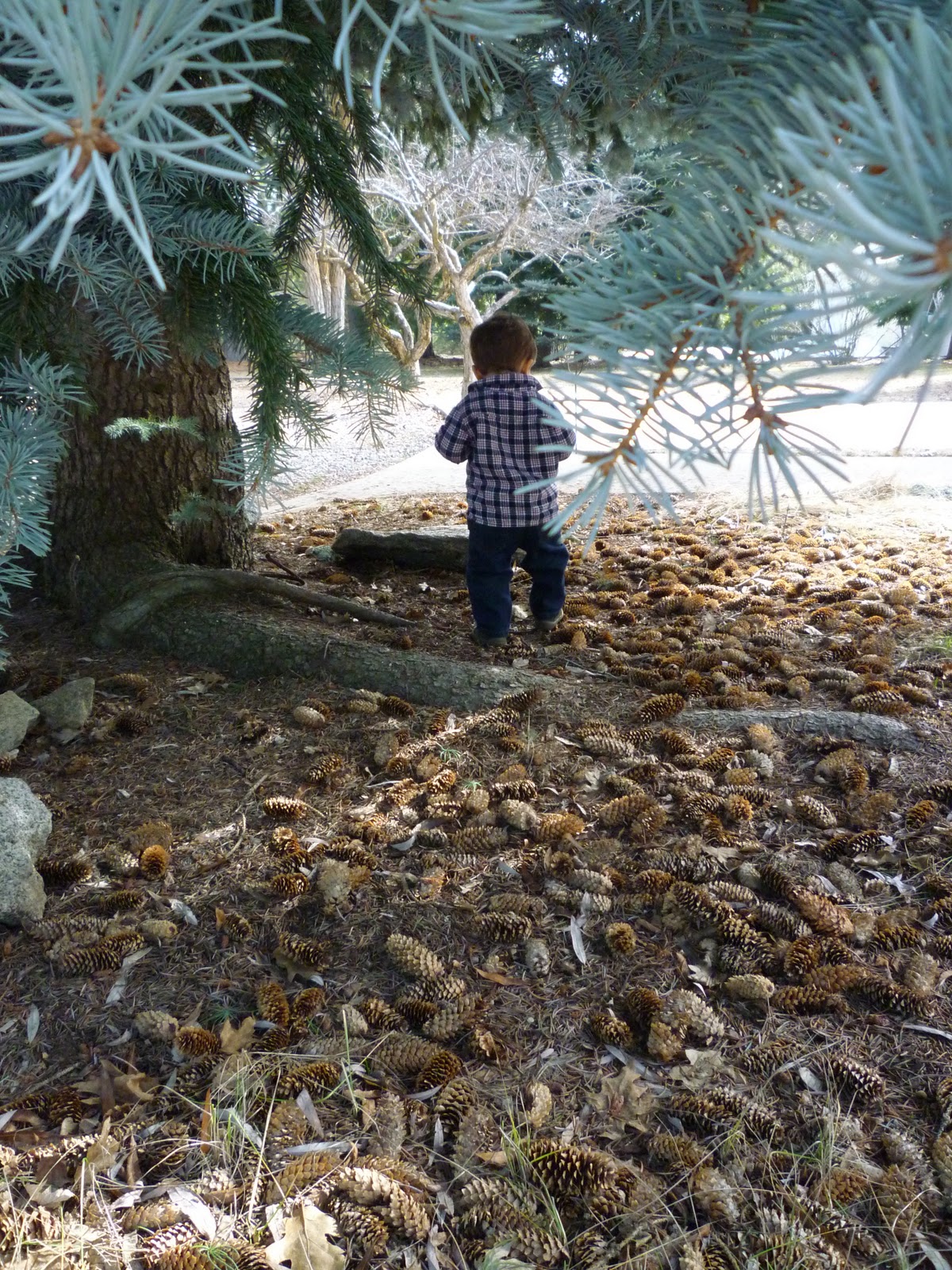
It was great fun to follow little Scout around the yard for an hour while he explored his world. I took a slew of pictures trying to catch something of the Serious Scientist and Joyful Naturalist I was observing.

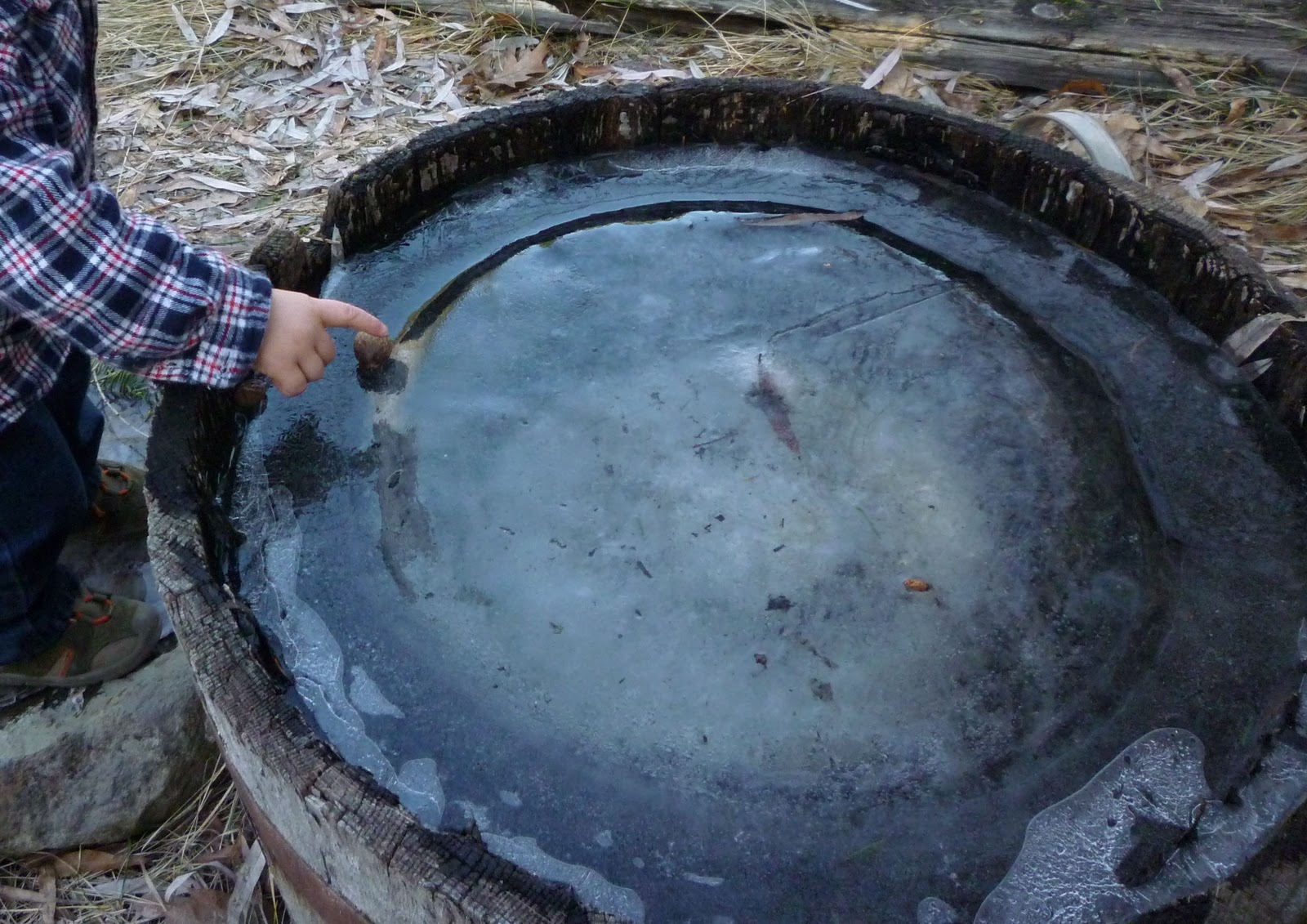
He is so good at walking on icy snow…I wonder how it feels to be so close to the surface and have a short toddly stride. Evidently pretty secure. Walking on snow was part of the adventure he was enjoying, and he never once slipped.


Scout is also an expert at recognizing a crabapple, even if it has lain under the snow for a few months and doesn’t look like its former self. He can get one into his mouth, avoiding the large piece of gravel that is also in his fist, and calmly remove the pit, enjoying what little “fruit” was left. I was a bit concerned when he picked up a specimen that had decomposed to an ugly state, but after squeezing it through his fingers for half a minute he rejected that one.

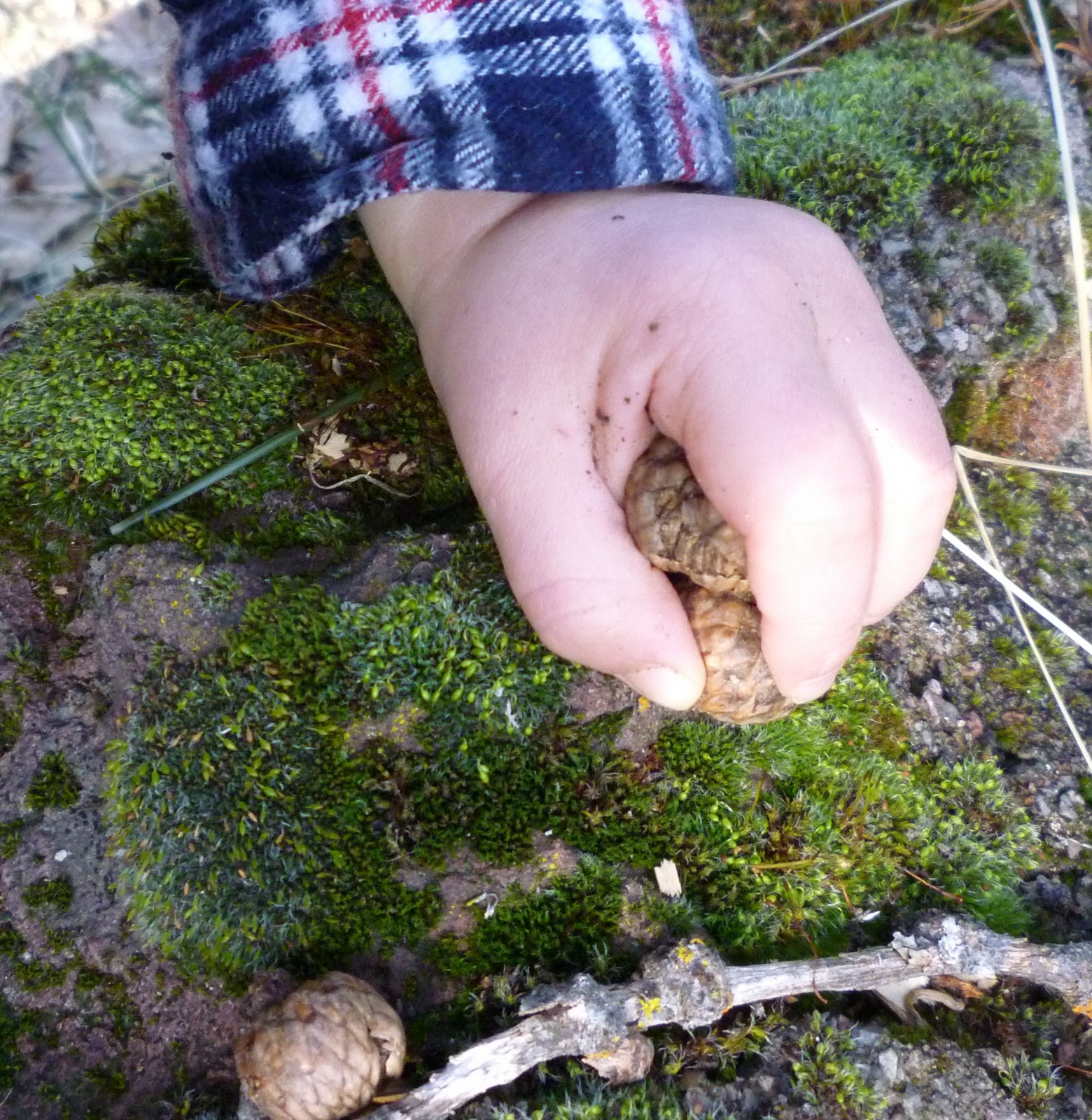
The main project of the hour was picking up stones, acorns, pine cones and sticks. He’s not yet at the age when sticks are preeminent, but he did carry a few for a while, which meant that his capacity for rocks was less.


But when he found the field of acorns, the sticks were dropped.The question is, how many acorns can fit in one little fist?

In spite of the sun, I’m sure his hands felt pretty cold after splashing in little puddles and patting ice, but he was oblivious to anything that would distract him from his Purpose.

However, Grandma did feel the chill, so we went inside and took a few acorns with us.


New Friends on the Way

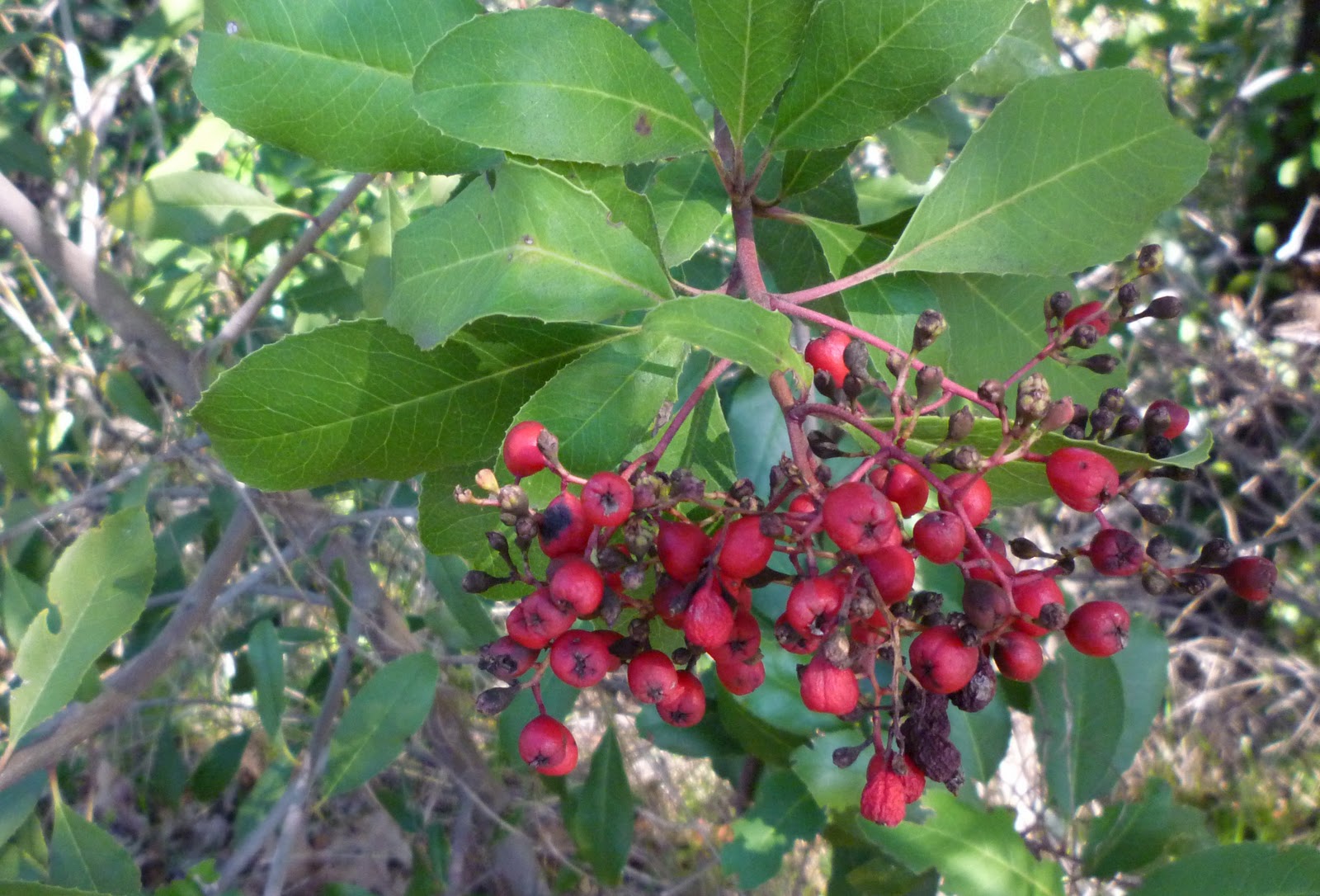
Heteromeles arbutifolia – toyon

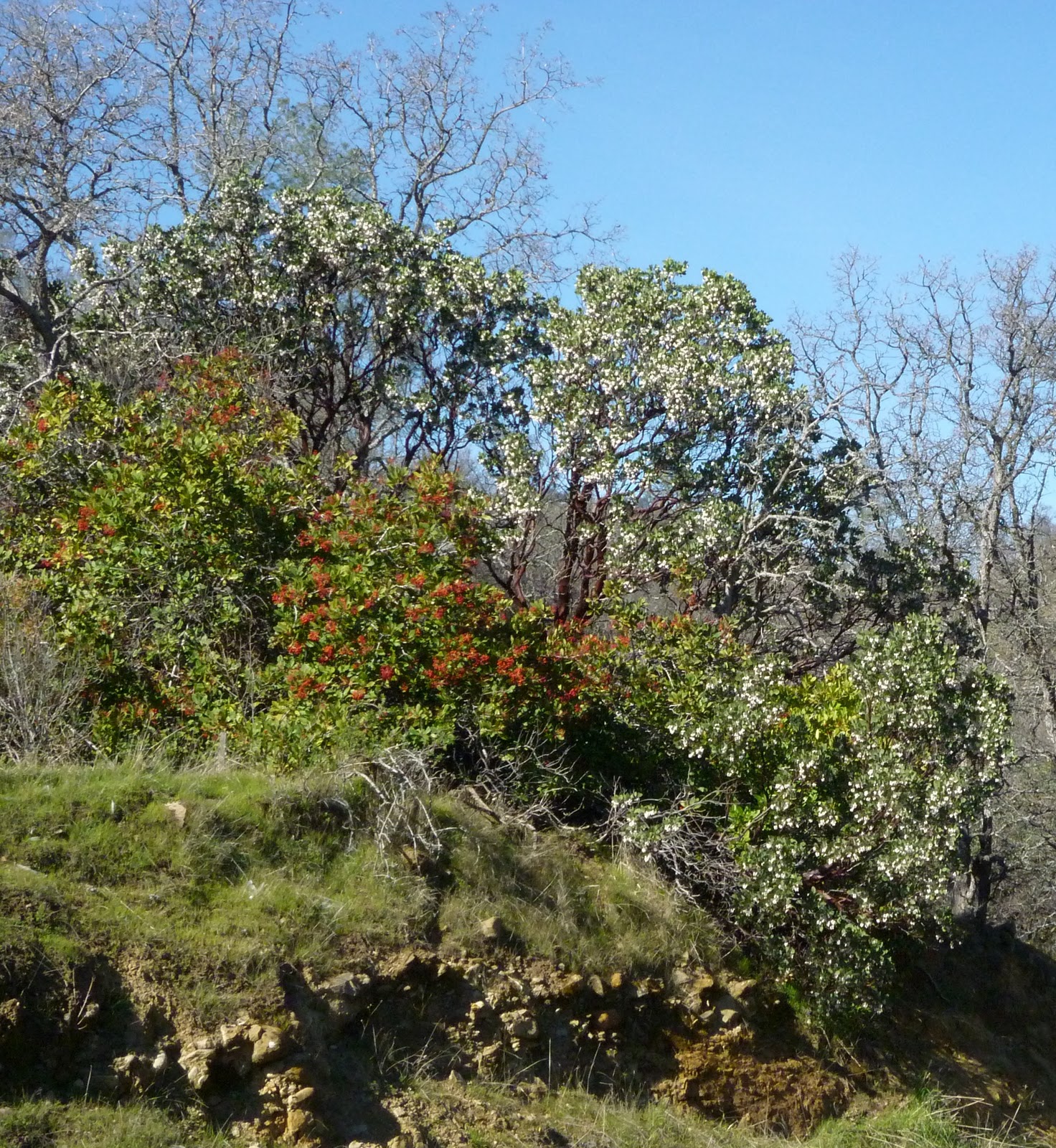
On my way to visit Pippin, The Professor, and Scout last week I stopped to see some of my tree friends. The lovely bay tree was blooming, all tangled up with the madrone, whose berries were almost gone.

toyon with manzanita behind

Also in the jumble was the toyon, with slightly fresher berries. I read in Pippin’s tree book that toyon is the only species in its genus, and it grows only in California and Baja California. Though I’d been introduced to Mr. Toyon many times in the last 40 years, I didn’t seem to pay much attention to him. I think we’ll be friends now. On this occasion I had the time and Google to help me focus and learn more, and I also have a blog where I can find him again if my memory fails.

another view of toyon

I did see quite a few of my most beloved manzanitas as well. Manzanita means “little apple.” The botanical name arctostaphylos means “bear berry,” though of course other animals also feed on these fruits. The common name of some varieties is also bearberry.

Right now the bushes are in bloom (so is the one in my yard); I saw pink- and white-flowered variations. There are about 60 species total, and most of those are native to California, so it’s a hard one to pin down as to which species you are seeing.

manzanita

Many of the trees I saw on this outing are growing on the slopes of that volcanic mountain I told about before, Mt. Saint Helena, in Napa County. On the weekend scores of cars were parked at the trailhead for hikes up to the top. The spot is in Robert Louis Stevenson State Park, so named because the author and his wife honeymooned on this mountain in 1880. He went on to use it as the model for Spyglass Peak in Treasure Island. One New Year’s Day a decade ago our whole family made the trek up and got amazing views.

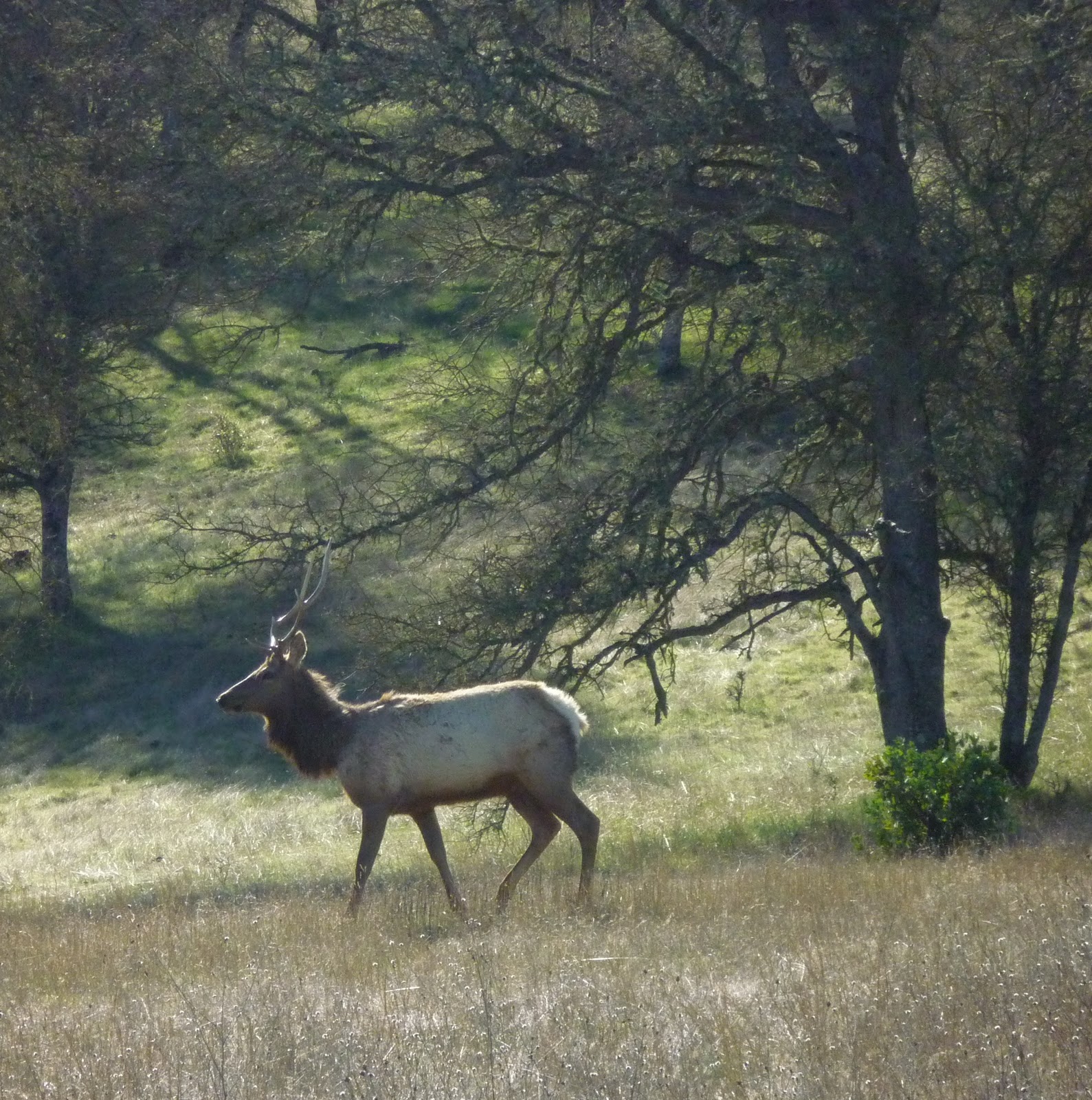
I left the forest and after driving a while longer I caught a glimpse of something off the highway that made me flip a U across three lanes to go back and take a second look. I was lucky there was a turnout right opposite the meadow where 20 elk were grazing!

Later The Professor told me that he had seen this herd of tule elk many times over the years, in this their winter home; it is the largest migratory elk herd in California. Tule elk are a subspecies of elk only half the size of Roosevelt elk, whose habitat is even more narrow than the toyon: they only live in California. I stumbled through the star thistles and got my socks full of prickles, trying to get as close as possible and watch them for a few minutes before they escaped.

On the way home I looked and looked for the spot where I’d pulled over three days before, but I couldn’t even find the turnout across from the meadow, much less see any animals. If I can get a view of the elk another time or two, I might put them in the category of friends, though they didn’t show any signs of wanting to get to know me. So far I’m content to thank God for this happy meeting.

Quote of the Week – beauty hidden there

“Unless we look at a person and see the beauty there is in this person, we can contribute nothing to him. One does not help a person by discerning what is wrong, what is ugly, what is distorted. Christ looked at everyone he met, at the prostitute, at the thief, and saw the beauty hidden there. Perhaps it was distorted, perhaps damaged, but it was beauty none the less, and what he did was to call out this beauty.” 

~ Metropolitan Anthony of Sourozh of blessed memory.

Mostly I know Metropolitan Father Anthony Bloom from his writings on prayer, which have been very encouraging. They convey a fatherly exhortation, as much as to say, as our Father might, “Child, why have you delayed so long coming to sit on my lap?” There is a flash of sadness that you did wait so long, but it is swallowed up in the joy and comfort of sitting there, and the love that flows, even though, like a child, you are fidgety and not paying attention as closely as could be desired. You find that you have hopped off His lap, hardly noticing yourself, but He smiles and enfolds you the moment you climb back up. 

Fr. Anthony shows you how this is so, and makes you want to get on with the work of repentance, of coming back into God’s presence again and again. Of course it is from Him that I have any hope of acquiring the loving attitude toward people that he talks about in the quote above. So the topics are connected.

This afternoon I went to a lecture by Father Mel Webber, author of Bread and Water, Wine and Oil. When he speaks I want to write down every word, which of course I can’t. But I hope to glean at least one good quote from my notes for next week’s posting.