Monthly Archives: August 2011

all the ingredients are here (poem)

This poem that Maria posted last week strikes a chord with me; I keep reading it over and over.

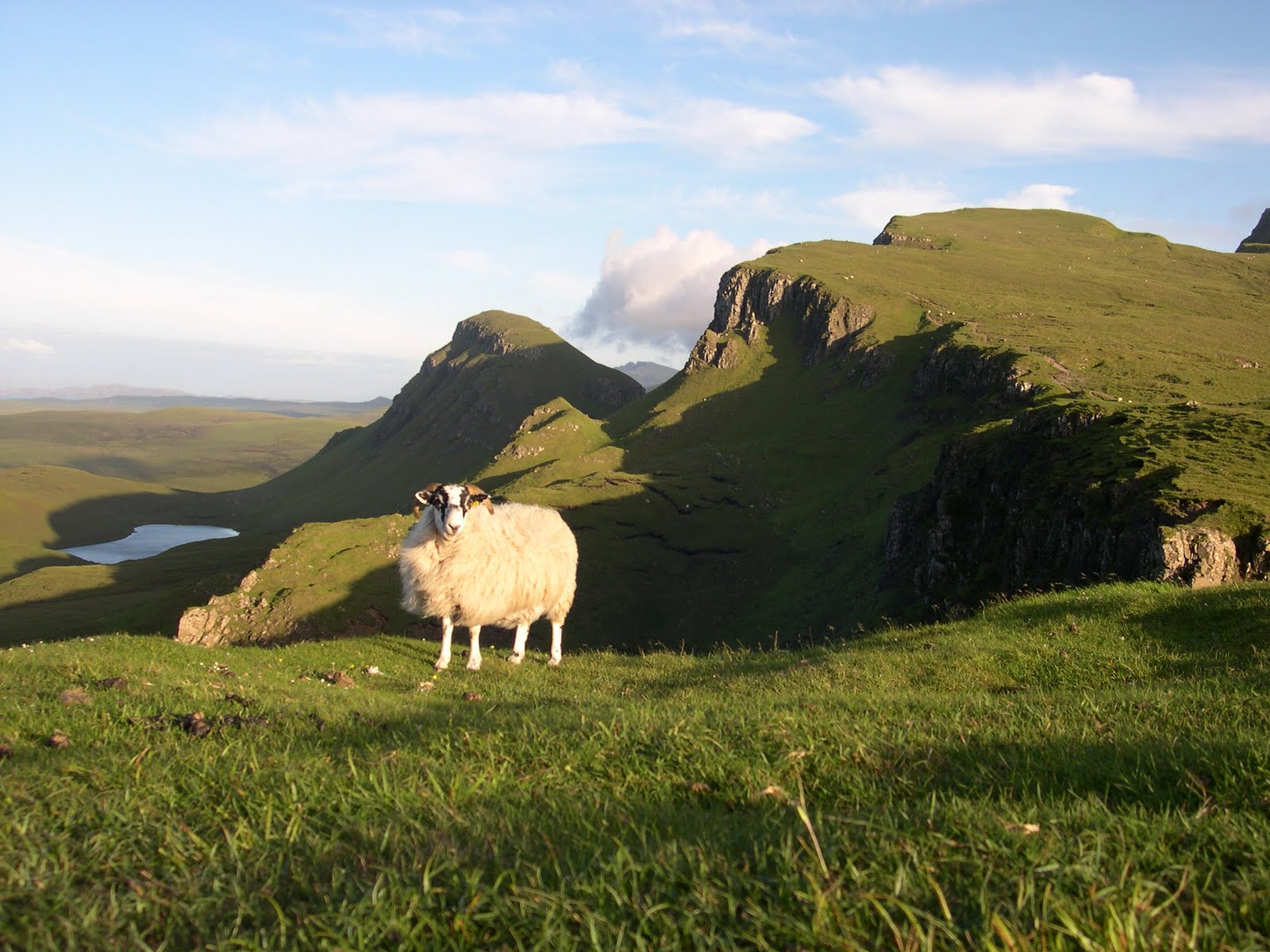
Isle of Skye (photo by Pippin)

MESSENGER

My work is loving the world.
Here the sunflowers, there the hummingbird —
equal seekers of sweetness.
Here the quickening yeast; there the blue plums.
Here the clam deep in the speckled sand.

Are my boots old? Is my coat torn?
Am I no longer young, and still not half-perfect? Let me
keep my mind on what matters,
which is my work,

which is mostly standing still and learning to be astonished.
The phoebe, the delphinium.
The sheep in the pasture, and the pasture.
Which is mostly rejoicing, since all ingredients are here,

which is gratitude, to be given a mind and a heart
and these body-clothes,
a mouth with which to give shouts of joy
to the moth and the wren, to the sleepy dug-up clam,
telling them all, over and over, how it is
that we live forever.

~ Mary Oliver, born in 1935, American poet

(I saw it here.)

Sunless and Satisfying Day

The beach cottage is next to a creek that forms a lagoon at this time of the year, cut off from the frigid Northern California ocean water by sand dunes and therefore swimmably warm, if you don’t mind the algae.

The whole place is full of memories for me, going back more than 20 years to the first time I was here with our children, who with their homeschooling friends built rafts of driftwood and punted around, while their baby sister crawled through the sand.
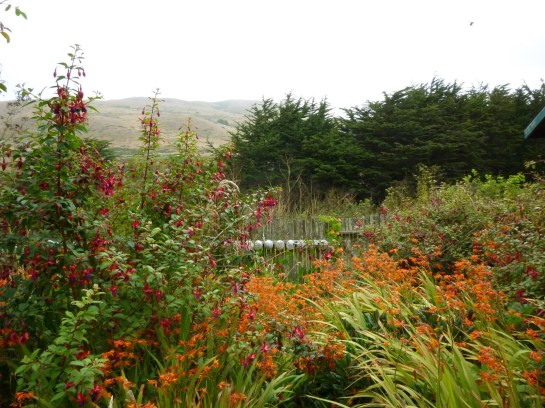
Those are abalone shells lined up on the fence.

We’ve come many, many times to this sleepy village, and this week it was to be with our friends who lived full-time in the house for a spell but now only vacation there. Mr. Glad and I are normally just a couple these days, but they were lucky enough to have four of their five daughters with them.

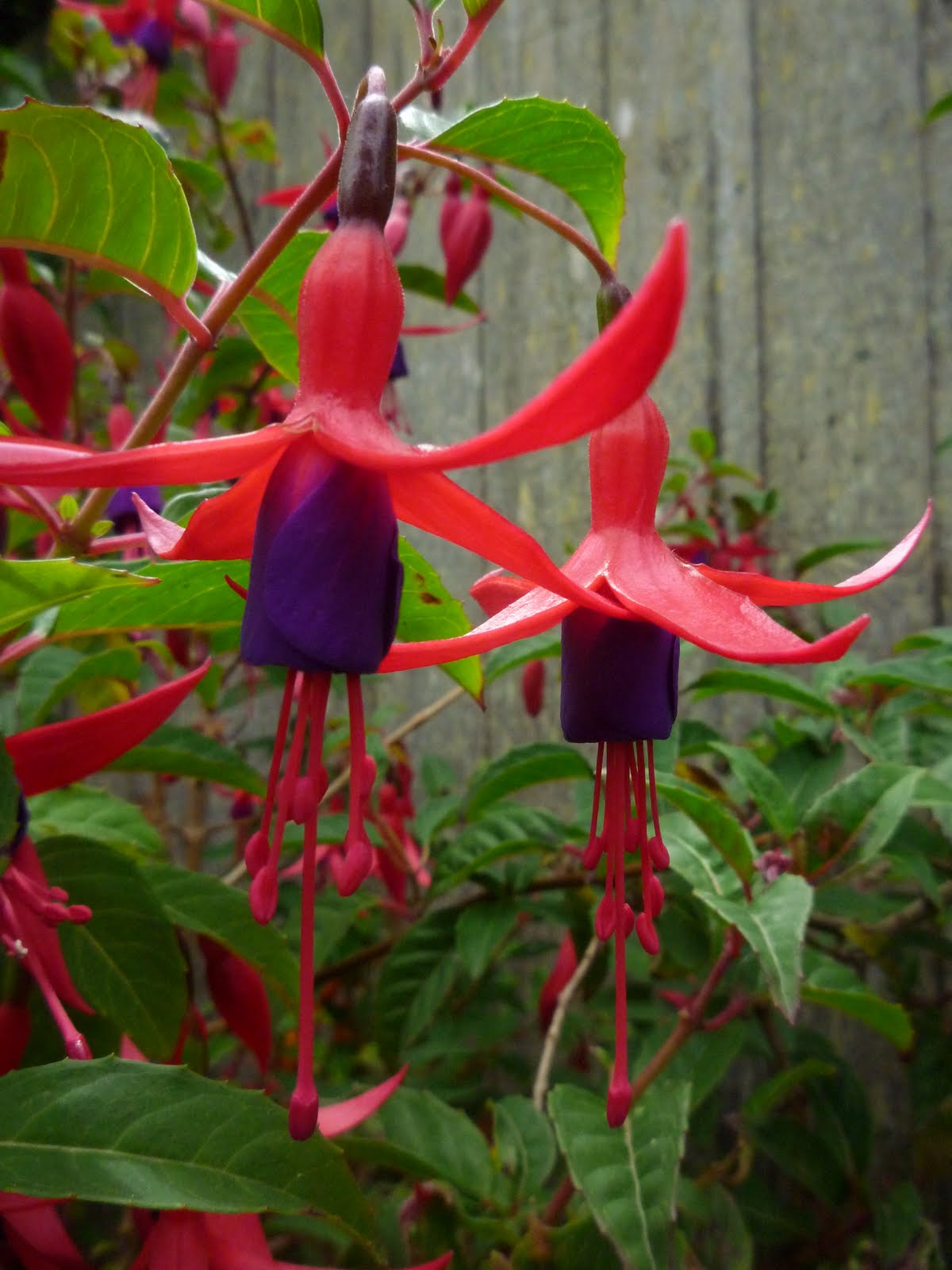
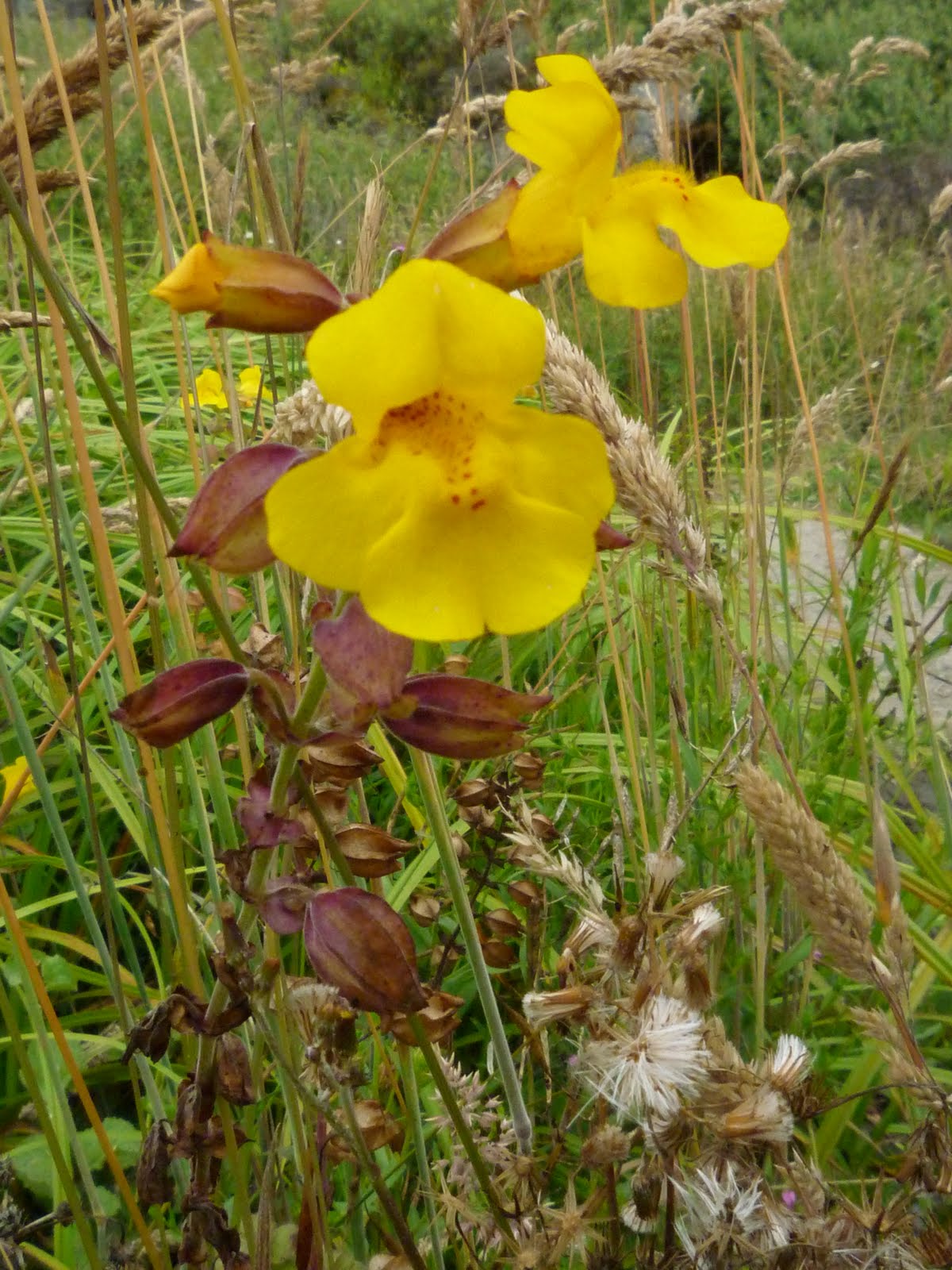
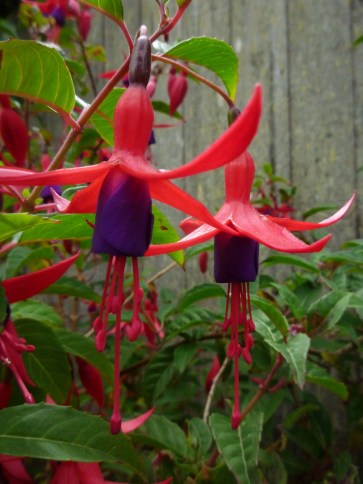
No sooner had we arrived than I discovered the fuchsias and Chinese firecrackers that had enthusiastically taken over the mostly untended yard. They make you think you are in a tropical paradise, until you look up and notice the fog and the golden hills.

In the background of the third fuchsia pic, you can see the wild fennel reaching for the skies. A lot of it has already dried and is getting mildewed.

The fields of rattlesnake grass a block away also contradict the tropical theme. I picked bundles of the stuff before I came to the conclusion that it’s really past its prime and that I should just come back next June to get it when it is still green and the “rattles” are whole.

Sand Art by Mr. G

We packed up some cheese, French and Italian breads, and watermelon, and drove up the coast to another beach just for fun.

One can’t easily predict how grey and cool the days will be out there, but we expected the sun to come out by the afternoon, and we pointed out the little patches of blue we could see here and there near the horizon.

At least it wasn’t terribly cold, though I did keep my sweatshirt on all day. The fog did not lift, but the sun burned some young chests right through it. And I was so happy and busy smelling the seaweed and the beach plants that I didn’t even notice the weather change that never happened.


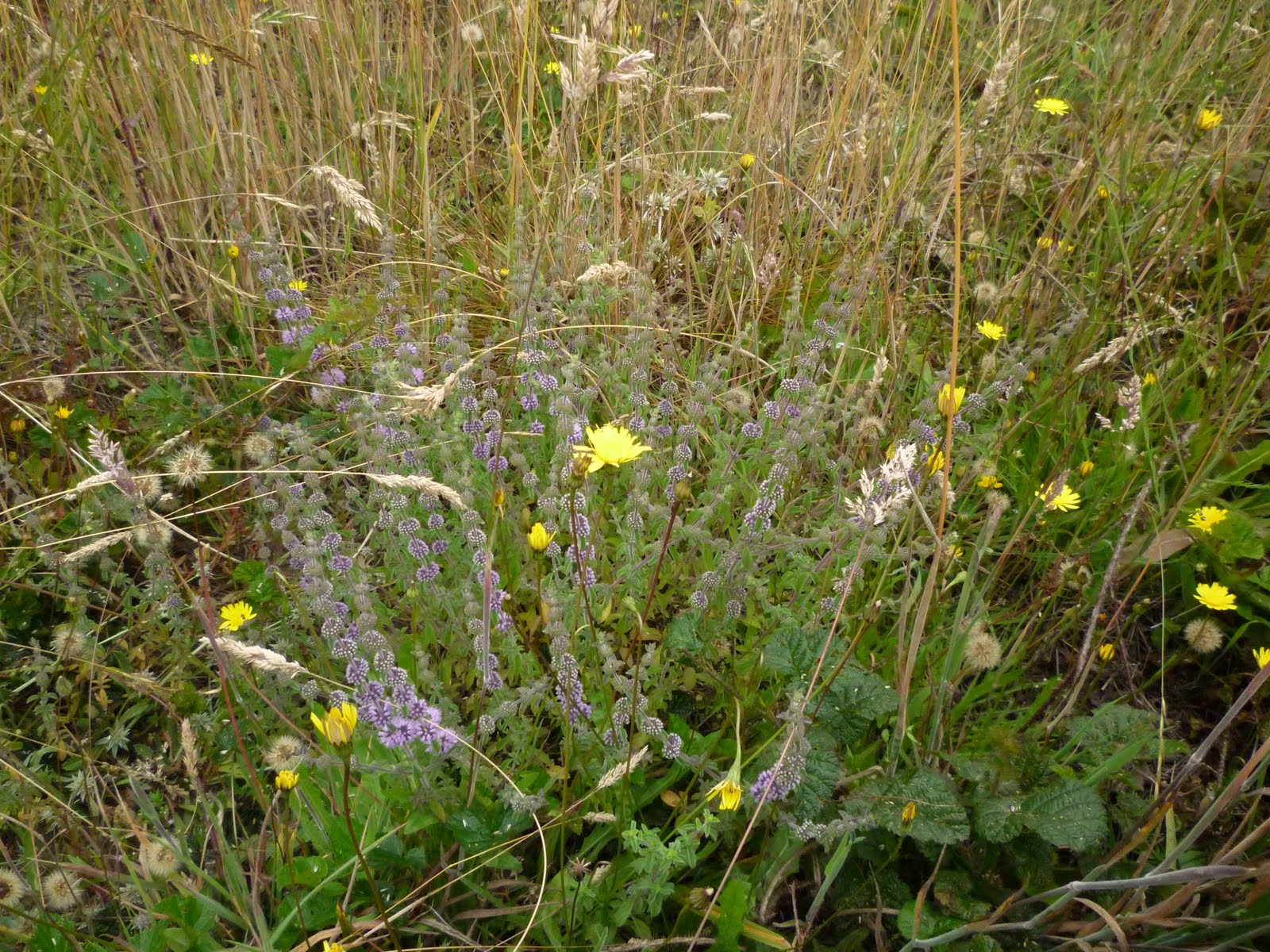
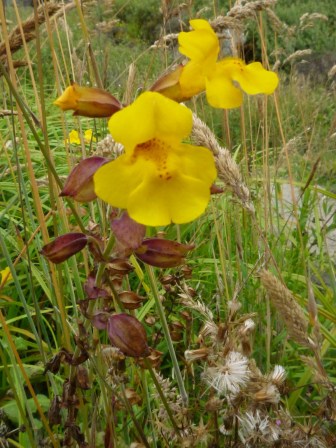
Some of us took a walk along the bluffs, where I found so many interesting things to see and click my camera at, including stickers and a minty purple flower that filled the low moist places.
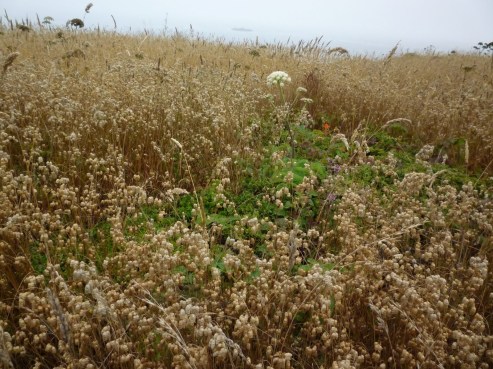
Rattlesnake grass and cow parsnip

When we returned to the cottage it was to cook together and cozy up with a big dinner and loving camaraderie — lively talk and laughing followed by sitting on couches and in rockers. Mr. G and I couldn’t help ourselves, taking lots of pictures of the girls so clearly content and comfortable with each other, tucked in with overlapping arms and legs and smiling so much you wouldn’t believe it.

I didn’t mind the grey skies, because the flowers and friendship made the best kind of sunshine.
California Mountains – Rivers and a Song

(This is the 3rd installment of my July vacation travelogue.)

Lake Tahoe sits on the California-Nevada state line, and the rivers in the surrounding mountains form the setting of the ballad “Darcy Farrow.” Ian and Sylvia were singing this song the first time I heard it, and I still think their rendition is the best. I heard many examples on YouTube while looking for one to post here.

As we drove down the highway south from the lake, we weren’t far from “where the Walker runs down to the Carson Valley plain,” and in fact we crossed all three rivers mentioned in the tale, the Truckee, the Carson, and the Walker. We even listened to Ian and Sylvia sing from the CD player at one point in our journey.

Of course I don’t like that Young Vandy put a bullet through his brain, but in comparing this story with other traditional songs I find I like it better than ones where the young man instead kills his beloved by accident or out of anger.

These rivers descend toward the east from from the northern Sierras and always refresh my mind as I watch them from the car. The Walker stays close to the highway longer than the others, and where it flows through desert-like terrain it captivates me by the contrast it gives to the sagebrush-covered banks. It’s fast and furious and carrying a lot of irrigation for the green fields of alfalfa grown farther east where the land flattens out. I recall those expanses of green and the beautiful Nevada cattle ranches in the shadow of the mountains — but we didn’t go that way this trip.

Four years ago we visited this area, and I wrote hasty notes in my journal as we sped along through ever changing layers of conifers, sagebrush, aspens and meadows, trying to preserve the moments of beauty. I didn’t get to catch my own photo of the rivers on either trip, but I found this one on the Web.

And below is one of ours, showing the mountains where the heavy snowpack from last winter is still melting and filling the rivers with icy water. On Hwy. 395 this far north the elevation is still above 5,000 feet so the summer temperatures don’t get extreme. The cattle looked content, and I know I was.

California Mountains – Tahoe

( 2nd of many posts in a series. 1st post: Getting Over )

Our neighbor camper played his lonely and cheery mandolin for hours each day that we were at the Meeks Bay Campground.

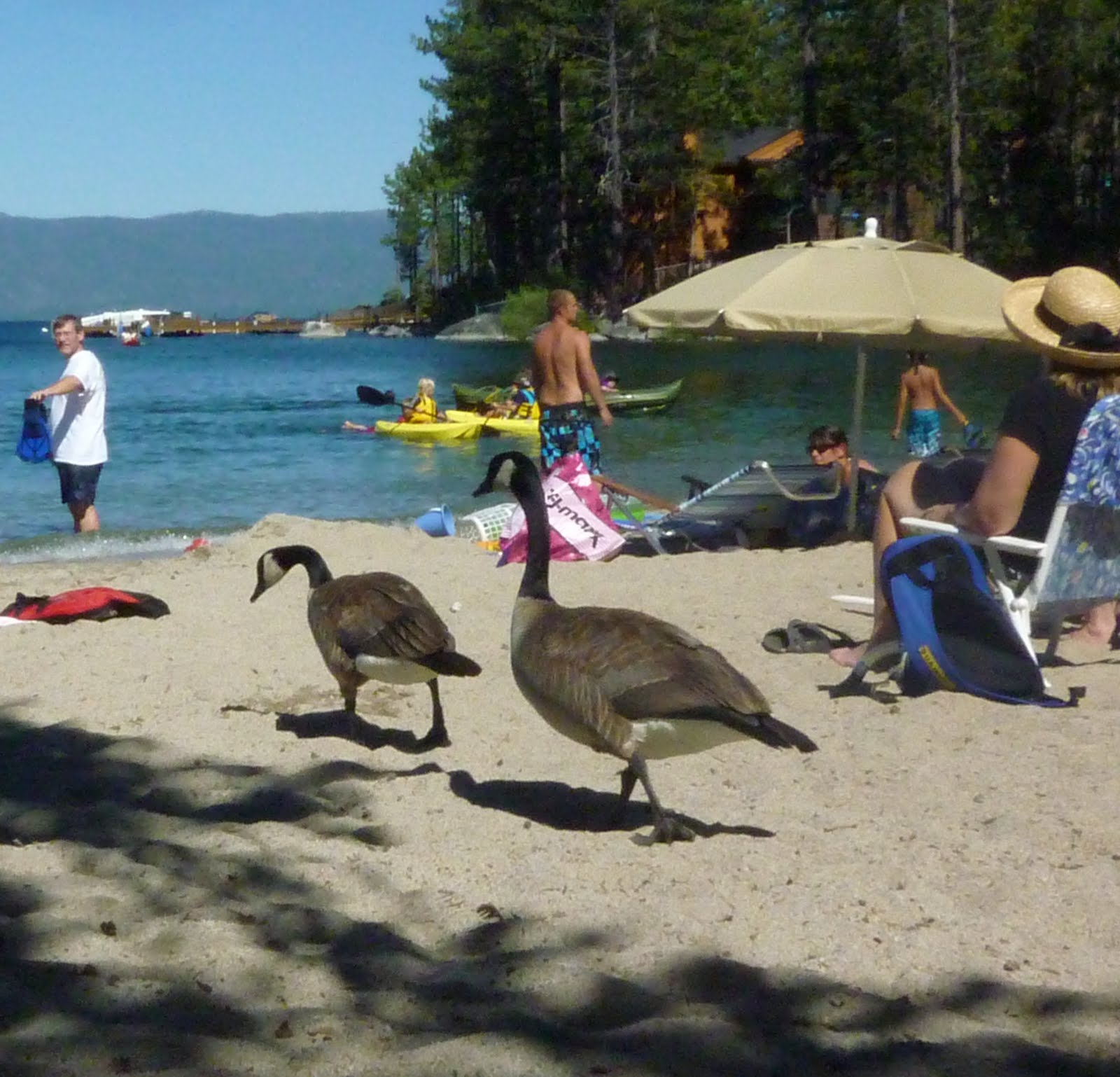
We had pitched our tent within walking distance of the beach, where we were surprised to see three or four Canada geese looking for handouts or taking a dip with the other bathers. The many children liked to chase them in the water occasionally, but the geese always swam faster than the children could run through the chilly waters.

The lake is high this year, the beaches shrunken, but we found a spot to plunk our chairs down in the sand with a view to people-and-geese-watch, glancing up often from our summertime reading.

GJ above Emerald Bay

Mr. Glad casually and calmly swam in the lake for ten minutes at a time, completely disguising the fact that it was cold — he estimated 60°.

I was content to wade fairly quickly out to a rock where I could sit and admire my manly husband, whom I compared to a younger, fatter guy who no sooner entered the lake than he headed right back to the dry sand moaning and sputtering and making a scene.

Bridges’ Gilia

The quaking aspen trees shaded our tent and made a lovely shadow picture on the roof in the mornings, and Indian Paintbrush flowers waved at the front door. Steller’s jays helped to wake us up early with their raspy voices.

Lake Tahoe lies at about 6,000 feet elevation, which makes for chilly nights and mornings, but a noontime picnic can be plenty hot if your site’s table is in the full sun.

We took a short hike to Eagle Lake, above Emerald Bay, and captured some wildflower images. The purpley one Pippin and I think is Bridges’ Gilia or Gilia leptalea, though it also seems to have a new and updated botanical name for some reason: Navarretia leptalea.

Photo by Mr. Glad

I especially liked to visit the beach at night when it was empty and the water was shimmering. Little waves were going blip-blip-swish on the sand, where by their tracks you could see that the geese had been the last creatures to go to their rest.