Monthly Archives: July 2013

What the World Needs Now

A recent confluence of thoughts began with hate and destruction, in a blog post from Fr. George:

When we dream about changing the world, we are expressing our own dissatisfaction with it, and thus our rejection and disdain for it. Can you really change something you hate? Not really. What you really want to do is kill it. We want to destroy the world to build one of our own liking.

To love is to accept things as they are, calling the good as good and the bad as bad, and not needing to change them in order to accept them. The truth is you can only change yourself, and even there we have limits because we were all made in certain ways and some things were not made to change.

Fr. George’s exhortation to love and accept “things as they are” brought to mind this poem by Mary Oliver that I have posted in the past:

MESSENGER

My work is loving the world.
Here the sunflowers, there the hummingbird —
equal seekers of sweetness.
Here the quickening yeast; there the blue plums.
Here the clam deep in the speckled sand.

Are my boots old? Is my coat torn?
Am I no longer young, and still not half-perfect? Let me
keep my mind on what matters,
which is my work,

which is mostly standing still and learning to be astonished.
The phoebe, the delphinium.
The sheep in the pasture, and the pasture.
Which is mostly rejoicing, since all ingredients are here,

which is gratitude, to be given a mind and a heart
and these body-clothes,
a mouth with which to give shouts of joy
to the moth and the wren, to the sleepy dug-up clam,
telling them all, over and over, how it is
that we live forever.

When I pay attention, I can hear that a message is always being sent my way, a choice is set before me every day, and on some days it seems to come every few minutes: Will I receive life, and my life, as a gift, or will I fight against what is handed to me, and try to create my own life and self the way I see fit?

I’m familiar with the teaching from wise church fathers that acceptance is a large part of humility. And when I read this passage from Metropolitan Anthony (from “Meditations on a Theme”) it seemed to go right along with these other expressions I’ve gathered here, on what should be my attitude in this life I’ve been made steward over. Met. Anthony credits St. Theophan as the source of his comments about how the earth can teach us:

Just think about what earth is. It lies there in silence, open, defenseless, vulnerable before the face of the sky. From the sky it receives scorching heat, the sun’s rays, rain, and dew. It also receives what we call fertilizer, that is, manure—everything that we throw into it. And what happens? It brings forth fruit. And the more it bears what we emotionally call humiliation and insult, the more fruit it yields.

Thus, humility means opening up to God perfectly, without any defenses against Him, the action of the Holy Spirit, or the positive image of Christ and His teachings. It means being vulnerable to grace, just as in our sinfulness we are sometimes vulnerable to harm from human hands, from a sharp word, a cruel deed, or mockery. It means giving ourselves over, that it be our own desire that God do with us as He wills. It means accepting everything, opening up; and then giving the Holy Spirit room to win us over.

This week I’m getting ready for a trip to the mountains, to My Lake (see posts with the label cabin). I’ll be getting the garden watered, and in the mountains I’ll be seeing lots of earth and its fruiting forests and wildflowers. I will try to take it all as a reminder to open up and give the Holy Spirit room.


Books have beauty inside and out.

I love it when the AbeBooks newsletter shows us interesting book covers. This particular edition features “The Prettiest Publications of the Past” and there are some lovelies. It’s almost enough to make me enter my credit card number right now so I can get a copy of The Book of Bugs for only $139.37.


Seas and Lands would cost not much over $80.


I could pick up Poppies and Wheat by Louisa May Alcott at $200…

But not really. I just like to look at the covers briefly, and then I go inside and delight in the artistry of the words, or I get caught up in the story or the vast worlds of ideas between the covers. I forget the pictures outside.

Still I wondered, do I have any pretty 19th century books on my shelves?

I own this copy of The Saints’ Everlasting Rest by the Puritan Richard Baxter. It was published in 1850 though he wrote in the 1600’s. I don’t actually find it pretty, but it’s the only one I found that has any decoration at all. It was given to my great-great-grandmother Margaret in New York City on the first day of 1859, when she was 24 years old and soon to be married.

I wonder if she read it? At the very back some words were penciled in and then erased. It wasn’t her fiancé who gave it, or anyone obviously family, for the message on the front flyleaf is signed somewhat formally “H.E. Browne”….

Well, you see how right off I’m concerned not with art but with the people or the book’s contents.

My favorite older book is from the 20th century, this copy of The Faithful Wife by Sigrid Undset. It was a recent gift to me from the shelves of an elderly friend, and I haven’t read it yet. But I think the design is very homey and wifey.


I’m reading The Gutenberg Elegies by Sven Birkerts these days, which is all about what’s inside the books and what goes on in our minds when we are reading literature. That paperback is on my nightstand, so it doesn’t show up on this handy-dandy bookshelf that Soldier made for me many years ago.

A disclaimer is in order: This son was pleased and happy to build a tabletop shelf according to the vision I described to him, but he made me promise to fill in the screw holes and crevices and paint or varnish it, because he wasn’t happy with the roughness of the finished result. I lied, or broke my promise, and never finished it, and here I am showing the whole world.  My children put up with a lot.

But it is beautiful, isn’t it? And when our older son Pathfinder saw it he immediately knew that he wanted several for his house, too.

Now go look at or inside a book.

The Complementarity of Heat

I noticed some ways that our heat wave complemented all our hospitality in the last few weeks:

1 – The extra warm temperatures that stayed up into the nighttime followed closely upon a late rain. This sort of tropical weather caused the basil (and everything, really) to grow lush early in the season, and that meant I could — I had to — make a huge batch of pesto.
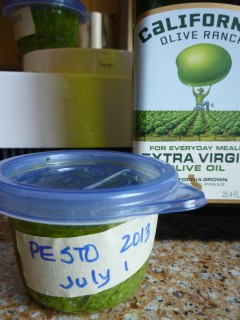
Pippin was here to be my recipe consultant and we decided to try adding some lemon juice to my recipe. My friend told me that she does that as a bit of preservative, and the kind of pesto they sell at Costco has a lemony flavor which some people prefer.

2 – It was convenient to have extra people around to help us eat the large quantity of green beans we slathered with the fresh pesto. Yum!

3 – Ivy and I could enjoy a long session with the lavender in the evening and we didn’t have to go back inside for our sweaters.


4 – Water play all day long! In the past I’ve seen others of our grandkids engrossed in washing play dishes while their teeth were chattering, it was so chilly. Ivy and Scout could be comfortable and wet at the same time.


5 – The pool warmed up and was fun to play in for hours. People could swim until the sun went down and not have to watch the fog come in.

6 – But I think my most favoritest thing has to do with the fact that I love to hang laundry in the sun to dry, and sheets are the easiest things to do that with, because they are so big, it doesn’t take long to get them up on the line and down. This summer I’ve had lots of sheets to wash already, and I have four times had the supremely satisfying feeling of using the free sunshine and afterward folding up the warm and sweetest smelling bed linens. I should write letters to the dear people who slept here and thank them for this.

If we keep living here I might never experience this concurrence of heat and guests again, and this will go down in Glad history as The Summer of the Complementarity of Heat and Hospitality.

One cupcake on Saturday and treats all week long…

My fortnight with lots of good company has come to an end. Of course I still have my husband who is normally all the good company I need, but it was a very wonderful thing to have our big house used for good purposes. Our guests were friends and family, and even strangers from Ohio and New York lodging here on account of a masters singing class held at my church. During this two weeks came the wave of heat.

One weekend Liam’s parents Soldier and Joy used our house for a birthday party for our little grandson. I love it when creative people decorate my house and take care of all the invitations and food for an event, and all I have to do is provide a relatively tidy environment and clean towels everywhere. In this case I even swept the floor because I knew the guest of honor would crawl all over it.

Frosting the lemon cupcakes

 
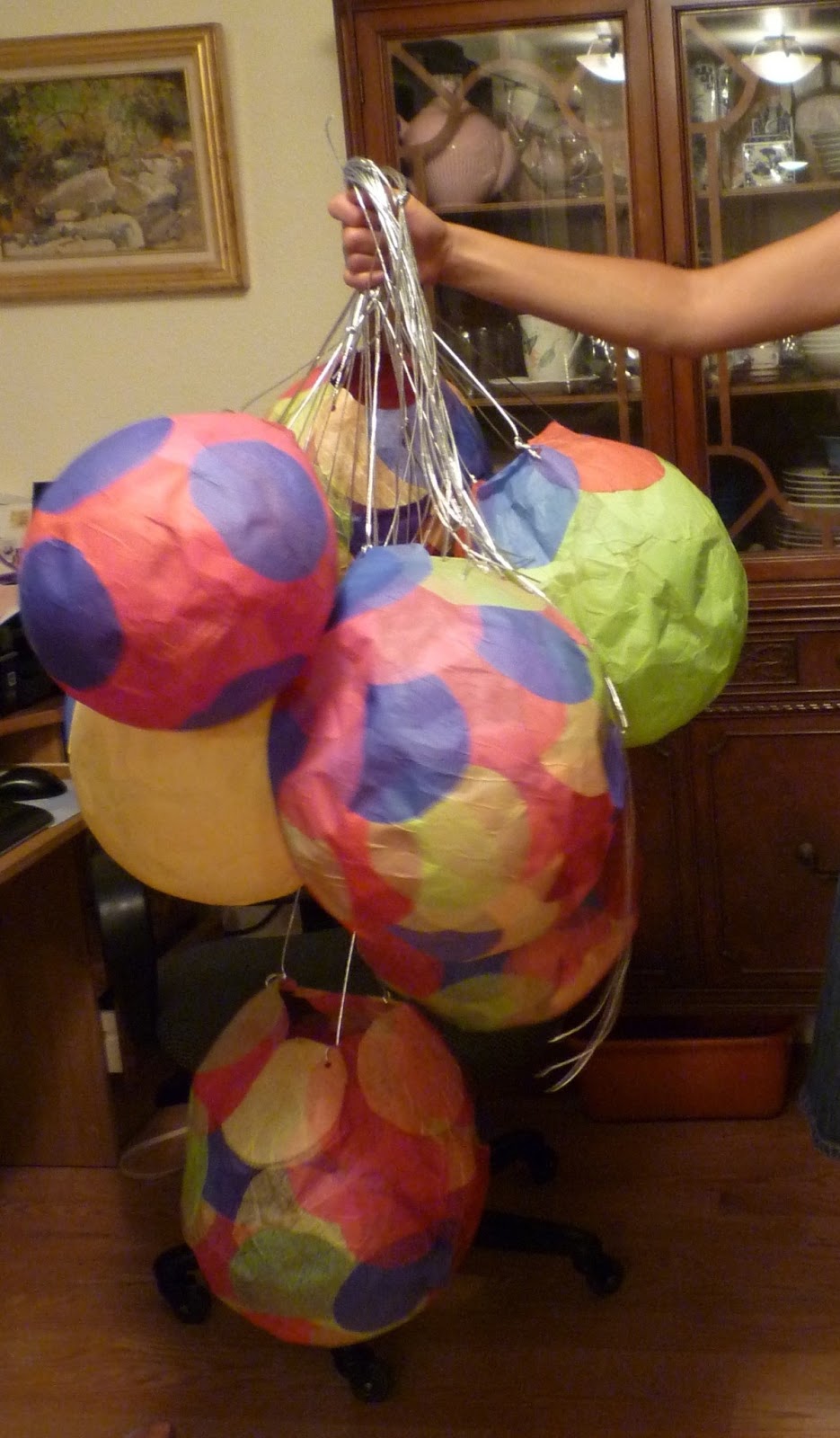
The Very Hungry Caterpillar was the theme for Liam’s party. His mother made the cutest treats and favors and lanterns relating to the story or the colors and shapes in the book. Liam didn’t notice most of it but he did eat most of a cupcake after the candle was blown out by his mother.

Their family had no sooner departed than Pippin’s crowd arrived with Pat. They had come south to enjoy more and different adventures before Pat had to return to MD. Pippin’s little ones are Scout and Ivy, so I was treated to more time with more grandchildren. So sweet.

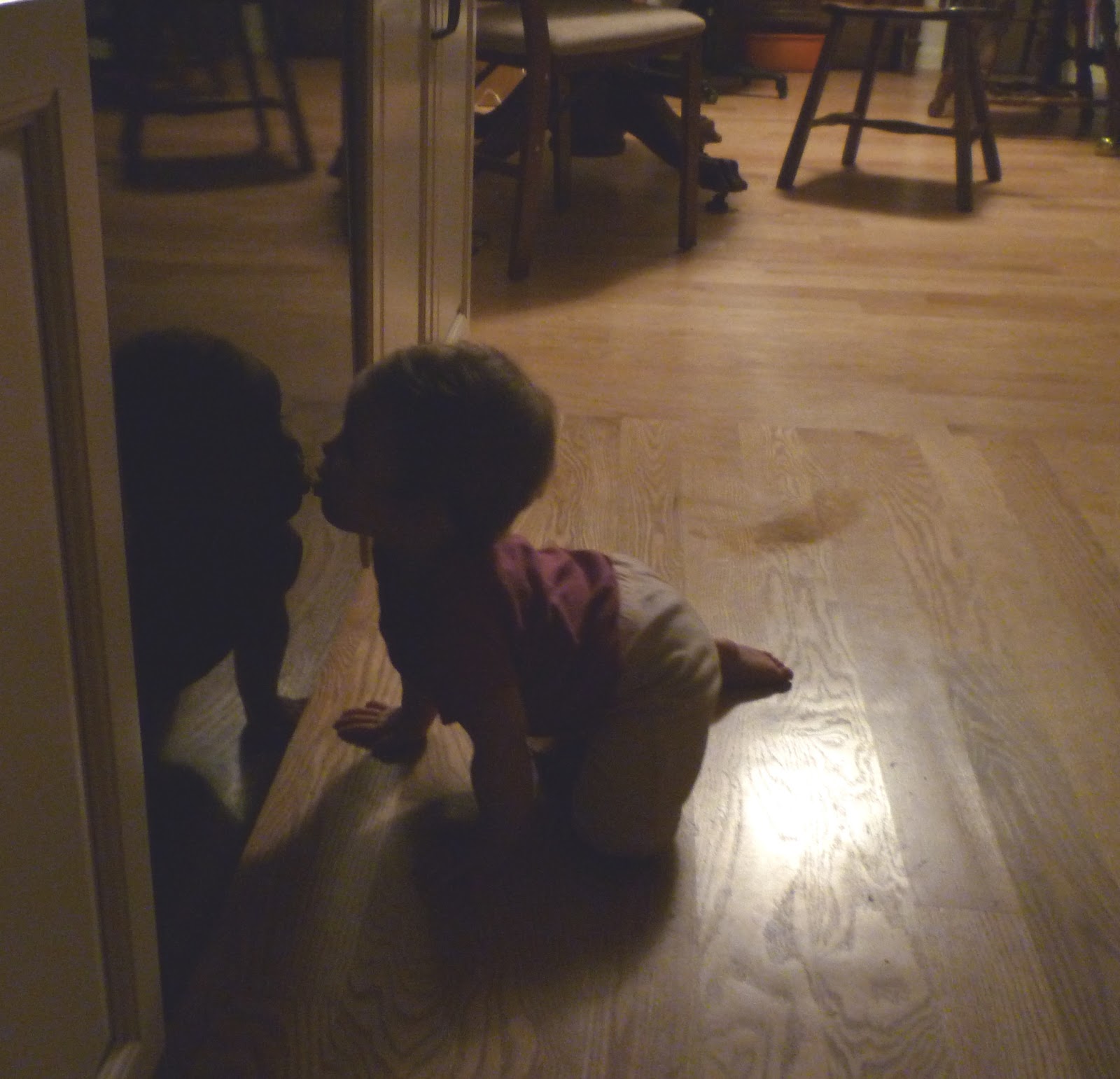
Ivy scooted around on the floor, too, and tried to kiss the little girl in the dishwasher door.

The heat wave surprisingly extended to the North Coast beaches and we all trekked to one where there was no fog or wind. Barely any sand got into our sourdough bread and cheese and blueberries, and only Scout stood on his head in the hole that the cousins dug.

God gave us a rainbow in a cloud. It was even more brilliant than this but faded somewhat while I rummaged around for my camera.


I took the photo below for Jo in Tasmania where they call New Zealand Spinach warrigal greens. Its botanical name is Tetragonia tetragonioides. It seems to have naturalized here on the coast and this is the second time I’ve seen it on beaches.


Here’s the same plant that keeps volunteering in my garden, amongst the tomatoes and snapdragons:

On the bluffs above the beach, as we were parting with Pat, I got a parting gift in this pale yellow/white paintbrush display in the middle of a coastal flower show. These all were just a few of the pleasures of the early summer – I will tell of more soon.