Monthly Archives: October 2018

I forgot that story already.

If only I were better at writing funny stories – I’ve had such good material for them the last couple of weeks! When the “funny” things are happening — i.e., the crazy days when I lose my keys, forget my phone, break a crown on my tooth, spend half the day on a cooking project that turns out barely edible, spend the other half driving back and forth to appointments or making fruitless business calls, and at the end of it all get stood up by my computer guy — my writer’s mind tries weakly to do its usual thing of organizing chaos into sentences, but only in synaptic spasms. And what exactly is humorous about this, anyway…? The exhaustion is total, and I only want to go to bed early.

The next day, if it is a recovery day — and I definitely haven’t had enough of those lately — I often do realize the hilarity of life, in retrospect. But I’m not a comedian, and when I start to relate my wonderment at how many things can go wrong, or I should say, how inconvenient adventures can be, it just sounds like a complaint. And if I did write my funny story, where would I put my beautiful flower pictures?

I thought of this once more after Columbus Day, which was fairly long and involved with things not going as planned. And I was feeling the deadline I was under, to leave town, and to get all my affairs in a good state so I could be away and not worry. When the problems were solved and I was all alone again, I found rest in writing about how a poem and my garden worked together to give me the needed R&R. I guess trying to write a funny story would be too challenging, a chore I don’t know how to tackle. My garden is easy, and writing (anything but humor) is my favorite kind of work.

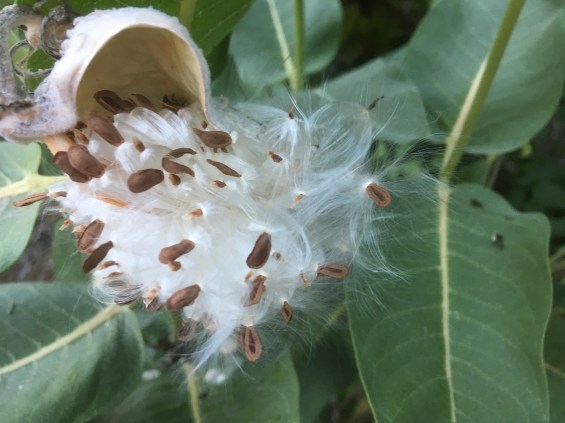
I soon forget the germs of those funny stories, because they are so quickly superseded by compelling tales of birdsong and burst milkweed pods, babies dropped fresh from Heaven, and bread dough rising.

Clara

Oh, but I have to tell you why I am going to be away from home! I am right now flying to Colorado with that new Baby Clara herself. Don’t worry, her mother and her brothers are with us. Clara’s father will meet us at the airport, and I will stay to help them out in their new town for a while. More stories are on the way.

The sweetest flower is here.

This morning I wished I had gloves on my hands, as I looped my loop through the fog that was lifting as I went. It was the time when many mothers are walking their kindergarteners to school and pushing a younger child in a stroller. Middle-schoolers congregate in the saddles of their bicycles, and then speed off at the last minute to get to class on time. I encountered four neighbors with three dogs, Nino, Corky and Maverick.
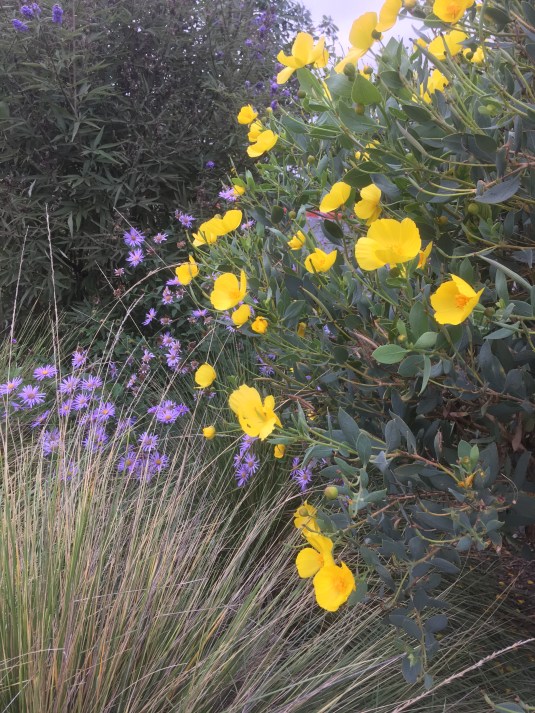

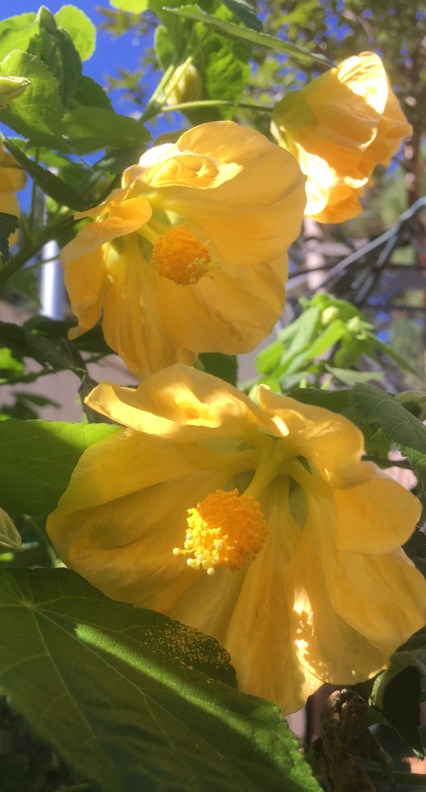
And flowers! Maybe because the edges of the walking paths were sheared in September, a few Queen Anne’s Lace flowers have opened near the ground. This thistle caught my eye, the first I had seen all year, contrasting in color and development with pyracantha already in the berry stage. Above it, the shrub with yellow flowers is one I don’t know, but it looks like it may originate in the southern hemisphere… I say that only because the leaves remind me of bottlebrush. Does anyone know it?

Less exotic is the lower creek path and the creek, seen from the bridge, my “same ol'” favorite scene.

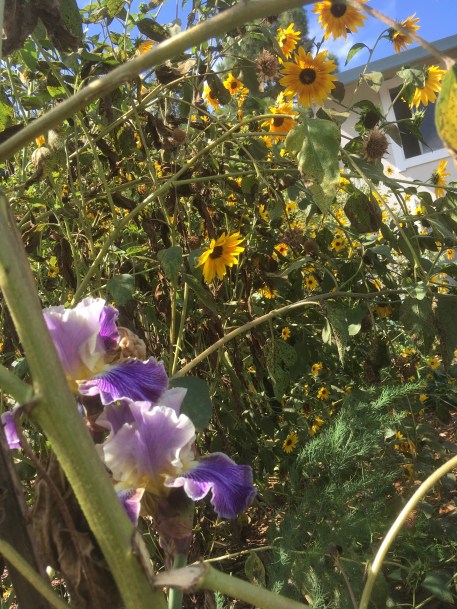
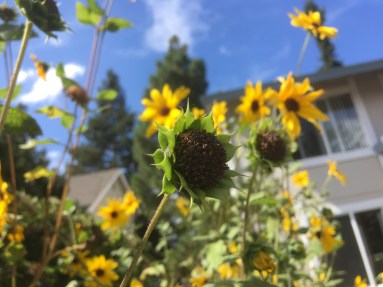
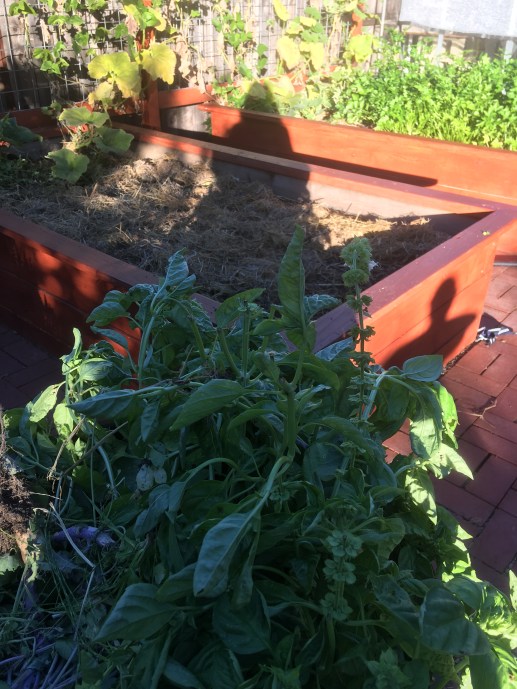
Birds are very busy in the runaway tangles of berries, vines and ripening seeds, such as in the patch of sunflowers in my front yard. I wish I knew who the little ones are that flit about there every day and fly away as soon as I get near.

I am listening to One Wild Bird at a Time by Bernd Heinrich, a man after my own heart, who spends days and weeks at a time in every season, tracking the behavior of birds in the Maine forest around his a cabin. He climbs trees to look into nests of woodpeckers and digs in the snow to count the fecal pellets of grouse, keeping detailed records in hopes of solving what to him are fascinating Why questions of the avian communities and society.
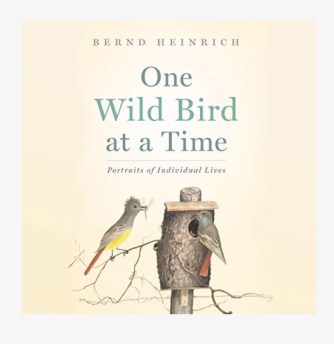
I also find this kind of detective work much more compelling to engage in or to read about than the kind of mystery novel many people enjoy, Agatha Christie or P.D. James or the current favorites. I don’t have the time Mr. Heinrich does to follow the owls and nuthatches through the woods, or to befriend and tame a starling; I also don’t have the vast background knowledge of birds and insects that informs his research, so I really appreciate his sharing the joy of his lifelong love in action.

Busy as my days have been, full as my house already is with books, when I returned a book to the drop slot at the library I succumbed to the temptation to look into the five ! 4-foot cube containers of books out in front, evidently what was left over from a book sale, books that were intended for thrift stores but — the truck had broken down, or what? We who were rummaging through only knew that the library staff had told us to take what we wanted, and yes, for free.

Wouldn’t you also have at least looked? I don’t know how much time I spent there, and I don’t know if it was the right thing to do… It was a strange situation, to be outdoors where several of the people were chatting as they tried to dig down at least a couple of feet toward who-knew-what treasures, the deepest of which were completely out of reach, unless someone wanted to dumpster dive.  One woman said, “These are some great books!” and later I heard, “These are all worthless.” Another seeker examined one volume after another and said to whoever would listen, “I never look a gift book in the mouth,” which seemed not the right proverb for what she was actually doing.

I talked to a third-grade girl who had come to the library with her grandfather. I showed her a few books I thought she might like, including Lemony Snicket and Beverly Cleary. She said about Cleary, “I only read the new books,” and told me she was looking for books for her baby sister.
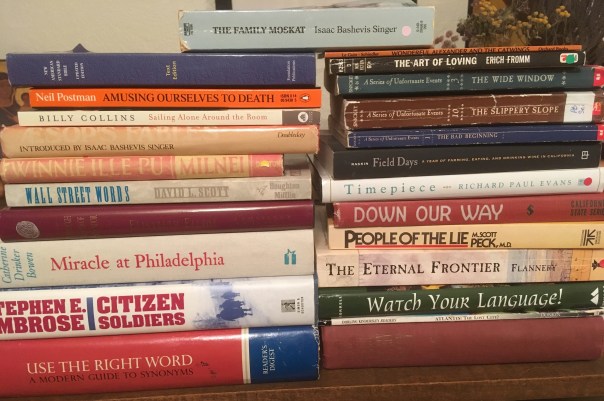
I still had a bag of books in my car that I had taken from a box at church, left by a friend who used to sell books online and now is joining a convent. The picture above shows most of what I brought home from the two sources, less a couple of cookbooks I’d already put on the shelf; the book at the bottom right with the embossing worn off is How Green Was my Valley.

The Art of Loving I have an interest in because I had read it on my own in high school, and then at an interview for a college scholarship the interviewer wanted me to talk about why I liked it; I was completely unprepared for that and dumb. (I did get the scholarship anyway.) Many of these books I chose thinking of the possible interest of various of my very large and growing family. But I suspect I will end up giving at least a few to the thrift store myself!

I’ve cooked a couple of new things lately, first, some homemade dry cereal as inspired by Cathy and adapting the method she uses, developed by The Healthy Home Economist. I’ve made two batches now, and I really like it. I decreased the amount of maple syrup in my second batch and used both chickpea flour and rice bran in my recipe, and it was still good 🙂 Cathy’s picture made it look very good, and mine doesn’t seem as appealing visually, but here it is.

My housemate Susan taught me this summer to enlist the aid of Saint Phanourios when I lost something important.  The second time it was my keys, including the remote key to my car, that I lost, and when I found them I decided to bake the traditional cake in his honor, for both findings. It’s a yummy spice cake that Greeks might eat at any time, baked with orange juice and zest, and walnuts.

I was anticipating the arrival of grandsons Liam, Laddie, and Brodie this week, and decided to revive my traditional Oatmeal Bread recipe to serve them, which was our sandwich, toast, snacking bread for twenty years or so when we fed a houseful of us. For a time Pippin was the baker. We had to turn out a batch of five loaves a little more often than once a week. (Not quite as often we added a batch of the sourdough bread.)

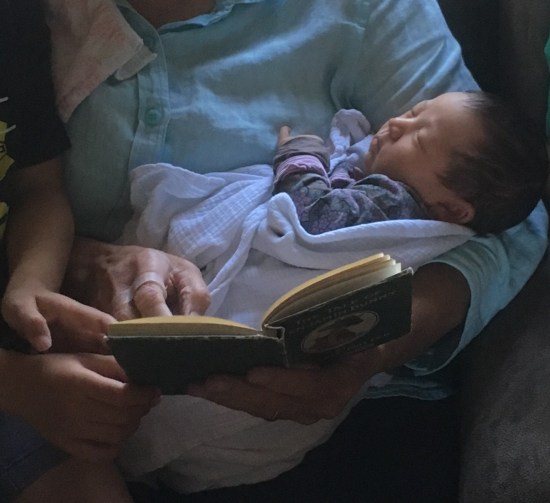
This is Liam giving a sniff to the loaves that had only just come out of the oven when they arrived, with their mom and tiny baby sister — ta da! — Clara. She is my favorite fall flower of all.
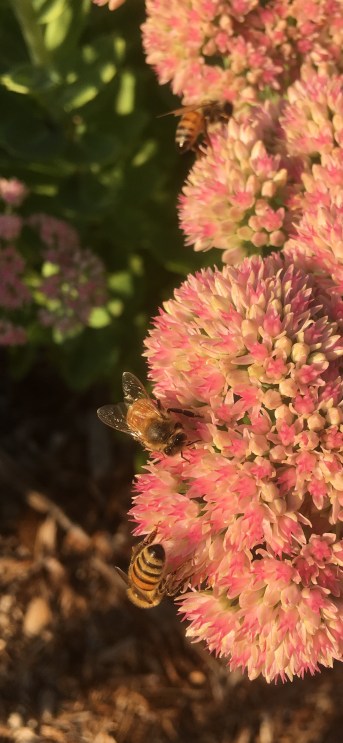
 

The ripe October light.

In the fall, the fresh air and thin, slanted light combine to put so many things in a new, or renewed, perspective. When I read the poem below, I found myself searching my surroundings for images that fit the poet’s words.

Down at the creek I had seen the leaves starting to turn, so I took their picture. But between now and then I’ve noticed so many other things even closer by that are infused with energy, and at the same time invite me to an intangible, but most real, resting place.

The sky bright after summer-ending rain,
I sat against an oak half up the climb.
The sun was low; the woods was hushed in shadow;
Now the long shimmer of the crickets’ song
Had stopped. I looked up to the westward ridge
And saw the ripe October light again,
Shining through leaves still green yet turning gold.
Those glowing leaves made of the light a place
That time and leaf would leave. The wind came cool,
And then I knew that I was present in
The long age of the passing world, in which
I once was not, now am, and will not be,
And in that time, beneath the changing tree,
I rested in a keeping not my own.

-Wendell Berry, from A Timbered Choir

Jewel tones and drapery.

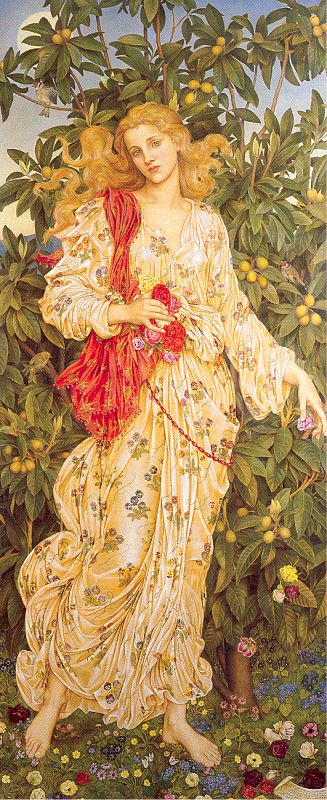
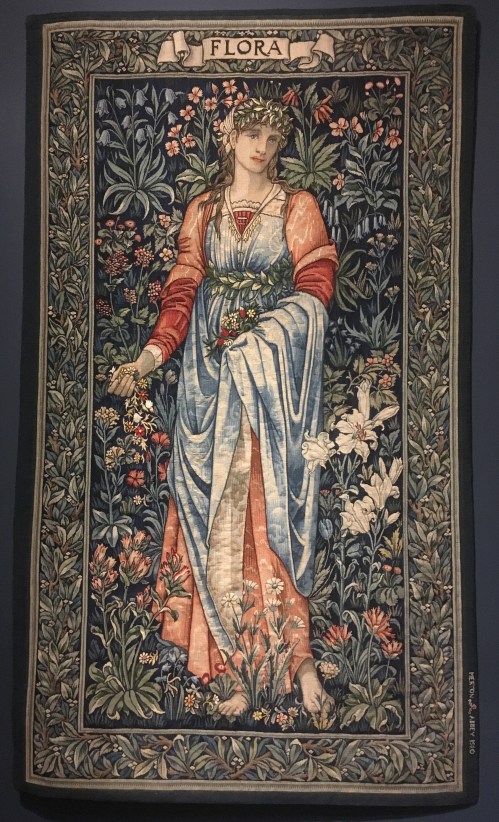
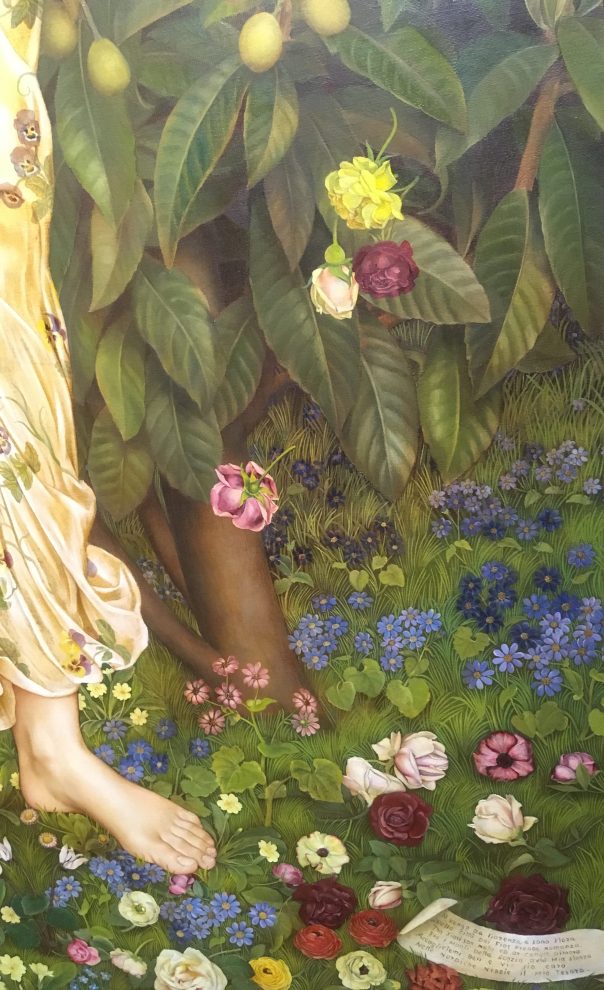
Flora, by Evelyn De Morgan

After showing for three months at the Palace of the Legion of Honor in San Francisco, the exhibition “Truth and Beauty: The Pre-Raphaelites and the Old Masters” closed just a few days ago. My friend Lorica and I managed to squeeze in a trip to “The City” in time to see it.

I didn’t read up on the subject beforehand, of the Pre-Raphaelite Brotherhood as a group of young enthusiasts named themselves in 1848, and what their concerns were. Lorica gave me some background on the drive down, and there was a lot of help to be had by reading the descriptions of each piece of art. One phrase that I read more than once was jewel tones. This term echoed in my mind as I walked through the exhibit and provided one idea to help me see a little better.

My knowledge being so sketchy, I can’t teach you about the movement, but there are good online sources of information, like The Art Story‘s page. What I will do here is try to share a few points and paintings that made the most impression on me.

And I have found quotes from these artists to let their own words speak as well.

From the Pre-Raphaelite Sisterhood site:

…the young artists studied early Italian frescoes and marveled at the difference between them and the current norms in the art world.  They believed that for the art world to be revived, it needed to return to the time before Raphael, and thus, the name Pre-Raphaelite was born.  In the midst of the Industrial Revolution and scientific discovery, these artists looked backward and created works that celebrated a distinct Medieval aesthetic.

The Brotherhood’s early doctrines were expressed in four declarations:

  • To have genuine ideas to express;
  • To study Nature attentively, so as to know how to express them;
  • To sympathize with what is direct and serious and heartfelt in previous art, to the exclusion of what is conventional and self-parodying and learned by rote;
  • And, most indispensable of all, to produce thoroughly good pictures and statues.

The Pre-Raphaelites created art that is known for its colorful brilliance. They achieved this by painting white backgrounds that they would later paint over in thin layers of oil paint. Their work was meticulous and their subject matter drew inspiration from myths, legends, Shakespeare, Keats, and lovely long haired damsels that we now equate with Victorian beauty.

All great art is the work of the whole living creature, body and soul, and chiefly of the soul.
— John Ruskin

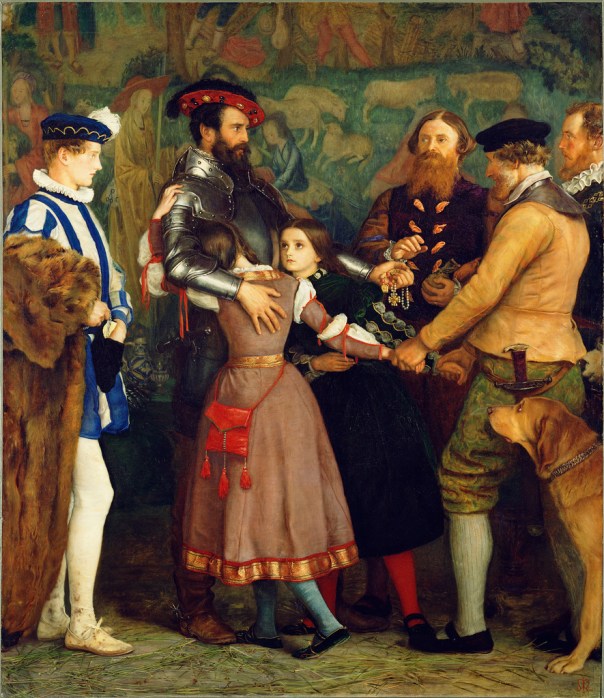
The Ransom, by Millais
Flora, by Burne-Jones
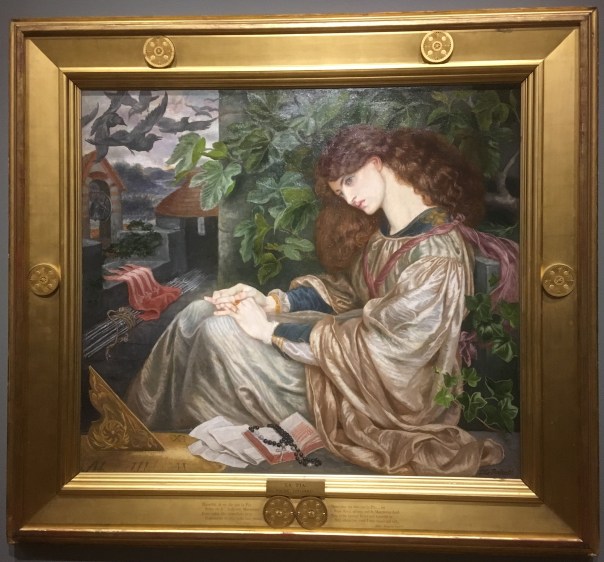
La Pia de Tolomei, by Rossetti
Burne-Jones and Morris

William Holman Hunt founded the Brotherhood along with Dante Gabriel Rossetti and John Everett Millais. John Ruskin became their champion for a time, and when William Morris founded his decorative arts firm in 1861 he made partners of Edward Burne-Jones, Rossetti, and several other artists, to “undertake carving, stained glass, metal-work, paper-hangings, chintzes (printed fabrics), and carpets.”

I’ve found it a pleasant use of time to go to the Wikipedia sites for each individual artist who is associated with this movement, to learn more about them and their interrelationships, their wives who were often their models, and their love triangles.

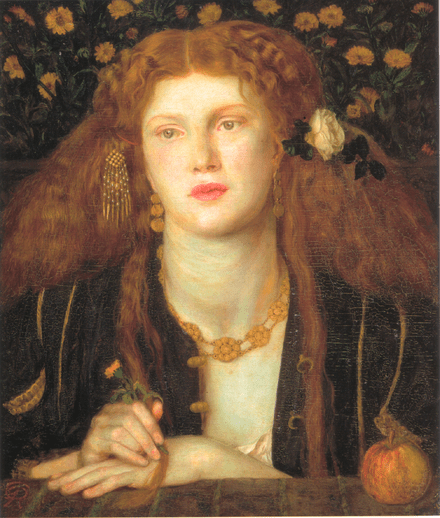
Bocca Bacia, by Rossetti
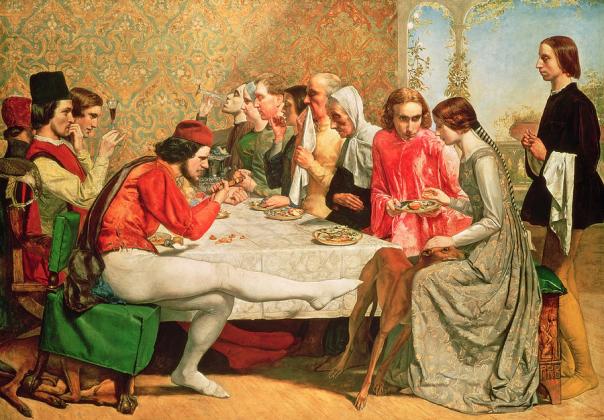
Isabella, by Millais

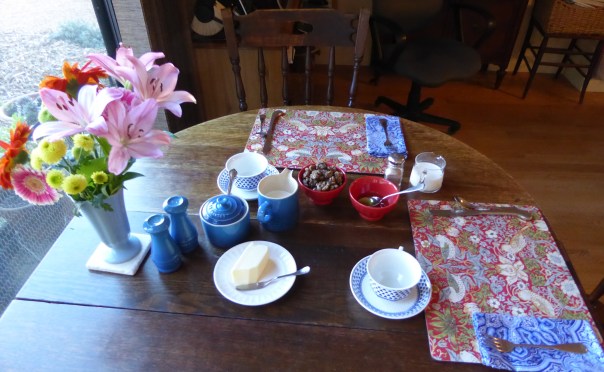
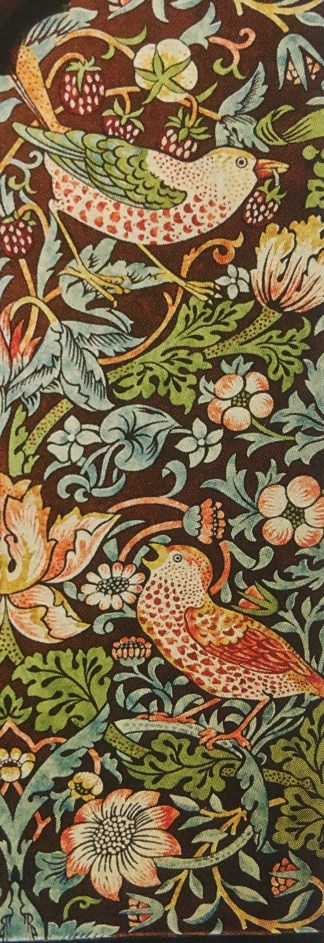
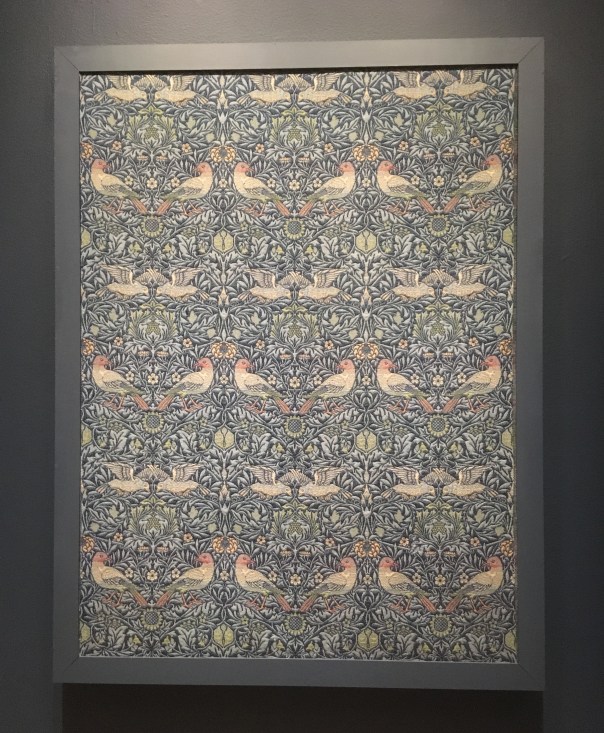
I had in the past become interested in John Ruskin from reading Alain de Botton’s The Art of Travel, and I enjoy William Morris every day as I eat my breakfast and dinner on placemats of his enduring design. (But the picture below is of a special party.)

Have nothing in your house that you do not know to be useful, or believe to be beautiful.
–William Morris

The Wikipedia article on Rossetti quotes John Ruskin:  Every Pre-Raphaelite landscape background is painted to the last touch, in the open air, from the thing itself. Every Pre-Raphaelite figure, however studied in expression, is a true portrait of some living person.

Giotto Painting the Portrait of Dante, by Rossetti
Detail of De Morgan’s Flora

Paint the leaves as they grow! If you can paint one leaf, you can paint the world.
– John Ruskin

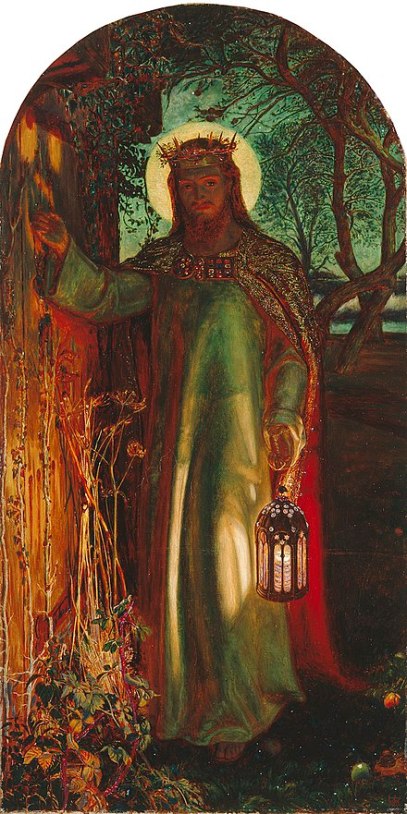
The Light of the World, by William Holman Hunt

From Wikipedia: The Light of the World is an allegorical painting by the English Pre-Raphaelite artist William Holman Hunt representing the figure of Jesus preparing to knock on an overgrown and long-unopened door, illustrating Revelation 3:20: “Behold, I stand at the door and knock; if any man hear My voice, and open the door, I will come in to him, and will sup with him, and he with Me”. According to Hunt: “I painted the picture with what I thought, unworthy though I was, to be by Divine command, and not simply as a good Subject.”

The more materialistic science becomes, the more angels shall I paint.
Their wings are my protest in favor of the immortality of the soul.
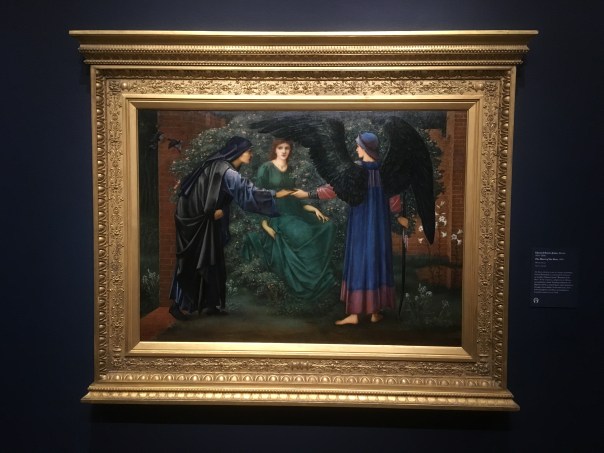
— Edward Burne-Jones

Colorful brilliance… saturated color… details, textures, women as muses, nature, light.

And clothing! I do often think of this, how much painting of clothing artists have done, and the Pre-Raphaelites were certainly good at it. My appreciation for the beauty of the garments and the way the fabrics drape on the wearers’ bodies was enhanced just today when I was reading/listening to Aldous Huxley’s The Doors of Perception. He speculates that some artists commonly have the ability to see into the is-ness of things such as he only experienced while experimenting with mescaline. Under the influence of the drug he saw the folds of his trousers as he had never noticed them before, and that leads him to muse on the art of drapery:

Artists, it is obvious, have always loved drapery for its own sake – or, rather, for their own. When you paint or carve drapery, you are painting or carving forms which, for all practical purposes, are non-representational-the kind of unconditioned forms on which artists even in the most naturalistic tradition like to let themselves go. In the average Madonna or Apostle the strictly human, fully representational element accounts for about ten per cent of the whole. All the rest consists of many colored variations on the inexhaustible theme of crumpled wool or linen. And these non-representational nine-tenths of a Madonna or an Apostle may be just as important qualitatively as they are in quantity. Very often they set the tone of the whole work of art, they state the key in which the theme is being rendered, they express the mood, the temperament, the attitude to life of the artist….

Not an inch of smooth surface here, not a moment of peace or confidence, only a silken wilderness of countless tiny pleats and wrinkles, with an incessant modulation – inner uncertainty rendered with the perfect assurance of a master hand – of tone into tone, of one indeterminate color into another. In life, man proposes, God disposes. In the plastic arts the proposing is done by the subject matter; that which disposes is ultimately the artist’s temperament, proximately (at least in portraiture, history and genre) the carved or painted drapery.


Truly, the beauty of the clothing in the paintings I have posted is art for art’s sake. De Morgan’s Flora’s dress at the top of the page is a “silken wilderness” of folds, so luxurious and lovely. Even in The Ransom, I am quite taken with the texture of the man’s leggings and the way his trousers have been pressed into creases.

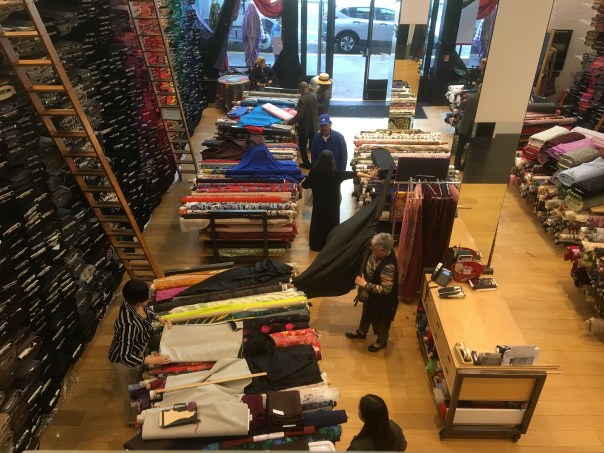
We did not talk about our next activity as being any kind of logical continuance from the museum, but I think it was. As on our previous trip together to the big city, Lorica had business at Britex Fabrics, the kind of store people drive a hundred miles to shop at. You can get just about any textile you need there, in the color you want. The staff really know things and come alongside.

While Lorica was discussing her needs with the salesperson, I watched a smiling black man on one of those ladders, in the green area, trying to help a woman far below, who called up to him, “How about that jewel-toned one?” He laughed and said, “I don’t have any green jewels in my collection, so I don’t know what you mean!”

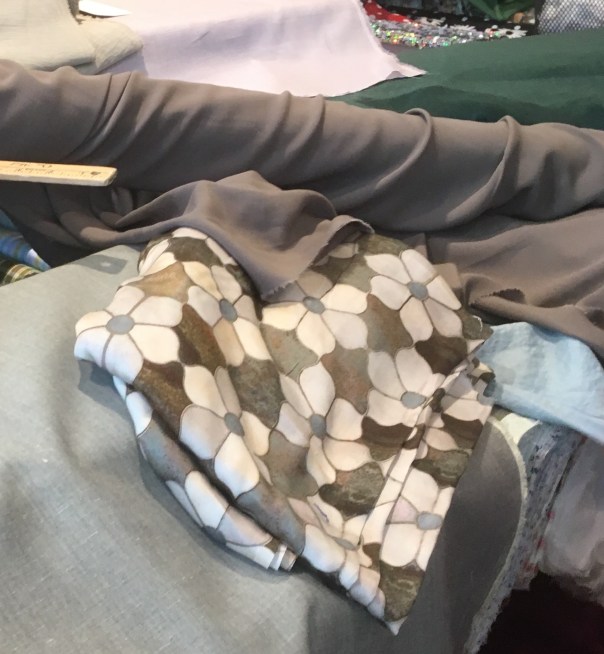
Lorica was looking for fabric for several projects, wool, silk, and cotton. She plans to make two blouses to wear with a skirt she will sew from a flowered “cotton satin” I brought from India.

She chose the green and the blue.

I saw this piece of linen unrolled from its bolt for display, and think of it as jewel-toned!

In the evening, back at home again, I was reading a magazine while eating dinner on my (blue, this time) William Morris placemats. There in the Bon Appétit restaurant issue was an eatery with William Morris wallpaper.

The past is not dead, it is living in us,
and will be alive in the future which we are now helping to make.
— William Morris