 I have been so busy with many things inward and outward, and I’ve wanted to write about all of it! Experiences of hiking or reading, or discovering connections between the people I meet on the street and those in my books; learning how the wrong ideas of a thousand years ago have brought us to the society we have today, and about how the small and strong actions of good people likewise have a long trajectory…. When I can’t gather my thoughts about even one part of it, and put them into a tidy or untidy blog post, I remain unsettled and confused at some level. The experience lacks a certain completeness.
Lots of bloggers I know seem to be writing fewer posts lately; I wonder if they feel the way I do. I think that after a period of upheaval or change or busyness, after reading and participating in family or church feast days, or traveling — one needs a time of quiet and retreat when not much is going on, in order to process what happened. But during most of this year, there are new loose ends — discoveries or disasters or directives — every day or even more often. When I start to organize a few thoughts, suddenly another one pops up and throws my mind into disorder again.
 But today — maybe I could write about today, its beautiful and specific concrete things especially, with my apologies for those two whole paragraphs above which I devoted to vague intangibles. I shucked beans this afternoon, at the invitation of Cathy, who wanted some company to shell the harvest of what she and her husband had raised this year. He is Mr. Greenjeans whom I’ve mentioned several times, but I don’t think Mrs. Greenjeans is the right name for her.
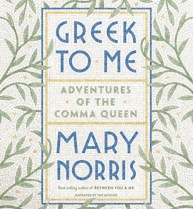
Anyway, this is exactly the kind of activity, or one of the kinds, that I have been wanting to do more of. It was the perfect opportunity to get some work done and chat at the same time. In order to get us away from the category of current events that cause our heart rates to rise, I told her about two of the books that I have been enjoying lately that are in a category together. Here I want to mention only one of them, Greek to Me, by Mary Norris.
The first coincidence having to do with that book was this morning when I returned from errands and saw a strange couple walking their dog on the sidewalk opposite my driveway. We got to talking and introduced ourselves from that distance, and they told me the dog’s name was Athena. The man noted that often they remember dog names better than human names, and I said that I would probably remember “Athena,” having just been listening to stories about Greek gods two minutes before.
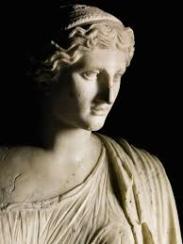
Mary Norris’s book is not only about Greek gods. It’s about her love affair with everything Greek, and her study of modern and ancient Greek language. She narrates her own book on Audible, and I do love her voice, both her writer’s voice and her physical voice. I first encountered it listening to her first book, Between You and Me, which she also narrated. She tells very personal and often amusing stories all through, about her Catholic childhood and emancipation and her various adventures in language learning over the decades.
Psychotherapy helped her to deal with childhood trauma, but so did immersing herself in stories of Mount Olympus. One of several pilgrimages culminated in her skinny dipping on Cyprus, off Aphrodite’s Beach, as she believed it to be, in hopes that seemed not entirely self-mocking, that she might become more beautiful in those mythical waters.
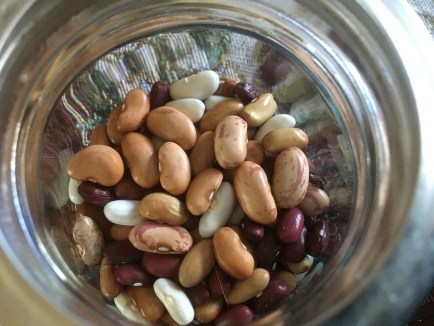
As Cathy and I shelled black, cranberry, tan and white beans into bowls, I played a little bit of Mary for her from my phone. Cathy told me fascinating stories of her own months-long stay in Greece way back when, about the time that I also was a wandering baby boomer. But my travels were not so deep or wide. And not in Greece.

Cathy tried to describe the sunlight in that land, in words very similar to those Mary Norris had used in trying to express its unique softness. Mary wrote that she wasn’t sure that she herself was changed by Aphrodite’s waters, but she saw everything from then on as though more clear and sparkling. Both of those women renewed my own desire to travel in Greece; some of you might remember that my late husband and I had booked travel to Crete when he became ill, and we weren’t able to go.
 I might not be any more likely to get to Tennessee, but if I do, I want to visit the replica of the Parthenon that is there, which Mary Norris tells about in her book. The story of its statue of Athena, the long process of collecting funds for it, then figuring out what it should look like, details about the sculptor and model and why certain design decisions were made — all of that was fascinating to me. I didn’t know this replica existed, and I haven’t researched anything about it since this morning when it came up near the end of the book. Have any of you seen it? Please tell me what you thought.
There. I’ve managed to tell you about one book, one part of a day, and one fun activity I engaged in, with a few women companions. Yes, there was at least one more at that table with Cathy, Mary and me. She’s part of the story I hope to tell another day.

 By the time our family brought this carol into our repertoire, several of us would enjoy singing the carol in its original language when we gathered at Christmastime, at least a few times. Even before their father ceased to be one of the singers, the details of our festivities had begun to change. It’s been a while since we have been able to sing as many carols as we would like, usually because of the needs of small children.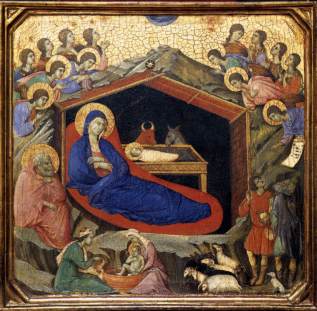
 logs, which we had then thrown on to barges and wagons, rolled into stacks and piled up on the ground – and yet this elm log had still not given up! A fresh green shoot had sprouted from it with a promise of a thick, leafy branch, or even a whole new elm tree.
 Gladsome Lights