“We kept good hens out in the back, brown and white, and some good layers from my father’s sisters that were black. There is happy our hens. All day they peck for sweet bits in the ground, twice they come for corn, and in the mornings they shout the roof off to have you come and see their eggs. And no trouble to anybody.
“I do like a little hen indeed. A minder of her own business always, and very dainty in her walk and ways….”
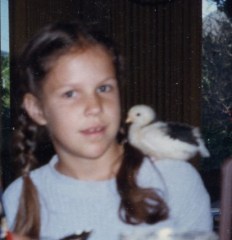 That is a clipping from How Green Was my Valley, by Richard Llewellyn, which I am currently reading/listening to. The narrator is Ralph Cosham, whose rich British voice perfectly accompanies the author’s prose to double the amount of atmosphere evoked. What a wonderful story! I’d never read the book before, and I’m not sure I ever saw the movie. I have probably seen fewer movies than anyone I know.
Many such short passages make me wish that I were reading the novel in print, so that I could underline them, and have an easier time copying them to share. But I’m not, so I won’t. Instead, I hit the replay button from time to time and pause whatever I’m doing to listen more carefully, in love with the sentences and the scenes and the Morgan Family.
 Probably because of all the people I know who during the pandemic especially enjoyed their chickens, or started keeping chickens for the first time, I also began longing to have chickens again. I walked around my property eyeing every nook and cranny, but concluded once again, sadly, that every spot is taken. Any ground not being used by plants or furniture or greenhouse did not qualify on account of being sweltering hot, or too close to the clothesline, where I wouldn’t want chicken dust.
If I had found room I could have taken quick possession of the healthiest year-old hens you ever saw, Rhode Island Reds and Barred Rocks, that one friend had to give away, a flock of ten that he had acquired as day-old chicks during covid. I did get to eat eighteen of their eggs; they were the best I’d ever tasted, and I have tasted lots of home-raised eggs.
Instead, I sent word to friends all over the county (and into the next county), everyone I could think of going back 40 years that I’d ever known to keep livestock. I finally found a good home for those girls. And for myself, I will go back to my dream and plan of raising worms. I do have the perfect spot for them, whom I imagine are the tiniest breed of livestock….
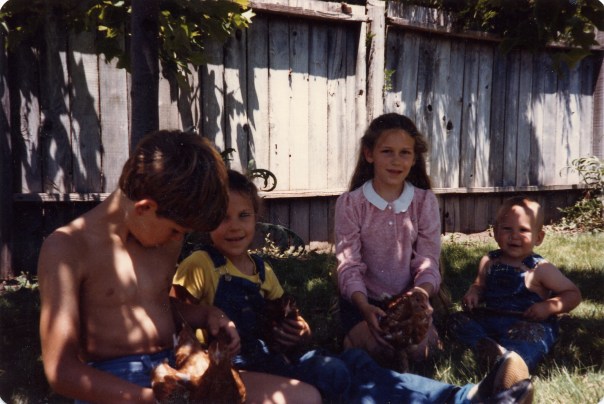
You would think that in thirteen years of keeping chickens I would have a few good photos of them, but it was in the days before digital cameras, and I couldn’t waste film on targets that moved the way chickens are likely to do. But I did locate this one above, the three older children in the 80’s, each holding one of their pullets. It’s almost the opposite of the kind of picture I wish I had, because adolescent chickens are inelegant, and these that you can barely see in the shade are definitely in the gawky stage. But it does show that we enjoyed our hens.
Until yesterday our area of California had been miraculously, blessedly free of wildfire smoke. Smoke from our fires out West was drifting all the way to the East Coast, and plaguing most of my children and many friends on the way — but not coming here. But yesterday it arrived. I don’t know which fire it is from. Once again, I have friends who lost their home, this time in the Dixie Fire 200 miles north of me. I’m sure that the personal connection increases weight that was already on my heart; I’m finding it hard to focus on anything and apply myself. It is some sweet relief to see in my mind’s eye the dainty hens in the Green Valley, when I visit vicariously in the coal mining town in Wales.
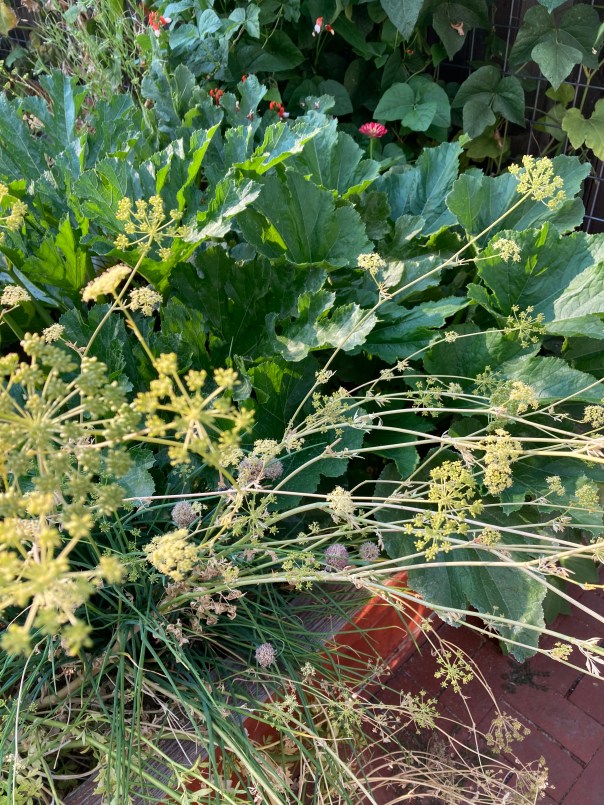
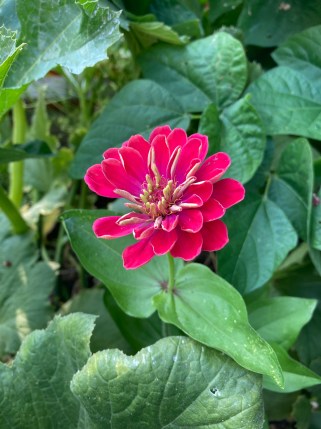
Another heartening little thing that surprised me today was a volunteer zinnia. I still haven’t cleaned up my planter boxes where most of my vegetables usually grow. In one box the parsley, hyssop and chamomile have all grown into a seedy jungle, and in the other a single zinnia plant sprouted in secret under the squashes and Painted Lady beans and grew up spindly toward the light.
May the Lord’s grace light our way and warm our souls.
But for you who fear my name,
the sun of righteousness shall rise with healing in its wings.
You shall go out leaping like calves from the stall.
Malachi 4

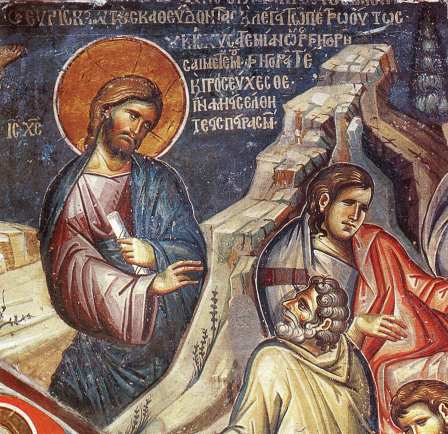

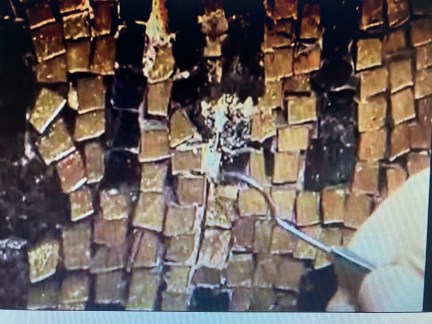
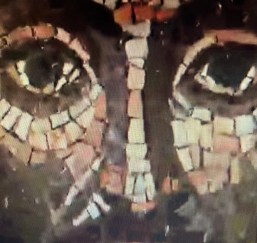 He starts with the history of the monastery, which he admits goes back to Moses and the burning bush, on through St. Helen and St. Justinian; the mosaic was installed soon after the church was built. In 1847 a Russian monk named Samuel did a huge amount of restoration work on the mosaic, and in 1957 archeologists sounded an alarm about its deteriorating condition, but it lasted 50 more years to the point where this 5-year project began. By then, 20,000 tiles were missing (though of course monks had saved them in boxfuls), which equaled 4% of the total, and a great number of the remainder were no longer actually attached to the base layer.





 Gladsome Lights