Monthly Archives: July 2022

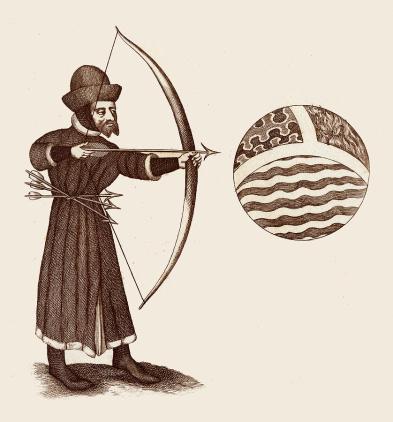
There is no god, the wicked sayeth.

“There is no God,” the wicked saith,
“And truly it’s a blessing,
For what He might have done with us
It’s better only guessing.”

“There is no God,” a youngster thinks,
“or really, if there may be,
He surely did not mean a man
Always to be a baby.”

“There is no God, or if there is,”
The tradesman thinks, “’twere funny
If He should take it ill in me
To make a little money.”

“Whether there be,” the rich man says,
“It matters very little,
For I and mine, thank somebody,
Are not in want of victual.”

Some others, also, to themselves,
Who scarce so much as doubt it,
Think there is none, when they are well,
And do not think about it.

But country folks who live beneath
The shadow of the steeple;
The parson and the parson’s wife,
And mostly married people;

Youths green and happy in first love,
So thankful for illusion;
And men caught out in what the world
Calls guilt, in first confusion;

And almost everyone when age,
Disease, or sorrows strike him,
Inclines to think there is a God,
Or something very like Him.

-Arthur Hugh Clough (1819 – 1861)
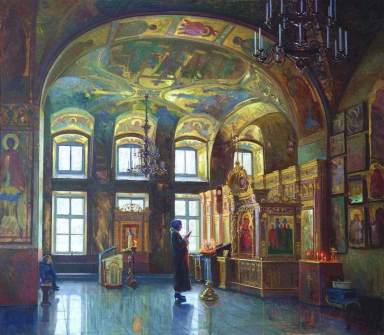
-Dmitri Petrovs

Deadheading Gazania

This morning I visited some church friends to see their vermiculture setup. Before I ever started my remodeling project almost four years ago, I knew that I wanted to raise worms, but I have put it off until such time as I could make mental and physical space for the project.
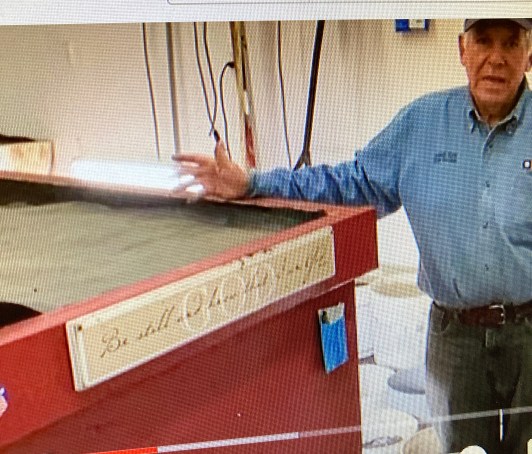
When I got home I did some online shopping for various styles of premade stacking trays designed for this kind of farming, and I ran across a video of a man who has quite a large operation and thousands of worms in a giant bin. I took a picture as the video was running, when I saw the sign on the end of this long container of vermiculture:

It’s hard to read, so I will tell you that it says, “Be still and know that I am God.”

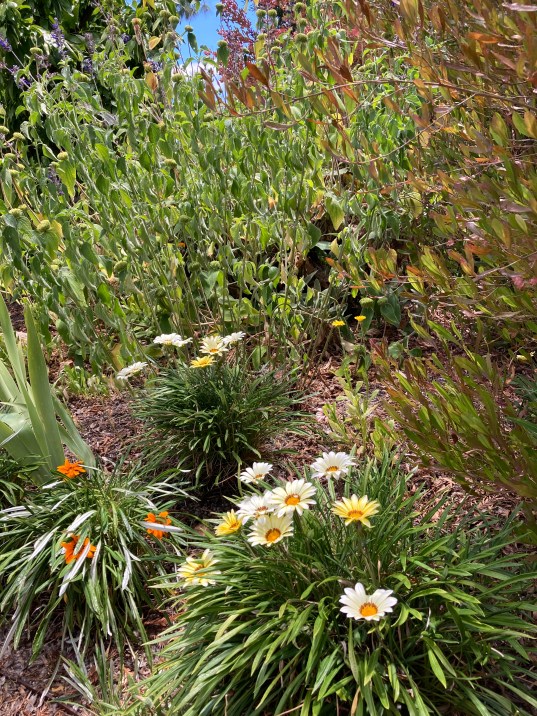
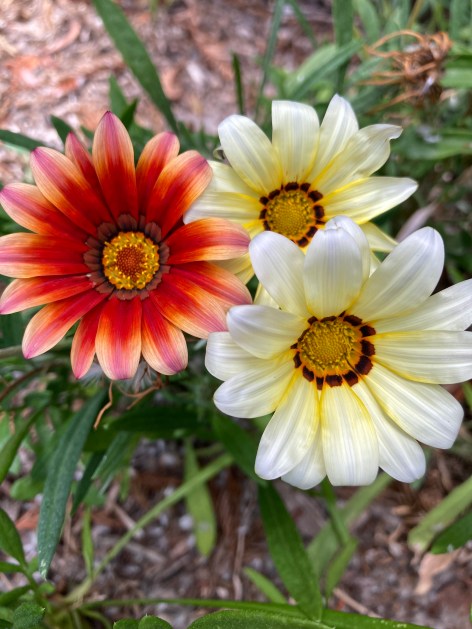
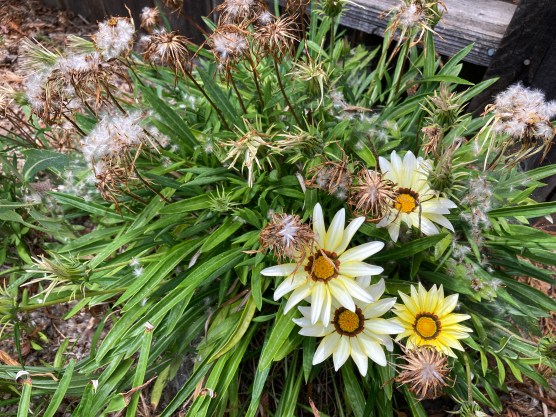
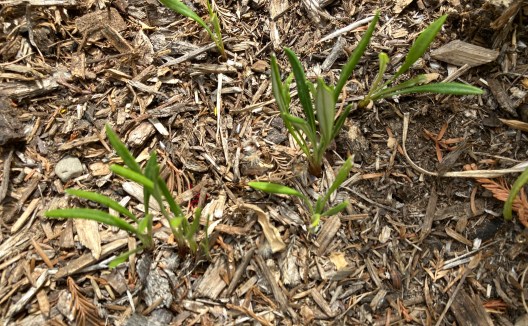
After lunch, I found myself in the garden where the gazanias have been needing deadheading for months; suddenly I decided to settle down and just do it. These plants  have been proliferating since I freed them from being crammed in a pot. It’s hard to believe all of them had been in that one pot… well, maybe it was two or three pots. But they do multiply! They are constantly making “drop-ins,” as my long-ago neighbor called the self-sown volunteers.

There is so much variety in the colors and designs of the flowers, it’s always a joy to take a good look at them, in the back corner of the yard where they are easily seen when you’re sitting at the umbrella table. Here you can see them in front of the Jerusalem Sage and the Hopbush.

I had a quiet and peaceful day, even with my morning worm research outing, and then Vespers in the evening. There was plenty of stillness in which to remember God, and there was COLOR!

Writing light and sage.

John Gower was a friend of Chaucer. He sounds like someone who, if he had lived seven centuries later, would have enjoyed writing a blog.

Confessio Amantis (Prologue: Motivation and Intent)

Of those who wrote before our lives
Their precious legacy survives;
From what was written then, we learn,
And so it’s well that we in turn,
In our allotted time on earth
Do write anew some things of worth,
Like those we from these sages cite,
So that such in like manner might,
When we have left this mortal sphere,
Remain for all the world to hear
In ages following our own.
But it is so that men are prone
To say that when one only reads
Of wisdom all day long, one breeds
A paucity of wit, and so
If you agree I’ll choose to go
Along a kind of middle ground
Sometimes I’ll write of things profound,
And sometimes for amusement’s sake
A lighter path of pleasure take
So all can something pleasing find.

-John Gower (1330 – 1408) England
Modern English version by Richard Brodie

John Gower