Monthly Archives: July 2025

Evening explorations with grasses.

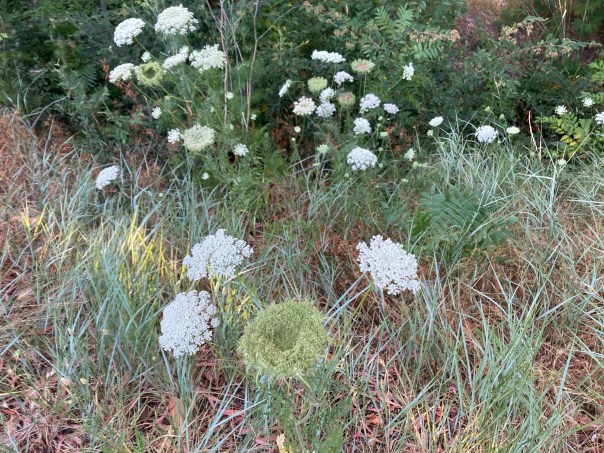
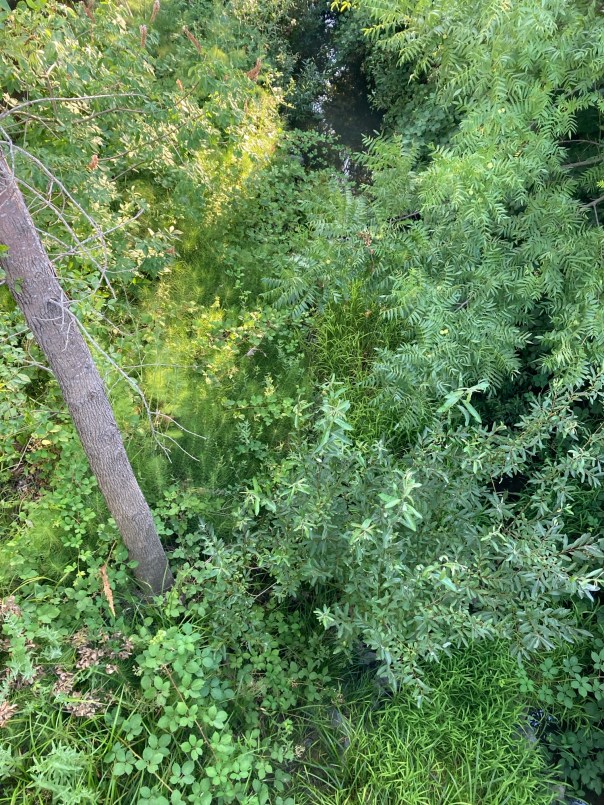
In the summer it’s relatively easy to take a walk after dinner, if I put my mind to it. The last two evenings I did manage to do my 30-minute creek path walk; for some reason it doesn’t feel like a chore at that time of day. There was plenty of light, and time to stop to look at interesting plants. But first I paused on the bridge and looked over… It’s always amazing how much plant matter grows up in springtime and early summer and fills the channel so that it’s hard to see the water down below:
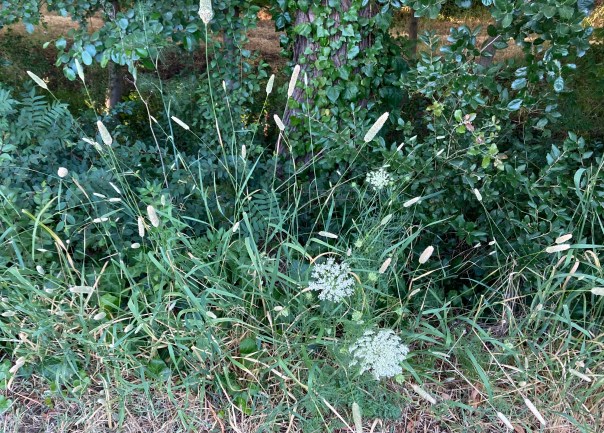
Harding Grass and Queen Anne’s Lace
Harding Grass

During my visit to Greece last month, I really enjoyed the exploratory nature of all the walking I did, in a place where so much was going on, and ancient history was confronting me around every corner. Since I returned it’s been hard to get back into walking along my old home ways, just to be walking. But this evening I did a little exploring, too, of the botanical sort, using the Seek app on my phone. Usually it can’t identify grasses, but this time it confidently told me about two of them.

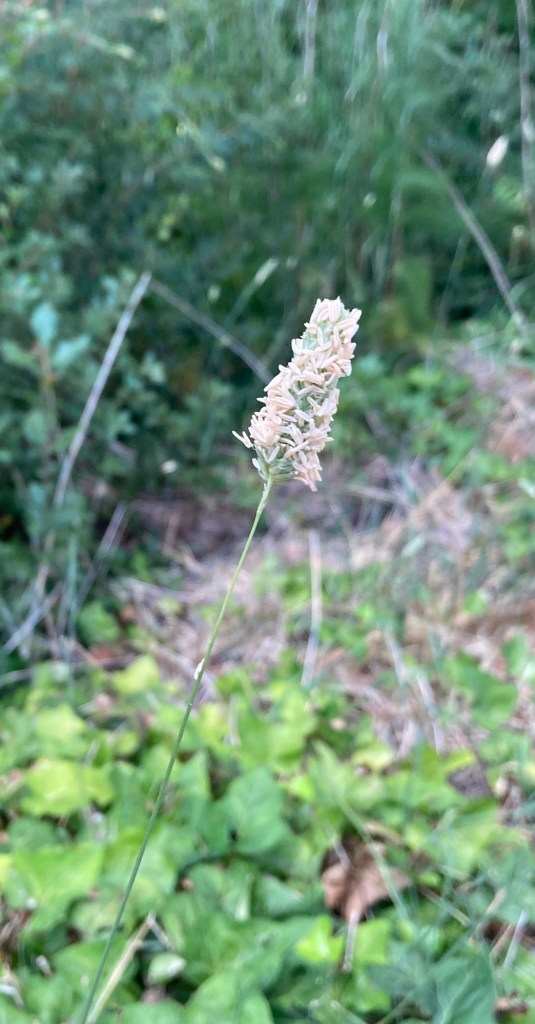
First the Harding Grass, Phalaris aquatica. You can see it blowing around the Queen Anne’s Lace in the picture above, the breeze making it very hard to get a crisp picture of the seed heads waving on their slender four-foot stalks.

Then I noticed the way the blue grass was contrasting with the same white flowers. Seek says that is Creeping Wild Rye or Leymus triticoides:
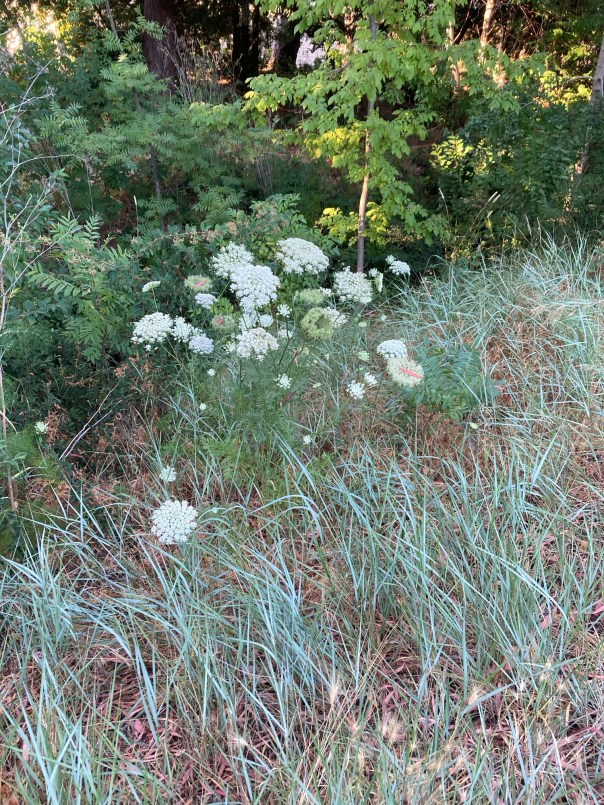
Creeping Wild Rye and Queen Anne’s Lace

I noticed lots of young black walnut trees growing on the banks of the stream, and on my way back I met a big tree growing out of the creek bed and way taller than the bridge. Surely I’d learned what it was before? But evidently not — Seek told me it’s a Box Elder, and I read later that they do like wet areas, and grow fast. Maybe it’s California Box Elder. I wonder, when the city’s maintenance crew dredges the creek this year or next, if they will take out such a big tree?
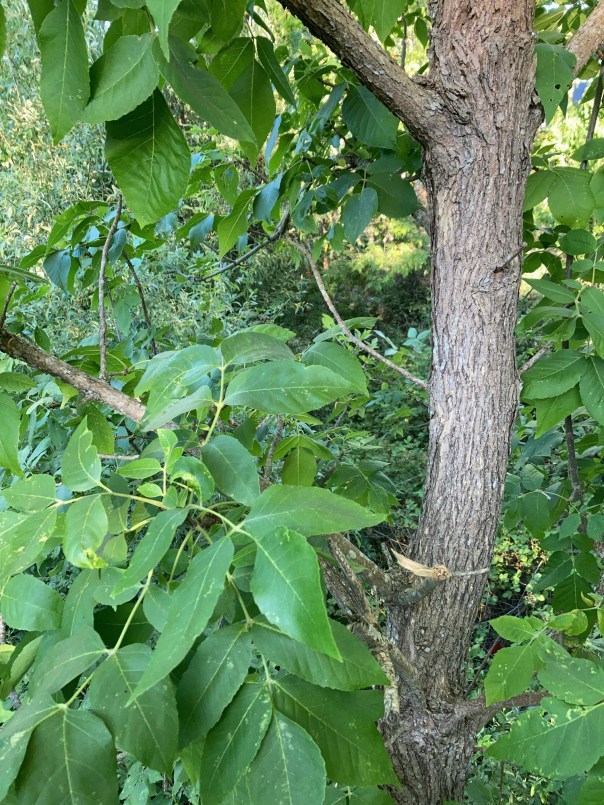
Box Elder

I meant to write about my discoveries earlier, and go to bed at a reasonable time, but I started researching small drought-tolerant trees suitable for a garden like mine. I’ll have more to tell you about why I need such a thing. For now I’m content to have become further acquainted with two plants, reaching the stage of knowing their names. I will count the Box Elder as a new tree friend, and fall asleep late, but happy.

Chocolates and swans in the garden.

I noticed recently that I am always writing the same words about my garden. Things have changed a bit in the last year, though. I’m not sure the net result is positive, but maybe it will all lead to me saying something new eventually.

Echinacea with teucrium in background.

The new landscaper is soon going to be the former landscaper. He just doesn’t have a vision of garden beauty that matches mine, and I haven’t been won over. Unfortunately, I had to actually see his ideas “leafed out” before I could know how wrong they are; now I need to fix some design problems by moving plants in the fall, and buying a couple of new ones. I’d hoped to have all this done by last fall and to be enjoying the refurbished areas by now.

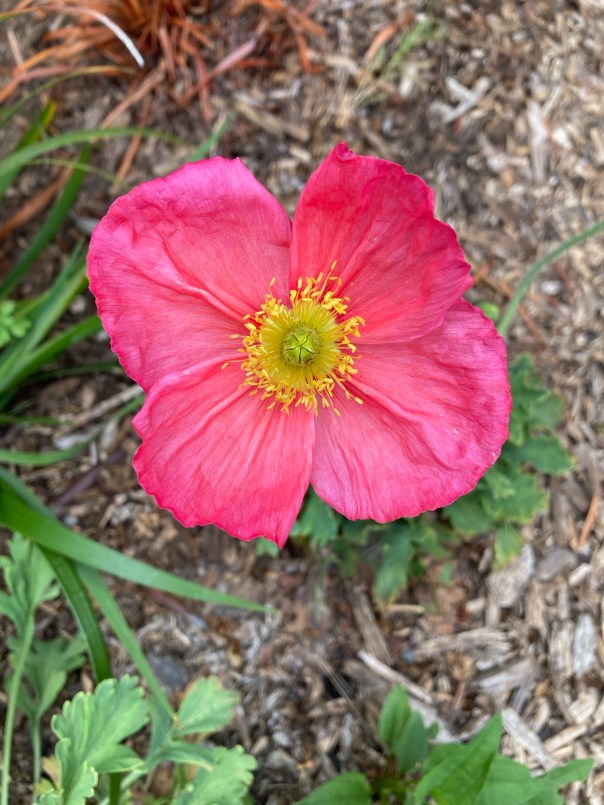
Chocolate Cosmos with an Iceland Poppy behind.

Oh, well, a garden is always a process, and I suppose it’s like with so many projects: everything takes longer than expected. And it is a joy to work out there, or to wander. I took a walk in a more upscale neighborhood near mine, and noticed that some front yards are tidy and boring, and some are a bit messy or hodgepodge-y. The latter are obviously houses where the owner(s) like gardening and are trying out different things, and don’t have the time or know-how to do the successive plantings or the upkeep to keep it looking interesting and orderly at the same time. So I won’t worry too much if mine is not perfect, either… It’s just that I thought the area right by the front door should look more put together than it does.

Lavender and fig tree

Depending on the viewing angle and size of frame you are focusing on, there are still some very nice scenes, front and back. Those are the ones I’m sharing in this post. My own hodgepodge I will ignore for now.

The Chocolate Cosmos is new to me and to the garden. There are three shades of color, and the plants I bought are medium-dark chocolate. They are perennials with a tuberous root, and reports conflict about whether they will even like winters here. I had to take out some very happy Iceland poppies to make a place for them; it must be that the poppies are getting enough shade there to keep blooming, and I’m glad I didn’t have to take them all out yet.
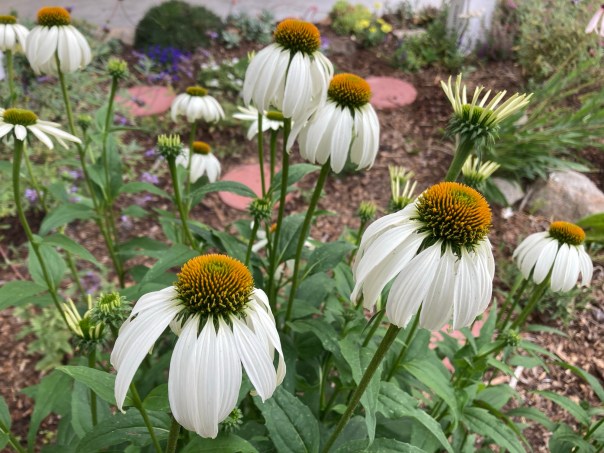
One thing I like is that the landscaper divided the White Swan echinacea so that I have more of it now; likewise a favorite violet salvia. I’m working on getting even more of those White Swans to plant in a couple of months before they go dormant.

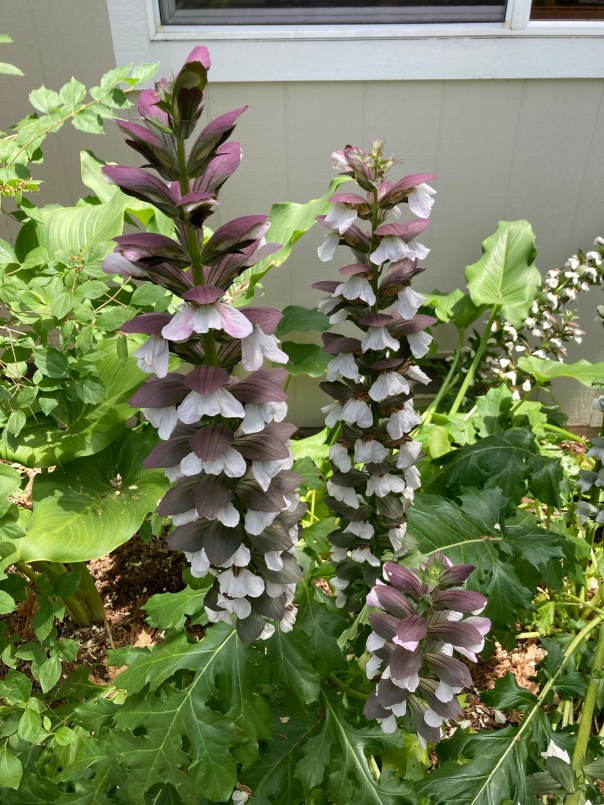
Today I cleaned up around some plants, like the acanthus above, taking away dead leaves and pulling out little grass sprouts that are remnants of big ornamental grasses that I removed last year. The grass shoots were growing out of the Yerba Buena ground cover, too, so as I knelt on it or moved the long stems aside, its most delicious scents were released into the atmosphere.

It was only recently that I learned, or remembered, that these white echinaceas are called Swans. It really is the perfect name for them, and makes me love them more. My garden is overflowing with gifts

The way the linden tree whispers.

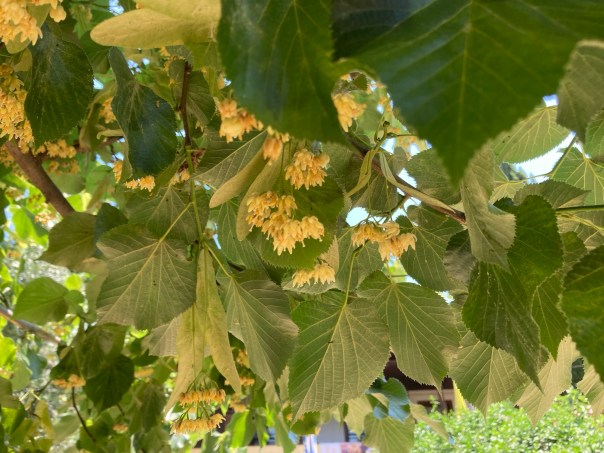
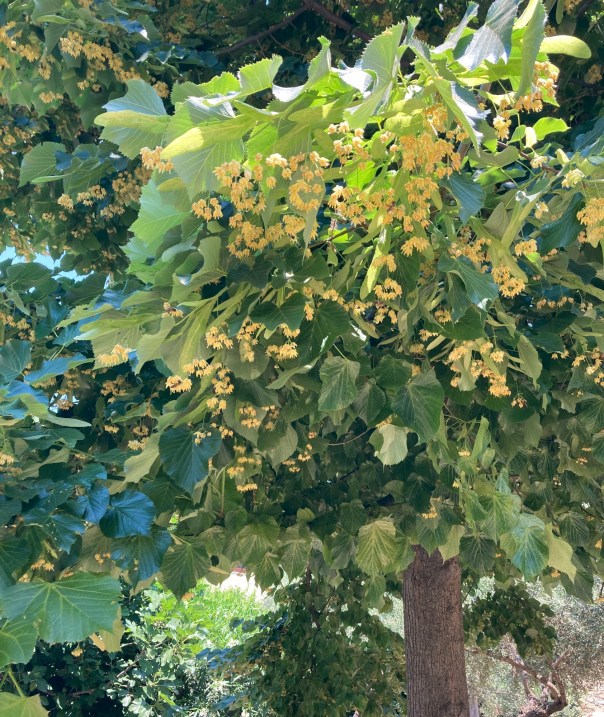
I was delighted to discover linden trees, Tilia tomentosa, in Thessaloniki last month, and in bloom, smelling so sweet. This month I came across a poem about them.

Linden Tree in Thessaloniki

LINDEN TREE WHISPERS

You know how the linden tree whispers
In the springtime, at night, by the light of the moon?
My love sleeps, my love sleeps,
Let’s go and wake her up, kiss her eyes.
My love sleeps . . .
You heard because of the way the linden tree whispers.

Do you know how the old grove sleeps?
It sees everything, even through the fog.
Here is the moon, here are the stars, the nightingales.
“I am yours,” overheard the old grove.
And those nightingales . . .
Well! You already know, how the old grove sleeps!

-Pavlo Tychyna (1891-1967) Ukraine

Linden tree, Thessaloniki

Stories about St. John of San Francisco.

St. John (Maximovitch) of Shanghai and San Francisco reposed in 1966. Twenty-five years later Hieromonk Peter Loukianoff, who had been close to St. John in the last few years of his life, and whose family had known the saint since the time they lived in Shanghai, wrote down his recollections: “Remembering Vladika [Bishop] John.”

Partly this was to correct falsehoods that had begun to circulate in the years since Archbishop John had reposed. In addition to conversations Acolyte Peter had with his bishop about various matters that might be of interest mainly in the altar, he relates many stories from everyday life that illustrate what kind of man St. John was, and the profound effect of his life on those who knew him.

St. John of Shanghai and San Francisco giving a sermon. Pavel Lukianov, the author, is the acolyte.
With Acolyte Peter

He conveys how fatherly St. John was with the youth, including alar servers such as Peter — kind and gentle even when he was strict. Peter Loukianoff himself was consecrated a bishop in 2003, and was eventually elevated to the rank of Archbishop of the Diocese of Chicago and Mid-America. He reposed in 2024.

One of the stories is about St. John’s feet:

From the day of his-monastic tonsure, Vladika slept in a sitting position. As a result he had swollen legs and it was painful for him to wear proper shoes, so he wore sandals. At home, in his cell, or when he served at St. Tikhon’s he often went barefoot–not for the sake of foolishness-for-Christ, but because it was easier on his feet.

Abbess Theodora, the late superior of Lesna Convent in France, told how once when Vladika was visiting the convent one of his legs gave him great pain, and she called a doctor, who prescribed rest in bed. Vladika thanked her for her solicitude but refused to lie in bed; nothing could persuade him. “Then,” related Matushka, “I myself don’t know how I was so bold, but I said to him bluntly, ‘Vladika, as the abbess of this convent, by the power given me by God, I order you to lie down.'” Vladika looked with surprise at the abbess, and went and lay down. The next morning, however, he was in church for Matins, and that was the end of the “course of treatment.”

And another story is about his letter-writing:

 Vladika’s daily schedule was as follows: In the morning he served Matins, followed by the Hours and Divine Liturgy. After services, if he served in the cathedral, he would stop on the way home in some hospital where he would visit all the Orthodox patients. Arriving home, he would tend to business. In addition to his official duties, he received scores of personal letters to which he would reply himself. (In his three and a half years in San Francisco he received more than ten thousand letters.)

At the top of each letter Vladika always neatly placed a large cross. In folding the letter to place it in an envelope I had to make sure that the cross was not creased or put in sideways or upside down. Vladika did not allow us to lick envelopes shut, and insisted they be opened with a knife. He used to remark with a smile that only Stalin ripped envelopes.

St. John was canonized in San Francisco on July 2 1994.

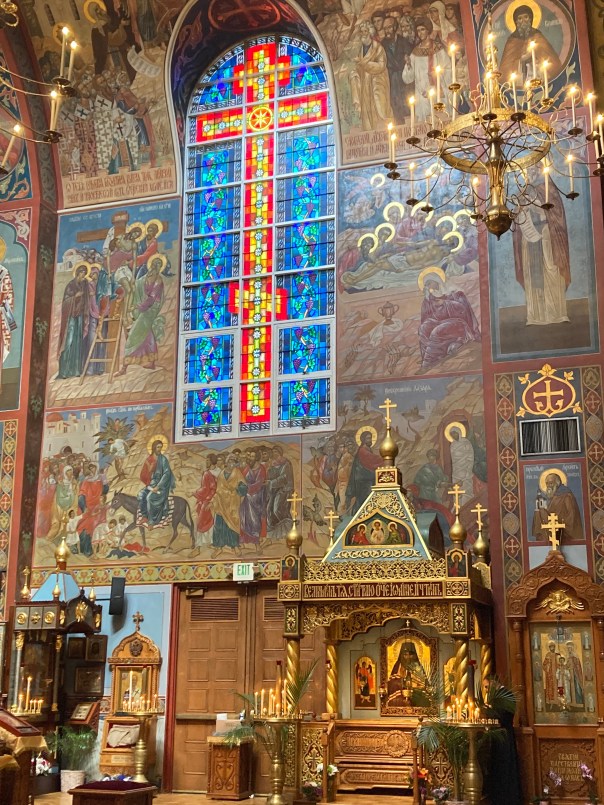
Holy Virgin Cathedral in San Francisco