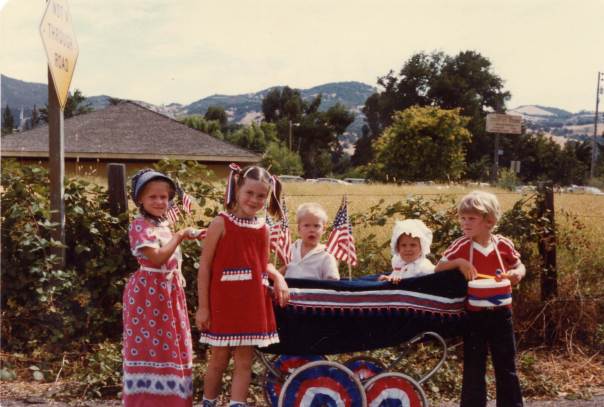
I don’t think anyone has ever asked me a question of the sort, “What does it mean to you to be an American?” But last year in Athens I asked my taxi driver, “What makes you proud of your country?” and quickly realized that as my goal had been to start a conversation, he was the perfect person to ask. He answered, “The philosophers!”, and went on to talk at length, with some encouragement by more questions, about Plato, Aristotle, the ancient church fathers, the London School of Economics, the dire situation in the EU… Basically, it was all downhill from Plato. Greece is not what it was.
The United States of America is not what it was 50, 100 or 250 years ago. I am just one citizen, in our diverse culture — or anti-culture. It’s hard for me to think of my country in the abstract, as an idea, especially if that is to be deduced from the behavior of the total population. There have been many individuals who asked God for His help and tried to live virtuous lives, who also called themselves Americans. I would like to be that sort of citizen, so maybe my answer to the meaning question would be, “It means that I pray with the Church, ‘For our country, the president, all those in civil authority, and for the armed forces: Lord, have mercy.'”
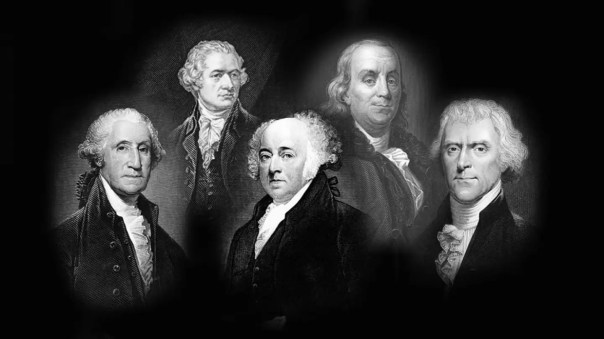
I was glad to see that some Orthodox Church leaders have given us a word on the occasion of this 250th anniversary of our nation:
Two hundred and fifty years is a span of time sufficient to accumulate both great achievements and grave failures. This nation—like all nations under God—has known the heights of generosity and the depths of injustice; the nobility of aspiration and the tragedy of betrayal. The Church does not pretend otherwise, nor would it serve this nation’s good for her to do so.
We bear witness to a God before Whom no nation and no person stands without need of mercy. The promise spoken to Solomon rings out across the centuries with undiminished urgency: “If my people who are called by my name humble themselves, and pray and seek my face and turn from their wicked ways, then I will hear from heaven and will forgive their sin and heal their land.” (1 Chronicles 7:14)
It is in this spirit that we call the faithful of the Orthodox Church in America—and, through their witness, this nation—to repentance: repentance for injustices past and present; for the idols of wealth, comfort, and power that seduce every generation; for the divisions and enmities that tear at the fabric of common life; and for the ways in which we have failed to love our neighbors as ourselves.
A true commemoration of a nation’s founding is not mere self-congratulation; it is a moment of sober examination, of honest confession, and of renewed dependence upon God. The Church does not speak this word from a posture of superiority. We acknowledge our own failures—in charity, in unity, and in the fullness of our witness to the Gospel. We, too, stand in need of God’s mercy. But it is precisely because the Church has known the healing power of repentance that she cannot withhold this word from the world she is called to serve.
—Excerpt from the Holy Synod of the Orthodox Church in America


Oh my 😉
LikeLike
Your first photo’s itself a perfect answer to the question. Different people would describe its meaning differently, but the directness and charm has much to do with our national character at its best.
LikeLiked by 1 person
I like your answer to the “meaning” question. It’s a good one in these unsettling times.
LikeLiked by 1 person
Patriotism at its best…may your post travel wide and far.
Great photo!
LikeLiked by 1 person
Your answer is concise and apt. Let us all remember to pray for our leaders. Thank you!
LikeLiked by 1 person
Yes.
LikeLiked by 1 person
That was good! Thanks, Gretchen Joanna for such a perfect message.❤️
LikeLiked by 1 person
Happy Independence Day, Kim!
LikeLike
“What makes you proud of your country?” This is an interesting question. I think we should ask it more often.
LikeLiked by 1 person