Orthodox Christian, widowed in 2015; mother, grandmother. Love to read, garden, cook, write letters and a hundred other home-making activities.
View all posts by GretchenJoanna →
“We call wild flowers common because of their quantity. But this is just where we strike the great difference between the productions of Nature and the productions of Man. When we produce many samples of the same thing they are of poor quality and we speak of them as mass-produced. The mass productions of Nature do not fail at all in terms of quality. Take the bluebell. There indeed is quantity. Yet every single year we are freshly struck by their quality. Only a flower-snob could fail to see that any one of these bells on the uplifted belfry is as delicate a construction as any tulip or any rose. I will not say more beautiful, or less, for in this realm of flowers we actually are in the presence of abundant examples of — perfection. I think that perfection is the key to the emotion that flowers cause in us. When a thing is perfect the problem of its existence is solved. Gazing at flowers in a wood an unexpected signal seems to go up; we feel a movement of happiness and hope about everything, there is a suggestion that all is really well, all is right with the world….”
–John Stewart Collis in The Worm Forgives the Plough
Son Pathfinder drove down from Oregon for his job, so he stopped also to see me at the beginning of this Bright Week, and helped quite a bit by mowing the lawn that hasn’t quite died, doing a pool maintenance task with me, and listening/talking for a while about his father and how our lives have changed. My children are my favorite people to talk to these days.
He brought some mail, including a card from Granddaughter Annie with a gift tucked inside, this bit of seeded paper she had “made at Bible study to represent spreading God’s love.” She also wrote to invite me to drive north to their house next month to see the exhibit that includes some photography from a class she is taking. I am not making firm commitments that far ahead, but I feel the love pulling me.
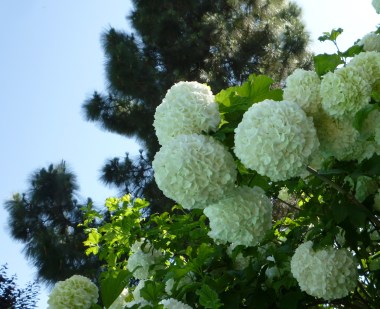
The snowball bush is hanging over the pool, the wisteria over the patio arbor. It was all warm and welcoming when our old friend Ken came by this week – also in town for work – and we sat out there for a visit. He said he hadn’t been in our back yard since he was baptized in our pool….we didn’t try to figure out how long ago that was! I told him about how I am planning to have the pool removed, and he looked over the equipment and discussed the job I need to get bids for. He owns a pool himself so he is a good person to talk to.
In addition to family and friends who are ready with long hugs and all kinds of practical assistance, I’ve appreciated the writings of Father Alexis Trader, who recently posted a series on grief. His descriptions of the feelings of grief are true to my own experience, as he empathizes with those who suddenly find ourselves in “this disorienting new universe that no longer feels like home.”
aloe saponaria
Here is an example of how that is playing out here: I don’t feel like gardening. In my whole life I have only gardened as a partner with my husband, and it’s as though I don’t yet know how to do it as the person I am now. I haven’t planted a seed or a tomato start, and I’m just not thrilled about any of that. It’s a good thing that so much of the garden will keep going on its own and feed me with its beauty. All these photos are from this afternoon – I guess I still know how to take pictures on my own!
About the process of grief Fr. Alexis says, “…one thing is consistent: grief is a journey that if it is successful is resolved in acceptance. The fathers also use the metaphor of a journey referring to a longer, spiritual journey in which the briefer journey of grief can be situated.”
This image of a journey helps me to keep going. I know I am not at the end of my life’s journey, and I may be on the road for many more years. This short trail called Grief which I am facing now, though, is the steepest hike I’ve ever encountered. I wish I didn’t have to go this way, but it’s on the route my Father has laid out for me, so “best get on with it.” No doubt the trick will be the same old strategy: One foot in front of the other. More from Father Alexis:
Grief indeed is a journey but the holy fathers demonstrate that if we can learn to open our spiritual eyes, we will see that it need not be a solitary journey filled solely with darkness and pain, but it can also be a passage of transformation from death to life. After all, for the fathers, “death is not death, but only a kind of emigration and translation from the worse to the better, from earth to heaven, from men to angels, archangels, and the One who is the Lord of angels and archangels” (Saint John Chrysostom, Letter to a Widow).
Somehow the stages of grief, whatever they may be or in whatever order they may occur, need to be situated within the greater journey from earth to heaven, the journey that the departed in Christ have already completed. We are all “strangers and pilgrims on the earth” (Hebrews 11:13). The experience of grief brings this truth home. When we accept it fully, we can look to “a better country, that is heavenly” (Hebrews 11:16), to “a city which hath foundations, whose builder and maker is God” (Hebrews 11:10), to that Jerusalem on high that has “no need of the sun, neither of the moon, to shine in it: for the glory of God did lighten it, and the Lamb is the light thereof” (Revelations 21:23). That is the place where stages and phases are past, where acceptance is complete, and where we are truly at home with those who are departed, there where “Christ is all and in all” (Colossians 3:11).
This morning I attended Bright Saturday Liturgy and was freshly struck by some of the prayers that I have prayed every week for almost a decade now. Like the prayer that we might “complete the remaining time of our life in peace and repentance.” Yes, that is the journey I am on. One thing is needful.
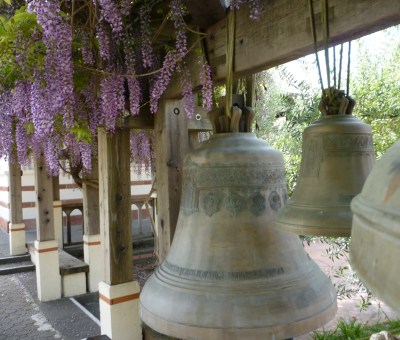
As I went out the door afterward, Ambrose, who is a drummer as well as a bell-ringer, began to ring the Paschal bells with gusto, and their brilliance filled the air of the quiet neighborhood to remind all the humans and animals that it’s not just another humdrum day, because Christ is risen!
Here is this year’s Artos, the blessed bread that remains in the church all during Bright Week, one more reminder of the Resurrection and of how our Lord is The Bread of Life.
I’ve been looking at other photos of loaves of Artos and truly I think our parish has the most gorgeous! In a few days we will all get a piece to eat. I happened to go into the church kitchen last week while the dough was being kneaded, so I know it has olive oil and orange zest in it, but other than the wheat itself I don’t know what other flavors it holds.
The Gospel reading at the Bright Tuesday Liturgy told the story of the disciples meeting the risen Christ on the Road to Emmaus, and I was very moved by it. I seemed to feel as never before how their world had collapsed when Jesus was crucified and dead. How heartbroken they must have been, to be suddenly without the One who meant everything to them, who was their very life. And then to hear how He, not recognized, spoke to them, and “beginning at Moses and all the Prophets, He expounded to them in all the Scriptures the things concerning Himself.” (Luke 24) The drama of this well-loved story grew in my heart as our priest read the passage.
When they convinced Him to stay with them that evening, their eyes were opened as they broke bread and ate together, and they knew Him. Then He vanished from their sight, and they realized that even though they hadn’t at the time realized why, their hearts had “burned within them” as they had listened to Him on the road.
My heart was joyful, and I got chills thinking about the unspeakable gift of breaking bread with God, partaking of the Holy Mysteries and by that sacrament receiving a kind of knowledge that can only come by His grace.
And we are only halfway through Bright Week! Christ is risen! He is risen indeed!
O night clearer than the day!
O night more luminous than the sun!
O night whiter than the snow!
giving more light than our torches,
sweeter than Paradise!
O night that knows no darkness;
driving away our sleep,
you make us keep watch with the angels.
O night, the terror of demons,
Paschal night, awaited for a year!
The Church’s wedding night
which gives life to the newly baptized
and renders harmless the torpidity of the demon.
Night in which the Heir
brings the heirs into eternity.
–Asterius of Amasea,
Homily 19 on Psalm 5, early 5th century

 “We call wild flowers common because of their quantity. But this is just where we strike the great difference between the productions of Nature and the productions of Man. When we produce many samples of the same thing they are of poor quality and we speak of them as mass-produced. The mass productions of Nature do not fail at all in terms of quality. Take the bluebell. There indeed is quantity. Yet every single year we are freshly struck by their quality. Only a flower-snob could fail to see that any one of these bells on the uplifted belfry is as delicate a construction as any tulip or any rose. I will not say more beautiful, or less, for in this realm of flowers we actually are in the presence of abundant examples of — perfection. I think that perfection is the key to the emotion that flowers cause in us. When a thing is perfect the problem of its existence is solved. Gazing at flowers in a wood an unexpected signal seems to go up; we feel a movement of happiness and hope about everything, there is a suggestion that all is really well, all is right with the world….”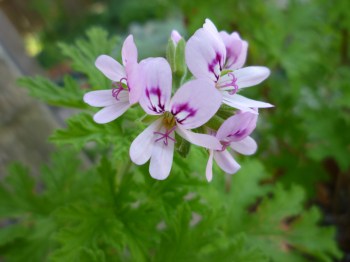
 she had “made at Bible study to represent spreading God’s love.” She also wrote to invite me to drive north to their house next month to see the exhibit that includes some photography from a class she is taking. I am not making firm commitments that far ahead, but I feel the love pulling me.
 to figure out how long ago that was! I told him about how I am planning to have the pool removed, and he looked over the equipment and discussed the job I need to get bids for. He owns a pool himself so he is a good person to talk to.


 This morning I attended Bright Saturday Liturgy and was freshly struck by some of the prayers that I have prayed every week for almost a decade now. Like the prayer that we might “complete the remaining time of our life in peace and repentance.” Yes, that is the journey I am on. One thing is needful.
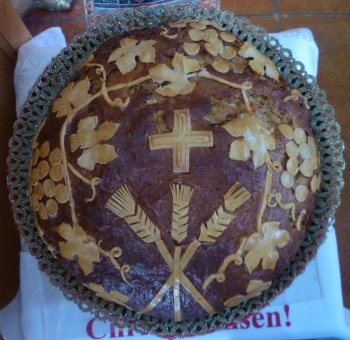 Here is this year’s Artos, the blessed bread that remains in the church all during Bright Week, one more reminder of the Resurrection and of how our Lord is The Bread of Life.