All posts by GretchenJoanna

Unknown's avatar

About GretchenJoanna

Orthodox Christian, widowed in 2015; mother, grandmother. Love to read, garden, cook, write letters and a hundred other home-making activities.

The Hungry Soul – How Science Disappoints

Previous posts on this book:

In the Introduction to his book, Leon Kass writes of his purposes: “I hope to provide evidence that the modern corporealists — those who deprecate or deny the soul — and their modern rationalist or humanist opponents –those who deprecate or deny the body — are both mistaken, both about living nature and about man. I seek such evidence in an examination of eating.”

Here the author conveys an understanding of reality that is more in line with orthodox Christianity than that of many who profess Christ, for he sees that we are unified creatures; our bodies are essential to who we are, not just shells that we hope to escape. He even goes further than what I would assent to, stating that his meaning of “soul” is “primarily not a theological but a biological notion!” (Yes, he put that exclamation point there himself.)

“You should know at the outset, however, that I use the term [soul] advisedly and without apology, even though I know that it will cause most scientists to snicker and many others knowingly to smile. These skeptics need to learn that it is only because they in fact have a soul that they are able to find such (or any) speech intelligible, amusing, or absurd. Indeed, only the ensouled — the animate, the animal — can even experience hunger, can know appetite, desire, longing.”

It is not, then, only the scientists who are giving us only part of the picture, but also the teachers of humanities (I don’t want to call them humanists, as their vision is too stunted), whom Kass and his wife would call colleagues, as they both are themselves university professors in the humanities.

“…the humanities have long been in retreat from the pursuit of wisdom. Analytical clarity, logical consistency, demystification, and refutation; source criticism, philology, and the explication of thinkers solely in terms of their historical and cultural contexts; and the devotion to theoretical dogmas – formerly romanticism and historicism, nowadays Marxism, deconstructionism, multiculturalism, feminism, and many other “isms” – all these preoccupations keep humanists busy with everything but the pursuit of wisdom about our own humanity.”

James Le Fanu

While I was in the middle of thinking about Kass’s book, I heard another writer on scientific topics interviewed on Mars Hill Audio. James Le Fanu is a physician and author whose book The Rise and Fall of Modern Medicine won the Los Angeles Prize Book Award in 2001. He was speaking in the interview about his recent book Why Us?: How Science Rediscovered the Mystery of Ourselves.

Le Fanu is also concerned about the reductionist and unsatisfying science that purports to tell us all there is to know. Before the notion of science appeared in the early 19th century the idea of the metaphysical was part of the common sense of mankind. Galileo and Newton and Kepler had an instinctive recognition that whatever science couldn’t explain, there was “something beyond.” Their study of Natural Philosophy was encompassed in the larger whole of the love of wisdom.

Nowadays, says Le Fanu, science is boring, and “to be a career scientist is to be in a very small hole,” as they are so specialized in their work, and in their education there is nothing like the older biology textbooks that were “full of awe and wonder and astonishment.” Le Fanu said that in the scientific journals he reads and in his talks with scientists, he has not noticed that any individual scientists are fully appreciating the mystery and glory of the human being.

But we assume that at least some of those scientists leave their holes each night and go home to prune the roses, eat a tasty dinner and play with their children, showing what Kass calls “the disquieting disjunction between the vibrant living world we live in and enjoy as human beings and the limited, artificial, lifeless, objectified, representation of that world we learn about from modern biology.”

As Kass is seeing the non-material aspects of our humanity demonstrated through the very material and natural activity of eating, so Le Fanu sees them revealed ever more obviously by the recent discoveries of science. Everything we learn seems to show how amazingly complex and unknowable by scientific study is “the most important part of the human experience…the nonmaterial thoughts and ideas and feelings and relationships..all the sorts of things we do the whole time….”

I loved listening to someone who is knowledgeable about the latest breakthroughs in the world of science talk about the “five cardinal mysteries” of the human experience. I ordered his book and have been relishing it on every level. Here is another man whose own soul is well-rounded and developed enough that he is a good writer, a practicing physician, and a person who can wonder at the Creation.

If we had a few more men like Kass and Le Fanu, true Natural Philosophers who don’t reduce life and reality to systems and ideologies, but who are willing to be open to that Something Beyond, the world would be a better place. Perhaps some of the upcoming homeschoolers who are getting a foundation in the kind of Poetic Knowledge that Charlotte Mason and James S. Taylor teach will have the ability to benefit from their scientific studies and to find them not boring but joyful.
 

Today’s Cats and Flowers

Giant and lovely snapdragon

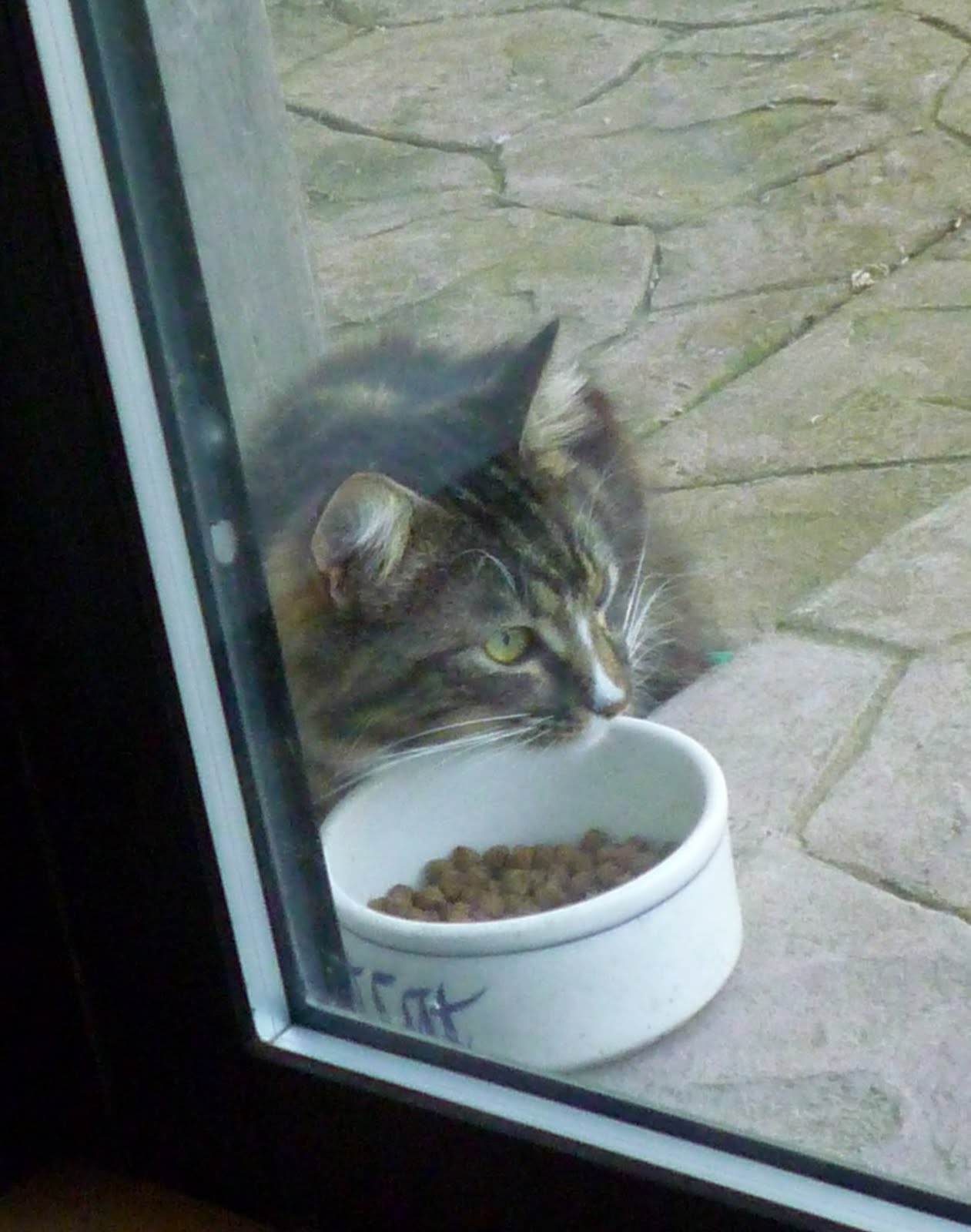
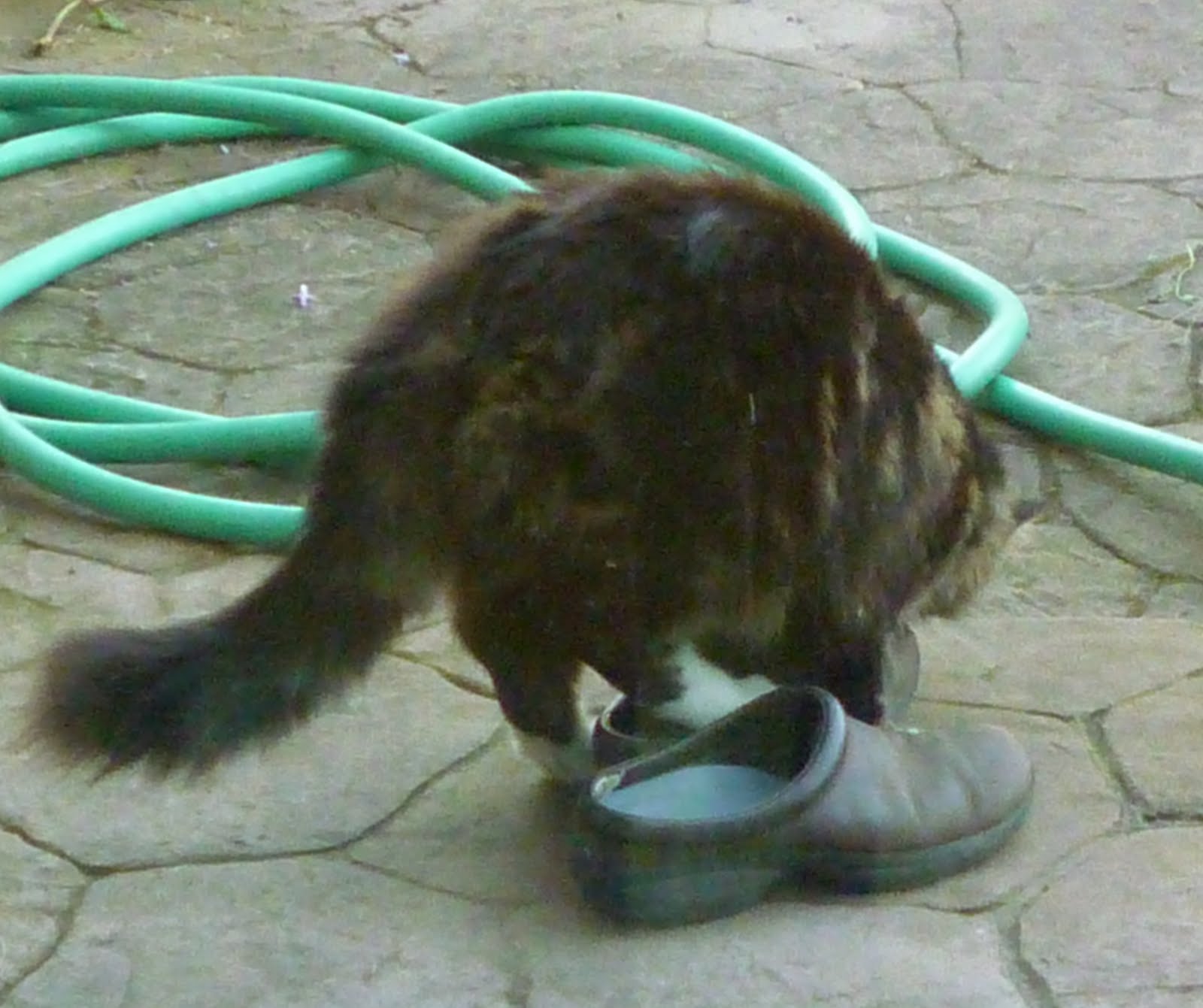
Reasons these cat pictures are bad: 1) I took them through a dirty window  2) I had to zoom in so as not to scare away the cats, so they are blurry  3) The glare made streaks in some photos 4) my garden hose is always lying around cluttering up the background.

I wasn’t prepared for having so many cat visitors in one day. The first one to arrive was the one I will name Boots. He was so interested in my clogs. I decided to put some food out for Boots, because, I’m very sad to report, Jim hasn’t been around for a month. I might as well try to make new friends by means of my leftover cat food, because I’m afraid he won’t ever come back.

Boots

The next picture shows Boots eating, and looking nicer. Except for the white feet, he isn’t the prettiest. But then, Jim wasn’t very good-looking until he had eaten regularly at my step for a few months.

Pincushion

I watered the yard thoroughly this morning, and will again Friday before we leave for Oregon to visit kids and grandkids. So I had to take pictures of flowers. I love my garden, even if it is pretty messy. If I loved it better I’d coil up the hose every evening.

Boots didn’t eat all the food, so there was still some later on when Girlfriend came by.

Girlfriend

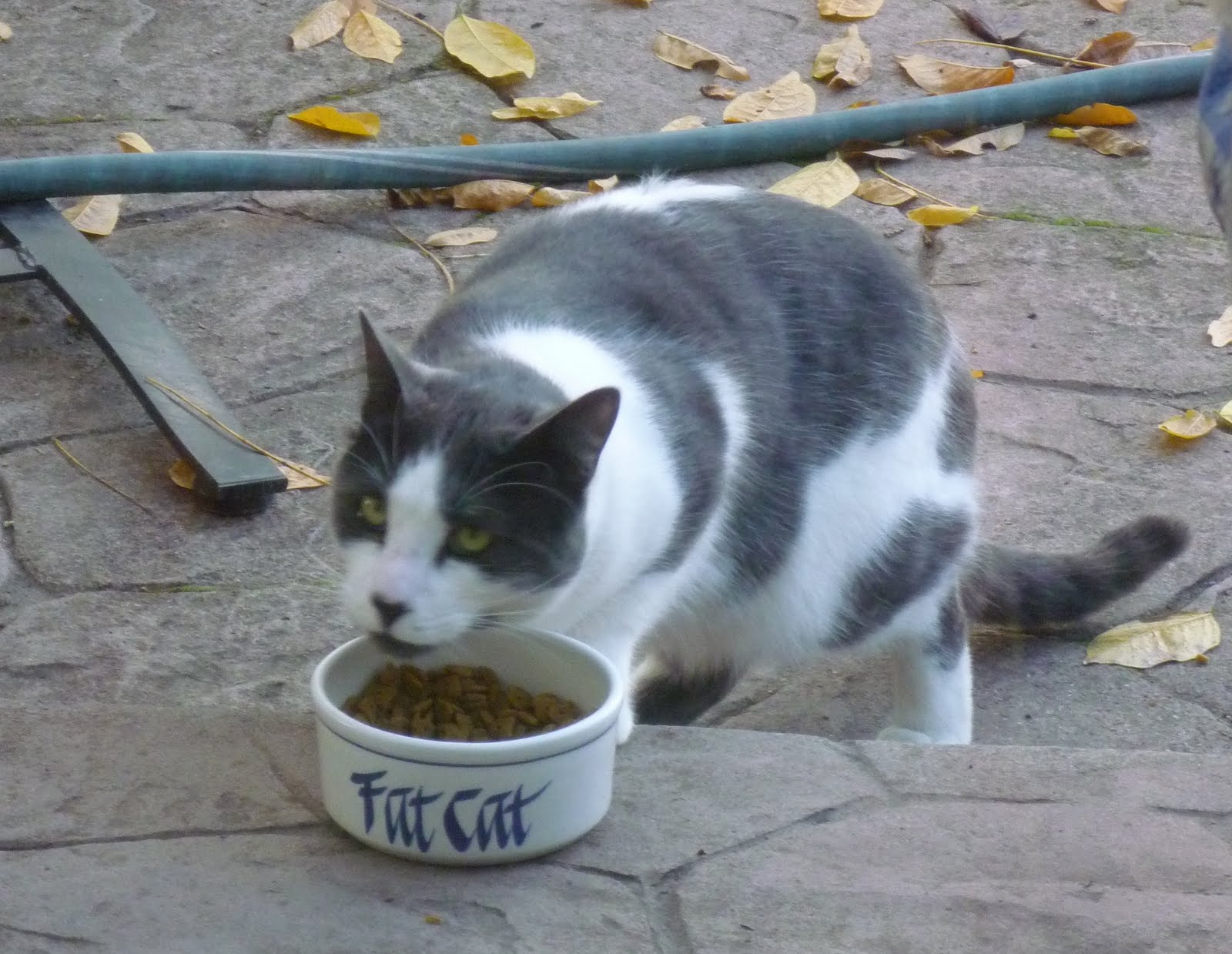
Last of all, just at dusk, came this odd-looking feline whom I’ll call Two-Tone….

Two-Tone

Oh, I take that back. It’s almost dark now, and Cow Cat is here — I can see through the window as I type — and what do you know, there is still food in the bowl. Cow Cat visits several times a day, usually, and always looks in the window and in the bowl, even though we have shooed him away many times.

Cow Cat a year ago

We didn’t like him because he’s ugly. But Goldilocks questioned the morality of that opinion….at least, that’s the challenge I felt in my heart when she said, “Why won’t you feed him?”

Calendula with oregano

Last year when I wrote about the cat visitors, I had chosen Jim, the black cat at the bottom of this post, as my favorite. So we discriminated against Cow Cat. Pippin said he may have a classic deformity of the face that makes him look the way he does. It’s not his fault. So perhaps I will take pity on him after all. Will he forgive me my past unkindness?

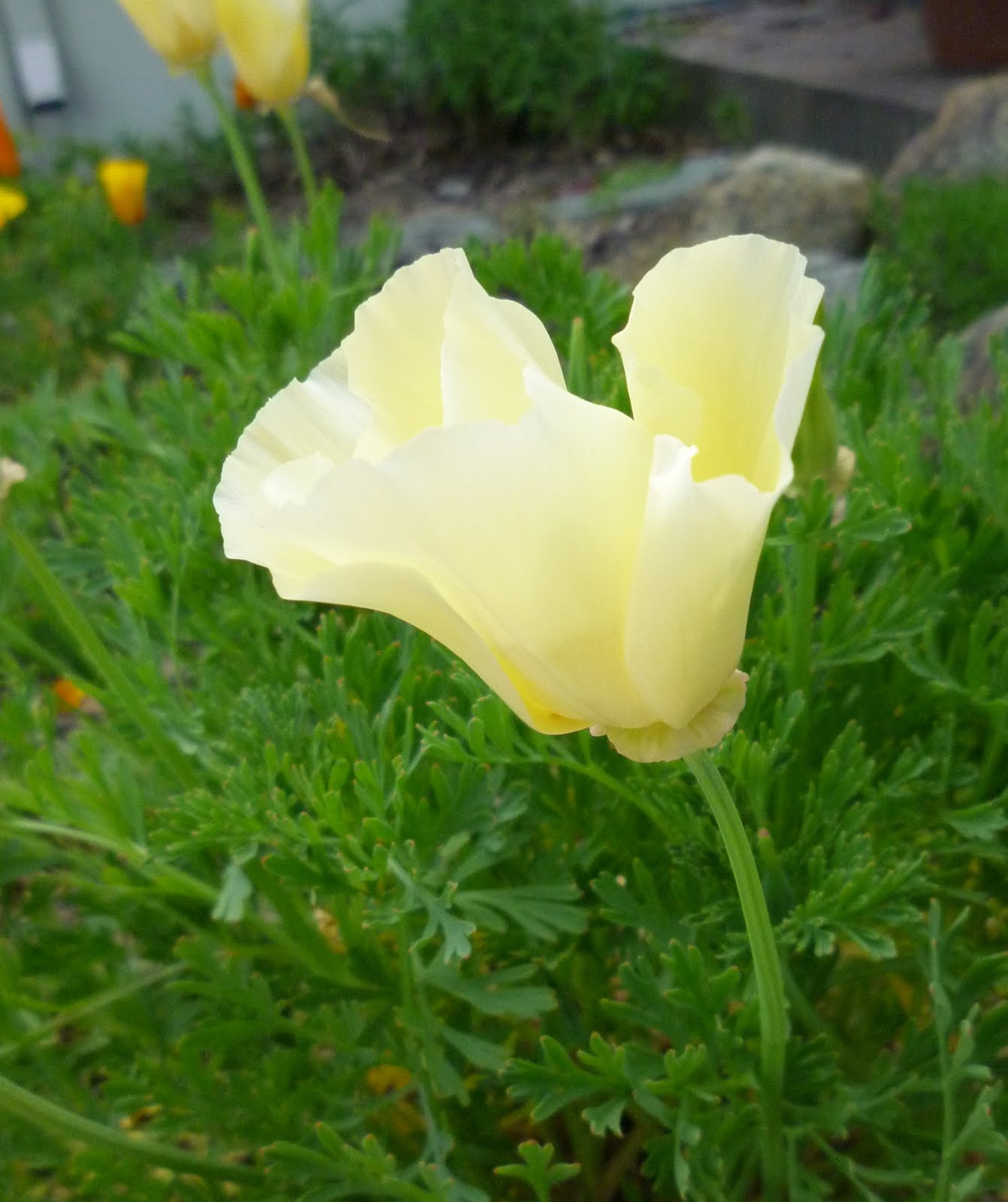
This yellow California poppy is very beloved, because it is unusual. The bright orange are much more vigorous and easy to grow, but I managed to get this one established, and it comes back most years.

Cow Cat is unusual, and he keeps coming back. Maybe I could learn to love him, too.

Fairy finery, honey and roses

Many people were already in the church when I arrived about 11:00 p.m. on Saturday night. On the carpet in the transept opposite the choir several blankets and children were laid out. I bought a fat candle to have ready for the procession, but it wasn’t lit until an hour later, and in the meantime I was getting intoxicated by the honey-warm scent rising to my nose, feeling as though I was already breaking the fast with some rich dessert. It smelled richer than baklava.

Then the Easter lilies came into olfactory focus, blending with the beeswax. By this time my ears were full of the hymns reminding me of Christ’s rising from the tomb, in a garden, in a real place on the earth, because He was really a man of flesh and blood as we are. When He rose He must have noticed whatever flowers were blooming in that garden.

Camellia in our church garden during Holy Week

Families were arriving, and while most males were dressed in their “ordinary” best Sunday clothes, the clergy wore white vestments, and many women and girls had put together very springy and bright, often all-white, outfits. A score of little girls had flouncy skirts that would have been fancy enough for a ball, or for acting the role of a fairy in a drama. I was so happy for their being able to commemorate their Lord’s Resurrection by being their prettiest.

Even I had found a long and full eyelet skirt at a discount store, to wear with an odd assortment of other white things, and switched from black to flowered purse. There were lots of us, then, adding our white forms to the press of bodies, including the Eritreans who always wear beautiful white gauze. On this day more Eritrean men than usual wore their white gauze, too.

When the deacons and priests started around with censers, it was with the incense that is so heady I want to cry over it, knowing that “Jesus is fairer, Jesus is sweeter….” Is it made from roses? I must find out about this.

When we made our procession around the property — it was a longer route than merely around the church building — yes, there was some drizzle, but very fine, and not enough to put out anyone’s candle. We were singing our new Paschal processional hymn, which the choir tried to teach the rest of us last week, but I know I didn’t get it. Several of us noted as we were trailing along silently, too far behind in the train to hear the choir, that it had taken us ten years to learn the old Paschal hymn; it would have helped to have the choir members scattered along the line, interspersed with the rest of us and leading us.

But I think everyone was content. We were at Pascha! At one point we who were closer to the front of the long line could see across the lawn to a stream of worshipers at the end of the procession, and the view was stunning, their white garments reflecting the flickering candles they were holding up in the dark. There were hundreds of us! I didn’t think it seemed that crowded in the building.

Soon we arrived again at the doors of the church, at which the priest knocked, and then, “He is not here! He is risen!” When we went inside we heard as always on this night the Paschal homily of St. John Chrysostom, which he gave about 1600 years ago and which has never sounded sweeter to my ears, full as it is of the love and grace of God. As we float through Bright Week and through the next 50 days, its glad tidings will remind us to keep greeting one another with “Christ is risen!”

This year our Father Michael, who is over 80 years old, read the homily. Somehow his voice never weakens, and retains the strength and authority of a strong spirit. Every time he serves or preaches I am so thankful for the grace that enables him to keep going, because he is so dear. His heart is such that the message of this sermon is of the sort that would flow from his own pen and lips.

At every repetition of the phrase, “Hell [or it] was embittered,” Fr. Michael paused so that the congregation could answer with a shout: “It was embittered!” — a sort of boisterous participation that we all seem to enjoy this one time in the year.

In a hearty baritone, this is what he proclaimed:

If anyone is devout and a lover of God, let him enjoy this beautiful and radiant festival.

If anyone is a grateful servant, let him, rejoicing, enter into the joy of his Lord.

If anyone has wearied himself in fasting, let him now receive recompense.
If anyone has labored from the first hour, let him today receive the just reward.

If anyone has come at the third hour, with thanksgiving let him feast.

If anyone has arrived at the sixth hour, let him have no misgivings; for he shall suffer no loss.

If anyone has delayed until the ninth hour, let him draw near without hesitation.

If anyone has arrived even at the eleventh hour, let him not fear on account of tardiness.
For the Master is gracious and receives the last even as the first; He gives rest to him that comes at the eleventh hour, just as to him who has labored from the first.

He has mercy upon the last and cares for the first; to the one He gives, and to the other He is gracious.

He both honors the work and praises the intention.
Enter all of you, therefore, into the joy of our Lord, and, whether first or last, receive your reward.

O rich and poor, one with another, dance for joy!

O you ascetics and you negligent, celebrate the day!
You that have fasted and you that have disregarded the fast, rejoice today!

The table is rich-laden: feast royally, all of you!

The calf is fatted: let no one go forth hungry!
Let all partake of the feast of faith. Let all receive the riches of goodness.

Let no one lament their poverty, for the universal kingdom has been revealed.

Let no one mourn their transgressions, for pardon has dawned from the grave.

Let no one fear death, for the Saviour’s death has set us free.
He that was taken by death has annihilated it!

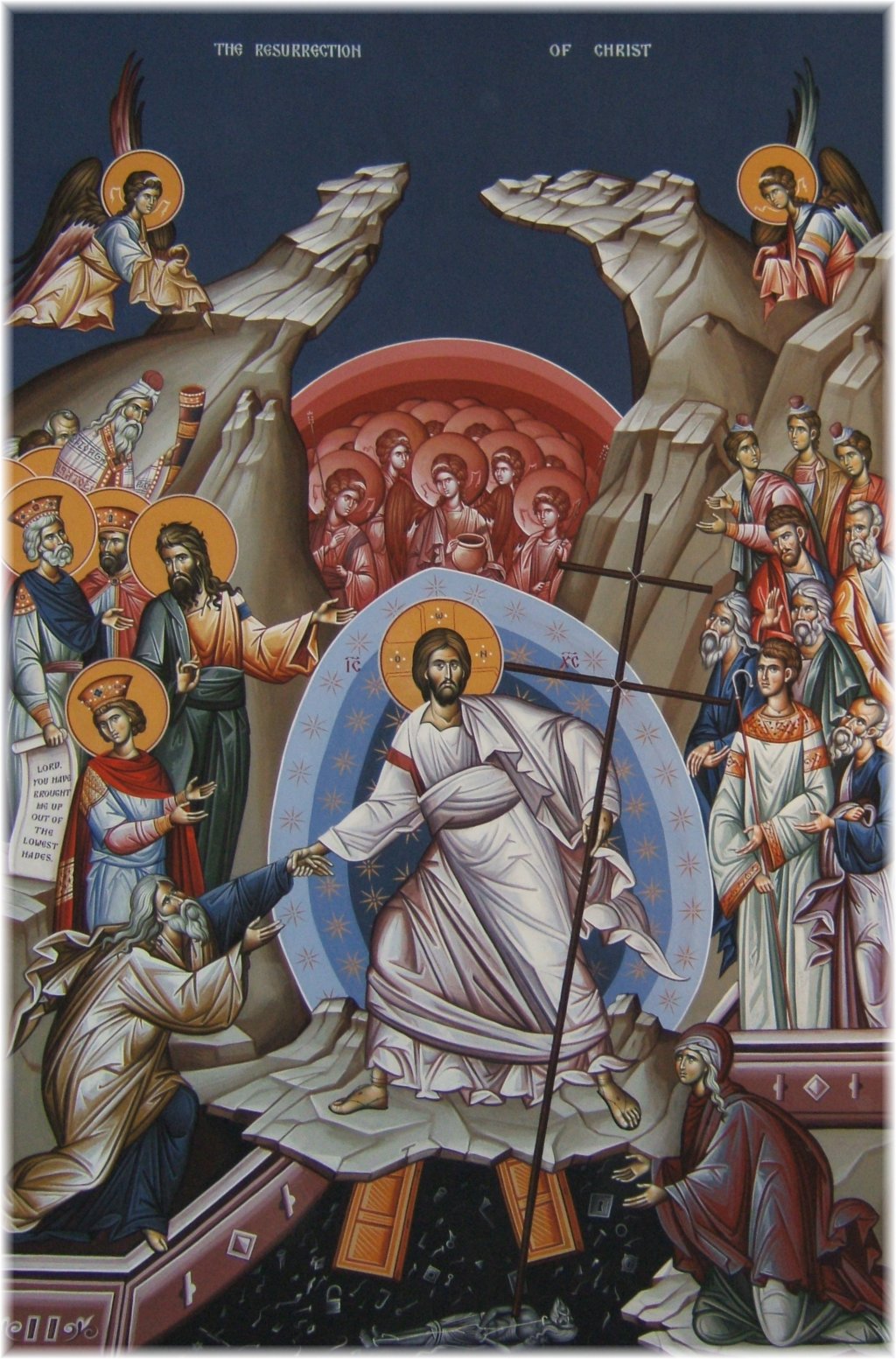
He descended into Hades and took Hades captive!

He embittered it when it tasted His flesh! And anticipating this, Isaiah exclaimed: “Hades was embittered when it encountered Thee in the lower regions“.
It was embittered, for it was abolished!

It was embittered, for it was mocked!

It was embittered, for it was purged!

It was embittered, for it was despoiled!

It was embittered, for it was bound in chains!
It took a body and came upon God!

It took earth and encountered Ηeaven!

It took what it saw, but crumbled before what cannot be seen!
O death, where is thy sting?

O Hades, where is thy victory?
Christ is risen, and you are overthrown!

Christ is risen, and the demons are fallen!

Christ is risen, and the angels rejoice!

Christ is risen, and life reigns!

Christ is risen, and not one dead remains in a tomb!
For Christ, being raised from the dead, has become the first-fruits of them that have slept.

To Him be glory and might unto the ages of ages.

Amen.

As I finish this post, it is Bright Tuesday. I went to church, and the gospel for today was the story of Christ meeting some of His followers on the Road to Emmaus soon after His rising from the dead. The unfolding of the scene, and imagining the Lord walking alongside and hearing them telling about the recent events — then their eyes being opened, His vanishing from their sight…. They said, “Didn’t our hearts burn within us?” And I got chills.

The altar is open all during Bright Week.

Who lives and was dead

Today was full of the Lord! The first thing I did on rising was go to church and take a turn reading Psalms by candlelight next to the “tomb” of Christ that had been erected on Friday and bedecked with Easter lilies. It is a special icon representing our Lord lying in the grave, and from the end of Friday night’s service the Psalms are read continuously until the next service, which was at 1:00 today.

The Orthodox also read Psalms all night by the casket of any church member at death. And if one is all alone in the church in the near dark — well, one is not alone, because God is there always, and not only He, but the saints who live and form that great Cloud of Witnesses, who are praying with us. It’s a very intimate and loving hour, and a blessed opportunity to participate in such a work.

In the middle of the Vesperal Liturgy of Holy Saturday we had baptisms. Once again we are at the anniversary of my own baptism on this day, four years ago now, and that adds to the gravity and joy of standing with those who are being newly illumined. During Lent the catechumens have been preparing for Holy Baptism, and the rest of the church pray extra on their behalf, and in our hearts and in repentance rededicate ourselves, remembering our own illumination.

Today there were six people baptized, praise God! Two couples, each with a very young boy-child, and they used our new sunken baptismal font that is just outside the church, filled with 90° water, which I’m sure made it easier for the little guys to suffer being immersed. The skies were dry, which made watching easier for all of us. In spite of the momentary displeasure and crying of the babies, everyone was beaming with smiles and songs.

Also during the service today we heard 15 Old Testament readings that have been familiar to me most of my life, but they are becoming even more beloved every year, as we hear passages as long as the whole book of Jonah and as short as the couple of paragraphs from Jeremiah that it has been my lot to chant three years in a row now. When Tom started reading the account of Abraham taking Isaac to the mountain to make a sacrifice, I realized that I have heard him read it every year, and from now on will never be able to read that moving story without hearing his voice.

We change all the altar cloths from purple to white in the middle of this service as well, two or three people nearby stepping up to do the quick work at the same time as men are lighting the chandelier and the choir is singing. Of course the choir is singing! There is rarely a quiet time during our services, filled as they are with prayers, Scripture, and hymns.

Mr. Glad went with me on Thursday evening for the Matins of Holy Friday, during which 12 Gospel passages are read, including the whole of several chapters of John, by the clergy in the center of the church. It’s a kind of total immersion in the events of Christ’s Passion, and requires three hours to get the full effect — but you get it.

Last night was Matins and Lamentations for Holy Saturday. The Lamentations consist of the whole chapter of Psalm 119, its verses interspersed with poetic verses pertaining directly to the Passion of Christ. But I didn’t go to that. I’m too old to stay up past my bedtime several nights in a row, and I wanted to be sure to make it tonight.

At my baptism, anointing with Holy Chrism

Tonight about midnight we will process around the church with candles — and maybe in the drizzle, if the weather doesn’t change quickly. Once we are back inside, a large portion of the first chapter of John will be read, often in more than one language. We will begin the happy shouts and songs of “Christ is risen!” and hymns that are the most rousing of the whole church year.

The priests and deacons will make the rounds among the people innumerable times with censing and with recitations of “Christ is risen!” and “In truth He is risen!” in many different languages in turn. Sometimes I see a cheat sheet floating around that shows these phrases, but I’m always a little too scattered to make up for my lack of preparedness right then. It’s very chummy, because we get a lot of visitors or once-a-year-ers and we fill the house. One has to pay attention to the candles to be sure that they don’t catch someone’s hair or long white scarf on fire.

Many children fall asleep on the floor as the festivities continue. The day of my baptism I was so thoroughly done-in that I couldn’t help looking again and again at the sleeping children and wishing that I were a child so that I could conk out, too. Perhaps I was being obvious; eventually a man offered me his chair, and with sleeping babe in arms moved to sit on the floor.

Of course, the highlight of the service is receiving the Holy Mysteries of Communion. When we have broken our Lenten fast with that heavenly food, and are giddy with fatigue, many of us go into the hall to share rich earthly treats that we’ve been doing without for many weeks. I’m not sure I will want to do that this year; I might need to come home and treat myself with sleep. We have a picnic Sunday afternoon with meat and everything one could want, when we are more rested.

So that’s where I’m going after I finish writing this and don my festal garments. I wanted to post at least something in commemoration of this pivotal point in history, and in our salvation history, and then I got carried away. What I first thought to share are these lines that Fr. L read to us instead of a homily this afternoon, words of the risen Christ that I hope will keep echoing in my heart.

I am the First and the Last. I am He who lives, and was dead, and behold, I am alive forevermore. Amen. And I have the keys of Hades and of Death.