All posts by GretchenJoanna

Unknown's avatar

About GretchenJoanna

Orthodox Christian, widowed in 2015; mother, grandmother. Love to read, garden, cook, write letters and a hundred other home-making activities.

Quote of the Week – Regret

Regret is an appalling waste of energy; you can’t build on it; it is only good for wallowing in.
–Katherine Mansfield


This contrast of building vs. wallowing is a good one for me to keep in mind as we approach Lent. Today is the Sunday of the Prodigal Son. This young man probably didn’t exactly grunt around in the mud with the swine even if he did covet their food, but I wonder if he wasted a lot of time feeling miserable before he said, “I will arise and go unto my father.”

Glory to God, we can get up every time we fall and by the power of the Holy Spirit go to our Father in prayer, saying as did the Prodigal, “I am not worthy to be treated as your son.” And we can expect to be embraced, and to be built up in Christ.

Addendum: By the Linked-Within feature I discovered that I did in fact write about the Sunday of the Prodigal Son before, and even used the same icon. It’s sort of a sequel to this part, discussing what happened after he left the pigsty.

W’y rain’s my choice.

Street lights shine down throughout my neighborhood, but I was wishing I’d brought a flashlight nonetheless when I went out earlier this evening with my umbrella to deliver a package that had been delivered to the wrong house. In this town we have confusing arrangements of names and streets. Today’s error resulted from something like this: One address is 5211 Fred St and the other is 5211 Frank St, with Fred and Frank being short loops off of Fritz St.

Our mixed-up houses are only two blocks from each other, so it didn’t make sense to drive over there. I would get wetter climbing in and out of the car than if I just took a short walk. I had to strain to see the house numbers, even the ones that have a light behind them. Until I got my bearings I took a few steps up two or three driveways in order to read the addresses.

Rivers of water flowed across the sidewalks, in many places pooling into lakes before they reached the gutter. But that’s not a problem if you have sturdy galoshes like mine. I found that my mind was singing the first stanza of a poem that I learned from Goldilocks when she came for her sewing lesson yesterday, barefoot because her boots had gotten soaked at recess.

This very night her school is having a fundraiser and all the students are reciting together:

It hain’t no use to grumble and complane;
It’s jest as cheap and easy to rejoice.—
When God sorts out the weather and sends rain,
W’y rain’s my choice.

That’s only the first fun verse of James Whitcomb Riley’s “Wet-weather Talk.” I bet the children are all glad that we’ve been having steady downpours for a few days, because that will help the audience get into the spirit of the poem that goes on for a few more stanzas exhorting us not to be “lockin’ horns with Providence.”

We are likely to rejoice in rain here in dry California. I was also happy to go on a little expedition, and only slightly disappointed when no one answered the door; I left the package on the step and came home again. I passed a man whose taxi was just driving away, and he laughed and said, “Another fine night for a walk!” and I answered with the other lyrics that popped into my head, “Splish splash…I’ll be takin’ a bath….”

But no, I wasn’t even very damp when I came in the door to the lovely warm fire that I’d got going a little earlier. The time to write this blog post was also here. It is certainly easy to rejoice when Providence gives me opportunities and the strength to take them.

Of course, other days rejoicing can cost more. But “sufficient to the day is the evil thereof,” as the Bible says somewhere. I don’t think I need to worry about those other days right now. A Russian proverb says, “Every day is a messenger of God.” My little delivery errand turned out to be a gift to myself, and that could only come from God.

A New Apron for Bird

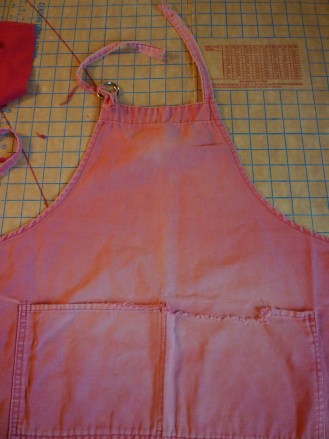
The beloved apron.

From about 1930 my friend Bird spent a lot of time in a closet turned into a sewing room, stitching away at shirts and dresses and whatever was needed to keep her twelve children clothed. All of them were born before I was, and Bird is now 99 years old. I didn’t get to see her on her birthday last September, but shortly before that I paid a visit and was concerned when I saw that Bird wasn’t wearing an apron.

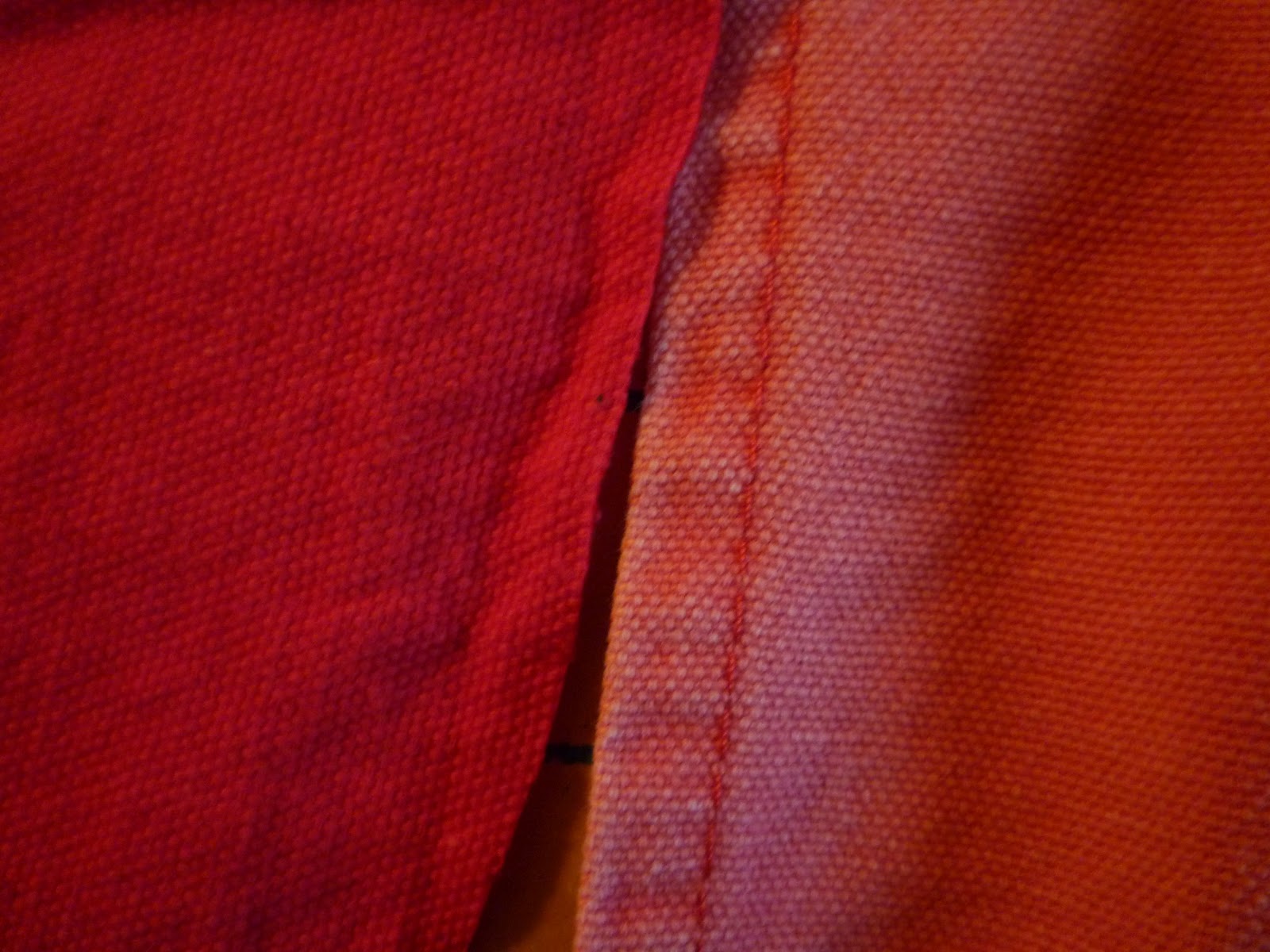
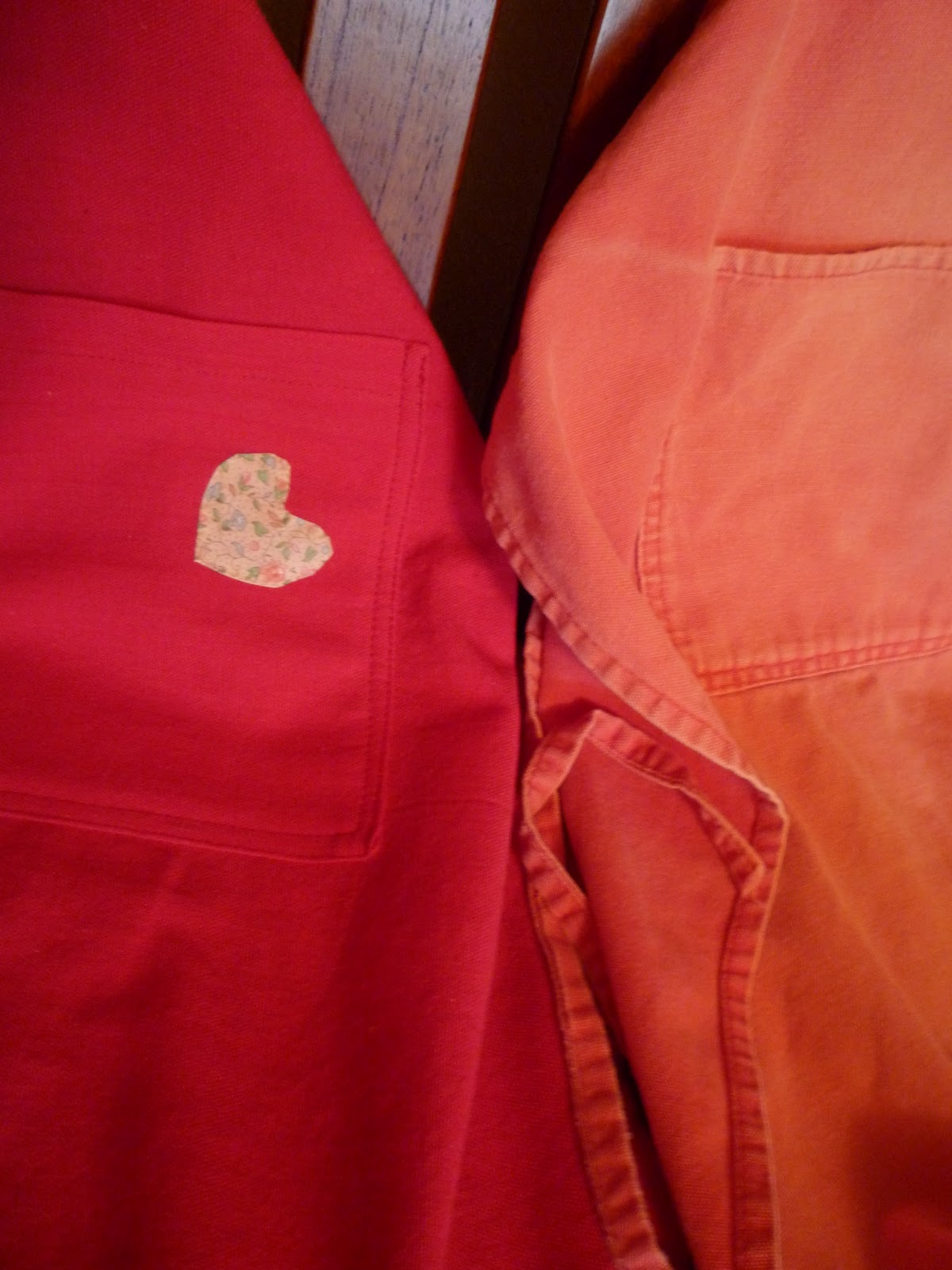
New and old fabric compared.

She doesn’t do much cooking or cleaning anymore, though she lives by herself in an apartment. She wears an apron because she has tied one on every morning for most of her life and she doesn’t feel right without that part of her attire. I knew all that, so when she was lacking the essential garment I asked what was wrong.

Her apron was so tattered, she said, she didn’t want to wear it when she was having company. Oh, yes, she did have a newer apron that her children had bought her, but it didn’t fit right. She brought it out of a drawer, and I could see that it was way too large, made to accommodate the great number of our generation who fill more of an apron than our grandmothers did. Though I didn’t have a measuring tape, I took some measurements from the old favorite, using a sheet of paper for the ruler, and when I went home I drew up a proper design, thinking I could make her one. But nothing came of my idea for a long time.

Without shame, I returned to visit last month and found Bird in the oversized apron. But knowing that I would be returning to her city in about three weeks, I asked if I could take her old apron with me this time, to use for a pattern. She took it out of a drawer, clean and neatly folded, though unusable, as the neck strap was broken through.

When I brought the old apron home, I looked among my stacks of fabrics and was amazed to find something that resembled what I imagined the old apron had looked like before it faded. My piece of Guatemalan fabric had been bought to fix a mistake I made in measuring for a tablecloth fifteen years ago, a tablecloth that never got made at all. So the fabric waited around, being the perfect replacement for the old apron, until all the parts of this story came together.

Today was the end of the story, or the beginning of the life of the new apron. I managed to meet my own deadline of this day, when I went to an appointment in her town and dropped the apron off beforehand. Bird was very pleased. She tied the apron on immediately and said that she felt properly put together again.

The Crosse

Friday is a day to remember The Cross. This poem by John Donne, which I first read at least 15 years ago, contributed to my own alienation from modern minimalists and anti-sacramentalists. It is long and full of theology, and by the time I get to the end I am always lifted up by joy. It must be that cup of joy He gave us by taking the cup of death. I’ve put it with the old spellings and words, to remind me of the historical context in which it was written, but it can be found in an updated form here.

I wonder if I wasn’t imbued with a love for The Cross from my earliest Sunday School classes; my teacher gave me a small plastic cross with adhesive on the back, which I stuck to the wall above my bed. I looked at it every night before I went to sleep, for years, as it was the sort of material that absorbed light and glowed for a while after the electric lights were put out.

THE CROSSE

Since Christ embrac’d the Crosse it selfe, dare I
His image, the’image of his Crosse deny?
Would I have profit by the sacrifice,
And dare the chosen Altar to despise?
It bore all other sinnes, but is it fit
That it should beare the sinne of scorning it?
Who from the picture would avert his eye,
How would he flye his paines, who there did dye?
From mee, no Pulpit, nor misgrounded law,
Nor scandall taken, shall this Crosse withdraw,
It shall not, for it cannot; for, the losse
Of this Crosse, were to mee another Crosse.
Better were worse, for no affliction,
No Crosse is so extreme, as to have none;
Who can blot out the Crosse, which the’instrument
Of God, dew’d on mee in the Sacrament?
Who can deny mee power, and liberty
To stretch mine armes, and mine owne Crosse to be?
Swimme, and at every stroake, thou art thy Crosse,
The Mast and yard make one, where seas do tosse.
Looke downe, thou spiest out Crosses in small things;
Looke up, thou seest birds rais’d on crossed wings;
All the Globes frame, and spheares, is nothing else
But the Meridians crossing Parallels.
Materiall Crosses then, good physicke bee,
And yet spirituall have chiefe dignity,
These for extracted chimique medicine serve,
And cure much better, and as well preserve;
Then are you your own physicke, or need none,
When Still’d, or purg’d by tribulation.
For when that Crosse ungrudg’d, unto you stickes,
Then are you to your selfe, a Crucifixe.
As perchance, Carvers do not faces make,
But that away, which hid them there, do take.
Let Crosses, soe, take what hid Christ in thee,
And be his image, or not his, but hee.
But, as oft Alchimists doe coyners prove,
So may a self-dispising, get selfe-love.
And then as worst surfets, of best meates bee,
Soe is pride, issued from humility,
For, ’tis no child, but monster;  therefore Crosse
Your joy in crosses, elso, ’tis double losse,
And crosse thy senses, else, both they, and thou
Must perish soone, and to destruction bowe.
For if the’eye seeke good objects, and will take
No crosse from bad, wee cannot scape a snake.
So with harsh, hard, sowre, stinking, crosse the rest,
Make them indifferent; call nothing best.
But most the eye needs crossing, that can rome,
And move;  to th’others th’objects must come home.
And crosse thy heart:  for that in man alone
Points downewards, and hath palpitation.
Crosse those dejections, when it downeward tends,
And when it to forbidden heights pretends.
And as thy braine through bony walls doth vent
By sutures, which a Crosses forme present,
So when thy braine workes, ere thou utter it,
Crosse and correct concupiscence of witt.
Be covetous of Crosses, let none fall.
Crosse no man else, but crosse thy selfe in all.
Then doth the Crosse of Christ worke fruitfully
Within our hearts, when wee love harmlesly
That Crosses pictures much, and with more care
That Crosses children, which our Crosses are.

-John Donne