Category Archives: agriculture

Thorny and Byzantine

In Lefkes

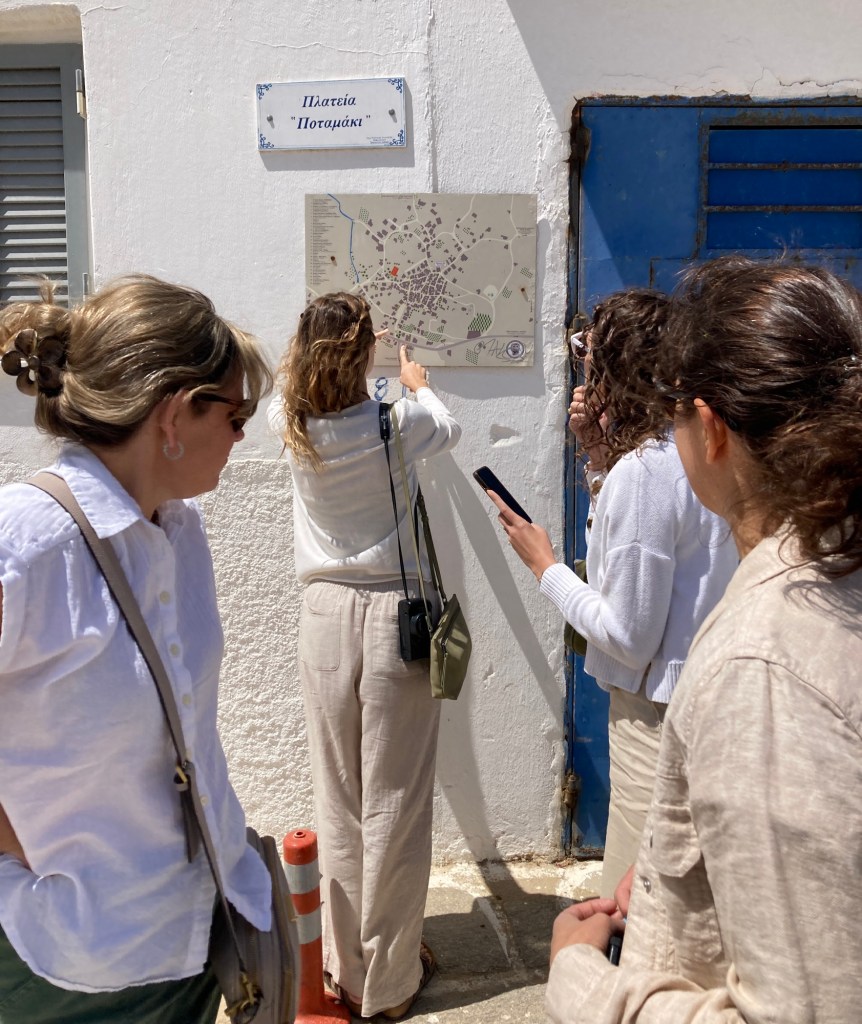
The skies had cleared and the wind was still blowing when we set off for the high country of Paros, on our first whole day here. In the village of Prodromos signs for Public Parking led us to a dirt lot, and the bus stop a short walk from there, where we hoped to catch a bus up to the town of Lefkes.

We could make out from the roadside sign, conveniently right outside a bakery, that our bus would not arrive for another hour and a half, so we did a little shopping —yes, including of pastries — and found a taverna where we could have an unfortunately quick lunch in the meantime.

The only other people in the restaurant were five older Greek men in a traditional and more relaxed midday gathering, for whom the five of us chatting and laughing over our menus clearly provided an interesting diversion; they couldn’t stop watching us. We petted the cat while waiting for our orders, and kept an eye on the time so we wouldn’t miss the one bus that we needed.

At every restaurant in Greece so far we’ve found that restaurant wait staff are reluctant to bring the check, which applies a gentle pressure to linger, and enjoy to the max the great food and ambiance. We felt ourselves to be rude and unappreciative of the chance to experience a village taverna complete with cat, and old men gossiping over their coffee.

We even had to leave an entire kebab untouched, but I stuffed the extra bread in my shoulder bag to take along, with breakfast toast in mind.
After a quick bus ride up to Lefkes, we strolled through the town, always heading gently downhill, on the Byzantine Trail, a thousand year old road that is by modern standards a path between Lefkes and Prodromos. The huge 19th century Agia Triada church that was built of local marble we found closed; reportedly services are held morning and evening every day.
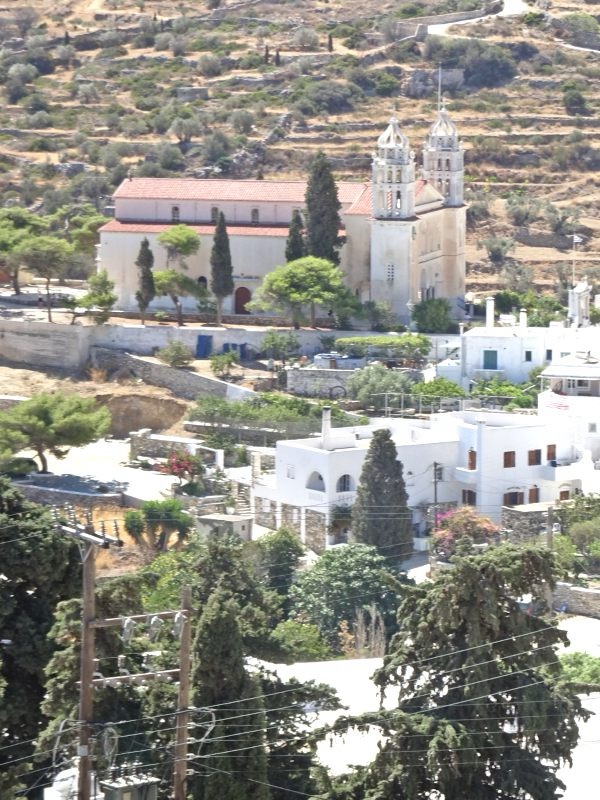
Lefkes, Internet photo

The trail soon left the town and wound on down the hill, with views on all sides of ancient terraces built of stones pulled from the earth that is rich with them, and naturally poor from the stoniness. A few of the thousands of plots are evidently being used again, though tourism has supplanted agriculture in the island economy.
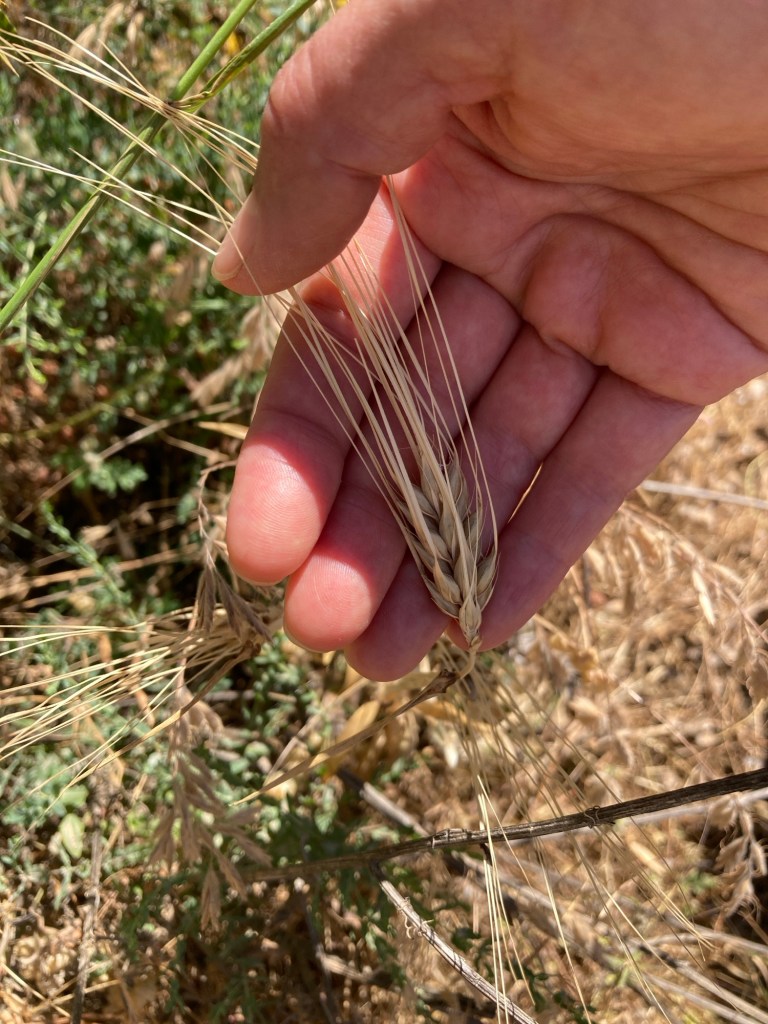
Barley

It is easy to imagine the farmers in the old days growing fava beans and keeping goats on those terraces. We did pass one old man keeping watch over his goats that very afternoon.
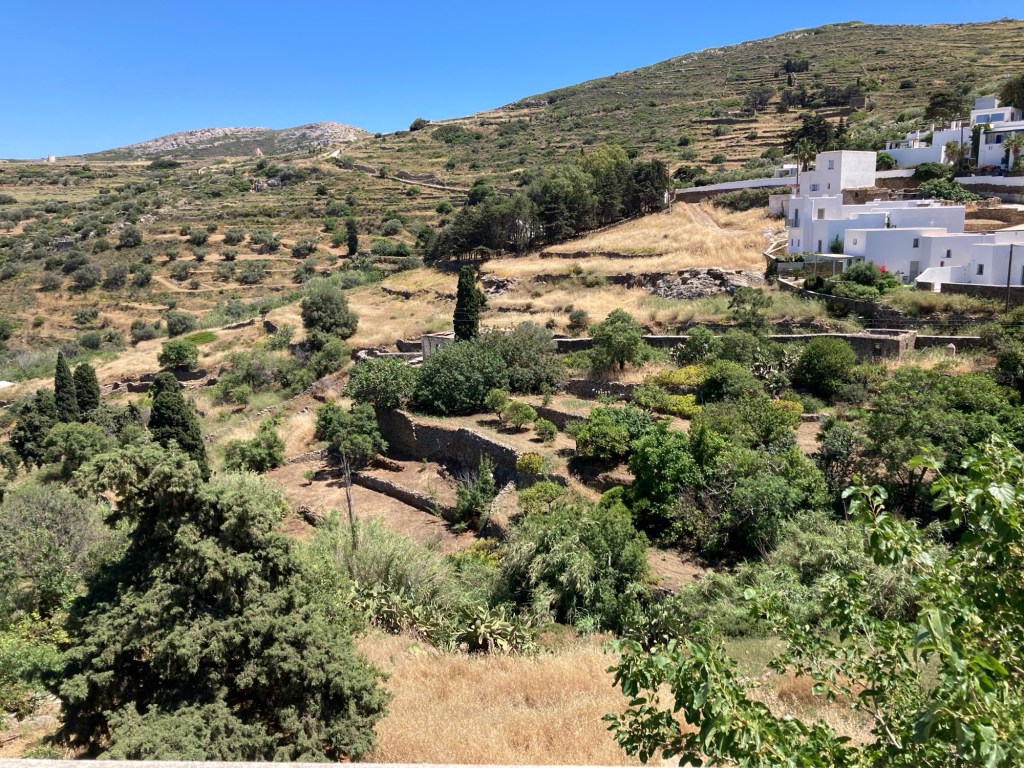
Pippin and I kept lagging behind the others to investigate all the strange or familiar plants along the path, which included at least a dozen species of prickly types.
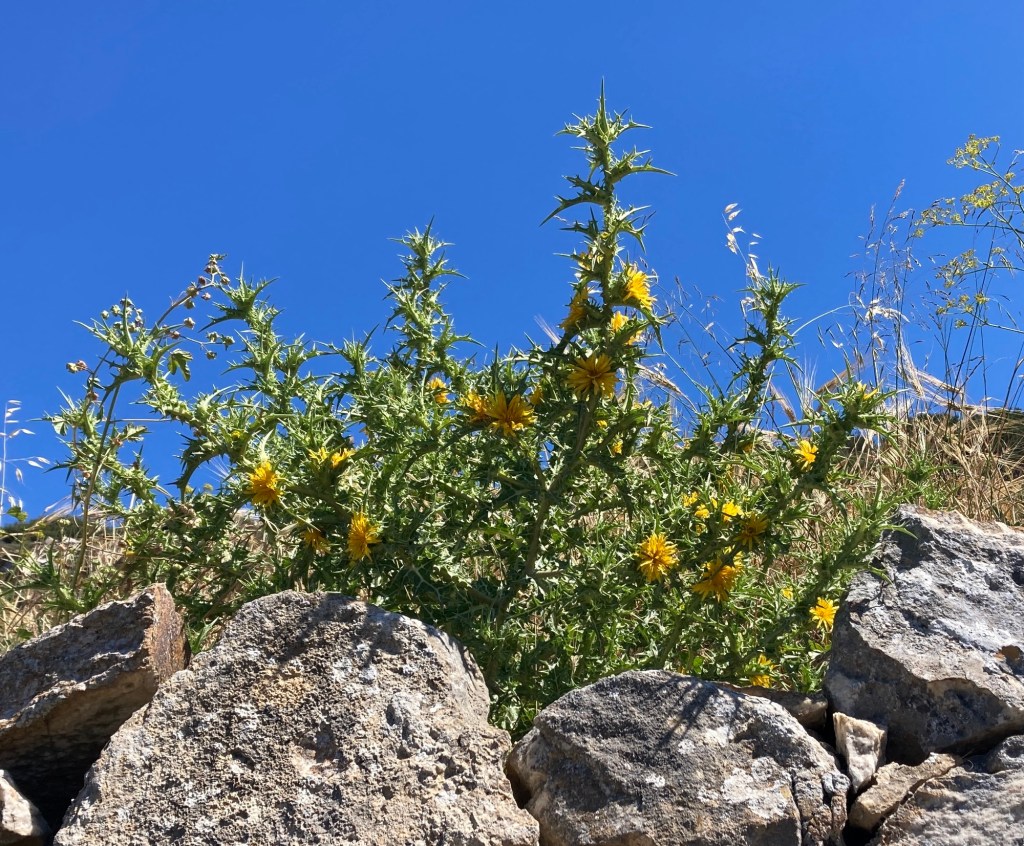
Common Golden Thistle

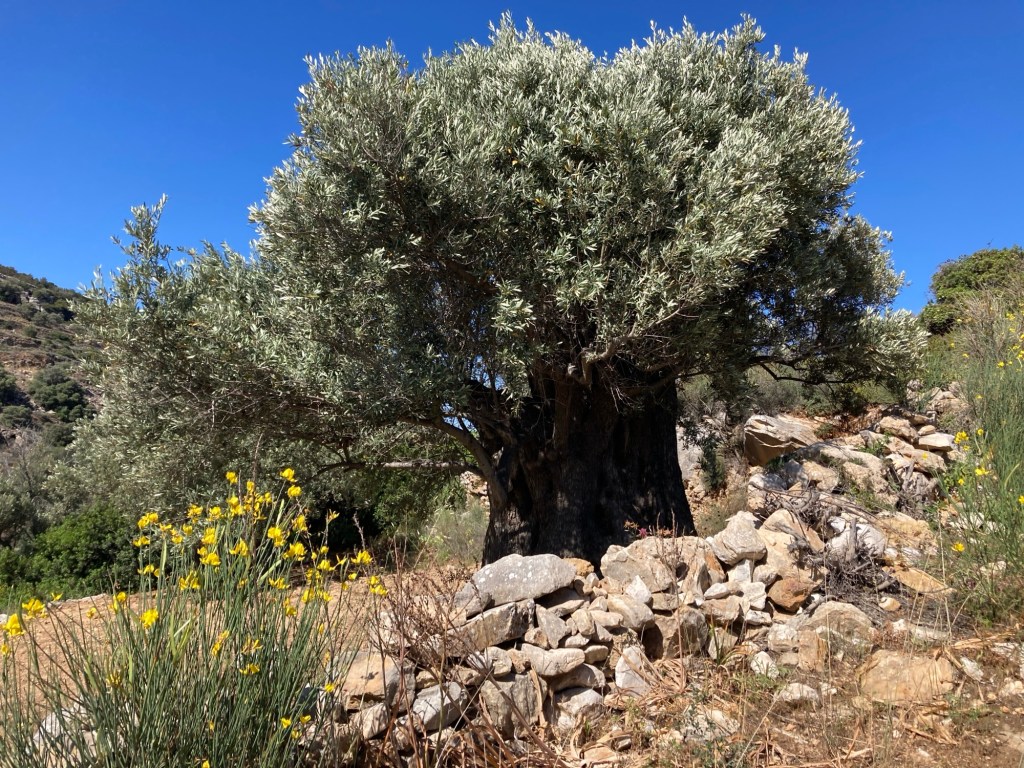
There was even a beautiful but thorny type of acanthus, which it took me a few sightings in different stages of its flowering to recognize as being related to the majestic version in its glory right now, back home in my garden.
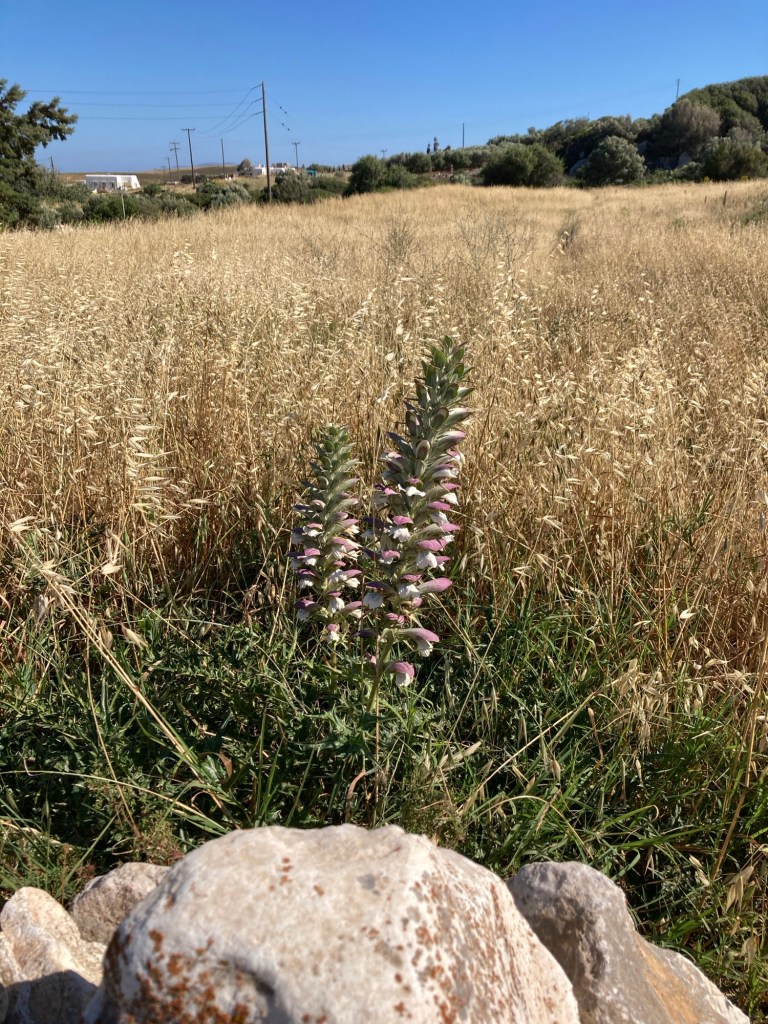
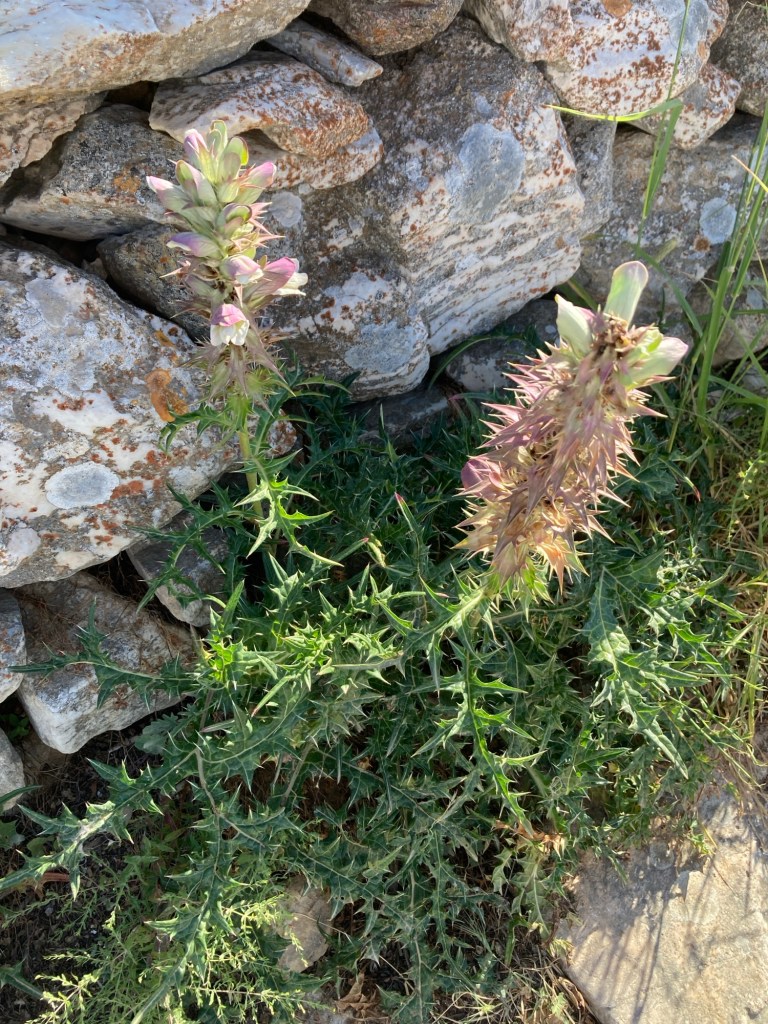
Acanthus

I was so happy to be wearing my new hiking boots that kept me comfortable and mostly steady on the road that was sometimes dirt, sometimes roughly rocky and uneven, and often paved with wide and flat marble that had been polished smooth over the centuries.

Phoenician Juniper

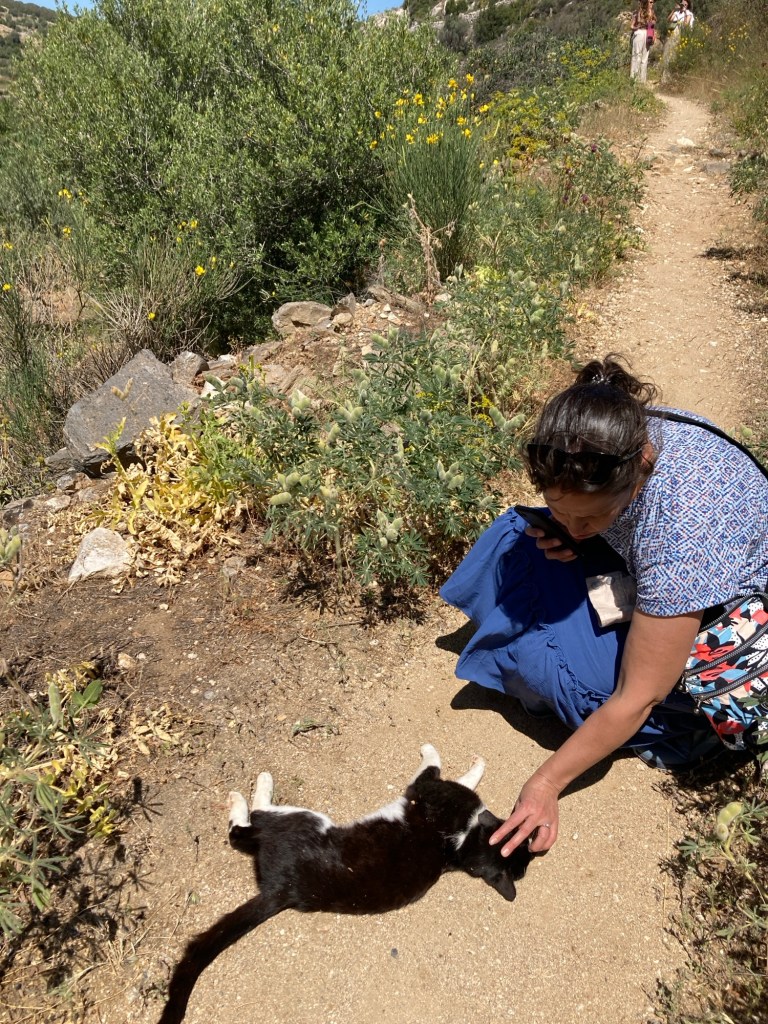
The ubiquitous cats greeted us on the Byzantine Road, begging attention, which at least a couple of us were happy to give.
I was in my element, under the warm sun, so many interesting plants to see, with my favorite botanist partner and in the company of other family favorites, getting good exercise among terraced hills — it all was so healthy and alive that I could forgive the wind that tangled my hair, and the thistles that grabbed at my legs.

Yellow Spine Thistle

I hadn’t known ahead of time just how much of a nature walk this trail was going to be, and I couldn’t get over my good fortune at being the recipient of this blessing, accomplished through the labors of my girls, from Kate who was willing to drive to Maggie who buys us pastries.

Eventually our walking trail brought us back to our car in Prodromos, and we returned to our house across the island. At the end of the day we had walked more than five miles, and we all slept very well that night under Aegean skies.
Greedy among the flowers — and fruit.

WHO CAN EXPLAIN WHY WE  LOVE IT (PICKING MULBERRIES)

Who can explain why we love it—West Lake is good.
The beautiful scene is without time,
Flying canopies chase each other,
Greedy to be among the flowers, drunk, with a jade cup.

Who can know I’m idle here, leaning on the rail.
Fragrant grass in slanting rays,
Fine mist on distant water,
One white egret flying from the Immortal Isle.

-Ouyang Xiu,  (1007 – 1072) China

I get the impression that this outing to West Lake is primarily a chance to get away from work. The poet enjoys being idle, and maybe he and his friends just happen to find mulberries to pick while they are enjoying their drink and exulting in the beauty of the day.

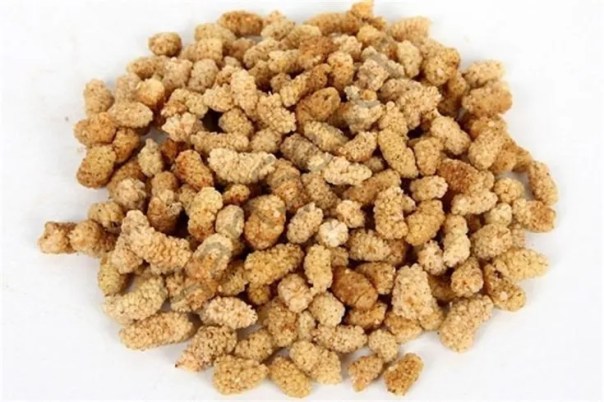
In any case, even the title of the poem is not about eating the mulberries — but the fruit itself is on my mind since I recently discovered dried white mulberries in the market, from Turkey. They are unlike any dried fruit I’ve ever eaten. Their extreme sweetness leads people to say that the flavor is honey-like; the chewiness of them is what I love most.

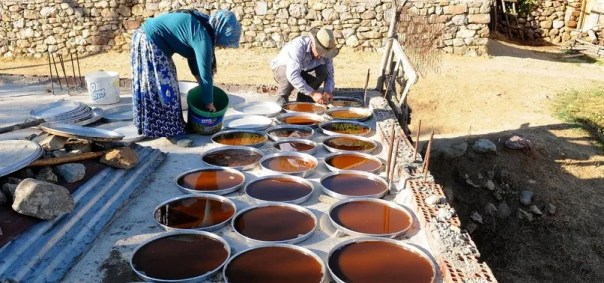
I read that nearly every village in Anatolia grows them, and the growers also make mulberry syrup, which I’d like to try as well. So I offer some photos that I found online. I also ran across a post, “White Mulberries,” from a  Turkish blog, and it contains the kind of information that is most interesting to me.

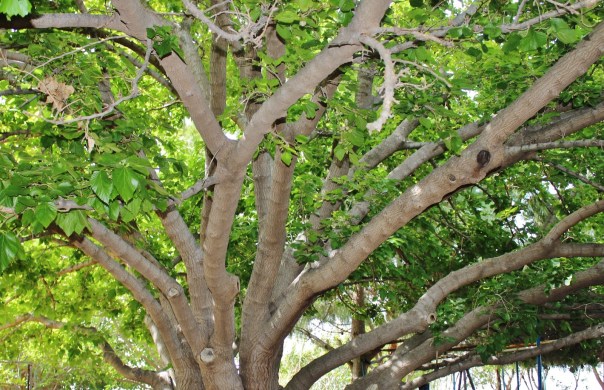
The site Tropical Fruit Trees shows photos of several varieties of Mulberry, by which I was able to see that the ones I’ve eaten dried are the “Persian White” type. They are the most cold hardy and grow in USDA zones 3b through 9. If I had twice as much land as I do, I would surely want to plant one of these trees. They attract birds, and produce lots of fruit, which means, plenty to dry. The leaves are not only the best food for silkworms, but make good livestock feed as well. Maybe one of my readers will be inspired to plant a Persian White!

The smell of dust.

About five this morning three things happened. I woke up in my sister’s house, which lies in the neighborhood of my childhood, along one of the thousand plain, unlined roads that make rectangular grid lines of themselves through the orange groves.

A mockingbird began to run through his upbeat repertoire outside my window. I was surprised at this, because I never heard them as a child. I wondered which local species he was imitating at the coolest moment of the day, 73 degrees. He didn’t sing for long.

About the same time that I saw on the forecast the prediction of 108 degrees today, I heard the whole house fan come on and start blowing all the previous day’s residual hot air out of the attic and all the rooms. In the summer my brother-in-law turns it on as soon as the outdoor temperature becomes cooler than that under the roof. It really lessens the need to use the air conditioner.

But tomorrow morning there will not be enough cooling off to work this system. While I was driving away in my air conditioned Subaru and toward a more coastal destination, the Central Valley was turning into a furnace. Most of the next ten days over 100 and four of them above 110. 

As I lingered with my brother’s family over dinner last night, we talked about various people we knew who were leaving California for one reason or another. Somebody’s mother had moved here years before from Missouri but had to go back, because she was always sickly in California. Was it the dust? Everyone around the table agreed that the dust can be oppressive.

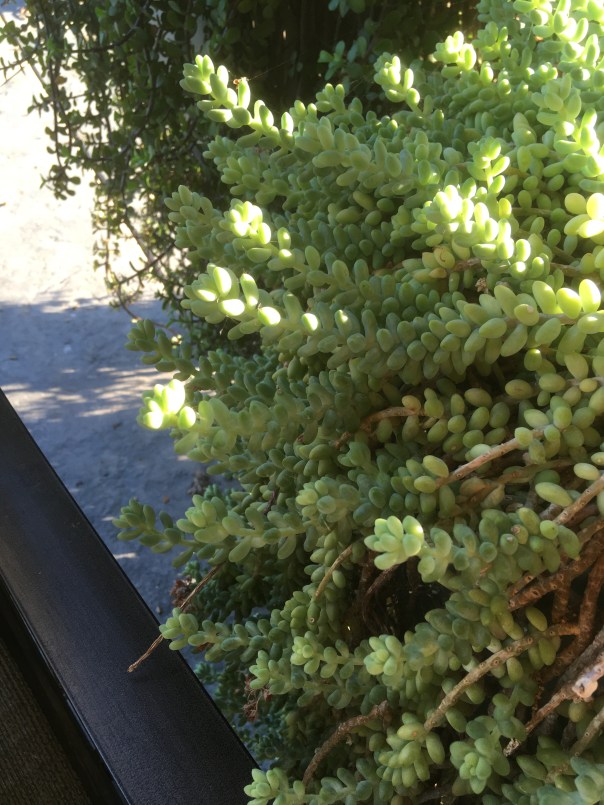
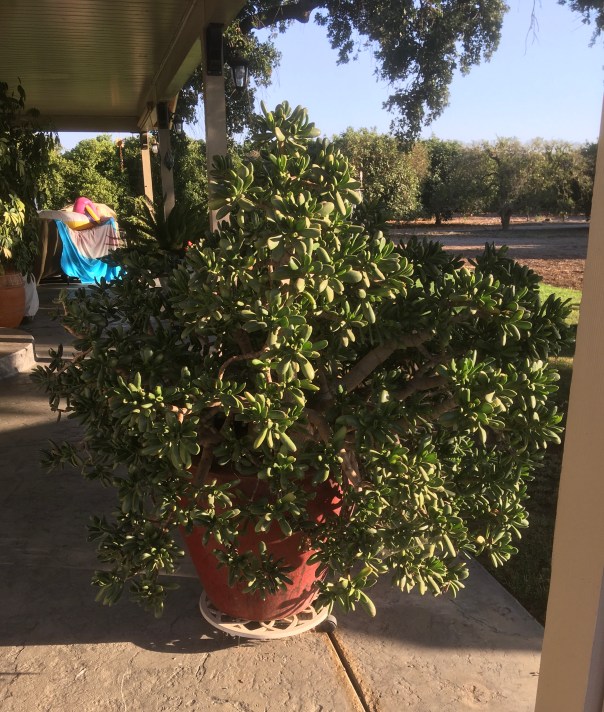
After dinner we went outside where the children ran on the lawn, and I admired the way the succulents thrive at my brother’s place, in the heat, yes, but under the shade and frost protection of the patio roof. Certain plants love the climate, and of course that dust blows off the fields that are in between plantings such as I saw on my drive in: cantaloupes, tomatoes, corn, alfalfa, cotton…. That Valley dust feeds the nation!

It’s also a component of the air of which I breathe deeply when I visit in the warmer seasons, the scent of my childhood. That air is like a caress, and a tonic, an atmosphere to sink into. The late evenings are the loveliest time to sit out, after the sun has gone down and air has lost its oven-like personality. One wants to stay up for hours recovering from the day’s fierceness, and not go inside where the air may be cool, but it’s artificially so.

At the end of today’s drive, I arrived  in the southern reaches of the state in a place where the ocean influence is felt morning and evening. Windows and doors are open so that soft breezes can blow through my hosts’ house. I picked up granddaughter Annie at the airport, and this weekend we’ll go to her cousin Pat’s wedding in San Diego. 

Today’s photos are all from my brother’s place, which is the house I grew up in. He has made a lot of changes, but it’s all good, and more pleasing every time I visit. Tomorrow, more family to visit, more gardens! Stay tuned…

The orange blossoms called me…

The orange blossoms beckoned, from my youth, from the Central Valley, from the treasury of olfactory memories in my mind, and from the image imprinted there the last time I visited my childhood home at this time of year. I didn’t remember the scent itself, but I remembered the ecstasy of inhaling it.
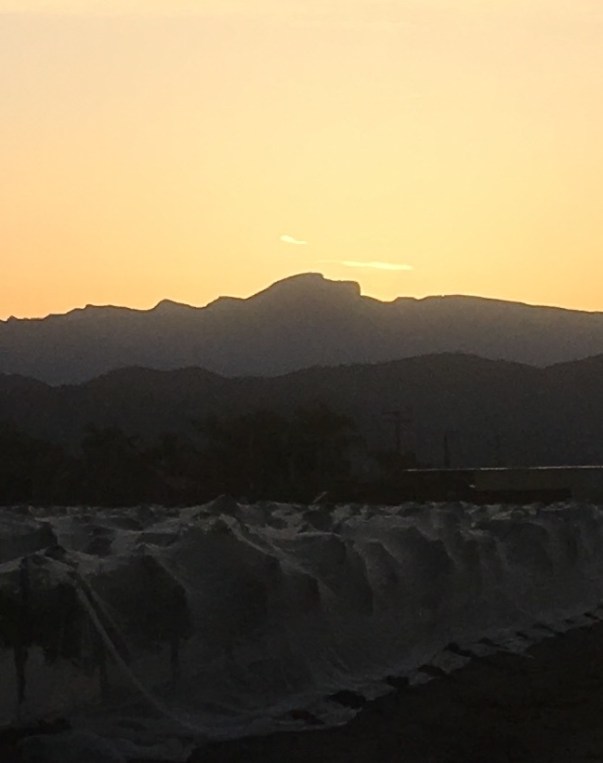
In response I made a little road trip last week, and spent time in Tulare, Kern and Fresno Counties, smelling citrus blooms and visiting with family and friends. I stayed with my sister Nancy, the farmer, who lives in the middle of the groves of trees that she and her husband care for. The Sumo mandarins that directly surround them were just about to bloom, so they had recently been covered with bee netting.

What? you ask. Yes, they are protecting the trees from the bees, because if the Sumos get cross-pollinated with other citrus such as lemons they may make seeds, and that is a no-no for seedless mandarins. It’s just one of the many sorts of special treatment that the trees and the harvest get, and an example of the extra work involved to grow this fruit that was developed in Japan. If you haven’t eaten a Sumo it may be because the costs add up quickly to make them expensive in the stores.

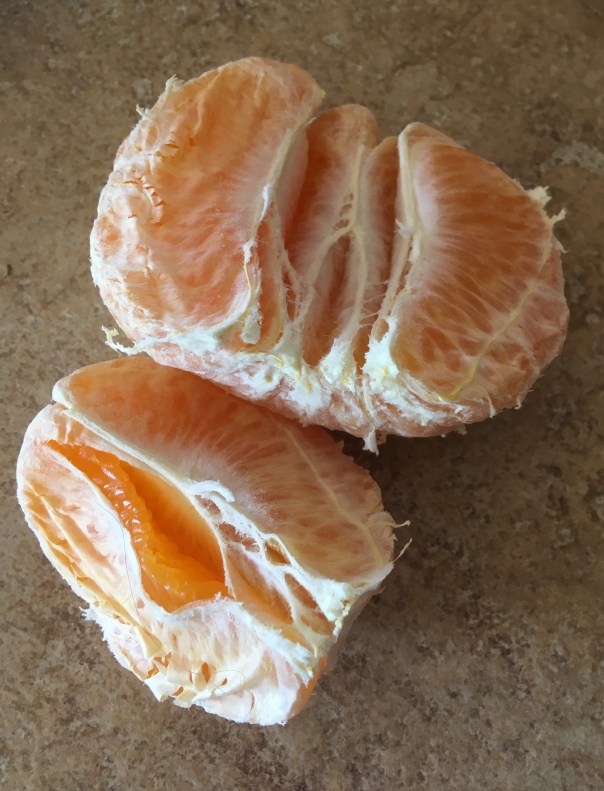
Nancy found a few Sumos remaining from this year’s harvest to give me. They are large for a mandarin orange, seedless, very tasty, and their loose rind makes them super easy to peel.
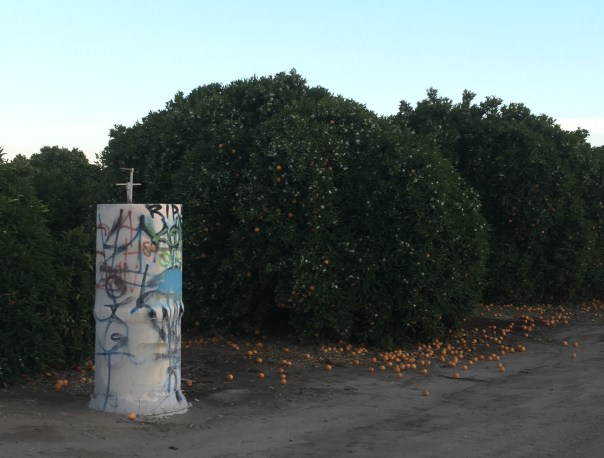
I came home with oranges from my father’s navel orange trees, too, which I didn’t expect. That fruit would normally be all picked and gone to market long before now, but this year the trees in the Valley are loaded with fruit, and it’s very small. That is a recipe for not being able to sell it, so the oranges fall on the ground eventually and the farmers take a loss. Farming is hard in many ways, and it’s not getting easier.

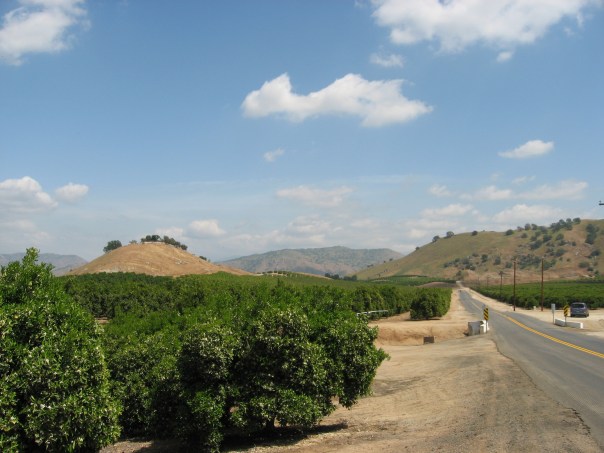
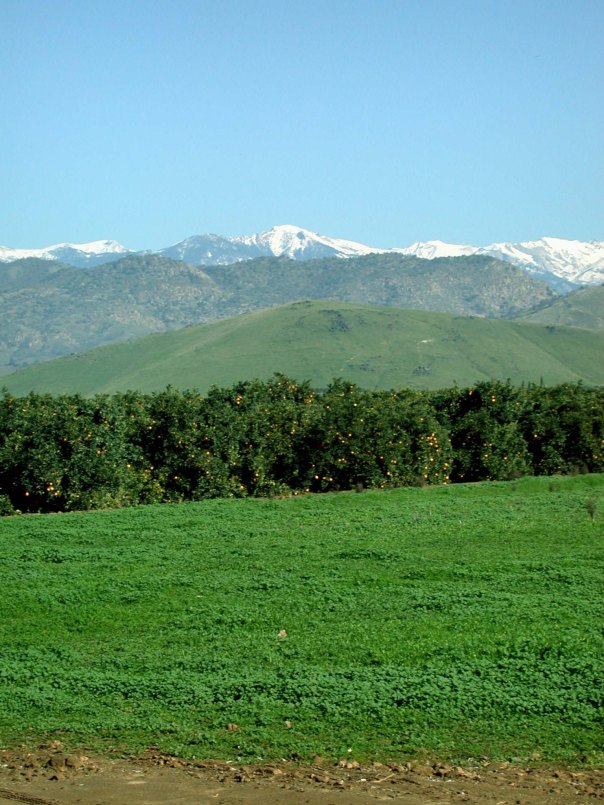
The next few photos below are from years past, taken at various times of year, of these country roads and places where I spent my childhood.

The view below of the Sierras with the sun rising behind reveals the profile of a formation that looks from there like a man lying on his back. We call it Homer’s Nose (though I didn’t remember “meeting” Homer until recently, and only heard about him from afar):

Since I was “so close,” one day I drove farther south an hour and a half to visit another Farm Girl, Kim of My Field of Dreams. After reading blog posts about each other’s gardens and families for many years, we enjoyed our first face-to-face meeting. We were like old friends or long-lost sisters (well, we are sisters in Christ, after all) and talked and talked, while I ate her delicious flourless muffins and got my wish of a spell of porch-sitting with Kim, looking out at the gardens that she was anticipating planting this week.

lemon flower

I didn’t want to leave, but I must. I got back on the two-lane highway with crazy tailgaters, and survived the ordeal again in reverse. When I arrived safe and sound back at Nancy’s it was the most relaxing thing to be able to sit outdoors before dinner and chat. Here we get chased indoors by fog or cold breezes very early, but there we were warmed by the rays of the sun on our backs and the air was still, and laden with orange scents. 🙂

I spent three days with my family. The last night we four siblings all were together, with some spouses and a few members of the younger generations, at the house where we grew up together, where my brother now lives. There again we ate our barbecue on the patio, and never went in, and it was the sweetest thing just to be together with those persons so fundamental to our psyches. My brother helped me pick a couple of bags of oranges from the same trees that have fed us for decades — they weren’t too tiny — and I’m confident that the eating of them will help me to prolong the savor of my brother and sisters and the whole family that I love.