 I didn’t learn until recently that “Practice resurrection” has become a sort of slogan. The phrase has worked itself into many sermons since Wendell Berry closed his “Manifesto” poem with the words, and it’s also the title of a 2010 book by Eugene Peterson. The only place I’ve personally read or heard it is in this poem. This post has been in my drafts folder for several months, since before Wendell Berry died. It is a wonderful expression of the fervor of his love that called out and pushed back against the wasting of communities, and of souls.
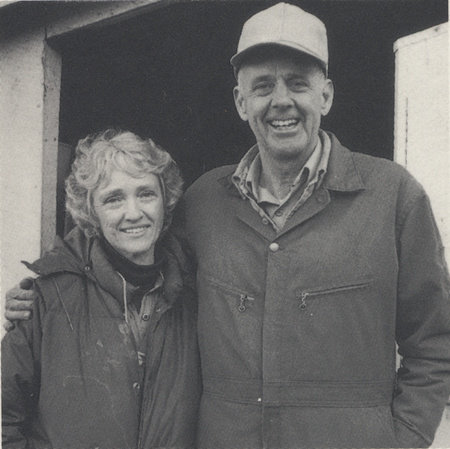
But it was only recently that I came across a lecture by Gracy Olmstead, about Wendell’s wife Tanya and her own artistic sensibilities that contributed so much to their life together, their home and their farm. The lecture was given in 2025 but only recently put up on the Berry Center site. Gracy published the text of her talk on her Substack: “Tanya Berry’s Work and Wisdom.” I strongly urge you to click on the link if only to see a photo of Tanya very elegantly feeding pigs; I found the whole thing very thought-provoking. Farming is for Tanya a way to practice her art.
One odd thing I discovered in my research when I was first drafting this post was a Christian minister who thought that for his Easter sermon in 2024 he had invented the word “resurrectional.” Berry published this poem in the 1973 edition of his collection, The Country of Marriage.
MANIFESTO: THE MAD FARMER LIBERATION FRONT
Love the quick profit, the annual raise,
vacation with pay. Want more
of everything ready-made. Be afraid
to know your neighbors and to die.
And you will have a window in your head.
Not even your future will be a mystery
any more. Your mind will be punched in a card
and shut away in a little drawer.
When they want you to buy something
they will call you. When they want you
to die for profit they will let you know.
So, friends, every day do something
that won’t compute. Love the Lord.
Love the world. Work for nothing.
Take all that you have and be poor.
Love someone who does not deserve it.
Denounce the government and embrace
the flag. Hope to live in that free
republic for which it stands.
Give your approval to all you cannot
understand. Praise ignorance, for what man
has not encountered he has not destroyed.
Ask the questions that have no answers.
Invest in the millennium. Plant sequoias.
Say that your main crop is the forest
that you did not plant,
that you will not live to harvest.
Say that the leaves are harvested
when they have rotted into the mold.
Call that profit. Prophesy such returns.
Put your faith in the two inches of humus
that will build under the trees
every thousand years.
Listen to carrion — put your ear
close, and hear the faint chattering
of the songs that are to come.
Expect the end of the world. Laugh.
Laughter is immeasurable. Be joyful
though you have considered all the facts.
So long as women do not go cheap
for power, please women more than men.
Ask yourself: Will this satisfy
a woman satisfied to bear a child?
Will this disturb the sleep
of a woman near to giving birth?
Go with your love to the fields.
Lie easy in the shade. Rest your head
in her lap. Swear allegiance
to what is nighest your thoughts.
As soon as the generals and the politicos
can predict the motions of your mind,
lose it. Leave it as a sign
to mark the false trail, the way
you didn’t go. Be like the fox
who makes more tracks than necessary,
some in the wrong direction.
Practice resurrection.
-Wendell Berry