
When I woke today, a multitude of urgent tasks filled my mind and sent me off in the wrong direction. Eventually I was rescued by the Jesus Prayer, by Jesus Himself. As I calmed down I realized that a few of the tasks were not that urgent, and when I began to consolidate my lists, one task fell off altogether, being a completely unnecessary outing, and large project that would have followed. That was a drive to the apple ranch to get Gravenstein apples, a variety that I usually miss out on because they are so early. But it won’t hurt to miss out on them again — why change tradition?

I’d wanted to water the garden early, but it ended up being not-so-early, and what do you know, that was not a disaster. Putting the hose on thirsty plants — or were they plants that merely look dry because it is August? — gave me so much joy, I could hardly bear it. I remember when my current garden went in, ten years ago, with its extensive automatic irrigation, my daughter Pearl was concerned and said, “But Mama, you love watering the garden!” Evidently that is true. It’s a great gift to have such work.
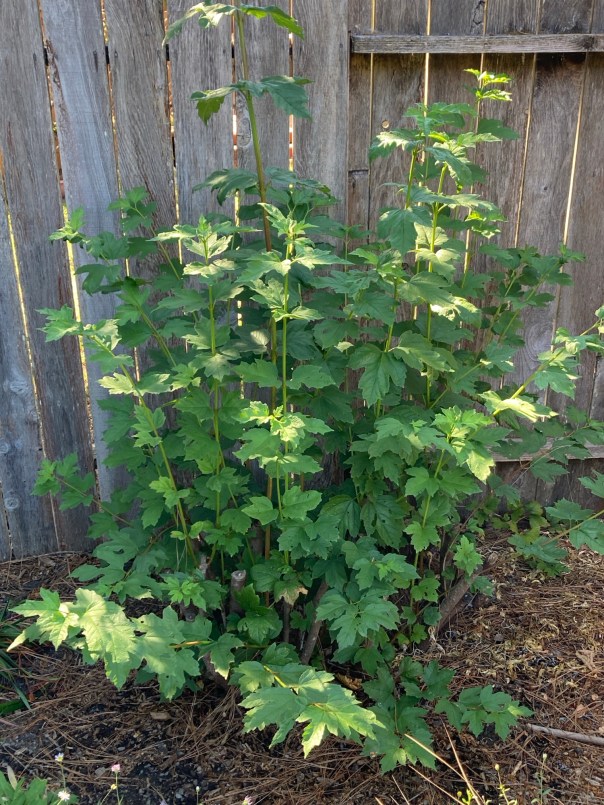
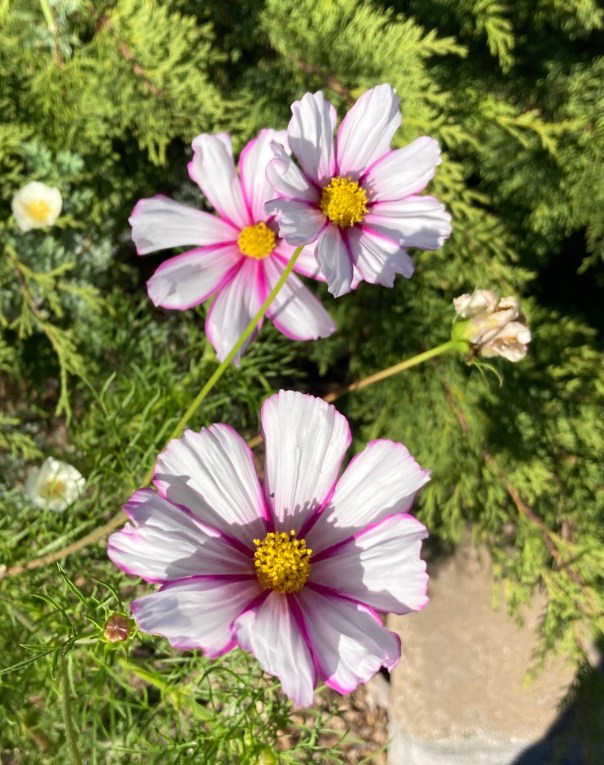
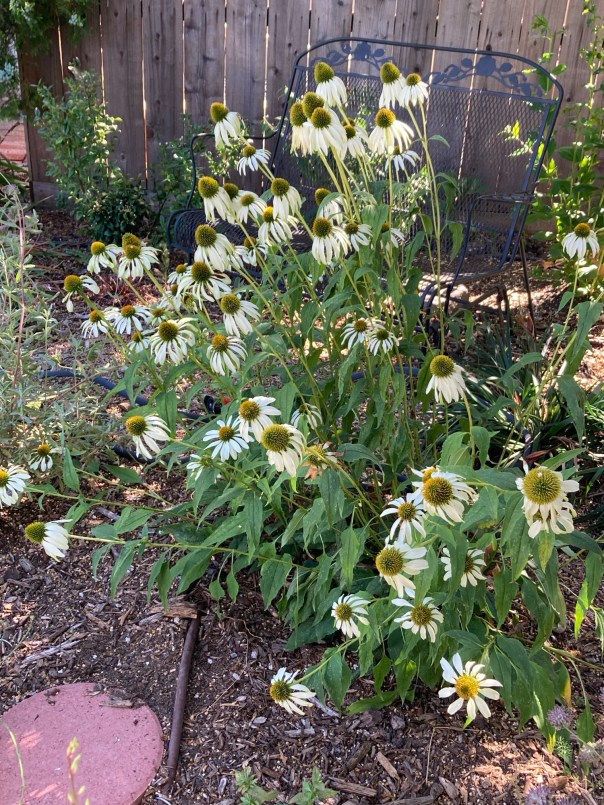
It seems to me that the irrigation system needs some adjusting; my thought is that as the plants are more in number and greater in size than when we first programmed it, and even since the last changes, I should customize it further. That job is a mental challenge for me, as there are six different valves/lines and three programs, for each of which one has to determine how many days per week and how many minutes of run time. As I have done so often, I will have to study the diagram and how to enter the settings via the dials and buttons, because it never sticks with me. If I just give some areas a little more water by hand, that will relieve my anxiety. It will be easier to tackle the problem if I am confident that nothing is dying of thirst right now.
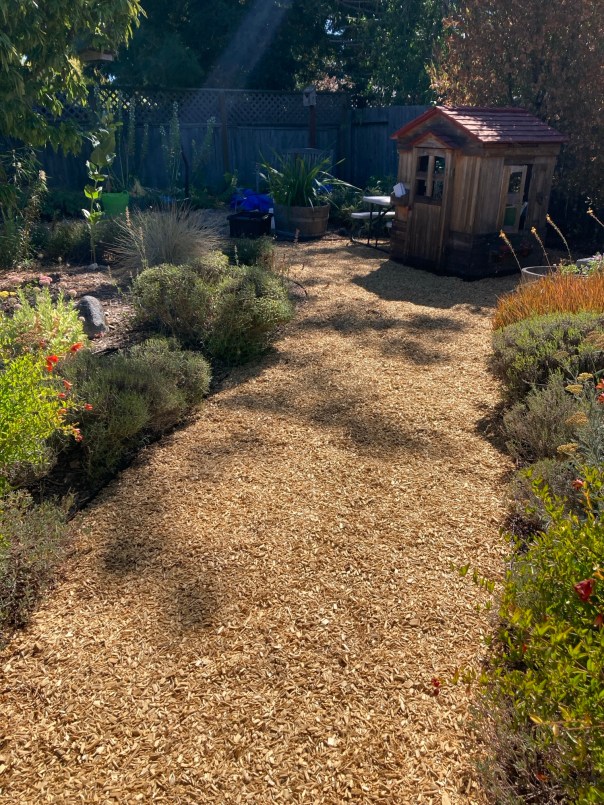
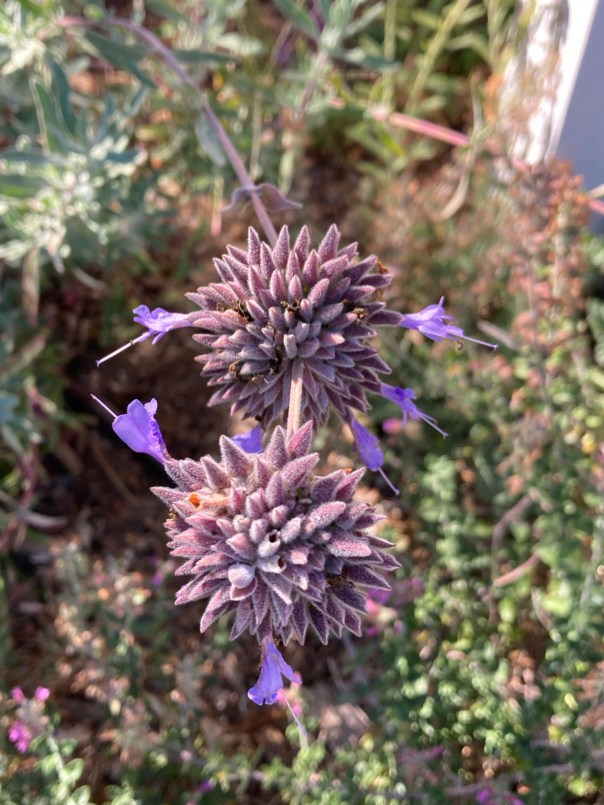

As I walked around with the hose, noting how many things are alive and obviously growing, happiness filled me. The thoughts of J.R.R. Tolkien that Eugene Terekhin writes about recently in “Why Gardeners Will Save the World” make me think that my garden is helping me while I am tending it:
Quoting a letter Tolkien wrote to a friend: “I think the simple ‘rustic’ love of Sam and his Rosie (nowhere elaborated) is absolutely essential to the study of his (the chief hero’s) character, and to the theme of the relation of ordinary life (breathing, eating, working, begetting) and quests, sacrifice, causes, and the ‘longing for Elves’, and sheer beauty.”
Terekhin: “Mythically speaking, Sam [the character in Lord of the Rings] was ‘down to earth.’ He was a gardener who loved all things that grow — as all hobbits do.”
….
“The most important thing one can do in wartime is to grow a garden. Because when we grow things, they grow us. It takes a long time to grow something, and as we tend our garden we grow together with it.”
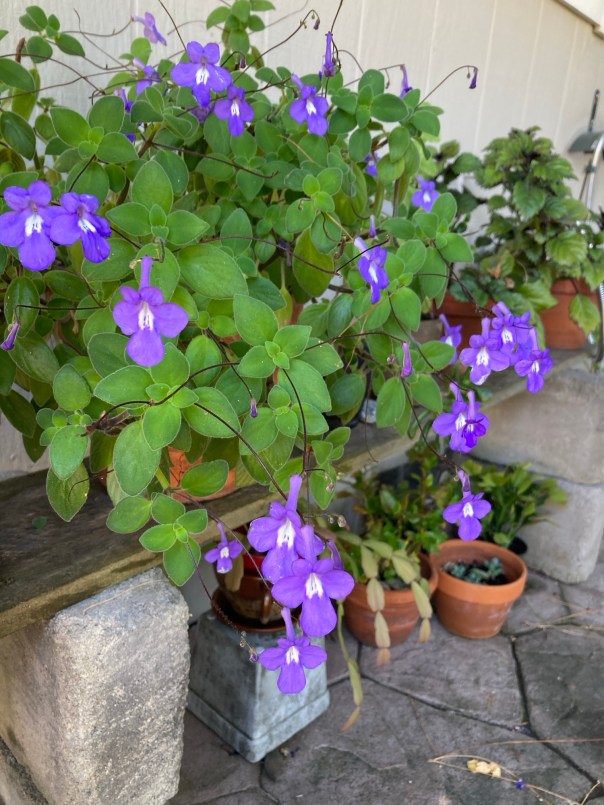
I know for sure that just being out there, soaking up the scents and the colors, watching the bees and butterflies drink from the flowers I tend on their behalf, is to me that most essential, ordinary life such as Tolkien shows us. For quite a while I followed this glorious, common swallowtail in all its glory, a creature that was drinking from just about every zinnia in the planter boxes. He and I were of the same mind about Being, and being down to earth.
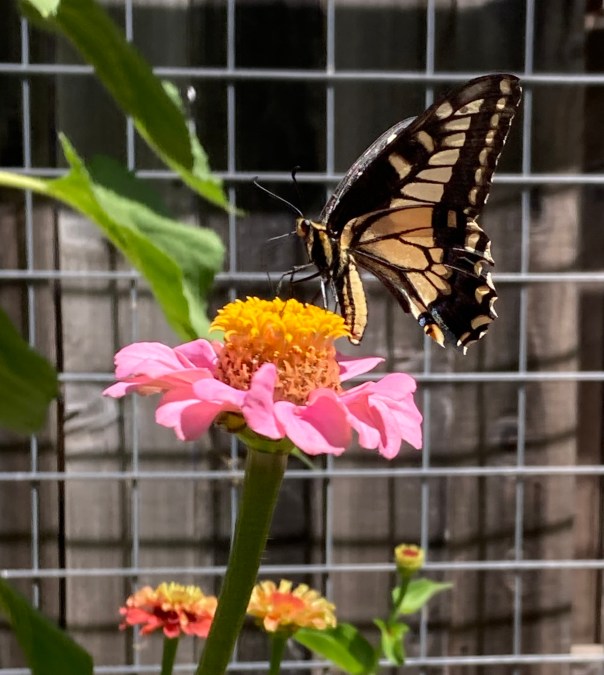
Happiness is a butterfly, which, when pursued,
is always just beyond your grasp,
but which, if you sit down quietly,
may alight upon you.
-Nathaniel Hawthorne
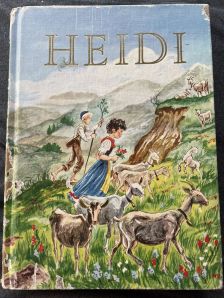 When I searched for a picture, I noticed the lack of depictions of Heidi as she is described in the story, with black hair. I guess illustrators (and movie directors, too) tend to think Swiss = blond.
 “The whole philosophy of Hell rests on recognizing the axiom that one thing is not another thing, and specially, that one self is not another self. My good is my good, and your good is yours. What one gains another loses. Even an inanimate object is what it is by excluding all other objects from the space it occupies; if it expands, it does so by thrusting other objects aside or by absorbing them. A self does the same. With beasts the absorption takes the form of eating; but for us, it means the sucking of will and freedom out of a weaker self into a stronger. ‘To be’ means ‘to be in competition.'”
 It’s now mid-afternoon and I haven’t said a word to anyone today. It’s the largest chunk of solitude to come my way in a long time, and very welcome. In Mansfield Park, which I am still reading, I really identify with Fanny, who, if she is not talking with her one dear friend and cousin Edmund, likes nothing better than to sit in her own room or walk outdoors where she doesn’t have to take part in conversation.
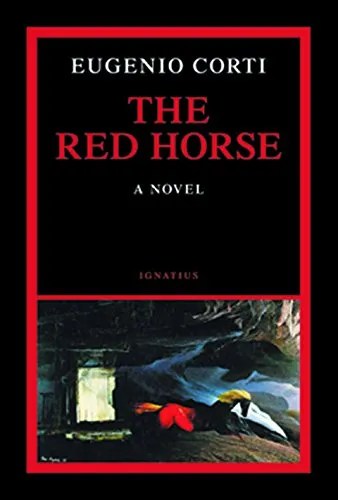 In the interest of reading a greater variety of books than I can heft while lying down in bed, I bought a Kindle. One of the first books I loaded on it is The Red Horse by Eugenio Corti, a giant of a book in every way. At least ten years ago I was deep into it, as one takes a needed vacation or The Cure at a sanatorium, but I had to give it up, mostly because of its size.
 Gladsome Lights