“The loneliness of leaders. Sometimes I try to imagine what they read, what books the great political leaders might pick up. I don’t mean the abhorrent dictators… but genuinely great leaders. I’m not sure such leaders even exist at this historical moment, probably not, but they did exist, fortunately enough, not so long ago, during the Second World War. Poets and novelists are reluctant to remember this….”
“So what should those extraordinary individuals, the real leaders, read? I was raised on literary culture, which has its bona fide heroes, truly remarkable, in which Kierkegaard and Kafka, Dostoevsky and Celan, receive their due. But if I try to think myself into the minds of those who bear the responsibility for a whole nation, if I imagine the nightly vigils of someone facing the monumental challenges of, say, a Churchill, would I really recommend Fear and Trembling, The Sickness unto Death, Notes from Underground, Metamorphosis, wonderful texts, books, categories, images that are our hymns, the hymns of our introspection, articulating our uncertainties, our mistrust of all authority? I wouldn’t dare. For the time being, these great leaders — do they exist? — must reach for Thucydides, Plutarch, Livy. And of course Homer and Shakespeare.”
While at Pippin’s I had the great satisfaction of reading Christmas stories for a total of several hours during my stay. The genre seems most appropriate for reading aloud, but when we have our larger family gatherings, there doesn’t seem to be much opportunity for it. Meanwhile, my collection grows.
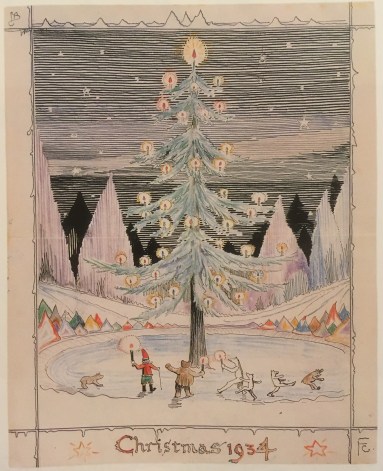
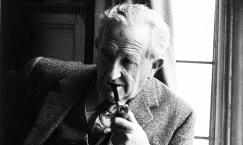
Recently I acquired Letters from Father Christmas by J.R.R. Tolkien, though in this case I think “recent” means 10-15 years ago. I’d glanced at them myself, but I think I was waiting to share the experience — to peek in on the Tolkien family and the stories that Tolkien the father created every year for his children. He wrote and illustrated them for over 20 years, starting by writing to three-year-old John, and continuing until he was only writing to his fourth child, Priscilla, with hopes that she will be hanging up her stocking “just once more.”
It is particularly interesting to me how Father Christmas refers to world events, in terms that place them in the context of the ages-long attempt of evil spiritual forces to destroy humanity once and for all. He first mentions goblins in 1932 and ’33, after he has written letters for about 12 years, and his goblins remind me of those in George MacDonald’s stories. They are a nuisance, and sometimes very scary —“Goblins are to us as rats are to you,” — but if you stand up to them they flee. They have no real power.
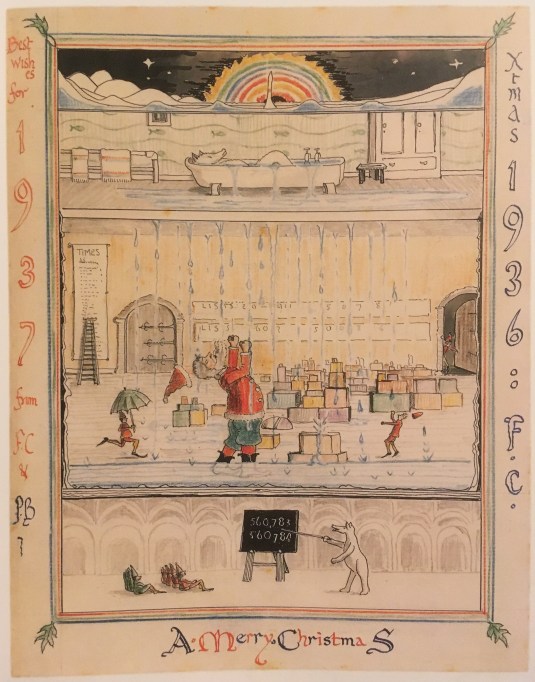
Most of the letters from the North Pole are about the mischief and adventures of all the people and creatures who live there: elves and snowmen, reindeer — and the North Polar Bear, who drew a bath, climbed in, and fell asleep with the water running, flooding the cellars full of toys.
But in 1932 the same bear had an encounter with a goblin:
“…he smelt a goblin! and became interested, and started to explore. Not very wise; for of course goblins can’t hurt him, but their caves are very dangerous.” In the next letter things are still heating up:
“Another Christmas! I almost thought at one time (in November) that there would not be one this year. There would be the 25th of December, of course, but nothing from your old great-great-etc. grandfather at the North Pole.
“Goblins. The worst attack we have had for centuries….”
More than once he mentions the last worst battle with these creatures, “the goblin-war in 1453, that I told you about.”
From then on the goblins show up regularly. The children are old enough to understand about the world situation as it affects them, and in 1940 F.C. writes more plainly, “We are having rather a difficult time this year. This horrible war is reducing all our stocks, and in so many countries children are living far from their homes. Polar Bear has had a very busy time trying to get our address-lists corrected. I’m glad you are still at home!”
The text of the 1935 letter above reads: “[North Polar Bear] says that we have not seen the last of the goblins — in spite of the battles of 1933. They won’t dare to come into my land yet; but for some reason they are breeding again and multiplying all over the world. Quite a nasty outbreak. But there are not so many in England, he says. I expect I shall have trouble with them soon.
“I have given my elves some new magic sparkler spears that will scare them out of their wits. It is now December 24, and they have not appeared this year — and practically everything is packed up and ready. I shall be starting soon.”
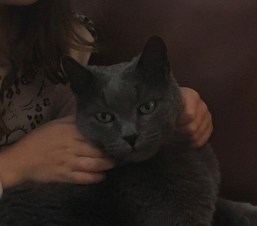
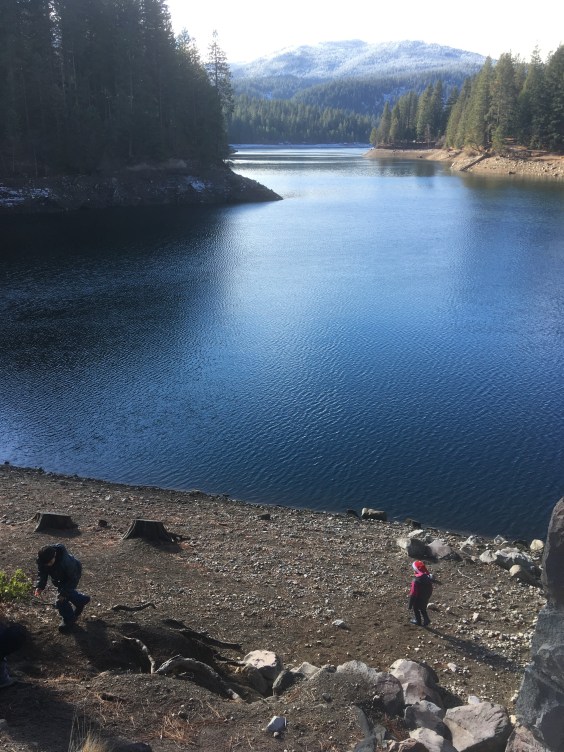
I’ve interspersed Tolkien’s illustrations with the last images from my northern adventure. Pippin and the children and I walked by the lake, and the stream flowing into it. We came home and snuggled again on the couch, with cats, and finished the last letters. I think we were all sad that the Tolkien children grew up!
I have been so busy with many things inward and outward, and I’ve wanted to write about all of it! Experiences of hiking or reading, or discovering connections between the people I meet on the street and those in my books; learning how the wrong ideas of a thousand years ago have brought us to the society we have today, and about how the small and strong actions of good people likewise have a long trajectory…. When I can’t gather my thoughts about even one part of it, and put them into a tidy or untidy blog post, I remain unsettled and confused at some level. The experience lacks a certain completeness.
Lots of bloggers I know seem to be writing fewer posts lately; I wonder if they feel the way I do. I think that after a period of upheaval or change or busyness, after reading and participating in family or church feast days, or traveling — one needs a time of quiet and retreat when not much is going on, in order to process what happened. But during most of this year, there are new loose ends — discoveries or disasters or directives — every day or even more often. When I start to organize a few thoughts, suddenly another one pops up and throws my mind into disorder again.
But today — maybe I could write about today, its beautiful and specific concrete things especially, with my apologies for those two whole paragraphs above which I devoted to vague intangibles. I shucked beans this afternoon, at the invitation of Cathy, who wanted some company to shell the harvest of what she and her husband had raised this year. He is Mr. Greenjeans whom I’ve mentioned several times, but I don’t think Mrs. Greenjeans is the right name for her.
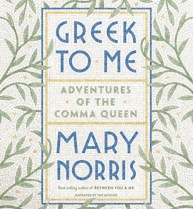
Anyway, this is exactly the kind of activity, or one of the kinds, that I have been wanting to do more of. It was the perfect opportunity to get some work done and chat at the same time. In order to get us away from the category of current events that cause our heart rates to rise, I told her about two of the books that I have been enjoying lately that are in a category together. Here I want to mention only one of them, Greek to Me, by Mary Norris.
Mary Norris
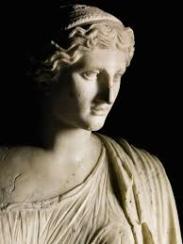
The first coincidence having to do with that book was this morning when I returned from errands and saw a strange couple walking their dog on the sidewalk opposite my driveway. We got to talking and introduced ourselves from that distance, and they told me the dog’s name was Athena. The man noted that often they remember dog names better than human names, and I said that I would probably remember “Athena,” having just been listening to stories about Greek gods two minutes before.
Aphrodite
Mary Norris’s book is not only about Greek gods. It’s about her love affair with everything Greek, and her study of modern and ancient Greek language. She narrates her own book on Audible, and I do love her voice, both her writer’s voice and her physical voice. I first encountered it listening to her first book, Between You and Me, which she also narrated. She tells very personal and often amusing stories all through, about her Catholic childhood and emancipation and her various adventures in language learning over the decades.
Psychotherapy helped her to deal with childhood trauma, but so did immersing herself in stories of Mount Olympus. One of several pilgrimages culminated in her skinny dipping on Cyprus, off Aphrodite’s Beach, as she believed it to be, in hopes that seemed not entirely self-mocking, that she might become more beautiful in those mythical waters.
As Cathy and I shelled black, cranberry, tan and white beans into bowls, I played a little bit of Mary for her from my phone. Cathy told me fascinating stories of her own months-long stay in Greece way back when, about the time that I also was a wandering baby boomer. But my travels were not so deep or wide. And not in Greece.
Cathy tried to describe the sunlight in that land, in words very similar to those Mary Norris had used in trying to express its unique softness. Mary wrote that she wasn’t sure that she herself was changed by Aphrodite’s waters, but she saw everything from then on as though more clear and sparkling. Both of those women renewed my own desire to travel in Greece; some of you might remember that my late husband and I had booked travel to Crete when he became ill, and we weren’t able to go.
I might not be any more likely to get to Tennessee, but if I do, I want to visit the replica of the Parthenon that is there, which Mary Norris tells about in her book. The story of its statue of Athena, the long process of collecting funds for it, then figuring out what it should look like, details about the sculptor and model and why certain design decisions were made — all of that was fascinating to me. I didn’t know this replica existed, and I haven’t researched anything about it since this morning when it came up near the end of the book. Have any of you seen it? Please tell me what you thought.
There. I’ve managed to tell you about one book, one part of a day, and one fun activity I engaged in, with a few women companions. Yes, there was at least one more at that table with Cathy, Mary and me. She’s part of the story I hope to tell another day.
“In my story Sauron represents as near an approach to the wholly evil will as is possible. He had gone the way of all tyrants: beginning well, at least on the level that while desiring to order all things according to his own wisdom he still at first considered the (economic) well-being of other inhabitants of the Earth. But he went further than human tyrants in pride and the lust for domination, being in origin an immortal (angelic) spirit.
“In The Lord of the Rings the conflict is not basically about ‘freedom’, though that is naturally involved. It is about God, and His sole right to divine honour. The Eldar and the Númenóreans believed in The One, the true God, and held worship of any other person an abomination. Sauron desired to be a God-King, and was held to be this by his servants; if he had been victorious he would have demanded divine honour from all rational creatures and absolute temporal power over the whole world.”
“You can make the Ring into an allegory of our own time, if you like: an allegory of the inevitable fate that waits for all attempts to defeat evil power by power.”
 “The loneliness of leaders. Sometimes I try to imagine what they read, what books the great political leaders might pick up. I don’t mean the abhorrent dictators… but genuinely great leaders. I’m not sure such leaders even exist at this historical moment, probably not, but they did exist, fortunately enough, not so long ago, during the Second World War. Poets and novelists are reluctant to remember this….”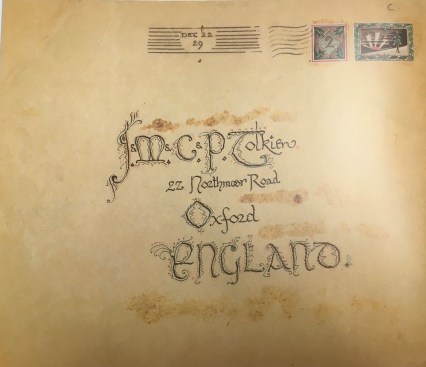
 Recently I acquired Letters from Father Christmas by J.R.R. Tolkien, though in this case I think “recent” means 10-15 years ago. I’d glanced at them myself, but I think I was waiting to share the experience — to peek in on the Tolkien family and the stories that Tolkien the father created every year for his children. He wrote and illustrated them for over 20 years, starting by writing to three-year-old John, and continuing until he was only writing to his fourth child, Priscilla, with hopes that she will be hanging up her stocking “just once more.”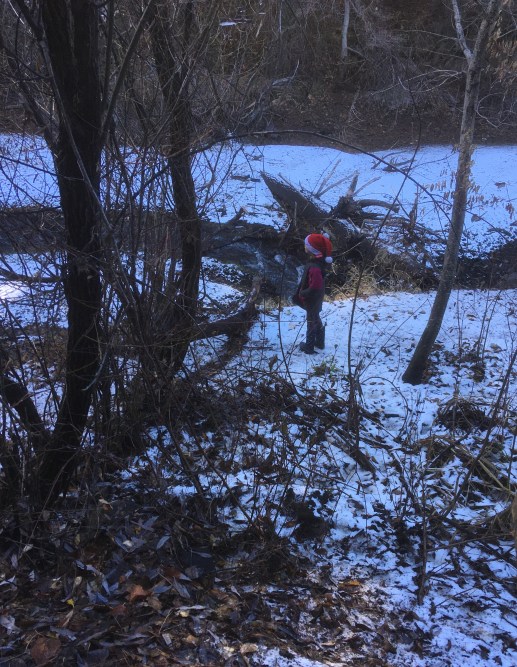

 “Another Christmas! I almost thought at one time (in November) that there would not be one this year. There would be the 25th of December, of course, but nothing from your old great-great-etc. grandfather at the North Pole.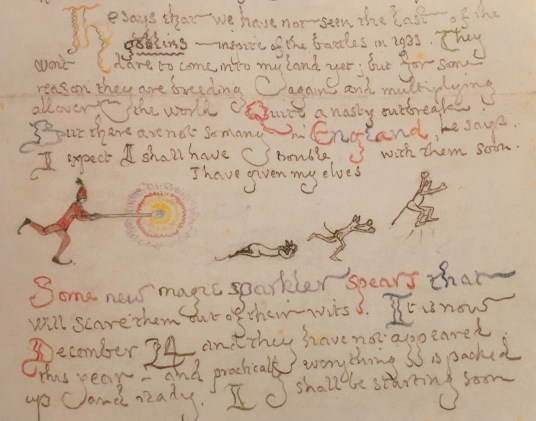
 I have been so busy with many things inward and outward, and I’ve wanted to write about all of it! Experiences of hiking or reading, or discovering connections between the people I meet on the street and those in my books; learning how the wrong ideas of a thousand years ago have brought us to the society we have today, and about how the small and strong actions of good people likewise have a long trajectory…. When I can’t gather my thoughts about even one part of it, and put them into a tidy or untidy blog post, I remain unsettled and confused at some level. The experience lacks a certain completeness.
 But today — maybe I could write about today, its beautiful and specific concrete things especially, with my apologies for those two whole paragraphs above which I devoted to vague intangibles. I shucked beans this afternoon, at the invitation of Cathy, who wanted some company to shell the harvest of what she and her husband had raised this year. He is Mr. Greenjeans whom I’ve mentioned several times, but I don’t think Mrs. Greenjeans is the right name for her.

 I might not be any more likely to get to Tennessee, but if I do, I want to visit the replica of the Parthenon that is there, which Mary Norris tells about in her book. The story of its statue of Athena, the long process of collecting funds for it, then figuring out what it should look like, details about the sculptor and model and why certain design decisions were made — all of that was fascinating to me. I didn’t know this replica existed, and I haven’t researched anything about it since this morning when it came up near the end of the book. Have any of you seen it? Please tell me what you thought.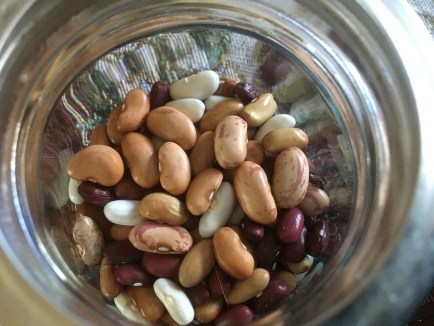

 have demanded divine honour from all rational creatures and absolute temporal power over the whole world.”
 Gladsome Lights