Category Archives: books

Peace is not a project, but a gift.

P is so easy. First off, there are the plans I have starting Sunday, to see all of my children over the course of only one week!! (I see that I have nicknamed three of my children with P names, too.) Kate is flying out from DC to see all the family before she starts her new job, and we will make a grand zigzagging tour to see the families of Soldier, Pathfinder, Pippin and Pearl, in that order. p- garden with olive pots pre-plant

So I need to get my place in order here, which mostly means planting. This week I bought a couple dozen pots of ornamentals, because I don’t have the patience to do the seed thing right now, and also I wouldn’t be here to water them next week when they would need constant moisture. I bought pincushion flowers and penstemons, just to mention the plants with “P” names.

My recent method of filling in the spaces in my landscape works like this: I go to p pincushion flowers pre-plant crthe nurseries and see if they have anything that looks familiar to me, that I know from experience or from my research last summer that is both unthirsty and pleases me. I bring the plants home, and wander around for a while studying my 3-D horticultural canvas that has already been extensively “painted.” Each plant has color and shape, and I try to guess if it might, in a year or two, complement and fit in with what is already here. If I tried to do this process more systematically, it would not happen.

For five months I’ve been looking at pots to buy, in which to plant my two mismatched olive trees, and this week I finally made the big decision and brought them home. I’ve been using my little cart quite a bit to haul these pots, bags of planting mix, and pavers to put under the potted olives.

p seeds poppy culinary

I’m still not sure that grey-white is a good color for the space, but it seems prudent to wait on that judgment until after the garden has grown up more around them. Twice in one week I heard the adage about what to expect from a newly installed landscape: The first year it sleeps, the second year it creeps, the third year it leaps. If after the leap, I decide I don’t like the color of these pots, I could paint them. They are made of fiberglass and have a matte and somewhat rough finish that would take paint well.

I did spy a packet of appealing poppy seeds when I was in the nursery — it’s risky going to those places! — and they can be planted in the fall, so that’s good.

After all my labors in the afternoon yesterday I  slept well, to a point. Then I was awake for several pre-dawn hours. At first my mind fretted about all those projects that loom in my life, most of which never even get started, everything from cleaning the garage and pruning the rosemary, re-landscaping the front yard and remodeling the great room, to what I suspect are more important things like writing letters and visiting distant friends. But I couldn’t do much about any of that at 4:00 a.m., so I stayed where I was and continued my reading in the novel Laurus.

It is a philosophical book in the way that The Brothers Karamazov is, and a book that reveals the depths of the human spirit across the ages the way that Kristin Lavransdatter does. (Thanks to my reader Beth for reminding me of that.) It makes me think about the essential goal of my own life, far beyond “projects,” to acquire the Holy Spirit.

Both of my housemates were gone overnight, and though I’m sure the house was no quieter for the lack of them breathing in other rooms, I became aware of the silence, and was surprised by it. No traffic sounds intruded, no clocks ticked, and I felt the quietness like a tonic to my body, soul, and spirit, calming even my thoughts. Maybe the Lord woke me so that He could give me that gift, because the silence had presence, and it was the presence of Peace.

A feast of a book.

From a certain angle, the spring seems so calm: warm, tender, each night redolent and composed. And yet everything radiates tension, as if the city has been built upon the skin of a balloon and someone is inflating it toward the breaking point.

This paragraph from All the Light We Cannot See by Anthony Doerr conveys the tone of the whole book, which I am only halfway through. Too soon, certainly, to be writing a review, but I can’t help myself, I have to share the joy. My copy was a Christmas gift from Kate and Tom; Kate said it was the best book she’d read all year.
I got into it right away, but it isn’t the kind of book you want to rush through. In that way it reminds me of The Red Horse by Eugenio Corti. They are both set during World War II with all its horrors, but even they can’t blot out the love that glows in these novels. Reading them is like being in the company of the best sort of humans, illuminated by a wise and able storyteller, someone who seemingly effortlessly paints lush pictures in your mind of the landscape of humanity and even of the dark places in individual souls, but who somehow leaves you with hope. You don’t want to leave, and while you are at this feast you want to linger over every bite, every description and metaphor that wants to pull you into another aspect of life and reality.

One of the protagonists is a young blind girl, Marie-Laure. Doerr’s descriptions of  her imagination make me wonder if he spent a lot of time under a blindfold, learning what sensory riches are available to those who can’t depend on their eyesight. Telling the story from her point of view enlarges the world that we get to live in as we read. One such moment is when she is accompanying the housekeeper on errands, often to give food to the needy:

…[Madame] burgeons, shoots off stalks, wakes early, works late, concocts  bisques without a drop of cream, loaves with less than a cup of flour. They clomp together through narrow streets, Marie-Laure’s hand on the back of Madame’s apron, following the odors of her stews and cakes; in such moments Madame seems like a great moving wall of rosebushes, thorny and fragrant and crackling with bees.

The other protagonist is an orphan boy, to whose orphanage a Nazi officer pays a visit, in a moment that hints at the impending gloom:

The lance corporal looks around the room — the coal stove, the hanging laundry, the undersize children — with equal measures of condescension and hostility. His handgun is black; it seems to draw all the light in the room toward it.

I have read very little 20th, and less 21st-century fiction,  but I can identify two elements of this novel’s style as those that I am more likely to encounter in newer books: Present-tense narration, and alternating chapters set in different time periods and about different characters whose lives, we predict, will merge in the end.

More than once in the past I’ve laid aside a book because one or more of these devices was annoying or contrived, but in this case the suspense is only heightened by getting glimpses of what the future will hold for for these young people. The plot was already deliciously thickened by the second chapter, because of these tiny bits of foreknowledge.

So many books I have gobbled up too fast, trying to get to the main point, to find out What Happened, promising myself that I will go back and read the story again so I can pay closer attention and do justice to the other facets of the creation the author has made. Doerr makes it so that I have no compulsion to rush. Everyone is in a process, we all have time. Take time to notice the feel of the air and the way the seasons are changing, the story progressing. Though the war is hanging over them (and the reader) and using them and hurting them, it is not everything. There is a bigger world, a whole universe, of which this one crazy man and his evil system is but a very small room.

Marie-Laure has felt trapped in her house near the sea for months — her father doesn’t think it safe for her to go out exploring the way they used to do back in Paris, now that they are occupied by the Germans. But Madame takes matters into her own hands and walks the girl down to the beach for the first time in her life. As they get close to the shore, Briny, weedy, pewter-colored air slips down her collar.

And then her feet touch the sand:

...wet, unwrinkled sand. She bends and spreads her fingers. It’s like cold silk. Cold, sumptuous silk onto which the sea has laid offerings: pebbles, shells, barnacles. Tiny slips of wrack.

Her world that was dreamily expansive when she was younger and raised by her doting father, and then became overshadowed and dirtied by the privations and separations of wartime, begins to open up again.

The German orphan boy Werner also has a rich childhood, because of kind people and in his exploration of the abundance of wonders in the physical world. He holds within himself a knowledge of the good even through years when he is victimized into participating in the wickedness.

The depictions of the heroes of this book, children growing up, ring true to me. I don’t think it is easy to get that right, and it’s not surprising. No accomplished author is that close to the experience of being a child, and no one can have had the experience of every child. It seems to me a very great gift to be able to “create” young people especially, and to reveal them so deeply and keep them real.

Maybe this will only be Part One of my review, but just in case, I will end with my own reflection of one theme that emanates from this novel: You are never ultimately trapped in a dark place. Light fills this universe of which the darkest moments are only specks, and light is in you.

pressed into the earth

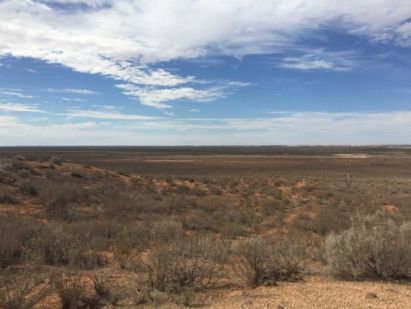
When in 1930 Jill Ker Conway’s father began homesteading a “block” of 18,000 acres in New South Wales, Australia, the change in lifestyle was jarring for his wife.

When my father left in the morning to work on the fences, or on one of the three bores [wells] that watered the sheep and cattle, my mother heard no human voice save the two children. There was no contact with another human being and the silence was so profound it pressed upon the eardrums. My father, being a westerner, born into that profound peace and silence, felt the need for it like an addiction to a powerful drug. Here, pressed into the earth by the weight of that enormous sky, there is real peace. To those who know it, the annihilation of the self, subsumed into the vast emptiness of nature, is akin to a religious experience. We children grew up to know it and seek it as our father before us. What was social and sensory deprivation for the stranger was the earth and sky that made us what we were. For my mother, the emptiness was disorienting, and the loneliness and silence a daily torment of existential dread.

from The Road to Coorain

western new south wales

The Road from Coorain

I have just begun reading a book of memoirs that Pearl gave me last week. I share this snippet not because of any metaphorical application but just for its worthiness.

On the plains, the horizon is always with us and there is no retreating from it. Its blankness travels with our every step and waits for us at every point of the compass. Because we have very few reference points on the spare earth, we seem to creep over it, one tiny point of consciousness between the empty earth and the overarching sky.

–Jill Ker Conway in The Road from Coorain