Category Archives: church

Athanasius – the heart sings

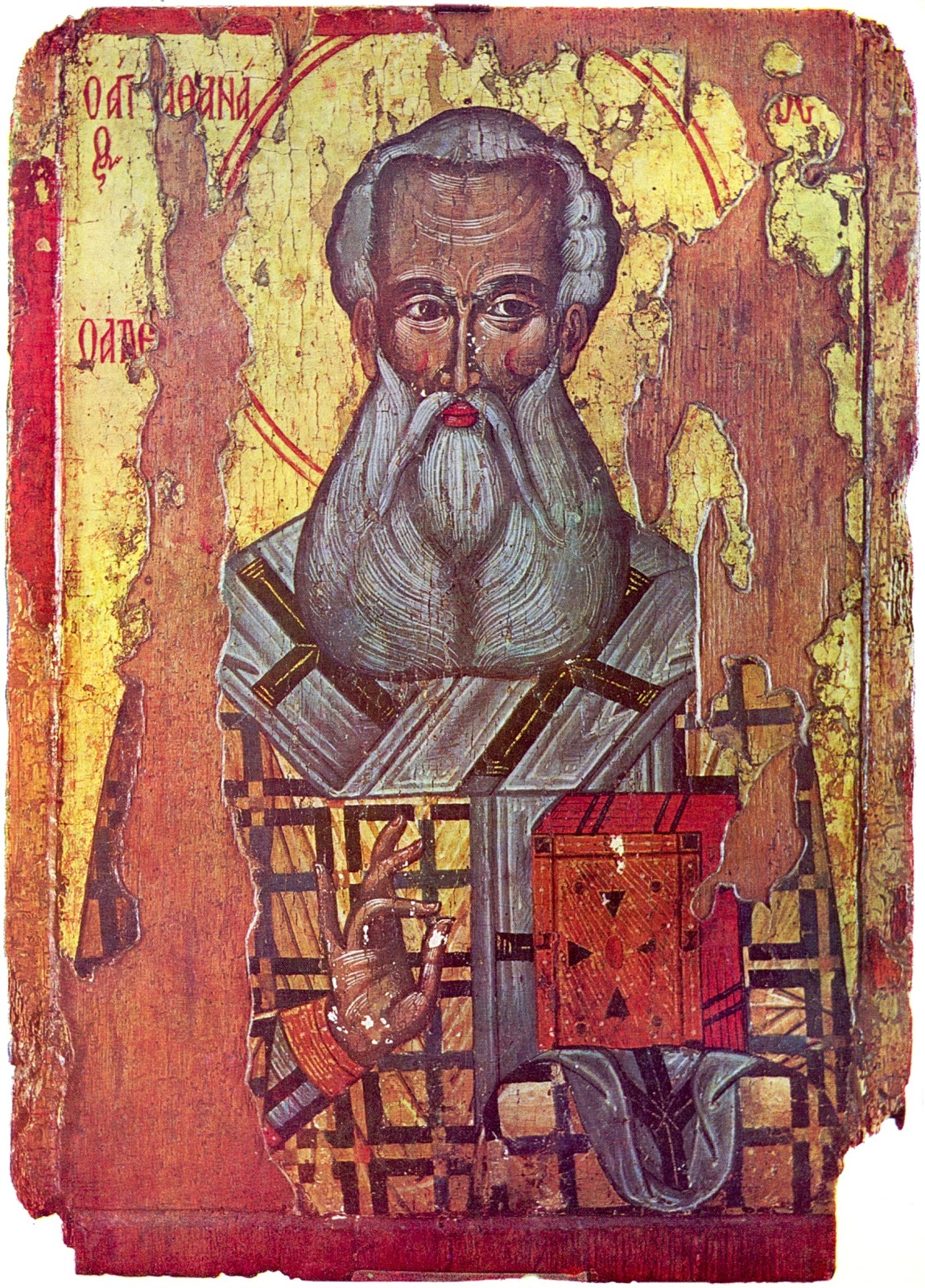
I must have read C.S. Lewis’s introduction to St. Athanasius’s On the Incarnation twice before in an attempt on the whole book, without getting much beyond it, but on this third try I have kept going. It seemed a fitting little paperback to read during Advent.

In the introduction we have an instance of Lewis’s exhorting us to read more of the Old Books, like this one from the 4th century, though we are timid: “The student is half afraid to meet one of the great philosophers face to face. He feels himself inadequate and thinks he will not understand him. But if he only knew, the great man, just because of his greatness, is much more intelligible than his modern commentator.”
And Lewis also writes here about devotional vs. doctrinal works, On the Incarnation being one of the latter, that he finds the doctrinal books often “more helpful in devotion” than the expressly devotional ones. I can relate to his description of people who “find that the heart sings unbidden while they are working their way through a tough bit of theology with a pipe in their teeth and a pencil in their hand.”

Actually I don’t know about the pipe in the teeth, but I always have a pencil in my hand as I lie in bed with my book of theology or literature or whatever. And I marked some passages from St. Athanasius to share in this season when we focus on God With Us.

You must understand why it is that the Word of the Father, so great and so high, has been made manifest in bodily form. He has not assumed a body as proper to his own nature, far from it, for as the Word He is without body. He has been manifested in a human body for this reason only, out of the love and goodness of His Father, for the salvation of us men. We will begin, then, with the creation of the world and with God its Maker, for the first fact that you must grasp is this: the renewal of creation has been wrought by the Self-same Word Who made it in the beginning. There is thus no inconsistency between creation and salvation; for the One Father has employed the same Agent for both works, effecting the salvation of the world through the same Word Who made it in the beginning.

St. Andrew and His Cross

Where we sang this morning

Happy St. Andrew’s Day! I had the honor and joy of celebrating the feast in church this morning. Added to the usual liturgy and communion were prayers and song lifting up one of our dear elderly parishioners who died in the Lord early today. Now the memory of his repose will always be tied to this feast.

Andrew was the first of Jesus’s disciples, and centuries ago became the patron saint of Scotland and other countries. I wore my tartan plaid skirt as I always do on November 30th, and this year I had a new purple Celtic scarf to wear, recently brought from Scotland by Pearl.

Some of you might remember that I wrote about this years ago; I’m sorry to say that while trying to repost those thoughts this morning I deleted them instead. Ah, well, it turns out to be a blessing, because the accident caused me to find that just today John Sanidopoulos has written a thorough history of how it happened that the Scots chose this saint for their patron, and his cross for their official national flag.


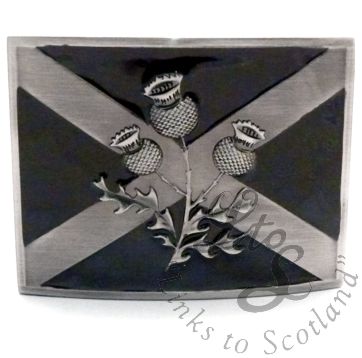
This form of cross is called a saltire and is linked to St. Andrew because he was crucified on a diagonal cross in the first century. I learned that the first use of the X-shaped symbol was on medieval soldiers’ clothing, probably a white image on a black background. And today there are many Scottish nationalistic garments and items that hearken back to this design, like this belt buckle.


It was only in the last decade that Scotland made St. Andrew’s Day an official bank holiday. The nation also has another flag you might be more familiar with, the Lion Rampant, the unofficial national flag that belongs to the kings and queens of Scottish history. And there is the Union Flag of the entire U.K. Time was, Scotland could not legally fly its official satire on its national holiday of St. Andrew, but that sorry situation has been rectified of late.

These national days and flags have been part of the cultural consciousness since the 14th century, a consciousness that naturally changes from generation to generation. The original and deeper meanings of this cross are probably lost in the background fog of the mind of the nation.  It is encouraging to think that even if they have largely forgotten him and their Christian heritage, St. Andrew continues to pray for the people of Scotland.

A sleeping place is blessed.

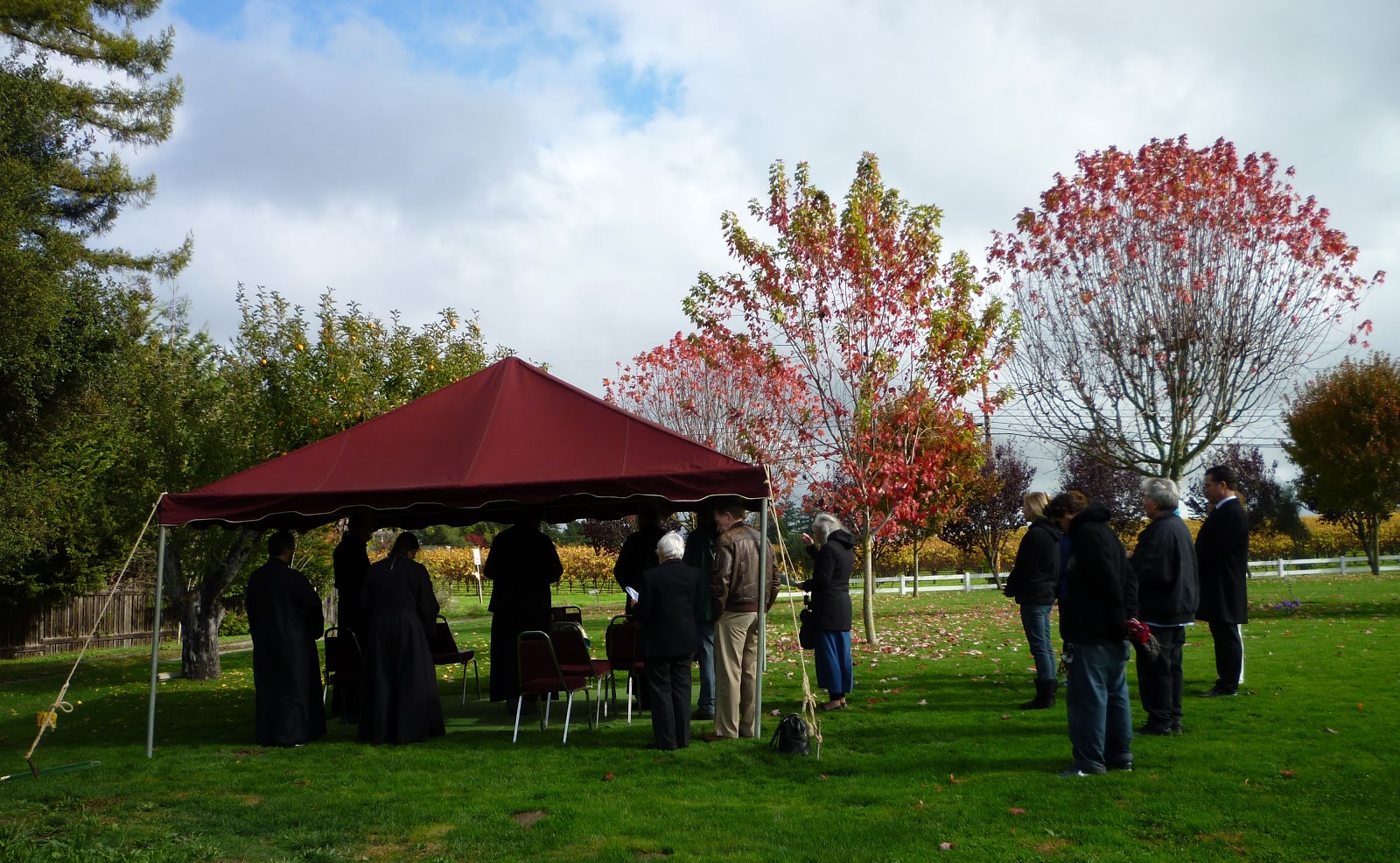
When our rector went to a nearby cemetery to bless a section designated for new gravesites, I was eager to go along and be among those praying and singing. A small group of us gathered at noon after a morning of rain. The light changed often as the clouds came between us and the thin autumn sunshine. The trees cast shadows in the middle of the day, and I never took off my fleece jacket.

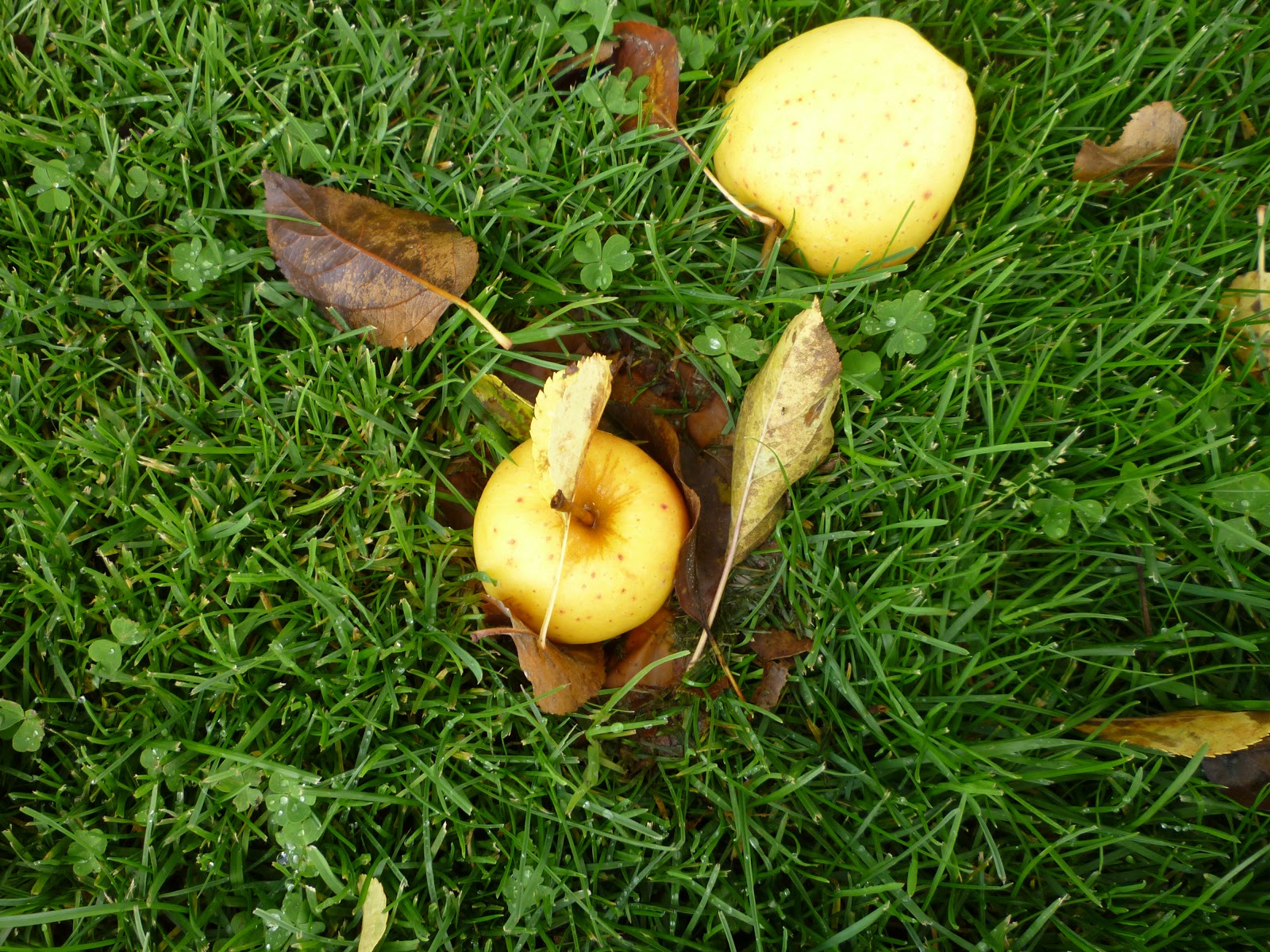
Not long into the service three words, “quickly flowing life,” pressed on my mind, referring to our earthly existence. It seemed the perfect time of year for this opportunity to turn our minds to death and corruption; I could see the vineyard across the street all in gold, and apples had fallen from trees all around the awning that had been set up for us.

Strangely enough, my husband was in another town not far away, attending the funeral of a Christian man. His body was put into the grave at about the time we were hearing the Gospel reading, about how Joseph of Arimathea took Christ’s dead body and cared for it. Here is the account from the Gospel of John:

After these things Joseph of Arimathea, who was a disciple of Jesus, but secretly for fear of the Jews, asked Pilate that he might take away the body of Jesus, and Pilate gave him permission. So he came and took away his body. Nicodemus also, who earlier had come to Jesus by night, came bringing a mixture of myrrh and aloes, about seventy-five pounds in weight. So they took the body of Jesus and bound it in linen cloths with the spices, as is the burial custom of the Jews. Now in the place where he was crucified there was a garden, and in the garden a new tomb in which no one had yet been laid. So because of the Jewish day of Preparation, since the tomb was close at hand, they laid Jesus there.

Our bodies are temples of the Holy Spirit, and when at death our souls are separated from our bodies it is right that they be laid in the earth to await the resurrection. Fr. Alexander Schmemann (in an article that is worth reading in its entirety) makes clear what is Christian faith as regards this event:

…it is with faith or unbelief, not simply in the “immortality of the soul,” but precisely in the Resurrection of Christ and in our “universal resurrection” at the end of time that all of Christianity “stands or falls,” as they say. If Christ did not rise, then the Gospel is the most horrible fraud of all. But if Christ did rise, then not only do all our pre-Christian representations and beliefs in the “immortality of the soul” change radically, but they simply fall away.

…..

He alone arose from the dead, but He has destroyed our death, destroying its dominion, its despair, its finality. Christ does not promise us Nirvana or some sort of misty life beyond the grave, but the resurrection of life, a new heaven and a new earth, the joy of the universal resurrection. “The dead shall arise, and those in the tombs will sing for joy…” Christ is risen, and life abides, life lives… That is the meaning; that is the unending joy of this truly central and fundamental confirmation of the Symbol of Faith: “And the third day, He rose again according to the Scriptures.”

The soul won’t be separated from the body forever, but for a time the body will be as asleep, while we anticipate our rising, when we will sing with joy at the final defeat of death. Until then, this spot on the earth would be as good as any for waiting.

When the service was over, we were invited to pick as many apples as we wanted from the trees, which I think were Golden Delicious. It didn’t take me long to finish my apple. The service was less than an hour. In a couple of months there won’t be any leaves left on the vines or the apple trees, and the years of each of us are quickly flowing.

Lord, teach us to number our days, that we may apply our hearts to wisdom.

[We had no idea of it at the time, but not three years after I wrote this post, my husband joined the ranks of those waiting here for that rising.]

Correct this ugliness.

The desire to be beautiful seems to be common to mankind, but the very atmosphere of this age is toxic with something that feeds a disease, making us obsessed with our image. One part of the toxic mix is the overwhelming abundance of pictures of faces and bodies in magazines and on every electronic device, forming a kind of lesson plan on How to Look. I was happy for a respite this morning when I read St, Nikolai’s homily for the day in The Prologue of Ohrid.

HOMILY
on the beauty of Christ above all other beauty

Thou art fairer than the sons of men (Psalm 45:2).
 

Holy Scripture does not ascribe any particular value to physical beauty, and in general to anything transient. That is why everyone who reads Holy Scripture should take care to be sufficiently attentive and wise to transfer the praise of physical beauty to the soul and to spiritual values. Without a doubt, spiritual beauty gives a wondrous attractiveness to the most unattractive body, just as an ugly soul makes even the most attractive body repulsive. The Prophet David, pouring forth good words (Psalm 45:1), says to his King, the Lord Jesus Christ: Thou art fairer than the sons of men. 

The Lord Himself created His bodily cloak as He wanted. Had He wanted to appear in the world as the physically fairest of men, He could have done so. But there is nothing in the Gospel to indicate that He drew followers to Himself or influenced men by His appearance. He Himself said: the flesh profiteth nothing (John 6:63). Therefore, it is clear that David was not speaking of the physical beauty of Christ, but of His spiritual, divine beauty. This is clearly seen in the following words of the Psalmist: Grace is poured forth upon thy lips (Psalm 45:2). So it is that the unsurpassed beauty of the Son of God is not in the form and shape of His lips, but rather in the stream of grace that flows from His mouth. 

Again, the Prophet Isaiah speaks of Christ: He had no form or comeliness; and when we shall see Him, there is no beauty that we should desire Him (Isaiah 53:2-3). Do Isaiah and David agree? Perfectly well. David speaks of Christ’s inward beauty, and Isaiah speaks of Christ’s external abasement. Isaiah said that He would not be seen as a king or a rich man, but as a servant and sufferer.

O Lord Jesus Christ, Thou art fairer to us than all men and angels: glory to Thine immortal and unending beauty. O gracious Lord, correct the ugliness of our souls, which are disfigured by sin, we pray Thee.


To Thee be glory and praise forever. Amen.