Category Archives: church

Flowing from Easter – The Church Year

I’m preparing for the expected blessing of having three dear and longtime friends as house guests at different times over the next two weeks. While my home is full of busyness and women’s talk, in The Orthodox Church we’ll be commemorating some of those events of the church year that are becoming more lovely to me with every cycle of the church calendar. And because I doubt I’ll even think of blogging while I am hostessing, I am looking ahead, blogging ahead.

In the years when I was first learning about Orthodoxy, I’m thankful I was able to participate quite a bit in various services throughout the seasons, so that I got a good foundation in how the intellectual knowing is the lesser part of a relationship with God. With every year that passes I see this more, and also feel my inability to convey in words this Reality that is Christ in His Church. Even the most eloquent and holy men and women would communicate by their entire persons, and relatively little by words, the Love that has been shed abroad in their hearts.

Still, their words are more eloquent than mine and express a deeper grasp of the realites by far, so I am depending on them to tell a little of how the day-to-day structure of the Church Year gives the grace of God. It all flows from the Resurrection. From the Orthodox Church in America site:

Although the first of September is considered the start of the Church year, according to the Orthodox Church calendar, the real liturgical center of the annual cycle of Orthodox worship is the feast of the Resurrection of Christ. All elements of Orthodox liturgical piety point to and flow from Easter, the celebration of the New Christian Passover. Even the “fixed feasts” of the Church such as Christmas and Epiphany which are celebrated according to a fixed date on the calendar take their liturgical form and inspiration from the Paschal feast.

Next week we have the Leavetaking of Pascha, which I love very much, because it always seems to me that I haven’t been able to sing enough times those exultant hymns of “Christ is risen from the dead, trampling down death by death.” Every year I become more familiar with some of the words and tunes, and try to learn a new one. “Why seek ye the living among the dead? Why mourn ye the incorrupt amid corruption?” On Leavetaking of Pascha we’ll repeat the Easter service in its entirety – and then won’t sing those hymns again until next year.

Even though we will still be in “the time of Easter” for another ten days, until Pentecost, we must say good-bye to the Feast of Feasts, so to speak, because we are coming up to the Ascension! Then we will update our greeting from “Christ is risen!” to “Christ is ascended!” the response to that being, “…from earth to heaven!”

In his book, The Year of Grace of the Lord, Fr. Lev Gillet tells at length the meaning of the Church Year. An excerpt from one paragraph, to which I have added breaks to make it more readable on the screen:

The liturgical year is, in fact, expressed as a calendar, but simply to identify it with a calendar would be totally inadequate. One could also say that the purpose of the liturgical year was to bring to the minds of believers the teachings of the Gospel and the main events of Christian history in a certain order. That is true, but this educational, pedagogical, function does not exhaust the significance of the liturgical year.

Perhaps we could say that its aim is to orient our prayer in a certain direction and also to provide it with an official channel which is objective, and even, in a certain way, artistic. This, too, is true, but the liturgy is more than a way of prayer, and it is more than a magnificent lyric poem.

The liturgy is a body of sacred “signs” which, in the thought and desire of the Church, have a present effect. Each liturgical feast renews and in some sense actualizes the event of which it is the symbol; it takes this event out of the past and makes it immediate; it offers us the appropriate grace, it becomes an “effectual sign,” and we experience this efficacy to the extent that we bring to it a corresponding inclination of our soul.

But still, this does not say everything. The liturgical year is, for us, a special means of union with Christ. No doubt every Eucharist unites us intimately with Christ, for in it he is “both he who offers and who is offered,” in the same way that every prayer, being the prayer of the members of the mystical body, shares in the prayer of him who is the head of the body and the only one whose prayer is perfect.

But, in the liturgical year, we are called to relive the whole life of Christ: from Christmas to Easter, from Easter to Pentecost, we are exhorted to unite ourselves to Christ in his birth and in his growth, to Christ suffering, to Christ dying, to Christ in triumph and to Christ inspiring his Church. The liturgical year forms Christ in us, from his birth to the full stature of the perfect man. According to a medieval Latin saying, the liturgical year is Christ himself, annus est Christus.

Unusual Monastery Visit


This time when I drove to the women’s monastery about an hour from here, it was not for a lecture or a service or for contemplative time; it was for a stint of strenuous gardening. The nuns had put out a call for helpers to get the woodsy place under control after the rainy winter and spring have brought out tall weeds of many sorts.

When I came through the open gate I didn’t see anyone around, so I wandered a bit in the direction of some hammering noise. It was Sister Xenia repairing a rabbit hutch. She took me to find Sister Mary, whose day it was for gardening, and she in turn led me to the area I’d be working in.

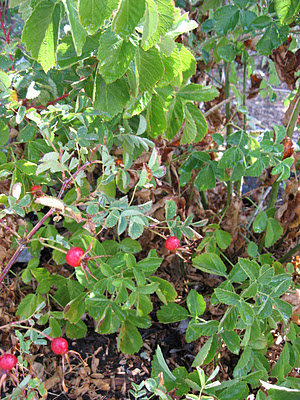
borage

“We got the weeds whacked down the other day, and now they need to be raked….This plant that is falling across the path needs to be trimmed back….Ivy is growing all over the quince tree and we want to get it out so the tree will have a better chance of bearing more than the three quinces it did last year.”

I put on my gloves, apron, and bandana to keep hair out of my face, and trimmed the blooming borage, leaving some branches so that the sisters could put the flowers in their salads.

Then the raking – whew! A giant eucalyptus tree stands above the monastery grounds and constantly drops pieces of bark, which combined with oak leaves and various other organic material have made a thick and tangled layer of debris that is turning into duff. On top of that were the strewn grassy weeds.

I pulled and yanked with my rake, and piles of scraped-up stuff grew tall in no time. “Someone” with a truck is now looked for both to haul all these piles away, and bring in some topsoil for the vegetable garden. I didn’t see the vegetable garden, but Sister Xenia said she works in it Wednesdays and Thursdays and maybe I would like to join her once a month or something like that? I always do think I can do anything, once a month. Maybe.

The poor quince tree took a long time. I hope he feels better and more fruitful. The sprucing-up was a challenge because on one side of the tree yard waste has been thrown down for many years, as we were led to understand (I had been joined by Tatiana and her son), creating a sort of man-made terrace. The ground level on that side is a several feet higher than on the other side, so that the tree is sort of growing out of a bank.

When I was below, I scrabbled up the “bank” that was mostly eucalyptus rubble, and stretched my tallest to pull as much ivy as I could from the branches. Sometimes three strands of ivy would be twisted round-and-round a thin branch, but at least this kind of ivy was tender and with care could be torn away.

Rescued quince

Then I walked back up the path to the other side and leaned way out, trying not to fall through the mulch, to pull at the ivy from that direction. After the ivy was gone, the many dead limbs were revealed, so I began pruning them out as well as I could with loppers. Several of them are so big they need to be sawed off, but I didn’t try doing it by myself in a precarious spot like that.

Galium aparine

Sticky weed is one plant that I went to war with at the monastery. Sister Mary called it that; I had never heard a name for it before, maybe because I never even saw it before a couple of years ago. Its usual common name is bedstraw or catchweed; it is Galium aparine. I pulled lots of this icky-sticky vine out of shrubs and flowers and everywhere, and it fought for its survival by depositing sticky little seeds all over my hair, gloves, socks….trying to come home and thrive here, no doubt.

Gardening is always a workout for me these days, given my age and the way the work always seems to have multiplied by the time I get there. A weed is easier to pull when it is small, to give a small example of what I’m talking about. Today was no different in that way, but the tasks I did made me use some different muscles, so I feel well exercised, shall we say.

It was lovely being at the monastery, and I’m glad I could be of use. I might have had some contemplative time while gardening if my mind hadn’t been so engrossed in solving garden problems and keeping my two feet under me. So if I go again, I’ll plan to spend the day and take breaks with the sisters in the church.

George Eliot and The Paralytic


This Lord’s Day we were remembering the paralytic, who sat by the pool waiting for a chance to get into the water at those times when an angel stirred it, so that he might be healed. After 38 years, Jesus came by and healed him.

Father John in his homily highlighted one aspect of the Gospel story: how we are like that man in our seeming paralysis when it comes to overcoming our sins. Priests often hear in confession the lament of the Christian who continues to battle the same weaknesses and failings year after year, feeling that he makes little progress.

I think a lot about the truism that habits are like a second nature to us. As we read in Jeremiah 13:23: “Can the Ethiopian change his skin or the leopard its spots? Neither can you do good who are accustomed to doing evil.”

It sounds very little like one chipper exhortation you might have read: “It’s never too late to be what you might have been.” Well, yes, why not just start today? When I read that on Tuesday, I remembered the paralytic, and I thought on my own unchanged bad habits. After his 38 years, wasn’t it in fact too late for many things? (The assumption is that one might have been greater; the reverse is probably more true, that it’s never too late to start a downward spiral.)

For myself, let’s see…how many years have I been cultivating certain of my bad habits? More than that, I’m afraid. But it’s a simple thing: “The only thing that stands between me and greatness is me.” (Woody Allen)

George Eliot

George Eliot is credited with having made that bold assertion, “It’s never to late to be what you might have been.” She was the subject of a New Yorker article from February of this year, “Middlemarch and Me,” by Rebecca Mead, who questions the validity of the quote and whether it even reflects the true outlook of the author Mary Ann Evans.

Mead has been a lifelong lover of Eliot’s books, Middlemarch in particular, and she points out some hints that the author leaves in her novels, as well as forthright confessions from her journals, to show that her general attitude was wiser and more modest.

In Middlemarch, we read of the main character,  “Dorothea herself had no dreams of being praised above other women, feeling that there was always something better which she might have done, if she had only been better and known better.”

Mead writes: Middlemarch is not about blooming late, or unexpectedly coming into one’s own after the unproductive flush of youth. Middlemarch suggests that it is always too late to be what you might have been — but it also shows that, virtually without exception, the unrealized life is worth living. The book that Virginia Woolf characterized as ‘one of the few English novels written for grown-up people’ is also a book about how to be a grownup person — about how to bear one’s share of sorrow, failure, and loss, as well as to enjoy moments of hard-won happiness.”

Let’s look back at the Paralytic by the Sheep’s Gate Pool. He must have had some way to propel himself, perhaps one limb that was functional, so that he could sit there for much of his life hoping to get down to the water first. He certainly had patience — and perseverance, to keep trying.

Father John said that even if we feel we have nothing more than a big toe’s worth of strength against our sins, we must keep struggling. Because we never know when Jesus will come to us. When he came to the cripple by the pool, He Himself was the source of the healing, and the man was delivered from his afflictions and was able to walk and carry his bed. For most of us, we will not receive the equivalent healing until we are resurrected in the coming Kingdom.

In the meantime, we will have failures. Maybe we will even think we are failures. It is very discouraging when one realizes what Samuel Johnson found: “The chains of habit are generally too small to be felt until they are too strong to be broken.” On another aspect of this human experience, Dorothea said in Middlemarch about her husband’s intellectual labors: “Failure after long perseverance is much grander than never to have a striving good enough to be called a failure.”

The most helpful sort of activity to persevere in, if one wants to be on the path to God, is prayer. “A long perseverance” of this sort would never be disappointing. The very moments of prayer have the potential to be Heaven itself, in the presence of the God Who is Love.

“In patience you possess your souls,” we read in Luke 21, and Mark Twain elaborates: “Habit is habit, and not to be flung out of the window by any man, but coaxed downstairs a step at a time.”

Whether we are being too easy on ourselves is the question. If we are being lazy, of course, that is one of the sins we are trying to overcome. And pride in thinking we are equal to any task, we can be anything we put our minds to — that also must be set aside.

Mary Ann Evans put it this way in her journal: “The difficulty is, to decide how far resolution should set in the direction of activity rather than in the acceptance of a more negative state.”

But I like best the way St. Seraphim of Sarov speaks about this, and will close with his gentle words: “One should be lenient towards the weaknesses and imperfections of one’s own soul and endure one’s own shortcomings as we tolerate the shortcomings of our neighbours, and at the same time not become lazy but impel oneself to work on one’s improvement incessantly.”

Fairy finery, honey and roses

Many people were already in the church when I arrived about 11:00 p.m. on Saturday night. On the carpet in the transept opposite the choir several blankets and children were laid out. I bought a fat candle to have ready for the procession, but it wasn’t lit until an hour later, and in the meantime I was getting intoxicated by the honey-warm scent rising to my nose, feeling as though I was already breaking the fast with some rich dessert. It smelled richer than baklava.

Then the Easter lilies came into olfactory focus, blending with the beeswax. By this time my ears were full of the hymns reminding me of Christ’s rising from the tomb, in a garden, in a real place on the earth, because He was really a man of flesh and blood as we are. When He rose He must have noticed whatever flowers were blooming in that garden.

Camellia in our church garden during Holy Week

Families were arriving, and while most males were dressed in their “ordinary” best Sunday clothes, the clergy wore white vestments, and many women and girls had put together very springy and bright, often all-white, outfits. A score of little girls had flouncy skirts that would have been fancy enough for a ball, or for acting the role of a fairy in a drama. I was so happy for their being able to commemorate their Lord’s Resurrection by being their prettiest.

Even I had found a long and full eyelet skirt at a discount store, to wear with an odd assortment of other white things, and switched from black to flowered purse. There were lots of us, then, adding our white forms to the press of bodies, including the Eritreans who always wear beautiful white gauze. On this day more Eritrean men than usual wore their white gauze, too.

When the deacons and priests started around with censers, it was with the incense that is so heady I want to cry over it, knowing that “Jesus is fairer, Jesus is sweeter….” Is it made from roses? I must find out about this.

When we made our procession around the property — it was a longer route than merely around the church building — yes, there was some drizzle, but very fine, and not enough to put out anyone’s candle. We were singing our new Paschal processional hymn, which the choir tried to teach the rest of us last week, but I know I didn’t get it. Several of us noted as we were trailing along silently, too far behind in the train to hear the choir, that it had taken us ten years to learn the old Paschal hymn; it would have helped to have the choir members scattered along the line, interspersed with the rest of us and leading us.

But I think everyone was content. We were at Pascha! At one point we who were closer to the front of the long line could see across the lawn to a stream of worshipers at the end of the procession, and the view was stunning, their white garments reflecting the flickering candles they were holding up in the dark. There were hundreds of us! I didn’t think it seemed that crowded in the building.

Soon we arrived again at the doors of the church, at which the priest knocked, and then, “He is not here! He is risen!” When we went inside we heard as always on this night the Paschal homily of St. John Chrysostom, which he gave about 1600 years ago and which has never sounded sweeter to my ears, full as it is of the love and grace of God. As we float through Bright Week and through the next 50 days, its glad tidings will remind us to keep greeting one another with “Christ is risen!”

This year our Father Michael, who is over 80 years old, read the homily. Somehow his voice never weakens, and retains the strength and authority of a strong spirit. Every time he serves or preaches I am so thankful for the grace that enables him to keep going, because he is so dear. His heart is such that the message of this sermon is of the sort that would flow from his own pen and lips.

At every repetition of the phrase, “Hell [or it] was embittered,” Fr. Michael paused so that the congregation could answer with a shout: “It was embittered!” — a sort of boisterous participation that we all seem to enjoy this one time in the year.

In a hearty baritone, this is what he proclaimed:

If anyone is devout and a lover of God, let him enjoy this beautiful and radiant festival.

If anyone is a grateful servant, let him, rejoicing, enter into the joy of his Lord.

If anyone has wearied himself in fasting, let him now receive recompense.
If anyone has labored from the first hour, let him today receive the just reward.

If anyone has come at the third hour, with thanksgiving let him feast.

If anyone has arrived at the sixth hour, let him have no misgivings; for he shall suffer no loss.

If anyone has delayed until the ninth hour, let him draw near without hesitation.

If anyone has arrived even at the eleventh hour, let him not fear on account of tardiness.
For the Master is gracious and receives the last even as the first; He gives rest to him that comes at the eleventh hour, just as to him who has labored from the first.

He has mercy upon the last and cares for the first; to the one He gives, and to the other He is gracious.

He both honors the work and praises the intention.
Enter all of you, therefore, into the joy of our Lord, and, whether first or last, receive your reward.

O rich and poor, one with another, dance for joy!

O you ascetics and you negligent, celebrate the day!
You that have fasted and you that have disregarded the fast, rejoice today!

The table is rich-laden: feast royally, all of you!

The calf is fatted: let no one go forth hungry!
Let all partake of the feast of faith. Let all receive the riches of goodness.

Let no one lament their poverty, for the universal kingdom has been revealed.

Let no one mourn their transgressions, for pardon has dawned from the grave.

Let no one fear death, for the Saviour’s death has set us free.
He that was taken by death has annihilated it!

He descended into Hades and took Hades captive!

He embittered it when it tasted His flesh! And anticipating this, Isaiah exclaimed: “Hades was embittered when it encountered Thee in the lower regions“.
It was embittered, for it was abolished!

It was embittered, for it was mocked!

It was embittered, for it was purged!

It was embittered, for it was despoiled!

It was embittered, for it was bound in chains!
It took a body and came upon God!

It took earth and encountered Ηeaven!

It took what it saw, but crumbled before what cannot be seen!
O death, where is thy sting?

O Hades, where is thy victory?
Christ is risen, and you are overthrown!

Christ is risen, and the demons are fallen!

Christ is risen, and the angels rejoice!

Christ is risen, and life reigns!

Christ is risen, and not one dead remains in a tomb!
For Christ, being raised from the dead, has become the first-fruits of them that have slept.

To Him be glory and might unto the ages of ages.

Amen.

As I finish this post, it is Bright Tuesday. I went to church, and the gospel for today was the story of Christ meeting some of His followers on the Road to Emmaus soon after His rising from the dead. The unfolding of the scene, and imagining the Lord walking alongside and hearing them telling about the recent events — then their eyes being opened, His vanishing from their sight…. They said, “Didn’t our hearts burn within us?” And I got chills.

The altar is open all during Bright Week.