Category Archives: church

How to scare away a demon.

St. Nikolai

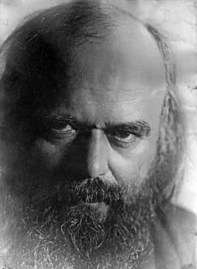
“Spiritists of our day accept every manifestation from the spiritual world as though sent by God, and immediately they boast that God has been ‘revealed’ to them. I knew an eighty-year-old monk whom everyone respected as a great spiritual director. To my question, ‘Have you ever in your life seen anything from the spiritual world?’ the monk answered me, ‘No, never, praise be to God’s mercy.’ Seeing that I was astonished at this, he said: ‘I have constantly prayed to God that nothing would appear to me, so that I would not have occasion to fall into deception and receive a fallen devil as an angel. Thus far, God has heard my prayers.’

“The following recorded example shows how humble and cautious the elders were. The devil, clothed in the light of an angel, appeared to a certain monk and said to him: ‘I am the Archangel Gabriel, and I am sent to you.’ To this the brother responded: ‘Think–were you not sent to someone else? For I am not worthy to see an angel.’ The devil instantly became invisible and vanished.”

-St. Nikolai Velimirovich
Sunday of St. Gregory Palamas

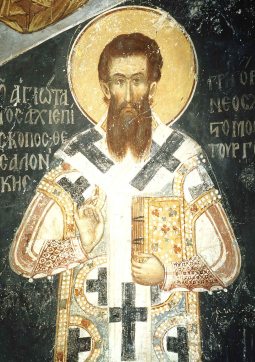
“… Adam chose the treason of the serpent, the originator of evil, in preference to God’s commandment and counsel, and broke the decreed fast. Instead of eternal life he received death and instead of the place of unsullied joy he received this sinful place full of passions and misfortunes, or rather, he was sentenced to Hades and nether darkness.

“Our nature would have stayed in the infernal regions below the lurking places of the serpent who initially beguiled it, had not Christ come. He started off by fasting (cf. Mk. 1:13) and in the end abolished the serpent’s tyranny, set us free and brought us back to life.”

— St. Gregory Palamas, The Homilies Vol. II

The cold in Armenia is very sharp.

The 40 Holy Martyrs of Sebaste are commemorated on March 9. Their martyrdom was in 320 under the Emperor Licinius, and St. Basil eulogized them only 50 years later in a homily on their feast day:

Homily on The Forty Martyrs

Wikipedia has this to say about the saints:

“A church was built at Caesarea, in Cappadocia, and it was in this church that Basil publicly delivered his homily. Gregory of Nyssa was especially devoted to the Forty Martyrs; two discourses in praise of them, preached by him in the church dedicated to them, are still preserved, and upon the death of his parents he laid them to rest beside the relics of the confessors. Ephrem the Syrian has also eulogized the Forty Martyrs. Sozomen, who was an eye-witness, has left an interesting account of the finding of the relics in Constantinople, in the shrine of Saint Thyrsus built by Caesarius, through the instrumentality of Empress Pulcheria.”

Those noble soldiers of the Master of all let us honor,
for they were united by their faith
as they passed through fire and water,
and being enlisted by Christ
they entered to divine refreshment.
Now those pious warriors stand and intercede
with Christ God for those who cry out.
Glory to Him that hath given you strength.
Glory to him that hath crowned you.
Glory to Him that made you wondrous,
Holy Forty Martyrs.

-Hymn for the feast

Sunday of The Prodigal Son

I found this poem on Maria Horvath’s blog more than ten years ago, and have kept her introductory words attached. This week in the Orthodox Church we remember the story of the Prodigal Son. I noticed that this poem can be sung, if you want, to the same tune as “Amazing Grace.”

Today’s poem, “The Prodigal Son,” tells of a father’s unconditional love for his son. It was written by John Newton (1725-1807). He is the former slave trader who became famous for “Amazing Grace,” the folk hymn that also examines the nature of forgiveness, his own in this case:

Amazing grace! (how sweet the sound)
That sav’d a wretch like me!
I once was lost, but now am found,
Was blind, but now I see.

The poem recounts the story of one of Christ’s best-known parables. The younger of two sons asks his father for the share of his inheritance, only to squander it all on loose living. Humiliated and desperate, he comes crawling back to his family.

THE PRODIGAL SON

Afflictions, though they seem severe;
In mercy oft are sent;
They stopped the prodigal’s career,
And forced him to repent.

Although he no relentings felt
Till he had spent his store;
His stubborn heart began to melt
When famine pinched him sore.

What have I gained by sin, he said,
But hunger, shame, and fear;
My father’s house abounds with bread,
While I am starving here.

I’ll go, and tell him all I’ve done,
And fall before his face
Unworthy to be called his son,
I’ll seek a servant’s place.

His father saw him coming back,
He saw, and ran, and smiled;
And threw his arms around the neck
Of his rebellious child.

Father, I’ve sinned — but O forgive!
I’ve heard enough, he said,
Rejoice my house, my son’s alive,
For whom I mourned as dead.

Now let the fatted calf be slain,
And spread the news around;
My son was dead, but lives again,
Was lost, but now is found.

’Tis thus the Lord his love reveals,
To call poor sinners home;
More than a father’s love he feels,
And welcomes all that come.

-John Newton