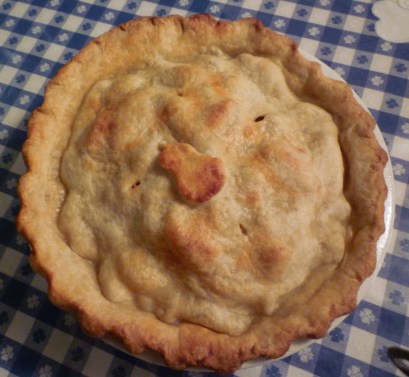
Today we had our annual birthday party for the Virgin Mary. Did you know her birthday is September 8th? It is one of the Twelve Great Feasts that we Orthodox Christians celebrate, and today, when it fell on a Sunday, several of us baked birthday cakes to eat at the agape meal. Even I baked one! I will try to post the recipe soon.
I guess that festivity put me in the mood to publish this post that I’ve had hanging around for five years. Back then I’d written several on The Supper of the Lamb by Robert Farrar Capon, and was working on a few more. Then, as they say, Life Happened, and RFC fell gradually down to the bottom of the drafts pile. But he’s back, and I hope you feel the richer for revisiting his delightful book.
“A calorie is not a thing; it is a measurement. In itself, it does not exist. It is simply a way of specifying a particular property of things, namely, how much heat they give off when burned. Only things, you see, are capable of being eaten or burned, loved or loathed; no one ever yet got his teeth into a calorie.
“….How sad, then, to see real beings…calorie counters — living their lives in abject terror of things that do not even go bump in the night. What a crime, not only against hospitality, but against being, to hear him turn down homemade noodles in favor of idols and abstractions — to watch him prefer nothing to something. And what a disaster to himself! To have capitulated so starchlessly before the the devil’s policy of desubstantialization! His body may or may not lose weight; his soul, however, is sure to wither.”
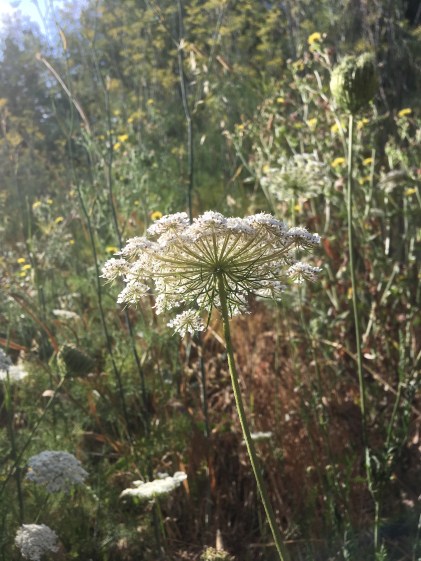
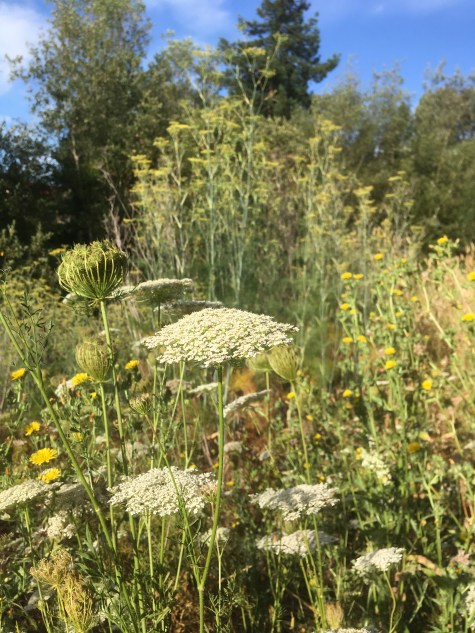
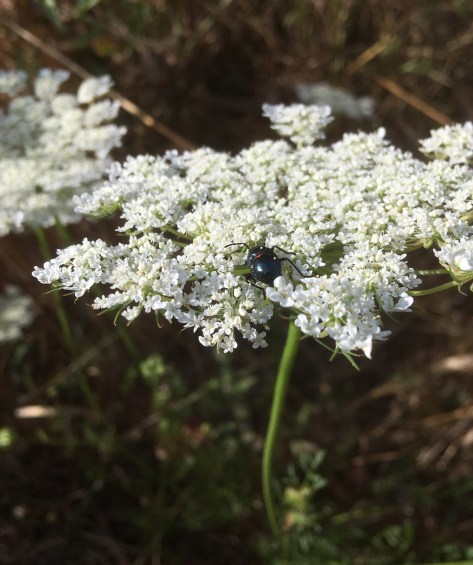
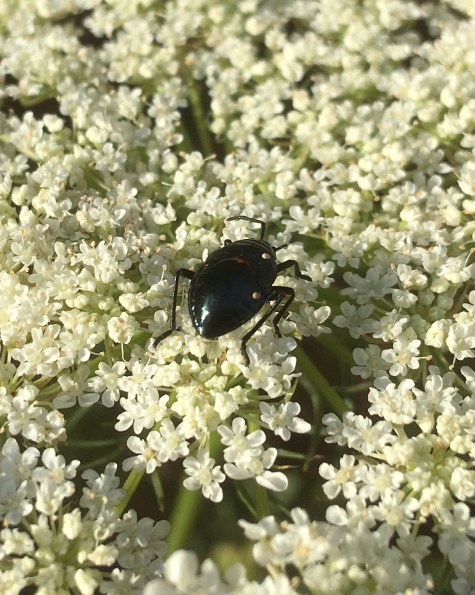
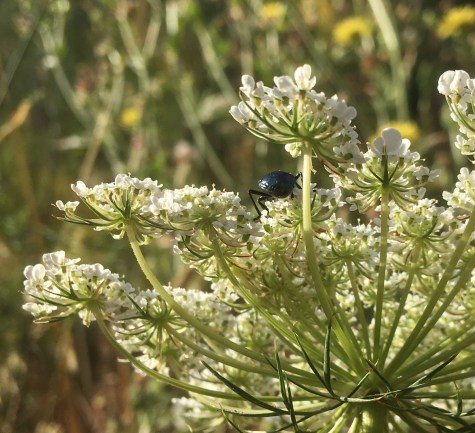
The Queen Anne’s Lace, or Daucus carota, one of the “wildflowers of the carrot family,” is in full glory this month along the creek near my house. It was a mild winter and a wet spring; though we are now well into the dry season, their plantation is lush.
Once before I posted a gallery of images of them, various angles and perspectives. This week my walk along the path was greatly extended and I explored the current neighborhood that has grown up, full of a unique assortment of plants and animals developing from this year’s natural and man-provoked conditions. That means a completely new gallery!
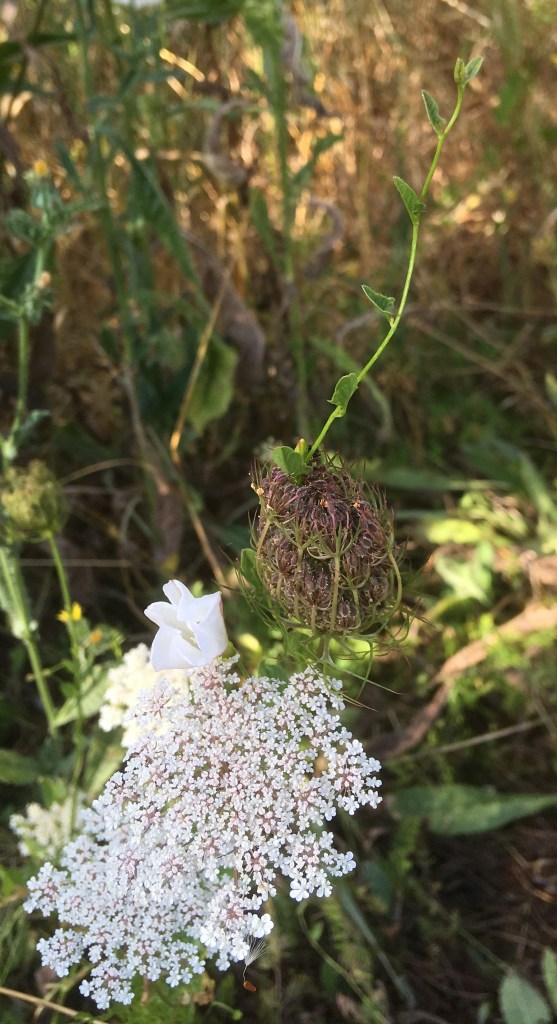
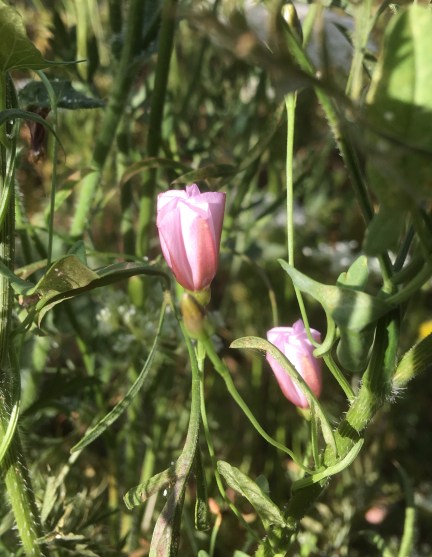
The picture just above shows a morning glory weed or bindweed (Convolvulus), which has twined around the stem of an opened flower, grown on through a bud, and is now reaching out into space. It has an opened flower just above the lower Queen Anne’s Lace bloom. And I just noticed a little seed of something, close to the bottom of the photo, and about to drop down, down… and make a contribution to next spring’s neighborhood.
Fennel in the background.
In my last gallery of Queen Anne’s Lace, I featured the red spots that are found in the center of many of the blooms. This year what were more eyecatching were insects and the other umbellifers.
I learned that word almost a year ago when Pippin and I were exploring wetlands together. As I walked along my nearby creek path I began to think about the flower form that Queen Anne’s Lace shares with the wild fennel nearby, and the word was struggling along my mind’s synapses for several minutes… and finally arrived where I could grab it. Today I researched its meaning again; it comes from the old name for the plant Family Apiaceae, which was Umbelliferae.
I found several helpful webpages besides the Wikipedia information. One has a timeline of North American invasive species: “We came on the Mayflower, too!“, where I learned that our wild fennel likely did come with those first pilgrims in 1620, and it spread all over the continent. That site also has lots of recipes for using wild plants, and I would be interested to try using the tender green fronds of fennel, or even the stems. But on the fennel page they were a little sloppy with their botany, telling me that fennel and anise are the same thing, which they are not.
Let’s start with fennel, which is my neighbor: its botanical name is Foeniculum vulgare. Anise is Pimpinella anisum. They are both in the Apiaceae family but different genera. The fleshy bulb that is eaten as a vegetable is a fennel bulb. Anise looks very similar in the field, but I don’t ever see reference to eating the bulb.
On the Spiceography page I read a paragraph-long comparison of the seeds, which both contain the essential oil anethole. I found its guidelines confusing, and concluded that I will just try to use whichever seed a recipe calls for. By the way, two other plants with this flavor but completely unrelated and different in form are star anise and liquorice.
Anise is an ingredient in many alcoholic beverages traditional to the Mediterranean and Asia. At least one of them, absinthe, includes fennel as well. I was pleased to see a map showing the locales and the names of the drinks.
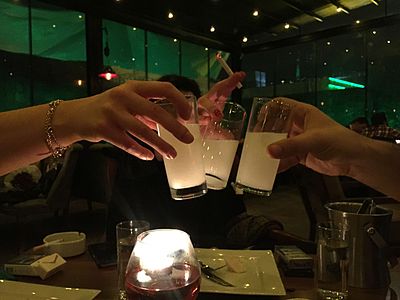
When I was in Turkey I did enjoy rakı. (Yes, that is an i without a dot. It designates a schwa or ə sound.) Usually it was served with water; you would pour a little rakı in your glass and then add water. It turned all milky then, as in this picture. No one ever tried to explain to me why this happened, and I doubt they could have if they knew, because when I read the explanation for it now it’s very complicated to my unscientific mind: The Ouzo Effect.
Fennel flower
I seem to have drifted from flowers to food and drink (passing quickly over insects). Truly this earth is full of enough animal, vegetable and mineral to keep us forever occupied examining, experimenting, cooking and brewing — and thanking our Father for putting us in a world so packed with beauty and life.
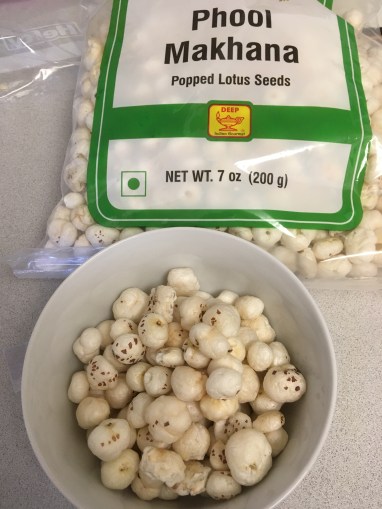
One package I picked up at the Indian market was a large bag of phool makhana or puffed lotus seed, a sort of popped-corn form of the seed of the lotus plant Nelumbo nucifera. When I was in India one restaurant that specialized in salads sprinkled a few of these puffs on top of one concoction that I loved.
I read about lotus seeds online, where there is a wealth of enthusiastic promotion of the food item as a cure-all, physically and spiritually. Unfortunately much of the prose resembles the spam comments I get on my blog, and gives me the giggles.
“… eaten as a fasting food in India as it considered a very pious. And, is also used to worship God.” Well, of course. “Whether you eat or drink, or whatever you do, do everything for the glory of God.” (I Corinthians 10:31)
Even Wikipedia seems to gush: “Lotus seeds can be processed into moon cake, lotus seed noodles and food in forms of paste, fermented milk, rice wine, ice cream, popcorn (phool makhana) and others, with lotus seeds as the main raw material. Fresh lotus seed wine has thirst quenching, spleen healing and anti-diarrheal advantages after drinking.[40][41]Lotus seed tea is consumed in Korea, and lotus embryo tea is consumed in China and Vietnam.”
One website that sells various flavors of puffed lotus seeds has this to say: “Focusing on ‘co-creation’ at all levels, we aim to bridge the gap between nature and consumers… to create an offering by combining the natural foods with modern techniques so as to enable the human kind to rejoice these gifts. POPMAK … is a healthy munching solution for all ages… which can add values in your life. We are just four years old company, aiming big to deliver and in this endeavor we will remain child like enthusiast for ever. Expect more surprises from us soon!!!!”
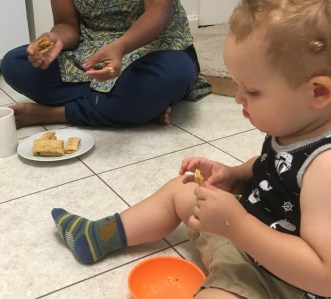
I must mention here a couple more Indian snacks that are in the house right now. Kareena bought these flaky fenugreek biscuits that she often eats for breakfast and shares with Raj.
I’ve eaten a few of them myself and they are really nice — crispy and subtly flavored.
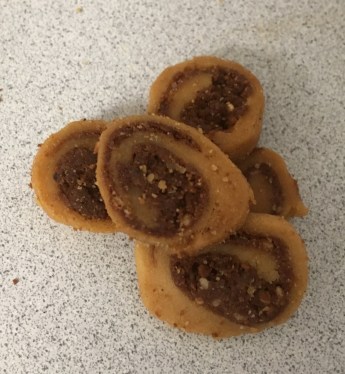
We bought some bhakarwadi which I have already eaten all up. They are like a cross between a barely-sweet cookie and a cracker with Indian spices, mildly hot.
The popped lotus seeds straight out of the bag were pretty bland and had the texture of stale popcorn. I roasted them in a pan with ghee, salt and spices, which transformed them into another light and crunchy, addictive Indian snack. Rejoice!
This week I traveled to the Washington D.C. area to visit Kate and her family, including little “Raj” whom I’ve mentioned before, now almost 17 months old. I had attended his birth in India, but now they are living here in Arlington, Virginia for a while.
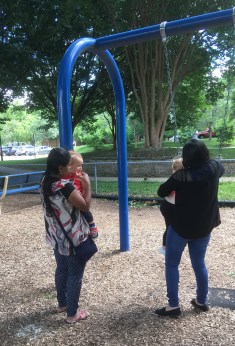
So far I’ve just been hanging out — the Indian nanny Kareena is here, too, and my first day I walked with her and Raj many blocks to a park where the little guy could play on the swings and in the sand pit. It was a lovely outing; that day the wind was howling and seemed to blow off the heat and humidity quite a bit.
Today we needed to do a big shopping trip, including to the Indian market, Kareena’s first stocking-up since they arrived. That was so much fun. We all kept adding to the baskets over the course of a half-hour at least, spicy snacks and unusual vegetables, the favorite brand of masala chai tea, mango chutney, chapati flour and besan flour, which is chickpea flour, or gram flour.
When I was in India I wrote home about a confection that is made with chickpea flour, pronounced ladoo and spelled in English like that or in many other ways, as I’m discovering: laddoo, laddu, and even ladu, as I saw it today.
This word is also an Indian nickname for the first-born son especially, and sometimes more generally a term of endearment: “Sweet.” Kareena uses it for my grandson all day long.
When I was on my way home from India in February of 2018 my plane was delayed four hours before it even left Mumbai; at 3:00 a.m. I was wandering the airport shops looking for some comfort food that wasn’t entirely simple carbs, and I found a snack that had chickpea flour in the ingredients, and ghee. That sounded wholesome enough 🙂 and it was the most splendid treat. One version was on the shelf in the market today, and when we arrived home and were putting all our purchases away I saw that Kareena had bought a package.
About a year ago I spent quite a while researching recipes to make my own besan ladoo, and I have a few pounds of the flour in my fridge that I bought even earlier for some other recipe. None of these facts should cause anyone to hope that Indian sweets will ever come out of my kitchen. I can easily live without that kind of goodie.
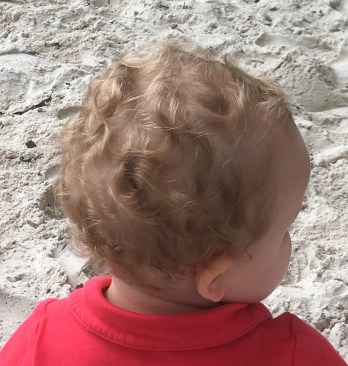
But the curlyhead that we call Raj or Ladoo, he came to us already delicious and sweet, and I can’t get enough of him.
 The Queen Anne’s Lace, or Daucus carota, one of the “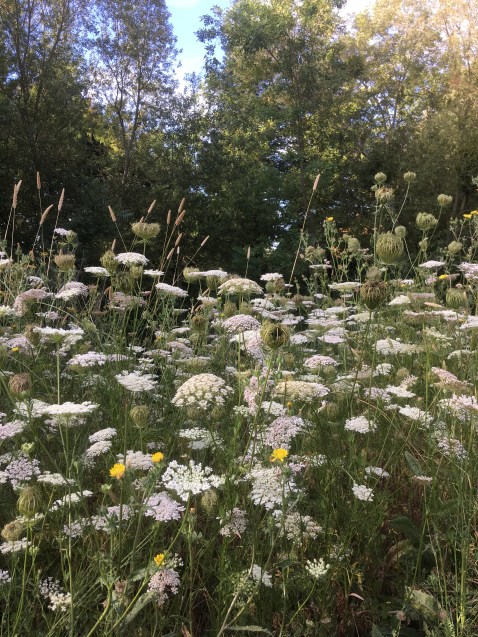






 One package I picked up at the Indian market was a large bag of phool makhana or puffed lotus seed, a sort of popped-corn form of the seed of the lotus plant Nelumbo nucifera. When I was in India one restaurant that specialized in salads sprinkled a few of these puffs on top of one concoction that I loved.

 This week I traveled to the Washington D.C. area to visit Kate and her family, including little “Raj” whom I’ve mentioned before, now almost 17 months old. I had attended his birth in India, but now they are living here in Arlington, Virginia for a while.
 heat and humidity quite a bit.

 Gladsome Lights