Category Archives: food and cooking

Bird Food Improved Upon

I am inspired by a blog on Brussels sprouts and peanuts here to prepare the recipe posted. Also to tell you my own story of birds and sprouts. Missing from my story are the peanuts.

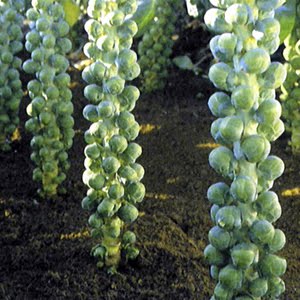
This is what the vegetable should look like before it is harvested, but my own try at growing these impressive stalks didn’t work out as planned. At the time when little buds should be growing into big sprouts, there was nothing but  big, bare stems. Could the flocks of quail who frequented our back yard have anything to do with this? I knew they ate the leaves on top….

Eventually I took the time to examine those stems up close, and there were indeed little sprouts on them, the size of pinheads, and never able to grow larger. My plants had been so starved by the constant bird pruning that they had nothing to put toward production of fruit.

I love to cook Brussels sprouts, and even B. has overcome his off-putting childhood initiation so that now he happily eats them. Cooked, mind you. Once as a little boy he was accompanying a farmer friend of the family on a walk through the vegetable garden when the man plucked a sprout off the stalk and handed it to young B. saying, “Here, try it, it’s a Brussels sprout.” B. obediently chewed the raw sprout and found it the most horrible thing he’d eaten in his short life.

It took many years for him to get over that first taste. Sprouts are so darling and yummy, though, that simple steaming has been enough preparation to suit us most of the time. After I got married I learned to cut a deep X into the base of each sprout before dropping it into the steamer basket. That lets the inside leaves cook along with the outside, so you aren’t left with a choice between mushy outsides or crunchy centers.

Now I’m off to the market and will certainly bring home some Brussels sprouts. I’ll let the birds eat the raw, and will serve mine cooked.

Psalter and Soup

This Advent season I’m participating with other women, organized by Sylvia, in reading the Psalter every day for the 40 days. Our Psalter is divided into 20 groupings each of which is called a kathisma, and every woman will read one per day.

There are more than 40 of us participating so that the whole book of Psalms will be read twice a day. Everyone who perseveres will end up having read the Psalter through twice before Christmas, as well! What a joy it has already been.

I’m also trying to read The Winter Pascha by Fr Thomas Hopko, which has 40 readings about this period in the church year that has similarities to Lent and Pascha. I read two days’ entries and now can’t find the book, so we’ll see how that goes….

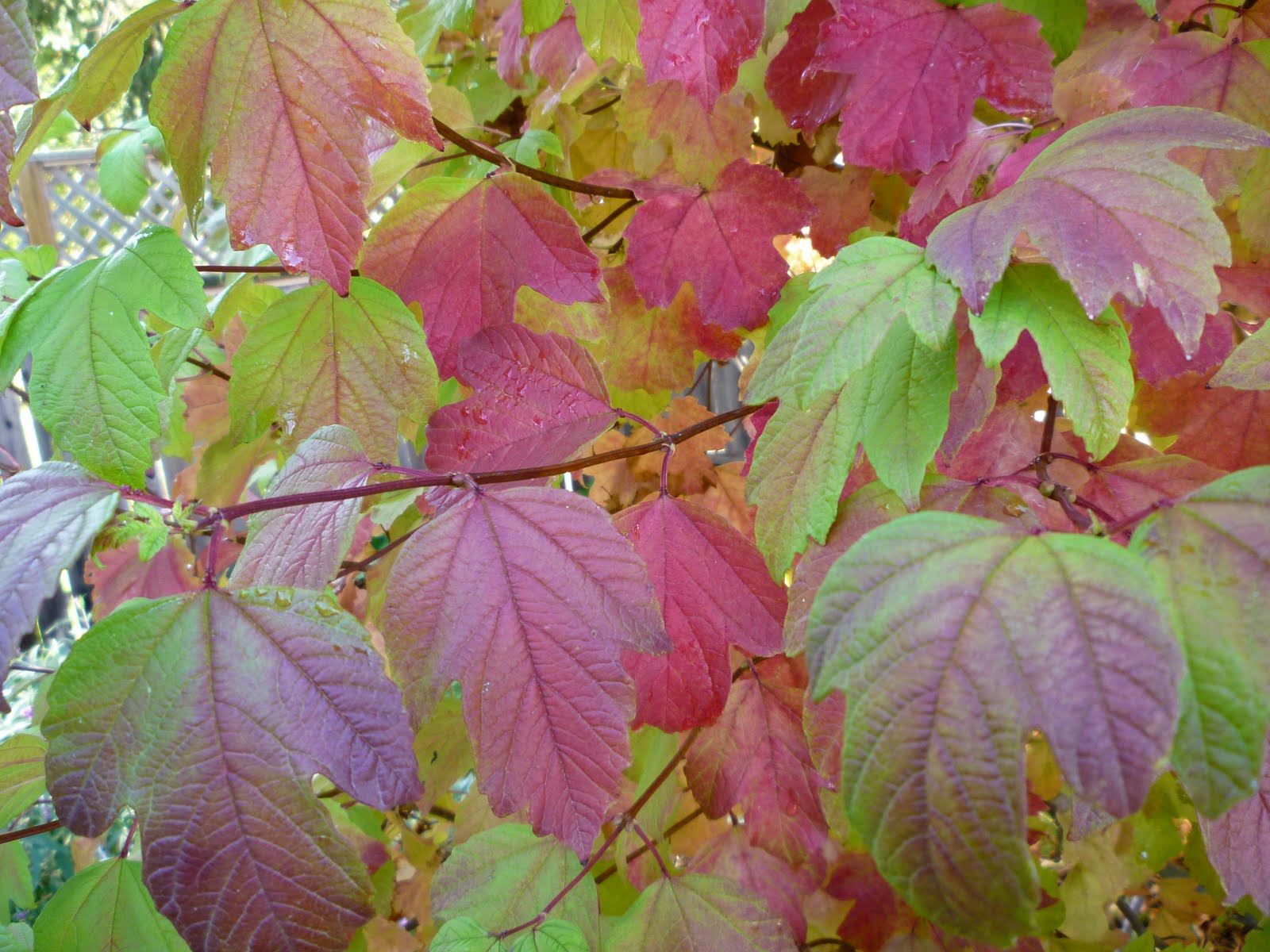
We just got a good rain and everything is washed clean, the sky is blue, and the snowball bush is showing its glory.

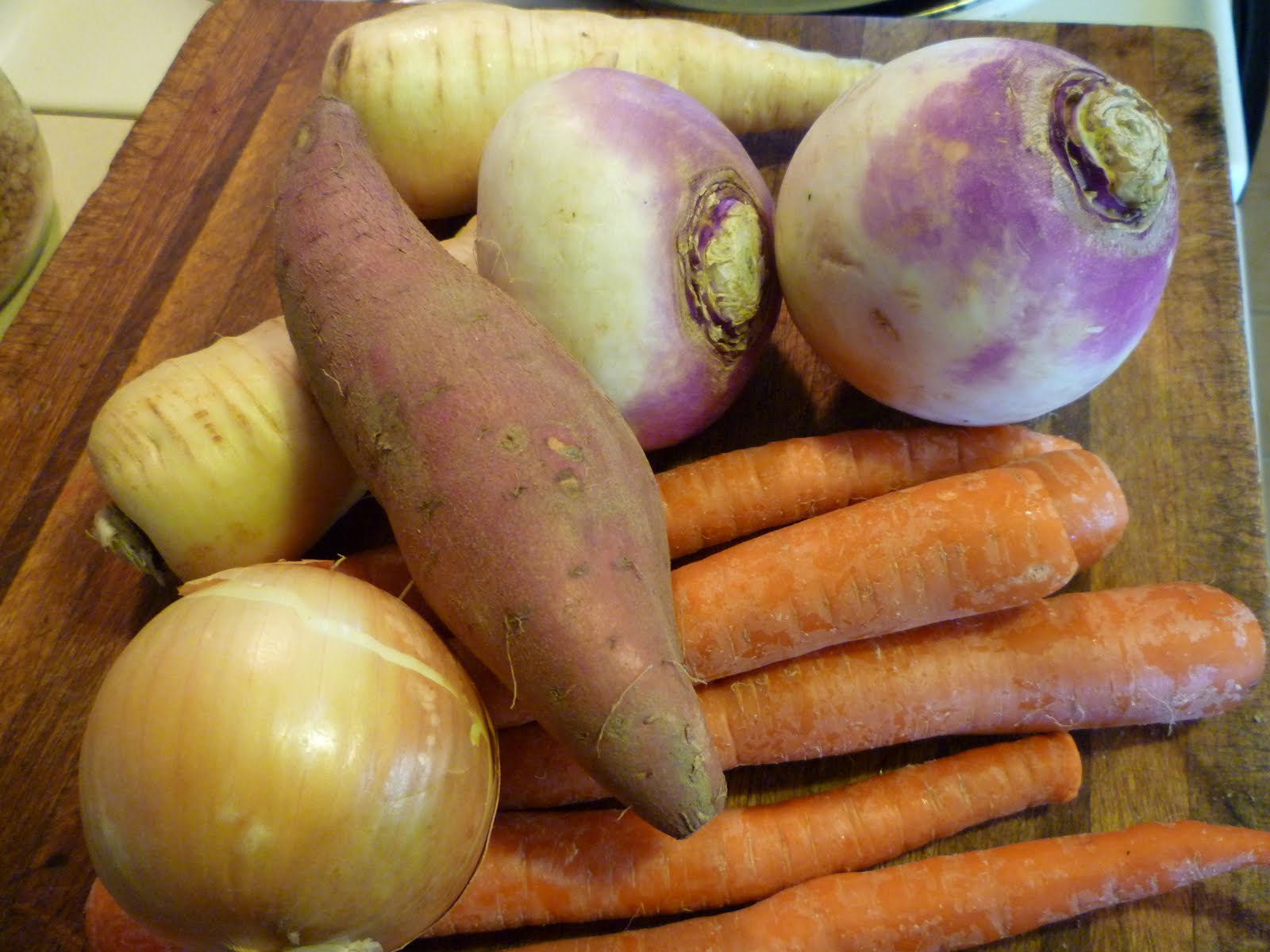
It’s the season for soup! It’s easy to make a lenten meal in the soup kettle, and today I am putting in three kinds of beans and some winter vegetables.

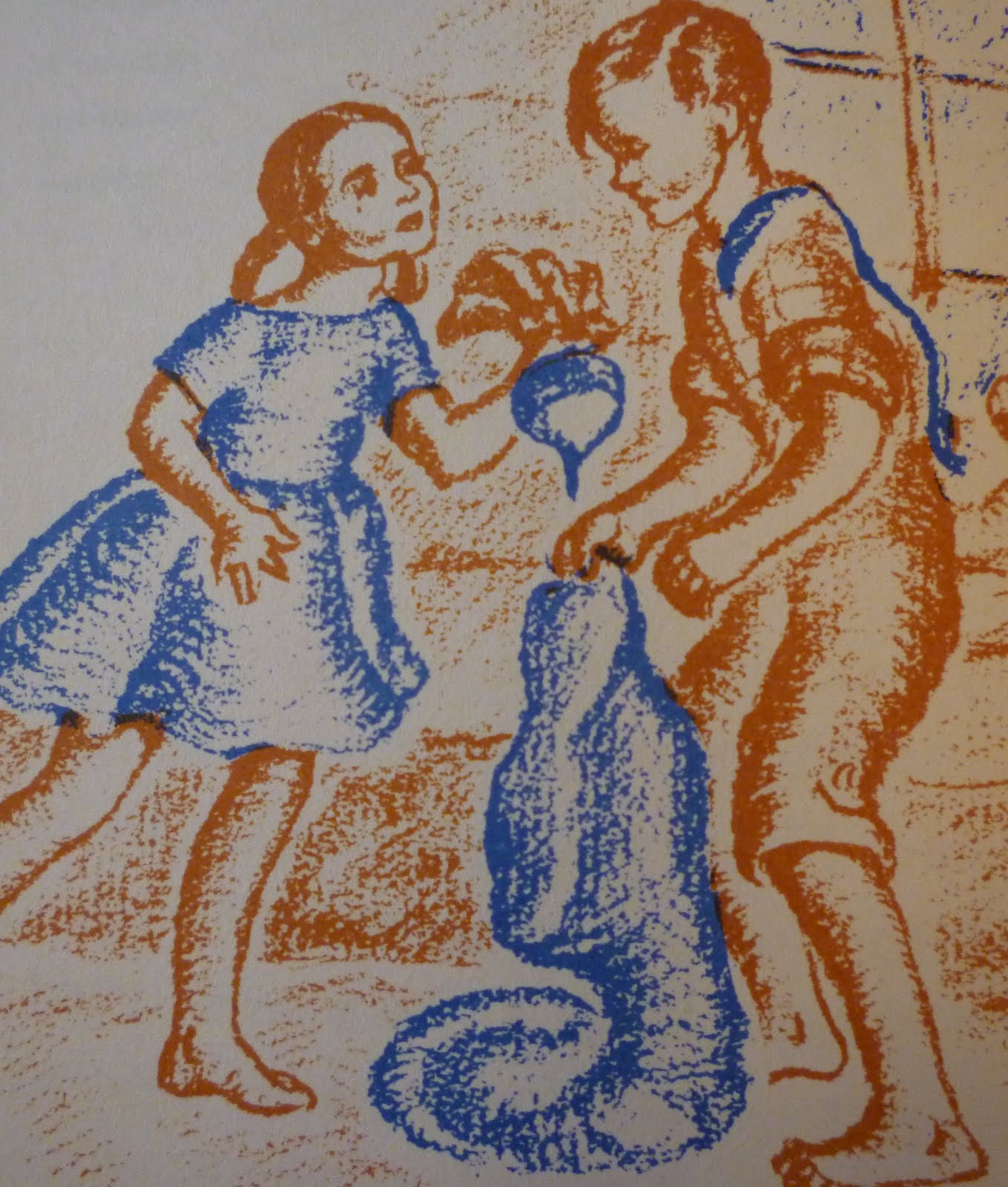
I don’t often buy parsnips or turnips. When I used to read Down, Down the Mountain by Ellis Credle to my children, the vegetables the characters are so fond of must have seemed as exotic as boys and girls riding barefoot for lack of shoes to wear.

In the story, the mountain children carry a bagful of turnips down to the town, turnips they themselves planted and tended lovingly, in hopes of selling them for enough money to buy shoes. But everyone they meet along the way is hungering and thirsting for just such a delicacy, and when they arrive in town they discover that only one turnip is left in the bag.
 I’m afraid that after my first 15 years of family cooking, with its centerpieces of lentil soup and bread, I might have inadvertently started cultivating a taste in my family for fancier food. Fast periods are a good opportunity to repent and reform.
 But this plain food tastes pretty fancy after all.

Pear Pie of the Year?

“Pie of the Week” was the inspiring category of postings at Gigi’s Firefly Cottage blog…

I wish I could bake a pie once a week. I also wish I could have a whole day of prayer and contemplation every week, and a day of gardening, and a loaf of bread baked every seven days or so. But at the rate I’m going, I should set my sights lower– perhaps one pie every six months or so? (If wishes were horses, beggars would ride, and eat more pie.)

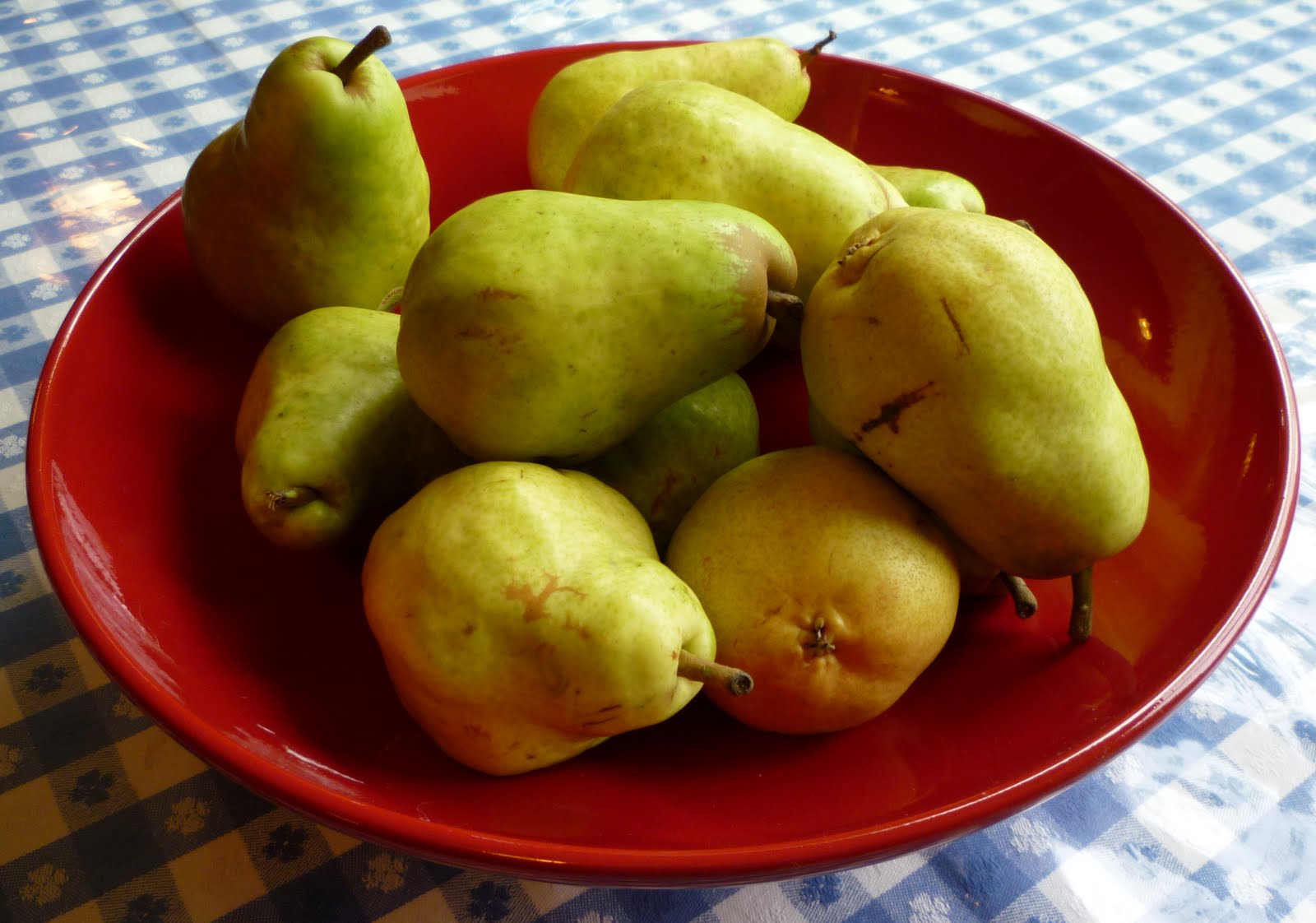
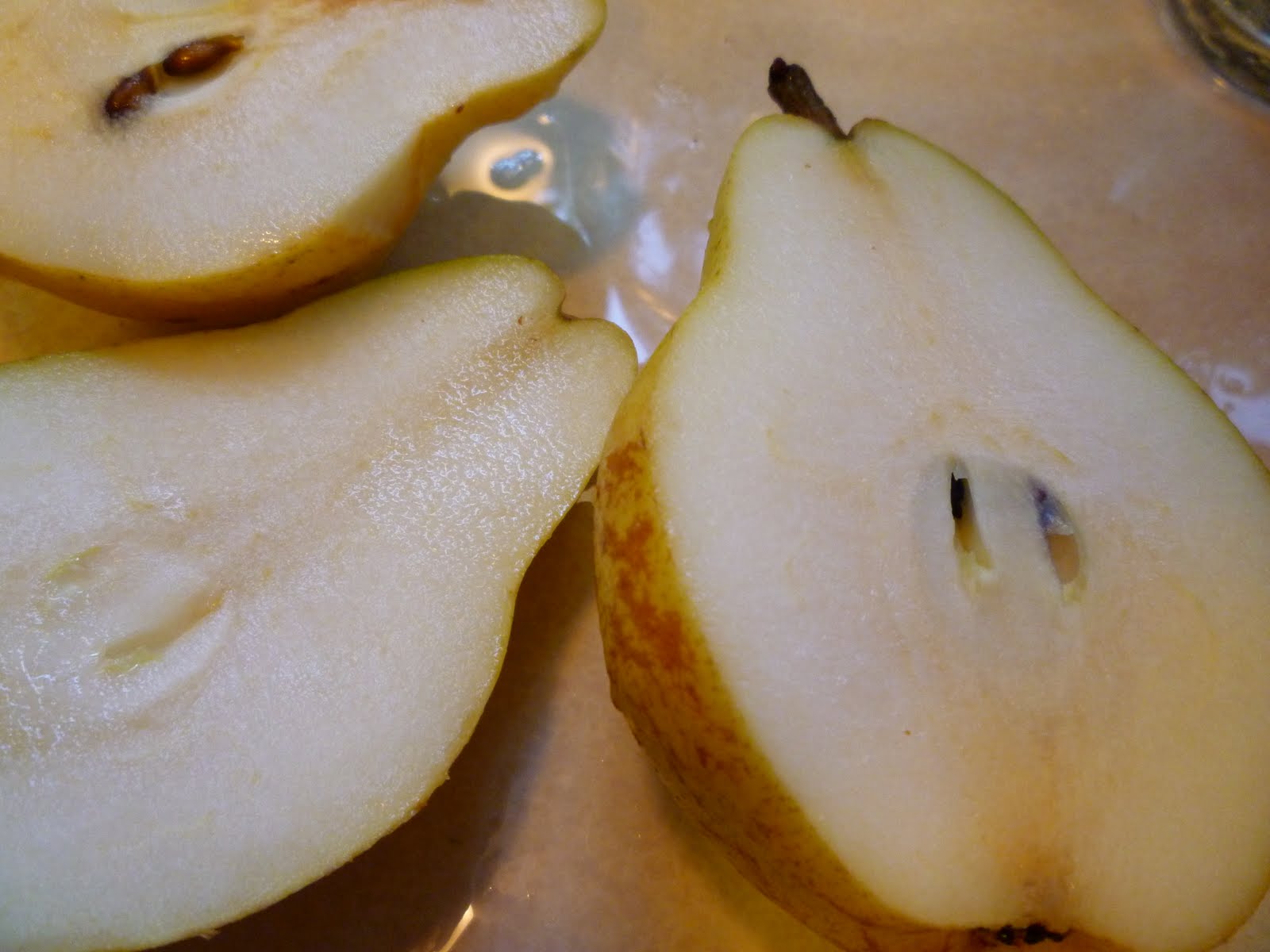
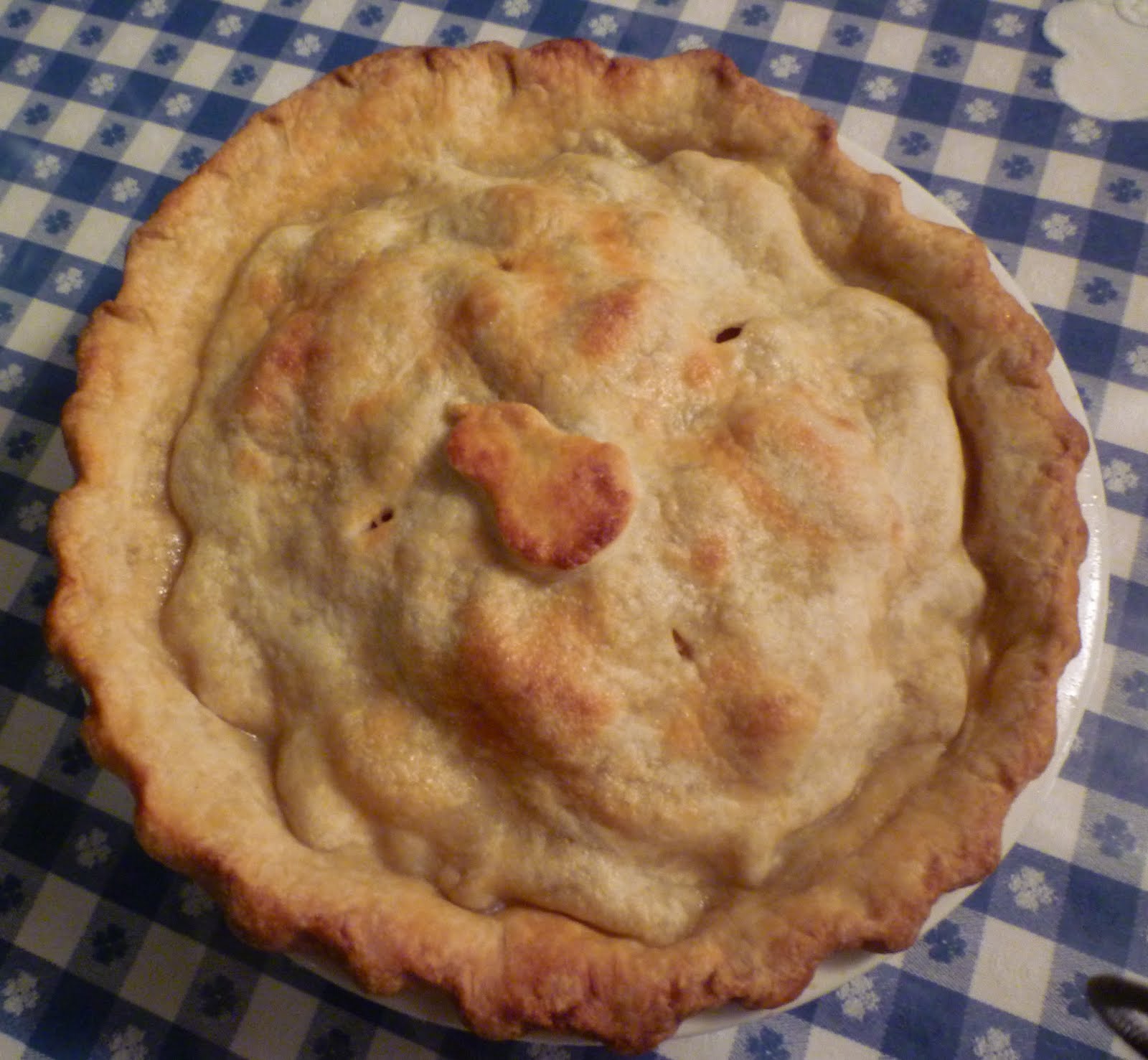
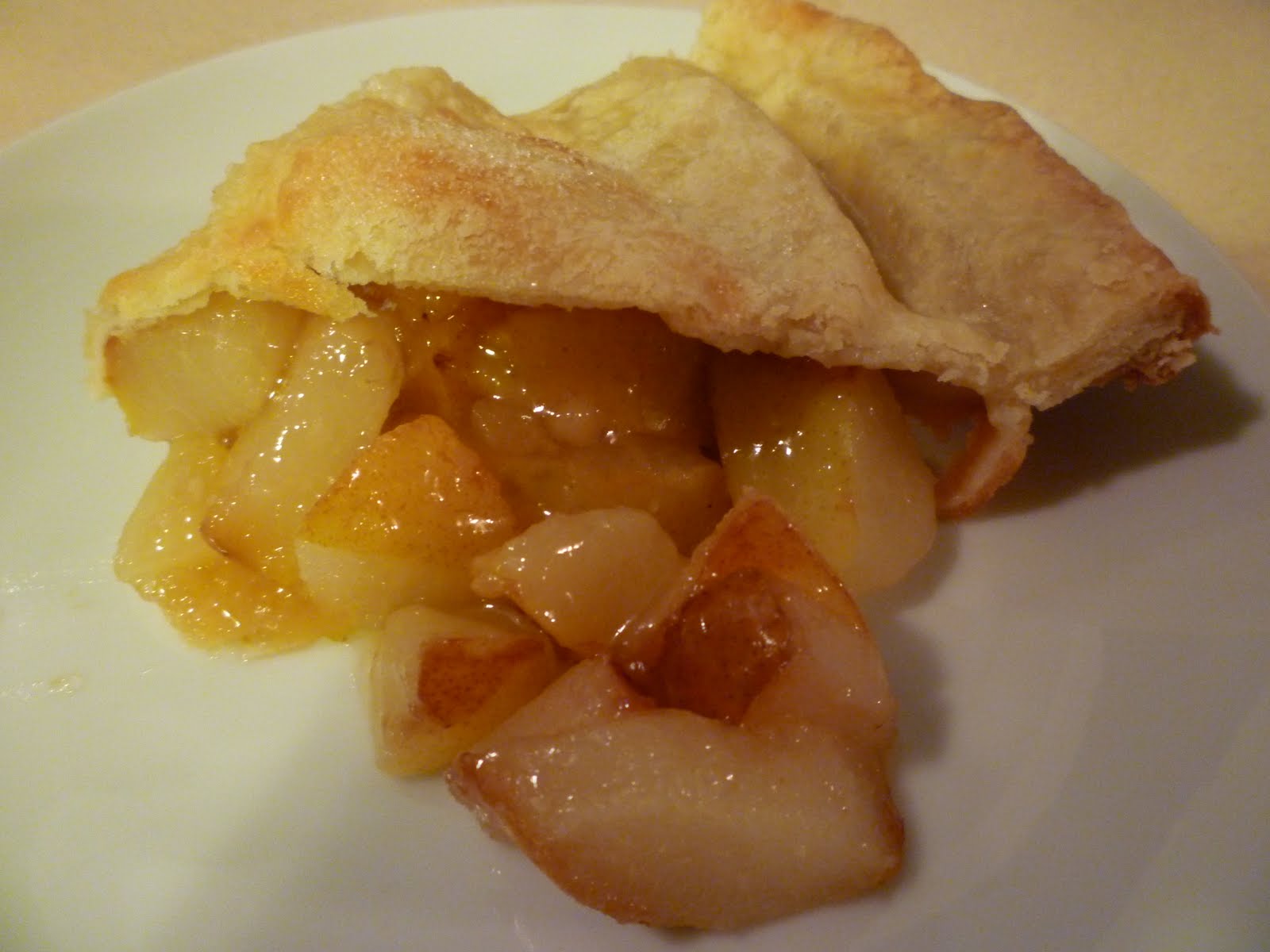
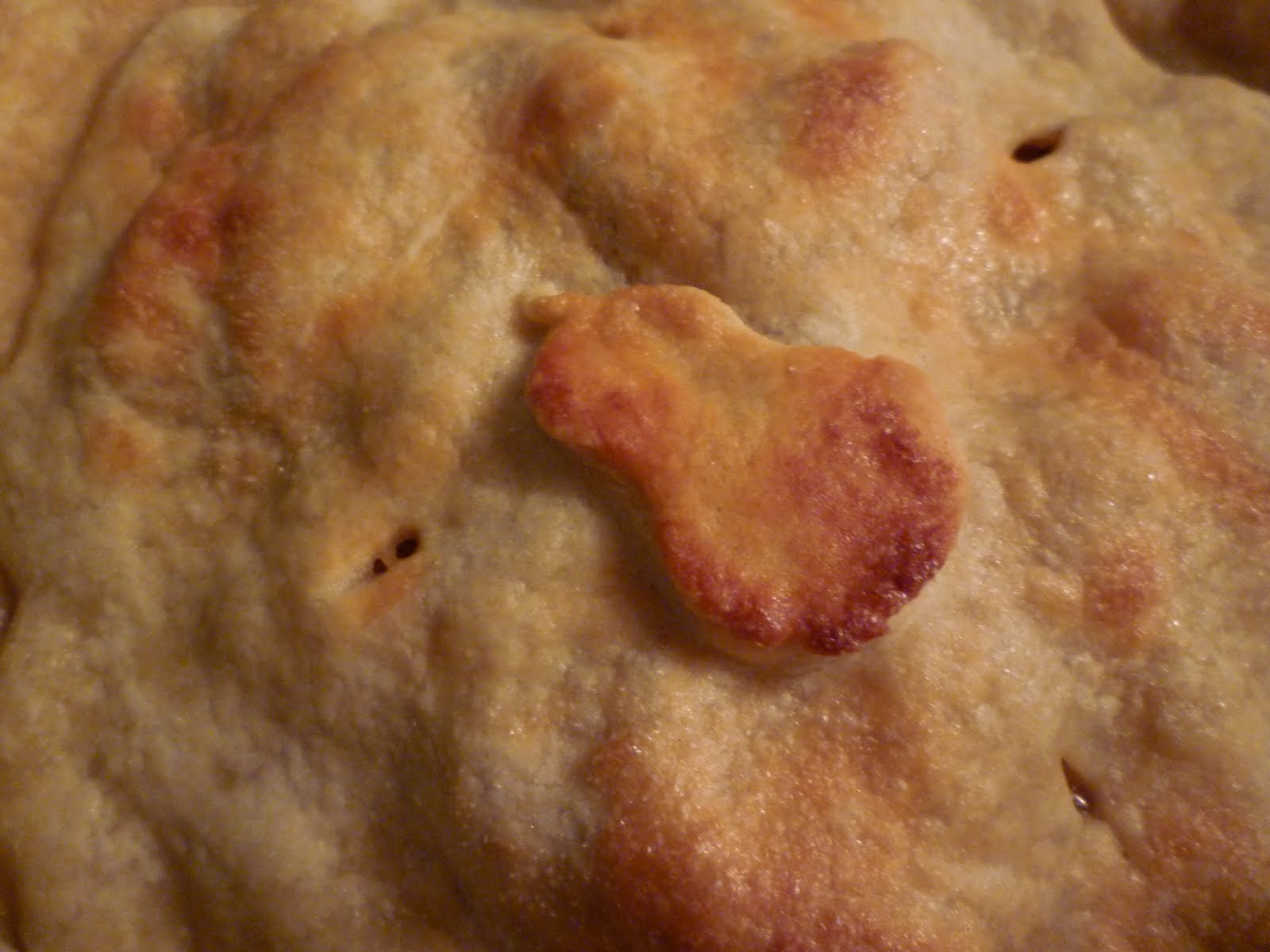
My latest pie is Pear. It’s the first pear pie I’ve ever eaten or baked. The thought of eating this subtle fruit any way besides fresh or dried never appealed, until I read a recipe on one of my favorite blogs recently, a recipe that made me think pear pie would be worth a try. I was prepared in mind, then, for the display of pale green Bartletts at a fruit stand where I stopped for a snack on Monday.

The price was right, but you had to buy a big bag of them, more than Mr. Glad and I could possibly eat. I thought, “This is my chance to bake a pear pie,” and I brought them home, and there was my deadline in front of me: within two days they would be pale yellow, and the pie would have to be baked.

Here is my new white pie dish waiting for its pears. The hearts on the cloth that is under the clear vinyl were my solution to shoe polish stains about 15 year ago.

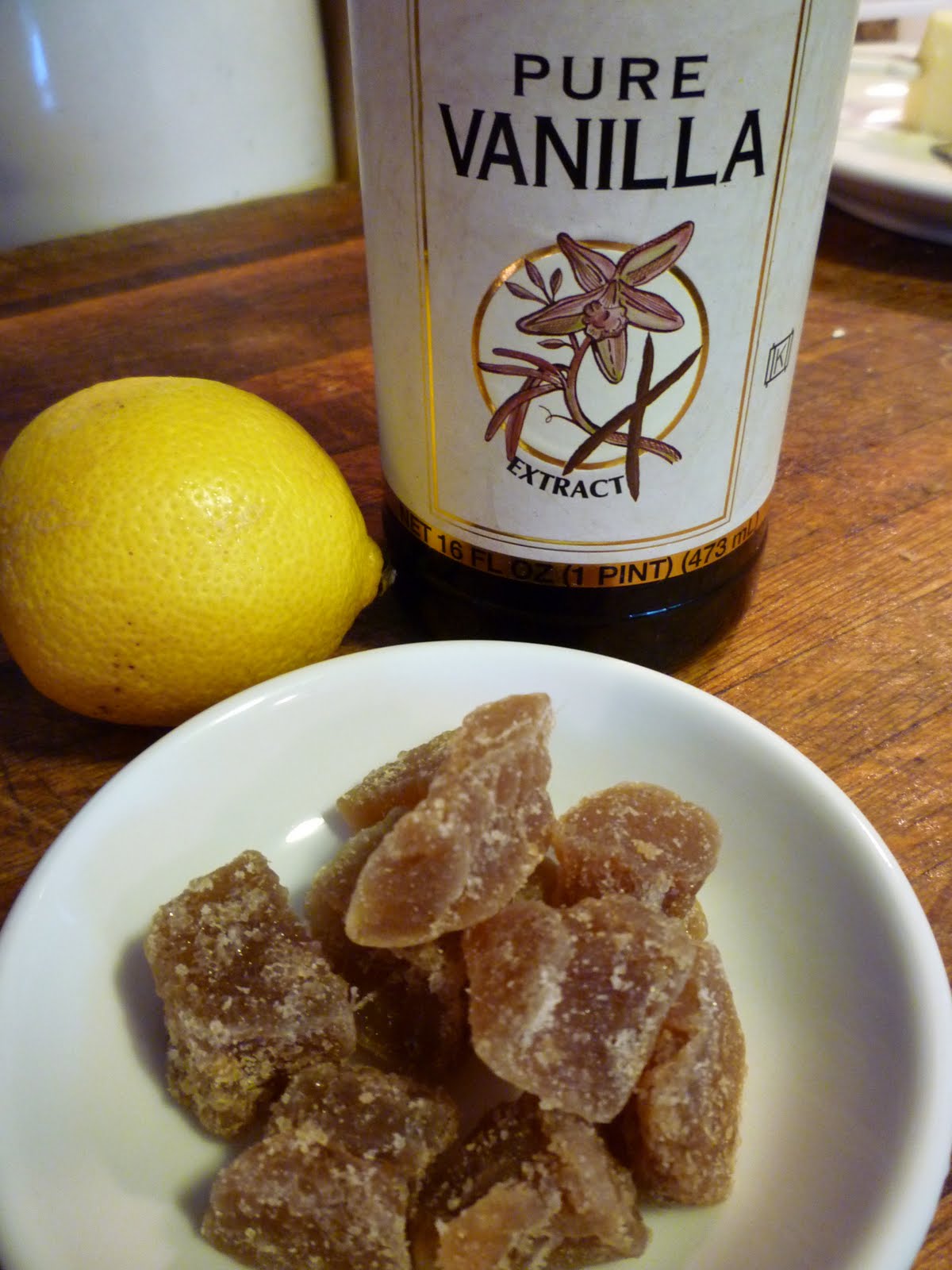
But where was the recipe? Nowhere to be found. Had I imagined it, or just lost it? The pie had to be baked, so I researched ideas on Epicurious.com for quite a while, settling on a this recipe that featured lemon, maple, and ginger to add complexity.


I made a couple of changes: doubled the ginger and forgot to put in the sugar. I’m so glad about that last omission, because the maple syrup made the pie just sweet enough for my taste. All the various flavors blended nicely and nothing overpowered the pears. I found it to be quite lovely. It was hard to know just what the added flavors were.


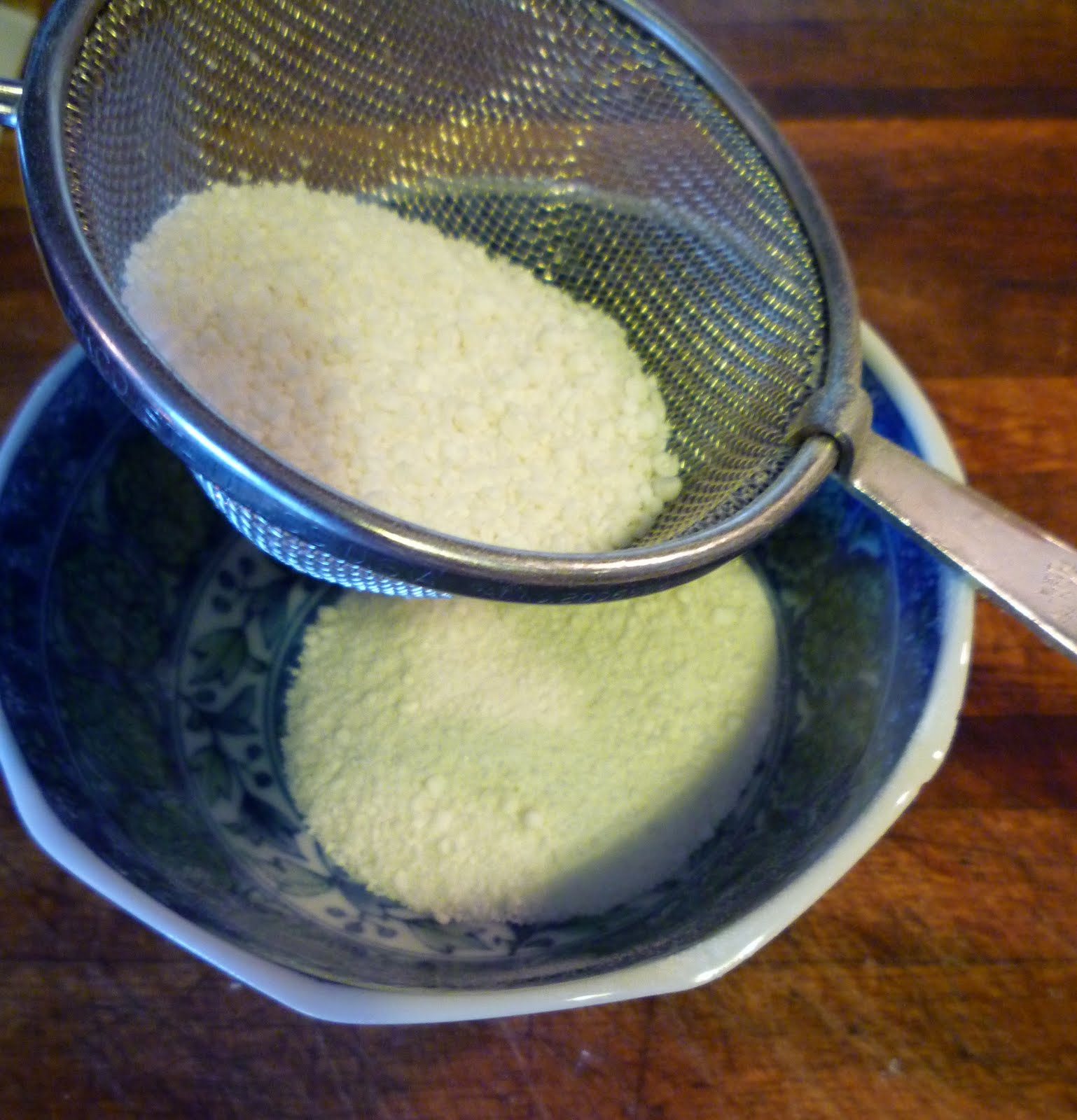
This pie was thickened with instant tapioca granules. I discovered I didn’t have instant, so I ground some small pearls in the blender and then sifted out the bigger pieces. The finished product was a bit soupy, maybe only because it was still warm.

But my husband often doesn’t like new taste sensations, especially the first time. After having a slice of this one, he said it had nothing that made him want to keep eating it. I should have that feeling; after eating more than necessary, I quickly wrapped the rest of the pie, dish and all, in heavy foil and stuck it in the freezer.


Maybe my pear pie will be the Pie of the Century!

Indian Rice Pudding

With the temperature in the 30’s there in the North Country, it wasn’t surprising that we desired comfort food. Rice pudding came to one daughter’s mind, and passed from there to mine, where the idea germinated into a Google search, and from there sprouted plans to use ingredients on hand.

Judging from the variety of methods and ingredients, I think you could have success with many different combinations. I didn’t write down what I came up with, but I think I can remember…
While the 1/2 cup of jasmine rice was soaking in warm water,
I chopped 1/3 cup almonds.


One recipe called for “dried fruit” and suggested almonds, pistachios, and raisins. I found some currants to go with the almonds. The cardamom was for later on.
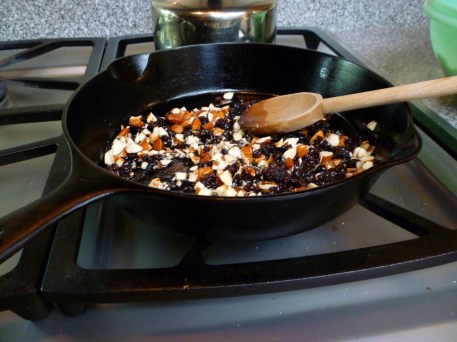
The yellow stuff is ghee, which I had brought along on the previous trip and forgotten to take home. Lucky me, because I wanted it for sautéeing the almonds and about 1/3 cup currants. If there is any better smell in the culinary world than this, I haven’t met it. I cooked the almonds and currants until the almonds were toasty brown.

In the meantime the rice had soaked for half an hour and after draining I added it to a quart of milk. (Some recipes used half coconut milk, and I have made many puddings without dairy, using primarily coconut milk, during church fasts.)

This pot needed frequent stirring over medium-low heat so that the pudding wouldn’t stick and burn. After perhaps 15 minutes it had thickened a bit and the rice was tender. That was the signal to add 3 tablespoons of sugar and 1/2 teaspoon of cardamom, along with the ghee mixture.
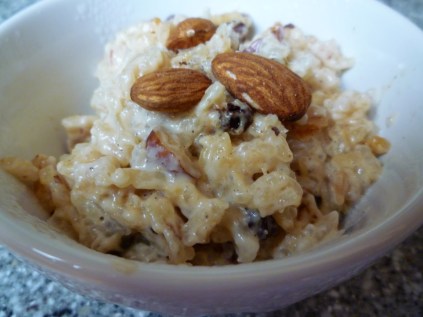
After a few more minutes of cooking, the pudding was even thicker, and ready to eat. But we waited a while until it had cooled to warm.

It had a good flavor, but we had been looking forward to a more runny pudding.
If I make this sort of thing again I think I’ll try using 50% more milk.