Though Kate has lived in Washington, DC for almost eleven years, I’d never spent a night in any of her dwellings before. This time, I stayed five nights with Tom and Kate in their apartment that I was seeing for the first time.
I am a country girl who lives in the suburbs – I’ve never in my life been a city-dweller. When I get the chance to take any kind of walking tour of a city with this much history, I find myself stopping and staring a lot. Just the brick row houses could keep me occupied for hours, if I had hours to spare.
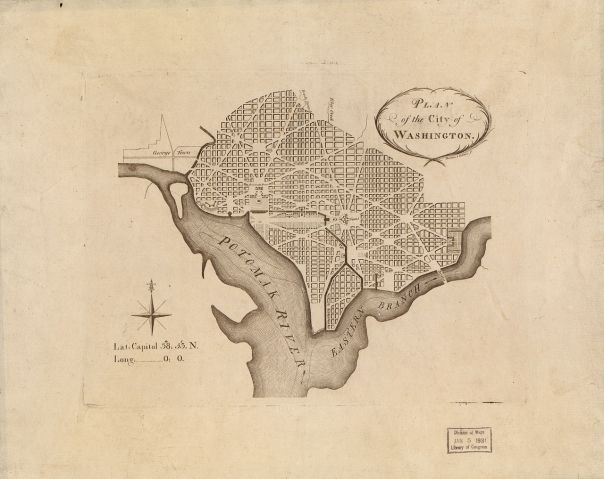
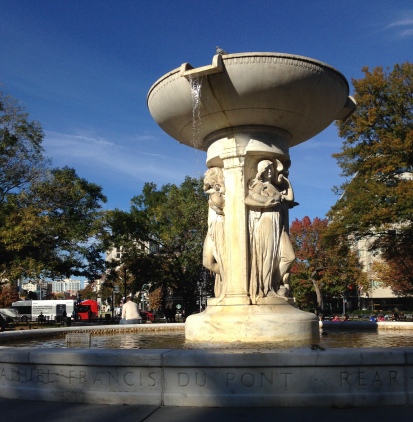
131 neighborhoods are unofficially recognized in our nation’s capital. One of them in the “Old City” is Dupont Circle, arranged around streets that extend like spokes from the traffic circle that was part of the original plan for the city, designed for President George Washington in the 1790’s. This is Tom and Kate’s neighborhood for a few more months; you can see it just west of the center of this map:
Pierre Charles L’Enfant was the architect who laid out the streets of what is now called the “Old City.” Much of the area was not developed until after the Civil War; in 1871 the Army Corps of Engineers began construction of the traffic circle that was then called Pacific Circle. About ten years later Congress renamed it Dupont Circle after Samuel Francis Du Pont, to honor his service in the Civil War. He was the grandson of another Du Pont I heard about a few days later. Here is one of his original drawings:
I arrived in D.C. the day after the presidential election. The next morning Kate and I walked through her neighborhood….
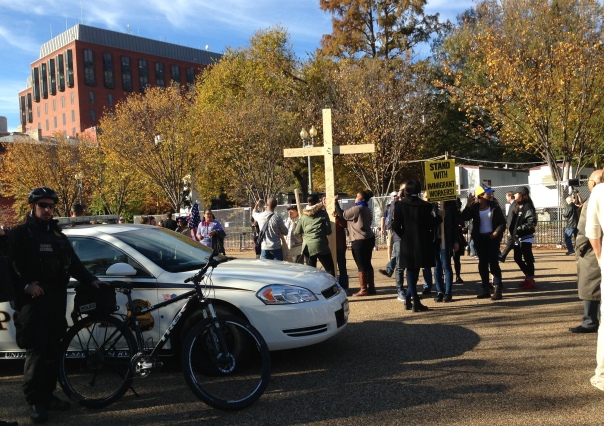
…and on to the White House, where the President-Elect Donald Trump was meeting with President Obama. Some quiet demonstrators were there, too. Lots of construction was going on and we couldn’t get as close as usual.
This young woman was talking for as long as I would watch, to the boy in the Trump t-shirt. He was listening meekly. I wondered if he ever got a chance to talk, or had anything to say. There at the White House, I didn’t see anything hateful, and I don’t believe in speculating about the thoughts of other people’s hearts.
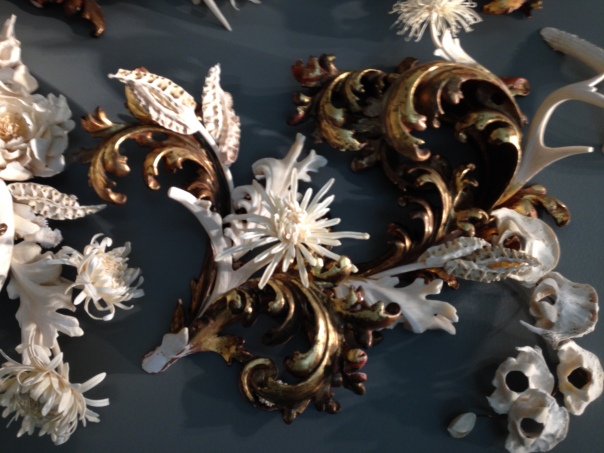
We spent quite a while touring the Renwick Gallery – so much beautiful artwork, which my pictures don’t do justice to, so I’ll just share one bit of Jennifer Trask’s art; she creates her designs with the antlers, teeth, and bones of many different animals including snakes, water buffalo and camels.
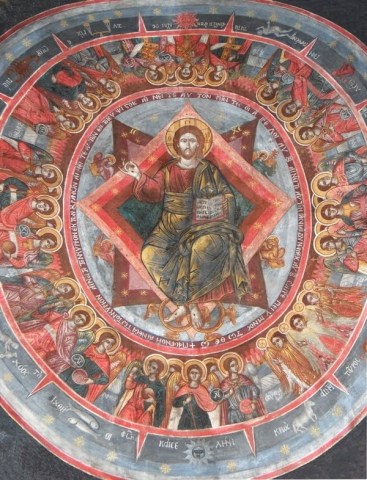
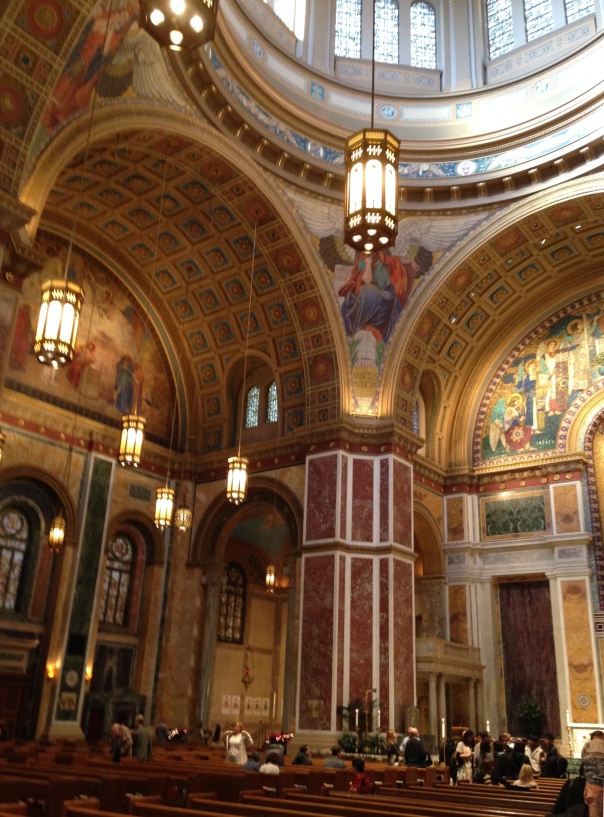
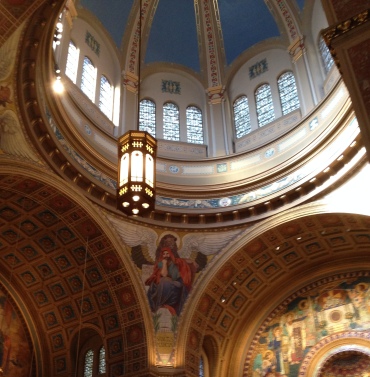
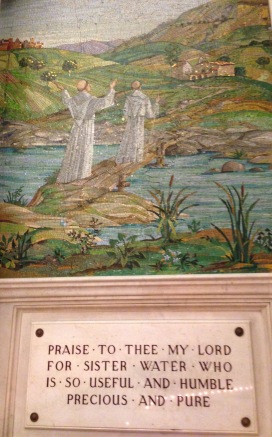
My daughter and her husband have been living the best kind of city life, the kind where you sleep, work and worship all in the same neighborhood. On Sunday we walked a couple of blocks to their church, the Cathedral of St. Mathew the Apostle, where I also had not been before. I was sorry to leave after the service, there were so many beautiful mosaics to gaze upon, and quotes from St. Francis in the side chapel dedicated to him.
Because that first photo blocks the face of St. Mark, I will share another, which shows a part of the beautiful dome, and all of St. Mark.
This quote from the prayers of St. Francis took my thoughts back home, where we really appreciate every drop of moisture that falls on our farms and gardens. Speaking of farms, Kate’s neighborhood boasts a farmer’s market, which we walked through after church, to sample fruit and salsa and pickled jalapeño okra. We bought apples and a jar of the okra.
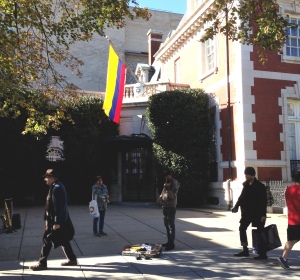
Right next to that market is the Colombian Embassy, and in front of it a fiddler was busking.
A bookstore-café, Kramerbooks & Afterwords, is a popular spot in the Dupont Circle neighborhood. It was the first of this kind of duo to open in the capital. We browsed in there, too, and I even took pictures of books 🙂
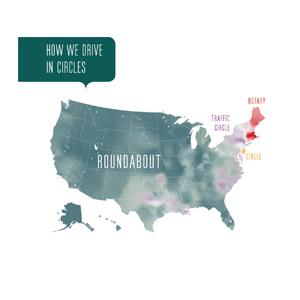
Tom bought a different book that afternoon, Speaking American by Josh Katz, which kept us busy for hours afterward — and afterwords in this case — because it is full of statistics on regional differences in word usage: Do you say sneakers or tennis shoes, sub or hoagie? Maps show where you likely live, if you prefer one word or the other. Tom seemed to be “from” all over the place.
This example from the book shows something I already knew from living in that neighborhood for a few days, that in D.C. they say “traffic circle,” not “roundabout.” But all in all, it’s a pretty inexact science.Being in the nation’s capital during this particular week meant that I engaged in more political thinking and talk than is usual for me, but as a group we weren’t entirely consumed by the kind of emotions that the media stories seem determined to rouse. We were too busy exploring all the rich cultural, natural and even culinary riches to be had close at hand. Oh, yes, if you don’t mind I will indulge in just one food photo, of some coconut milk panna cotta I had for dessert at a restaurant that actually wasn’t in their neighborhood. We got there via Uber!
Another reason for our relative calm may be that we have been influenced throughout our lives by the truths and reality exemplified in another quote that I found in the neighborhood, right in Tom and Kate’s living room. The words from the Bible were part of a gift that Kate’s brother made for them the first year they were married, and they do help keep things in perspective.
In my next post there will be more books, buildings and quotes.
Come back again if you also like this sort of thing!
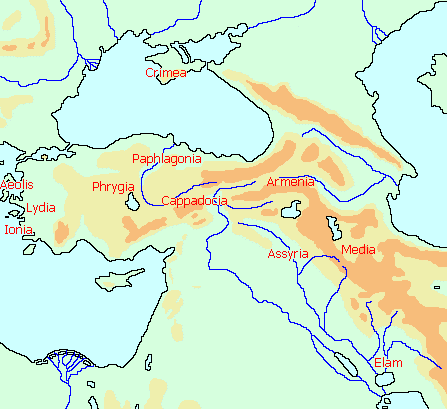
The Cimmerians have not been heard of for 2600 years, but they are still talked about! How’s that for fame? Granted, I personally only heard about this people group recently, and that through a poem. By making the mystery of “those shapes of antique hearsay” the subject of his exploration in verse, Merwin provoked me to do a little reading about them and to muse on the wonderfulness of the phenomenon, that humans can get very interested in some of our relatives about whom so little is known, or can be known: “questions that we are helpless not to ask.”
It is thought that after the Cimmerians disappeared, they likely settled in Cappadocia. Many things believed about them are inferred from linguistics, such as the Armenian name for Cappadocia, Gamir, which seems to be a version of Cimmer.
A NOTE FROM THE CIMMERIANS
By the time it gets to us
we can make nothing of it
but questions or else it makes
us turn out to be only
questions that we are helpless
not to ask
in the first place
is it real which is to say
is it authentic which is
to say is it from someone
not one of us and if so
how do we know that and where
has it come from what petal
of our compass or from what
age of the orbiting phrase
before us as we say it
in the language we speak now
and for whom was it set down
or to whom is it addressed
now or will it speak later
in another meaning and
is it a question
advancing or receding
from our point of view and are
we to believe they exist
in truth those shapes of antique
hearsay whom no one has seen
by day the Cimmerians
who dwell in utter darkness
it is said or perhaps live
on the other side of it
I remember when I first learned in a practical way about microclimates, from my friend Rhonda who had a lovely cactus garden in our county. I also tried to grow a few cacti, but they all got waterlogged from rain and then froze to death in their first winter. Rhonda lived on a small mountain, where the cold air descending would usually keep rolling right on downhill so that the plants barely noticed it going by. That was her microclimate, so different from my back yard where the damp and freezing air would settle on my cactus and turn all their juices to ice crystals.
My friend Dick lives on a smaller hill in a generally more extreme climate zone, but a similar weather pattern holds sway so that frosts are often averted. There may be other factors involved in his microclimate that we didn’t discuss, but in any case, starting about 50 years ago, but more intensely in the last decade, he has been enjoying his freedom to experiment widely.
In a previous post I mentioned how before that, he was one of the friends with whom I would ride bicycles all around the country roads and through the orchards connecting our little Central Valley communities. Many of them weren’t actually towns, and the primary one in my life was a shrinking town, even then. I think its population peaked at 100, which was the figure embossed on the town limit sign as long as I can remember.
Delta sunflowers along the driveway.
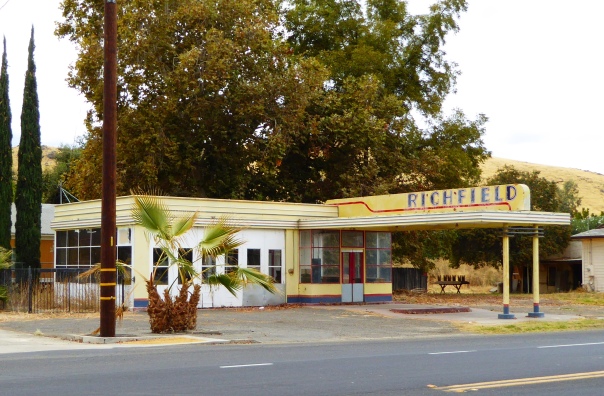
We had a fire station with a volunteer fire department, but I can imagine that when an alarm sounded, it might have taken an hour for the firefighters to get to the station from out in the groves or fields, if they were close enough to hear it in the first place. In any case, it seemed that every year or two some old building would burn down. None was ever rebuilt. The gas station where we pumped up our bike tires and bought 8-oz. sodas didn’t burn, but when it went out of business, there it sat, to rust.
It makes me sad, all this decay of the man-made things, and the lack of prosperity that once was, in former times when people concentrated their energies and money in the local businesses and organizations instead of driving 20 miles to shop and go out to dinner. But I myself wouldn’t dream of investing there, and if I were like my brother and sister who do still live on surrounding farm property, I would be working hard just to keep my own family and property alive. Given the pervasive vandalism and theft, it would take a good deal of optimism to try to renovate anything.
But I do like to visit, and to smell the particular flavor of dusty air that was soft and mild when I was there earlier this week. October is a good month, between the scorching summer and the winter dampness that seeps into your bones, or manifests in tule fog, a driver’s torture to navigate through. But let me try again to stop describing the cons, and get back to all the things I like about my childhood home.
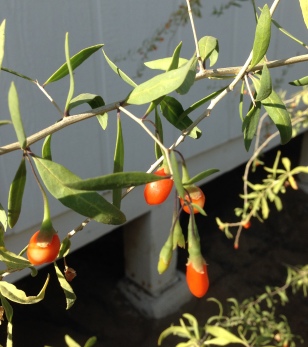
Goji berries
I’m sure I mostly appreciate it because of its nostalgic value, and because of my people living there still. One of them is my friend on the hill, who had gone away for decades and all over the world before he returned and was able to take over the ranch that had belonged to his parents. At least three generations of farmer-gardeners have been farming this particular property, cultivating citrus for commercial markets, and gardens of ornamentals and edibles for home use.
Dick is trying to grow every kind of mandarin orange that exists. These are mostly in the areas close to the house, where he does what he calls the “fun stuff.” Lower down in the flatter areas are the oranges and blood oranges he will send to the packing house. I think he is about ready to plant a section of mandarins for market, too.
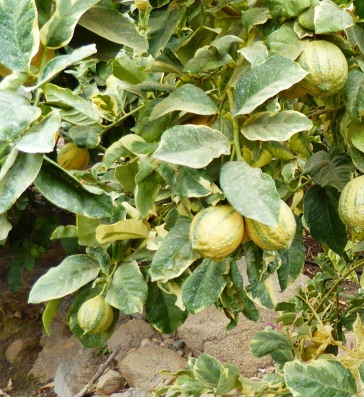
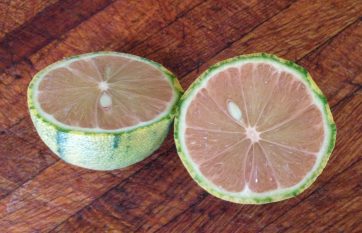
He also grows at least three varieties of lemons, I know, because he sent me home with Eureka, Lisbon, and these striped Pink Lemonade varieties. If you count Meyer lemons, well, he has those, too. I just now cut into a Pink Lemonade to see if it is in fact pink inside, as its name would lead you to believe, and yes, it is:
No one in my family knows what variety of lemon my father raised, but from reading online I had guessed Eureka. Dick says that Lisbon is now the most common lemon grown commercially, but he also said with certainty that my father’s would have been Eureka. Did I tell you that both of our fathers were citrus farmers? Having Dick for a friend is like having another brother. I feel so lucky that both my real brother and my old friend-like-a-brother (not to mention my sister, who is the on-the-ground farmer in her household) are deeply planted in the world of citrus, and that through them I can grow this part of my connection to my father and to those trees that densely enveloped our house and put food on our table.
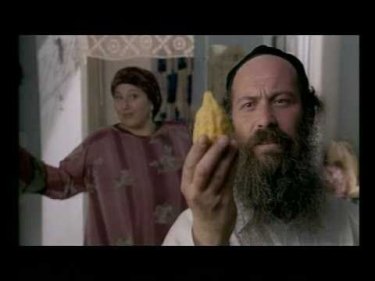
It was the movie “Ushpizin” that gave me any knowledge or appreciation for citrons. If you haven’t seen this wonderful film please consider my hearty recommendation. Apart from the ritual use of citrons, the interwoven stories of forgiveness, redemption and hospitality make it one of the few movies I wanted to buy for myself, and I did.
It is about Hasidic Jews in Israel preparing for and celebrating the Feast of Booths (in real life Jews are in the middle of this feast right now!), and every household wants to invest in the most beautiful citron they can afford. At the time of Sukkot, a truly perfect specimen – their word for citron is etrog – might cost you hundreds of dollars! This article tells about the history of that tradition, and addresses the question of what is to be done with them after the feast when they are no longer useful ceremonially.
But what is a citron, a fruit that seems to have little to recommend it as a fruit? It is believed to be “one of the four original citrus fruits (the others being pomelo, mandarin and papeda), from which all other citrus types developed through natural hybrid speciation or artificial hybridization.” It does appear to me that it might be an ancestor of the lemon….
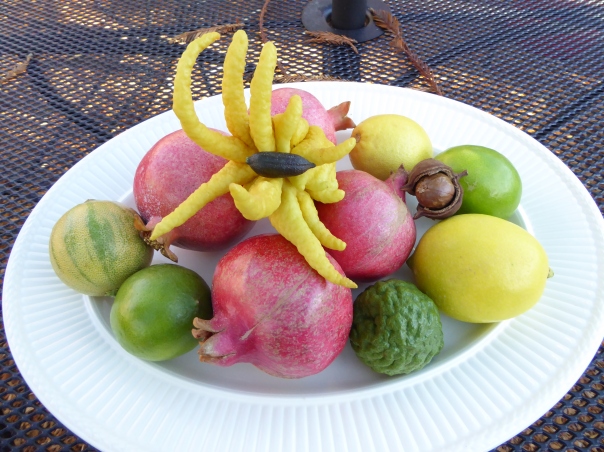
Part of the loot that I brought home from the fertile hill in the Valley I arranged on a platter:
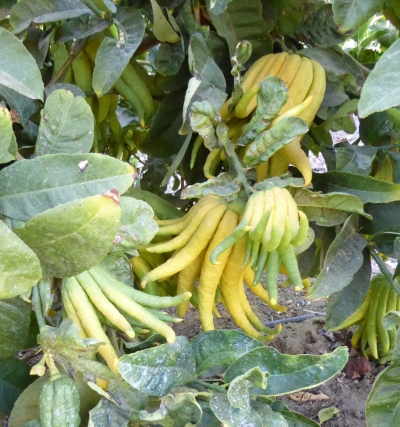
And there in the middle are the two strangest fruits that I was introduced to: A Buddha’s Hand Citron, holding a Finger Lime. The Buddha’s Hand has been around for a long time in the Far East, where it has symbolic value as well; it is valued primarily for its perfume, and typically doesn’t contain any pulp or juice, but can nonetheless be eaten in various ways. I guess I will leave mine out on the kitchen counter so that sometimes when I pass by I can pick it up and inhale its romantic and complicated scent. In that aspect I agree that it is more excellent than the lemon.
That wrinkly green fruit on the platter is a Kaffir Lime. I had been pronouncing it “keefer,” and its etymology is not simple. It came with a separate branch of Kaffir Lime leaves, which it seems are often used whole as a flavoring or aromatic, in a pot of rice or Thai stew, or in a hot bath, one leaf at a time. I’m still reading about them.
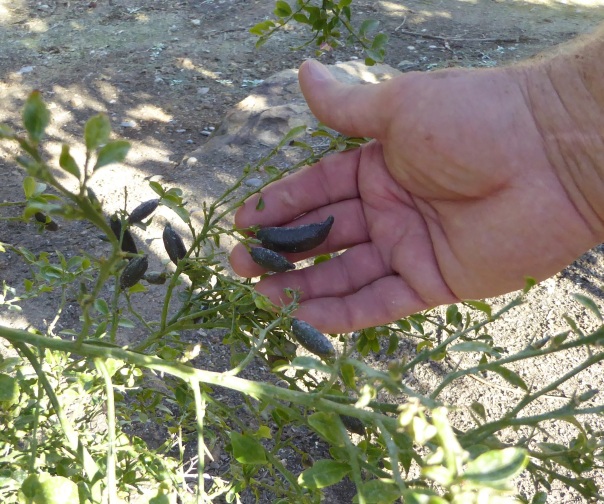
The little thing sitting in the place where the palm of Buddha’s hand would be, and still on the plant in Dick’s hand directly above, is an Australian Finger Lime, Citrus australasica. When we were standing next to the tree Dick picked one and slit it open with his knife — there were the tiny translucent pearls of juice popping out, ready to sprinkle on one’s tongue or bowl of ice cream — I wished we had brought a scoop at least down from the house. And then I wished that I had put him on Pause so as to snap that photo, with his scuffed leather work gloves as the backdrop. The culinary possibilities of finger limes in a world of Food Art are vast, as one can see with a quick search online, where I found my photo. I’m not ready to slice into my own little lime yet.
Some things I don’t have good pictures of are a 20′ tall wisteria shaped like a Christmas Tree, 40 avocado trees of eight varieties, and Sacred Datura, a plant in the nightshade family that is certainly exotic. Datura wrightii is sometimes used as a hallucinogen, but since it is not edible, and all parts are highly poisonous, I personally do not hold it in very high esteem.
Does anyone know this yellow-flowering tree?
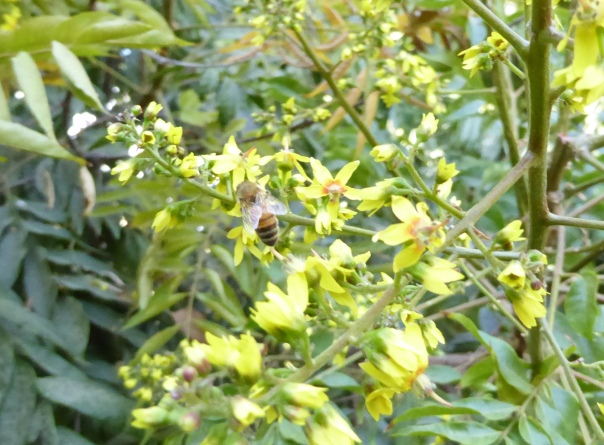
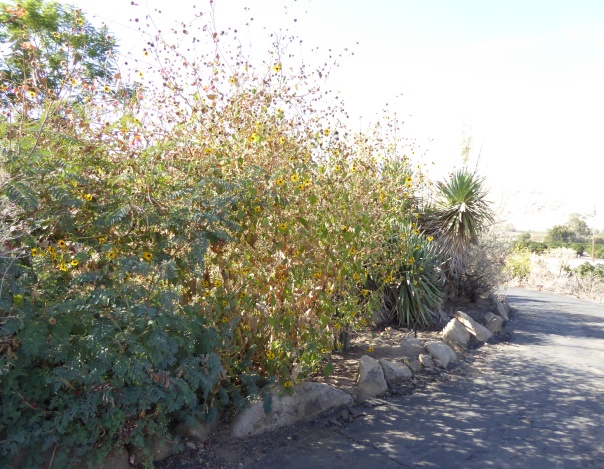
I was amazed at how many shrubs and trees were in bloom in the fall, and at all the bees buzzing on the hill. But then, the nights are still mild in that area, and the daytime high was 80° every day I was there. Delta sunflowers such as I plan to plant in my front yard next spring are blooming enthusiastically – those plants grow without a drop of water all summer long along the highways in the Central Valley, so when they get even a few tablespoons of moisture in the heat they respond beautifully, as can be seen in the second photo above. Dick threw a dead sunflower plant over the wall and next thing you know, he had them growing in the grove below as well. He says that birds planted his original ones.
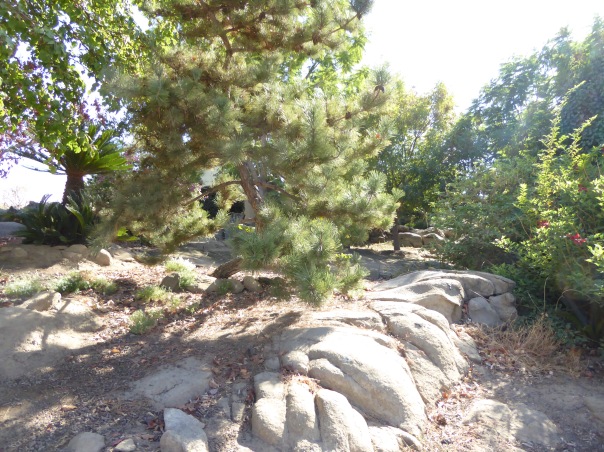
This photo reveals the rock I referred to when I said that the hill is a hunk of granite. The soil around the house is therefore very shallow, but obviously it has been lovingly built up over the last century so that the plants have the benefit of living organic material above and rich minerals below, in which to sink their roots. The kind of dirt found naturally in the area is called San Joaquin Valley Loam, and it is rich in granite but low in organic material.
Soil-building is a project that can never be neglected; even if you have a richer loam naturally, it will in time wear out. Dick raises earthworms whose castings contribute to the health of the system, and he is always adding organic materials of various kinds to his groves and to the gardens. He doesn’t want to be one of the farmers who thinks that “dirt is a place you park your tractor.” I don’t personally know any farmers like that, but he says they are too common.
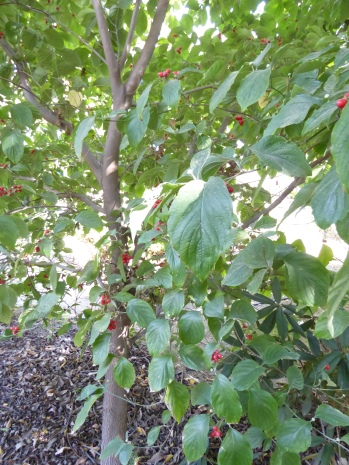
dogwood
Gardeners like me don’t have to make a living from our land. If we fail at growing something because we were too cheap to amend the soil, or we forgot to irrigate, or were too lazy to dig weeds, it won’t affect our lives much. The farmers who make a living by horticulture and agriculture have to be sure they are giving the plants what they need, and that means caring for the soil and the whole environment, which is not a simple task; but the rewards include a connection to the land and the weather and the changing seasons that so many people never get.
I am inspired by my farming friends and family to be a better gardener, and to pay closer attention to my work and the natural world around me. Then I will be true to the impulses that were bred into me as a child, and my closeness to the earth and also to my fellow farmers will grow.
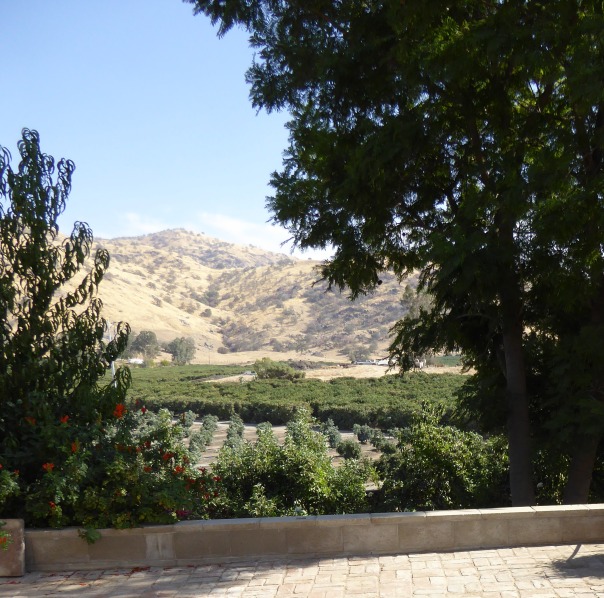
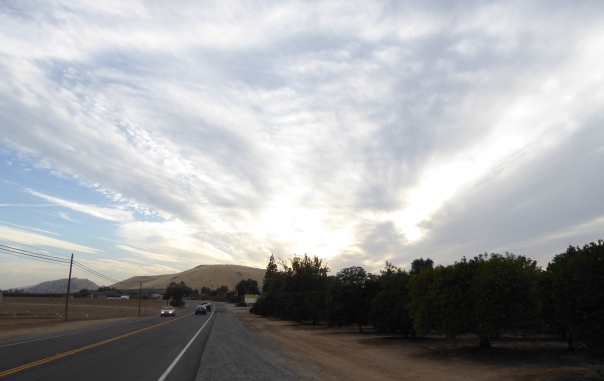
This last picture I took as I was driving back from Dick’s house. I wanted to save the image of that golden hill behind the tiny town, one that we kids used to climb so we could enjoy the view. It doesn’t look very tall, especially from this distance, but it’s to the scale of the orange trees that also aren’t very tall. You can see a lot of sky in this country – Let’s hope and pray that those skies drop some rain on all our fruit trees really soon!
“…for modern students of religion—generally speaking—monotheism involves a fundamentally mathematical thesis, ‘There is one God,’ as distinct from ‘more or fewer’ than one God; start counting gods, and when you get to one, stop counting. Consequently, all those who believe in one God must logically believe in the same God.
“This approach to monotheism is what allows our contemporaries to speak of ‘the monotheistic religions.’ Their thesis is simple: ‘Since there is only one God, all those who believe in one God believe in the same God. Their differences are those of development and/or expression.’
“This thesis is not only simple; it is simply absurd. Biblical monotheism is not about mathematics; it is about God’s identity: Who is this one God? Who he is, is the essential question.”
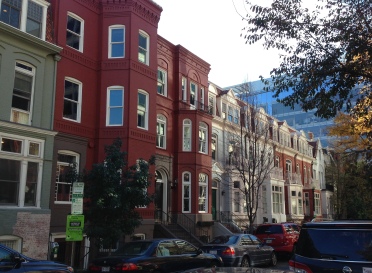 Though Kate has lived in Washington, DC for almost eleven years, I’d never spent a night in any of her dwellings before. This time, I stayed five nights with Tom and Kate in their apartment that I was seeing for the first time.




 Being in the nation’s capital during this particular week meant that I engaged in more political thinking and talk than is usual for me, but as a group we weren’t entirely consumed by the kind of emotions that the media stories seem determined to rouse. We were too busy exploring all the rich cultural, natural and even culinary riches to be had close at hand. Oh, yes, if you don’t mind I will indulge in just one food photo, of some coconut milk panna cotta I had for dessert at a restaurant that actually wasn’t in their neighborhood. We got there via Uber!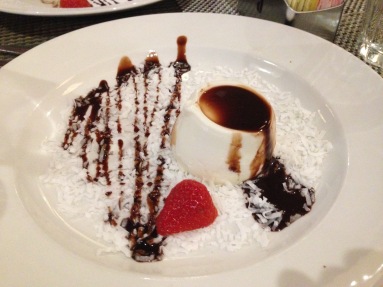

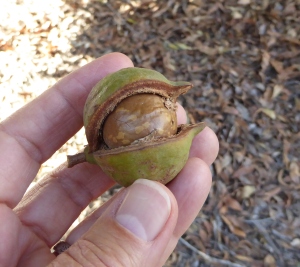

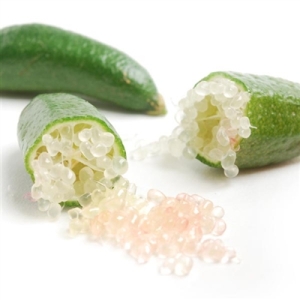 rinkle on one’s tongue or bowl of ice cream — I wished we had brought a scoop at least down from the house. And then I wished that I had put him on Pause so as to snap that photo, with his scuffed leather work gloves as the backdrop. The culinary possibilities of finger limes in a world of Food Art are vast, as one can see with a quick search online, where I found my photo. I’m not ready to slice into my own little lime yet.