Category Archives: history

Savor the heady dry breath.

I miss spending time in the public library, not that I have had a great deal of that experience. In my youth the city library was not a convenient place to study, being ten miles from our house, and my elementary school had no library.

When I stayed with my grandma she would actually drop my sisters and me off at the branch library in Berkeley while she ran errands and we could roam at liberty for an hour. I’m sure none of us knew what a lavish gift that was, but from this vantage point I can appreciate the sublimity, and the mental picture of the room where I spent the most time is still there.

Back home in the country we depended on the bookmobile that every two weeks provided plenty of the sensory excitement that is the subject of the poem below. The visits were brief and fairly businesslike, as we had to jostle a bit with the other young patrons in that cramped space and there certainly was nowhere to sit and ponder. Mom was waiting outside in the car.

I paid no conscious attention to anything but the book titles, being mainly interested in getting my stash to take home and savor in a more purely intellectual fashion. But now, so long removed, if I think on that county van for only a minute, I can remember the clunking sounds  of books being pulled off shelves and put back, and our tennis shoes scuffling around in the grit that we’d brought in from the gravelly parking lot. The librarian-driver would speak as few quiet words as possible as she stamped our cards. And the scent of the books — it’s still in me.

Library
by Valerie Worth

No need even
To take out
A book: only
Go inside
And savor
The heady
Dry breath of
Ink and paper,
Or stand and
Listen to the
Silent twitter
Of a billion
Tiny busy
Black words.

From All the Small Poems and Fourteen More

Revisiting the Fort Ross Fourth

I wasn’t able to participate with my church in the Fort Ross pilgrimage this year, but I thought I’d re-publish my article about the yearly event that I shared five years ago. I hope you all had a blessed Independence Day!

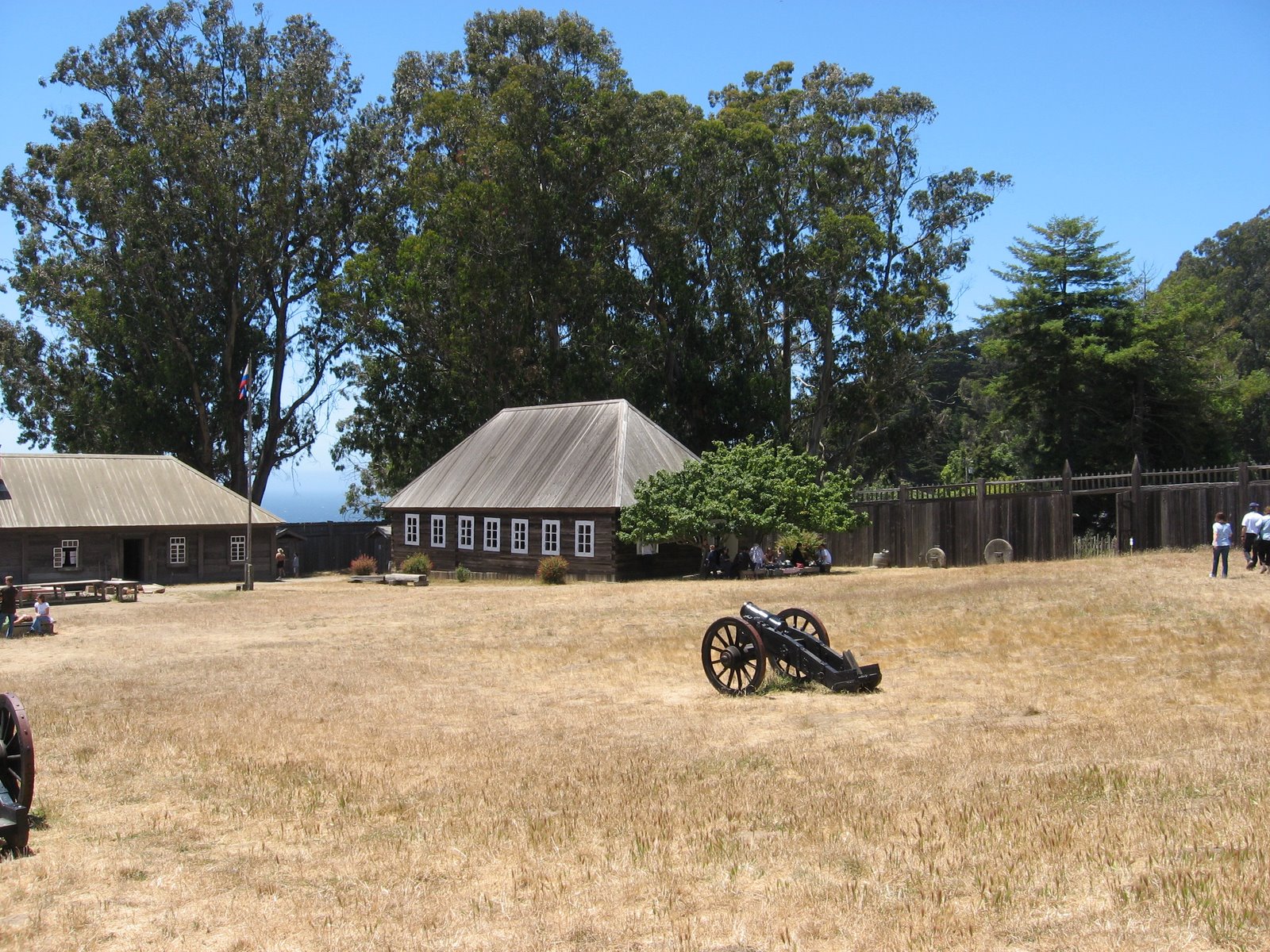
Fort Ross State Historic Park has been a favorite destination of our family for decades. It is a restored fort from the early 1800′s, when California was not yet a state in the Union, and for a while the Russians had an outpost in Northern California for fishing and trapping and growing food. You can see lots more photos and read about the history of Fort Ross online.

I loved the place from our first discovery of it when the children were small. A historic association holds yearly re-enactment days that are great fun, but just visiting on our own was relaxing and renewing, at least in the summer, when the sun would break through the fog and you could smell the ocean and the baking grasses at the same time, and imagine the people of long ago.

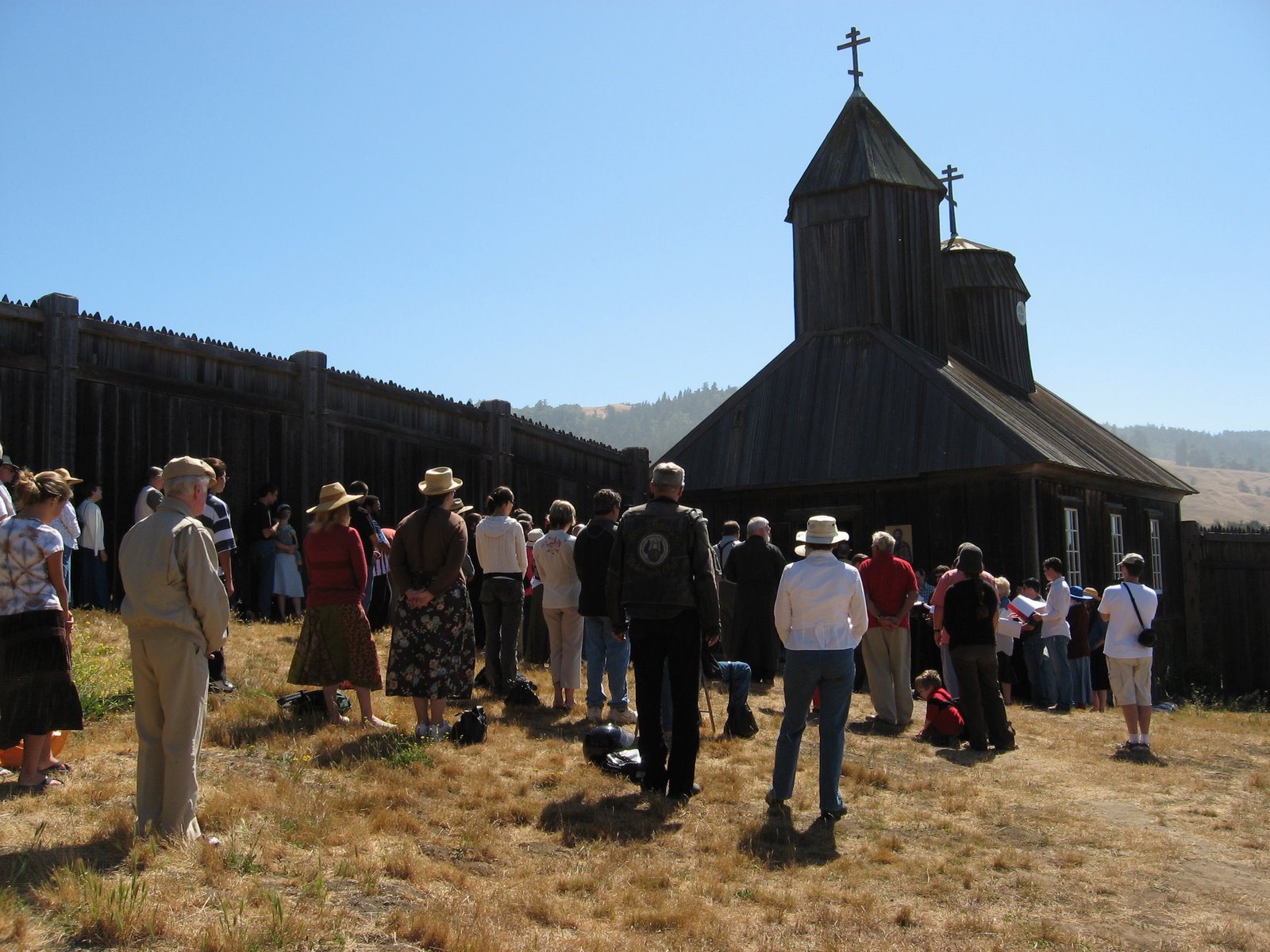
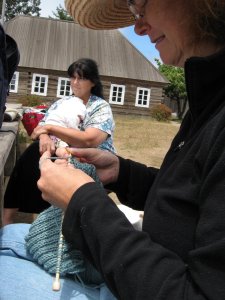
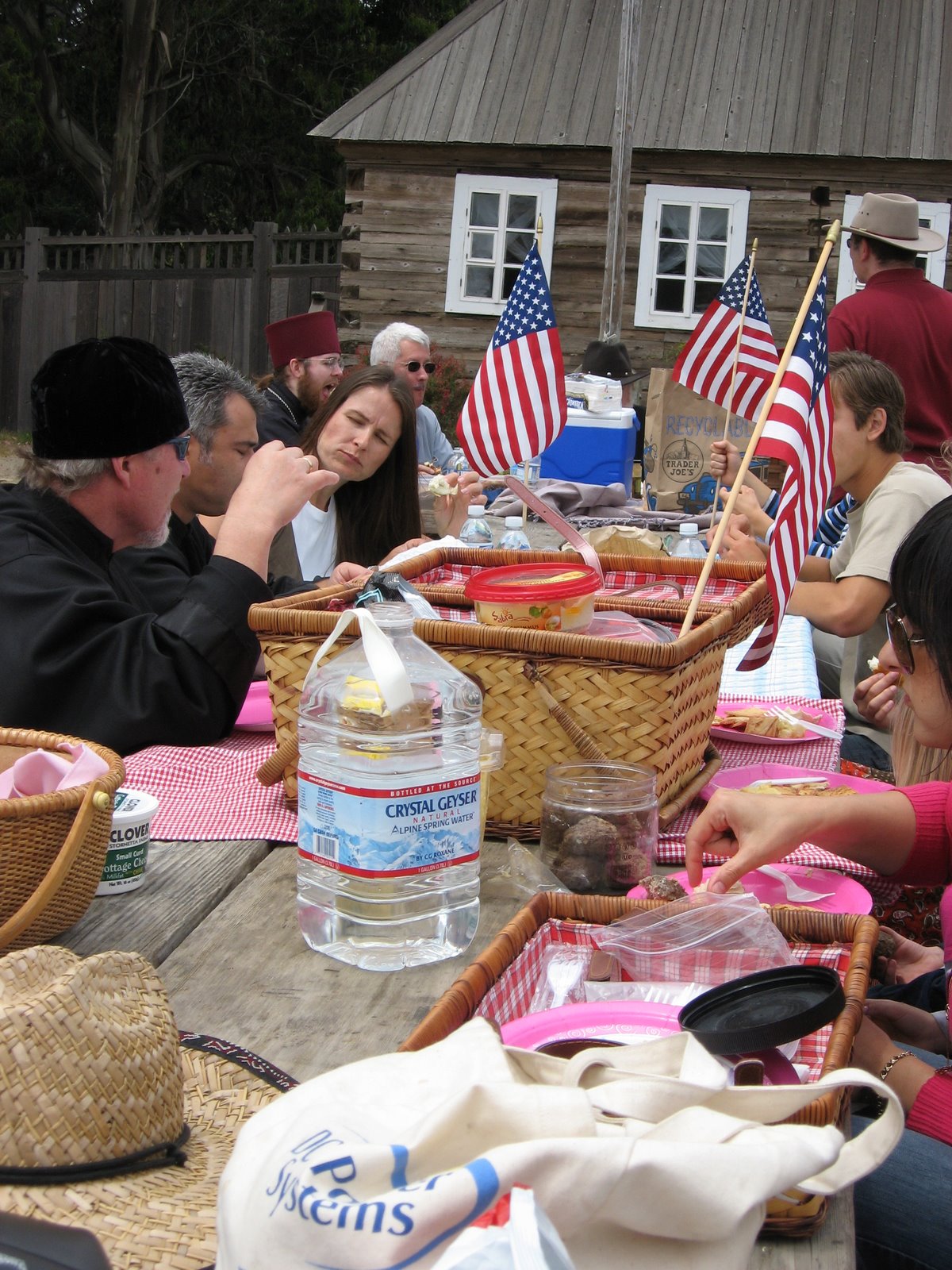
After I joined the Orthodox Church, I was delighted to learn that our diocese has permission to use the chapel at the fort twice a year, including on the 4th of July. We worship in the morning and have a picnic afterward when the sun usually comes out. There is plenty of time to get back home in the evening for Vespers and maybe fireworks later on. I’ve made the pilgrimage three times now, and my pictures here are collected from all the visits.


It’s a short walk from the parking lot to the actual fort enclosure. The photo at right is looking across the field from the chapel.


The church building as restored is small, and sometimes we let the whole of it serve as the altar, with the congregation and the choir standing outside and the priests and deacons coming in and out frequently as they pray and serve Communion.

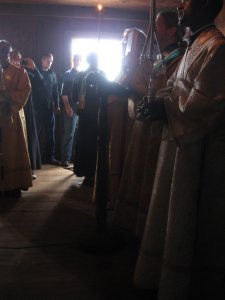
This year we all squeezed into the chapel, which is very intimate. I couldn’t get a good picture because of that window, but I am posting a bad one just to give an idea of the atmosphere. Very thin idea, indeed, as there is only the one visual dimension, and no conveyance at all to the other senses.


After the liturgy, the clergy and many others made the trek to the cemetery to sing a short service for the ones buried there. Others of us waited within the walls of the fort for their return.


The bishop brought a picnic lunch, too.


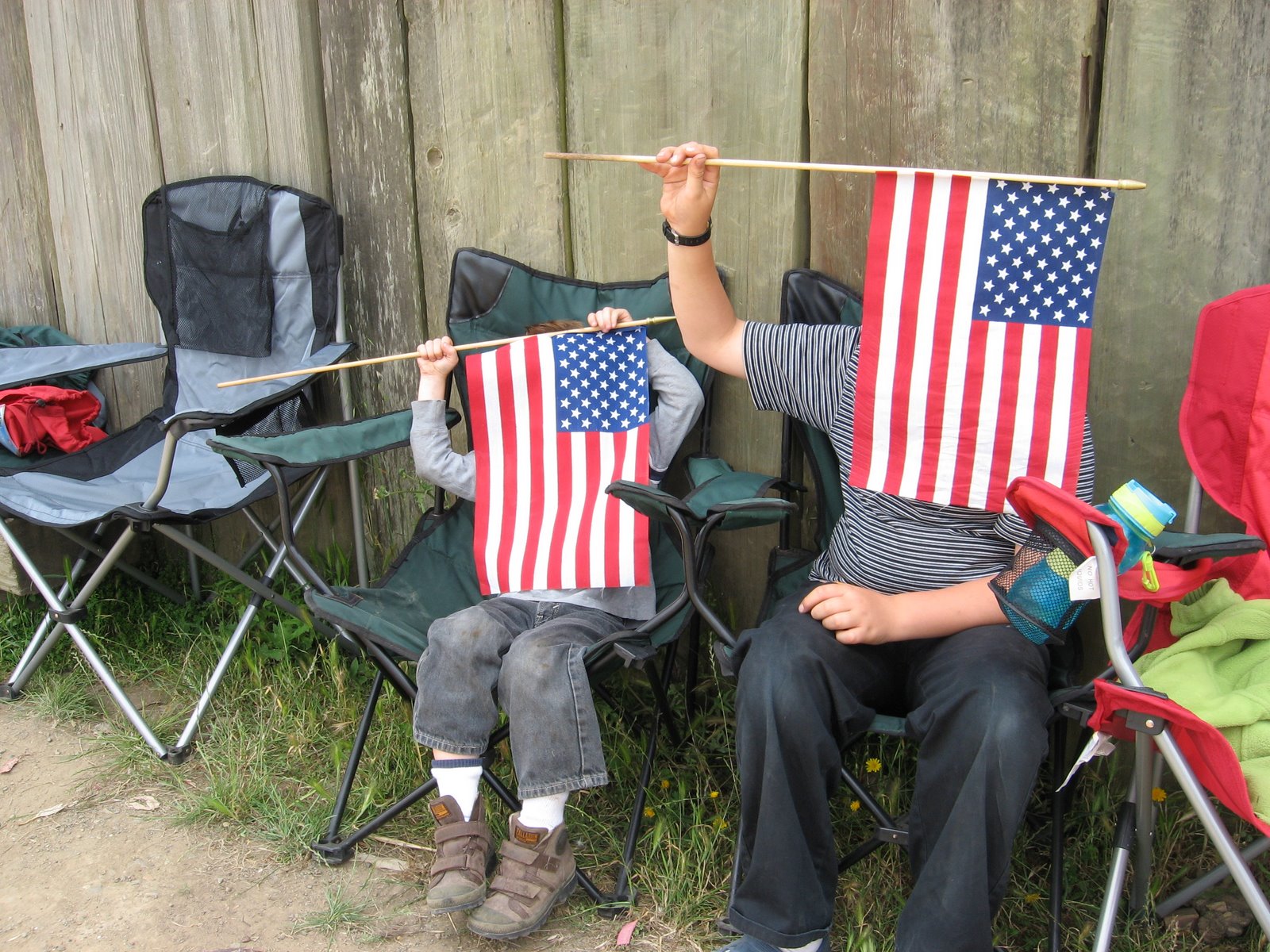
We waved plenty of flags to show our thankful allegiance to the nation whose birthday we were celebrating, at a fort now owned by Americans.


One year N. brought his hammered dulcimer and treated us to music at the picnic.

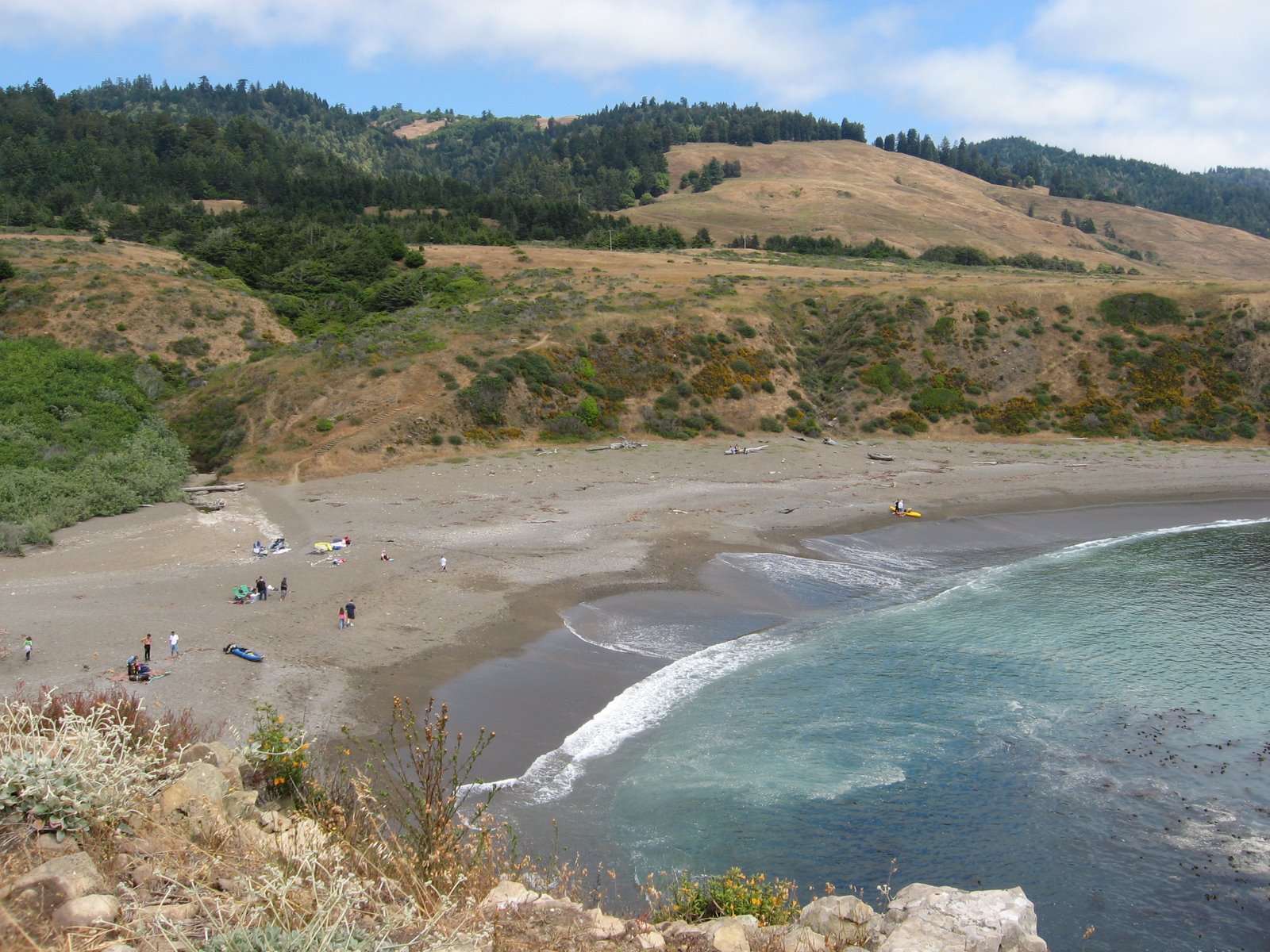
After lunch, K. and I took a walk down to the lovely cove below the fort.

One young parishoner and his mother had found treasures in nearby tidepools.


When we got back, the history talk by the park ranger was still going on. It leads up to instruction in loading and firing the cannons.

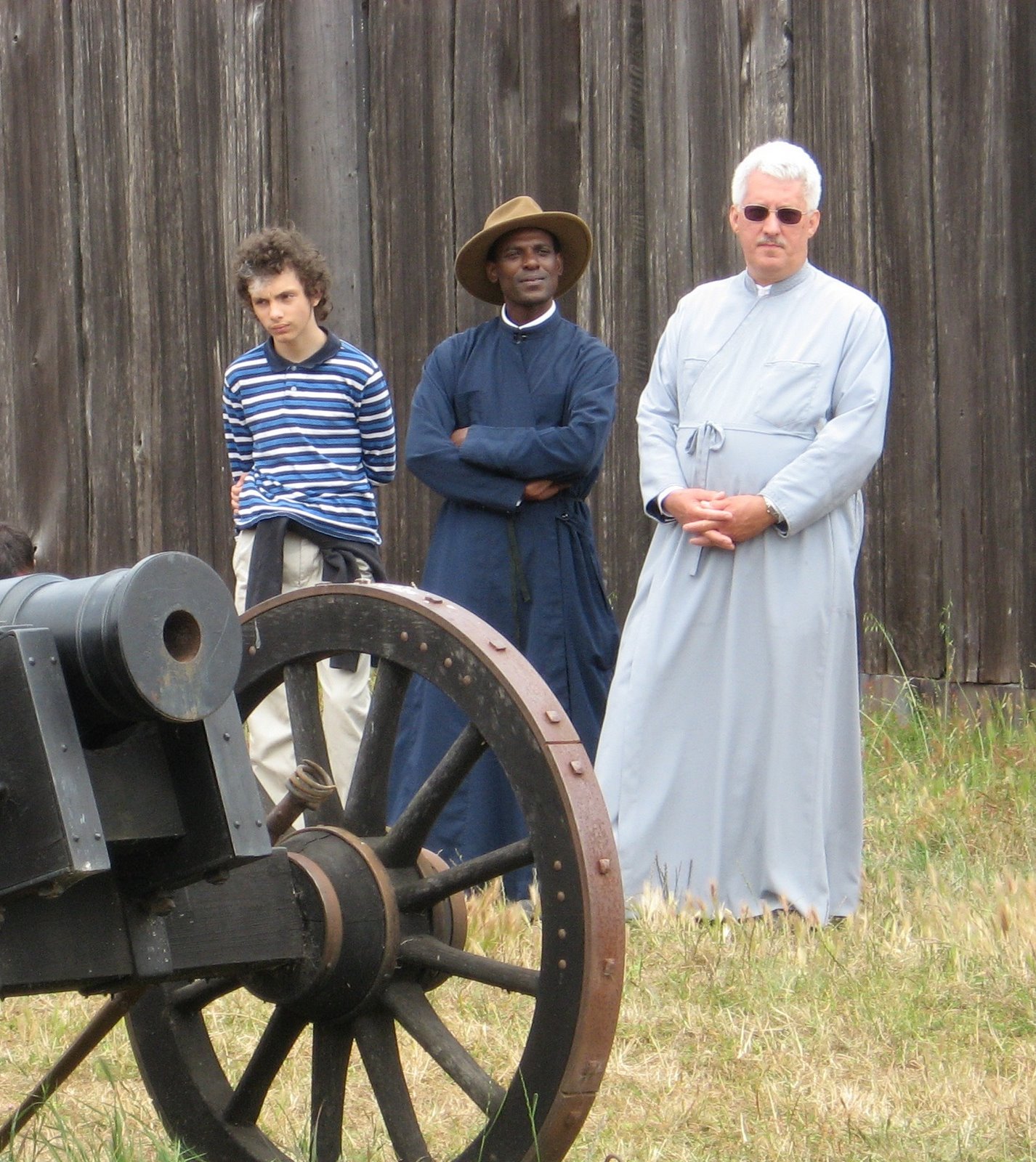
My favorite priest is getting ready to load the cannon.


A blue study of guys waiting for the explosion.

Bang! Poof! No cannonball was shot–only gunpowder.

The majority of California’s state parks are likely to be closed because of the deep debt our state is in. If that happens, our Fort Ross pilgrimages may become a fragrant memory, and something to hope for in the more distant future.

Update: Since I wrote that last gloomy paragraph, grassroots efforts of many people have improved the likelihood that the park will endure and continue to be one of my favorite destinations — and maybe as a pilgrim in 2015.

Bicycling ages considered.

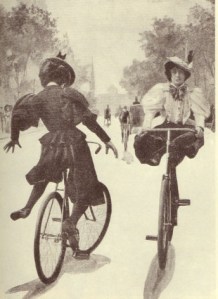
I didn’t know C.S. Lewis had written about bicycles until I read The Inklings blogAntique-Bicycle-Girl-Image-GraphicsFairy-1024x984, but I was considering my own history of bicycling when, while on vacation and staying in a house whose amenities included eight bicycles in the garage, I went for a spin with my granddaughter.

It was the first time I’d been on a bike in about 20 years, as lower back problems had made perching on a bike seat uncomfortable during my last pregnancy and beyond. I wasn’t motivated to try very hard, because by the time my back was healthier, we had moved to the suburbs,  and riding where there are a lot of cars and stop signs to look out for and accommodate is at worst harrowing, and at best a chore.  So we gave away my bicycle.

The bike I rode for just a few minutes in Oregon was a bit large for me, but that didn’t prevent me from enjoying the sensation of rolling along with the wind in my hair, smelling the pines and listening to the chatter of my little companion.

It all took me back to the freedom and happiness of my youth, when for a few years in adolescence two or three friends and I would tool around the back roads of our Central Valley villages, spanning the miles that separated our houses hidden in orange groves.

From Lewis: “‘Talking about bicycles,’ said my friend, “I have been through the four ages. I can remember a time in early childhood when a bicycle meant nothing to me: it was just part of the huge meaningless background of grown-up gadgets against which life went on. Then came a time when to have a bicycle, and to have learned to ride it, and to be at last spinning along on one’s own, early in the morning, under trees, in and out of the shadows, was like entering Paradise. That apparently effortless and frictionless gliding — more like swimming than any other motion, but really most like the discovery of a fifth element — that seemed to have solved the secret of life. Now one would begin to be happy. But, of course, I soon reached the third period. Pedalling to and fro from school (it was one of those journeys that feel up-hill both ways) in all weathers, soon revealed the prose of cycling. The bicycle, itself, became to me what his oar is to a galley slave.’

“‘But what was the fourth age?’ I asked.

“‘I am in it now, or rather I am frequently in it. I have had to go back to cycling lately now that there’s no car. And the jobs I use it for are often dull enough. But again and again the mere fact of riding brings back a delicious whiff of memory. I recover the feelings of the second age. What’s more, I see how true they were — how philosophical, even. For it really is a remarkably pleasant motion. To be sure, it is not a recipe for happiness as I then thought. In that sense the second age was a mirage. But a mirage of something.’

“‘How do you mean?’, said I.

“‘I mean this. Whether there is, or whether there is not, in this world or in any other, the kind of happiness which one’s first experiences of cycling seemed to promise, still, on any view, it is something to have had the idea of it. The value of the thing promised remains even if that particular promise was false — even if all possible promises of it are false.'”

— C.S. Lewis, Present Concerns, “Talking About Bicycles”

For myself, my memories also include unpleasant experiences on bicycles in my youth, both involving moments of panic at the realization of my helplessness. Once I was borrowing the bike of my grandmother’s friend, in a strange neighborhood. The bike had been offered to keep me entertained while the ladies had tea indoors. I blithely pedaled around the residential streets for a very few minutes and suddenly knew that I had no idea where Grandma’s friend lived, or how to get back there. I didn’t know her name; I hadn’t noted what street she lived on.

The feeling of being lost was so sharp and guilty — it was my own stupid fault, of course. With my heart beating madly I rolled along vaguely back the way I had come, and eventually saw my grandmother’s car. I went back in the house with the awareness that no one there knew how close I’d come to disaster; and I never told my secret, about how the lighthearted floating through space took away my common sense.
bicycle bloomersAnother time, with my cousins in their city, we walked our bikes up a hill so that we could ride down fast. I was wearing my cousin’s child’s cowboy hat, and as we picked up speed on the descent I felt the hat fly off at the same moment I saw that the traffic light at the bottom of the hill was turning red. My instincts told me not to slam on the brakes, for fear of losing control even more, so I ran a red light, and I think I might have screamed at least a little. Drivers of cars waited for us to go through, and as we slowed to a saner speed I noticed that the cowboy hat had a neck cord that had kept it on my head after all.

No, I didn’t get off to a good start with city riding. My favorite rides of all time are the country ones I took with Pippin riding on a small plaid child’s seat behind me, when she was a toddler. We would take a half-hour ride in the mornings sometimes, when her father worked swing shift and could watch the older children. There was a narrow road I liked to take, with oaks arching over, and in springtime the banks along the way were covered with sweet-smelling broom.

Even then, the pleasure of bicycling was for me as much in the surrounding sights and smells as in the mode of travel — which means a preference for meandering rural rides. Mr. Glad has teased me for decades about getting a tandem machine for us to pedal together, but that has never sounded relaxing in the least.

I wonder if there could be some more appealing variation of my earlier experience still ahead for me, maybe a “third age,” as above, followed by a richer “fourth age”? The gentle prodding I received to revisit the topic has made me more open to the possibility of a bicycle (or a tricycle??) in my future.bicycle_woman_rider

My $1 Summer Vacation

Of Cape Cod and summering there, one man generations ago said, “It is the dullest, flattest, stupidest, pleasantest, most restful place on the whole coast. Nothing to do and we do it all the time.”

Sometime back I succumbed to a book on a topic pretty far removed from my usual interests or experience: the life and history of a summer house on Cape Cod in Massachusetts. This book sat on the shelf for five years or so until for some reason I took it down and put it in my suitcase to read on a trip. How and why I ever came into possession of it, I couldn’t remember. Then inside the back cover I discovered a remainder sticker I had removed and put there, which showed that I had found it in the $1 bin at a local bookstore.the big house image

The author is George Howe Colt, who as I figured out after some chapters is married to Anne Fadiman, writer of essays I first read in her delightful book Ex Libris. As his story opens, he and Anne and their two children are opening up the eponymous Big House for the season, in what might be their last summer as its owners.

Colt writes richly about the history of Cape Cod and summer homes generally, and about his particular family’s particular house on the Cape. It hasn’t been that long, really, that people have lived this Cape-Cod-summer lifestyle that was already near to extinction when the author told his tale more than ten years ago. In the early 19th century Bostonians started building summer homes there where previously it was thought most unsuitable, as Thoreau wrote: “It is a wild, rank place, and there is no flattery in it.” In previous eras homes were built in more sheltered locations inland from the sea.

I learned that many of our forbears used to think of the ocean unkindly, as a symbol of spiritual barrenness, and they did not want to go into or live near it — and then over the course of a century they had changed, to the point where they thought that living close to the sea, swimming in it, and even drinking buckets of sea water the most healthful things they could do.

capecod
Aerial view of Cape Cod (from the www.)

I was interested in the architecture and construction of the Big House, so much larger than many summer houses that no way could it be called a cottage. Size is the only luxurious thing about it, though. Residents and guests must wash dishes by hand in a kitchen where crickets abound, sleep between old mismatched sheets, and prop open many of the sixty-seven windows with a wooden coat hanger or a copy of Greyfriars Bobby.

The whole phenomenon of Old Money and what Colt calls the Boston Brahmin is explained: “If one had old money, it followed that one had old things: the wealthier the Bostonian, it has been said, the more dents in his car and the more holes in his clothes.” I know this is common knowledge to many people but the concrete example of Cape Cod lifestyle brought it all home to me.

Of course, summer somehow relates to everyone’s childhood, too, and that keeps the traditions going: “We would never tolerate the Big House’s inconveniences in our winter homes, but this is different: we change in the winter, but during the summer — a season in which we regress to an innocent, Edenic state by replicating the experiences we had as children — change is heresy.”

For the author, the place was such a keystone of his youth that it seems reasonable to him to include in the book many stories and details about the family members who spent their summers there, information that seemed to me often inappropriate, and detracted from the book as a whole. When I read the subtitle, A Century in the Life of an American Summer Home, I did not anticipate hearing details about adolescent sexuality, Colt’s grandmother’s Alzheimer’s, and his uncle’s bunions. A little more focus would have been appreciated.

ColtGeorgeH_1l
the author

He obviously cares very much for his whole family and wants to remember every detail for posterity — or is it for the sake of his own sentimentality that he cannot edit out anything? Seemingly no indescretion committed or indignity suffered by any relative can be omitted, and I was very uncomfortable reading much of this material. This kind of authorial behavior kept inserting Colt and his personality front-and-center for me, and I mused that he was really writing not merely The Big House but George’s Big Loss.

I admit that if Colt had strained out more stories not directly related to the house, I would have missed hearing the wonderful tale of how his father during the war was hidden from the Germans by a French family, whose daughters later made their wedding dresses out of his white silk parachute. That was one little part I really loved and had to mention!

And I kept reading because Colt is a very good writer and I was imagining myself there in those halcyon summer days the family spent recreating, whether they were washing dishes or playing outdoors. Fishing, sailing, and tennis each have a chapter dedicated to them. And in a chapter titled “Rain” we get a tour of many of the books that were available and savored, and not only on rainy days. After a mention of board games, Colt writes,

“Best of all, there were books. Although it didn’t take rain to get us reading in the Big House (in fact, reading inside on a sunny day gave us a deliciously guilty feeling), on an overcast afternoon people would be curled up with a book in almost every bedroom, with three or four of us draped over the sofas in the living room, physically proximate yet in separate worlds.”

It’s been almost two years since I finished reading The Big House, but as I worked on wrapping up this review that I began back then I am tempted to start reading it through from the beginning again — well, maybe I could skim over those indecorous parts. Because it is just that kind of book, to be read in summertime as a delicious seaside vacation.