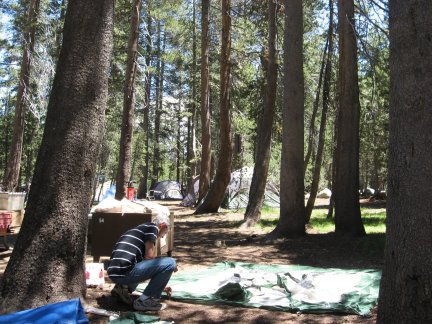
 This month during Mr. Glad’s time off work, he and I took one trip to two mountain destinations. First we camped in Yosemite National Park, but not in the valley as we used to do. There aren’t many sites available there anymore.
We stayed at White Wolf for the first time. Here is my husband hammering in the tent stakes. You can see the dark brown bear box in the background behind him. It was large enough for an ice chest and three other largish camp boxes. All food and smelly things have to go in there, NOT in your car, and certainly not in your tent, and then you lock it with a special kind of latch that bears can’t work.
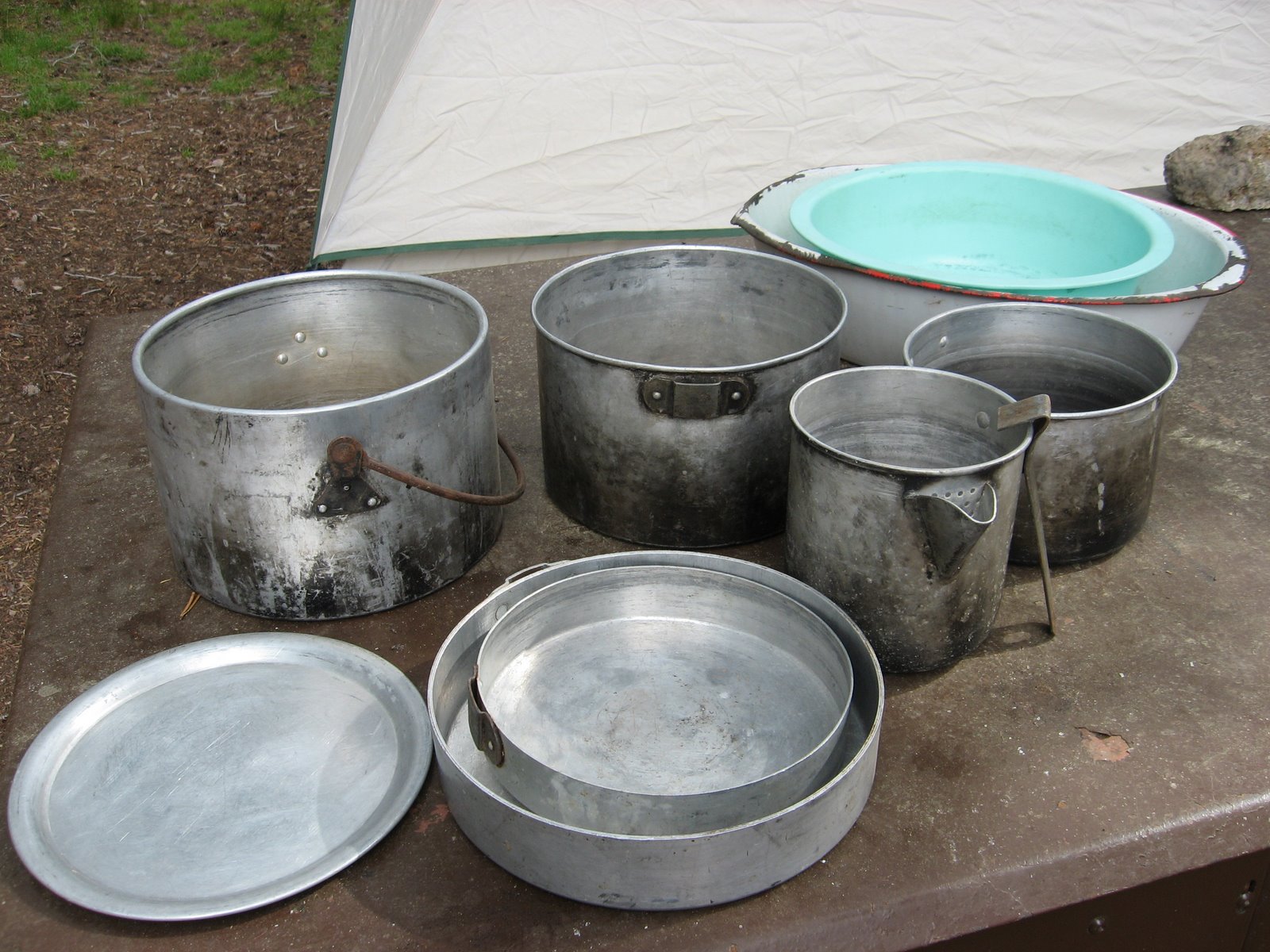 Our set of pots and two dishpans, inherited from our parents. We come from a long line of campers! And generations of these people have favored Yosemite for their camping.

As I was starting dinner, thundershowers broke. We quickly put everything away and waited in the car for a while.
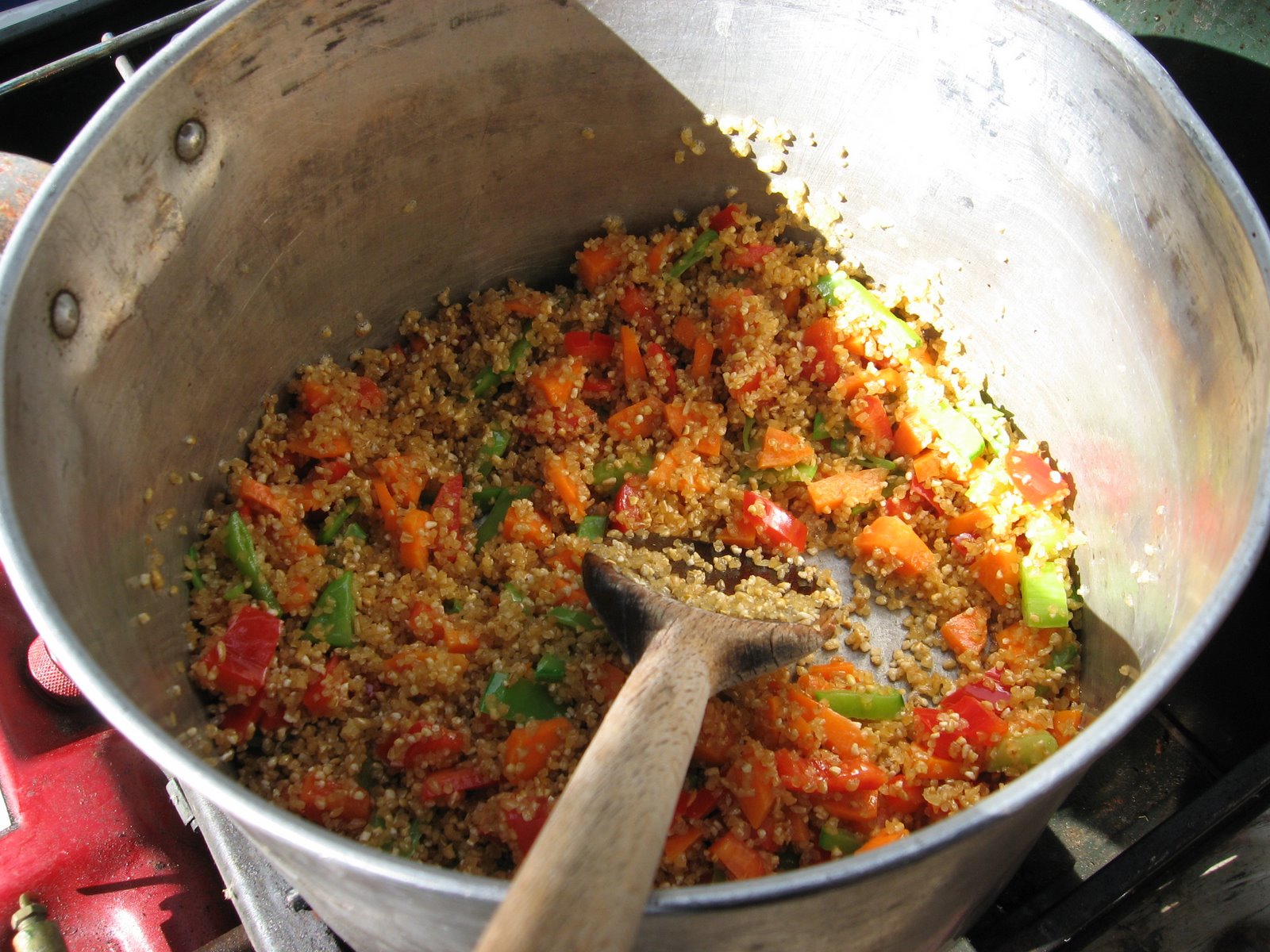 Our first night we had Tuna and Bulgur with Green Beans, an old favorite–well, I don’t love it myself, but it was a good one to make for the crowd through the years. Camp food should not require too much cooking time, or you run out of fuel. And it should not be too weird or fancy, because you want the children to eat. It also should not have too many ingredients that need to be in the ice chest, because the ice chest is never big enough.
This time we accidentally left the green beans at home, so I chopped up the remainder of the raw vegetables I’d been snacking on in the car for a substitute.

Here is a view of Tenaya Lake and the eastern mountains of Yosemite, from Olmstead Point, on the Tioga Pass Road, Hwy 120. This highway is the only road that goes all the way through the park to the eastern side of the Sierras.
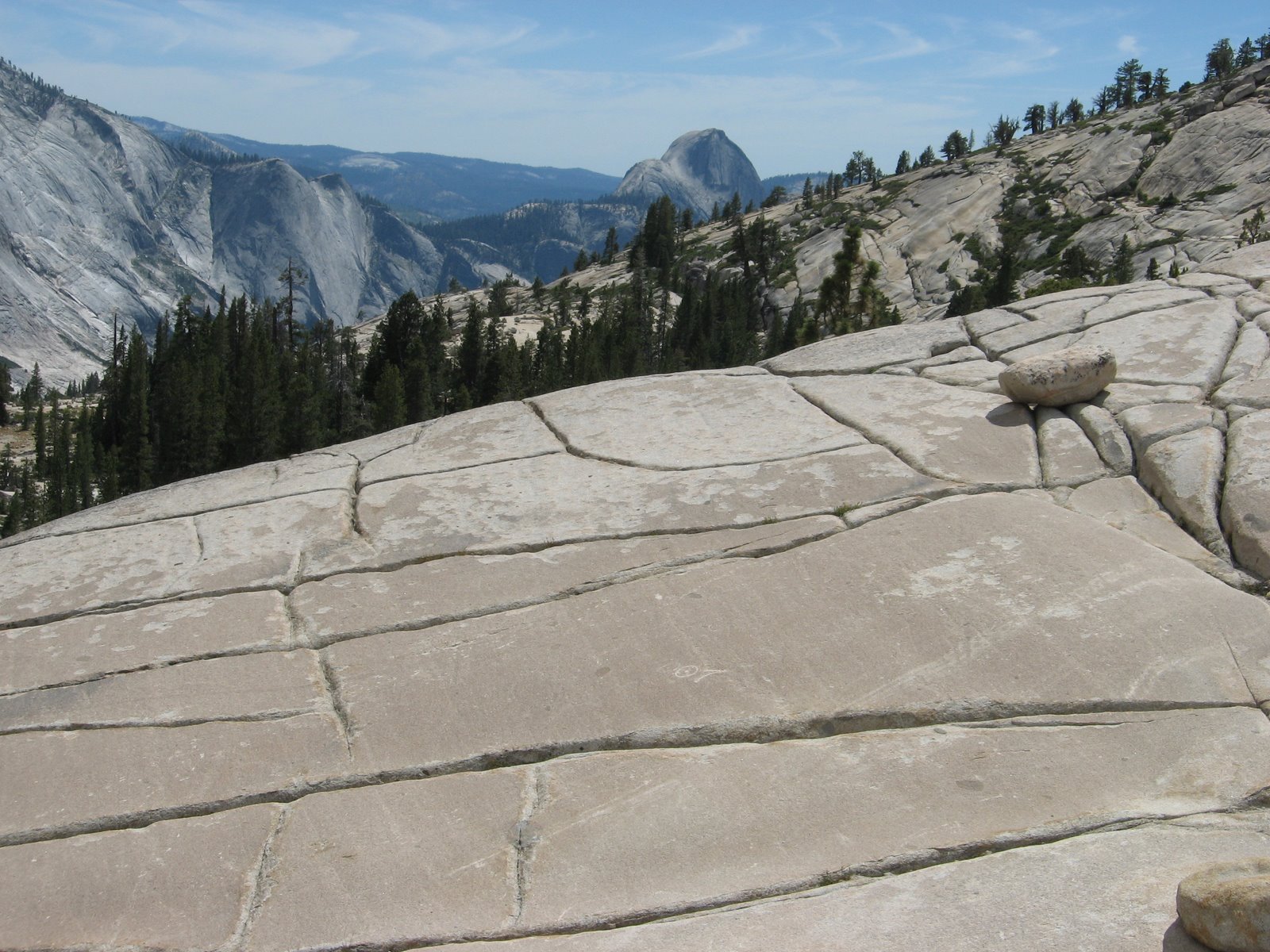
Olmstead Point is one of my favorite places in the world, because there are so many fun and strange formations of granite, and very accessible for scrambling around on. Of course, the views are great, too! Here you can see Half Dome in the distance, center. To the left, rising out of the picture so that you can’t see the top, is a hunk of granite called Clouds Rest, which my ambitious Other Half climbed while I sat in camp all day and read books. It was seven miles up, seven miles down. Then he swam in Tenaya Lake.
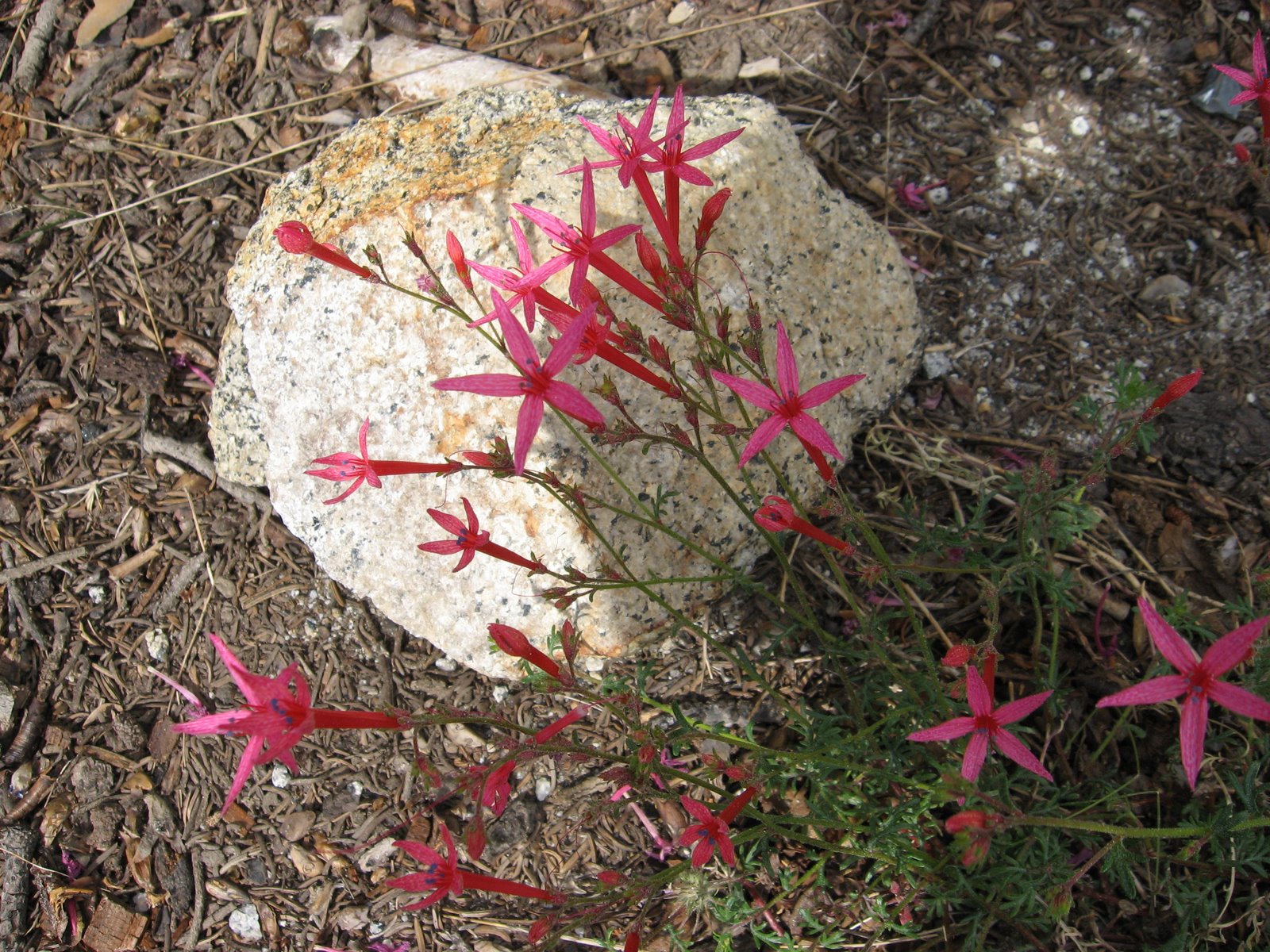
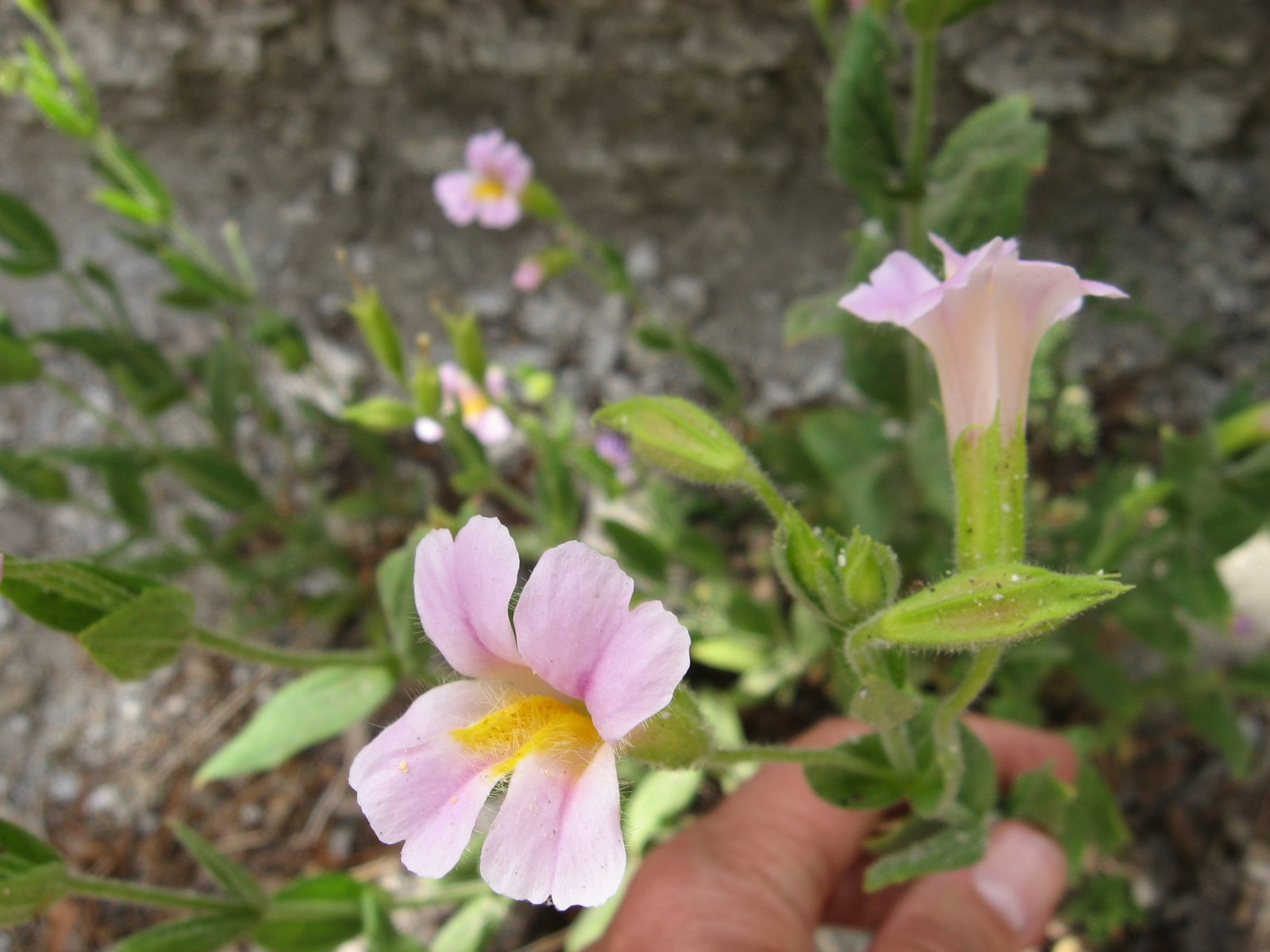
The pale flower that I am holding steady against the breeze with my hand, I believe to be a collinsia. The hot pink one I haven’t identified yet. Any ideas? [update: It is Scarlet Gilia]

The second night I made some buttermilk biscuits to go with canned soup. I brought the dry ingredients and butter already mixed and in a bag in the ice chest, along with a jar of the right amount of buttermilk. The biscuits were definitely the best part of that meal. We’re not used to canned soup; my man kept saying he thought it needed more salt, and I said I was sure they had already put as much salt as possible in it to try to bring out what little flavor was there.
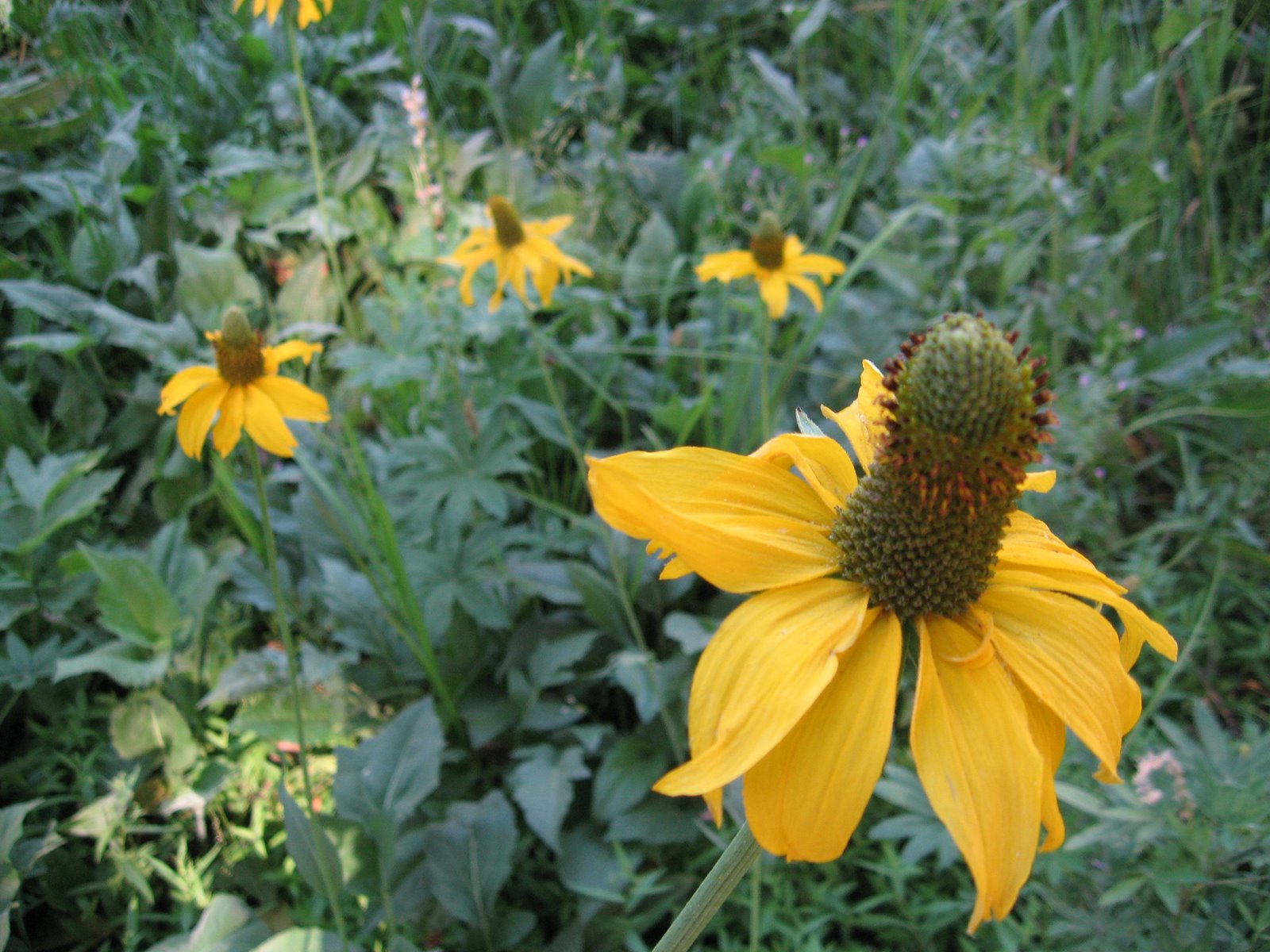
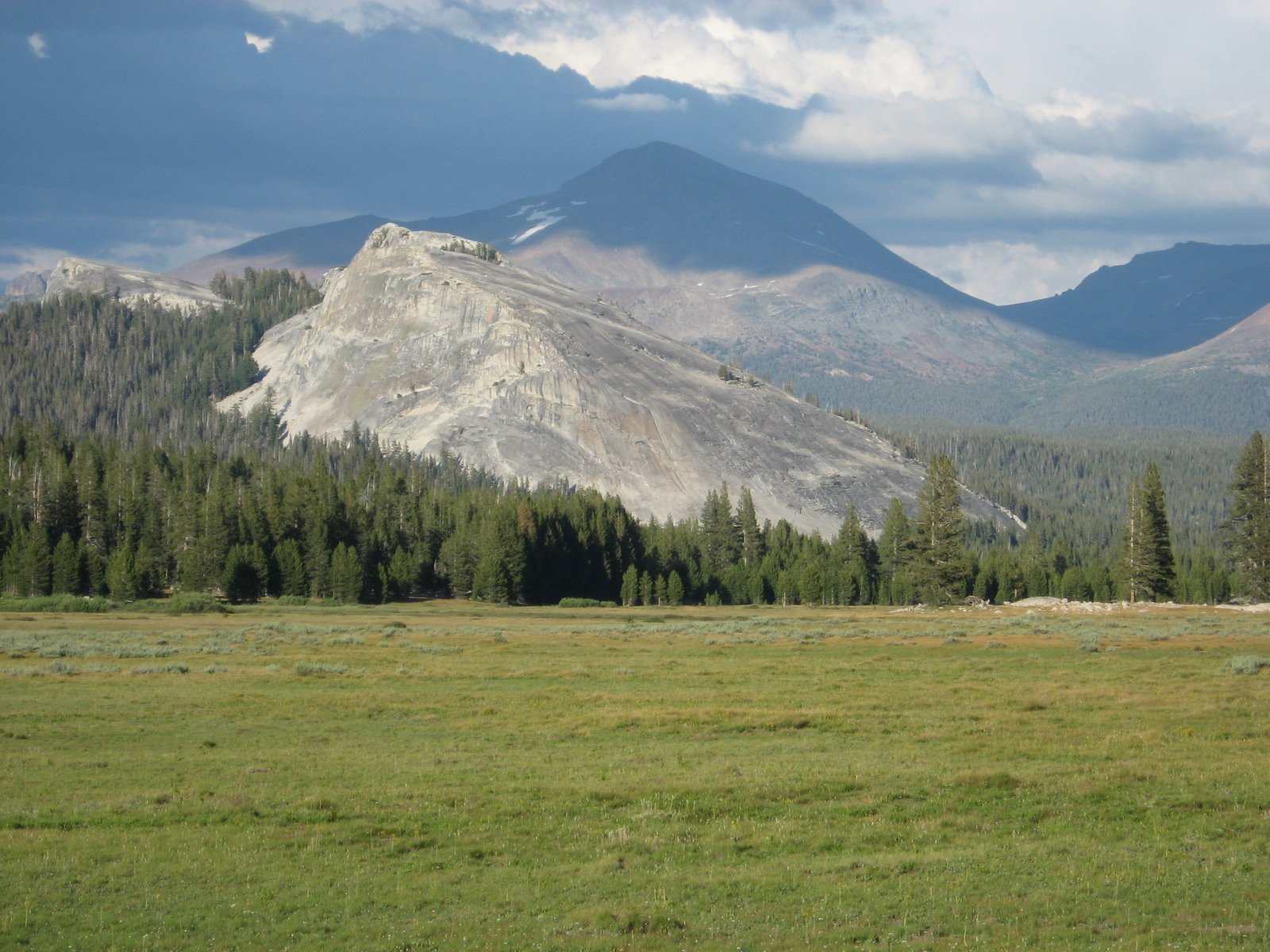
We went up the road to Tuolumne Meadows in the evening. That’s Lembert Dome sort of lying against the hill. We climbed it several times over the years with the children. Pippin did some of her earliest hiking there, at the age of 2 1/2 I think it was, running from rock to small boulder to hoist herself up on to, and saying, “Won wock,” and then again, “Won wock….,” learning to count to one as well.
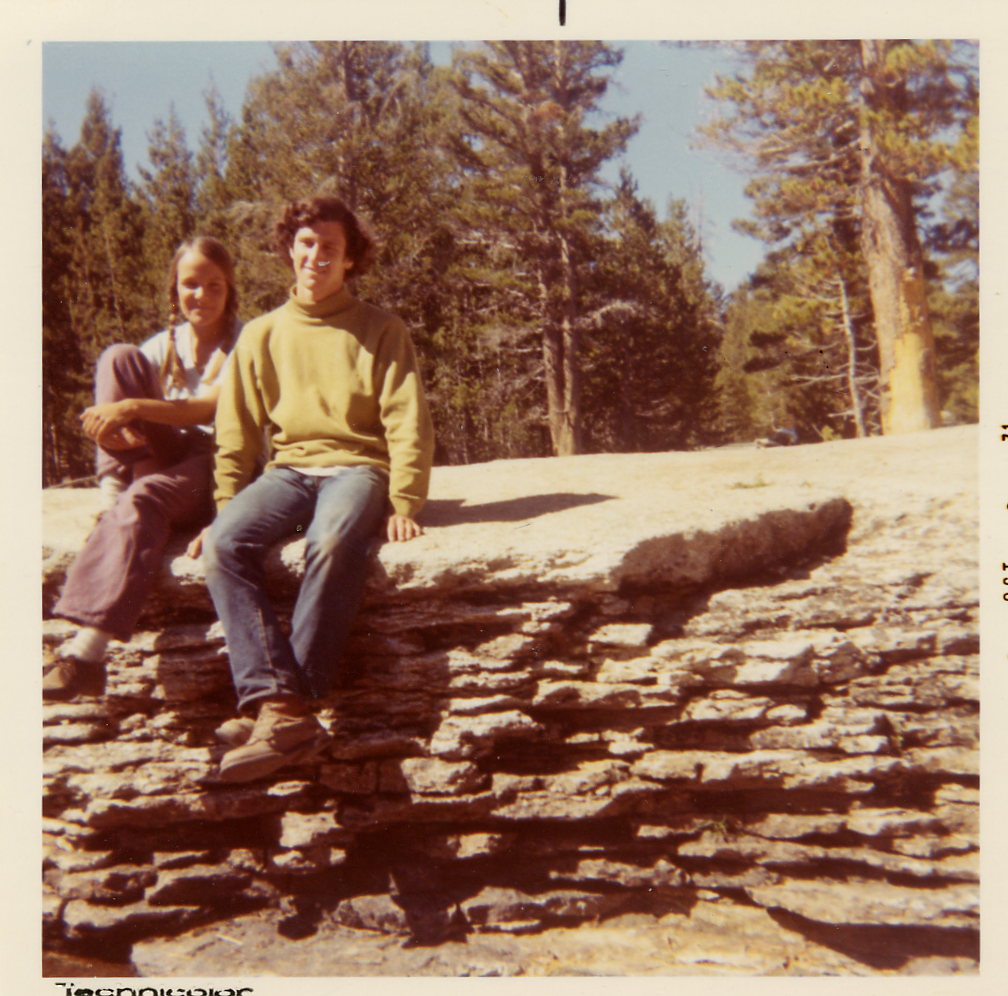
Another thing that makes Tuolumne Meadows special to us is that when we were here with my in-laws almost 38 years ago, before they were my in-laws, we got engaged to be married! My in-laws to-be took this picture of us when we told them. It’s the only “engagement picture” we have. 😉
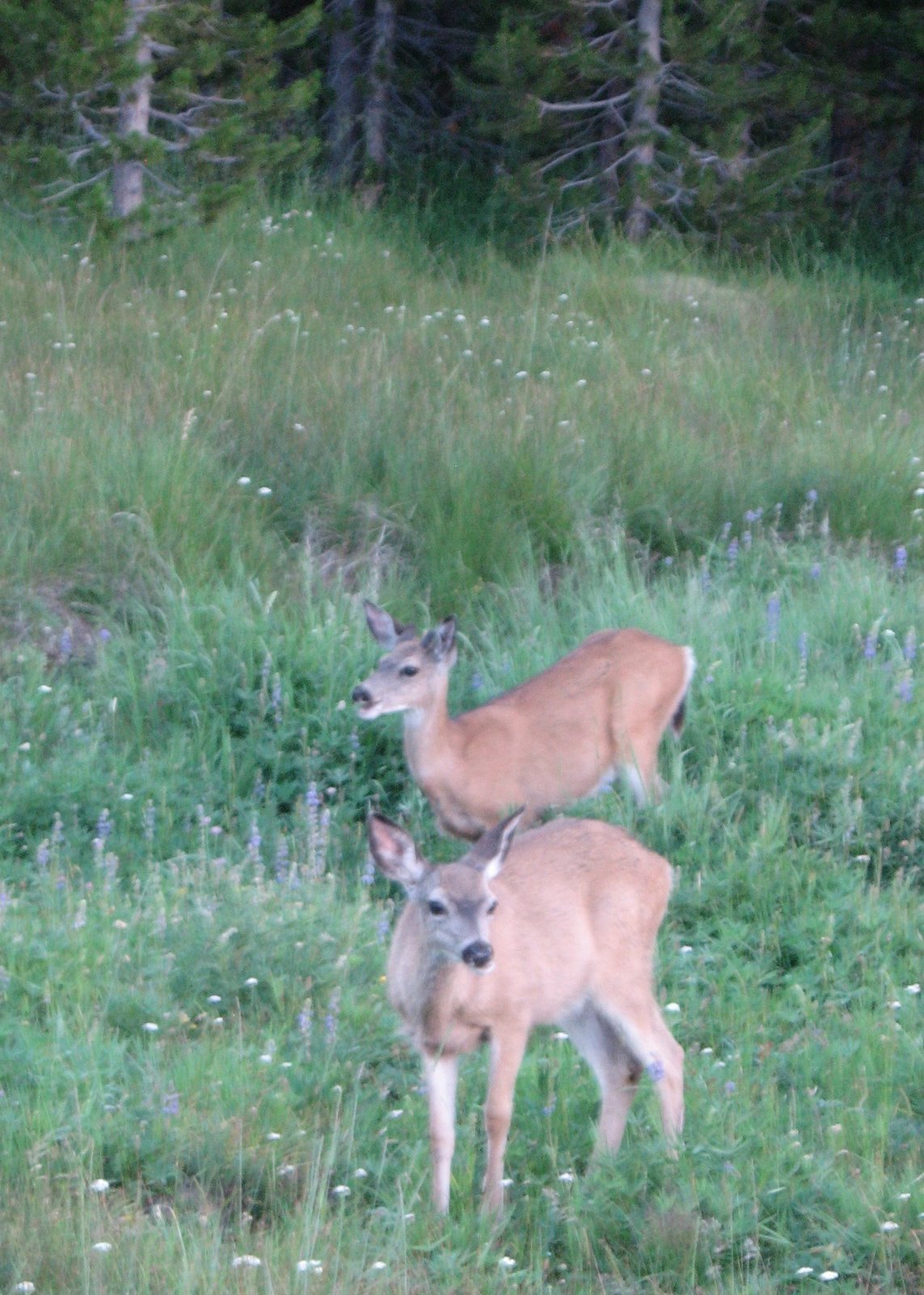
Next to the Tuolumne Meadows Bridge, I took many pictures of these does and their two buck friends who were close by. The lighting was poor, and I was too far away, but I had to try. You know I love deer.
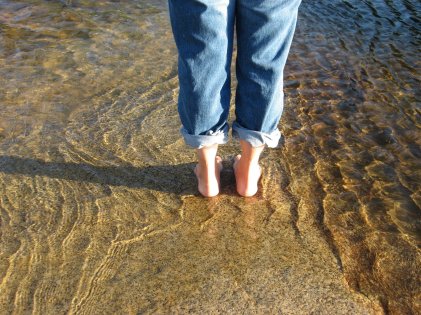
I waded in the Tuolumne River, where two streams came together over a slab of granite that wasn’t too slippery, if I were careful. I was.

Large bushes of lupines were everywhere! Everywhere, that is, where we were driving by and couldn’t stop to take a picture. Or everywhere that the wind was blowing them wildly. I became obsessed with finding the right bush in a convenient photographic place. Finally, as we were leaving Yosemite, at Crane Flat there were hundreds of them among the trees by the store. From looking at six wildflower books I’d say these are Flat Leafed Lupines, but don’t ask me the botanical name. They don’t have hairy leaves, and they are tall!

We left Yosemite and drove south through the foothills to my family’s cabin high up above Fresno. Thirteen of us gathered to hold a memorial service for my father.

The cabin overlooks this lake. I love this picture, taken from a dome behind our cabin, because it shows quite a bit of the dome itself. The lake is surrounded by domes. Several of them have been climbed by various of us.

The house can only be used about four months out of the year, because it lies at 8200′ and sometimes gets buried in snow. It is the cabin with the brown roof. The owner of another cabin went in on snowshoes and took this picture.
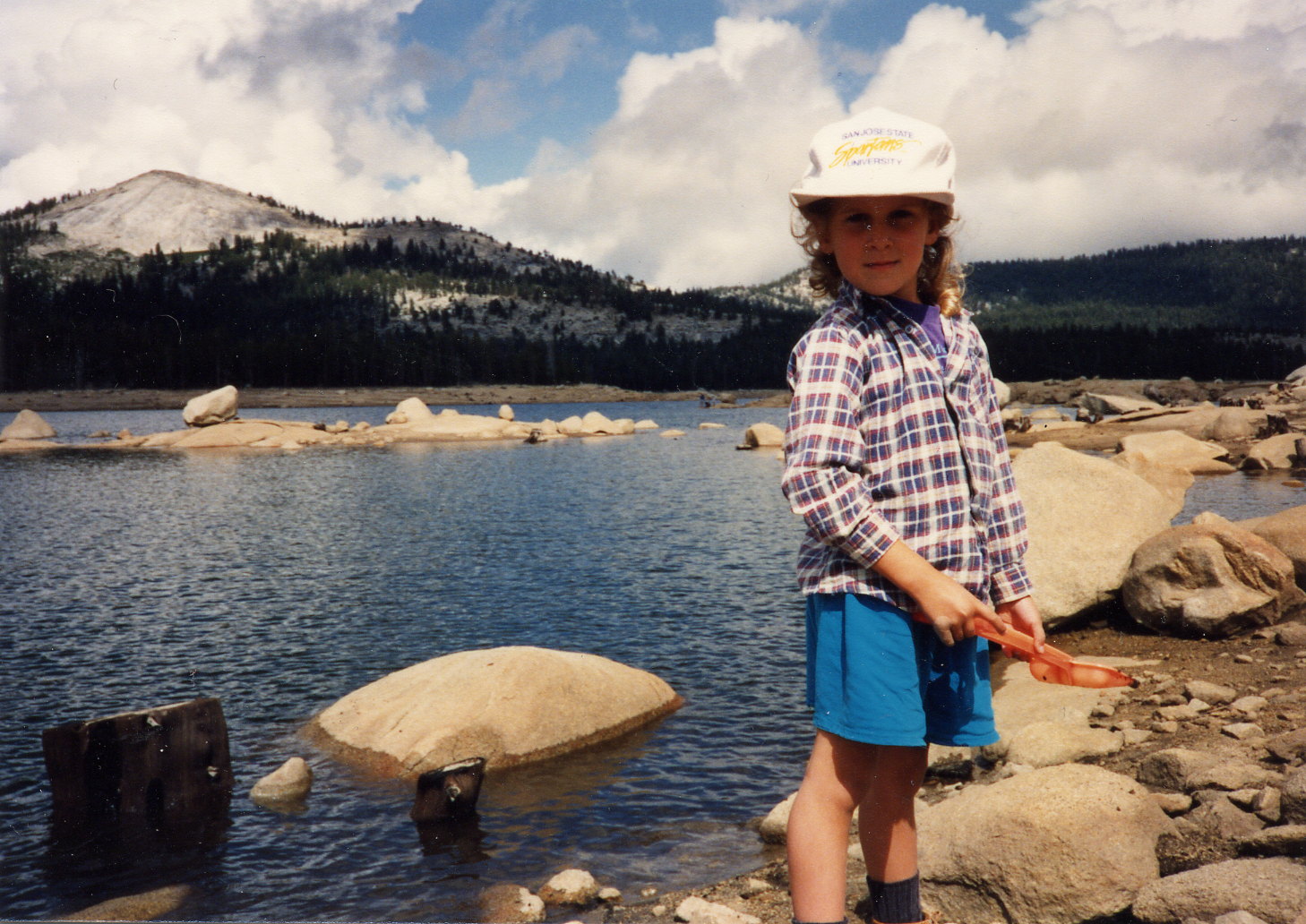 It is a man-made lake, for the purpose of generating hydroelectric power. Sometimes they pump water out of it and the water level goes way down, exposing a lot of smaller boulders as in this picture taken of Kate about 15 years ago. Then we call it a Mud Puddle.

This is another long-ago picture of some young sprouts above the lake.

My dad bought a canoe soon after he acquired the cabin almost 20 years ago; it’s a great tool for enjoying the water and the surrounding domes. I was out this time with B. and H., paddling for an hour, almost to the creek inlet. It was glorious to use my muscles after so much time out of commission lately. Songs fairly burst out of me when I am in a canoe, I get so excited by the pure romanticism of it all, the Canadian/Indian canoeing songs that we somehow learned when the children were small. As we were skimming across the lake I told about Paddle-to-the-Sea by Holling C. Holling and how that book has been made into a movie that I am eager to see. But this pic above is from the past, with a different daughter.
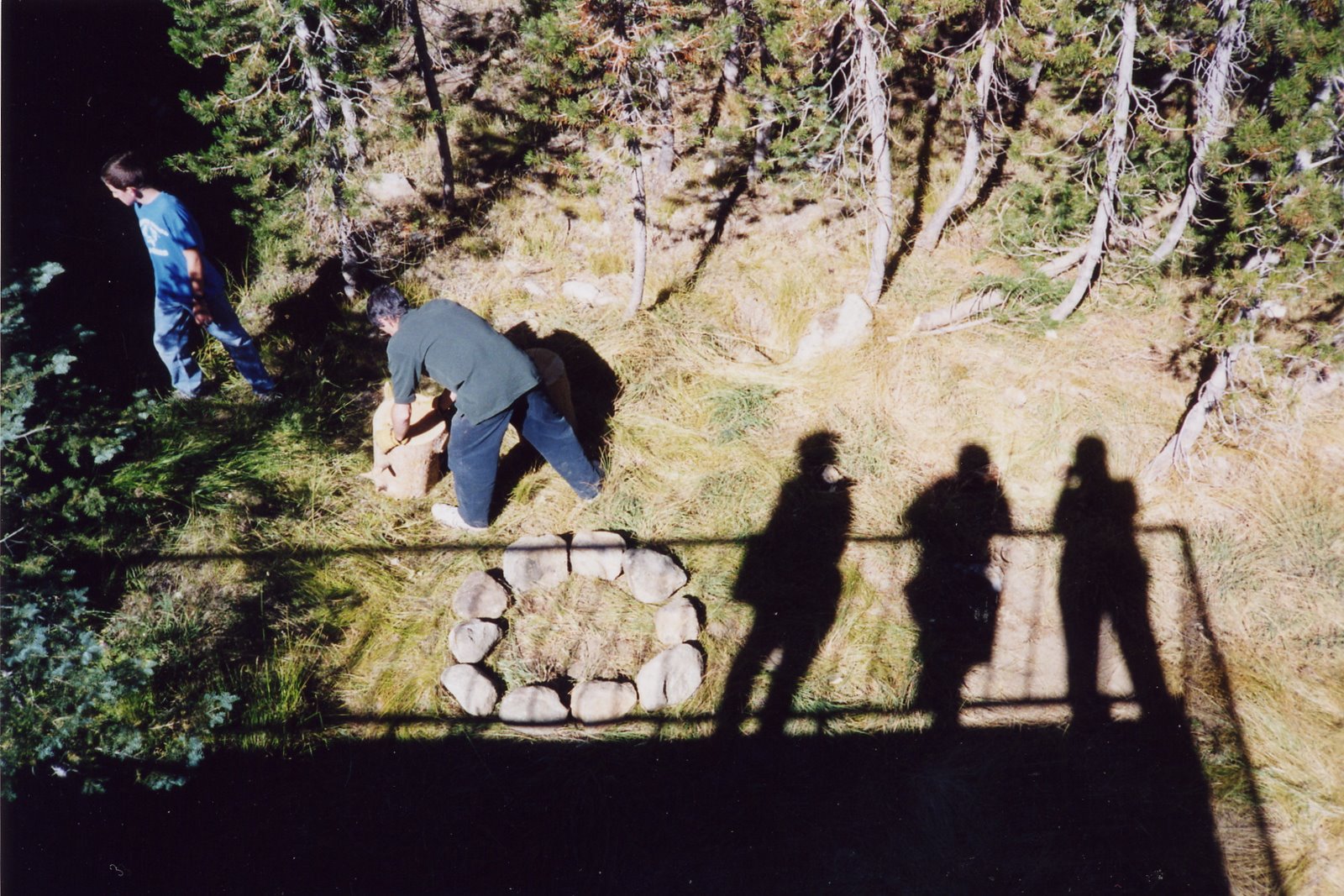
On one work day we built a fire ring just below the cabin. Weak-armed women stood on the deck and took pictures of their shadows.
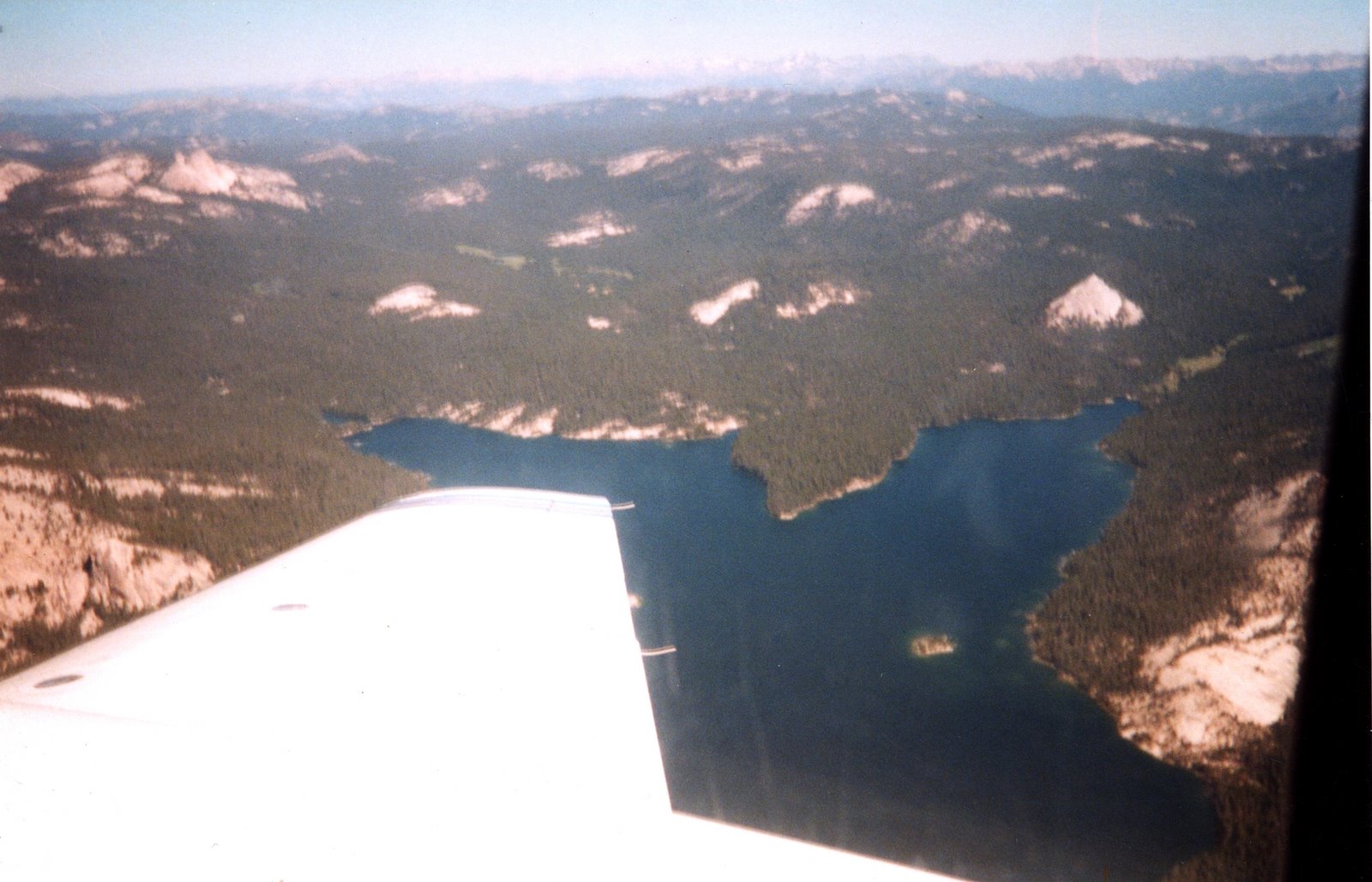 My dad was invited once to take a plane ride over the Sierra Nevadas to see all the places he had hiked so many times. They flew over Our Lake and he got a picture.

After many of the extended family went home, there were five of us who stayed the night. The guys had a challenging game of Risk, or World Domination (?) We girls were not into it.
 Pippin baked a tart on our last morning. It was good she didn’t need a pie plate, as we discovered there was not such a thing to be found up there. One never knows what to expect. From now on we will be adding some of those items that we women want. But the nearest store is 3,000 ft. down the mountain and an hour away. We avoid making that trip for all but the most extreme needs.
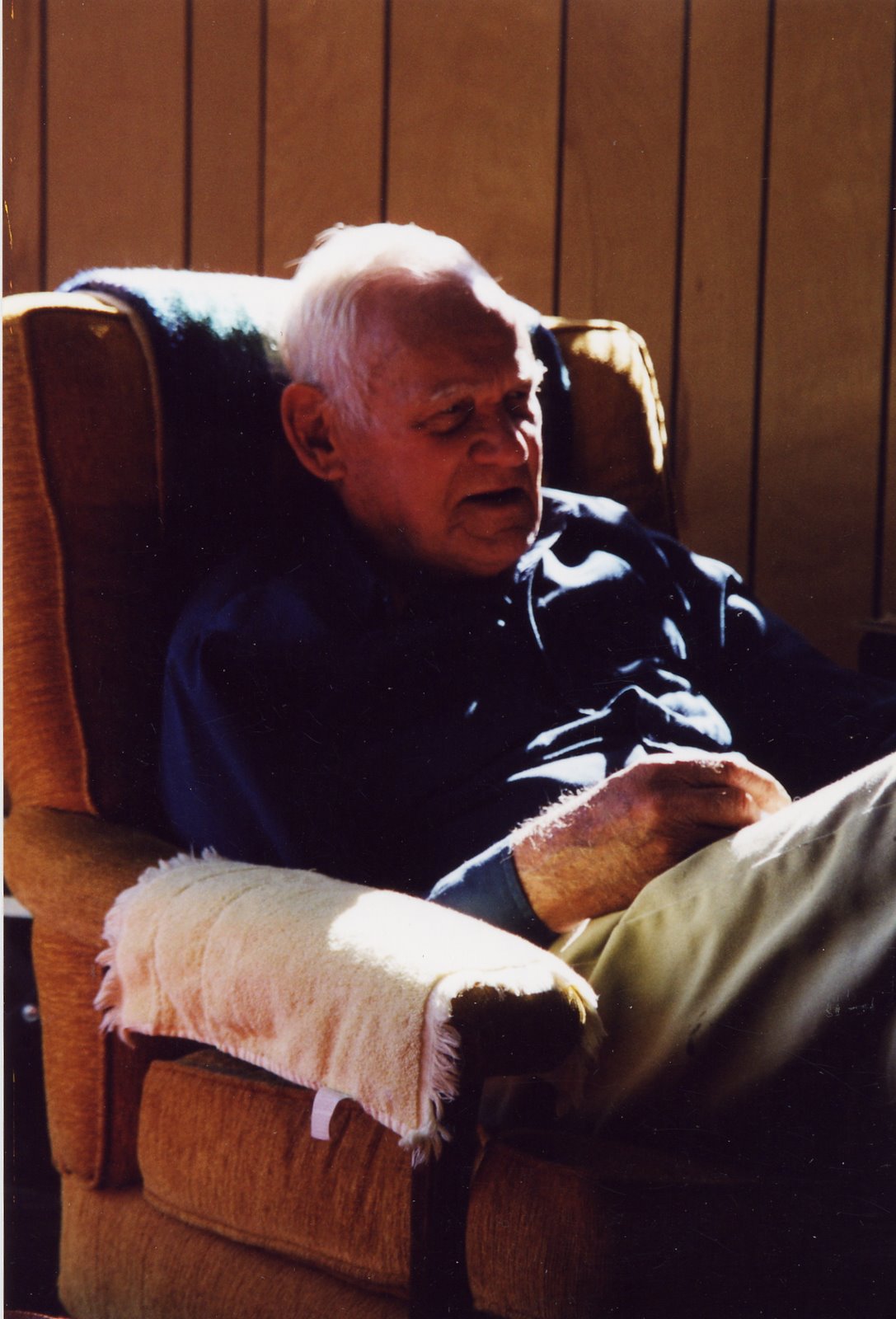
My father, in a characteristic cabin pose, ten or so years ago. There doesn’t seem to be a way to fix this picture so that you don’t see the hand towel he always used to protect the arm of the chair! He thought it was perfectly appropriate for cabin living, even if he would never do such a thing at home.
It doesn’t feel the same up there, knowing that he won’t ever join us again. Thank you, Daddy, for giving us this family-nurturing place in a soul-nurturing mountain haven.








 Gladsome Lights