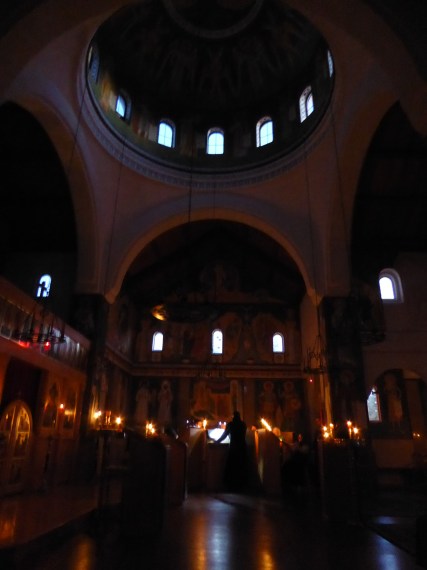
During Lent we Orthodox sing the Great Canon of St. Andrew of Crete, a long penitential hymn composed in the seventh century. It is divided into four parts, which are sung in four different services in the first week.
“A basic distinguishing feature of the Great Canon is its extremely broad use of images and subjects taken both from the Old and New Testaments. As the Canon progresses, the congregation encounters many biblical examples of sin and repentance. The Bible (and therefore, the Canon) speaks of some individuals in a positive light, and about others in a negative one—the penitents are expected to emulate the positive examples of sanctity and repentance, and to learn from and avoid the negative examples of sin, fallen nature and pride.” -Orthodox Wiki
One of the exhortations which caught my attention this year was regarding the lessons that might be learned from the life of the patriarch Jacob:
The ladder which the great Patriarch Jacob saw of old is an example, O my soul,
of approach through action and of ascent in knowledge. If then thou dost wish to live rightly in action and knowledge and contemplation, be thou made new. (Genesis 28:12; Rom. 12:2; Titus 3:5)
In privation Jacob the Patriarch endured the burning heat by day and the frost by night, making daily gains of sheep and cattle, shepherding, wrestling and serving, to win his two wives. (Genesis 29:16-30; 31-40)
By the two wives, understand action and knowledge in contemplation. Leah is action, for she had many children; and Rachel as knowledge, for she endured great toil. For without toil, O my soul, neither action nor contemplation will succeed.
May God strengthen us!

 Gladsome Lights