Category Archives: mountains

We return to the secret Warners.

Jess Valley in the Fall

I was sitting on a log with my husband, in the middle of a tall forest. We were on our way back to the trailhead and not in a hurry to leave. “It’s so quiet,” I said. “You can’t hear a clock ticking, or a car on a road…”

“But you can hear pine needles falling on the ground,” said my companion.

That deep quiet is one of the things we love about the Warner Mountains and this whole corner of the state, Modoc County and much of Siskiyou County. You might go for several hours, as we did, and not see another soul.

“The Warner Range is not part of the Sierra Nevada range or the Cascade Range, but part of the Great Basin Ranges,” you will learn if you read the very short Wikipedia article on them. The Warners extend into Oregon, as you can see from the map at right.

This area is like a secret treasure. The forest and blue sky (we were hiking at over 6,000 feet elevation) seemed to belong to us alone. And it is true that few Californians have been here or even know anything about this hinterland.
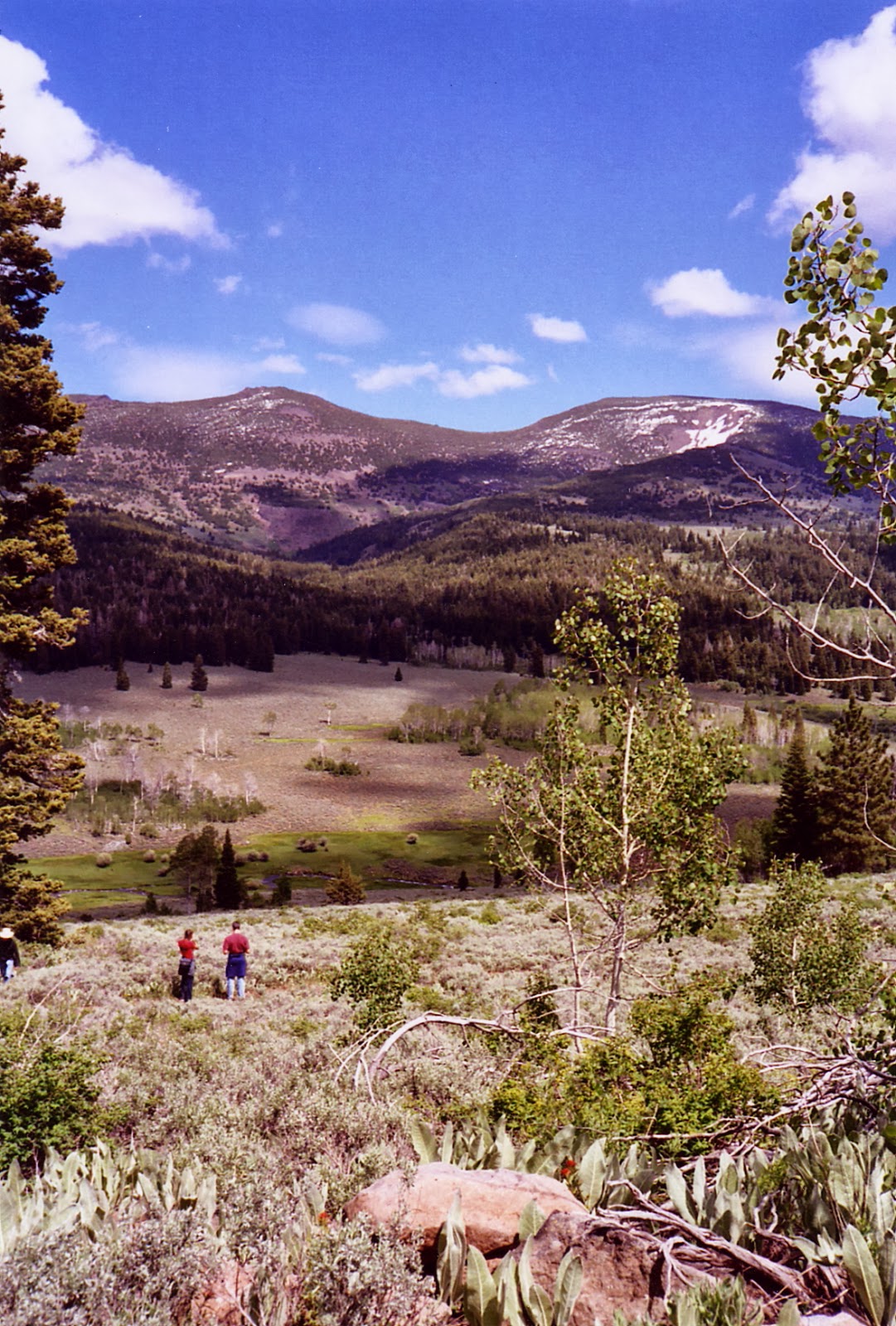
Warner view 2003

Ten years ago we came here for the first time, with some of our children, and camped in the summertime. We hiked on the same Slide Creek Trail, out of Soup Springs Campground. I’m posting some pictures of that visit, when the main difference in the scenery was the source of yellow highlights in the views. Earlier in the year it was fields of mule’s ears (Wyethia) that made the bright splashes, but now it is aspen trees turning color.
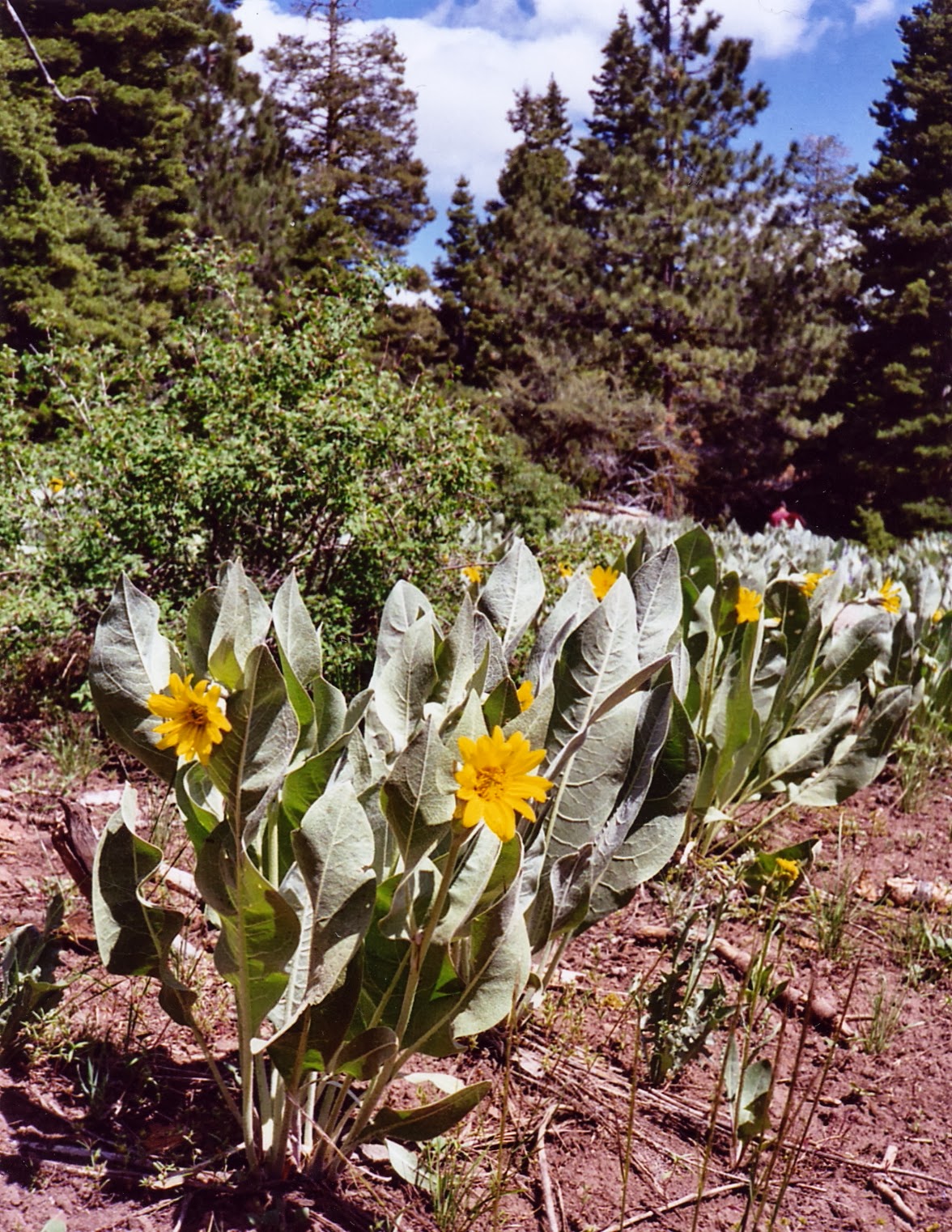
Mule’s Ears Summer 2003

The mule’s ears have thick leaves when they are green, and after they are dried up, before they lie down on the ground, they clatter sharply in the wind. The aspens make a more whispery noise.

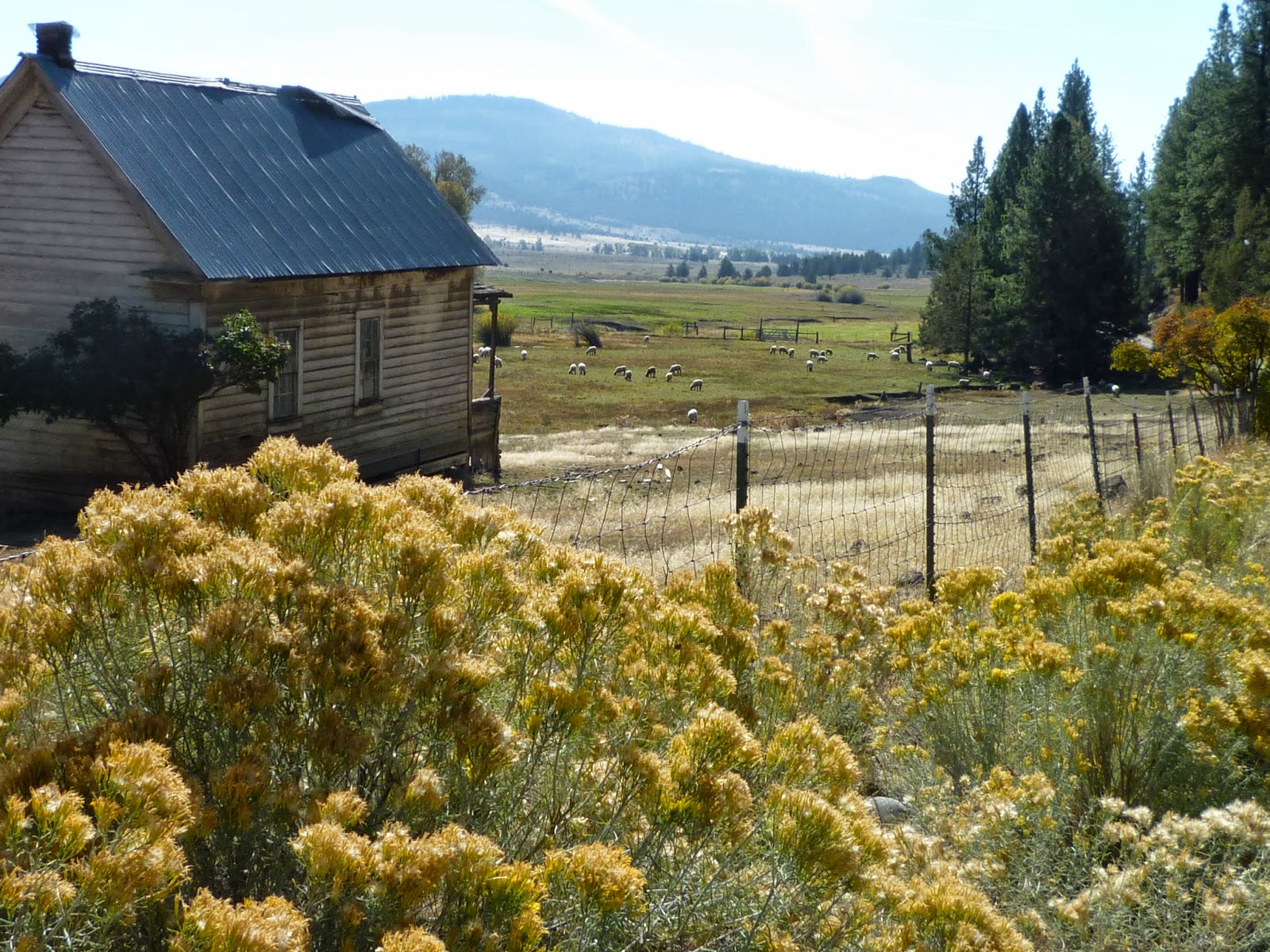
Jess Valley 2003

In 2003 we had stopped in Jess Valley at the corner of Road 64, because the setting of the farms between mountain ranges was perfect for taking pictures. I recognized the spot when we went by and we stopped again for more.

The air is so clean up there, it makes you want to breathe deeply and refresh every cell in your body before you have to go down to the valley again.
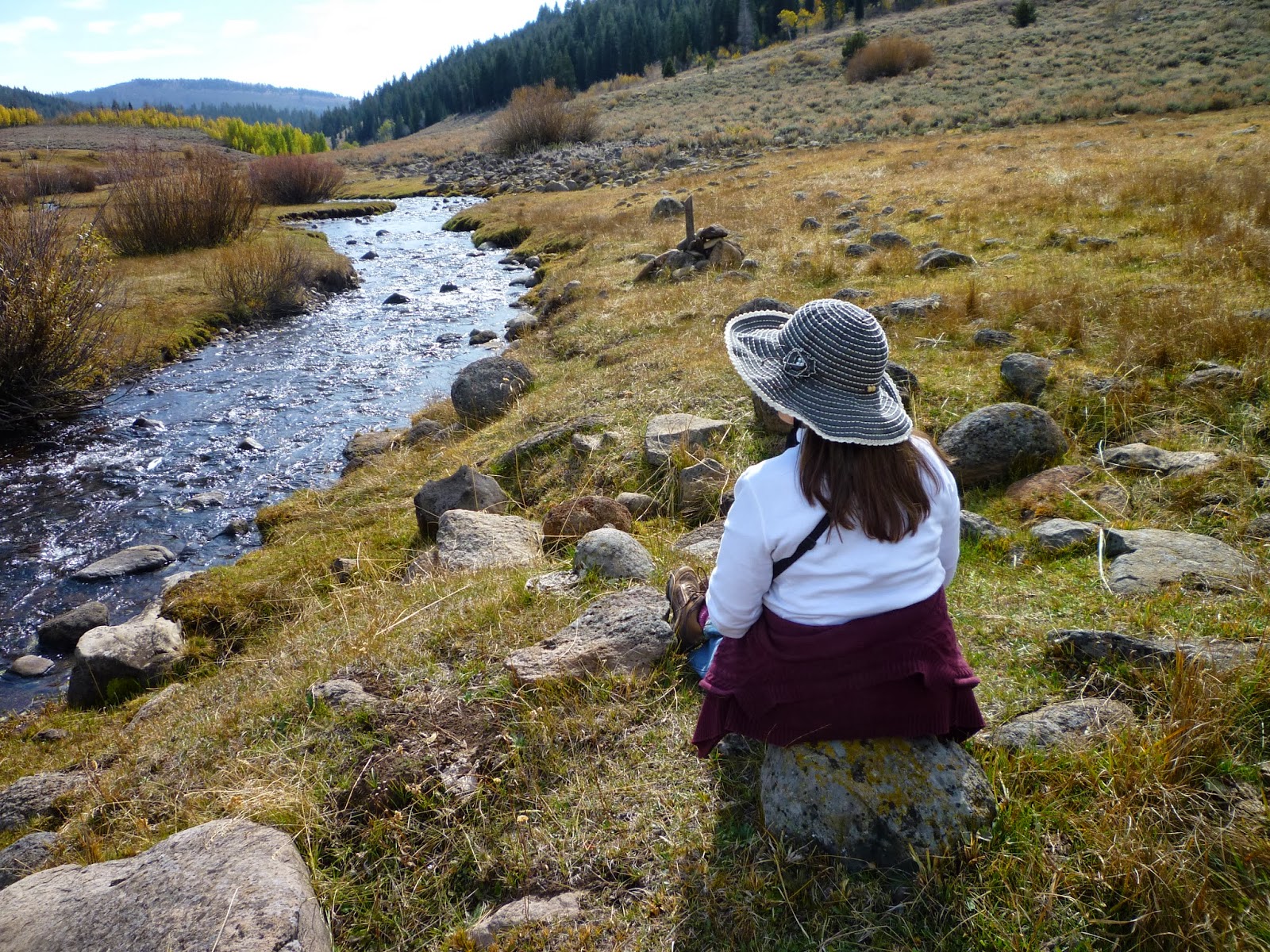
by Mill Creek
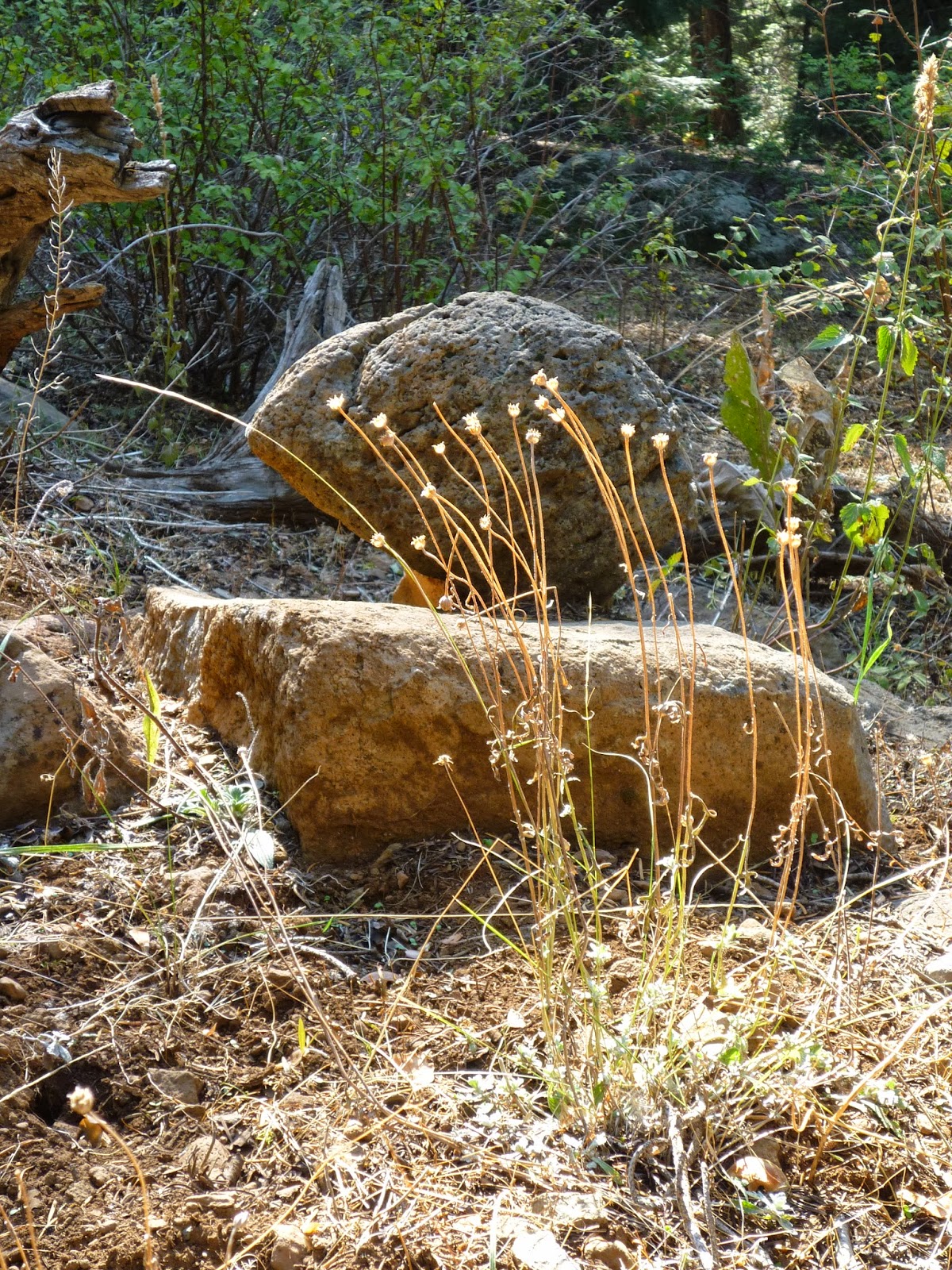
What the mule’s ears look like now

Our hike wasn’t the only thing worth remembering of last week’s trip, so I will try to write again soon on the culture and events of this out-of-the-way part of our fair state.

Two Glad girls by Mill Creek – 2003

Mountain Air – Berries

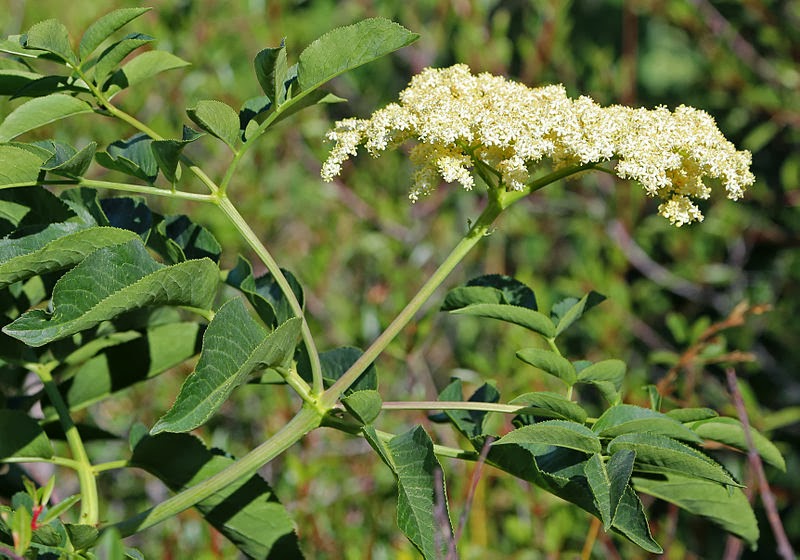
Wikipedia Commons – sambucus mexicana

Last July when we were descending from the lake to the valley, along the road between about 7,000 to 4,000 feet elevation I glimpsed many tall plants with big flower heads resembling the umbrella-shaped blooms of cow-parsnip.

Our driver was of the usual sort who is totally uninterested in suddenly pulling over just because I cry, “Look! Another one of those plants – what do you suppose they are?”

So I just kept straining my eyes and craning my neck as we sped past one after another. And I really wasn’t too disturbed, because I was confident that since I had recently studied various similar plants in the parsley family after our trip to Oregon, I would be able to look in a book or online and find out which species had yellowish blooms of that sort. At home I researched for an hour or more but there was no such plant.

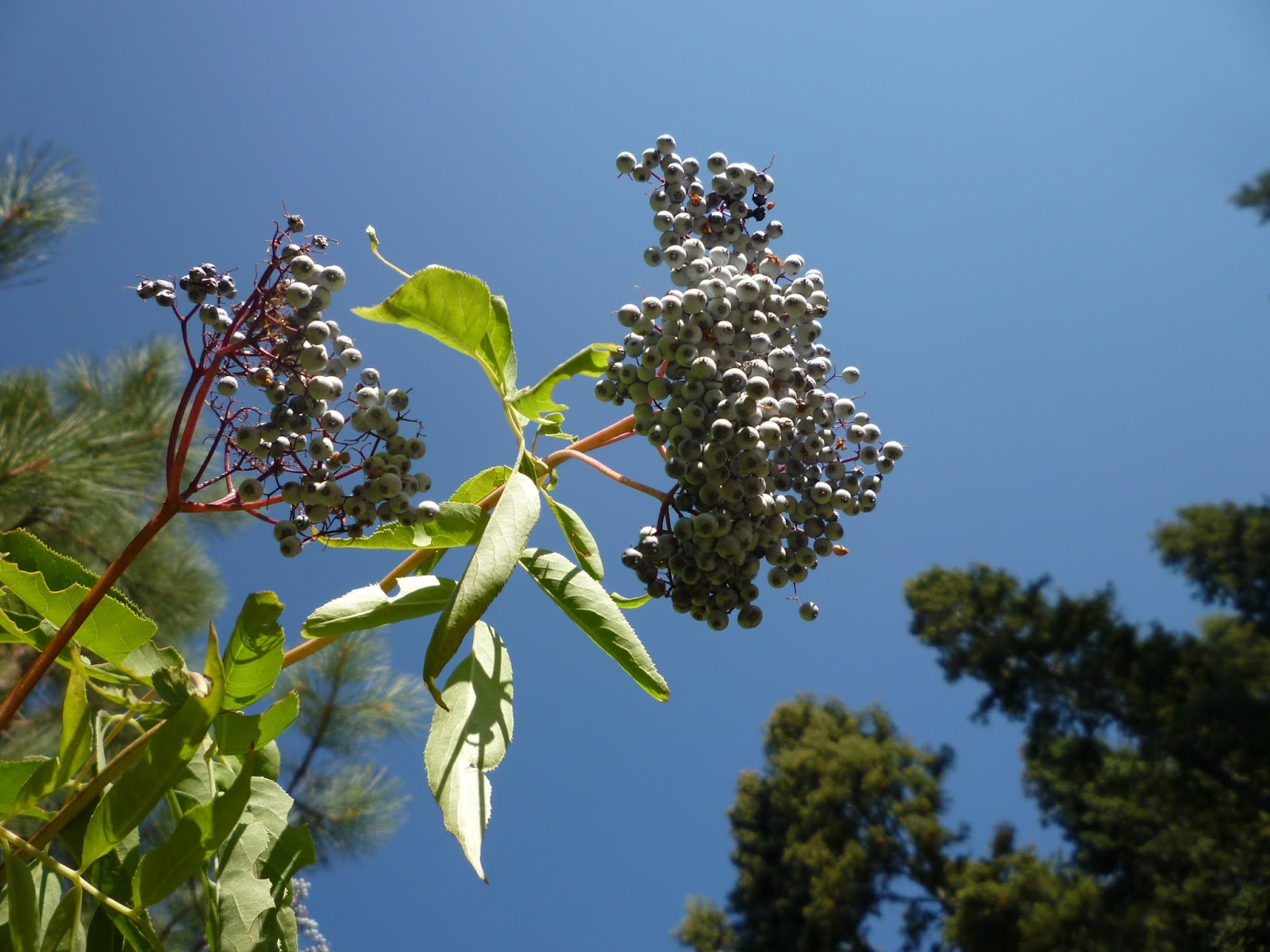
blue elderberry

When I drove up this month I guess I was in too big of a hurry to find what I was looking for, but once again, on the way down the hill some tall bushes got my attention, with their big clusters of berries. I realized after a while that those were the same plants I had seen in July, and I stopped twice at turnouts and walked back to take some pictures.

Once I saw the leaves up close, it was obvious they weren’t in the parsley family. Mr. Glad suggested they might be elderberries, and when I plugged that name into Google I found that indeed they are. In the Sierras three species of elderberries grow. The black elderberry is at higher elevations, and the red elderberry is red, so that leaves this one, the blue elderberry, which grows up to 25′ tall and wide.

It’s always satisfying to come back from a trip with at least one new plant in my mental directory. True, sometimes I only keep them in my blog postings, because they disappear from my recallable memory. In any case, knowing some names makes me feel more friendly with the natural world.

That’s the last I’ll see of that part of the country for a good while. Very soon the cabin will be shut up against the snows of winter in the Sierra Nevada. We pray that this year they will be very heavy!

sambucus mexicana

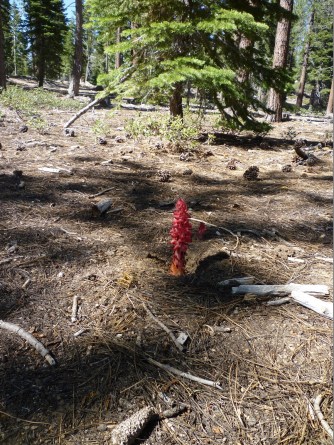
The parasitic snow plants are blazing at Tahoe.

Mr. and Mrs. C. invited us to their cabin again on the south end of Lake Tahoe. At 6,000 ft. elevation it’s still pretty brisk in May, but the sky was SO blue, the lake was SO blue, and the air was dry, full of the smells of pine trees and cedars with some wood smoke thrown in. I breathed deeply.

Here is a map if you need to get your bearings. The lake itself lies on the Nevada-California state line. We usually approach from the southwest and drive through the state capital of Sacramento to get there.

I had escaped the world down below where picture storage was one of the many time-consuming computer problems that had recently worn me out, and I arrived with a reluctance to use my camera. Of course that didn’t last long, especially when wildflowers are out. May in the Sierras brings flowers you can’t see in the summertime, so I had to seize my opportunity, didn’t I? My other blog posts about the Tahoe area have different photos from what I came away with this time.

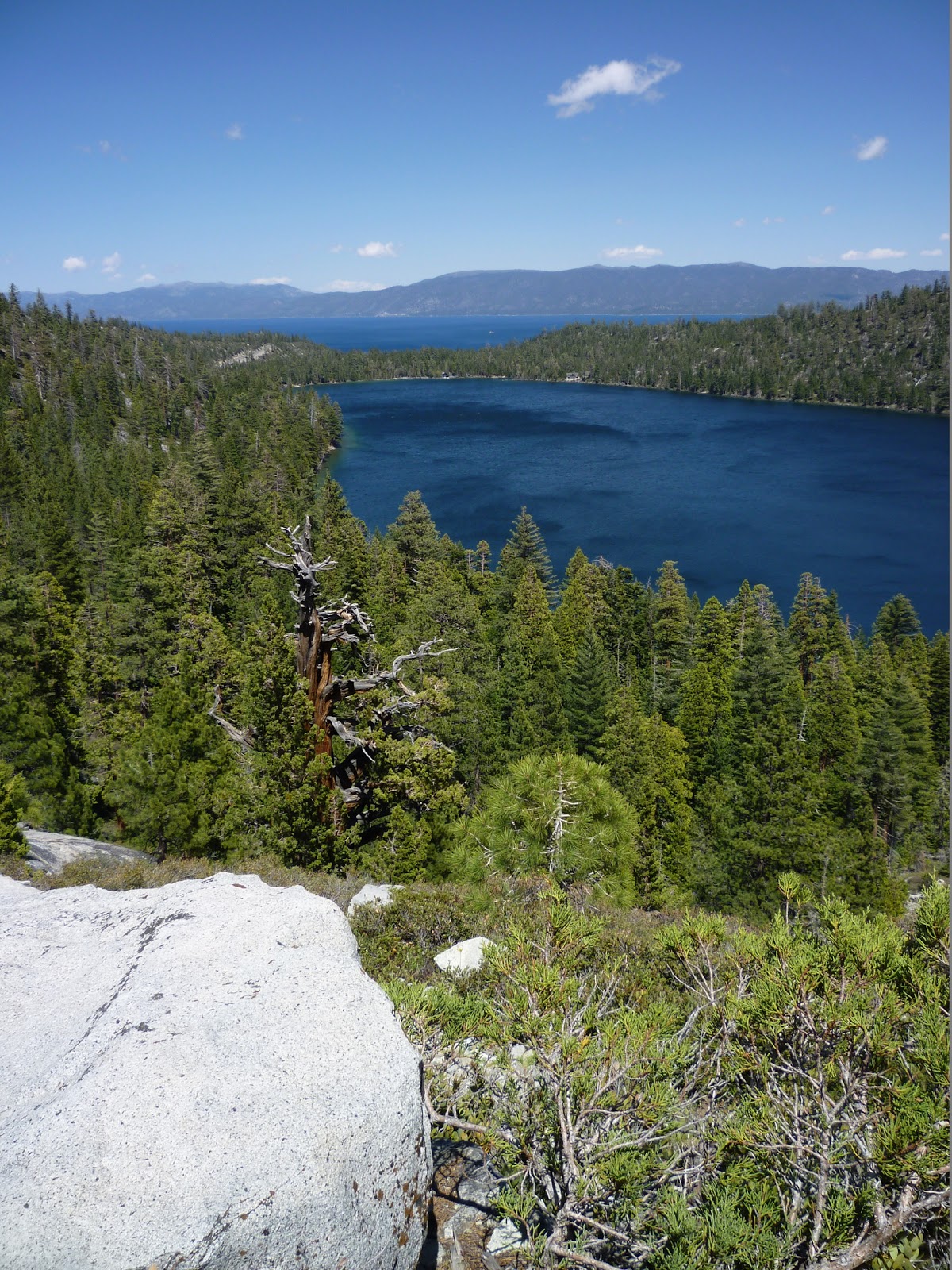
Cascade Lake in foreground, Tahoe in distance.

We hiked to the top of Cascade Falls one day. It drops and flows into Cascade Lake which lies just south of Emerald Bay, a little higher in elevation. This picture was taken from a granite shelf looking as straight-down as I could manage to the bottom of the falls.

Sticky Cinqefoil
                      This looks to me like some kind of buttercup but I haven’t found it in a book yet. (Update: I added the caption after one of my readers enlightened me.)

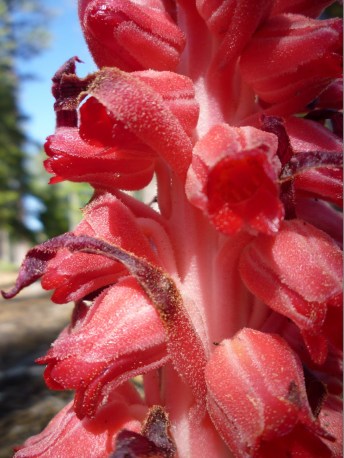
The Snow Plants have popped up all over, here and there on the floor of the conifer forest, with no leaves. Mrs. C. was coveting one, wondering how she might get a specimen to grow near the cabin, but what I found out on Wikipedia when I came home makes me think that would be near impossible to make happen.

The snow plant is sarcodes sanguinea, the only species in the genus sarcodes, in the heath family. It is unable to photosynthesize its own food, “…a parasitic plant that derives sustenance and nutrients from mycorrhizal fungi that attach to roots of trees.” Now I can imagine the roots of these bright plants extending deeply into the world of tree roots. If we are lucky, perhaps the right conditions will in the future concur and surprise Mrs. C. with a burst of red.

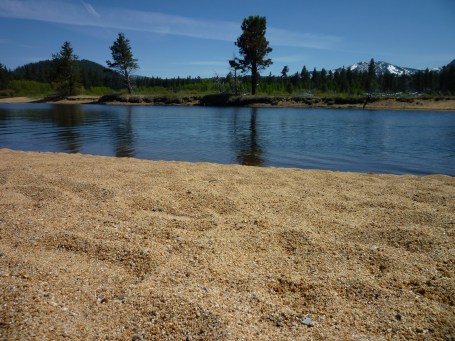
A lagoon by Kiva Beach

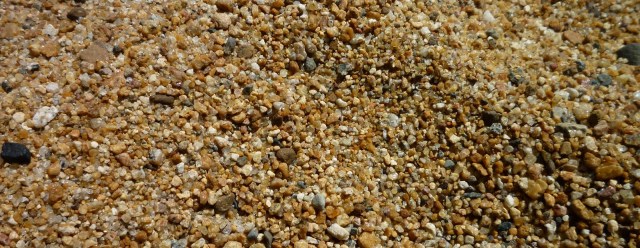
Another color that got my attention was the sand around Lake Tahoe. We took the yellow lab to swim and fetch and I sat on the shore and considered how all the grains of sand were warm golden tones, not like any ocean beach I’ve seen.


Wooly Mule’s Ears, also known as mountain mule’s ears, were in bloom, and I got a photo of them as in a perennial bed planted by Mother Nature, with a border of Squaw Carpet in front.

Wyethia mollis and Ceanothus prostratus
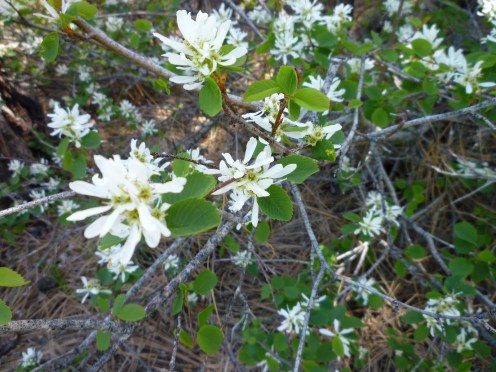
Here’s a nice flowering bush that I don’t know. Maybe someone reading this knows this plant? It grows in the forests on public land and in private yards. (Update: the same reader in a comment below is kind enough to tell us that this is Western Serviceberry.)


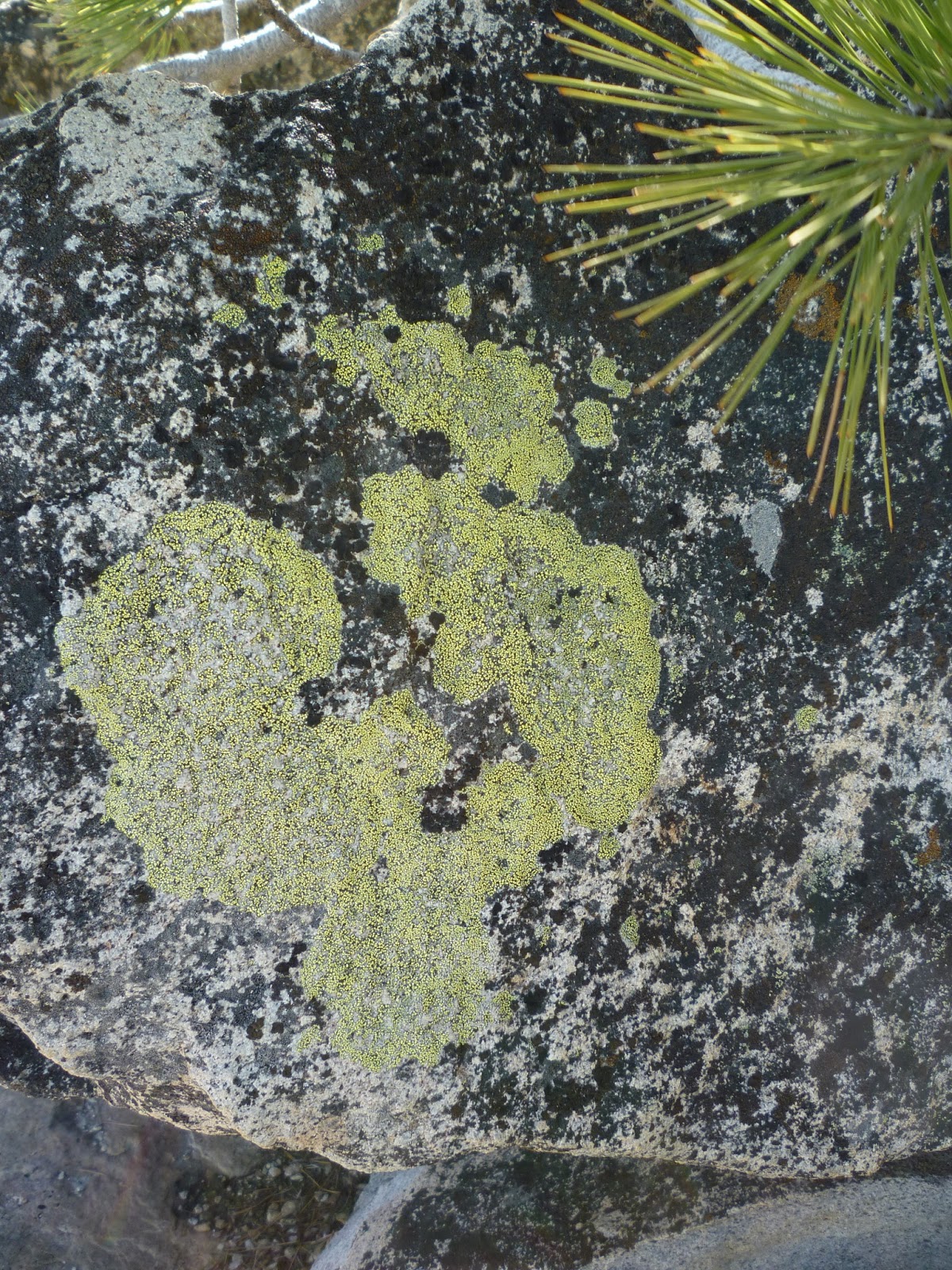
Did you ever do a Google image search of “lichen”? Amazing, amazing plants. Here is one of the more subtle designs, which we saw on a rock at the top of Cascade Falls, a lovely arrangement of vegetable and mineral and just one example of how God’s artwork is splashed all around the world for our pleasure and His glory. Thank You, Lord, for the refreshment.