TO BE ALIVE
To be alive: not just the carcass
But the spark.
That’s crudely put, but…
If we’re not supposed to dance,
Why all this music?
-Gregory Orr
TO BE ALIVE
To be alive: not just the carcass
But the spark.
That’s crudely put, but…
If we’re not supposed to dance,
Why all this music?
-Gregory Orr
 The first full moon in November is traditionally called the Beaver Moon in North America, and marks the season when we might be busy as beavers getting everything shored up against winter.
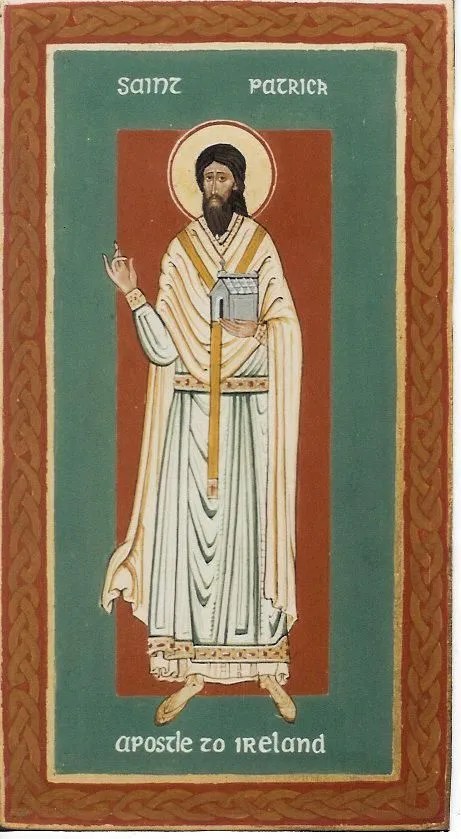
Lately I’ve been refreshing my memory of the hymn that I memorized soon after my husband’s passing, a version of St. Patrick’s Breastplate from Charles Villiers Stanford. He used two old Irish tunes to compose a majestic setting for Cecil Frances Alexander’s poetry. The YouTube version I learned from is still up: “St. Patrick’s Breastplate.”
On the occasion of the full moon I am sharing only the portion of the hymn that draws our spiritual eyes to the natural world.
I bind unto myself today
the virtues of the starlit heaven,
the glorious sun’s life-giving ray,
the whiteness of the moon at even;
the flashing of the lightning free,
the whirling wind’s tempestuous shocks,
the stable earth, the deep salt sea,
among the old eternal rocks.
Another version of this ancient hymn is “The Deer’s Cry,” and my favorite rendition of that one is sung by Lisa Kelly here: “The Deer’s Cry.”
What could I add to this prayer? The blessing is in the singing of it.


It’s the birthday of Sergei Rachmaninoff, and in his memory I share with you a small part of his choral work, The Liturgy of St. John Chrysostom, which he composed in 1910. It is the hymn, “Let Our Mouths be Filled with Praise”:
Maria Horvath (blog now inactive) posted this song, scripture and video together many years ago:
We begin this month’s look at the different forms of love with one of the most thought-provoking statements ever made about love.
In the Sermon on the Mount, Christ tells his followers, “You have heard that it was said, ‘You shall love your neighbor and hate your enemy.’ But I say to you, Love your enemies and pray for those who persecute you, so that you may be sons of your Father who is in heaven; for he makes his sun rise on the evil and on the good, and send rain on the just and on the unjust. For if you love those who love you, what reward have you? Do not even the tax collectors do the same? And if you salute only your brethren, what more are you doing than others? Do not even the Gentiles do the same? You, therefore, must be perfect, as your heavenly Father is perfect.” ~ Matthew 5:43-48

The lyrics below tell the true story of a truce between British and German soldiers on the Western Front in 1914. It is told from the perspective of a fictional British soldier.
CHRISTMAS IN THE TRENCHES
Oh, my name is Francis Tolliver, I come from Liverpool,
Two years ago the war was waiting for me after school.
From Belgium and to Flanders, Germany to here,
I have fought for King and country I love dear.
’Twas Christmas in the trenches and the frost so bitter hung,
The frozen fields of France where still no songs of peace were sung.
Our families back in England were toasting us that day
Their brave and glorious lads so far away.
I was lying with me mess mates on the cold and rocky ground
When across the lines of battle came a most peculiar sound.
Says I, Now listen up me boys, each soldier strained to hear
As one young German voice sang out so clear.
He’s singing bloody well, you know, my partner says to me.
Soon one by one each German voice joined in in harmony.
The cannons rested silent and the gas cloud rolled no more,
As Christmas brought us respite from the war.
As soon as they were finished and a reverent pause was spent,
“God Rest Ye Merry Gentlemen” struck up some lads from Kent.
The next they sang was “Stille Nacht.” ’Tis “Silent Night,” says I,
And in two tongues one song filled up that sky.
There’s someone coming towards us now, the front line sentry cried.
All sights were fixed on one lone figure trudging from their side.
His truce flag like a Christmas Star shone on the plain so bright
As he bravely trudged unarmed into the night.
Then one by one on either side walked in to No Man’s Land
But neither gun nor bayonet, we met there hand to hand.
We shared some secret brandy and we wished each other well,
And in a flare-lit football game we gave ’em hell.
We traded chocolates and cigarettes and photographs from home,
These sons and fathers far away from families of their own.
Tom Sanders played the squeeze box and they had a violin,
This curious and unlikely band of men.
Soon daylight stole upon us and France was France once more.
With sad farewells we each began to settle back to war.
But the question haunted every heart that lived that wondrous night,
Whose family have I fixed within my sights?
’Twas Christmas in the trenches and the frost so bitter hung.
The frozen fields of France were warmed, the songs of peace were sung.
For the walls they’d kept between us to exact the work of war
Had been crumbled and were gone forever more.
Oh, my name is Francis Tolliver, in Liverpool I dwell.
Each Christmas come since World War I, I’ve learned its lessons well,
For the one who calls the shots won’t be among the dead and lame,
And on each end of the rifle we’re the same.
~ John McCutcheon, born 1952, American singer, musician, and composer
 Gladsome Lights