This morning I woke in the northwoods of Idaho, at the home of my goddaughter Rosemary and her husband. I sat on their deck and watched the green aspen leaves as they quietly fluttered and twirled against patches of blue sky background above.
Unfamiliar birds squawked and twittered in the neighborhood, glorifying God. And I found this prayer in my prayer book, that asks God to teach us to use our voices to pray as well. The prayer itself is good instruction.
“My Lord, I know not what to ask of thee. Thou alone knowest my need. Thou lovest me more than I know to love Thee. Father, I am thy servant: grant me all I dare not ask. I ask neither for a cross nor for comfort; I simply stand in thy presence. My heart is open to thee. Thou seest my needs, of which I myself am unaware. Look upon me and act toward me in accordance with thy mercy: smite and heal, cast down and raise up. In thy presence I stand, reverent and silent before thy holy will and thy judgments, to which I cannot attain. To thee I offer myself in sacrifice. I commend myself to thee. I have no desire except to fulfill thy will. Teach me to pray. Do thou thyself pray within me. Amen.”
The washcloth and the scouring pad were right there, and plenty of (salt) water, for cleaning up, but my grandson Scout and I didn’t need them for that, as our recent snacks had been eaten out of hand. We were at the third beach of that morning, earlier this week when he was down here by himself visiting all his grandparents.
Scouring Pad Alga
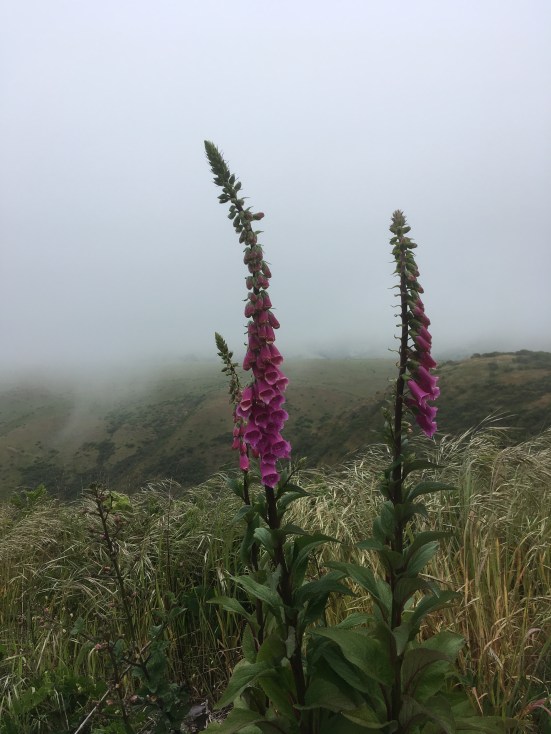
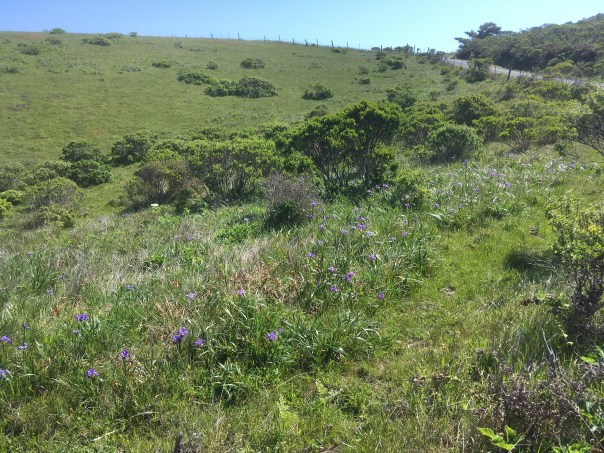
On the way we had traveled over “Wildflower Hill,” as I’d named it two weeks ago. Most of the April flowers had faded, but foxgloves were in bloom!
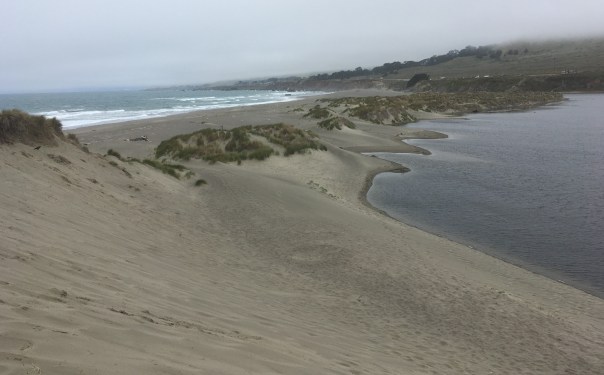
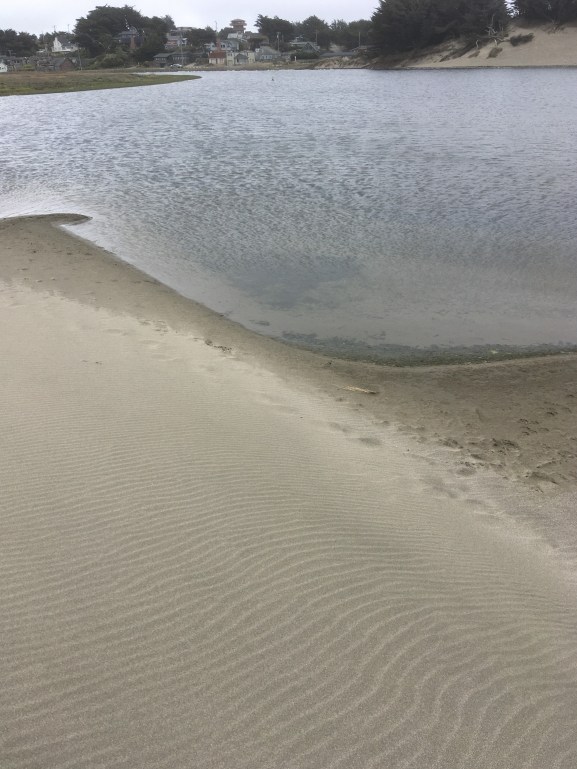
Our first stop at the coast was at my most frequently walked beach, where we spent the most time and effort around the adjoining lagoon, and climbing up and down the dunes.
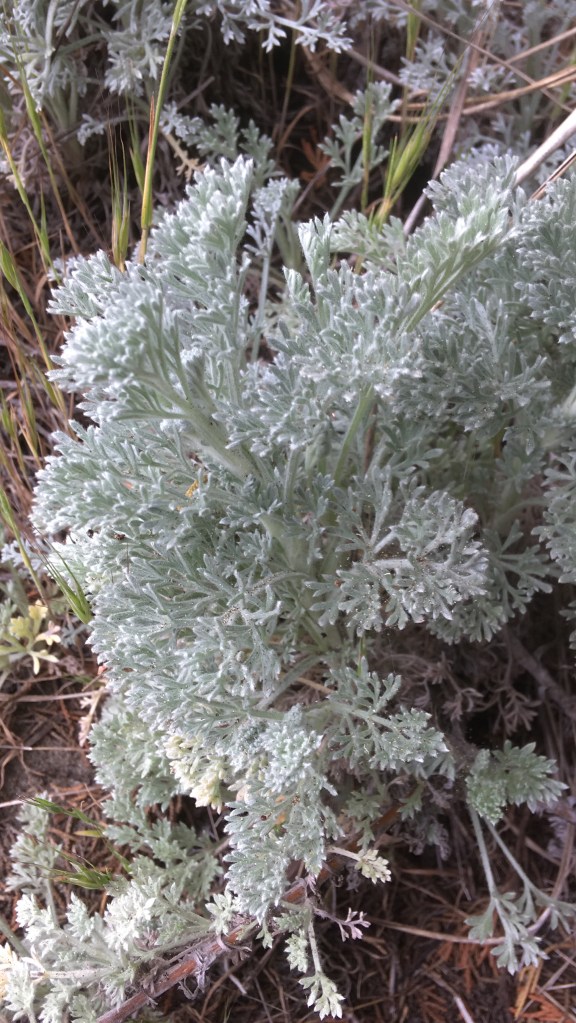
Beach Wormwood
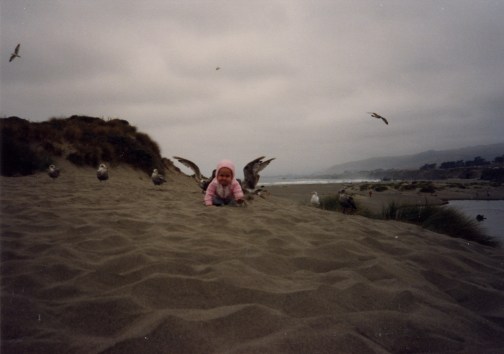
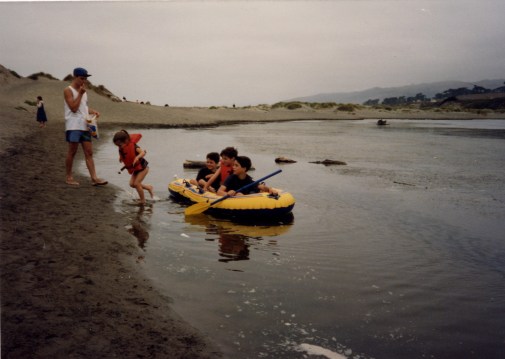
Our family and other homeschoolers used to play here 20 and 30 years ago. I found a few pictures showing us back then, when Kate was an infant:
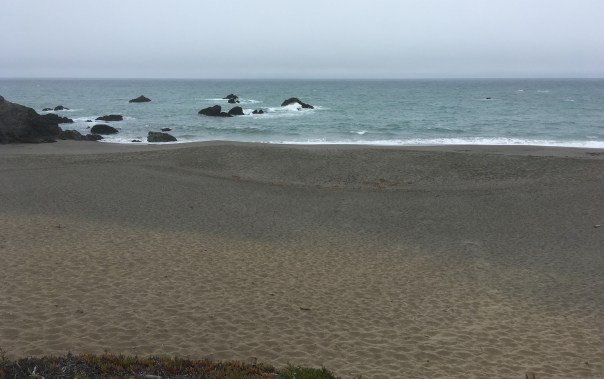
Scout wanted to see the beaches that he’d gotten to know last summer, so next we went to one of those, where we noted the layers of different colors of sand, and the color of the ocean.
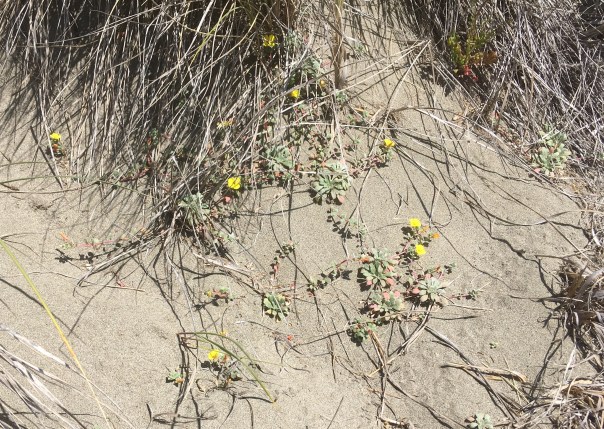
Yellow Sand Verbena
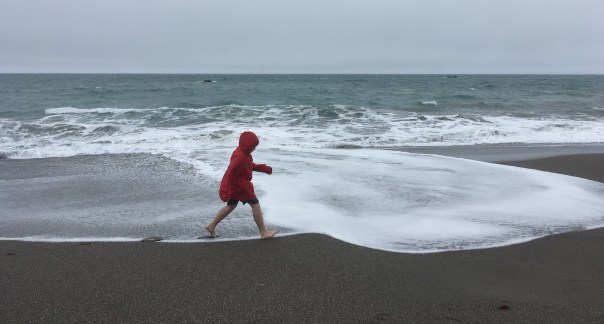
It was chilly and breezy, so we were glad to have our windbreakers. He was swimming in his borrowed jacket (but not in the ocean!), and I was squeezed into mine that I’ve outgrown, but they worked fine.
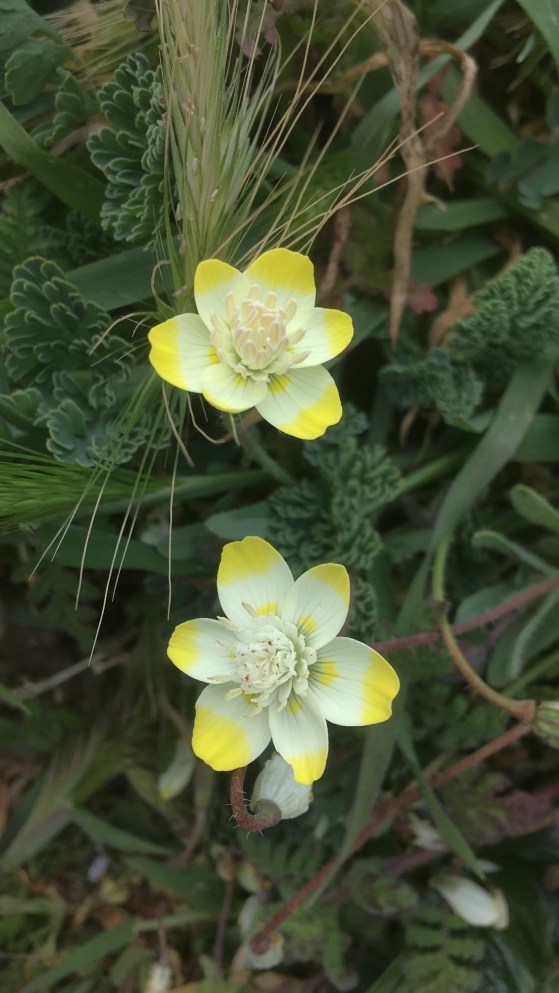
Creamcups
California Goldfields
At the last beach, after our snack, Scout wanted to explore “on the other side of those rocks,” and he soon came back to tell me it was urgent that I come, too, and see the tidepools.
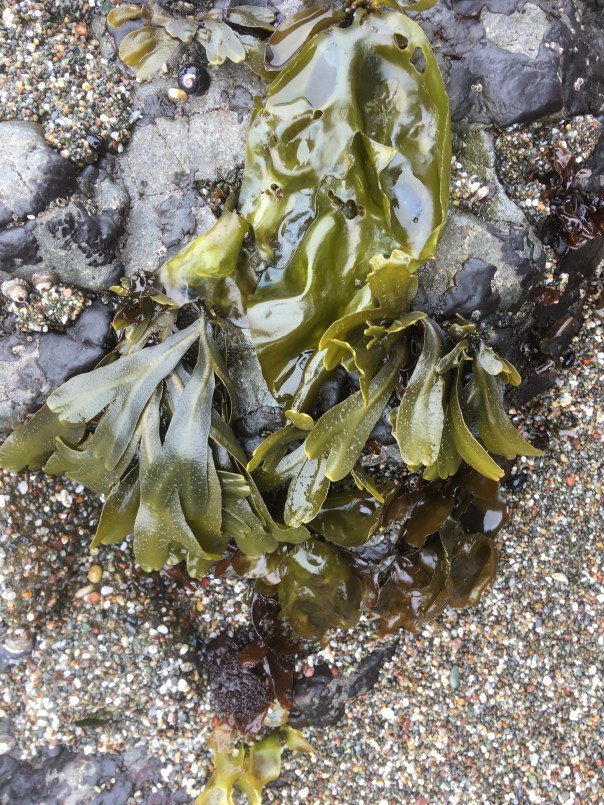
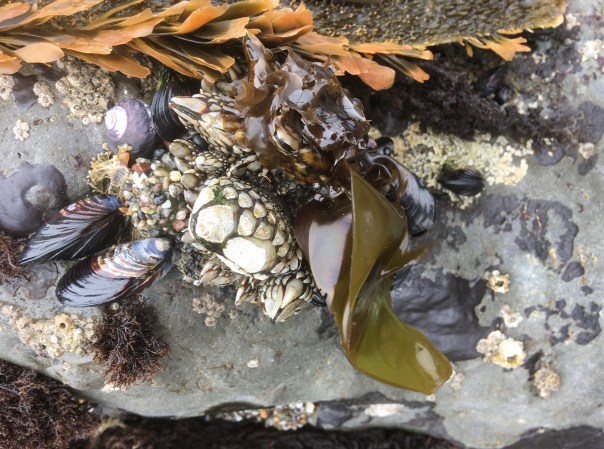
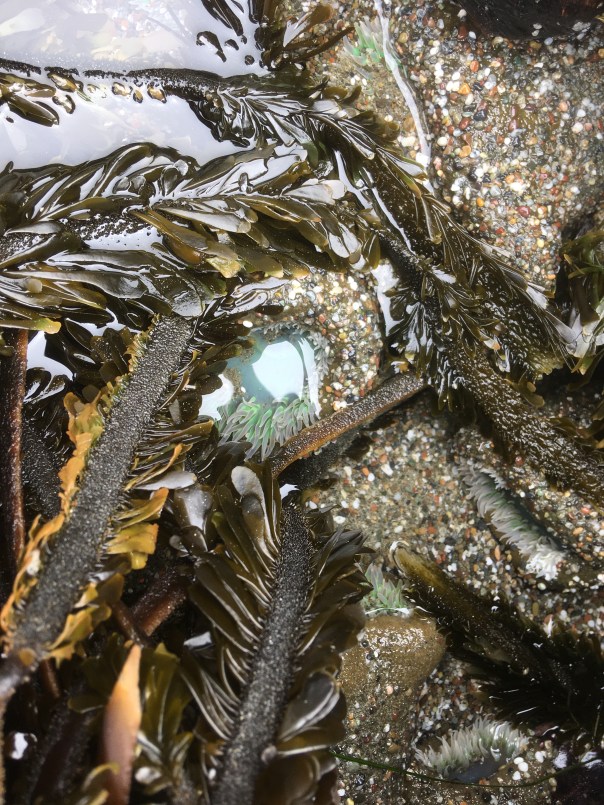
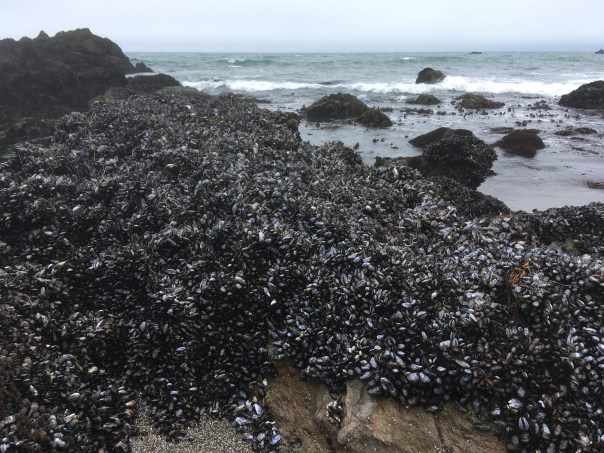
I was so surprised. All the times I’ve been on that beach, and I never knew… It was the most interesting collection of creatures I’d ever seen in tidepools. And all around, new plants as well. Thousands of mussels grew crammed together on the rocks.
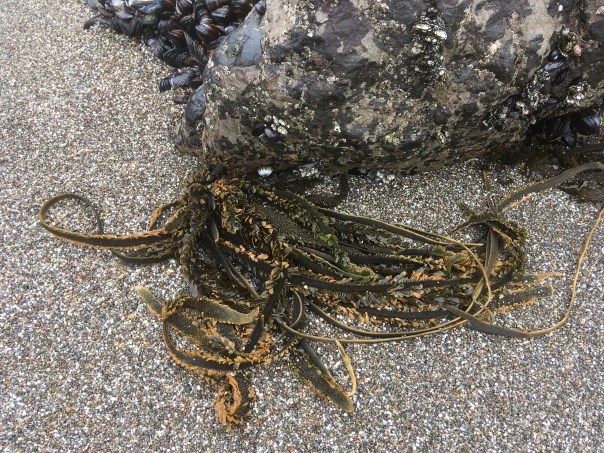
California MusselslimpetsGooseneck BarnaclesLots of Feather Boa Kelp still rooted to its rocks.Giant Green Anemones hiding in sand.Turkish WashclothBlack Pine SeaweedRockweed
Besides the plants and animals whose names I’ve mentioned in captions here, we also saw Black Oystercatchers, Bee Plant, Dogwinkles, Sea Thrift and Silverweed. These many evocative names began to swim in my brain and tried to form themselves into a fantastical story… but in the end all I could extract was the vision of me at the sink with those seaweed dishwashing tools, the Turkish Washcloth and the Scouring Pad Alga. We picked off the real live leaves of various kelps to bring home; I’ve yet to make soup out of it.
It was quite a stimulating day. Scout and I shared the feeling that our minds were buzzing, our hearts full with the excitement of such life and beauty lying quietly under a few inches of water or briefly exposed, shining with the glory of God. He’s already planning his next visit to this spot, and how his mother must join us to share the joy. Sounds good to me!
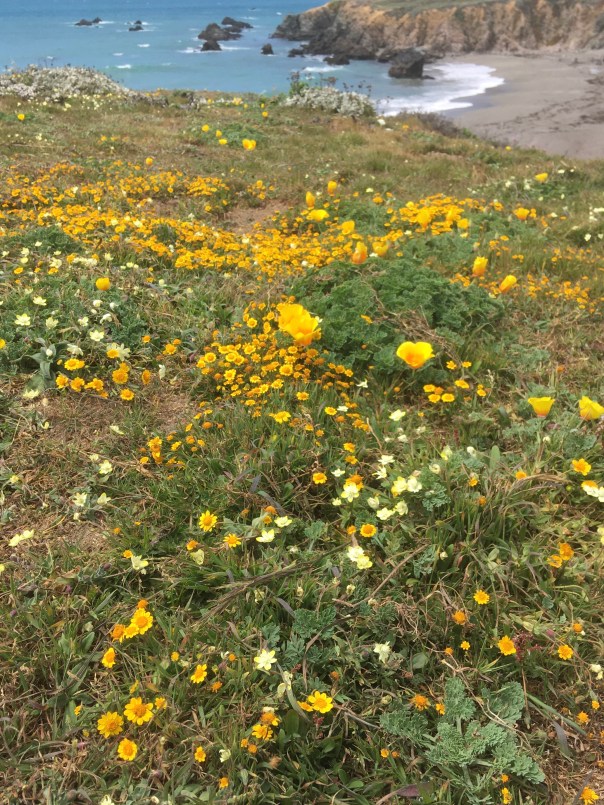
When I drove up the last hill on my way to the coast this week, I found that in the last week thousands of wildflowers had bloomed along the roadsides.
As there is little traffic on that particular road, I took my time and drove slowly, looking not only for the spots of color but also for wide spots where I could pull over. Several times I had to hike back a ways to where I’d caught the glimpse. This went on for about an hour, after which I ran out of hill, and made my way down the last slope to the beach, where I saw still more new flowers since my last visit.
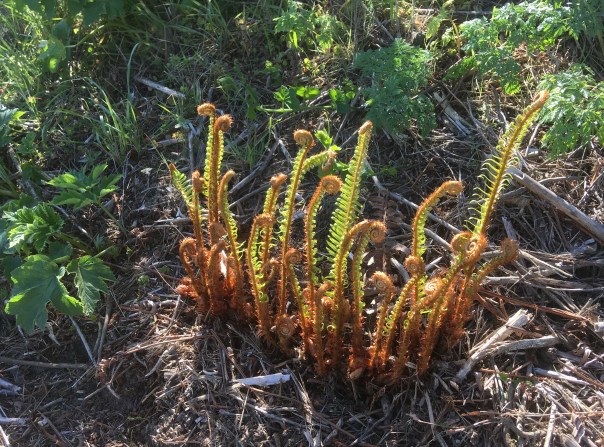
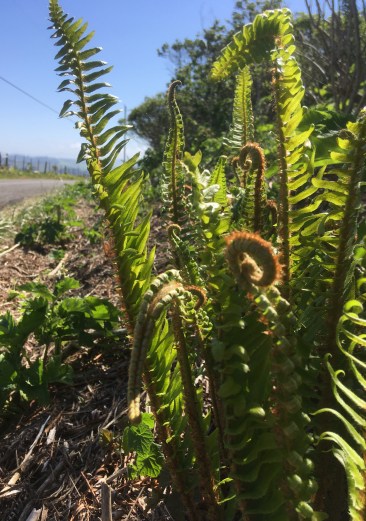
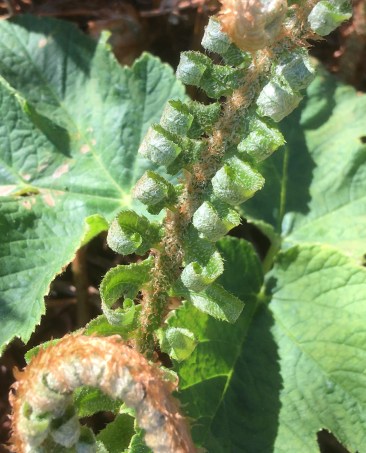
Sword ferns with detail below.
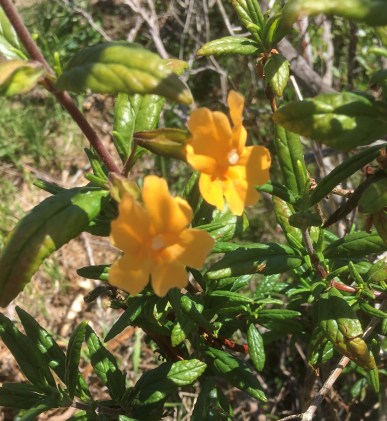
There was lots of cow parsnip with manroot crawling all over it, and swaths of yellow capeweed. I saw potentilla, Mules-ears and buttercups. This trifolium dubium below is called Suckling Clover and other common names I’ve never heard of. The flowers are darling, and barely a centimeter across. It’s said to be the traditional Irish shamrock. Unfortunately I didn’t read that until just now, and I didn’t get a good picture of its leaves.
Another wildflower I identified for the first time was the Shepherd’s-needle:
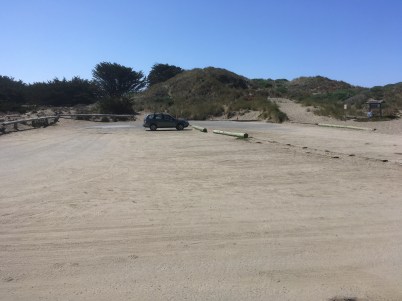
When I pulled into the lot where I most often park, it was empty. Maybe because schools in our area are back in-person, and parents are no longer free to bring the kids to the beach on weekdays. (That’s my car.)
Or maybe because people knew enough to stay away — the wind was up! It was so brisk and blowy, I didn’t walk in the waves but on the dry part of the beach, and found myself headed behind the dunes where I could get them between me and the worst wind.
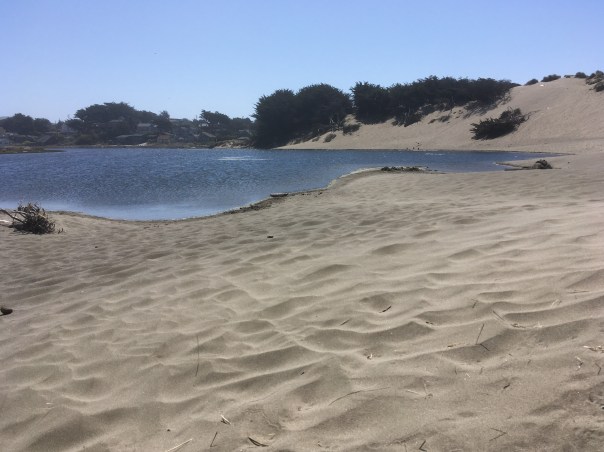
I sat with my back against the dune and my feet in the hot sand. This was my view of the lagoon:
It was a perfect reading spot, until the wind shifted and started blowing from my side! That signaled the end of my beach stay, but I sat longer in my car on the bluffs above, to get some more reading time in before my mini-retreat would be over. It had been an unusually dry outing, but oh so satisfyingly full of flowers!
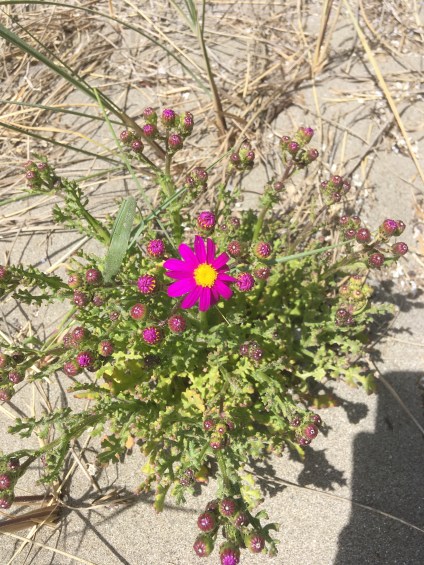
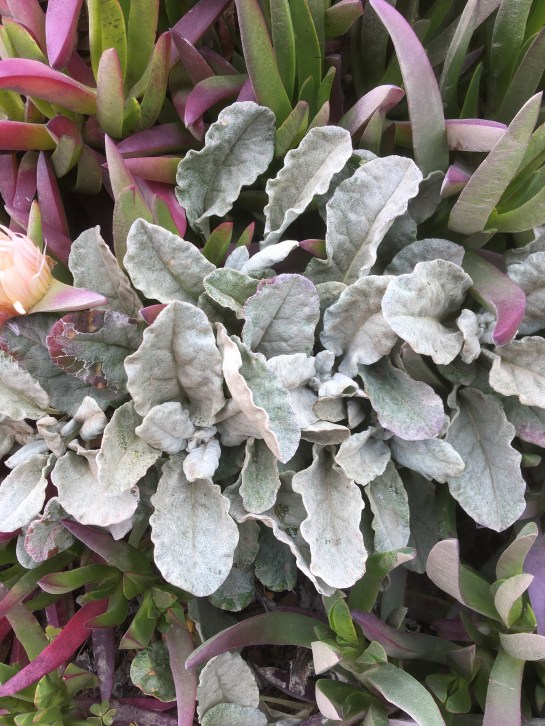
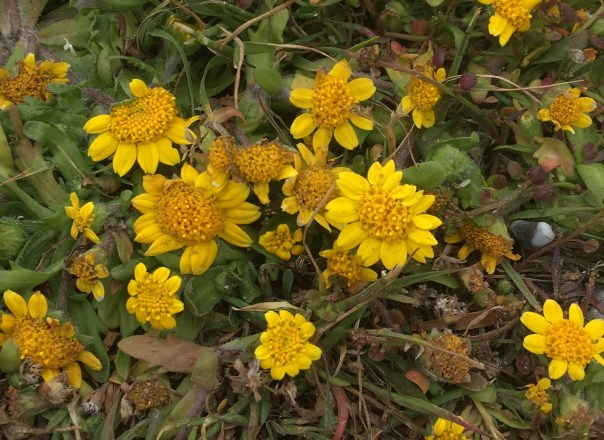
Today’s beach trip kept getting put off, until by the time I got out to the coast it was already afternoon. These flowers had opened sometime in the last week; I don’t remember ever seeing them on the California coast before. The daisy flower looks like something that might have escaped a back yard, but the plant as a whole definitely does not.
However, the Seek app tells me it is redpurple ragwort, Sinecio elegans, which is in the aster family: “Native to southern Africa, it is cultivated as an ornamental plant… It has been known to escape cultivation and become naturalized in areas of appropriate climate.” I guess that’s why it doesn’t look like a typical Pacific coastal plant.
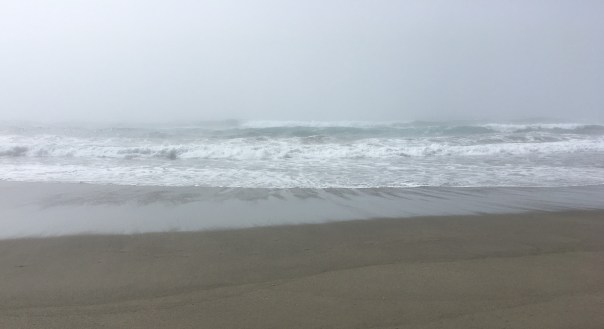
The sand was surprisingly hot on my bare feet at first, a new thing after many months of fall and winter. But then the fog, which had been thin and drifting away, changed its mind, thickened up, and cooled everything off. I didn’t walk fast today, and I didn’t walk in the ruffles at the edge. I sat on a stump to read, behind the labyrinth, with this view:
Then I walked on up the beach a ways and sat to read a little more.
I saw this new sign, “Sensitive Wildlife Area: Do Not Enter,” one of many posted along the rope that surrounds an area not twice as large as what you can see in this picture. The dunes are of course always in flux from the changing winds. It seems odd to guard a relatively tiny spot, and also not to say what agency is forbidding the children to play there. [See more about this in the comments.]
In the car today I finished listening to The Princess and the Goblin by George MacDonald, which I also read last year sometime. It is one of my favorite books. When I got home I read a lot of The Eucharist, and created a recipe for vegan tapioca pudding using leftover ginger pulp, agave nectar, two sizes of tapioca pearls and mostly almond milk, with a bit of coconut milk, too. It was good!
Mondays seem to be a good day to go somewhere to be alone and quiet, and not try to accomplish too much. The high school class that I teach on Sunday afternoons will end soon and maybe my Sundays won’t be so brain-deadening, but for now, I’m glad for these Mondays and for the beach that is always there, and willing for me to participate in whatever it’s doing, if only by breathing.
 This morning I woke in the northwoods of Idaho, at the home of my goddaughter Rosemary and her husband. I sat on their deck and watched the green aspen leaves as they quietly fluttered and twirled against patches of blue sky background above.














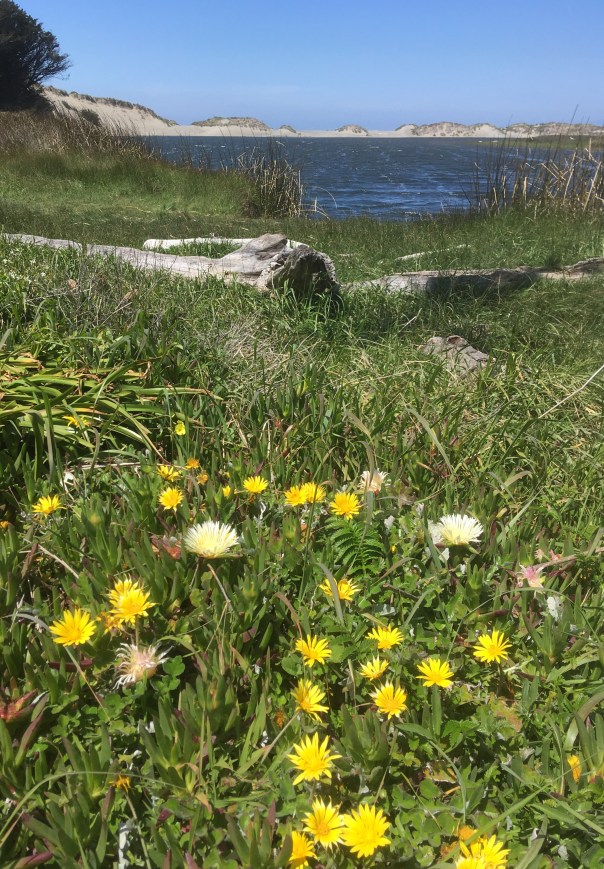

 Today’s beach trip kept getting put off, until by the time I got out to the coast it was already afternoon. These flowers had opened sometime in the last week; I don’t remember ever seeing them on the California coast before. The daisy flower looks like something that might have escaped a back yard, but the plant as a whole definitely does not.


 I saw this new sign, “Sensitive Wildlife Area: Do Not Enter,” one of many posted along the rope that surrounds an area not twice as large as what you can see in this picture. The dunes are of course always in flux from the changing winds. It seems odd to guard a relatively tiny spot, and also not to say what agency is forbidding the children to play there. [See more about this in the comments.]