This poem surprised me by not having any mention of green leaves or grass. It describes a morning moment so succinctly, I think I might remember it, especially if I were watching the moon at dawn… Otherwise, maybe not! Because it may never happen that I have the opportunity to know this scene as more than a poem, I thought it best not to wait to share it.
GREEN
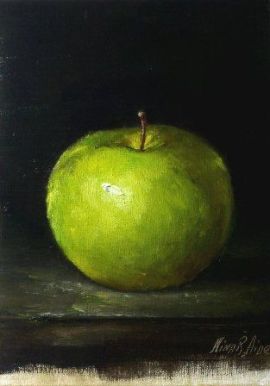
The dawn was apple-green, The sky was green wine held up in the sun, The moon was a golden petal between.
She opened her eyes, and green They shone, clear like flowers undone For the first time, now for the first time seen.
Lord when I look at lovely things which pass,
Under old trees the shadow of young leaves
Dancing to please the wind along the grass,
Or the gold stillness of the August sun on the August sheaves;
Can I believe there is a heavenlier world than this?
And if there is
Will the heart of any everlasting thing
Bring me these dreams that take my breath away?
They come at evening with the home-flying rooks and the scent
of hay,
Over the fields. They come in spring.
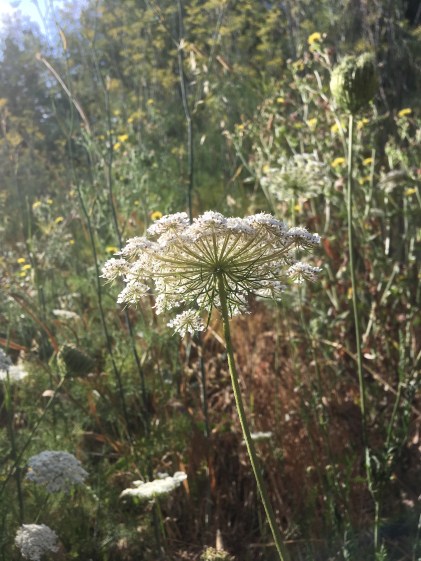
The Queen Anne’s Lace, or Daucus carota, one of the “wildflowers of the carrot family,” is in full glory this month along the creek near my house. It was a mild winter and a wet spring; though we are now well into the dry season, their plantation is lush.
Once before I posted a gallery of images of them, various angles and perspectives. This week my walk along the path was greatly extended and I explored the current neighborhood that has grown up, full of a unique assortment of plants and animals developing from this year’s natural and man-provoked conditions. That means a completely new gallery!
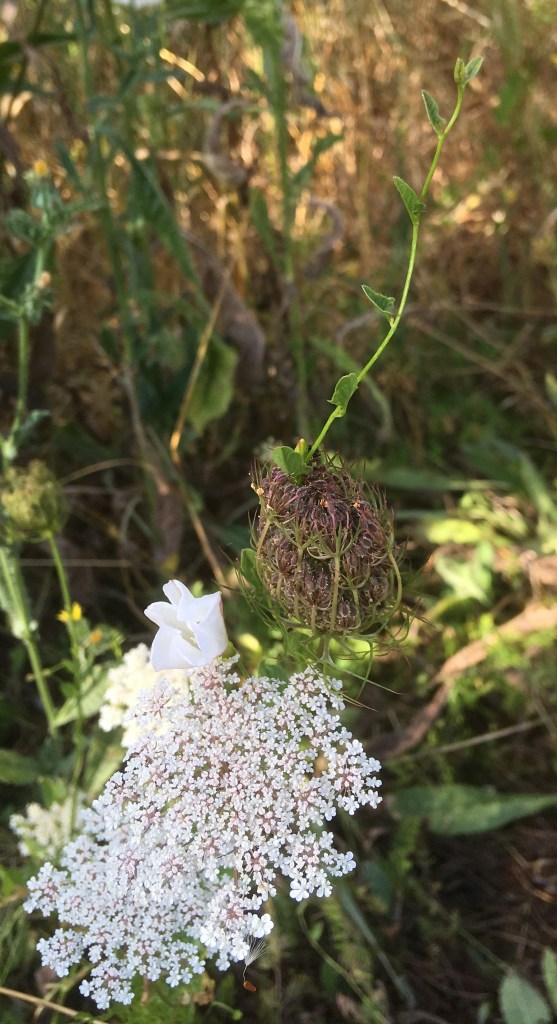
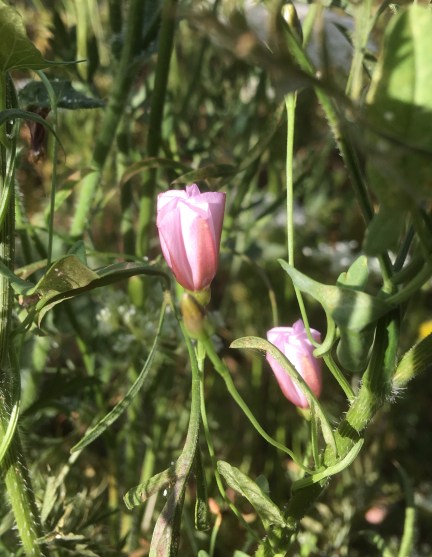
The picture just above shows a morning glory weed or bindweed (Convolvulus), which has twined around the stem of an opened flower, grown on through a bud, and is now reaching out into space. It has an opened flower just above the lower Queen Anne’s Lace bloom. And I just noticed a little seed of something, close to the bottom of the photo, and about to drop down, down… and make a contribution to next spring’s neighborhood.
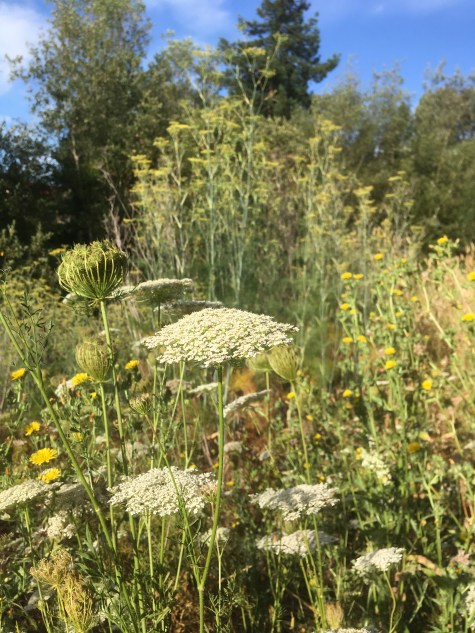
Fennel in the background.
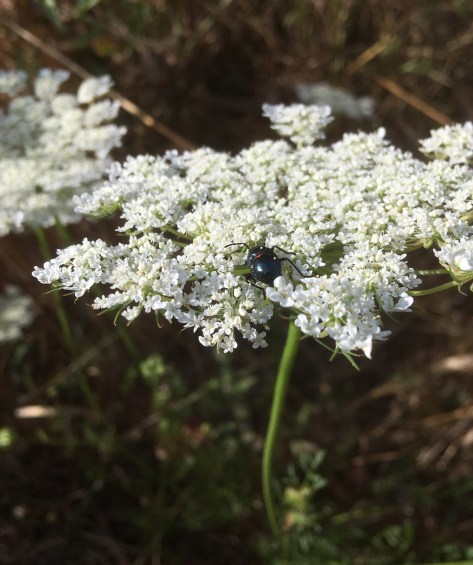
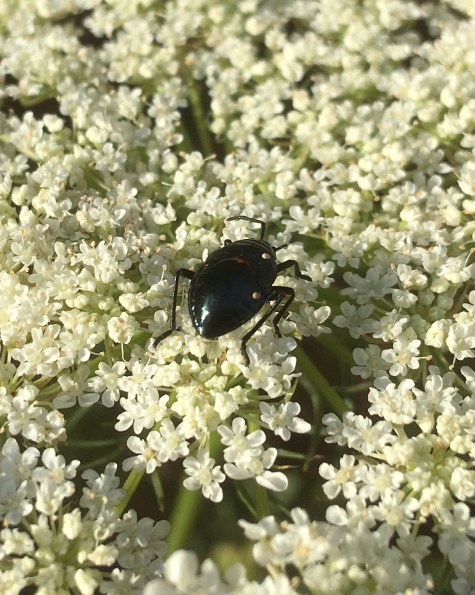
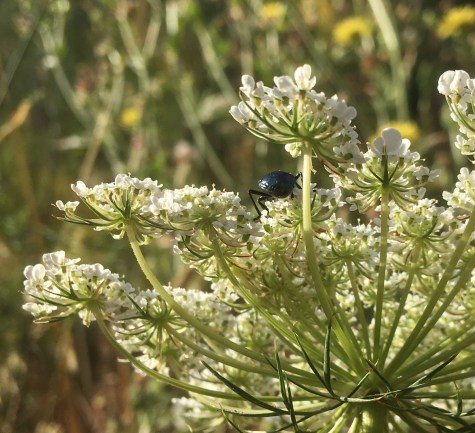
In my last gallery of Queen Anne’s Lace, I featured the red spots that are found in the center of many of the blooms. This year what were more eyecatching were insects and the other umbellifers.
I learned that word almost a year ago when Pippin and I were exploring wetlands together. As I walked along my nearby creek path I began to think about the flower form that Queen Anne’s Lace shares with the wild fennel nearby, and the word was struggling along my mind’s synapses for several minutes… and finally arrived where I could grab it. Today I researched its meaning again; it comes from the old name for the plant Family Apiaceae, which was Umbelliferae.
I found several helpful webpages besides the Wikipedia information. One has a timeline of North American invasive species: “We came on the Mayflower, too!“, where I learned that our wild fennel likely did come with those first pilgrims in 1620, and it spread all over the continent. That site also has lots of recipes for using wild plants, and I would be interested to try using the tender green fronds of fennel, or even the stems. But on the fennel page they were a little sloppy with their botany, telling me that fennel and anise are the same thing, which they are not.
Let’s start with fennel, which is my neighbor: its botanical name is Foeniculum vulgare. Anise is Pimpinella anisum. They are both in the Apiaceae family but different genera. The fleshy bulb that is eaten as a vegetable is a fennel bulb. Anise looks very similar in the field, but I don’t ever see reference to eating the bulb.
On the Spiceography page I read a paragraph-long comparison of the seeds, which both contain the essential oil anethole. I found its guidelines confusing, and concluded that I will just try to use whichever seed a recipe calls for. By the way, two other plants with this flavor but completely unrelated and different in form are star anise and liquorice.
Anise is an ingredient in many alcoholic beverages traditional to the Mediterranean and Asia. At least one of them, absinthe, includes fennel as well. I was pleased to see a map showing the locales and the names of the drinks.
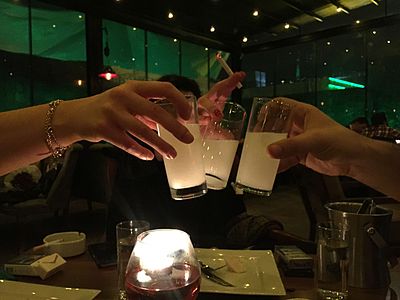
When I was in Turkey I did enjoy rakı. (Yes, that is an i without a dot. It designates a schwa or ə sound.) Usually it was served with water; you would pour a little rakı in your glass and then add water. It turned all milky then, as in this picture. No one ever tried to explain to me why this happened, and I doubt they could have if they knew, because when I read the explanation for it now it’s very complicated to my unscientific mind: The Ouzo Effect.
Fennel flower
I seem to have drifted from flowers to food and drink (passing quickly over insects). Truly this earth is full of enough animal, vegetable and mineral to keep us forever occupied examining, experimenting, cooking and brewing — and thanking our Father for putting us in a world so packed with beauty and life.
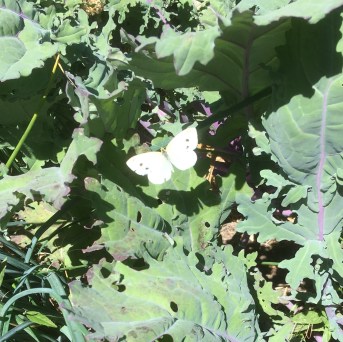
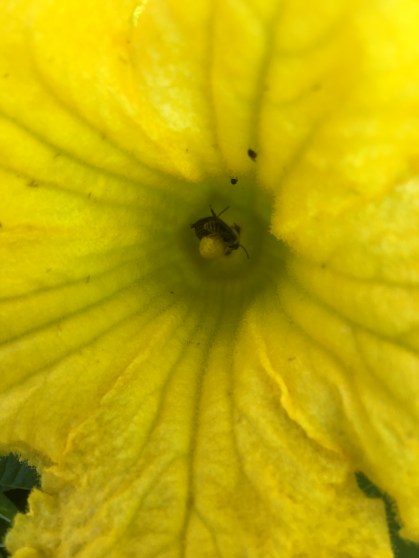
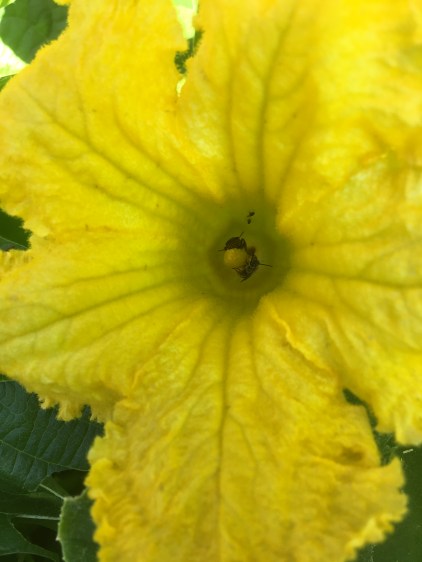
I was following a Cabbage White around the kale patch, when I happened to look into a squash blossom. It was pointing straight up like a cup, and I saw a hoverfly in the bottom, not hovering at that moment, but I assume drinking nectar…? He didn’t move. While I was pointing my camera down there, another hoverfly zipped right in. For a moment they were piled up, but soon arranged themselves one on either side of the cup. Who knows how long they might have sat companionably at their juice bar if a third insect, flying so fast I couldn’t see, hadn’t flown in, and quickly out again; that agitated the fellows and they departed.
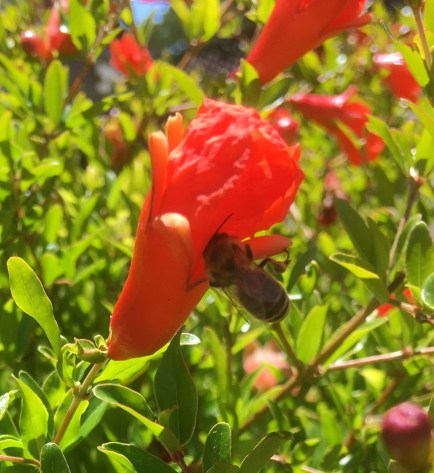
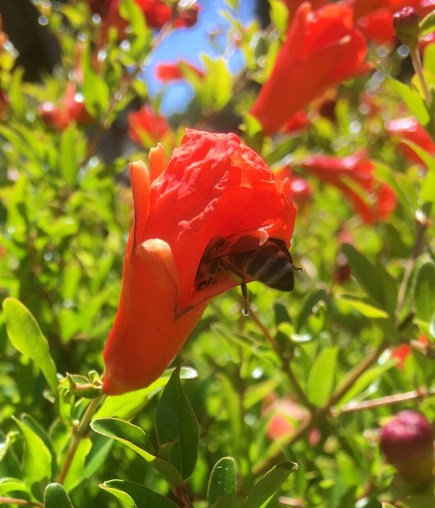
On the same tour of my estate I noticed bees at the dwarf pomegranate bushes. They would buzz around slowly checking out various blooms; I soon realized that they were looking for flowers that were at the right stage of opening, because they have to crawl deep into the narrow cave to get what they want. The flowers don’t seem to be open very long before they start to wilt, and then there is no way to get in.
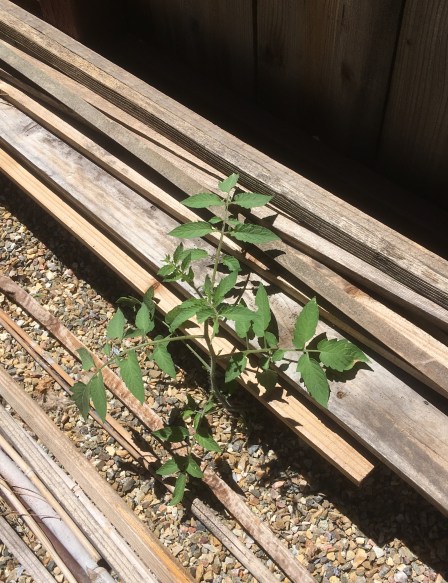
I never believed in Mother Nature before this week, when I found a gift that was so clearly chosen with my particular gardening eccentricities in mind, I thought immediately that she would be the one who left it for me. But — I went back to that quote from Chesterton, following St. Francis of Assisi, who said we should think of Nature more as our “little dancing sister,” who delights us into laughter. We have the same Father, we and Nature. Okay then, I’ll say it was my Little Sister who gave it to me: a tomato plant.
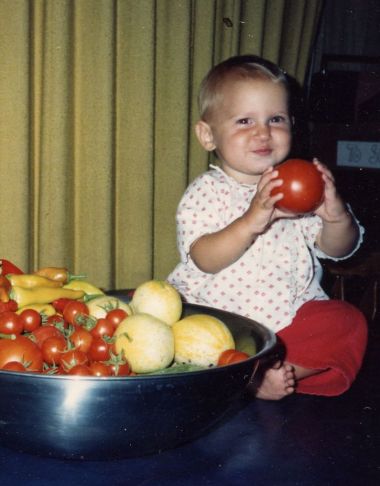
I used to grow the absolute best flavored tomatoes that you could find anywhere. A big part of my method was to dry-farm them, the way the Italian immigrants to California used to do. You water when you plant them, deeply, but then not again all summer. I tweaked that system and usually gave mine a drink every month or so.
But in my new garden, I haven’t found a way to do this, or a place. This year I didn’t plant one tomato, and I gave away all my tomato cages. Recently I saw my neighbor Kim’s tomato “garden” which is all in big pots, and it gave me the idea to try that next summer, and I could put the pots in my nice hot utility yard, on the gravel.
This week I went out to the clothesline and saw a tomato already planted in that very space. I’m thinking it must have a deep root, as it’s not near a water source. I did laugh, I can tell you. Whether or not I get a tomato from this plant, it was a very sweet and thoughtful gift from my little sister, and I take it as a pointed word of encouragement about my idea for next summer’s tomato experiment.
 ave the opportunity to know this scene as more than a poem, I thought it best not to wait to share it.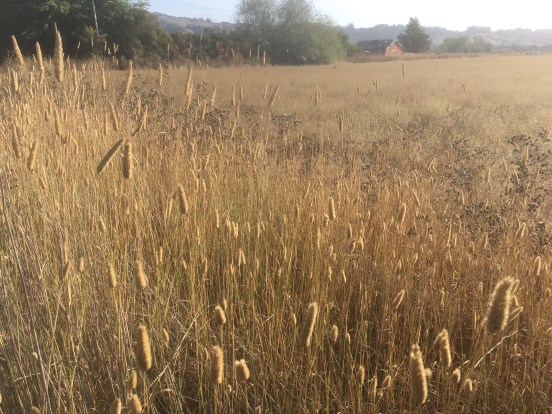
 The Queen Anne’s Lace, or Daucus carota, one of the “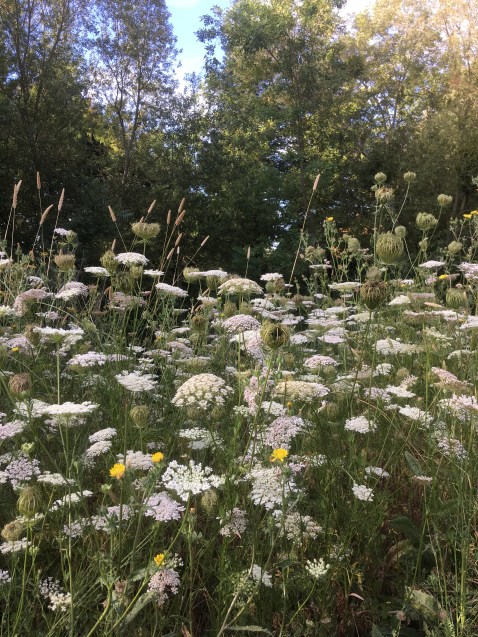







 ,”
,”