 On outings with Pippin’s family, I insisted on sitting in the “way back” of the van they call Batvan. That way I had a close-up view of the map that Scout had made, which he used to show me the route from my house to his house to Montana to the river…this map covers just about anywhere you might want to go – or at least, where he wants to go.
I had (all without any map whatsoever) just arrived in my car Billy Bluesage via Pathfinder’s place in Oregon (home of Annie the photographer) in Siskiyou County where this family of my middle daughter lives. It was their baby Jamie who was born the day after his grandpa’s funeral, bless him. I have posted many pictures of their place and environs over the years, here and here, and here for example.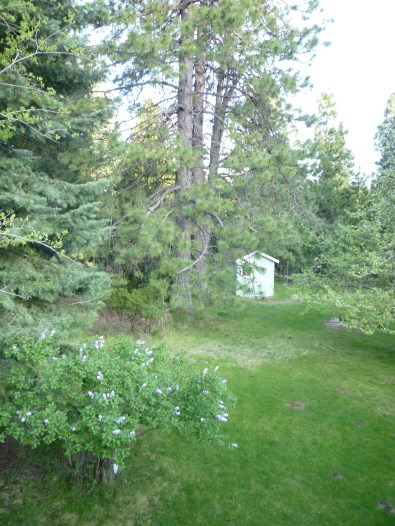
The first morning I woke up I took some pictures off the balcony of the room in which I had slept. It’s nearly 4,000 ft. elevation there and the chill still comes on in the evening at this time of year, but I had been cozy in my flannel, under a down comforter. The lows had been predicted to be in the 30’s F°. Tomatoes must be kept under cover for a few more weeks.
During that day I guess we mostly got ready for our picnic-and-campfire outing that was to be that evening. I must have been very lazy. I saw some deer in the back yard, but I never did go out and take the tour of Pippin’s garden. A fire was burning in the wood stove and I was like one of the cats liking to hang out in that room.
While the sun was still up and the sky blue, we packed all our food and baby gear and The Professor drove us to a spot on the Sacramento River where the North Fork comes in. You’d never dream that this little stream goes on to gather water from tributaries for more than 400 miles to become the longest and largest river in California.
The map below shows its course; we were sitting near the top where the two lines come together from the left, the North and South Forks of the river joining in a happy song running over the granite stones. 
Anyone interested in a more thorough explanation and less reduced graphic of these Sacramento River headwaters would do well to check out this blog post I ran across, which almost makes me want to put on my waders and go slogging through the waterways, further up and further in to the highest lakes and springs.
Almost. But realistically, who I am is this sluggish woman in the photo below, standing in one place as I look out at the little North Fork across the way, and wishing Mr. Glad were with us, or that he would be waiting at home for me, and I would soon be with him again and telling him what I saw and learned. Many of my joys on this trip were muted by not having him to share them with. He loved looking at maps, too, and planning trips to new places.
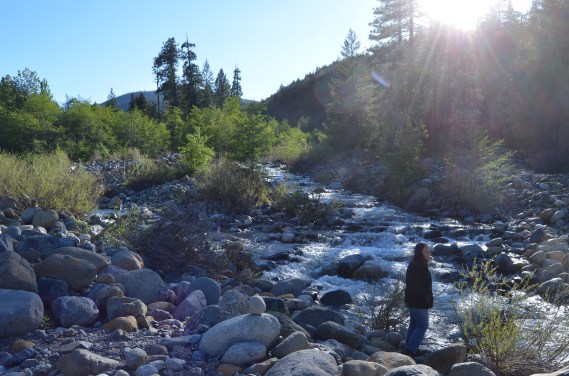
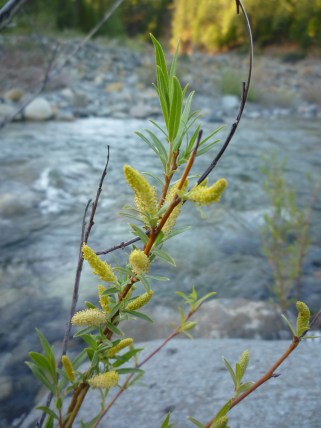
Well, this was a new place for me, and I did love it. What is more refreshing than being on the brink of frothing waters and breathing the clean air they stir up?
The older children scrambled over the boulders to find the best stones, and threw hundreds of rocks of different sizes into the river; they are hard workers when it is that much fun, and every rock plunging in plays a different note and tone.
It was cold – brrrr – and some of us added layers to the fleeces we already had on. I had been wearing a turtleneck with a chamois shirt I inherited from my husband on top of it, and I soon added a fleece jacket. Pippin and I took turns with a blanket that looked like something an Indian squaw would have appreciated down there by the river at night. 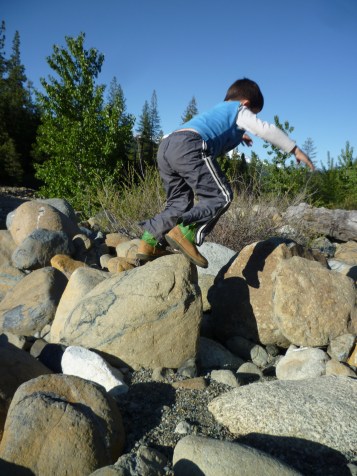
Scout and Ivy hopped and leaped and only fell a few times; they never cracked their noggins or landed in the river.
Notice the matching John Deere boots? I don’t know how they can navigate the rocks in those!
< Scout didn’t fall that time. 
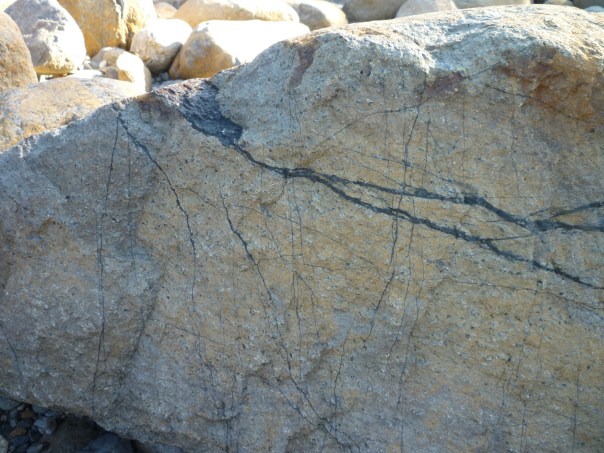
Pippin and I took lots of pictures of veins in rocks.
The Professor took pictures of his family and larger landscapes. The sun set and we lit our fire. We ate wraps and chunky s’mores.
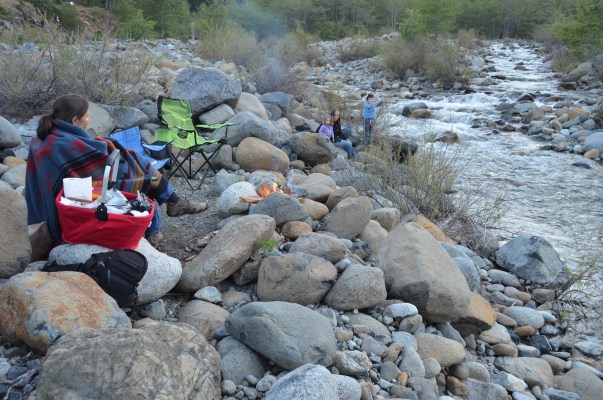

The light faded from the sky, but the firelight made it possible for Pippin and Jamie to look into each other’s eyes adoringly.
We didn’t really want to go home, but there was not a comfy place to sleep, either, sooo… We got out our flashlights and headlamps and picked our way over the stones back to Batvan. The grandma waited in the car with the children while the parents loaded up, and then we drove back home, so refreshed and worn out that we were quite content.


 d my ankles began to hurt. Note to self: No Danskos next time.
 This third cemetery has a smooth endowed section with flat grave markers, down the hill from what is in this picture, and we all trailed over there on the paths between the large square plots, to finish the service near those newer graves. Not far off a group of three people we didn’t know was gathered around a gravesite that was heaped with flowers, one woman obviously weeping.
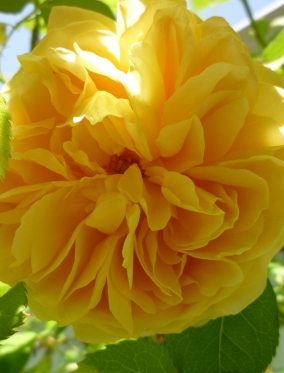
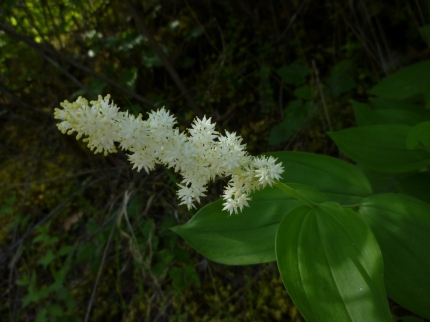
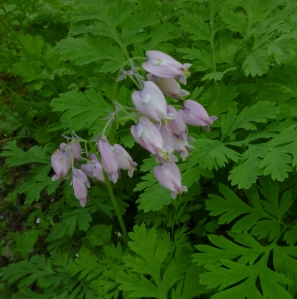
 “We call wild flowers common because of their quantity. But this is just where we strike the great difference between the productions of Nature and the productions of Man. When we produce many samples of the same thing they are of poor quality and we speak of them as mass-produced. The mass productions of Nature do not fail at all in terms of quality. Take the bluebell. There indeed is quantity. Yet every single year we are freshly struck by their quality. Only a flower-snob could fail to see that any one of these bells on the uplifted belfry is as delicate a construction as any tulip or any rose. I will not say more beautiful, or less, for in this realm of flowers we actually are in the presence of abundant examples of — perfection. I think that perfection is the key to the emotion that flowers cause in us. When a thing is perfect the problem of its existence is solved. Gazing at flowers in a wood an unexpected signal seems to go up; we feel a movement of happiness and hope about everything, there is a suggestion that all is really well, all is right with the world….”
 Gladsome Lights