Not since I was a teenager have I given much attention to the message of the Prophet Zachariah. Our youth group studied the Minor Prophets of the Old Testament with the pastor of the Presbyterian Church in my little town. I remember nothing specific about Zachariah, and I doubt that our course material included learning that he is called “The Sickle-Seer.”
 His feast day is today, so I read a little by and about this servant of God who was born in Babylon, was called to be prophet at a young age, and died around 520 B.C.
“The Book of the Prophet Zachariah contains inspired details about the coming of the Messiah (Zach 6:12); about the last days of the Savior’s earthly life, about the Entry of the Lord into Jerusalem on a young donkey (Zach 9:9); about the betrayal of the Lord for thirty pieces of silver and the purchase of the potter’s field with them (Zach 11:12-13); about the piercing of the Savior’s side (Zach 12:10); about the scattering of the apostles from the Garden of Gethsemane (Zach 13:7); about the eclipse of the sun at the time of the Crucifixion (Zach 14:6-7).” oca
He is known as the “Sickle-Seer” because of a vision described in the fifth chapter of the Book of Zachariah, in which he saw a sickle flying through the air, destroying thieves and liars. I notice that most translations call this not a sickle but a scroll, but it’s easy to see why the Septuagint text might be correct about the word, as a sickle would be more effective at destroying the sinners than a scroll, as this page explains.
Commenting on the first verse of the book, “In the eighth month of the second year of the reign of Darius, the word of the Lord came to Zechariah, son of Berechiah, son of Addo the prophet….,” the Orthodox Study Bible notes:
“The identity of the prophet and the time of the prophecy are not merely historical references, they are eternally significant because the revelation of God came to Zechariah at this time.
“The word of the Lord is an action of God in His graceful self-disclosure. The word of the Lord comes to Zechariah veiled, but when the Messiah comes in Bethlehem of Judea five centuries later, He comes in the flesh. Indeed, the language of the LXX [The Greek Septuagint] here parallels the language used by John to describe the Incarnation (see Jn 1:1-18). The Word who comes to Zechariah is truly the eternal Son of God, the Word of God, the Second Person of the Holy Trinity who becomes flesh as Jesus Christ.”
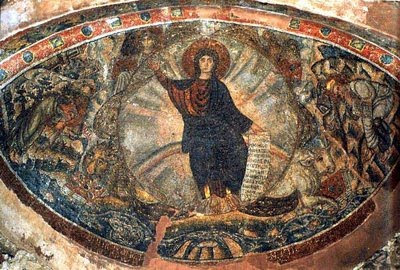

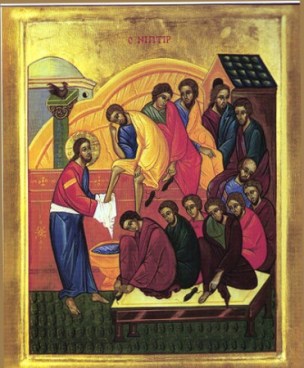 “In my relationship with others, I should like to plunge deep into every situation, entering the very soul of each person who comes to me, speaking to him as if he were the person most dear to me in the entire world. But where are we to find a love so great as to embrace everyone? How are we to love the foolish, the conceited who fuss over their mean little futilities, when (to make it worse) we are convinced that paying them attention only does them harm? I suppose that each of us needs to be a saint in order to grasp, through the thick layer of deposited rubbish, the element in each person which is unique and cannot be repeated – his soul – and to address that alone.”