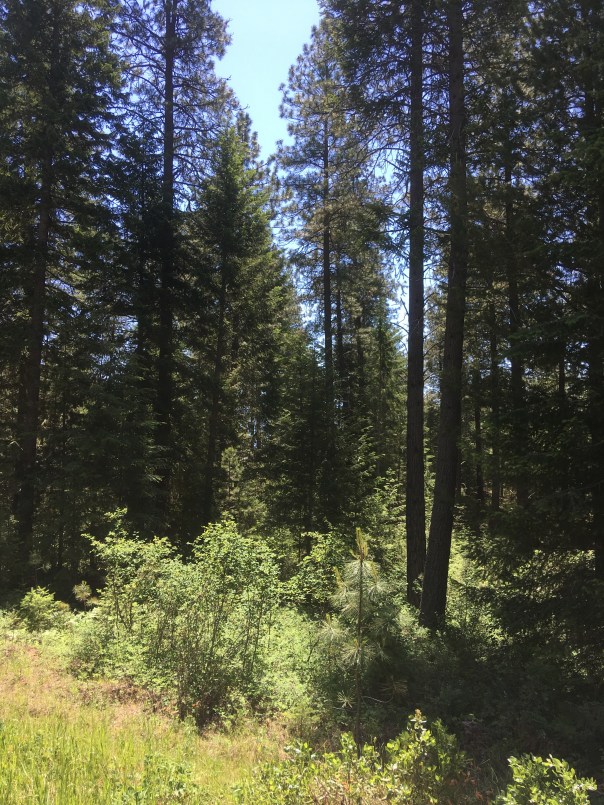
Fr. Tryphon is abbot of All Merciful Savior Monastery on Vashon Island, WA. He writes a blog at The Morning Offering.
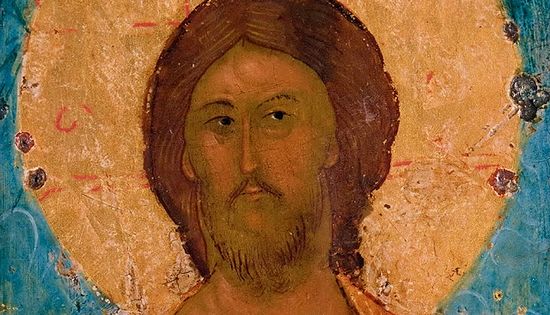
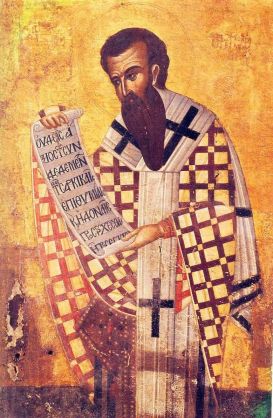
St. Gregory of Nyssa
“According to Saint Gregory of Nyssa, heaven and hell are not about location, but about relationship. God is everywhere, and He did not create a heaven for some, and a hell for others. If we love God, His fire will be a comforting warmth, but if we choose not to have a relationship with Him, His fire will be as hell fire. We choose how we will experience the presence of God in the afterlife, and since God can not be absent from anywhere, those who have chosen to ignore Him, will, nevertheless, be in His presence for all of eternity. Paradise and Hell do not exist from God’s point of view, but from man’s point of view. It is all about man’s choice and condition, for heaven and hell are not two different locations, but two different experiences of the same place.
“Everyone will spend eternity in God’s presence, but how we experience the Divine Presence will depend upon the condition of our soul. Those who have been transformed by the action and work of the Holy Spirit, will experience God as light and bliss. Those who have rejected God’s love will experience it as pain and suffering. For the unbeliever and the unrepentant, their sins will not allow them to enjoy the Presence of God.
In the Orthodox Church, when we celebrate a feast commemorating an event in our salvation history, such as Pentecost, also known as Holy Trinity Sunday, it is followed directly by another feast honoring a person who figures heavily in the previous day’s event. In the present case, tomorrow is Holy Spirit Day. It seems a good time to post these thoughts from Metropolitan Anthony:
When we say that God is spirit, we say simply that he is not matter as we know it, that he is something quite different. In that sense it is a negative description that belongs already without the word, to that form of theology which is negative theology, apophatic theology, a theology of paradoxes, a theology that uses words to point toward the ineffable — that which can neither be described nor put into words and yet which must be indicated somehow in speech.
One could avoid speech. In Siberia there were pagan tribes that had deliberately rejected every human word for God. And when in conversation they wanted to indicate God they raised their hand towards heaven. This is possible in a civilization of direct communication by speech. It is no longer possible in a civilization of books. But whatever words we use we have got to be aware of the fact that we are not describing, we are not defining what God is, because the very thing we know about God is that he is beyond defining, beyond describing. So that when we say of God that he is a Spirit, when we speak of the Holy Spirit in particular, we do not mean to give a concrete definition or any description of what he is. We point towards the fact that he is beyond our conceptual knowledge, beyond every formulation, that is is what we don’t know, and this is what we mean to say by saying that he is a spirit as contrasted with us.
–Metropolitan Anthony Bloom, excerpt from “Our Life in God,” from Essential Writings
“A lie seeks to make true something that has no true existence. It is an ‘alternate,’ make-believe universe to the one in which we live. Our desire for alternatives (and our fear of reality) are among the many motivations behind lies. It is revealing, however, to think about the nature of lies (which also reveals the nature of the truth). It is, at the very least, a matter of existence.”
“That which is true, is that which truly exists. As such, it is always its own strongest argument. If it truly exists, it will continue whether I believe in it or not. The truth does not require ideology. This carries the corollary of a lack of anxiety. If the truth abides, whether I believe it or not, then I am not bound to ‘make it so’ through the efforts of a culture war. It is, rather, for me to live it, to give thanks for it, and enjoy its fruit in the world.”
We can only be said to be alive in those moments when our hearts are conscious of our treasures. -Thornton Wilder
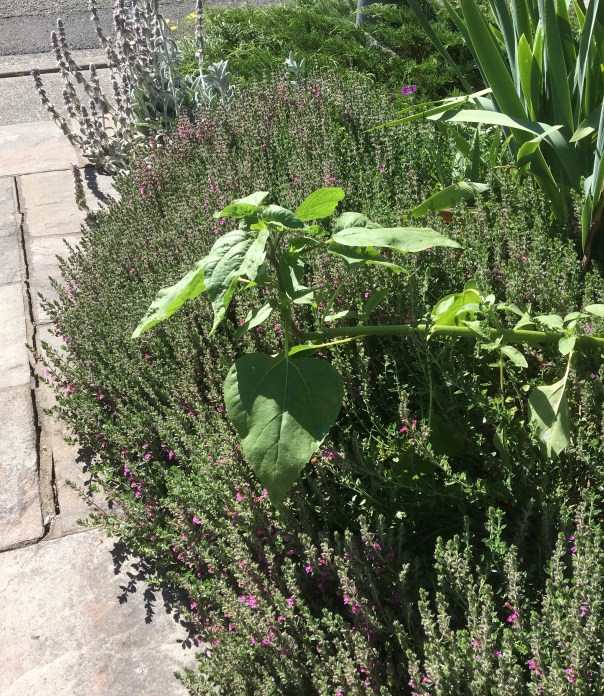
I’m home from my travels, and have been wandering about the garden to see what has changed in the last three weeks. My housemate Susan watered all the pots through a heat wave, Alejandro staked sunflowers and trimmed perennials, and my neighbor Gary trained the pumpkin vines to the trellis.
Mylitta Crescent
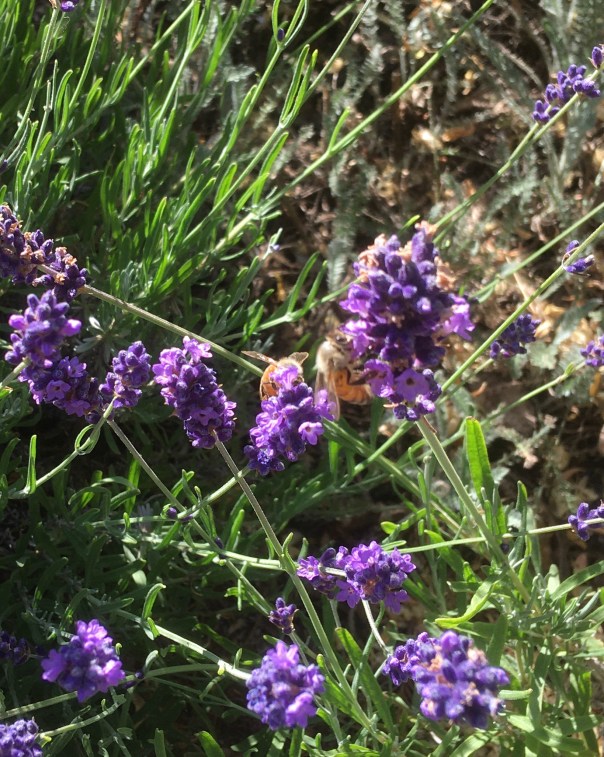
When I departed in late May, the bumblebees were the dominant buzzers among the flowers, but once the lavender and the germander opened, the honeybees returned. They are very alive, diligently about their business, and not ignoring the salvia, either. This gray bee likes the echinacea blooms that are just now available for nectar refreshment.
Hyssop, chamomile, basil and parsley are making a jungle of buds and blooms in the vegetable box out back. I’ve been waiting for the hyssop to do something for two years, while it took up a large space in that planter. It is famous as a bee plant. When I see bees acting like this one below, it makes me want to grow hyssop again… but not in the planter next time:
This Hyssopus officinalis is not the anise hyssop that I grew in my previous landscape, which “is neither anise (Pimpinella anisum) nor hyssop (Hyssopus officinalis),” but Agastache foeniculum. But they are both members of the mint family, and bees appear equally devoted to them.
The insects focus intently on what gifts they are given from the Creator, and I have been bowled-over conscious of my own treasures, during my travels. The grandchildren in Colorado, and their parents trying to keep up, impressed me with their youthful vitality, compared with Grandma, who liked to sit on the deck, play Bananagrams, take leisurely walks… and never once jumped on the trampoline with them.
While in Idaho I was acutely aware of what treasures my friends Rosemary and Jacob are. Being with them is like swimming in a refreshing, nectar-rich pool of friendship.
We worked to identify various plants on their property, and found dewberries, thimbleberries, and wineberries; wild roses are everywhere, and white spirea. Along the country road where we walked, these Baker Mariposa Lilies dotted the foliage on the forest floor. Every one was dotted itself with one or more insects as conscious as an insect can be of its sweet treasure.
I think Jacob and Rosemary would agree with me that it is the Lord who has given us this prized possession that we hold as a threesome, love that is an overflow of the Holy Trinity, from whom all life emanates.
My friends are my estate. Forgive me then the avarice to hoard them. They tell me those who were poor early have different views of gold. I don’t know how that is. God is not so wary as we, else He would give us no friends lest we forget Him. –Emily Dickinson
I realize now that my aliveness is of a different sort from bees and children. My heart was continuing to sing and dance with thankfulness while my body sat quietly on airplanes for hours yesterday. So many treasures and the consciousness of them, and riches waiting for me when I arrive home… All this activity is making me sleepy like a toddler. Must be naptime!
 When we say that God is spirit, we say simply that he is not matter as we know it, that he is something quite different. In that sense it is a negative description that belongs already without the word, to that form of theology which is negative theology, apophatic theology, a theology of paradoxes, a theology that uses words to point toward the ineffable — that which can neither be described nor put into words and yet which must be indicated somehow in speech.