The following paragraph comes at the end of Part I of David Bentley Hart’s The Experience of God: Being, Consciousness, Bliss. Perhaps some readers wonder why he didn’t make a stronger case for the theistic point of view while he was comparing humans’ pictures of the world; here he explains:
…as I have begun to grow somewhat older than I really want to be, I have also begun to vest less faith in certain forms of argument, or at least in their power to persuade the unwilling, and more in certain sorts of experience — certain ways of encountering reality, to phrase the matter with infuriating vagueness. My chief desire is to show that what is most mysterious and most exalted is also that which, strangely enough, turns out to be most ordinary and nearest to hand, and that what is most glorious in its transcendence is also that which is humblest in its wonderful immediacy, and that we know far more than we are usually aware of knowing, in large part because we labor to forget what is laid out before us in every moment, and because we spend so much of our lives wandering in dreams, in a deep but fitful sleep.
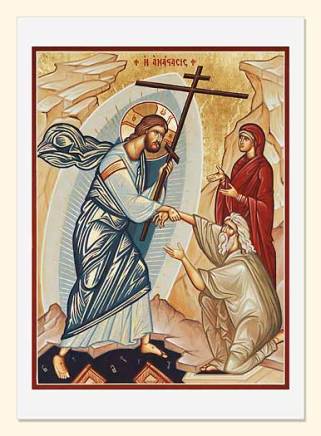
On Thursday of Holy Week (today) we commemorate the first eucharist as the Lord Jesus instituted it, what we Orthodox call The Mystical Supper. On the Orthodox Wiki discussion page I found that someone had asked for clarification of what the Real Presence is, according to Orthodoxy; it seemed confusing to them. Then various people gave input. One said that it may be confusing because it is a Mystery. [Think smiley face] It is a common joke in or on the Church that this is a facile answer.
But it points to the true nature of the faith, that our relationship with God is not purely intellectual. We do not know Him by putting together all the facts we’ve learned; He doesn’t reveal Himself through our intellects alone, or even primarily.
Fr. Thomas Hopko says, “The mystery of the holy eucharist defies analysis and explanation in purely rational and logical terms. For the eucharist — and Christ himself — is indeed a mystery of the Kingdom of Heaven which, as Jesus has told us, is ‘not of this world.’ The eucharist — because it belongs to God’s Kingdom — is truly free from the earth-born ‘logic’ of fallen humanity.”
The page on The Holy Mysteries, what we call the sacraments, is very good! It starts right out with this perspective and reality about the Church that I love: “…the Orthodox Church considers everything which is in and of the Church as sacramental or mystical.” I suppose this is why “There has never been a universal declaration within the Orthodox Church that there are only seven sacraments.”
I knew that, but I learned some other things, more historical and not so mystical, reading these pages today: “While the Synoptics do give the Last Supper as a Passover seder, John’s Gospel (which the Church privileges over the others) has it happen before the Passover.” The contributors all seemed to agree on these points though they differed on their theological significance.
On a more personal note, while I am grieving the death of my husband, I’ve been so grateful that we are in Holy Week, with its numerous opportunities to participate in this sacrament, this mystery of the Kingdom of Heaven — and truly, in all the abundant graces of the Church. It’s not facts that have been sustaining me, but His Real Presence.
Fr. Stephen asks rhetorically, “Can You Forgive Someone Else’s Enemies?” with a look at the words and actions of Jesus in the Gospels, and reflecting on the story of The Brothers Karamazov. He writes:
Forgiving is “loosing.” Refusing to forgive is “binding.” The imagery of loosing and binding helps move the imagination away from a legal construction. When we sin, or even when we are involved in sin, we become bound. There is a binding that occurs because we ourselves were the cause of the sin. There is a binding that occurs because we ourselves were the victim of a sin. There is a binding that occurs because we simply witness the sin. There is even a form of binding that occurs to the whole of humanity because of the diminishment of even one of its members. If everyone were somehow only responsible for their own actions the world would be quite different. As it is, the action of one involves the binding of all. Adam’s sin has left us bound ever since. We are not being held legally responsible for Adam’s action. We are existentially and ontologically bound by Adam’s sin.
These truths are hard to grasp, even for the intellect, and Fr. Stephen helps me quite a bit at that level. But to live in the reality of our freedom, to acquire and absorb and give this kind of liberating love — it’s something impossible, were it not for the fact and the power of the Resurrection. Lent is a good time to pray about this, yes?
I’m looking forward to seeing all of my children at once this weekend, and the thought of them and their tender, breakable and forgiving hearts gives me great comfort; they are a testimony to the kindness of God. And His kindness certainly pertains to the article I was referencing, the whole of which you can read here.
Most people in our family love maps. The previous generations loved them, too, and I treasure the memories and pictures of various father-son or sibling groupings around a map, planning a road trip or a backpacking adventure, or just getting a better idea of the world we live in.
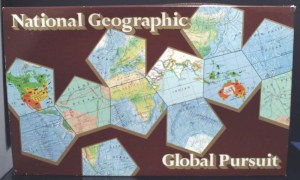
Geography games including maps can also be fun, such as Global Pursuit that was put out by National Geographic in 1987. It was a little challenging for someone like me who isn’t sharp in spatial orientation skills, because the map of the world was all chopped up into pentagons which never fit together all the way.
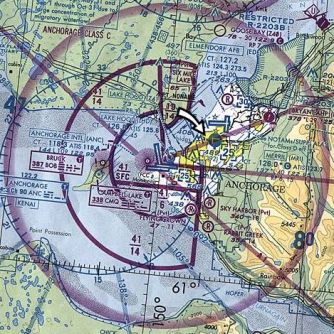
It’s easy to lose all track of time when poring over maps. One of my favorite parts of an unusual aviation ground school that was offered at my high school was studying the aviation maps pilots use to plot their course. In those days it was all done on paper, and I was fascinated by the concentric rings around airports, and all the copious information including odd names of towns in Texas, which was the area our school sample was showing. (The one below, I realize, is of Anchorage, Alaska.)
The whole concept of a map, a simplified form by which we can get a mental handle on a vastly greater reality, became useful for me in a different manner when I was introduced to the way M. Scott Peck uses it in his book, The Road Less Traveled. I have never actually read the book, but the the image of a mental/emotional map has served me well through the years. Some excerpts:
CHOOSING A MAP FOR LIFE – Truth is reality. That which is false is unreal. The more clearly we see the reality of the world, the better equipped we are to deal with the world. The less clearly we see the reality of the world–the more our minds are befuddled by falsehood, misperceptions and illusions–the less able we will be to determine correct courses of action and make wise decisions.
Map of Life – Our view of reality is like a map with which to negotiate the terrain of life. If the map is true and accurate, we will generally know where we are, and if we have decided where we want to go, we will generally know how to get there. If the map is false and inaccurate, we generally will be lost.
I brought all of my real and metaphorical map history to this poem I read today. The poet is another woman who also likes maps, but her poem shows clearly the ways that they fail to reflect reality. That doesn’t bother her; even in their failure she praises them for the vision they give us, “not of this world.”
Perhaps we also don’t need to worry about whether our heart-maps are all matched to our surroundings. Might they also serve a great-hearted and good-natured purpose, so that instead of giving up on our inner maps we strive to bring the full reality closer to the vision? I’m thinking of our daily prayer, “Thy Kingdom come…” and of “Love hopes all things, love believes all things….” May the Lord write the map of His Kingdom large in our hearts.
MAP
Flat as the table
it’s placed on.
Nothing moves beneath it
and it seeks no outlet.
Above – my human breath
creates no stirring air
and leaves its total surface
undisturbed.
Its plains, valleys are always green,
uplands, mountains are yellow and brown,
while seas, oceans remain a kindly blue
beside the tattered shores.
Everything here is small, near, accessible,
I can press volcanoes with my fingertip,
stroke the poles without thick mittens,
I can with a single glance
encompass every desert
with the river lying just beside it.
A few trees stand for ancient forests,
you couldn’t lose your way among them.
In the east and west,
above and below the equator –
quiet like pins dropping,
and in every black pinprick
people keep on living.
Mass graves and sudden ruins
are out of the picture.
Nations’ borders are barely visible
as if they wavered – to be or not.
I like maps, because they lie.
Because they give no access to the vicious truth.
Because great-heartedly, good-naturedly
they spread before me a world
not of this world.
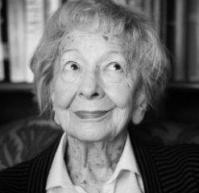
–Wislawa Szymborska
Translated from the Polish by Clare Cavanagh The New Yorker, April 14, 2014
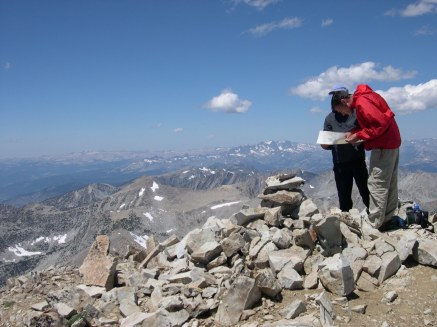
My two sons consulting a topographical map on a peak.