Here is a smattering of pictures, one from each month of 2025. It was hard to choose just one per month. I can think of possible thematic collections from the year that might be done, so that I could re-post more — but I probably should keep looking to today instead, and the many household projects I want to do that don’t involve sitting at the computer. Still, it was fun to briefly scroll through the months and assemble these:
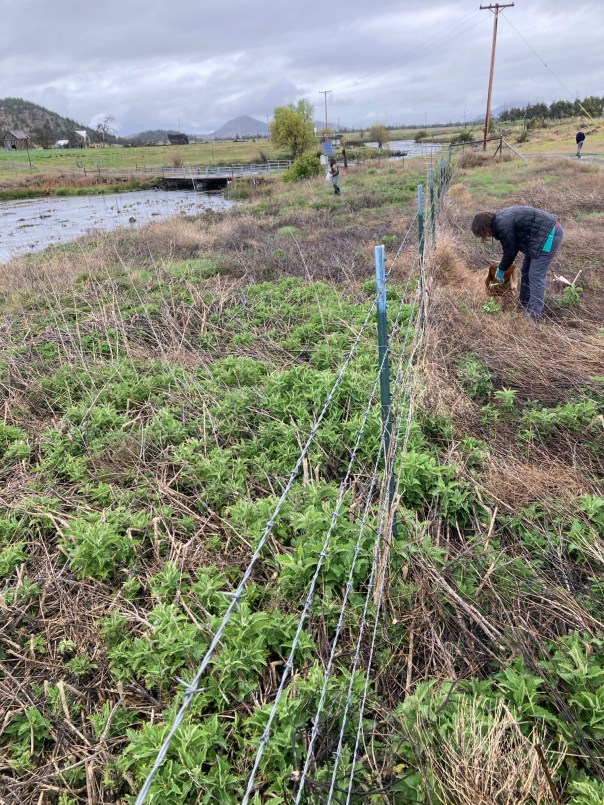
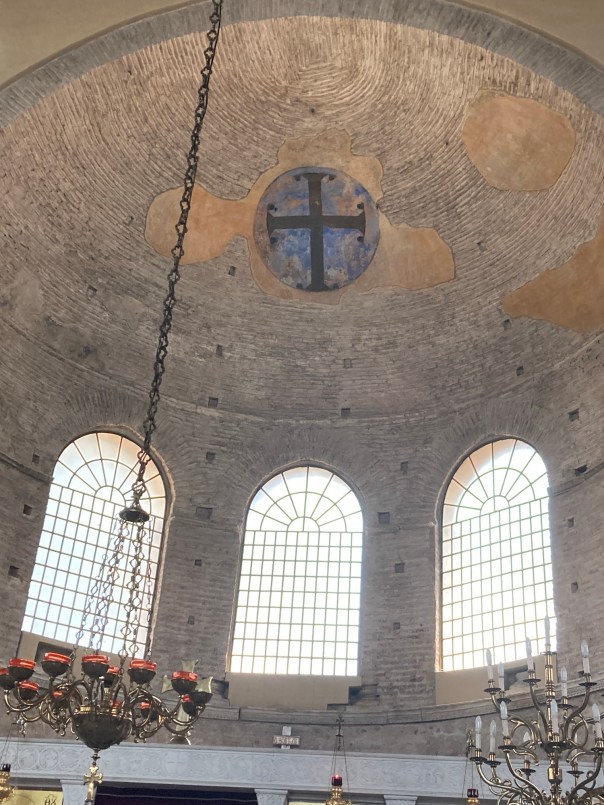
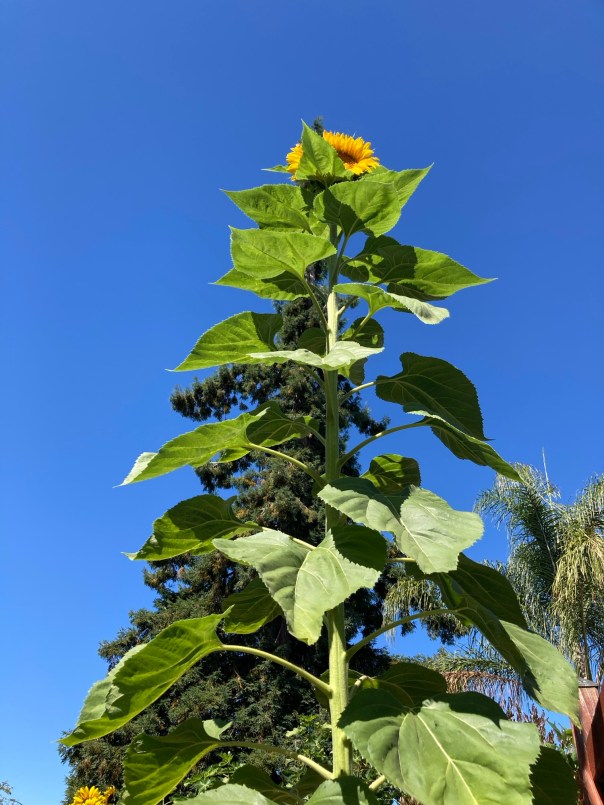
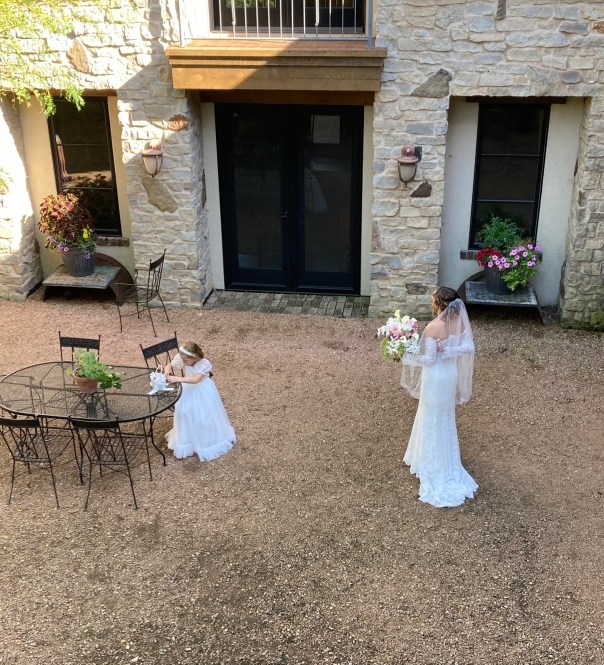
January – pomegranates in the back gardenFebruary – Eucalyptus along the creek pathMarch – Memorial for my husband, 10 yearsApril – Gathering nettles in the NorthMay – Paros, GreeceJune – Thessaloniki, GreeceJuly – In the High SierraAugust – Boba teaSeptember – My tallest sunflower everOctober – Maggie’s wedding in WisconsinNovember – Seedy crackersDecember – Christmas with Lori
And there it went! I had already forgotten some of the blessings that came to me, as each day and week and month raced past. I wonder what images will be worth saving in 2026?
“3100 Christians were killed and 2830 were kidnapped in Nigeria in 2024.” In India, “Four to five pastors or churches are attacked every day.” These are some statistics representing great suffering in parts of the world that aren’t in our daily headlines. The constant wars and episodes of violence, the dysfunctional families and societal breakdown that do make the headlines can’t begin to tell the story of each individual human life wracked with pain and heartache. No doubt all of us know, and many of us are, cases in point. Is it not crass, under the circumstances, to write about being happy? Should we feel guilty for even being happy?
The words of Jesus about tribulation had been floating around in my mind a lot recently: “In the world you will have tribulation,” and, “I have overcome the world.” Last Sunday as I was driving to church and actually bringing those thoughts into focus, as hard as I tried I could not remember the clause that comes between those two, which I have known most of my life. I stopped on the way to pick up a friend, and while I was waiting for her to come out to the car I looked up the verse on my phone. It turned out to be a convenient case of forgetfulness because when I went to the Bible app, of course it had several translations, which gave a broader meaning to Christ’s encouraging words.
Our Lord had just been telling his disciples about many disturbing things that would happen in the future, and then generalized saying, “In the world you will have tribulation….” And his next words are startling, really. The way I knew the next part is: “…but be of good cheer, for I have overcome the world.” Other translations are “take heart,” or “have courage, for I have overcome the world.”
The poem below is about being happy, about meaning, and writing. I’ve written before about how in the most creative, happy times of my life, which were while I was with child, I completely forgot about my diary or journal and never wrote a word in it. At other times, just living at a normal level of happiness, I often have written in a journal. My problem with journaling is exactly what G.K. Chesterton alluded to on at least two occasions saying,
“I am a bad reporter because everything seems to me worth reporting; and a bad reviewer because every sentence in every book suggests a separate essay,” and,
“Once I planned to write a book of poems entirely about the things in my pocket. But I found it would be too long; and the age of the great epics is past.”
Did Chesterton ever keep a journal, I wonder? My guess is he didn’t, because writing about everything in a journal would leave him no time for gainful employment at writing in a more focused manner about many things.
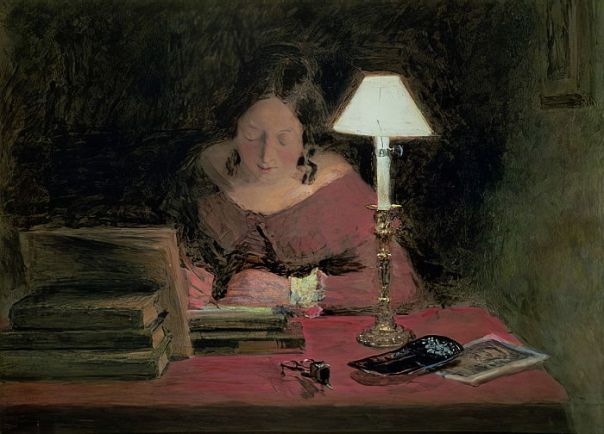
William Henry Hunt, Girl Writing by Lamplight
I seem to have given up on my journal to a greater degree than ever before, because there is just too much that I want to put in it. If I wrote in my journal the way I want to, I would never be done. I sense this, every time I try, and I start scribbling madly, racing against time, knowing that it’s hopeless: I will never be able to do a proper job. Journaling demands to be neverending.
A book I borrowed briefly from the library some years ago told the story of the author’s obsession with journaling, and then her obsession with thinking about her obsession. She asked, How could she have a life, if she journaled about everything? She feared she was ceasing to really live, because she was writing instead. I didn’t read very far in it, because if journaling was stealing time from living, using my precious hours to read her book was even worse theft.
Blogging is not the same at all, in my case. I have to be somewhat focused when I write for others to read, and I must bring every post to an end, so I can publish it. For a process-oriented person like me, each post is a manageable goal, one which I can abandon and no one will care. In the meantime, I’m able to include some of the things I would have journaled about, without getting lost in my thoroughness.
I could put myself into this poem, and I would be talking to God. Because I do write a lot, the whole thing may not seem to pertain to my situation. But it did make me think, and it made me happy.
MISSED TIME
My notebook has remained blank for months thanks to the light you shower around me. I have no use for my pen, which lies languorously without grief.
Nothing is better than to live a storyless life that needs no writing for meaning — when I am gone, let others say they lost a happy man, though no one can tell how happy I was.
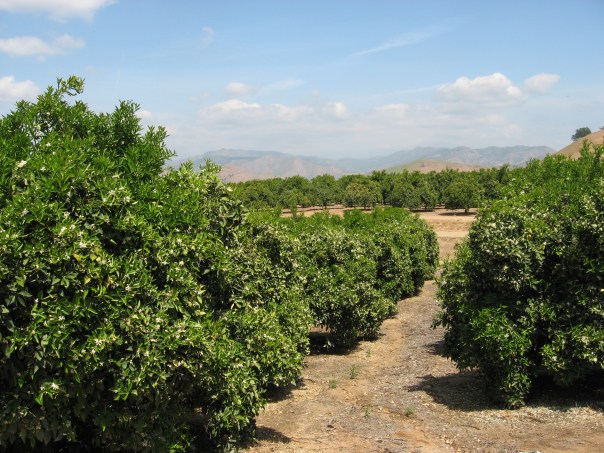
Back in the day when I lived with my family in farm country, in the midst of miles and miles of citrus orchards, my siblings and I would ramble through the groves, ours and our neighbors’, and along the private dirt roads dividing the properties from each another. All the kids did this, and no one ever suggested we were trespassing.
Once we came upon a small and shabby house with its doors and windows open, and obviously abandoned. We dared to go in, and walked through the rooms, which still contained furniture such as a kitchen table with dried up food on plates, other unwashed dishes in the sink, and personal belongings lying about. We didn’t stay long, it was too creepy, but my imagination was stirred from then until now, wondering what story lay behind the disorder. What would prompt the residents to leave without finishing dinner, and never come back? Why had no one bothered to come and clean up the mess, and make the place livable again?
That house didn’t show signs of having been beautiful at any time, but under different circumstances, it might have been. It remains for me a disturbing memory, for all the sad stories it might have been hinting at, but also because of the physical ugliness that stood as a witness to chaos. In all likelihood it has been leveled to the ground long since, and orange trees planted in its spot. I wonder if anyone else remembers it.
The poem below tells of a much richer and more nuanced experience and story. The poet Frederick Goddard Tuckerman was stricken when his wife died after the birth of their third child, and felt that as the father of the child he was somewhat guilty. Most of his poems after her death express these feelings of loss, loss of home and of the woman as the center of family life. One commentator suggests that the description of the mother, twice using the word “sat,” indicates her being frozen in time as a memory.
SONNET XVI (“Under the mountain”)
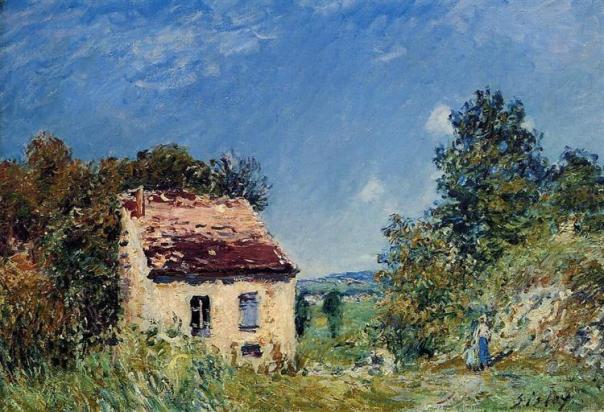
Under the mountain, as when first I knew Its low black roof, and chimney creeper-twined, The red house stands; and yet my footsteps find Vague in the walks, waste balm and feverfew. But they are gone; no soft-eyed sisters trip Across the porch or lintels; where, behind, The mother sat, — sat knitting with pursed lip. The house stands vacant in its green recess, Absent of beauty as a broken heart; The wild rain enters; and the sunset wind Sighs in the chambers of their loveliness, Or shakes the pane; and in the silent noons, The glass falls from the window, part by part, And ringeth in the grassy stones.
-Frederick Goddard Tuckerman
Alfred Sisley, Abandoned House
Thanks to Sally Thomas for sharing this poem on her Substack page last month.
Long, long ago, I lived in Turkey for most of a summer as an exchange student. My host family lived in a house in an older neighborhood of Izmir, the district of Bayraklı. Three years later when I visited them they had scaled up and moved to a high rise apartment at the other end of the city.
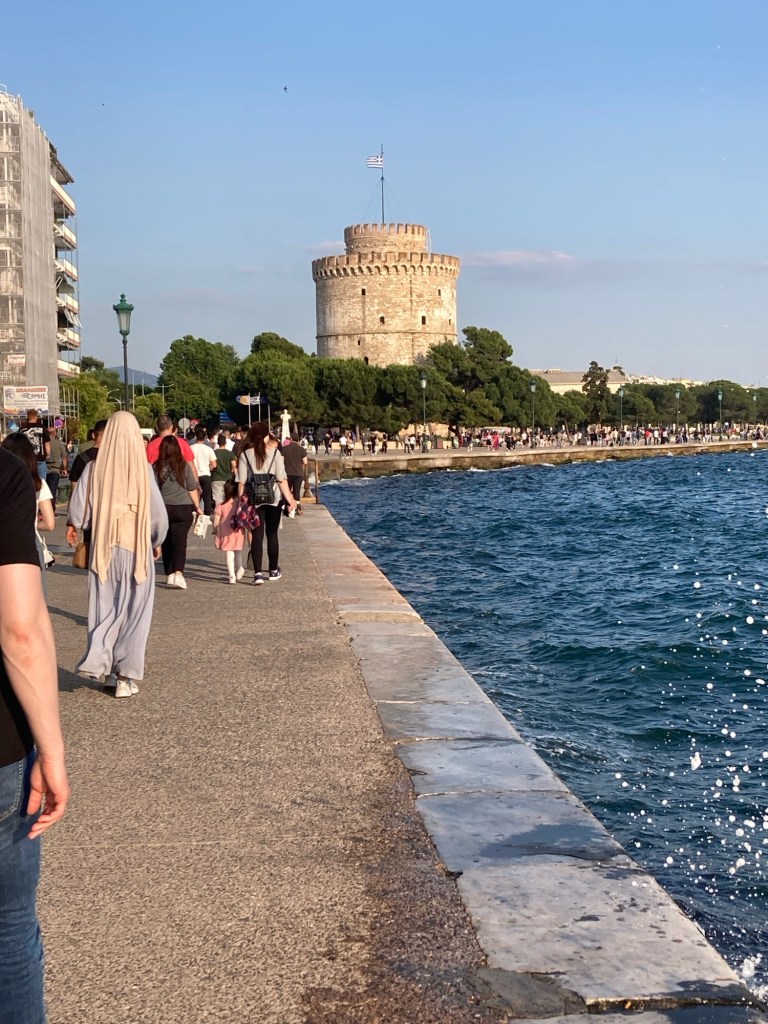
The New Waterfront in Thessaloniki
One thing that was the same both times I was there was the custom of strolling along the wide walkway next to the sea that is called the Kordon.
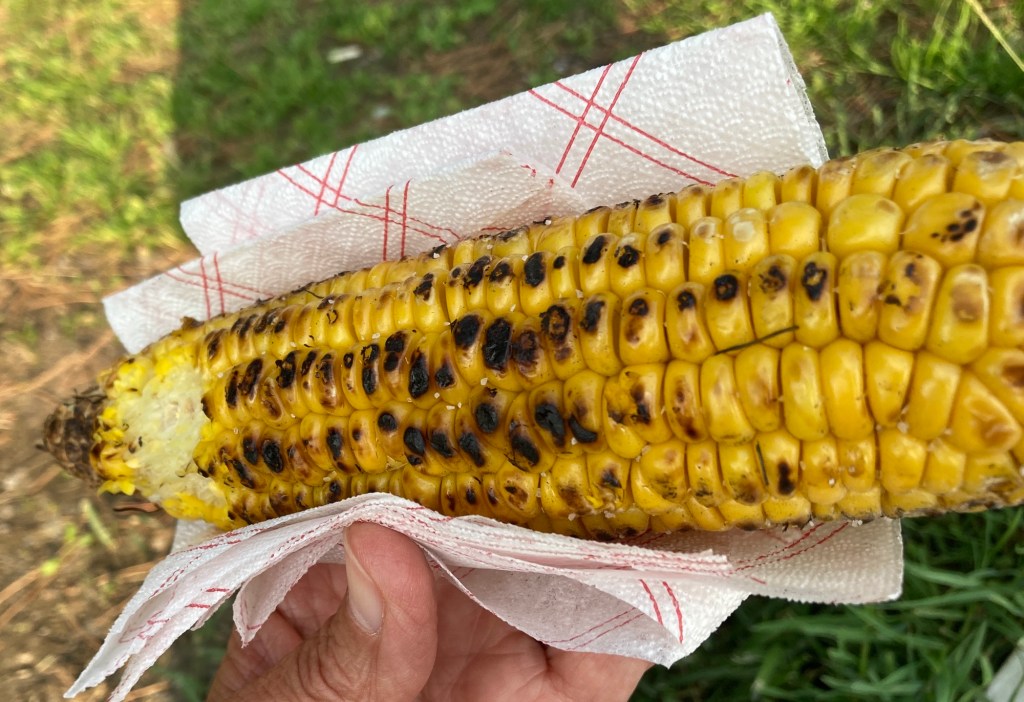
On summer evenings especially it was the place to be, refreshed by the breezes off the Aegean. But at any time of day you might run into friends, or intentionally meet up with them there; it was a simple pleasure for families. Street vendors sold snacks from their carts, such as roasted corn and nuts. As the sun was setting we’d buy a cup of the pudding-like warm drink called salep.
Thessaloniki
Over the years since I have often thought about how that city had so wisely made the most of its setting for the health and prosperity of its inhabitants.
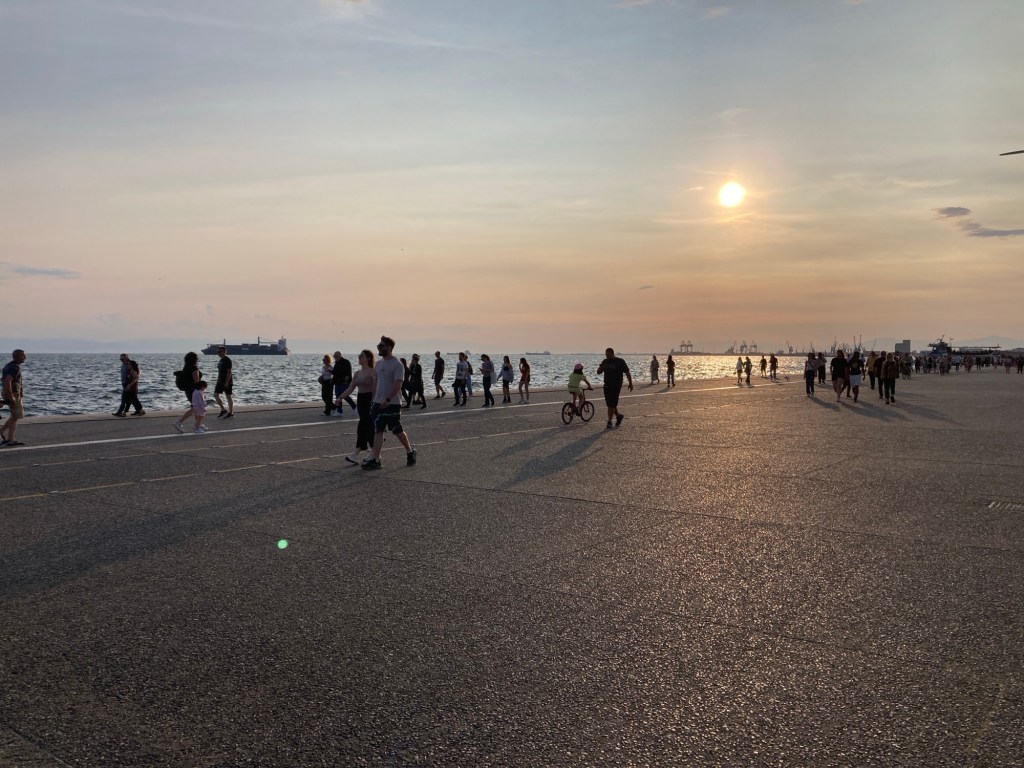
I saw in advance that Thessaloniki had a similar recreational strip, called The New Waterfront, and last night I walked there for an hour.
I learned this morning when looking for a picture of Izmir’s promenade that some people have called these two “twin cities,” because of various historical and demographic aspects they share, besides their seaside location and pleasing waterside parks. Wouldn’t it be fun to spend time in both cities for a year or two while researching and writing a book comparing the two? Hmm… I should have thought of that about twenty years ago, but I suppose I was busy with something else.
Alexander the Great
Well, it felt very strange and dreamy to wander along that walkway last night, like going back to a different life in a different place that was somehow the same place, an existence that belonged to a different person. But no, it was me, and it is me. It’s a mystery for sure.











 Gladsome Lights