Category Archives: travel

Skimpy Travelogue

I can’t seem to write a real blog post about all the things I want to tell since I have been on the east coast, three days already. I thought my tablet device would work for this, but it doesn’t really…so tedious. If I had brought my laptop I could have done much more — but maybe not, as I have been busy morning till night, either having other kinds of fun than writing, or catching up on my sleep. Before you know it I’ll be home and I’ll type out more details.

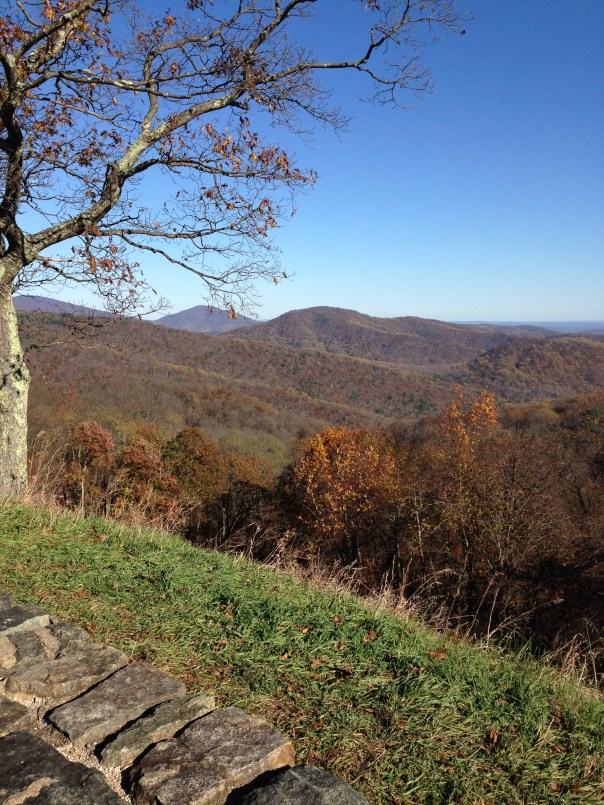
I’m staying with Kate and Tom in Washington D.C., but today we drove south to Virginia, among the Blue Ridge Mountains and along Skyline Drive, where there are 75 overlooks of the Shenandoah Valley and the wavy tree and hill textures in gold, orange and pink, with varying amounts of gray and white.

Even here I was pleased to be reminded of home, when I read, “Shenandoah National Park was established in 1935 to bring the western national park experience to the urban east.” I did not expect this topography to resemble that of the western U.S., and what I enjoy so much are these hardwood forests blanketing the folds of the mountains. You know what else that makes me happy about that place? It keeps the lovely word strumming in my mind: Shenandoah.

img_3710

A good traveler has no fixed plans.

gl11-img_3532crpThe cold mornings hit this week, but the fog always lifts in time for a walk under blue skies. On one of  those days, I was only warm for the hour when I was walking down the path with the sun on my back.

Always something different to see, and why should I be surprised? But I always am! I saw two plants I didn’t know yesterday; maybe one of my readers can help me identify them.img_3566
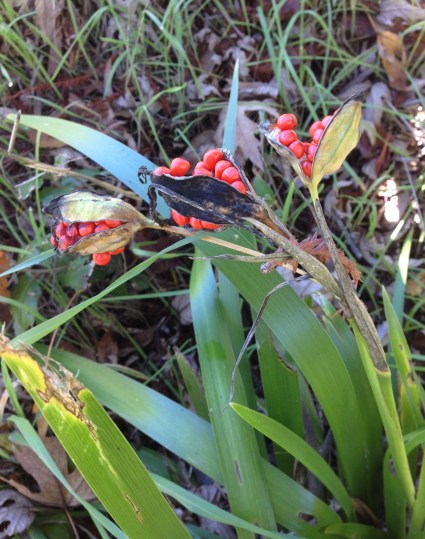
What seems to be a lily in the seed-forming stage.gl11-img_3567

And a bush with fuzzy seeds.

gl11-img_3557-fuzzy-bush

gl11-img_3559

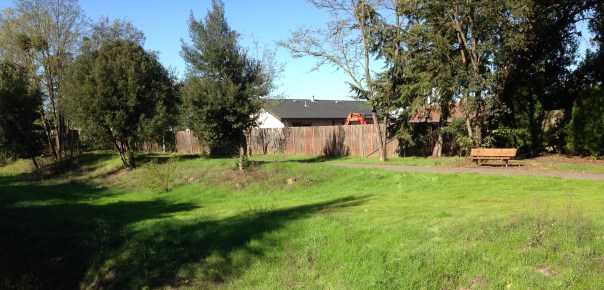
I was so relaxed, I dinked around and took forever to get home (to the house with not enough windows). I even sat on this bench for a while and noticed things. The last time I enjoyed the view from that spot I was with my late husband, almost two years ago. Normally on my walks now, I just walk.
gl11-img_3576

Back in my own yard, blooms hang on to the newly-planted echinacea. This week I set out Iceland poppies, and will soon put up more trellising for the various peas. I’m trying to get things in order here before I leave next week on a trip across the country. There is so much to do I shouldn’t really take the time to compose blog posts, but that strategy seems to work about as well as if I would stop eating for lack of time.

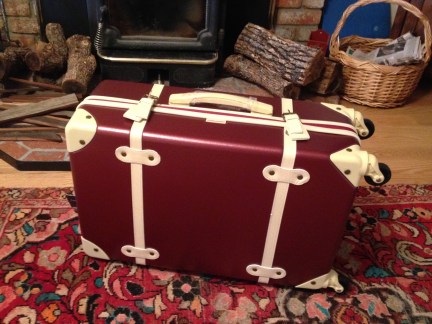
So far I don’t feel anxious about the deadline by which all my preparations must be made, before my departure. Maybe that’s because I still have a few days, and they aren’t packed with other activities to work around. I bought new luggage for this trip, not only practical, but fun. That’s a first-time experience already.  🙂

“Money spent on good-quality gear is always money well spent.”
-Tahir Shah, In Search of King Solomon’s Mines

Before I get on the plane I’ll try to share specifics about this upcoming journey. I read some of my old blog posts yesterday to find out to what degree I’ve already repeated myself in my past travelogues. Often I have a hard time relating to the author of the articles, and I think to myself, “That girl has eaten way too much dark chocolate!” When I am on an expedition farther than my own neighborhood with its familiar insects and flowers, my brain starts playing Beethoven symphonies instead of Chopin nocturnes.

gl11-better-img_3547

Much of the inspiring travel writing out there appeals to the me that once was, in the most energetic and healthy time of life — but when I actually lived in that era and body I was involved in much more thrilling and satisfying work than wandering to and fro among strangers. I was a young wife and mother, and that experience was adventurous to the max, requiring all of my resources and spunk.

People write as though you haven’t really traveled unless you go with no itinerary and no destination, to be surrounded by strangers – whom you would, of course, find to be kind. I do have experience traveling alone among strangers whose language I didn’t know, and they weren’t all careful of my welfare. In the decades since, in the interest of preserving the health and enjoyment of my family, I have focused on thoroughly preparing for journeys. It won’t prevent unexpected events, things “going wrong,” we hope in ultimately harmless ways, and ideally making for good stories to tell. Adventure is a relative concept, I suppose.

I am not averse to meeting new people on my travels, but mostly I hit the road or climb on the plane with the goal of seeing a familiar face at the end of my trip. I have the goal, but don’t hold on to it too tightly. Anything can happen, and long before I take my seat on the airplane I give myself into the care of many people who are capable of goofing up. When I get to my destination I will let my hosts take care of me and determine my schedule.

I can’t travel anywhere that God isn’t.  Maybe that is the main reason why every morning my brain will be excited and my heart will be at peace, and I will feel like an adventurer.

“A good traveler has no fixed plans and is not intent on arriving.”  -Lao Tzu
gl11-fullsizerender

October on Central Valley farms.

glt-p1050721-bee-fairy-duster
bees on fairy duster – calliandra


For a long weekend I returned to the Central Valley (California) territory of my childhood as I had done in May. Both times were for nephews’ weddings, so I was there primarily to be with my family, but I also managed to visit with three dear friends before and after the festivities.


glt-sumo-ripening-10-16

Back in May, I didn’t get to see much of my childhood friend Dick’s garden or groves, but this time I asked for and was given a thorough tour, and I took so many pictures of his vast collection of plants, I will have to scatter them at random around this post and the next. I hung around with my farmer sister Nancy long enough to ask more questions, and hear stories about the trials and adventures of being a farmer in these times. Heat, drought, frost, and the hot pursuit of thieves are a few of them.

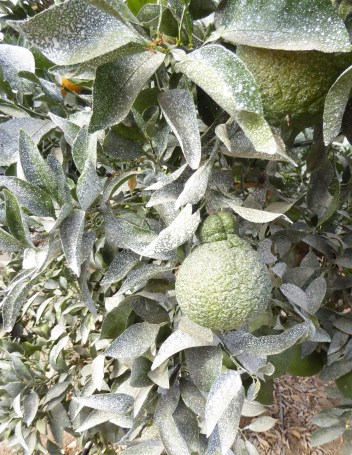
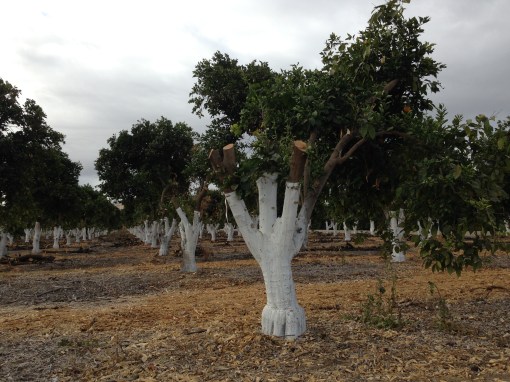
As I pulled into Nancy’s driveway I noticed that the Sumo mandarins were whiter than I remembered from May. Have you ever wondered why Sumos are so expensive? It might have something to do with the extra care they need to make it to harvest and on to market. Whitewash is used for several reasons, not least of which is as a sunscreen for the fruit. Whether it helps the leaves to withstand the withering rays, I don’t know. Citrus does like a warm summer, but the one that just ended featured 44 days over 100°, while the average would be 32 days. Some trees baked to death.glt-grove-dtRain was hoped for last week, even though an outdoor wedding was on the schedule. You can see how the sky was grey with clouds — but storms often come as far south as Fresno, and no further, which was the case again. A few sprinkles did fall as a happy gift at the wedding reception, just enough to feel like a blessing, and to create a rainbow!

glt-dog-beds
Beds for the essential watchdogs.


One topic of conversation as we sat around in various assortments of kinfolk over the days was the problem of thievery and vandalism in the citrus groves and around the farmers’ houses. People will steal copper irrigation valve fittings worth $2, and the damage requires the farmer to spend $200 in repairs. Next to one of Dick’s groves live some teenagers with nothing better to do than drive their cars into orange trees and stuff rags into pipes. This kind of thing adds up to a cost of $100-200 every month for just that few acres.

glt-grove-in-fall-prp
young grove against the Sierra foothills

Sometimes thieves will spread tarps on the ground under trees in the middle of a large orchard and pick fruit into them; then after dark they come back and haul it off. A woman rides her bicycle down a driveway to see if there might be something to pilfer, and when challenged by the dogs and/or the homeowner she makes up a story about being lost and needing directions. My sister is becoming famous for the many times she has jumped in her car to chase down such interlopers (some in cars) and take their pictures, or tell them to leave the neighborhood, because they aren’t fooling her.

October is the month when the citrus growers can breathe a sigh of relief that the hottest season of the year is past, and they begin to watch the sky for signs of rain. The oranges really need some rain in October if they are going to “size up” — no amount of irrigating will accomplish what atmospheric moisture does.

And in the coldest months the lemons and oranges have to be protected from hard frosts, nowadays usually by wind machines that make a breeze to keep the frigid air from settling on the trees and their ripening fruit. If you are growing one of the ultra-early varieties that now exist, which can be picked as early as October, you might have less to worry about come December and January.glt-grafting-lemons-on-to-oranges-10-16

Just down the road from Nancy’s I saw this grafting project the likes of which I don’t remember seeing in all my years living in the citrus orchards and coming back to visit. I wondered what was going on that required such brutal cuts. It’s this: these are mature orange trees that are being changed into lemon trees.  All but one of the major branches have been cut off, and lemon wood was grafted in under the bark. (I wish I had been able to get over the ditch to get a closeup photo.) The one branch carries on photosynthesis while the lemon parts are growing, and eventually that remaining upper part of the orange tree will be pruned off, leaving a lemon tree with an orange rootstock.

glt-sorghum-silage-10-16-central-valley

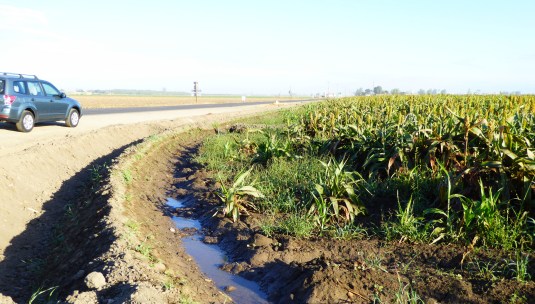
I drove past fields of something I didn’t recognize, so I took a picture and texted it to my sister, who told me it is silage for dairy cattle. When I researched it I found out that it is sorghum silage, and uses less water than corn silage. That feature is always a good thing in this thirsty land we live in.

Nearby, alfalfa covered fields with its sweet green blanket; cotton was drying and popping out of its bolls. Cotton is also a plant that can be grown in arid regions such as the Central Valley’s West Side. When I was a child my father grew cotton for a few years.

To complete the report of my fun trip, next time I’ll focus on the specific microclimate of my friend Dick’s place, and the lush gardens three generations have created on a hunk of granite. A lot is still blooming in October, but some of the harvest is just now coming in.

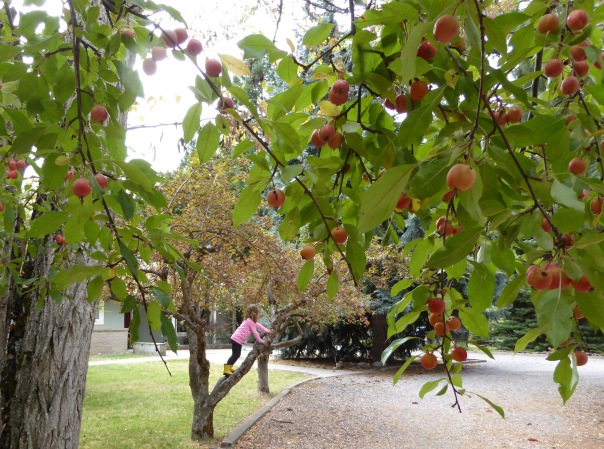
Forest and crabapples with Ivy.

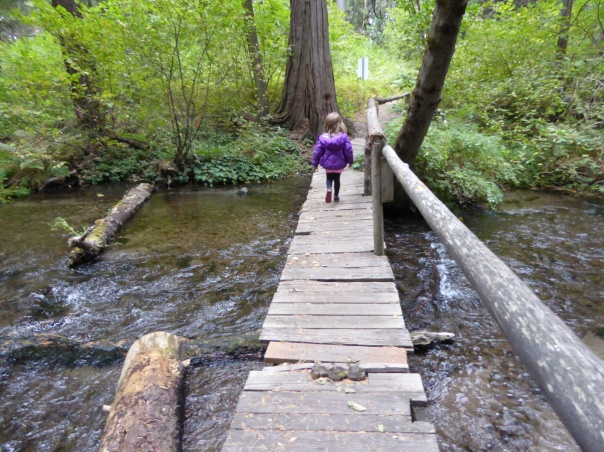
gl-s-crabapples-ivy-9-16At the lower elevations, the northern California forest in September is a dry and dusty place, but it still holds many sights to see and ponder over, if you are lucky enough to be with my daughter Pippin, as I was last week.
I had long hoped to travel the several hours to celebrate little Ivy’s birthday with the family, but business here at home kept me up in the air about my plans until the last minute, when I realized that it would be possible for me to make a quick trip up and back. On my one layover day we three “girls” walked in the woods. We chose to drive to a little park not far away this time, instead of making our outing to the woods right behind their house.

gl-s-slugs-er-9-23-16


I’ve written before about how Pippin has always had her senses keenly tuned to the natural world; when I am outdoors with her she stops to notice many details of flora and fauna that I am blindly passing by.

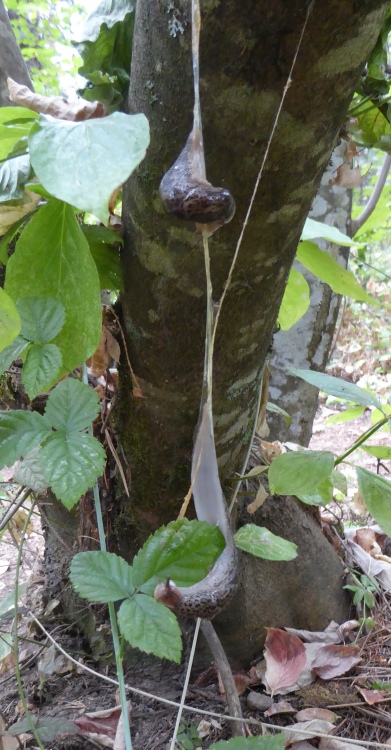
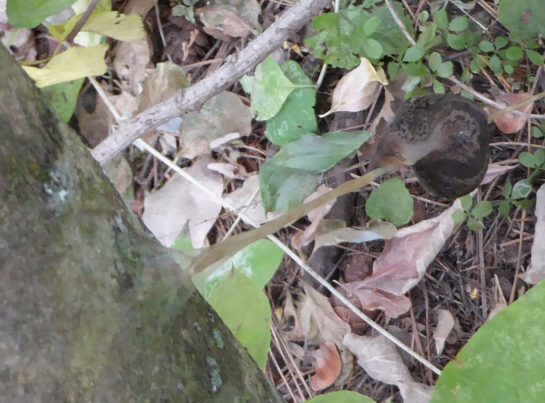
I doubt I would have seen these slugs descending from a tree on their slimy rope, but once I saw them I had to record them with my camera.


And the way their line was attached so firmly and invisibly to the tree…

gl-s-p1050507-slug-attach

gl-s-p1050497-pine-drops


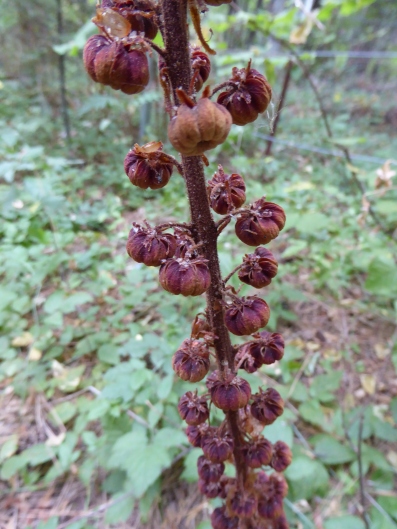
Pippin told me that this plant is called Pinedrops, and is similar to Snow Plant in that it lives symbiotically on the fungi that in turn live on tree roots; for most of its life you don’t see it above ground.


gl-s-p1050516

gl-s-p1050519-wasp-nest-dogwood-fruit


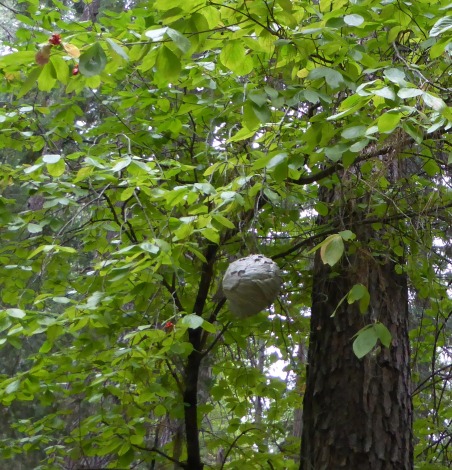
While my eyes were probably on my boot tops, Pippin noticed a large wasps’ nest in what she took to be a dogwood in the stage of bearing fruit. I wondered how many wasps might live in that large house.


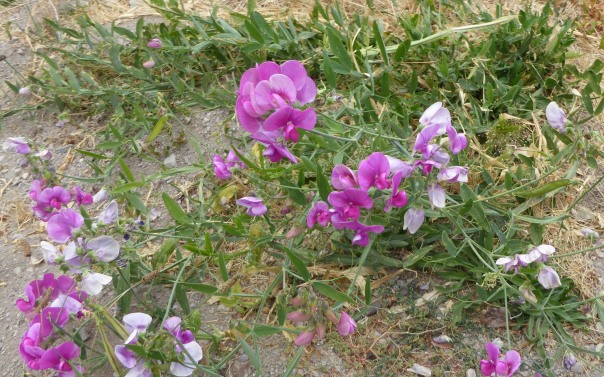
We also stopped by a fish hatchery where Ivy fed the various species of trout, and I spied a commonplace wild sweet pea that I thought uncommonly healthy and pretty.

gl-s-p1050529-wild-sweet-pea
wild sweet peas – Lathyrus

gl-s-crabapples-9-23-16

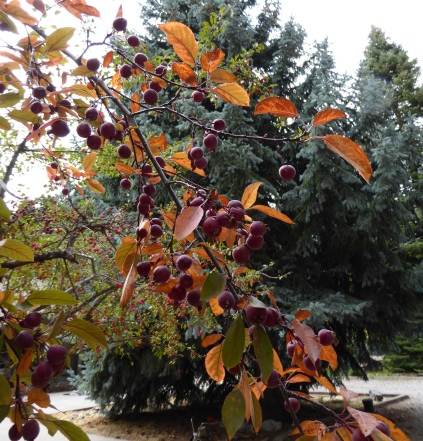
Back at the house, I took up the challenge I never can resist: trying to photograph the crabapples. They make me wish I were a real photographer, so I could capture how gorgeous they are. At Pippin’s they have two or three varieties, and the Professor shakes the trees from time to time in the fall and winter so the fruit will fall on the lawn and feed the deer.gl-s-p1050555-ivy


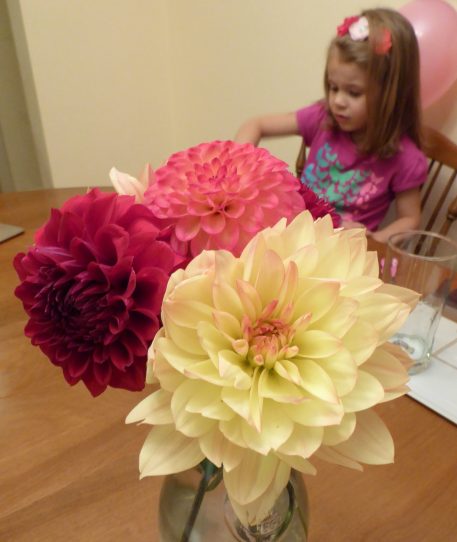
Pippin is a gardener as well as a naturalist and her dahlias are worth the drive north just to visit them. This trio she had just brought in for the birthday party table.


I didn’t entirely ignore the grandboys, but because it was Ivy’s birthday I didn’t feel bad focusing on her this time. Given that I have eleven grandsons and “only” three granddaughters, you might understand my feelings for the girls.

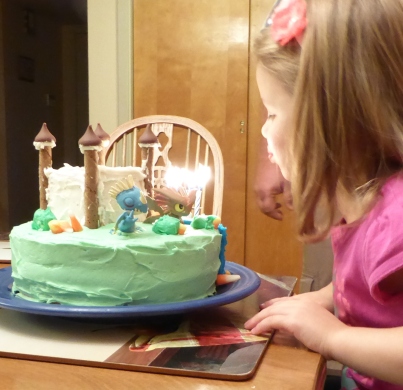
This year it was a Dragon Cake she wished for, and her parents were obliging. They added a castle for context. Happy Birthday, Ivy!

gl-s-p1050565-ivy