Category Archives: travel

From Earthsea to Alexander

To prepare for a recent road trip, I visited the public library looking for a book on CD. I ended up with a whole stack of boxes to take along in the car later that morning and was very pleased with a few of them.

My car was also loaded down with a Thanksgiving turkey, baking pans and tablecloths and some already cooked food, things to contribute to a feast at Pippin’s house. I was taking myself early to help prepare, and Mr. Glad would follow later.
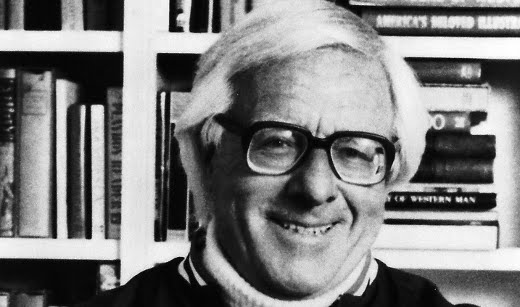
Ray Bradbury

Two slim library cases held one disk each of an introduction to a book in the Big Read program of the National Endowment for the Arts. I was only vaguely familiar with the list and the program, not having any family member that I know of participating. But of the offerings I browsed I was interested in A Wizard of Earthsea by Ursula K. LeGuin because of recent recommendations from someone, I can’t remember who. And Fahrenheit 451 by Ray Bradbury was a book my reading group discussed a decade or so ago. The recordings were about 30 minutes each.

When I slid the Wizard introduction into the player and the narrator’s voice came into my car, it took me a few seconds to realize that it was Dana Gioia, my favorite book reviewer, poetry critic, and literature teacher. His voice was recognizable, but his intonation was all jazzed up, brighter and more dramatic, I suppose to keep the average somewhat reluctant American reader listening.

His commentary was in brief snatches, and mostly introductory to several other authors who talked about the book, including LeGuin herself, and to short passages read from the text. None of the comments or readings was longer than a minute or so, and most were much briefer than that, which made it easy for me to pay attention; I’m sure this feature was also designed for listeners of diverse ages who are used to having their short attention spans catered to.

The Big Read program is intended to reverse or at least slow the decline in the number of readers in our nation, and I haven’t heard if it is working. But this recording was a wonderful introduction to LeGuin. I enjoyed myself thoroughly while listening to what seemed like a sort of CliffsNotes in audio technicolor. There is music in the background that also adds to the drama.

CliffsNotes (Yes, they do squish the name together like that nowadays) seems to have some videos out, and digital flashcards, but for literature I think these NEA audio files would be much preferable, being a better bridge to visual and private reading activity than listening to a talking head, as I assume the CliffsNotes videos are.

The general plot and themes of the novel were discussed, and the particular skills of that writer. LeGuin talked about her background as a reader and writer and how she developed into the writer she is. Her childhood was spent in an intellectually rich household in Berkeley, where her father founded the anthropology department at the university and her mother wrote a book on Ishi.

There were many refugees from Europe in town then, such that “everyone had an accent.” It seems that her exposure to many cultures nourished her imagination to create new worlds and people groups. The Earthsea books do sound appealing to me now, and if I keep looking at that cover illustration I pasted here I’ll be bound to buy the first one soon.

But the first CD I took out of the box from my library stash was not from the NEA; it was a 2-disk collection of Popular Poetry, Popular Verse, Volume II from Naxos AudioBooks, a broad offering of everything from Shakespeare and Longfellow to Donne and Robert Herrick. It’s not surprising that I didn’t remember hearing most of the poems before  — but I’d like to listen again. The many love poems made me miss my husband whom I had only seen a couple of hours before.

Quite a bit of music was interspersed between groupings of poems. I skipped most of this because I was impatient to hear more poems, and I had no idea how long I might have to wait through the instrumental portions. The poems were read by Tony and Jasper Britton, and by Emma Fielding, all of whose voices and reading were not over-dramatic or annoying in any way. Here are some of the rich words that fell upon my ears:

Prayer (I) 
By George Herbert

Prayer the church’s banquet, angel’s age,
God’s breath in man returning to his birth,
The soul in paraphrase, heart in pilgrimage,
The Christian plummet sounding heav’n and earth
Engine against th’ Almighty, sinner’s tow’r,
Reversed thunder, Christ-side-piercing spear,
The six-days world transposing in an hour,
A kind of tune, which all things hear and fear;
Softness, and peace, and joy, and love, and bliss,
Exalted manna, gladness of the best,
Heaven in ordinary, man well drest,
The milky way, the bird of Paradise,
Church-bells beyond the stars heard, the soul’s blood,
The land of spices; something understood.

Out of the 5+ hours I was on the road on the way up the state, there were only 10 minutes or so that I didn’t need my windshield wipers. The rain was often drenching, so when I had to stop for refueling and resting I was back in the car lickety-split and pushing the Play button again.

I tried a speech by author David McCullough, his Jefferson Lecture in the Humanities from 2003, but he was very dry, in content and delivery. I have found from Mars Hill Audio Journals that some writers of the most fascinating books are not good at speaking even in interviews.

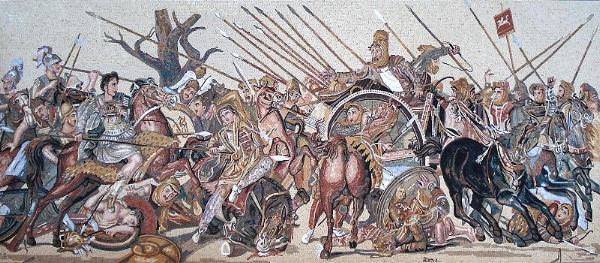
The last thing I was listening to when I arrived home again the day after Thanksgiving was Alexander the Great and His Time by Agnes Savill. It is nine CD’s and I only heard three of them, but it was the most detail I’ve ever read on Alexander, who is certainly a fascinating ancient man. The descriptions of battles sometimes were hard for me to follow, but overall it was an easy “read” and I’m trying to figure out when I might finish it.

I kept thinking about the great contrast between my comfortable life — just sitting in my heated car snacking on food that I had easily bought at the store — and that of the high-achieving, fighting, indomitable but gracious man who slogged all over his world under the harshest conditions and must have had comparatively little ease in his relatively short life.
Alexander in The Battle of Issus

And the other Big Read disk? That was my favorite of the two I tried, because I still remembered Fahrenheit 451. It was wonderful to hear the author tell how he and his brother would run, not walk, to the library, and spend hours there every week. He started writing stories as a young child, and never stopped.

Here’s a list of books in the Big Read program. I’m planning to listen to more of the introductory recordings, which are lots of fun even if I never get around to reading the actual book.
The Power of a Great Melancholy

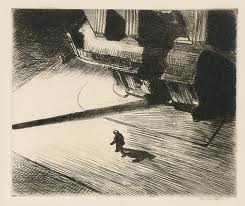
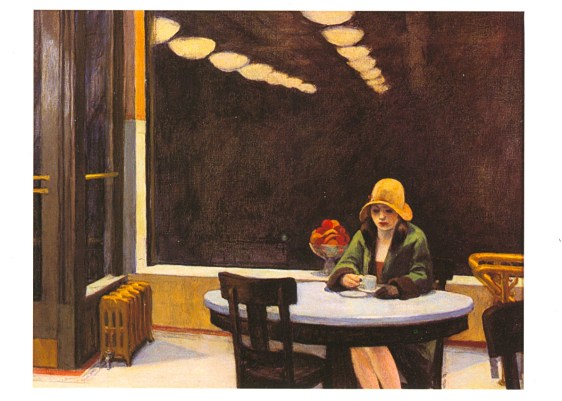
“Automat” is a picture of sadness — and yet it is not a sad picture. It has the power of a great melancholy piece of music. Despite the starkness of the furnishings, the location itself does not seem wretched. Others in the room may be on their own as well, men and women drinking coffee by themselves, similarly lost in thought, similarly distanced from society: a common isolation with the beneficial effect of lessening the oppressive sense within any one person that they are alone in being alone. In roadside diners and late-night cafeterias, hotel lobbies and station cafés, we may dilute a feeling of isolation in a lonely public place and hence rediscover a distinctive sense of community. The lack of domesticity, the bright lights and anonymous furniture may come as a relief from what are often the false comforts of home. It may be easier to give way to sadness here than in a living room with wallpaper and framed photos, the décor of a refuge that has let us down.

In this second chapter of his book The Art of Travel, Alain de Botton writes about people who travel more from an unhappiness at being home than from a desire for recreation. He includes reproductions and commentary on other paintings by Edward Hopper (whose “Automat” is the painting at the top of the page): “Gas,” “Compartment C, Car 293,” and “Hotel Room.”

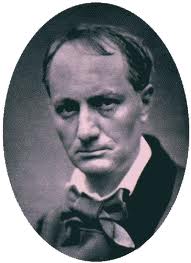
The themes in the paintings here seem primarily to be isolation and loneliness, but to expand the scope of the chapter titled “Travel Places,” the author also introduces the life and writings of Charles Baudelaire, whose work was a significant influence on Hopper, it turns out.

Baudelaire

Baudelaire, who from an early age wanted nothing more than to flee from home, all his life “felt more at home in the transient places of travel than in his own dwelling.” Not that he ever seems to have escaped the restlessness he describes: “Life is a hospital in which every patient is obsessed with changing beds. This one wants to suffer in front of the radiator, and that one thinks he’d get better if he was by the window.”

My own childhood and temperament having made me a perpetual home-lover, I’m unable to fully understand these dissatisfied impulses, but I have done a bit of solitary traveling now and again. I liked it because I like being alone, but I also always had caring people on one or both ends of my journey, and a measure of peace knowing that the One Who loves me most was right with me. 

Otherwise, I might have said with Baudelaire:

Carriage, take me with you! Ship, steal me away from here!
Take me far, far away. Here the mud is made of our tears!

I’ve struggled for weeks to write on this part of de Botton’s book, knowing that the topic is really too difficult for me, but wanting to tackle it because it’s fundamental to our existence. What line divides a peaceful solitude and a painful loneliness? Can any one of us hope to understand another person’s experience of isolation? Is loneliness an essential ingredient of human life, at least a step on our way to maturity?

In this book on travel we can’t expect to find a deep exploration of these ideas. Or even a nod to the question of whether we in the 21st century experience our loneliness any differently from Hopper’s subjects. In the whole book there is not a mention of cell phones or the array of social networking tools that seem to prevent any of us from being part of a scene such as de Botton describes in the paragraph above. Perhaps it’s a deliberate omission, and he hopes to gently propel the reader back to a low-tech experience of being alone.

But being with strangers in an airport or service station nowadays likely means being surrounded by people using electronic devices that exclude them from any here-and-now community, lonely or otherwise. We know that many of them/us are doing this in an effort to have friends, to be in community, all the while missing possible opportunities to connect with people present in the same room. How might this development change the dynamics of a place like the automat?

De Botton writes about his own bad feelings being transformed while sitting in similar place, into a “gentle, even pleasant kind of loneliness,” and he values Hopper’s paintings that “allowed their viewers to witness an echo of their own grief and thereby feel less personally persecuted and beset by it.”

Hopper – Night Shadows

As I pondered the meaning of loneliness, I thought for a long time that de Botton is trivializing it. Along the way I read various writers on the subject in hopes of understanding everything better. Of course de Botton writes from his own experience, and it must be that his own feelings are not on the level of acute alienation, nor is he destitute of support, to use some synonyms. If he had known what some people feel as catastrophic and terrifying, what John O’Donohue, in Anam Cara: The Book of Celtic Wisdom, calls “…the solitude of suffering, when you go through darkness that is lonely, intense, and terrible. Words become powerless to express your pain…” I don’t know that he would make these fairly easy remedies, such as looking at paintings and riding on trains, sound plausible.

De Botton is such a pragmatist, as evidenced by his use of religion, that if he had in fact suffered an agony of soul I would expect him to be one of the many people who tell us that loneliness is the human condition. Get over it, make use of it, learn to live with yourself and with the knowledge that you are completely alone and there is no fixing it.

Even Jesus was lonely, after all. In his darkest hour, when he might have taken some comfort from his friends at least standing by, they fell asleep and left him all alone and feeling forsaken. And this shows that he did take on the whole of the plight of being human.

It’s an aspect of our lives that we in the modern age are especially prone to and sickened by, but it’s not what we were made for. We were made in the image of God, The Holy Trinity, where all Life resides — God in three persons, a unity of Love, as Bishop Timothy Ware explains in his book The Orthodox Church:

Our social programme, said the Russian thinker Fedorov, is the dogma of the Trinity. Orthodoxy believes most passionately that the doctrine of the Holy Trinity is not a piece of ‘high theology’ reserved for the professional scholar, but something that has a living, practical importance for every Christian. Man, so the Bible teaches, is made in the image of God, and to Christians God means the Trinity: thus it is only in the light of the dogma of the Trinity that man can understand who he is and what God intends him to be.

God is personal, that is to say, Trinitarian. This God who acts is not only a God of energies, but a personal God. When man participates in the divine energies, he is not overwhelmed by some vague and nameless power, but he is brought face to face with a person. Nor is this all: God is not simply a single person confined within his own being, but a Trinity of three persons, Father, Son, and Holy Spirit, each of whom ‘dwells’ in the other two, by virtue of a perpetual movement of love. God is not only a unity but a union.

If all the humans you know fail in their love toward you — and they likely will — and if you feel alienated from society, from God, even from your true self, your salvation does not lie in accepting this situation as All There Is. As St. Augustine said, “Thou hast made us for thyself, O Lord, and our heart is restless until it finds its rest in thee.”

In the Church we can be brought into communion with the Holy Trinity and with other people who are learning to participate in that “perpetual movement of love.” This is the opposite of alienation, but we may have to go through the Valley of the Shadow of Death to get there. If that’s what it takes for us to realize our need, and to become desperate enough to cry out to the only One who will never disappoint us or hurt us, we might consider it the power of a great melancholy.

This is the fourth in a series on The Art of Travel. The other posts are
Introduction
Possessing Beauty
What Van Gogh Can Do

Possessing Beauty

No changing of place at a hundred miles an hour will make us the one whit stronger, happier, or wiser. There was always more in the world than men could see, walked they ever so slowly; they will see it no better for going fast. The really precious things  are thought and sight, not pace. It does a bullet no good to go fast, and a man, if he be truly a man, no harm to go slow; for his glory is not at all in going, but in being.

      –John Ruskin, quoted in The Art of Travel by Alain de Botton

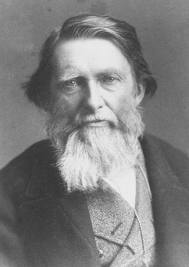
John Ruskin

Ruskin is one of the “guides” the author takes as a teacher in his study of this art of travel; this particular guide yearns to give us his students the tools to understand and possess beauty. Ruskin believed that we can only understand beauty by paying close attention to it, and that attempting to describe nature through writing or drawing was the surest way to focus the mind sharply enough.

On the topic of drawing Ruskin published two books in the 1850’s and gave lectures in London, but the point of his instruction was never to produce students who could draw well. He wanted to teach people to notice, and to “direct people’s attention accurately to the beauty of God’s work in the material universe.”

Right here is a good place to propose that we who believe in God the Creator also take as our teacher John Ruskin, rather than Mr. de Botton, because I doubt that we can learn much directly on the subject of beauty, especially on how to possess it, from a man who doesn’t understand that beauty, and in fact all that he possesses, are gifts from his Father God.

De Botton’s most recent book is Religion for Atheists, which he wrote from the conviction that a disbelief in God should not prevent atheists such as himself from making use of various aspects of the major world religions to better their lives. No doubt many professing Christians have a similar pragmatic outlook, and are missing out on the essence of the faith, Who is Christ Himself, the Bread of Life, the Glory of God the Father.

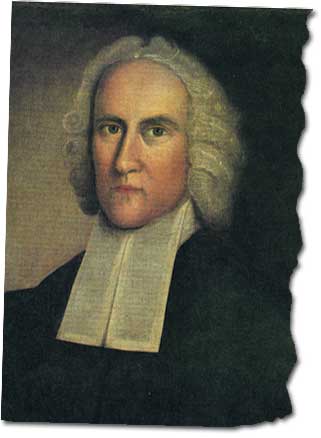
In musing about the beauty of God, I came upon a website with that title, featuring quotes from Jonathan Edwards. Many people have caught a bad impression of Edwards from those who speak of what they know not, but long ago I learned that the most frequent word in the preacher’s sermons was “sweet,” in reference to God and fellowship with Him. It’s not surprising that he had something to say about beauty as well. (The following paragraphs from Edwards were taken from his writings “The Mind” and “True Virtue” and bundled on the webpage with the added headings.)

God is Beautiful: “For as God is infinitely the greatest Being, so he is allowed to be infinitely the most beautiful and excellent; and all the beauty to be found throughout the whole creation, is but the reflection of the diffused beams of that Being who hath an infinite fulness of brightness and glory.”

Jonathan Edwards

Beauty is a kind of consent or harmony: “[Beauty is] a mutual consent and agreement of different things, in form, manner, quantity and visible end or design; called by the various names of regularity, order, uniformity, symmetry, proportion, harmony, &c. . .”

“One alone, without any reference to any more, cannot be excellent; for in such case there can be no manner of relation no way, and therefore no such thing as Consent. Indeed what we call One, may be excellent because of a consent of parts, or some consent of those in that being, that are distinguished into a plurality in some way or other. But in a being that is absolutely without any plurality, there cannot be Excellency, for there can be no such thing as consent or agreement.”

Love is the highest kind of beauty: “The reason, or at least one reason, why God has made this kind of mutual agreement of things beautiful and grateful to those intelligent beings that perceive it, probably is, that there is in it some image of the true, spiritual, original beauty, which has been spoken of; consisting in being’s consent to being, or the union of spiritual beings in a mutual propensity and affection of heart. . . . And so [God] has constituted the external world in analogy to the spiritual world in numberless instances. . . . [He] makes an agreement of different things, in their form, manner, measure, &c. to appear beautiful, because here is some image of an higher kind of agreement and consent of spiritual beings.”

“When we spake of Excellence in Bodies, we were obliged to borrow the word Consent, from Spiritual things; but Excellence in and among Spirits is, in its prime and proper sense, Being’s consent to Being. There is no other proper consent but that of Minds, even of their Will; which, when it is of Minds towards Minds, it is Love, and when of Minds towards other things, it is Choice. Wherefore all the Primary and Original beauty or excellence, that is among Minds, is Love.”

God is beautiful because He is a Trinity: “As to God’s Excellence, it is evident it consists in the Love of himself; for he was as excellent before he created the Universe, as he is now. But if the Excellence of Spirits consists in their disposition and action, God could be excellent no other way at that time; for all the exertions of himself were towards himself. But he exerts himself towards himself, no other way, than in infinitely loving and delighting in himself; in the mutual love of the Father and the Son. This makes the Third, the Personal Holy Spirit, or the Holiness of God, which is his infinite Beauty; and this is God’s Infinite Consent to Being in general. And his love to the creature is his excellence, or the communication of himself, his complacency in them, according as they partake of more or less of Excellence and beauty, that is, of holiness (which consists in love); that is, according as he communicates more or less of his Holy Spirit.”

Jonathan Edwards did not have a perfect understanding of Trinitarian doctrine, but I am still very blessed by his giving glory to the Holy Trinity for Beauty, which of course can have its source and perfect demonstration no where else. For readings on the Holy Trinity I commend to you these pages.

Above a storefront in Carmel, California

Now, back to the subject of travel…I suppose no one wonders what all this beauty-talk has to do with our goings, because don’t we all like to look at beautiful things when we travel? And when we have to move on, we also like to keep something to take home with us. How to not lose everything of the experience of a new place?

De Botton suggests three ways that we often try: 1) Taking pictures with a camera, 2) imprinting ourselves physically, as in carving our names in a tree trunk and thereby leaving a bit of ourselves behind, 3) buying something, “to be reminded of what we have lost.” And none of these actions can have as much effect on the whole person as drawing.

In explaining his love of drawing (it was rare for him to travel anywhere without sketching something), Ruskin once remarked that it arose from a desire, “not for reputation, nor for the good of others, nor for my own advantage, but from a sort of instinct like that of eating or drinking.” What unites the three activities is that they all involve assimilations by the self of desirable elements from the world, a transfer of goodness from without to within. As a child, Ruskin had so loved the look of grass that he had frequently wanted to eat it, he said, but he had gradually discovered that it would be better to try to draw it: “I used to lie down on it and draw the blades as they grew — until every square foot of meadow, or mossy bank, became a possession to me.”

De Botton chronicles his own efforts to follow Ruskin’s advice, and when he attempts to draw a window frame in his hotel he finds that he had never actually looked at one before, in all its complexity of construction.

Many passages in the book also paint exemplary word-pictures, such as a paragraph on olive trees, of which the author at first “dismissed one example as a squat bush-like thing.” On closer consideration, with the help of Van Gogh’s art as well as Ruskin’s tools, he sees the trees in all their magnificence, telling us that “the taut silvery leaves give an impression of alertness and contained energy.”

There is another way that this description by de Botton follows Ruskin: in his anthropomorphizing of natural objects, attributing to them qualities that only humans or at least animals would actually have, and feeling that “they embody a value or mood of importance to us.”

In the Alps, he described pine trees and rocks in similarly psychological terms: “I can never stay long without awe under an Alpine cliff, looking up to its pines, as they stand on the inaccessible juts and perilous ledges of an enormous wall, in quiet multitudes, each like the shadow of the one beside it — upright, fixed, not knowing each other. You cannot reach them, cannot cry to them; — those trees never heard human voice; they are far above all sound but of the winds.”

My two-year-old grandson Scout is already a traveler following in Ruskin’s (and his mother’s) footsteps. He loves to hike and to stop and look at everything. On a recent outing he said, as he wandered off, “I’m going to climb up here, Mama, and the rocks will take care of me…”

That’s what I call the spirit of good old-fashioned traveling. Not the sort that Ruskin himself decried, in the 19th century: “Modern travelling is not travelling at all; it is merely being sent to a place, and very little different from becoming a parcel.” 

When I am loaded on to a jet plane, I confess to feeling a bit like a parcel squeezed into a big crate of parcels. But Ruskin, and yes, even de Botton are helping me to be a more joyful and observant traveler, even if it’s only on a trip down the neighborhood footpath.

Before I had read just the small number of Ruskin’s words that are in The Art of Travel, I didn’t have the nerve to try my patience with drawing anything. But the man who wanted to teach me to notice has given me a vision of myself drawing a flower or a rock or a building. On my last car trip, I was even so bold as to pack into my bag a box of colored pencils.

The Art of Travel

If our lives are dominated by a search for happiness, then perhaps few activities reveal as much about the dynamics of this quest — in all its ardour and paradoxes — than our travels. They express, however inarticulately, an understanding of what life might be about, outside the constraints of work and the struggle for survival. Yet rarely are they considered to present philosophical problems — that is, issues requiring thought beyond the practical. We are inundated with advice on where to travel to; we hear little of why and how we should go — though the art of travel seems naturally to sustain a number of questions neither so simple nor so trivial and whose study might in modest ways contribute to an understanding of what the Greek philosophers beautifully termed eudaimonia or human flourishing.

This paragraph from the first chapter of Alain de Botton’s book The Art of Travel sums up what it is about. The author likes to think about things, and especially about how to have a good life, which naturally is a concern of my own as well. His conclusions and even many of his presuppositions are different from mine, however, which makes the reading of his books into a stimulating discussion with myself as I also haltingly debate with him.

He provokes me to clarify my thoughts on matters I am already familiar with and introduces me to quite a few people I haven’t known well, in a context that helps me engage with their ideas and principles, too. Flaubert, Baudelaire, Van Gogh, and some non-French and/or lesser known personages both real and fictional such as Edward Hopper, Duc des Esseintes and Alexander von Humboldt make appearances in the pages of this book. Wordsworth gushes over the beauties of the Lake District and John Ruskin gives drawing lessons.

These people are “guides” whom de Botton brings along on his philosophical rambles, and whose travels, writings, and works of art help us to think creatively and usefully about our goings-forth. Parts of the book are given to Anticipation, the Exotic, Curiosity, Possessing Beauty, and Habit.

The fact is, this book has got me pondering and arguing on so many topics that I’m going to need several sittings at the keyboard in order to sift through the potpourri and rearrange it to my liking. In my mind and notebook I’ve been taking parts from one chapter to stick in a different place altogether, and making some new categories of my own.

There are critics at all levels who don’t appreciate de Botton’s style and objectives. For a few, it is because he tells us the obvious. That is a problem some of us have: We speak of what we are thinking about and other people say (hopefully just to themselves), “Well, duh!”

I don’t blame you at all, if you are one of these people. But I count myself among those who enjoy staring back at all of those things that are staring us in the face; we notice how this thing is connected to that one and the other, and the light is bouncing from one facet off the face of another obvious something and caroming all over the place. And we can’t help writing about it.