Category Archives: travel

Fort Ross Fourth

Fort Ross State Historic Park has been a favorite destination of our family for decades. It is a restored fort from the early 1800’s, when California was not yet a state in the Union, and for a while the Russians had an outpost in Northern California for fishing and trapping and growing food. You can see lots more photos and read about the history of Fort Ross online.

I loved the place from our first discovery of it when the children were small. A historic association holds yearly re-enactment days that are great fun, but just visiting on our own was relaxing and renewing, at least in the summer, when the sun would break through the fog and you could smell the ocean and the baking grasses at the same time, and imagine the people of long ago.

After I joined the Orthodox Church, I was delighted to learn that our diocese has permission to use the chapel at the fort twice a year, including on the 4th of July. We worship in the morning and have a picnic afterward when the sun usually comes out. There is plenty of time to get back home in the evening for Vespers and maybe fireworks later on. I’ve made the pilgrimage three times now, and my pictures here are collected from all the visits.

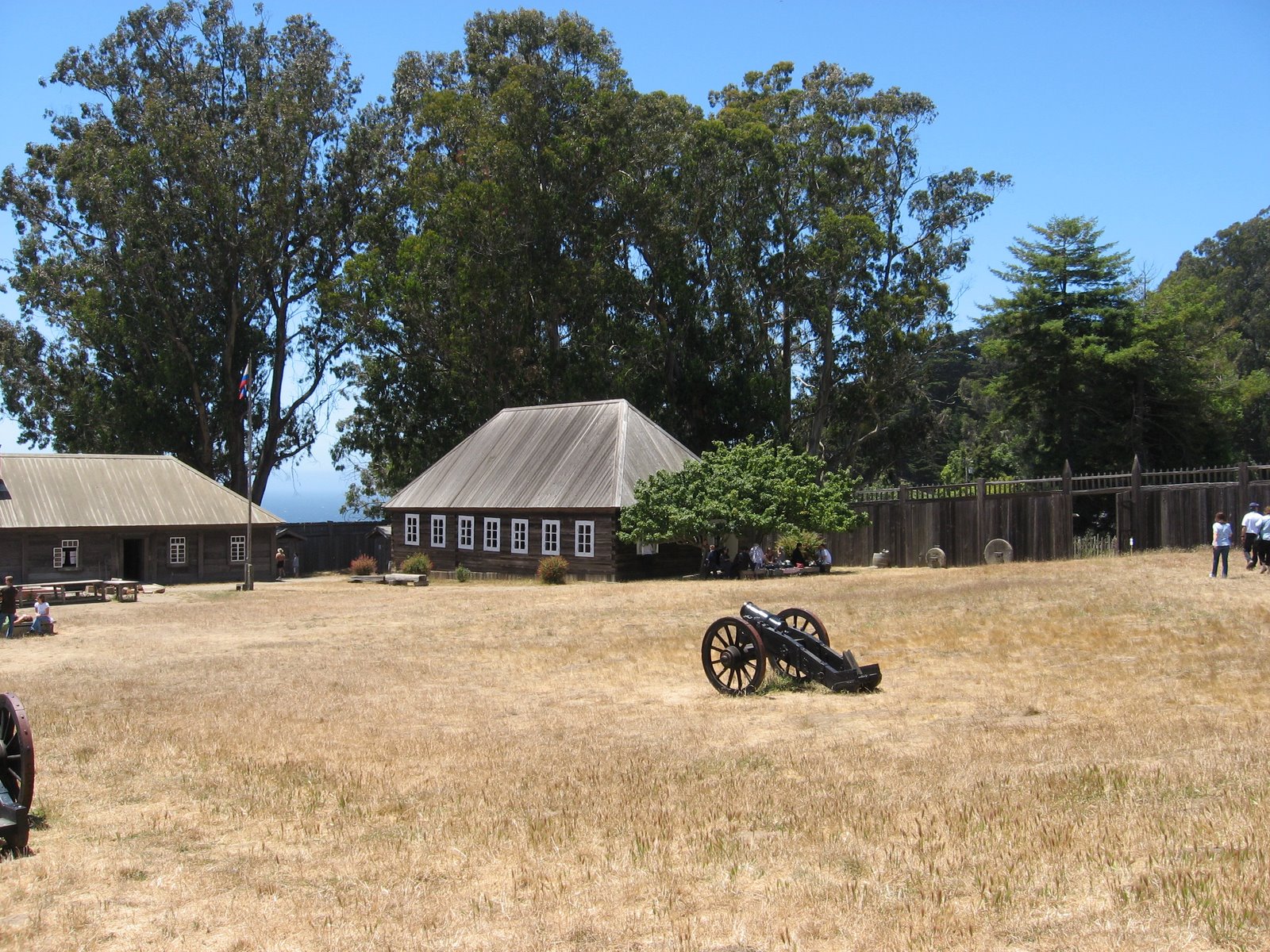
It’s a short walk from the parking lot to the actual fort enclosure. The photo at right is looking across the field from the chapel.
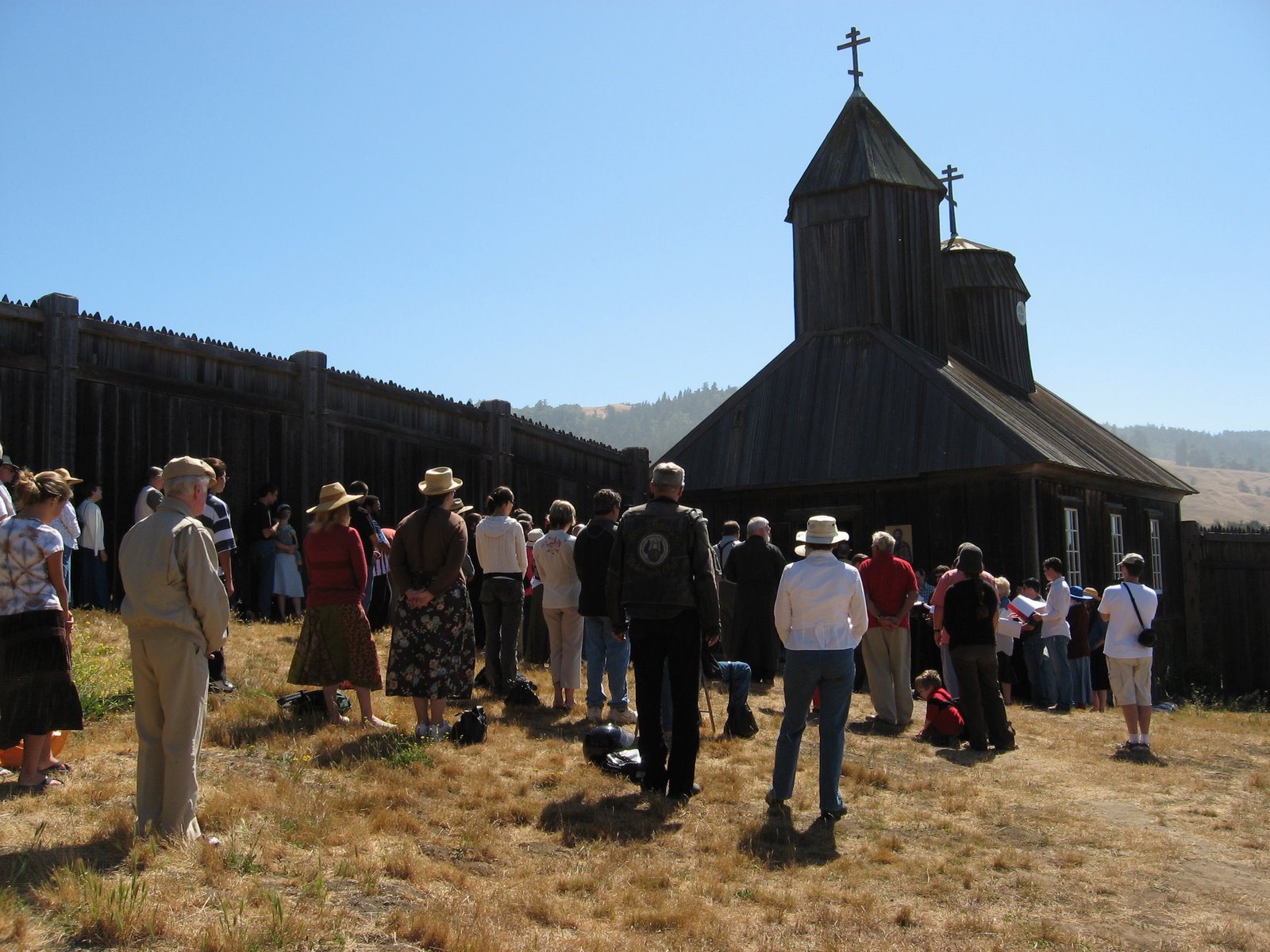
The church building as restored is small, and sometimes we let the whole of it serve as the altar, with the congregation and the choir standing outside and the priests and deacons coming in and out frequently as they pray and serve Communion.
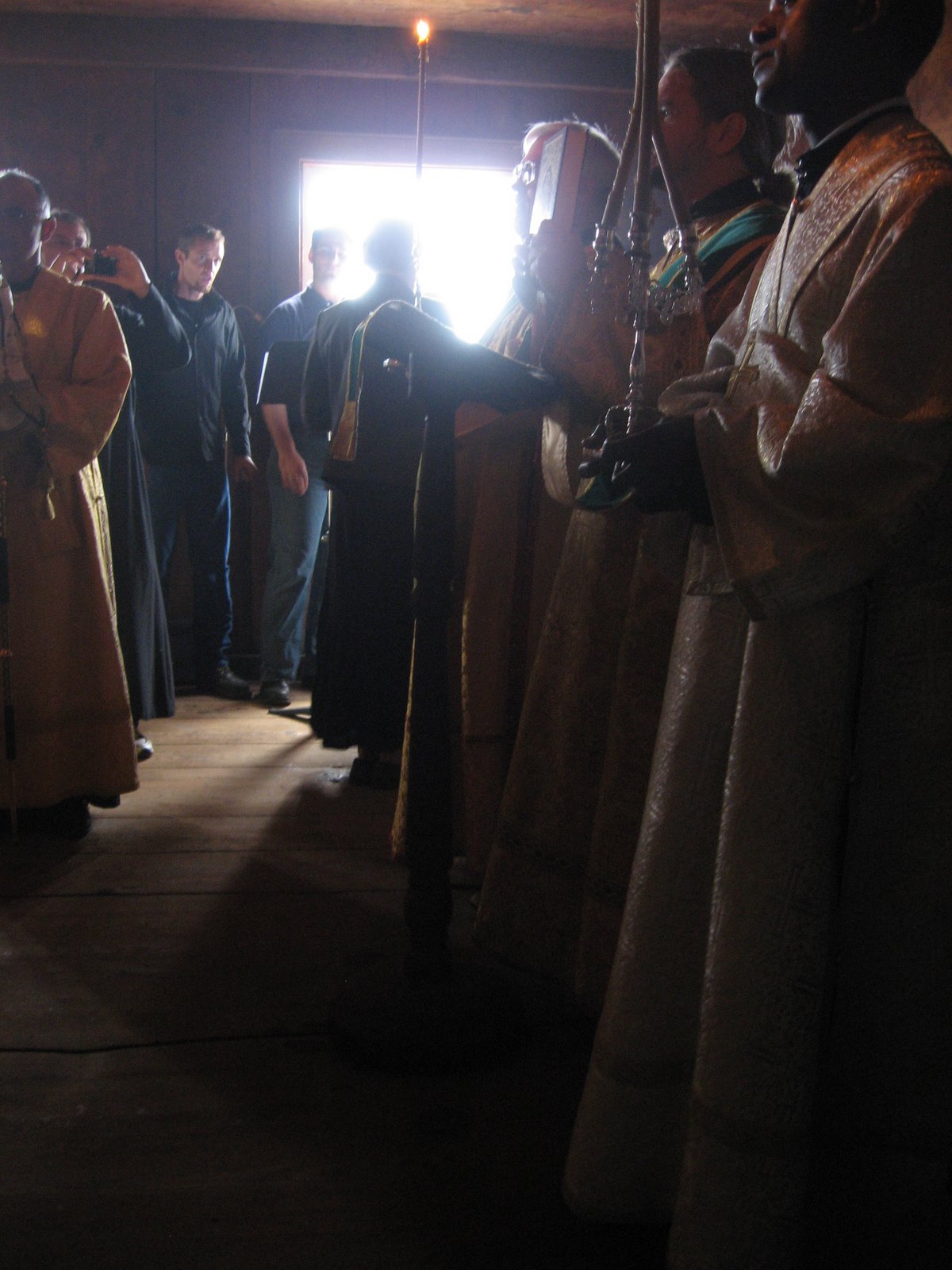
This year we all squeezed into the chapel, which is very intimate. I couldn’t get a good picture because of that window, but I am posting a bad one just to give an idea of the atmosphere. Very thin idea, indeed, as there is only the one visual dimension, and no conveyance at all to the other senses.
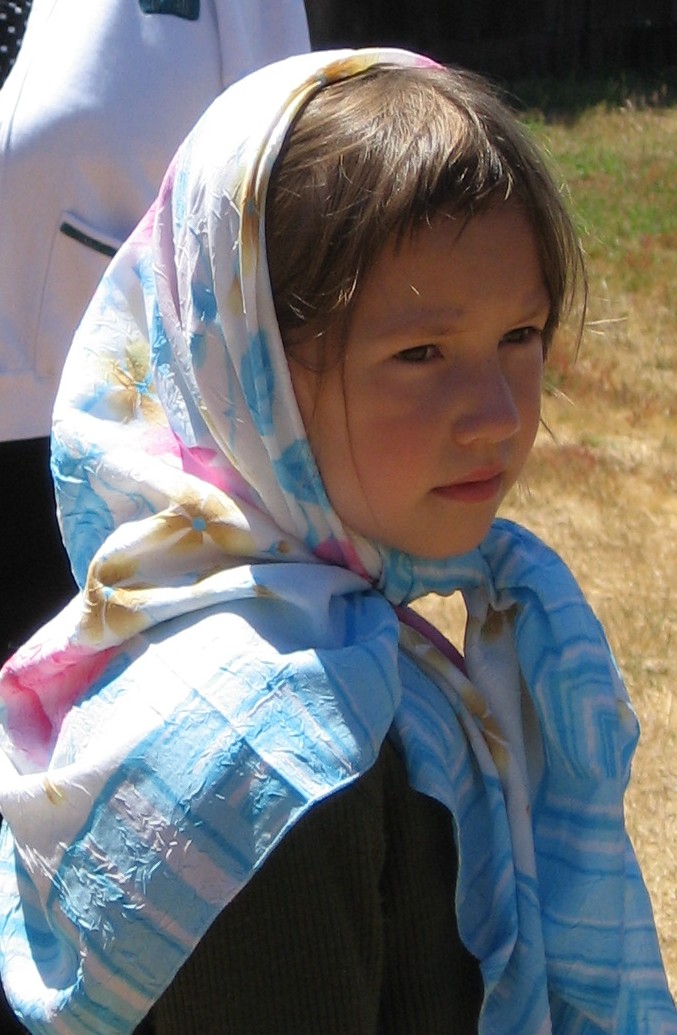
After the liturgy, the clergy and many others made the trek to the cemetery to sing a short service for the ones buried there. Others of us waited within the walls of the fort for their return.
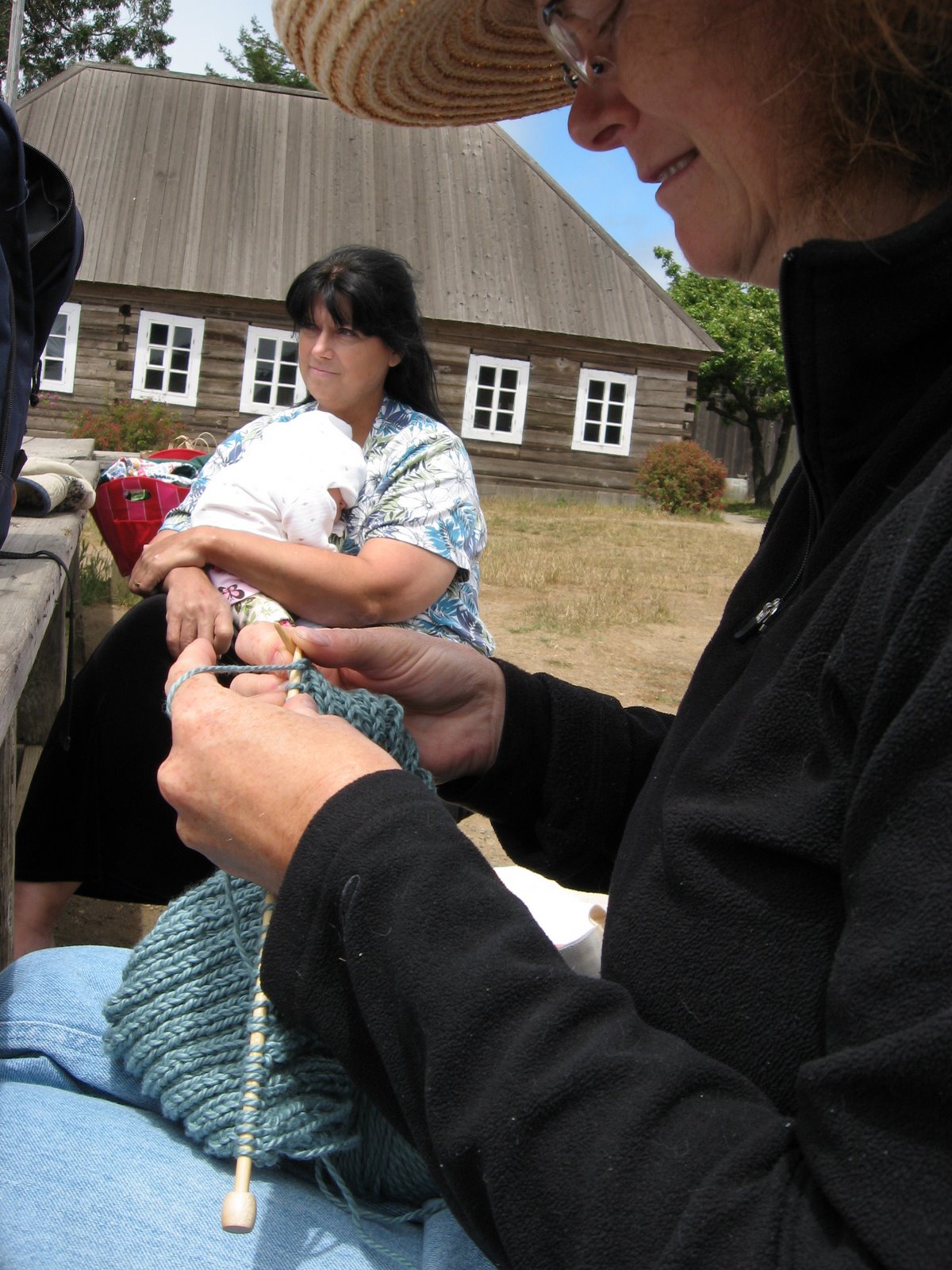
The bishop brought a picnic lunch, too.
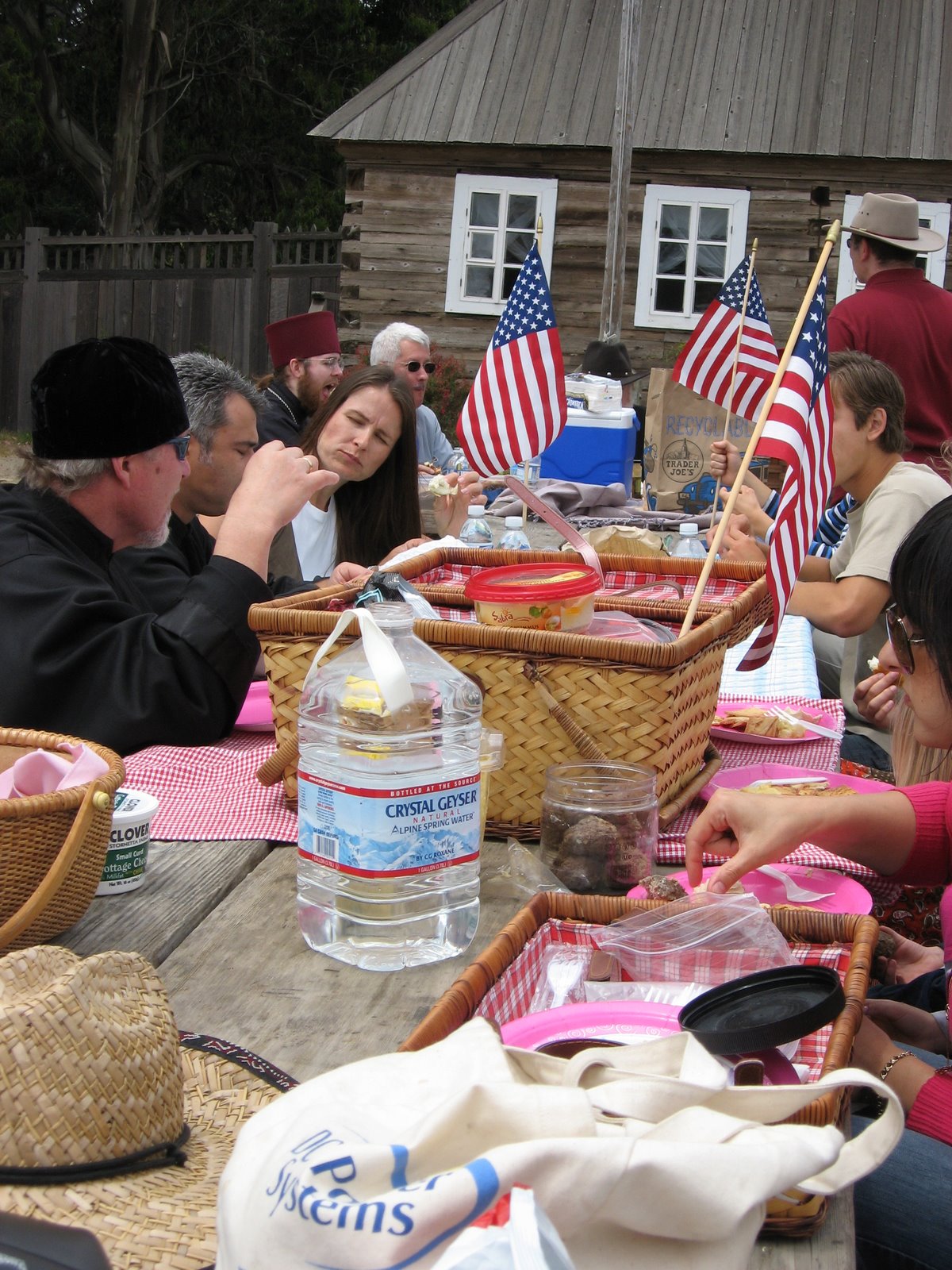
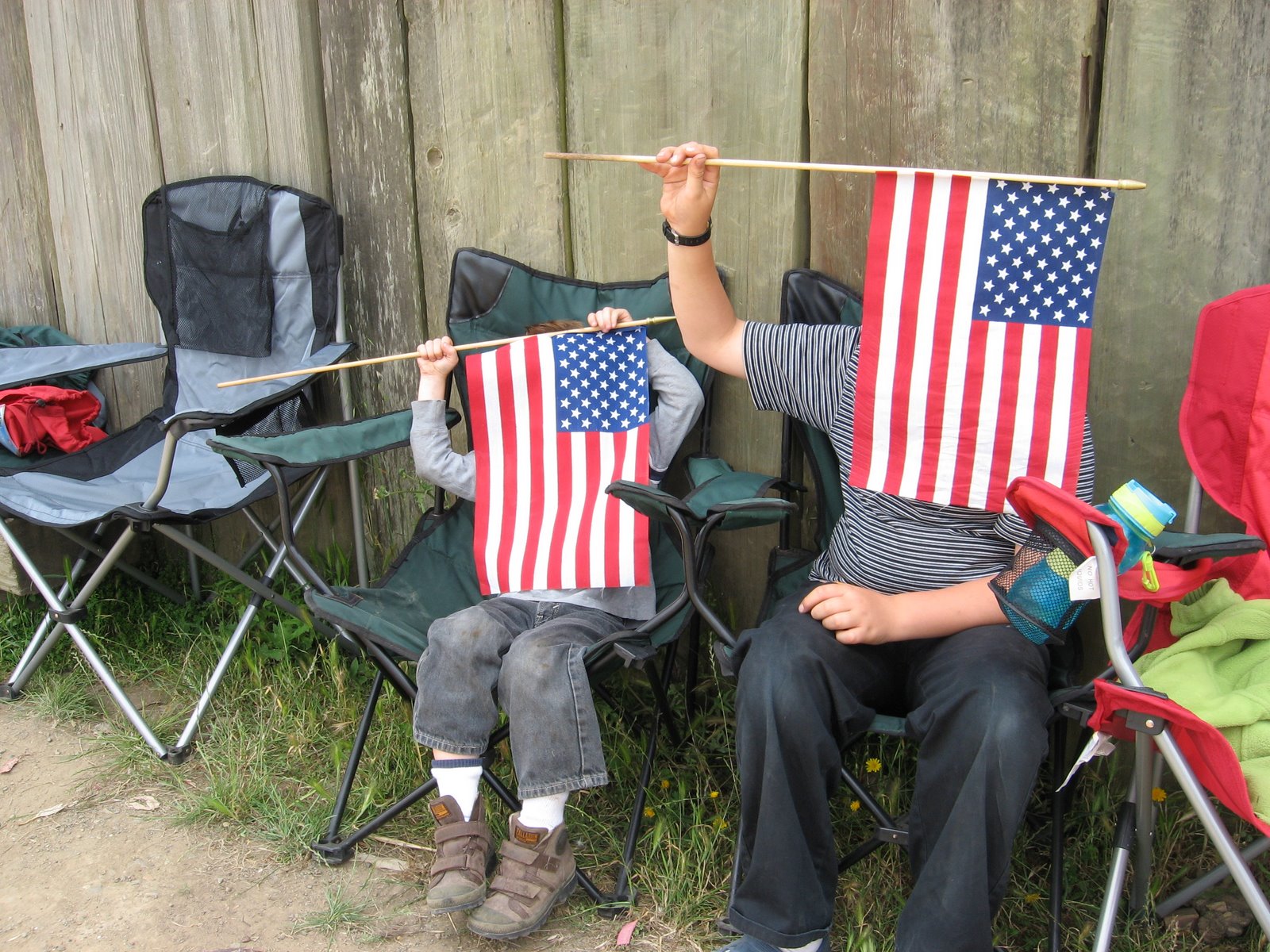
We waved plenty of flags to show our thankful allegiance to the nation whose birthday we were celebrating, at a fort now owned by Americans.
One year N. brought his hammered dulcimer and treated us to music at the picnic.
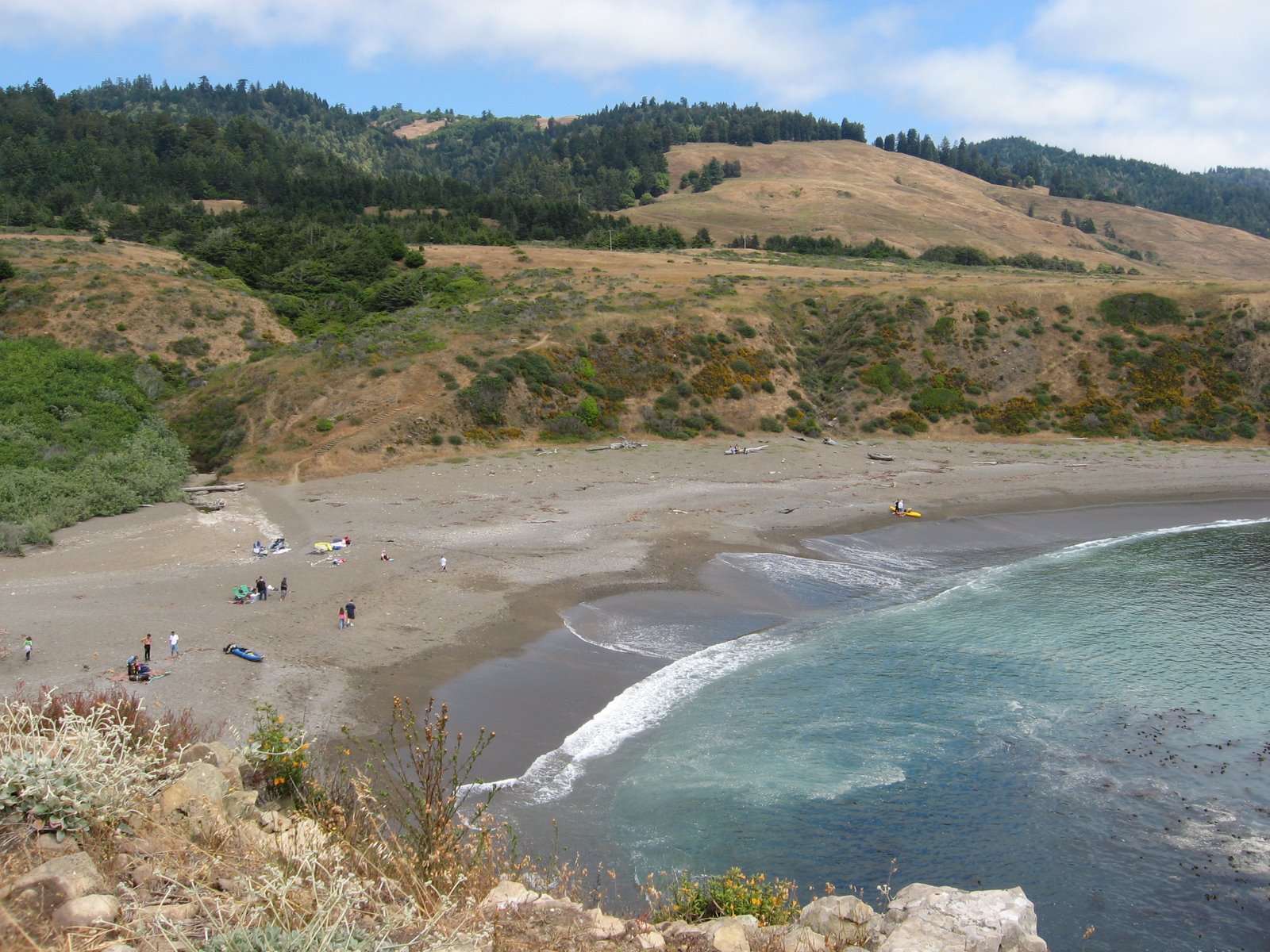
After lunch, K. and I took a walk down to the lovely cove below the fort.

One young parishoner and his mother had found treasures in nearby tidepools.

When we got back, the history talk by the park ranger was still going on. It leads up to instruction in loading and firing the cannons.

My favorite priest is getting ready to load the cannon.
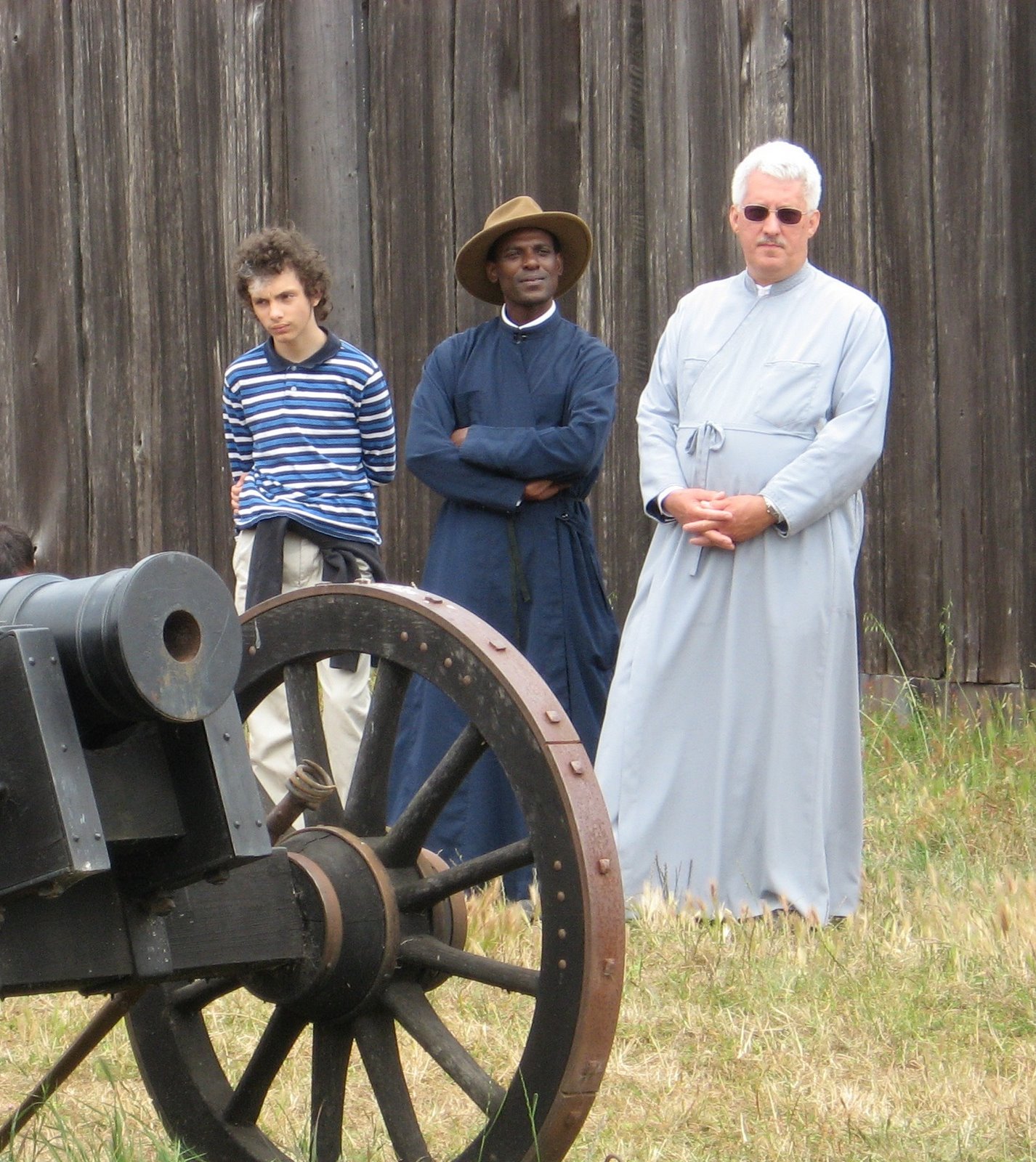
A blue study of guys waiting for the explosion.

Bang! Poof! No cannonball was shot–only gunpowder.

The majority of California’s state parks are likely to be closed because of the deep debt our state is in. If that happens, our Fort Ross pilgrimages may become a fragrant memory, and something to hope for in the more distant future.
Lavender Time

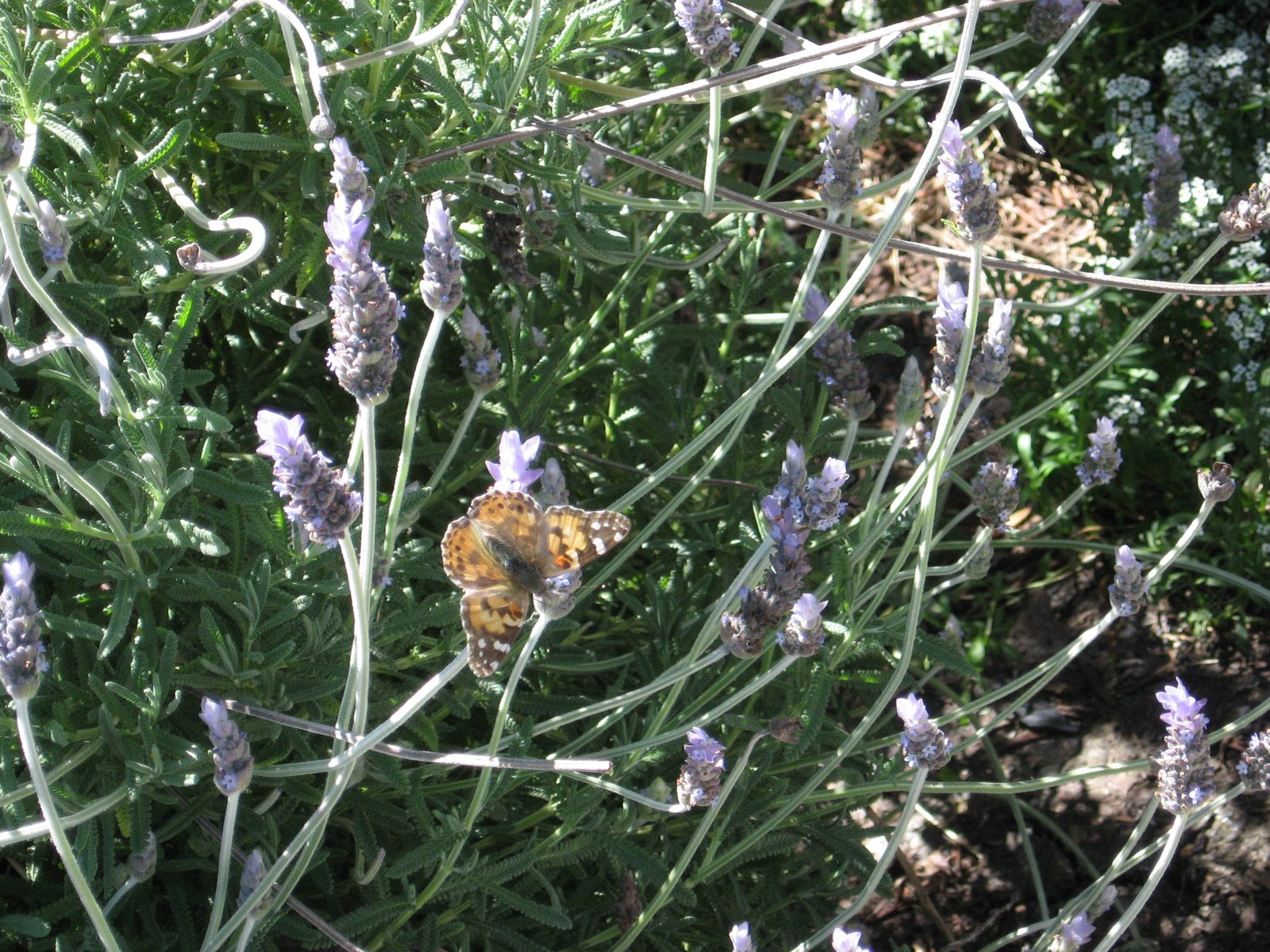
This is the time of year when lavender bloom is peaking. I’m not speaking of French lavender, where I caught a butterfly perching at least a month ago. I have two of those bushes that seem to be always blooming, and quickly grow to a huge size because there never seems to be a post-bloom time to cut them back.

But rather, English lavender.

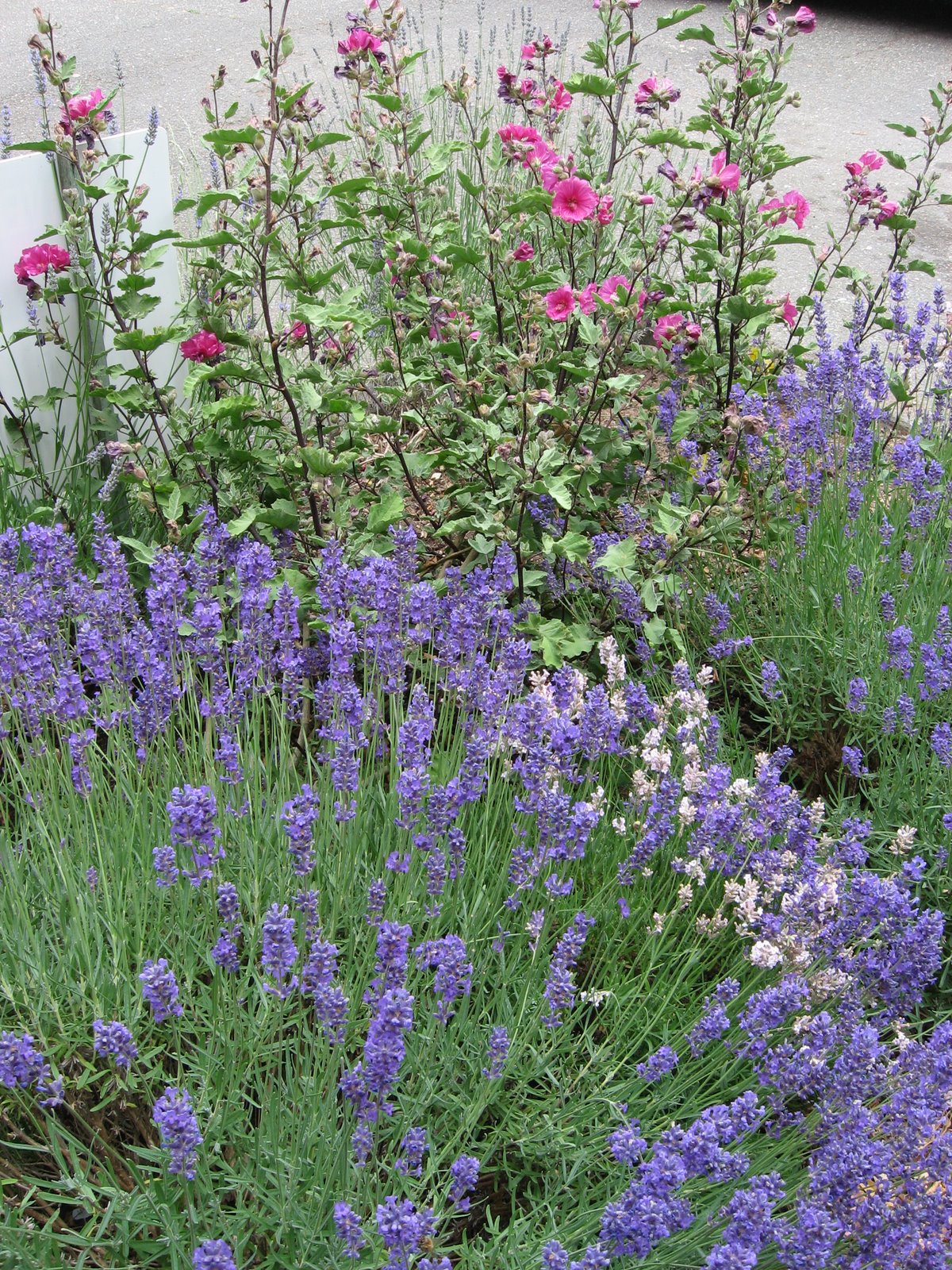
At church, close to my favorite rose, these two colors of lavender complement the mallow that waves over them.

And not too far away the Matanzas Creek Winery has acres of lavender in bloom right now. Many times I’ve taken friends to get a whiff and a feast for the eyes in the mornings of late June. I didn’t take this picture, though.

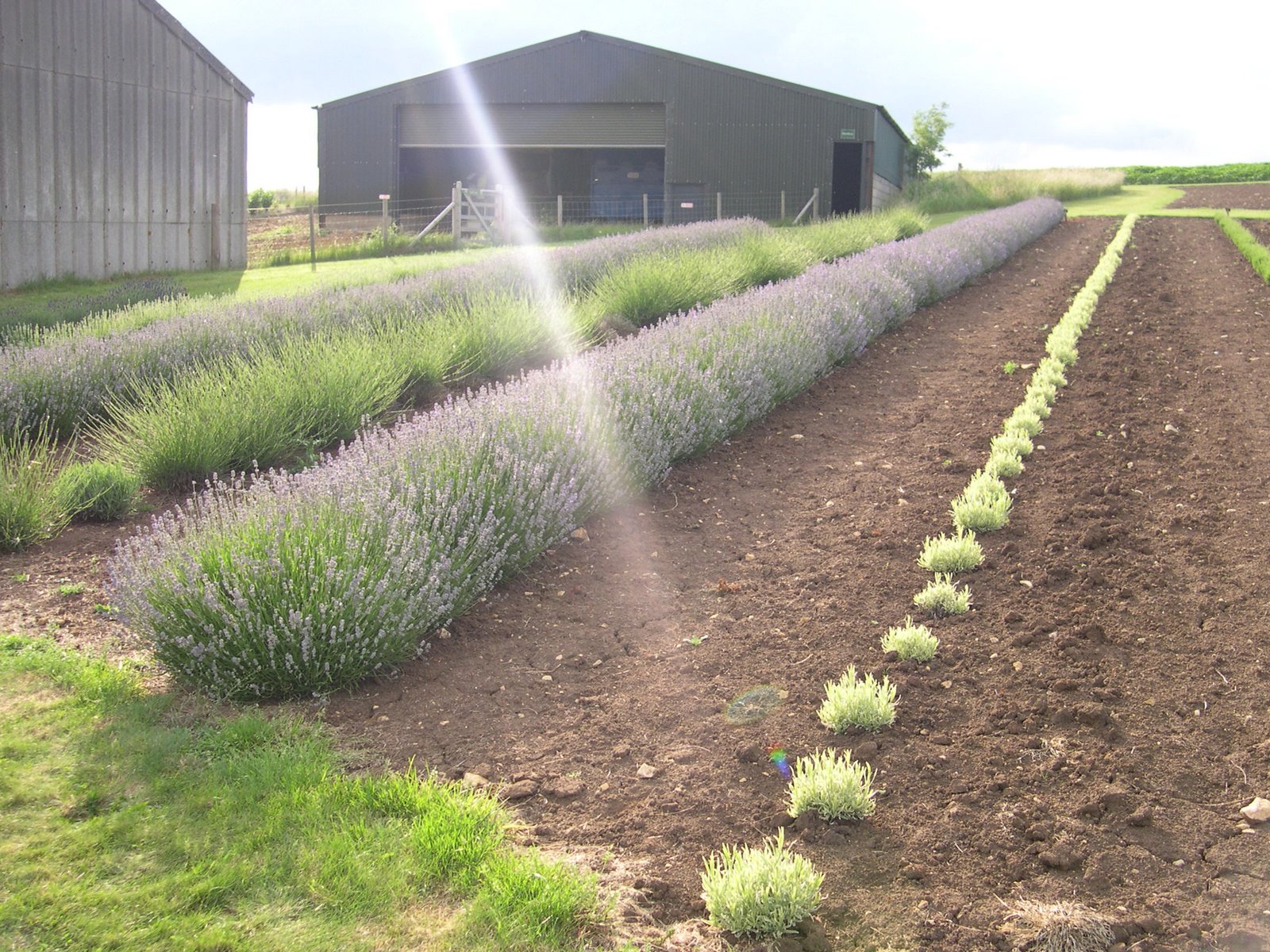
Pippin  took many pictures of lavender at a farm we encountered in the Cotswolds of England at springtime several years ago. I’m not showing you her most picturesque shots, in case she wants to use them commercially sometime.

This farm grew so many varieties of lavender, and they had identifying markers at the end of each row, so that I could write the following journal entry:

On our way back to Snowshill we find the lavender farm Jacki told us not to miss. Fatigue has me waiting in the car for my daughter to take a picture, but she comes back to get me—she knows I will want to experience this place, and she’s right. What a palette of color and textures; her photos come out looking like Monet paintings. Twickle Purple, Alba, Dutch, Nana Alba, Hidcote and Peter Pan are some of the varieties I note in my book, as we stroll on wide grass paths among the neat rows spreading out of sight for many acres. There don’t seem to be any other people around; it’s probably suppertime for most folks–or later. Some of the plants are bushy and covered with blooms, others more dainty, with the flowers just coming on. The colors range from deep cobalt through lighter blue and white. When you throw in the lavender smell, it all makes for a sensual feast.

Lavender gives such a lot of pleasure over a long season, is unthirsty and very easy to care for. After the bloom, it’s short work to prune the bushes back, and then there’s no fuss until the next spring, when I can sit on the patio and watch the bees feeding off my own lavender. Weeks ago there were bushes in bloom in our area, but I kept watching in vain: the bees had not deemed mine ready yet. But today was the day! Just this morning there they were, a dozen of them buzzing around. It takes almost more patience than I have, to get a picture like this in a garden where the breeze is nearly constant. But I did it! So I have something to give today.

Oregon Trails Weekend

Over the weekend we drove north to see children and grandchildren. First there was a drive of many hours to arrive in time for a baseball game in which C. played Friday evening.

Next morning, following the ballet lesson of L., seven of us packed into the van to drive two more hours farther into Oregon for a double-header baseball game at Glide. The weekend was heavy with baseball.


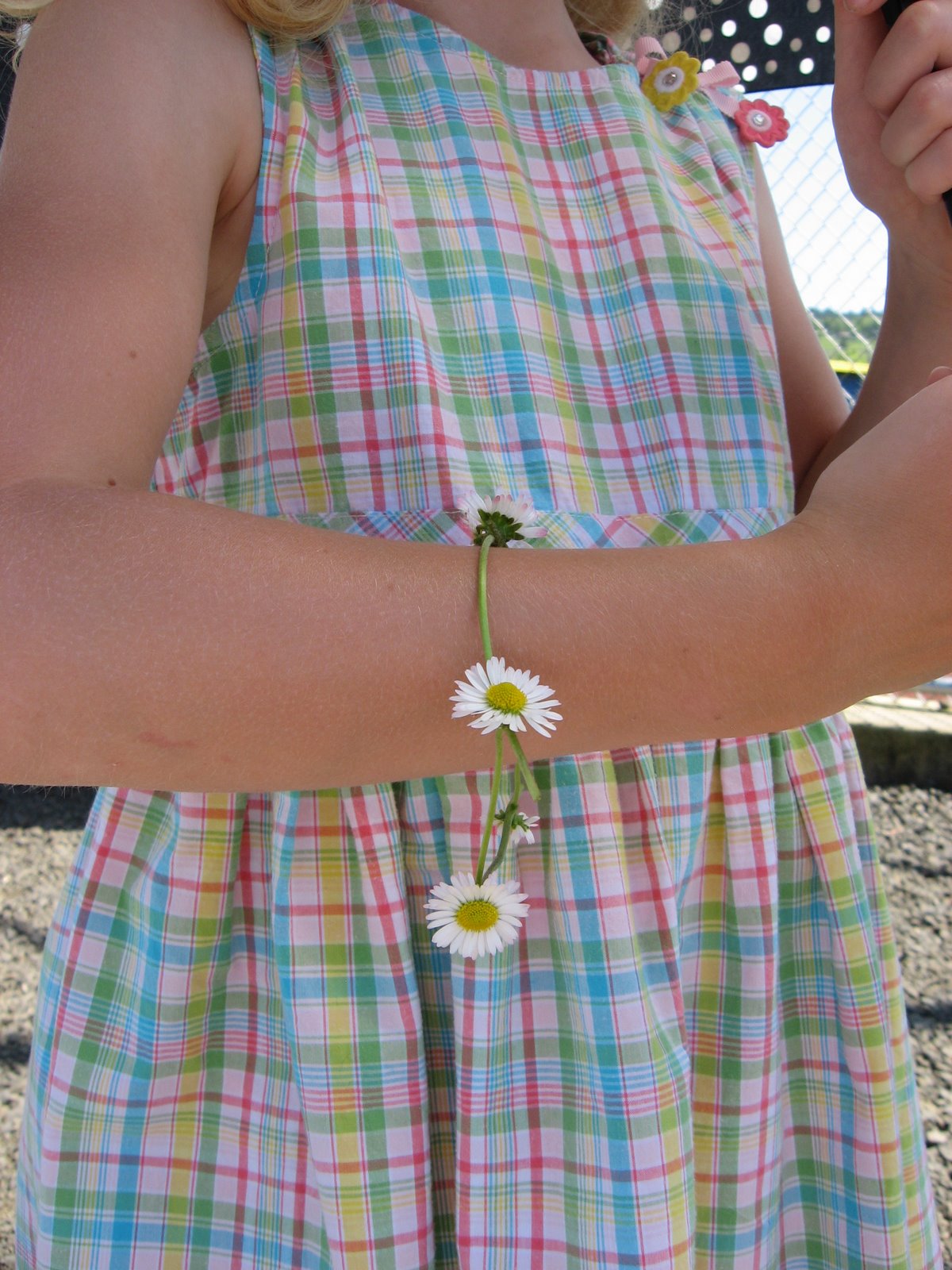
Daisy chain bracelets are a nice ball field pastime.

After the games, we stopped by Colliding Rivers, where Little River and the North Umpqua have a head-on.

Then dinner, and driving, driving, so late that all the children and one grandpa were asleep when we got back.

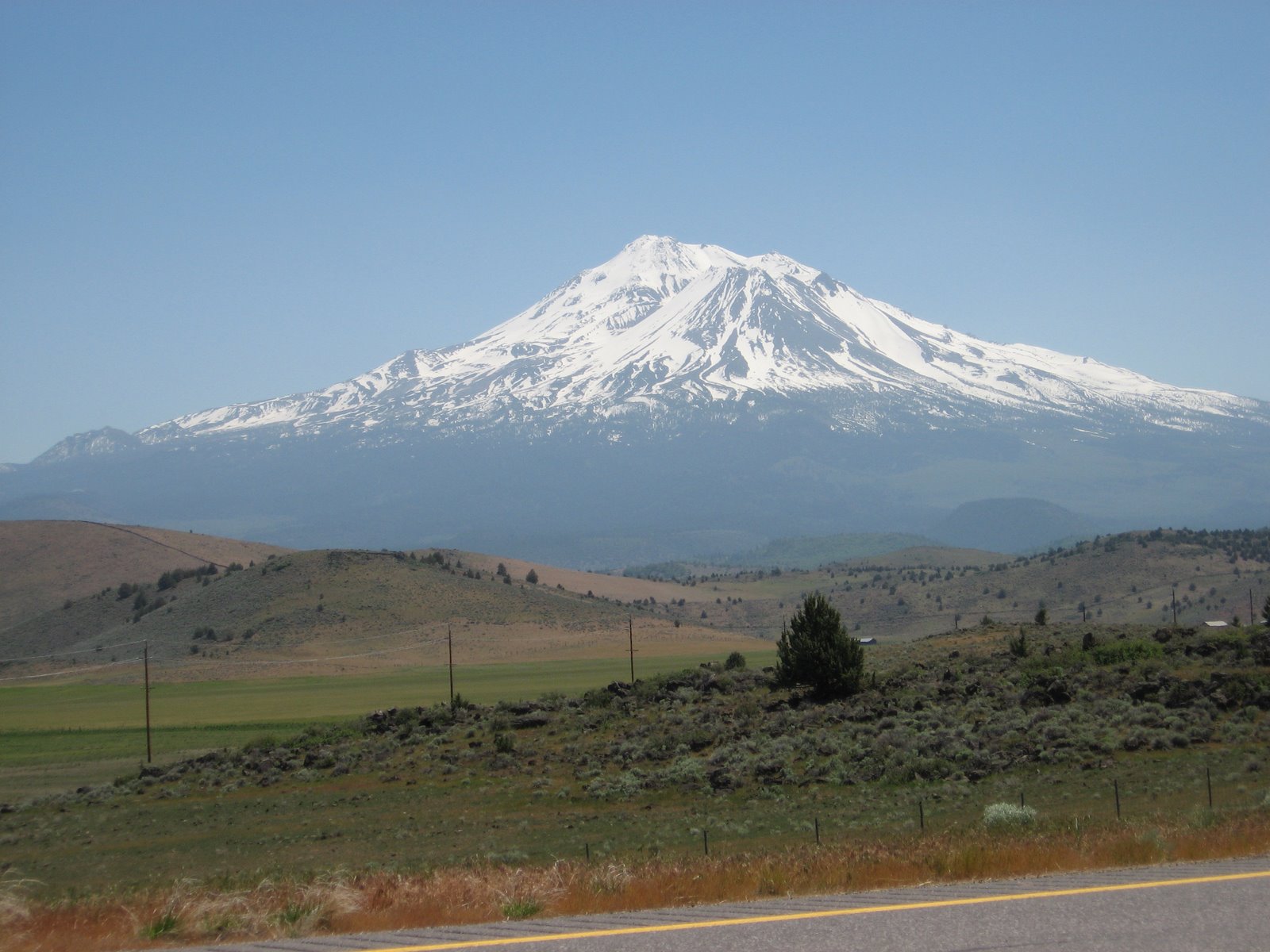
And on Sunday, back down into Siskiyou County, CA and the beloved Mount Shasta. It so dominates one’s consciousness with drama and size–it’s no wonder people tend to think of it as magical and spiritual in itself.

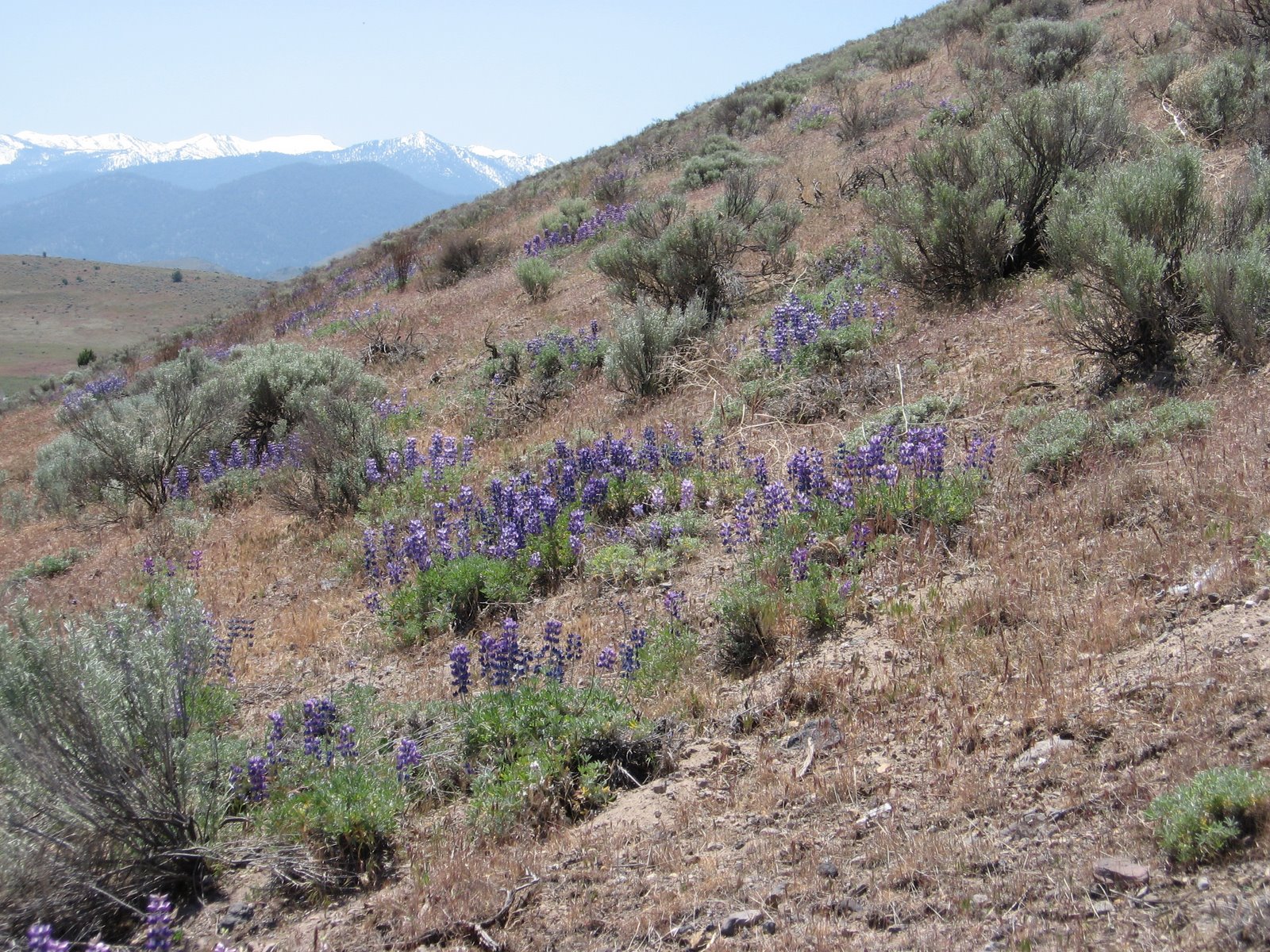
The lupine bushes are also large up there. Mount Eddy in the distance.


Thanks be to God for families and love and cars to drive so we can visit. Thanks for safety and for a home to come back to.

Rocks and Stones

If any one rock expresses for me the metaphor the Psalmist uses in words like this (Psalm 18): “The LORD is my rock, and my fortress, and my deliverer; my God, my strength, in whom I will trust; my buckler, and the horn of my salvation, and my high tower,” it is El Capitan in Yosemite National Park. Contemplation of this edifice over time probably contributed to my love for rock and stone. It may seem odd, or lazy, that I’ve never made the effort to study geology or petrology. All I do is stare at the big rocks and collect some pretty little rocks. The latter are good to put on the soil around succulents and keep the roots warm.

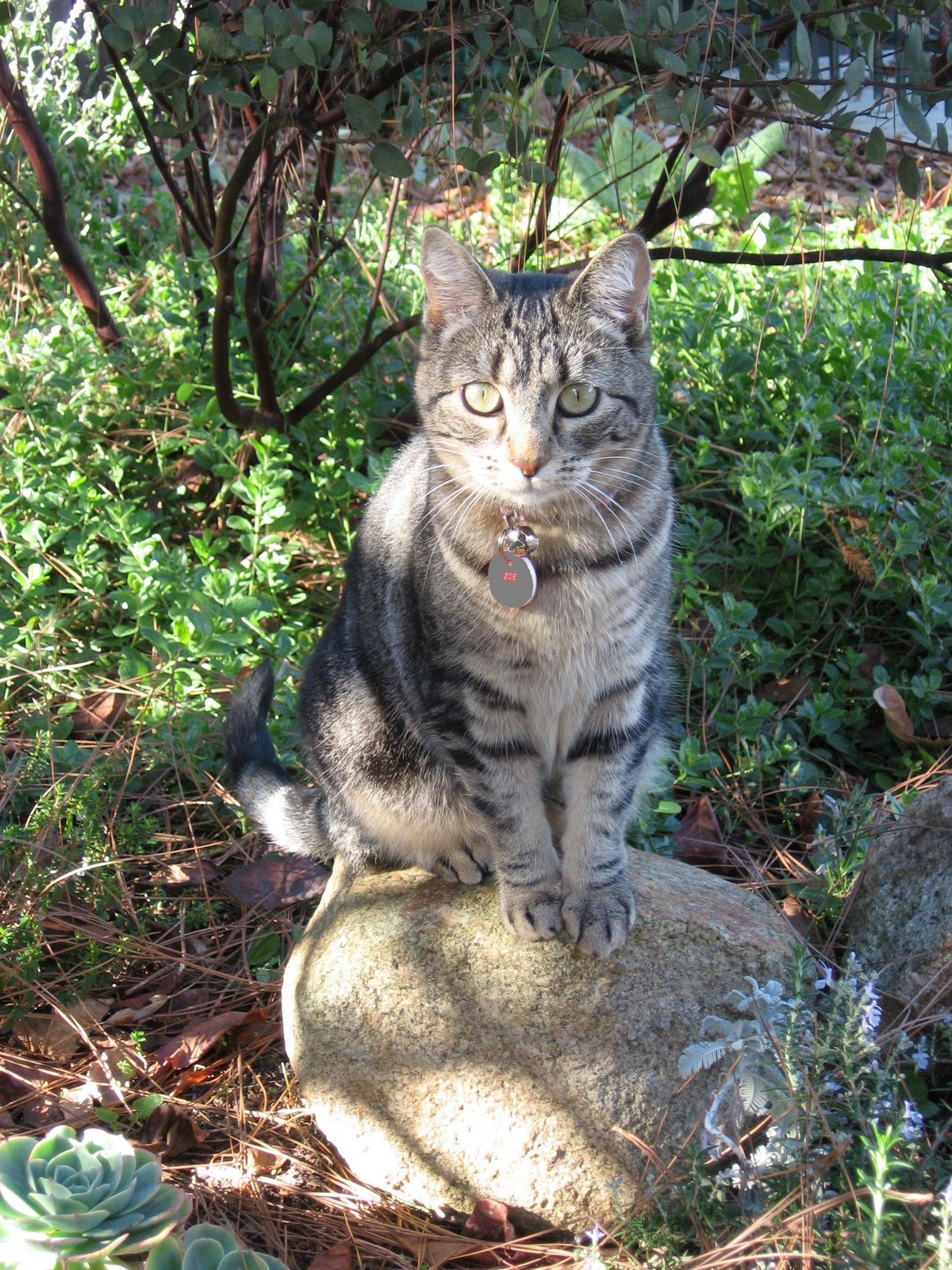
To be truthful, I collect some medium-sized stones as well and haul them down from the mountains on occasion, with the help of stronger and less enthusiastic members of the family. Granite. These are not only reminders of larger hunks of granite, such as El Capitan, but they are very useful in the garden, for beautifying generally, adding another texture and color to contrast with leaves and flowers, or the colors of the cats who sit on them. In some places they also prevent cats from engaging in other less desirable activities.

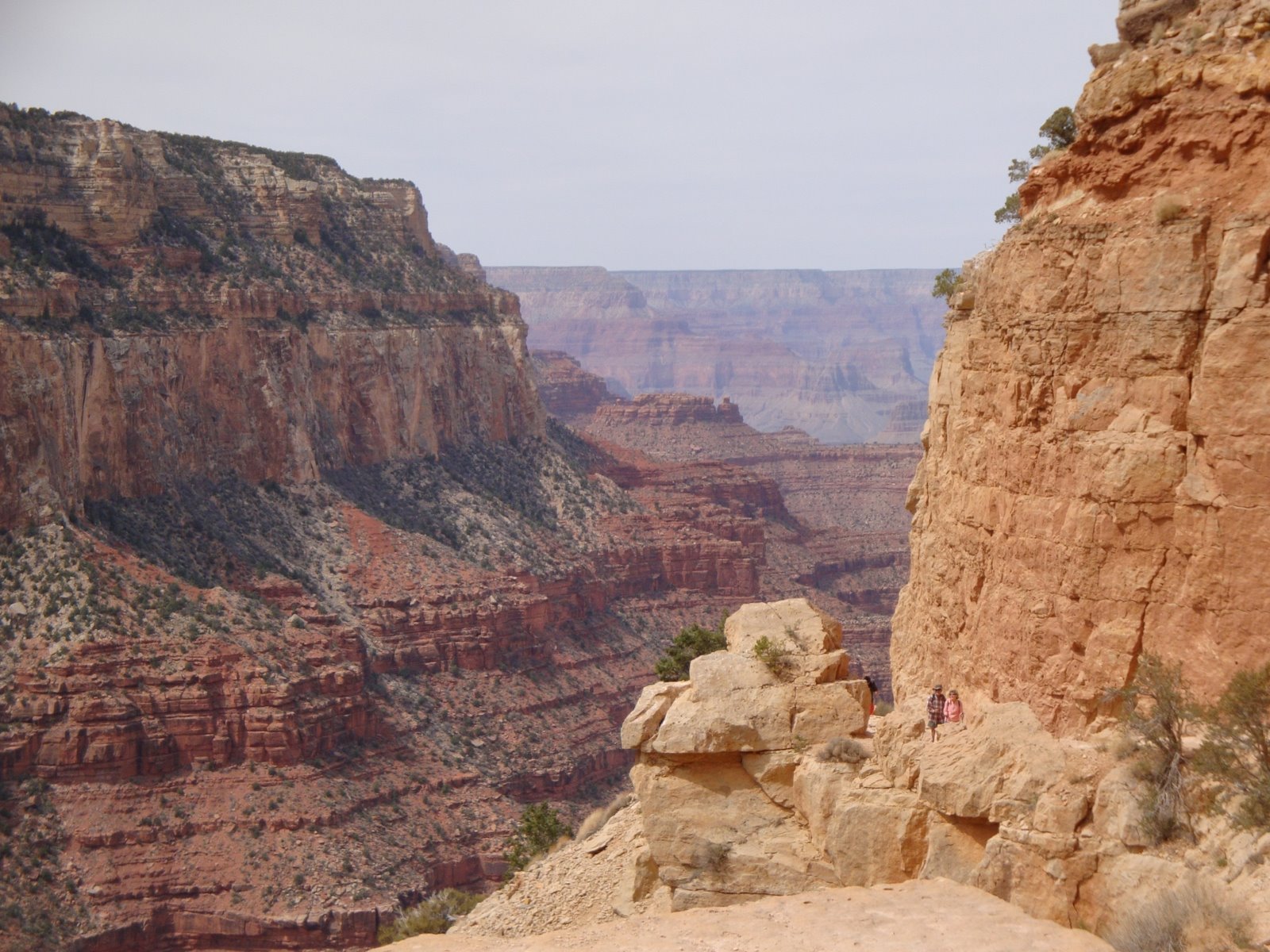
The Southwest, where we have recently traveled, is a delight to rock lovers, even the ignorant type like me. The stone there is typically redder than in Yosemite. Above is a shot from the Grand Canyon.

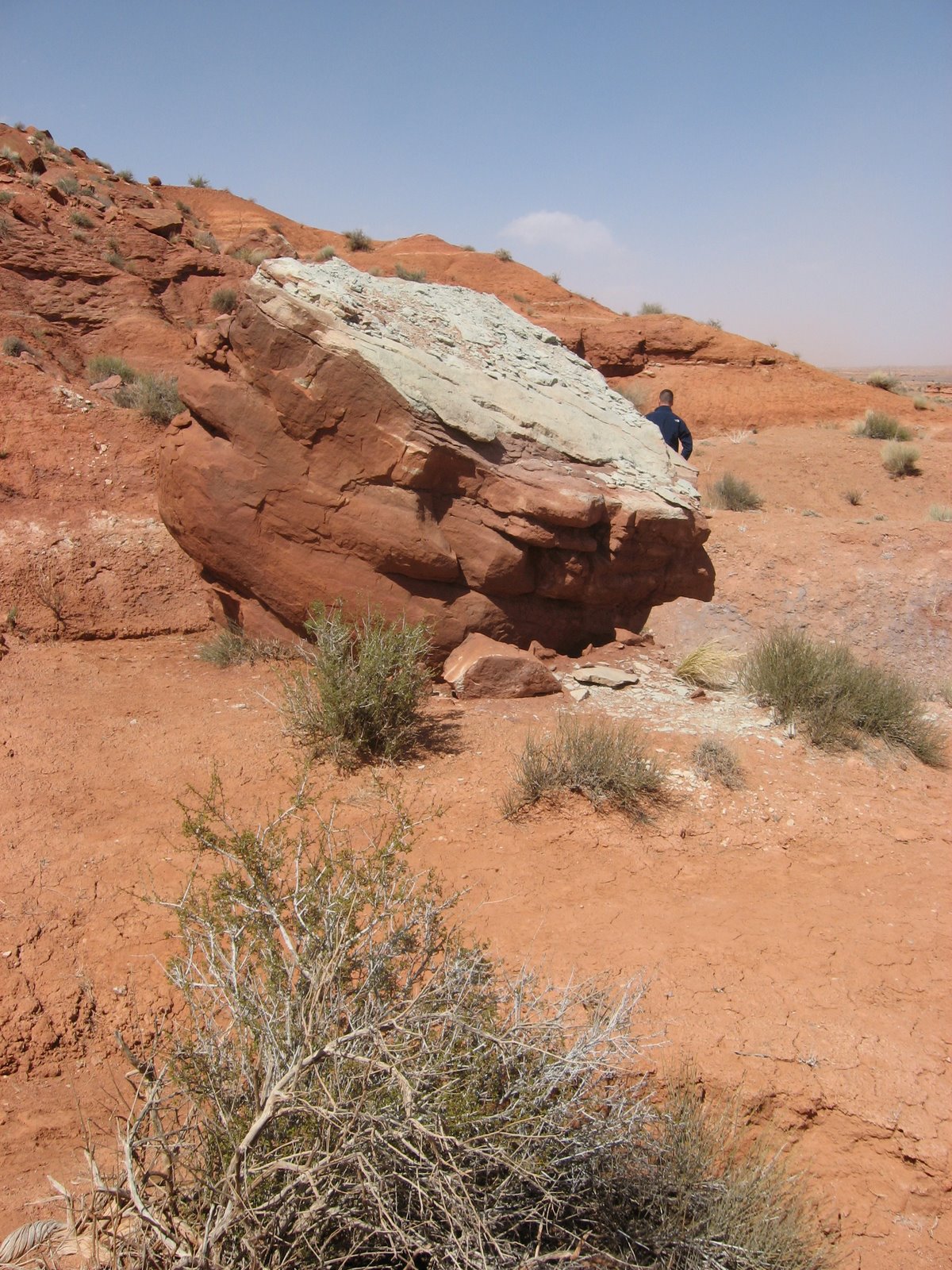
But in Monument Valley I was thrilled at aqua blue rock faces gorgeously setting off the mostly red cliffs. As we climbed out of the car and hiked in among giant boulders and hills of rock, I looked forward to taking their pictures.

Unfortunately, we were in the middle of a sandstorm, which made it unsafe to use one’s camera. My companions said, “What are you talking about? There is no blue rock here!” And when I got close to these piles of brilliant color and picked up some of the chips of sandstone, it wasn’t bright at all, but sort of grayish-white.

This photo I risked (above, with a man behind it) shows the bluest rock I saw–as it looks to normal people. I am still puzzled as to what was going on that day. If the rocks were reflecting the blue sky, why didn’t the others see that? Did I have blue sand in my eyes?

In England and Scotland several years ago I collected small stones that wouldn’t weigh me down too much on the return flight. Here is a photo of the first place where I couldn’t help myself, where the chalk cliffs on the southeast coast of England meet the sea. I am the dark shape bending down to hunt and peck along the shore. >>


 Also while in England, we visited several stone circles. Just being near these stones and thinking about the people who mysteriously erected them makes me praise God for creating humans with a desire to know the Absolute and numinous, people who are not content to live a life that is merely earthly. History is full of evidence of God’s working in men’s hearts, and I am linked with these people because we have all sought God.

The standing stones above are in Swinside. I much preferred just meandering in the historically rich countryside, soaking up….something, to visiting “museums” full of print-heavy posters that were too much like dull textbooks.

 Stone fences and walls abound in Britain, including portions of the famous Hadrian’s Wall and its forts, leftover from the Romans in the 2nd Century A.D. We liked hiking alongside it for a couple of miles (below).

I started out talking about the greatest, and will end this post with photos of the smallest, the collection of specimens I brought back from Britain–one group from Beachy Head in England, and three gatherings from Scotland. The plain white one from Beachy Head is pure chalk. The black cores of the other white rocks are a kind of obsidian. Beyond that I am pretty ignorant. If you click on one of the photos it will enlarge so you can see the stones more closely. I bet you’re not surprised that I could find a stone embedded with a cross.